


AI is moving beyond systems that simply answer questions.
We’ve gone from chatbots, to assistants that can use tools, to agents that can browse the web, work with files, call APIs and execute tasks on our behalf.
But as agents become more capable, a bigger question emerges:
What happens when an AI can actually act?
That makes agent architecture just as important as model intelligence.
This is the problem @NEAR Protocol AI is addressing with IronClaw 1.0, a secure, open-source AI agent harness built in Rust.
Its core idea is simple: separate the part that decides from the part that acts.
The model reasons about what should happen. The tools, credentials, files and network access sit on the execution side. Between them is a single coordination layer called the guard, through which actions must pass.
That architectural separation is the foundation for everything else.
 The Numbers Behind IronClaw
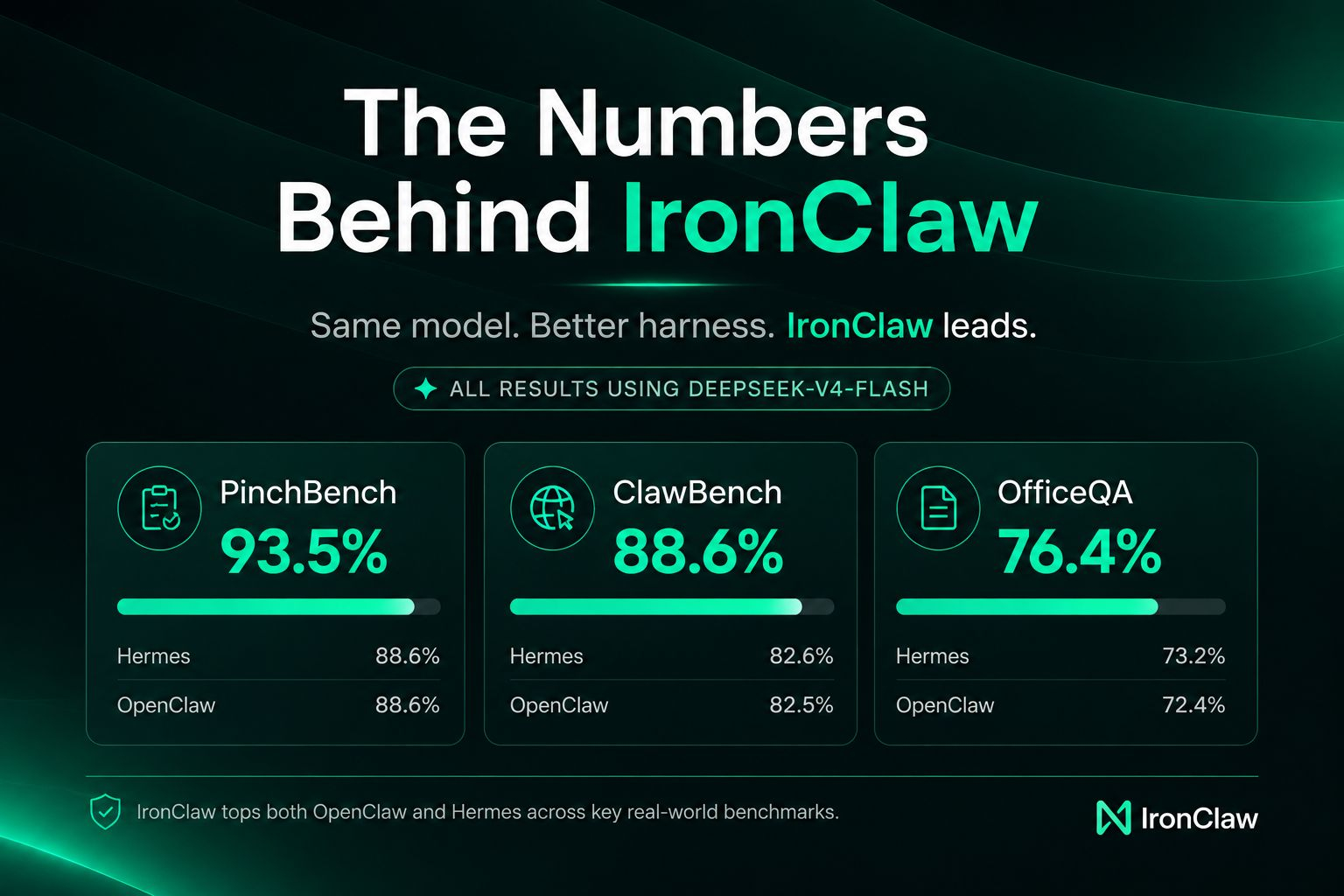
#ironclaw 1.0 launched on July 27, 2026, and one of the strongest parts of the release is the benchmark data.
Using the same base model, deepseek-v4-flash, across the compared agent harnesses, IronClaw recorded:
➜ PinchBench — 93.5%
➜ ClawBench — 88.6%
➜ OfficeQA — 76.4%
▪︎ PinchBench tests 147 real-world tasks covering areas such as scheduling, email, coding, research and file management.
▪︎ ClawBench focuses on live web interaction across more than 140 production websites and tests multi-step tasks such as bookings, applications and purchases.
▪︎ OfficeQA focuses on document-based reasoning across a large corpus of U.S. Treasury materials, including scanned documents, dense tables and millions of numerical values.
The important point is not simply that IronClaw scored highly.
The underlying model was the same.
That suggests the harness itself; how the agent handles tools, permissions, state and execution; can have a meaningful effect on what the model is able to accomplish.
There is an important caveat, though: IronClaw does not lead every benchmark. The research also notes that it trails on benchmarks such as Gaia and a SWE-lite split.
That makes the comparison more credible. The claim is not that IronClaw is universally better at everything, but that its architecture performs strongly across the specific task categories highlighted in the 1.0 release.
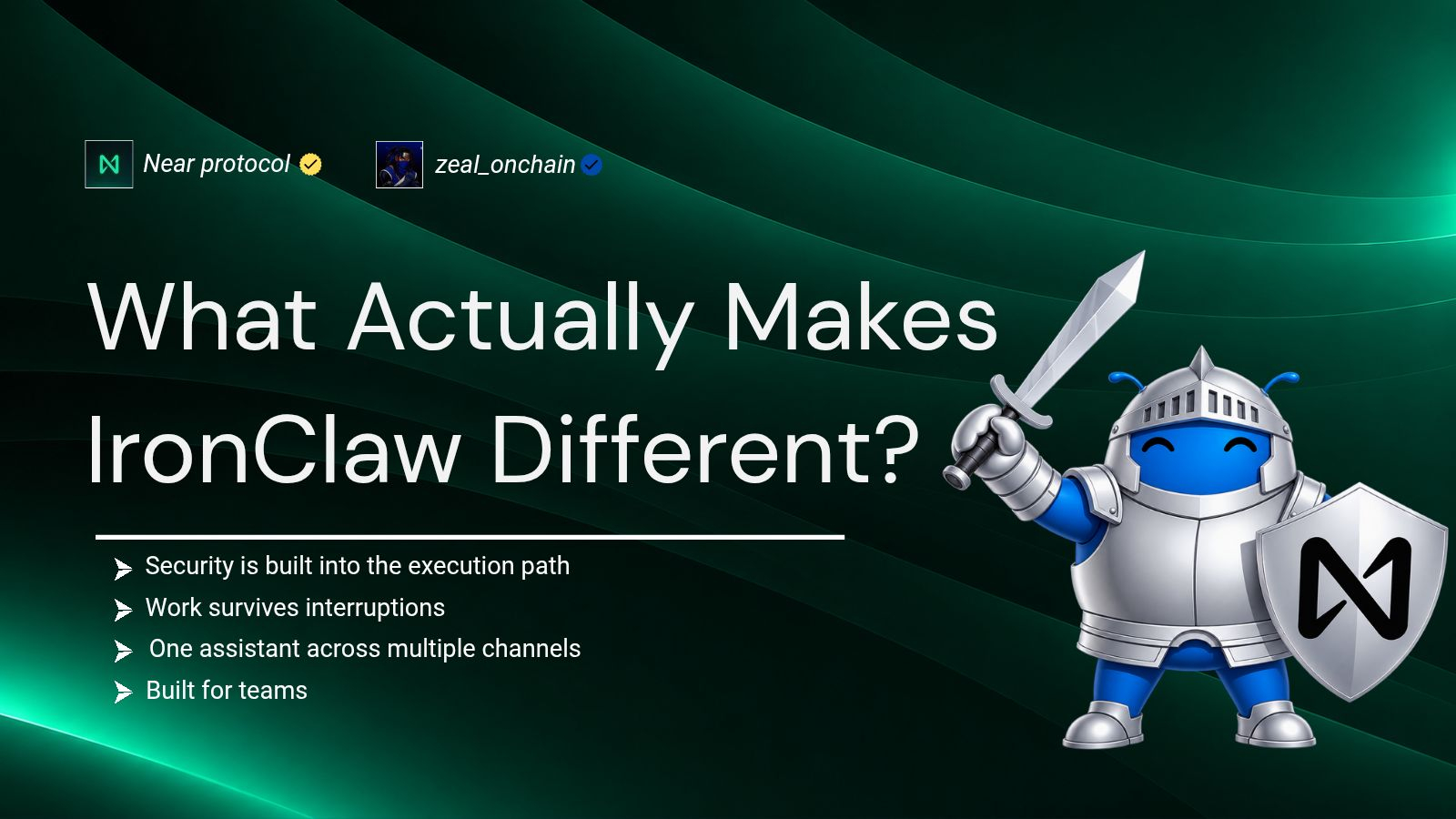 What Actually Makes IronClaw Different?
The biggest improvements are architectural rather than cosmetic.
1. Security is built into the execution path
Sensitive actions can require explicit human approval, while capability-based permissions control what an agent is allowed to do.
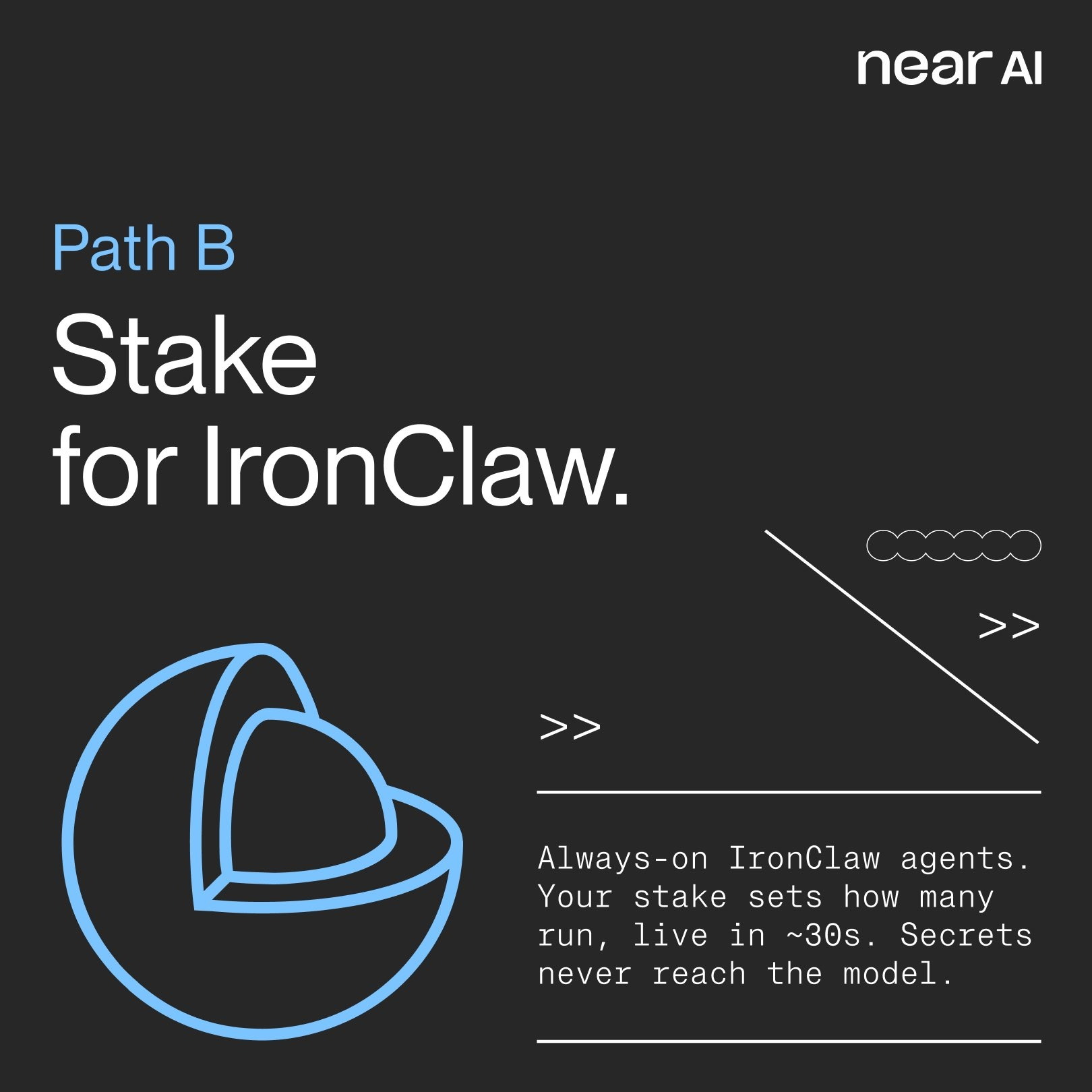
Credentials are also kept away from the model's context, with secrets handled through a more isolated security layer.
This matters because an agent with access to email, files, APIs or financial systems has a much larger attack surface than a chatbot.
2. Work survives interruptions
IronClaw uses continuous checkpointing.
If an agent is halfway through a long task and needs approval, gets restarted or encounters an interruption, its state can be preserved so the work can continue instead of starting from scratch.
That turns interruption from a complete failure into a pause.
3. One assistant across multiple channels
IronClaw can operate through the CLI, web, Slack and Telegram while maintaining shared memory and the same guard policies.
For businesses, this is important because the agent doesn't become a completely different system every time the interface changes.
4. Built for teams
IronClaw supports multi-tenant deployments where organizations can share tools and skills while keeping individual workspaces private by default.
For teams that require stronger isolation, single-tenant deployment provides complete separation.
The underlying idea is straightforward:
share capabilities without unnecessarily sharing access.
 Where NEAR AI Fits In
IronClaw is only one part of the larger #NEARAI stack.
NEAR AI combines secure agent infrastructure with confidential computing through Trusted Execution Environments (TEEs), where workloads can run inside hardware-isolated environments.
The broader stack includes NEAR AI Cloud, confidential inference, IronClaw, OpenClaw hosting and integrations with NEAR's #crypto infrastructure such as Intents and Chain Signatures.
That creates an interesting separation of responsibilities:
IronClaw secures the agent's execution.
TEEs protect the environment where sensitive computation happens.
NEAR provides the crypto infrastructure for identity, transactions and payments.
And then there is the part I find particularly interesting: staking.
 Staking Is More Than Yield
NEAR AI introduced Staking for NEAR AI on July 30, 2026.
The idea is different from simply paying for AI infrastructure with a credit card.
Users can lock NEAR and receive recurring AI credits for services such as IronClaw hosting and confidential inference, while retaining ownership of the underlying stake.
For IronClaw hosting, the current policy is:
Staked NEAR ÷ 100 = monthly USD credit budget
The minimum stake to activate an IronClaw agent is currently 50 NEAR, with the first agent designed to go live in roughly 30 seconds.
These figures are policy parameters from the July 30, 2026 launch and can change over time.
But there is an important distinction that should not be overlooked.
NEAR AI staking is not the same as protocol staking.
Protocol-level staking secures the NEAR blockchain through validators and delegators.
NEAR AI staking instead connects locked NEAR to AI usage such as agent hosting and confidential inference.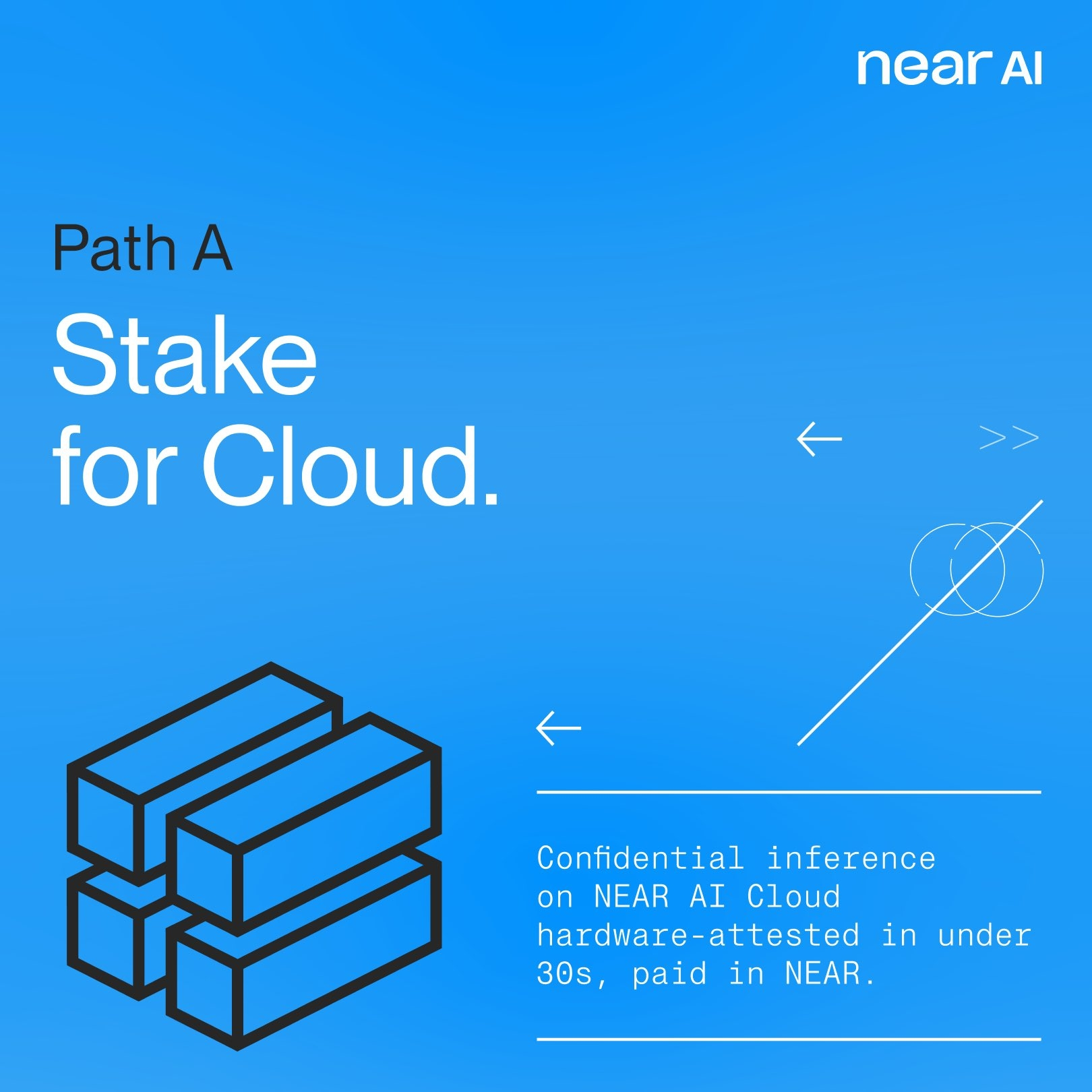
They are different mechanisms, but they point toward the same broader idea: the asset securing the network can also become part of the economic infrastructure powering applications built around it.
The Bigger Picture
This is why I think the IronClaw story is more interesting than simply launching another AI agent.
The bigger bet is about connecting several layers:
secure execution → confidential compute → crypto-native ownership → agentic activity
If agents are eventually going to manage sensitive information, interact with businesses, hold identities, make payments and execute transactions, then the infrastructure around them needs to handle more than intelligence.
❍ It needs security.
❍ It needs persistence.
❍ It needs privacy.
And eventually, it needs an economic layer.
That is what makes NEAR AI's approach worth watching.
The long-term thesis can be summarized simply:
Capital funds compute.
Compute powers agents.
Agents create onchain activity.
Whether that becomes a meaningful new model for AI infrastructure remains to be proven.
But the architecture being built around IronClaw and NEAR AI suggests the industry may be moving toward a future where the question isn't just:
“How smart is the agent?”
but also:
“Can we trust it with real work?”