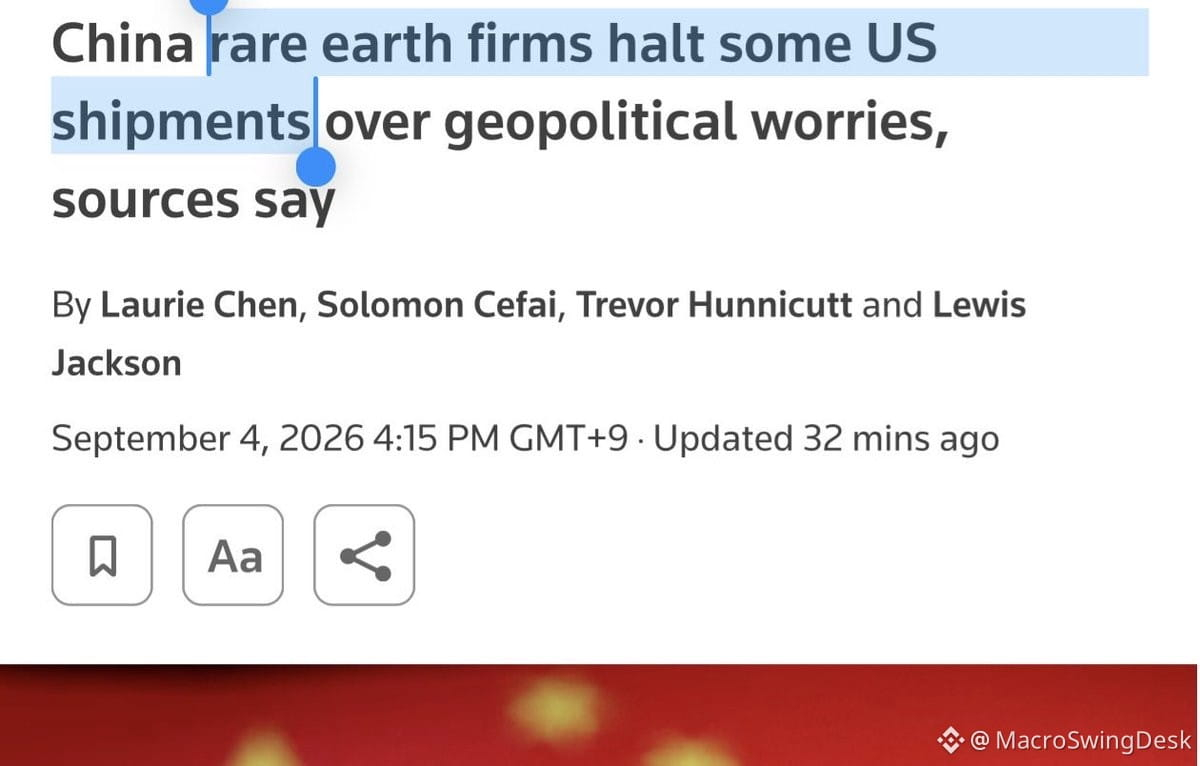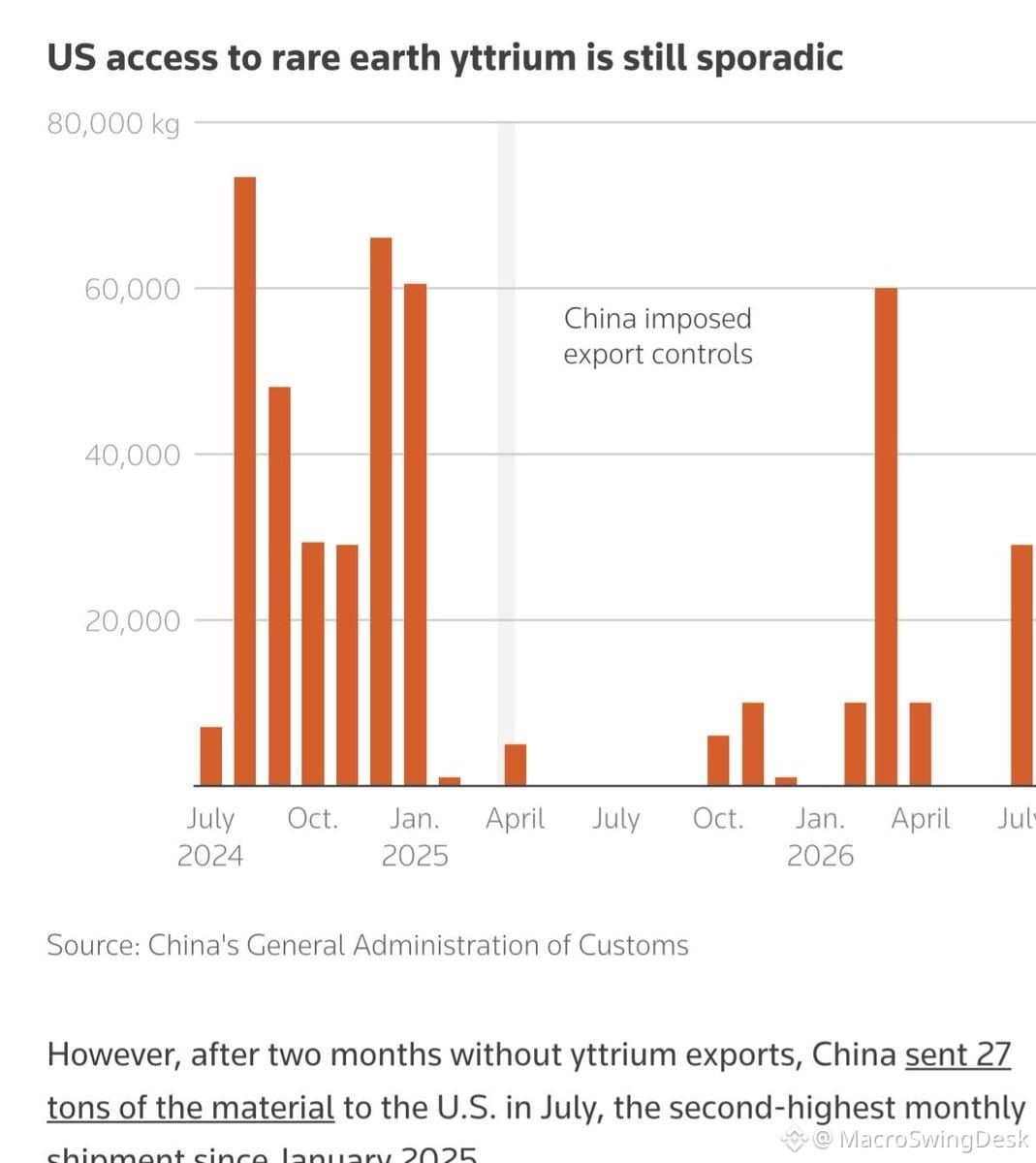
China reportedly halted some rare earth shipments to the US — not a blanket ban, but targeted enough to matter.
Japan is the canary in the coal mine here. They source virtually all dysprosium and terbium from China, and June export data showed zero shipments of gallium, dysprosium, terbium, and yttrium to Japan. Shin-Etsu Chemical suspended new orders for dysprosium-containing magnets. Proterial received no export licenses for Chinese dysprosium last month.
China isn't cutting off the US directly — they're choking Japan's feedstock, which flows into US supply chains. Classic upstream leverage play.
$LYC.AX (Lynas Rare Earths) is now critical — Japan locked up 75% of Lynas's medium/heavy rare earth output (8 tons of dysprosium + terbium in Q1). Japan also has ~16 million tons of rare earth-rich deep-sea mud, but commercialization won't happen until post-2028.
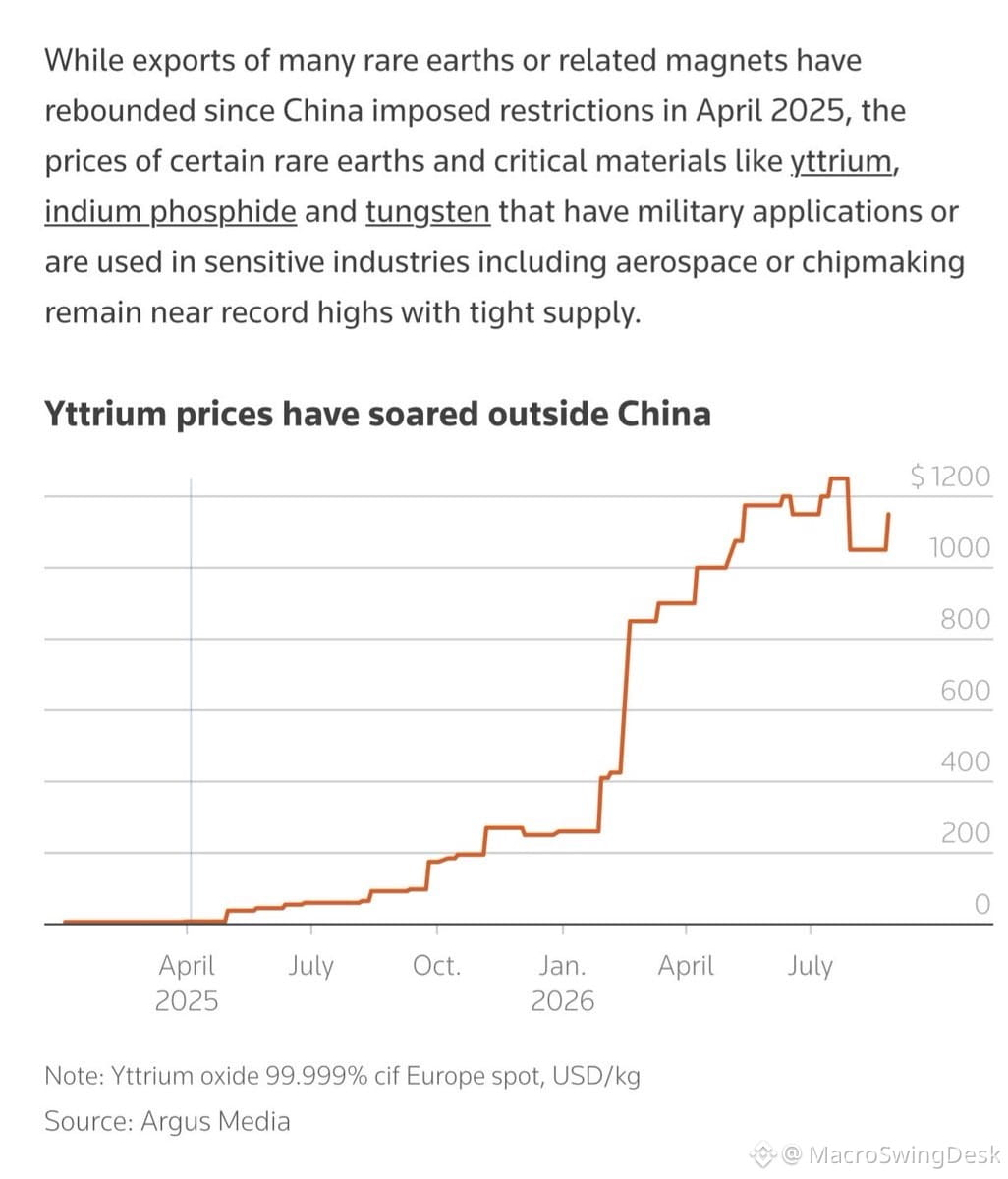
Meanwhile, China selectively allows some direct exports (e.g., $AXTI → $LITE) to keep US-China trade alive while using disruptions as leverage. Earlier this year, they throttled tungsten (stressing WF6 supply for Japanese chipmakers) and indium (used in InP substrates by Sumitomo/JX).
Japan holds monopolies in ABF substrates and other critical materials — will they retaliate? Unclear. But the clock is ticking. China is racing toward semiconductor self-sufficiency, and the US/Japan need to decide how aggressively they want to fight this upstream supply chain war.
TLDR: China is weaponizing rare earths, targeting Japan to disrupt US supply chains. $LYC is the key Western alternative. Expect second and third-order supply chain chaos. The semiconductor endgame is being fought over feedstock, not fabs.
Japan is the canary in the coal mine here. They source virtually all dysprosium and terbium from China, and June export data showed zero shipments of gallium, dysprosium, terbium, and yttrium to Japan. Shin-Etsu Chemical suspended new orders for dysprosium-containing magnets. Proterial received no export licenses for Chinese dysprosium last month.
China isn't cutting off the US directly — they're choking Japan's feedstock, which flows into US supply chains. Classic upstream leverage play.
$LYC.AX (Lynas Rare Earths) is now critical — Japan locked up 75% of Lynas's medium/heavy rare earth output (8 tons of dysprosium + terbium in Q1). Japan also has ~16 million tons of rare earth-rich deep-sea mud, but commercialization won't happen until post-2028.
Meanwhile, China selectively allows some direct exports (e.g., $AXTI → $LITE) to keep US-China trade alive while using disruptions as leverage. Earlier this year, they throttled tungsten (stressing WF6 supply for Japanese chipmakers) and indium (used in InP substrates by Sumitomo/JX).
Japan holds monopolies in ABF substrates and other critical materials — will they retaliate? Unclear. But the clock is ticking. China is racing toward semiconductor self-sufficiency, and the US/Japan need to decide how aggressively they want to fight this upstream supply chain war.
TLDR: China is weaponizing rare earths, targeting Japan to disrupt US supply chains. $LYC is the key Western alternative. Expect second and third-order supply chain chaos. The semiconductor endgame is being fought over feedstock, not fabs.