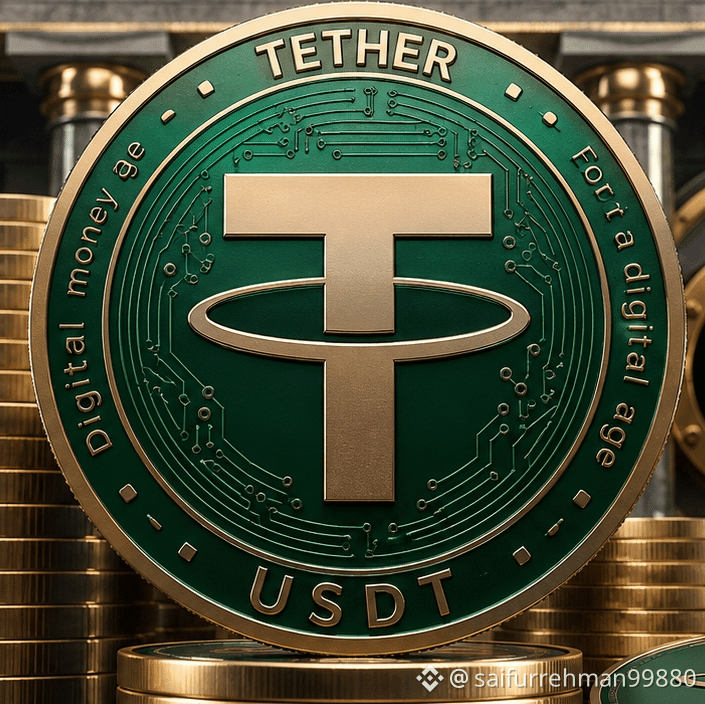
“USDT Crypto Coin: The Future of Digital Money”
USDT, also known as Tether, is a cryptocurrency called a stablecoin. Its main purpose is to maintain a value close to 1 US dollar, unlike Bitcoin and many other cryptocurrencies whose prices can change significantly.
Key features of USDT:
Symbol: USDT
Type: Stablecoin
Issuer: Tether
Main purpose: Digital representation of U.S.-dollar value
Uses: Crypto trading, transferring digital value, and moving funds between supported crypto platforms
Networks: USDT is available on multiple blockchain networks, including Ethereum, Tron, Solana, and others.
Is USDT an investment?
USDT is not designed like Bitcoin as a growth investment. Its goal is price stability around $1. If you're thinking about buying USDT, it's important to understand that it generally isn't intended to rise dramatically in price.
Important: Although USDT aims to maintain its peg to the U.S. dollar, it is not completely risk-free. Its value can temporarily move above or below $1, and users should consider issuer, reserve, blockchain, exchange, and regulatory risks.
USDT, also known as Tether, is a cryptocurrency called a stablecoin. Its main purpose is to maintain a value close to 1 US dollar, unlike Bitcoin and many other cryptocurrencies whose prices can change significantly.
Key features of USDT:
Symbol: USDT
Type: Stablecoin
Issuer: Tether
Main purpose: Digital representation of U.S.-dollar value
Uses: Crypto trading, transferring digital value, and moving funds between supported crypto platforms
Networks: USDT is available on multiple blockchain networks, including Ethereum, Tron, Solana, and others.
Is USDT an investment?
USDT is not designed like Bitcoin as a growth investment. Its goal is price stability around $1. If you're thinking about buying USDT, it's important to understand that it generally isn't intended to rise dramatically in price.
Important: Although USDT aims to maintain its peg to the U.S. dollar, it is not completely risk-free. Its value can temporarily move above or below $1, and users should consider issuer, reserve, blockchain, exchange, and regulatory risks.