
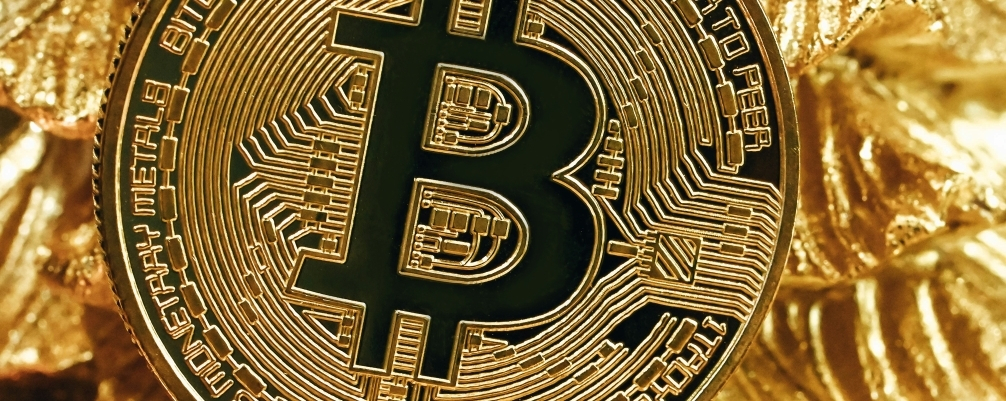

Two scarce assets. Two completely different systems. One fascinating question.
For thousands of years, humans have searched for something that can preserve value.
Gold became one of the most successful monetary assets in human history.
Then Bitcoin arrived with a completely different idea:
Can scarcity be created digitally?
Today, Bitcoin and gold are often compared as potential stores of value.
But asking “Which one will win?” may be the wrong question.
A better question is:
Which asset has the stronger monetary model—and under which conditions?
Let's compare them across seven critical dimensions.
🪙 1. Supply: Scarcity vs Digital Scarcity
Gold
Gold is naturally scarce.
New gold enters the global supply primarily through mining, but the total amount that can ultimately be extracted is unknown.
If gold prices rise significantly, higher-cost mining projects can potentially become economically viable.
So gold has scarcity, but its supply is not absolutely fixed.
Bitcoin has a protocol-defined maximum supply of approximately 21 million BTC under its current monetary rules.
New BTC is issued through mining, and the issuance rate decreases over time through scheduled halvings.
This creates a highly predictable monetary supply schedule.
The difference
Gold: Naturally scarce, but supply is not precisely capped.
Bitcoin: Digitally scarce with a predetermined maximum supply.
Advantage depends on your philosophy.
If you value a hard mathematical limit, Bitcoin has the stronger model.
If you value a naturally occurring physical asset with no software dependency, gold has an advantage.
📱 2. Portability: Try Carrying $1 Million
This category produces a very different result.
Imagine you need to move $1 million worth of gold across the world.
You have a physical asset.
It requires:
Transportation
Security
Storage
Insurance
Verification
Now imagine transferring $1 million worth of Bitcoin.
The physical weight is essentially irrelevant.
Bitcoin can be transferred digitally using the network, subject to the practical requirements of the technology and access to it.
That's a revolutionary property.
Gold is physical.
Bitcoin is digital.
For a world increasingly connected through the internet, Bitcoin has a major portability advantage.
But there's an important caveat:
Bitcoin depends on technology, electricity, network access and secure key management.
Gold doesn't need an internet connection to physically exist.
Winner?
Bitcoin for digital portability.
Gold for physical independence from digital infrastructure.
🔢 3. Divisibility: How Small Can You Go?
Gold can be divided into smaller physical units.
You can own:
Gold bars
Coins
Small bullion pieces
But physical division becomes increasingly inconvenient.
You can't easily cut a gold bar into tiny pieces every time you want to make a small payment.
Bitcoin is fundamentally different.
One Bitcoin can be divided into very small units called satoshis.
This makes Bitcoin highly divisible at the protocol level.
For digital transactions, this is extremely useful.
Gold:
Physically divisible, but practical limitations exist.
Bitcoin:
Highly divisible digitally.
Advantage: Bitcoin.
🔐 4. Custody: Who Holds the Asset?
This is where the comparison becomes complicated.
Gold custody usually involves:
Vaults + Banks + Dealers + Security + Insurance
You can physically hold gold yourself, but large amounts create security and storage challenges.
Bitcoin offers another model.
You can potentially control your BTC directly through private keys.
This creates an extraordinary concept:
Self-custody.
But self-custody comes with responsibility.
Lose access to your private keys, and recovering the assets can be extremely difficult or impossible.
With gold, losing a physical bar is obviously a problem.
With Bitcoin, losing the key controlling the asset can be equally serious.
There are also custodial solutions for both assets.
Gold:
Physical security is the central challenge.
Bitcoin:
Digital security and key management are the central challenges.
Neither system is completely risk-free.
💧 5. Liquidity: How Easily Can You Buy or Sell?
Gold has an enormous global market.
It is traded through:
Dealers
Banks
Financial markets
Investment products
Physical bullion markets
Its liquidity has developed over centuries.
Bitcoin has also developed deep global liquidity across cryptocurrency markets.
It can be traded continuously across many venues, including weekends.
However, liquidity can vary significantly by market, asset and trading venue.
Gold generally benefits from a much longer-established financial infrastructure.
Bitcoin benefits from its native digital architecture and global accessibility.
Gold:
Deep, mature and historically established liquidity.
Bitcoin:
Highly accessible, digitally native, and globally traded.
The advantage depends heavily on what type of transaction you're making.
🏛️ 6. History: Gold Has an Extraordinary Head Start
This is probably gold's strongest argument.
Gold has been valued by civilizations for thousands of years.
It has been used as:
Money
Jewelry
A store of value
A reserve asset
A symbol of wealth
Human societies have repeatedly assigned value to gold.
Bitcoin's history is dramatically shorter.
Bitcoin launched in 2009.
That means gold has thousands of years of monetary history.
Bitcoin has only a small fraction of that track record.
This matters.
A monetary asset isn't only about technology.
It's also about social trust.
Gold has had generations to build that trust.
Bitcoin is still building its historical record.
Advantage: Gold—by an enormous margin.
But Bitcoin has something gold never had:
A rapidly expanding digital-native network effect.
⚖️ 7. Regulation: A Completely Different Challenge
Gold has existed within financial and legal systems for centuries.
Countries regulate:
Gold ownership
Gold trading
Imports and exports
Taxes
Financial products
Dealers
Bitcoin operates in a much newer regulatory environment.
Governments around the world continue to develop rules concerning:
Cryptocurrency exchanges
Taxation
Custody
Market structure
Anti-money-laundering requirements
Institutional participation
This creates both opportunities and uncertainty.
Gold's regulatory framework is relatively mature.
Bitcoin's framework is still evolving in many jurisdictions.
Advantage:
Gold for regulatory maturity.
Bitcoin for technological innovation—but with greater regulatory uncertainty.
🧠 The Bigger Difference: Physical vs Digital Scarcity
Perhaps the most important distinction isn't actually Bitcoin vs gold.
It's:
Physical scarcity vs digital scarcity.
Gold's scarcity comes from geology.
Bitcoin's scarcity comes from software and consensus rules.
Gold says:
“You can't easily create more of me because nature makes me difficult to obtain.”
Bitcoin says:
“You can't create more of me beyond the protocol's monetary rules.”
These are two radically different approaches to scarcity.
📊 Bitcoin vs Gold: Quick Comparison
FactorGoldBitcoin
SupplyNaturally scarceProtocol-limited
PortabilityDifficult at large valueHighly portable digitally
DivisibilityPractical physical limitsExtremely divisible digitally
CustodyPhysical securityKey/security management
LiquidityMature global marketGlobal digital markets
HistoryThousands of yearsSince 2009
RegulationMature frameworkEvolving framework
But remember:
A comparison table doesn't determine the winner.
Your priorities determine the winner.
🐂 When Gold May Be Stronger
Gold may appeal more to someone who values:
Long historical track record
Physical ownership
No dependence on internet infrastructure
Established institutional acceptance
Mature regulatory frameworks
For a conservative store-of-value thesis, these characteristics matter.
🚀 When Bitcoin May Be Stronger
Bitcoin may appeal more to someone who values:
Predictable scarcity
Digital portability
High divisibility
Global accessibility
Self-custody
A native digital monetary network
For someone living in an increasingly digital economy, these characteristics can be extremely attractive.
⚠️ The Risk Nobody Should Ignore
Both assets have risks.
Gold can face:
Storage costs
Physical theft
Authenticity concerns
Transportation challenges
Lower digital portability
Bitcoin can face:
Extreme volatility
Key-management risks
Cybersecurity threats
Regulatory changes
Technology dependence
Market-structure risks
So the intelligent question isn't:
“Which asset has no risk?”
Neither does.
The intelligent question is:
“Which risks am I more comfortable owning?”
🔥 My Take
I don't think we need to declare:
“Gold is dead.”
And I don't think we need to declare:
“Bitcoin will definitely replace gold.”
Those are simplistic arguments.
Gold has something Bitcoin cannot manufacture overnight:
Thousands of years of monetary history.
Bitcoin has something gold cannot easily reproduce:
Native digital scarcity and global digital portability.
One represents physical monetary history.
The other represents digital monetary innovation.
Perhaps the most interesting future isn't necessarily a world where one completely destroys the other.
It could be a world where both coexist for different purposes.
💬 The Question for You
If you had to hold ONE asset for the next 20 years, which would you choose?
🥇 Gold
₿ Bitcoin
But don't just comment the asset.
Explain your reasoning.
Would you prioritize:
Scarcity?
History?
Portability?
Self-custody?
Liquidity?
Regulatory certainty?
👇 I want to read the strongest argument from both sides.
If you enjoyed this comparison, share it with someone who believes Bitcoin vs Gold has only one obvious answer.
Follow me for more deep dives into Bitcoin economics, crypto business and the future of digital assets.
Educational content only. Not financial advice.
#Bitcoin #BTC #Gold #BitcoinVsGold #Crypto #DigitalGold #Investing #BitcoinEconomics #CryptoEducation #BinanceSquare