
Coin--King
13.1k Публикации

Coin--King
 Square Verified+
Market predictor, Binance Square creator.Crypto Trader, Write to Earn .X..@Coinking007
Открытая сделка

Владелец OPG
Трейдер с частыми сделками
1.1 г
685 подписок(и/а)
44.0K+ подписчиков(а)
39.4K+ понравилось
Посты
Портфель
Все
Цитирования
Видео
Активно
PINNED
People don’t look at their own behavior, yet they still ask why we changed.
🎁 🎁
$BICO $DUSK $BMT
#XRPLeadsCryptoPullbackDropsNearly7% #DollarPostsBiggestGainInNearlyFourWeeks #NvidiaRises4%OnRevenueBeat #XRPRallies44%InAWeek
🎁 🎁
$BICO $DUSK $BMT
#XRPLeadsCryptoPullbackDropsNearly7% #DollarPostsBiggestGainInNearlyFourWeeks #NvidiaRises4%OnRevenueBeat #XRPRallies44%InAWeek
go
BOSS BNB
·
--
Good EVENING
CLICK 👉🏻CLAIM THE WEB3 BENEFIT
GOOD LUCK🫰🏻
CLICK 👉🏻CLAIM THE WEB3 BENEFIT
GOOD LUCK🫰🏻
go
Smart Tr ⁶⁶⁰
·
--
JAPAN JUST OPENED THE DOOR
FOR SHIB.
Nomura-backed Laser Digital Japan added SHIB as one of only 6 supported cryptos after FSA approval — alongside BTC, ETH, XRP.
Burn rate up 441% in 24h. Exchange balances dropping fast — whales moving SHIB off exchanges.
$1000SHIB | $ETH | $XRP
#XRPUSDT🚨
#ETH
#SHIB
FOR SHIB.
Nomura-backed Laser Digital Japan added SHIB as one of only 6 supported cryptos after FSA approval — alongside BTC, ETH, XRP.
Burn rate up 441% in 24h. Exchange balances dropping fast — whales moving SHIB off exchanges.
$1000SHIB | $ETH | $XRP
#XRPUSDT🚨
#ETH
#SHIB

go

Stella_ DCruz
·
--
click here 👈🌹
$NVDAB
join & claim web3 benefits 🚀👈
$NVDAB
join & claim web3 benefits 🚀👈

go

KAN_ 加密 143
·
--
BNB (originally Binance Coin) is a major native cryptocurrency that powers the BNB Chain ecosystem and the Binance exchange🌹💕
follow 💕🌹
like💕🌹
repost💕🌹
$BNB $XRP
follow 💕🌹
like💕🌹
repost💕🌹
$BNB $XRP


go

E L E X A
·
--
🚨 LIVE NOW 🚨
Watching is easy… winning takes action 👀
Want free $USDT?
💬 Comment 666
❤️ Like
🔁 Share
➕ Follow
⏳ Spots are filling fast
Comment 666 now 🚀
#Crypto #USDT
Watching is easy… winning takes action 👀
Want free $USDT?
💬 Comment 666
❤️ Like
🔁 Share
➕ Follow
⏳ Spots are filling fast
Comment 666 now 🚀
#Crypto #USDT

go

MrRUHUL
·
--
who let bro cook this hard 🧧🎁💰💵🧧🎁💰💵🧧🎁💰💵🧧🎁💰💵🧧🎁💰💵

go

A L I A N S A R I
·
--
guys claim gift 🎁🎁🎁

go

ALONE_21
·
--
claim your free rewards
good night sweet dreams take care friends
good night sweet dreams take care friends

go

Ahmed Ali Nizamani
·
--
50 + 730 = 🎁🎁🎁🎁✨

done

ETHcryptohub
·
--
🎁🎁🎁🎁 Gifts for Everyone 🎁🎁🎁🎁
Comment: Yes
LIKE + Follow + Repost
🎉🎉🎉🎉🎉🎉🎉🎉🎉🎉🎉
#Ethcryptohub
$BNB $BTC
Comment: Yes
LIKE + Follow + Repost
🎉🎉🎉🎉🎉🎉🎉🎉🎉🎉🎉
#Ethcryptohub
$BNB $BTC
go

Frenzy _13
·
--
Hello crypto friends 🤗✨
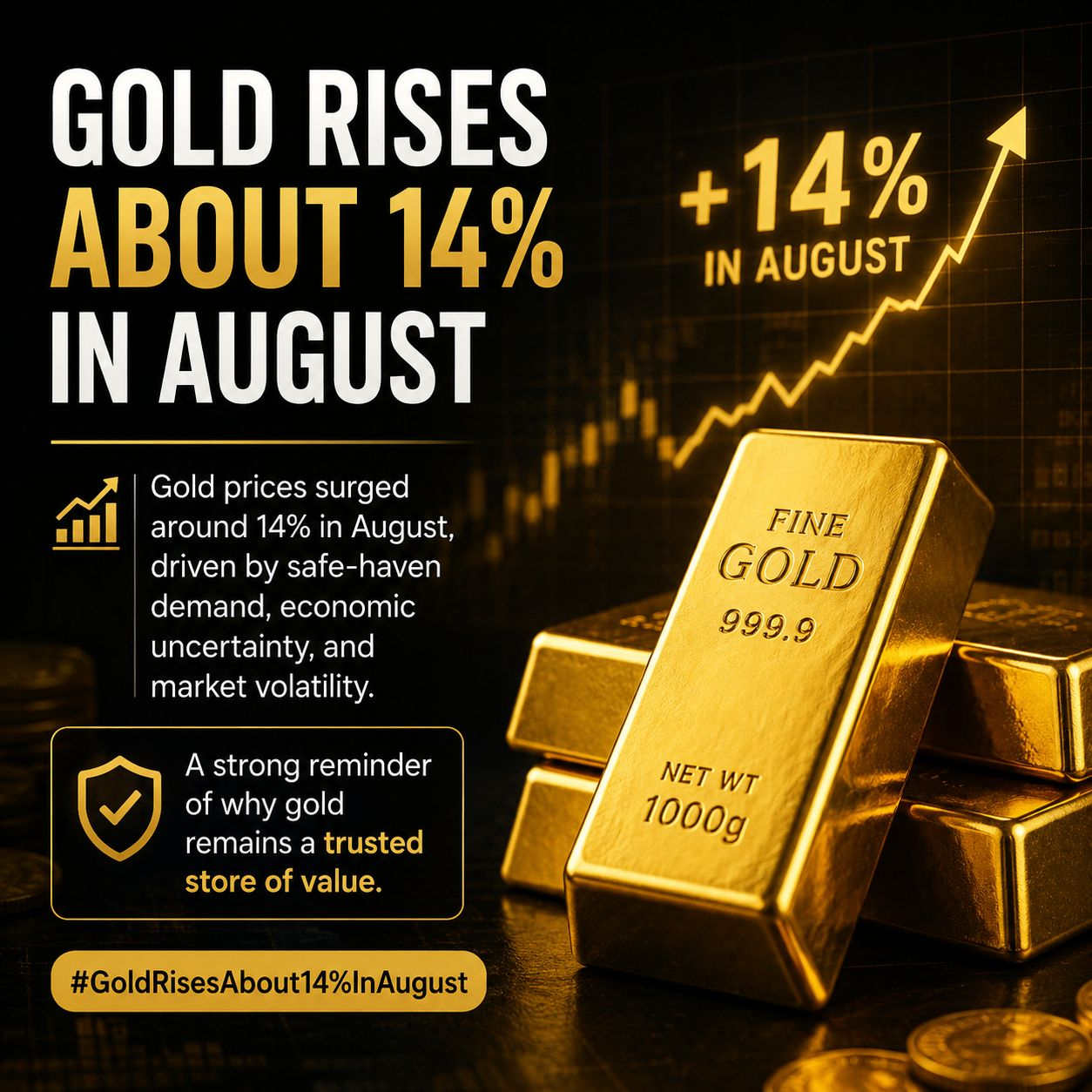
Gold is up around 14% in August, and that’s definitely caught my attention. To me, this move looks bigger than just a short-term price pump. It shows how much interest investors still have in safe-haven assets. Now I’m watching to see if this momentum can carry into September.
$XAU
Gold is up around 14% in August, and that’s definitely caught my attention. To me, this move looks bigger than just a short-term price pump. It shows how much interest investors still have in safe-haven assets. Now I’m watching to see if this momentum can carry into September.
$XAU

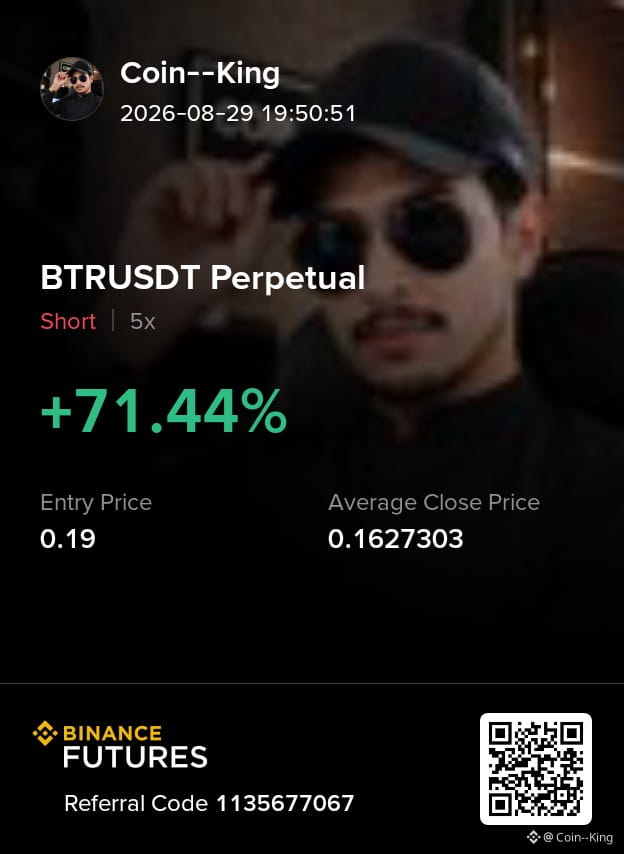
This was a short setup on $BTR USDT. I was not chasing the move. The first thing I watched was the rejection around the 0.19 entry area, followed by weak price action and lower levels forming on the chart. Once momentum started fading, the short made more sense than forcing a long. I kept 5x leverage because the setup was about controlled exposure, not oversized risk. Price continued moving in my favor, so I managed the position instead of closing too early. The average close came around 0.1627303, locking a 71.44% return on the position. The key was patience, structure, and trade management. No trade is guaranteed. This is only my technical view, not financial advice. Always manage your own risk.
$BTC $ETH
#YenPasses160PerDollarToOneMonthLow #NYSilverFuturesDrop3% #USShortTermTreasuryYieldsJump #FedSeptRateHikeOddsRiseTo57%
$BTC $ETH
#YenPasses160PerDollarToOneMonthLow #NYSilverFuturesDrop3% #USShortTermTreasuryYieldsJump #FedSeptRateHikeOddsRiseTo57%
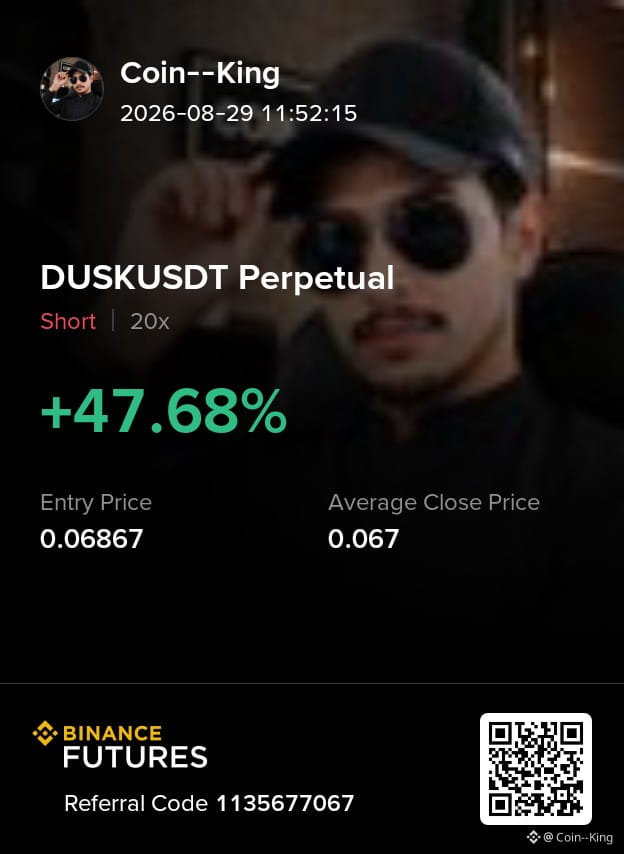
This $DUSK short was all about patience and clean execution. The entry came around 0.06867, with the setup favoring a downside move instead of chasing the market. The position was taken with 20x leverage, but the key was managing the trade rather than relying on leverage alone. Price moved lower, the position was closed around 0.067, and the trade locked in a strong +47.68% return. No overtrading, just a clear setup, proper execution, and disciplined profit-taking.
#dusk #cryptotrading #BinanceFutures #cryptouniverseofficial #trading
#dusk #cryptotrading #BinanceFutures #cryptouniverseofficial #trading
My friend after giving someone a trading signal: “Trust me bro.” 💀📉
$BTC $ETH $BNB
#WarshSaysInflationIsFedTopFocus #USShortTermTreasuryYieldsJump #SOLJumps20%OnTheWeek
$BTC $ETH $BNB
#WarshSaysInflationIsFedTopFocus #USShortTermTreasuryYieldsJump #SOLJumps20%OnTheWeek
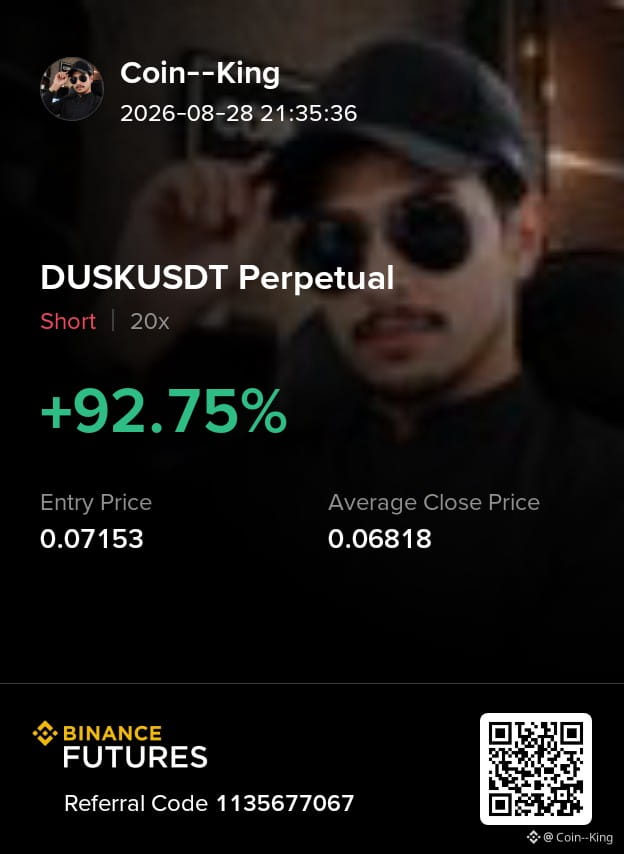
Booked the $DUSK short. +92.75% on 20x.
Caught the bounce near 0.07153 after that mid-August spike toward 0.088 faded. Sellers kept defending the local high and volume dried on every push up. That was enough. Took the short and scaled out around 0.06818. Didn’t hunt a bottom. Just took the meat of the move and locked it.
Dusk is still building real rails — regulated RWAs, privacy with compliance, DuskEVM opening up for builders, NPEX on the traditional-finance side. I like the story long term. Tonight it was just a tape trade. Project narrative and 15-minute candles are two different games.
Leverage cuts both ways. Size small, plan the exit before you click, and never marry a coin because the thesis sounds clean.
Not financial advice. Do your own work. Markets don’t owe anyone a win.
$BTC #BİNANCEFUTURES $HEMI
Caught the bounce near 0.07153 after that mid-August spike toward 0.088 faded. Sellers kept defending the local high and volume dried on every push up. That was enough. Took the short and scaled out around 0.06818. Didn’t hunt a bottom. Just took the meat of the move and locked it.
Dusk is still building real rails — regulated RWAs, privacy with compliance, DuskEVM opening up for builders, NPEX on the traditional-finance side. I like the story long term. Tonight it was just a tape trade. Project narrative and 15-minute candles are two different games.
Leverage cuts both ways. Size small, plan the exit before you click, and never marry a coin because the thesis sounds clean.
Not financial advice. Do your own work. Markets don’t owe anyone a win.
$BTC #BİNANCEFUTURES $HEMI
I’ve been watching Dusk’s dual rails for a while and the Moonlight versus Phoenix setup still feels under-discussed for what it actually lets you do.
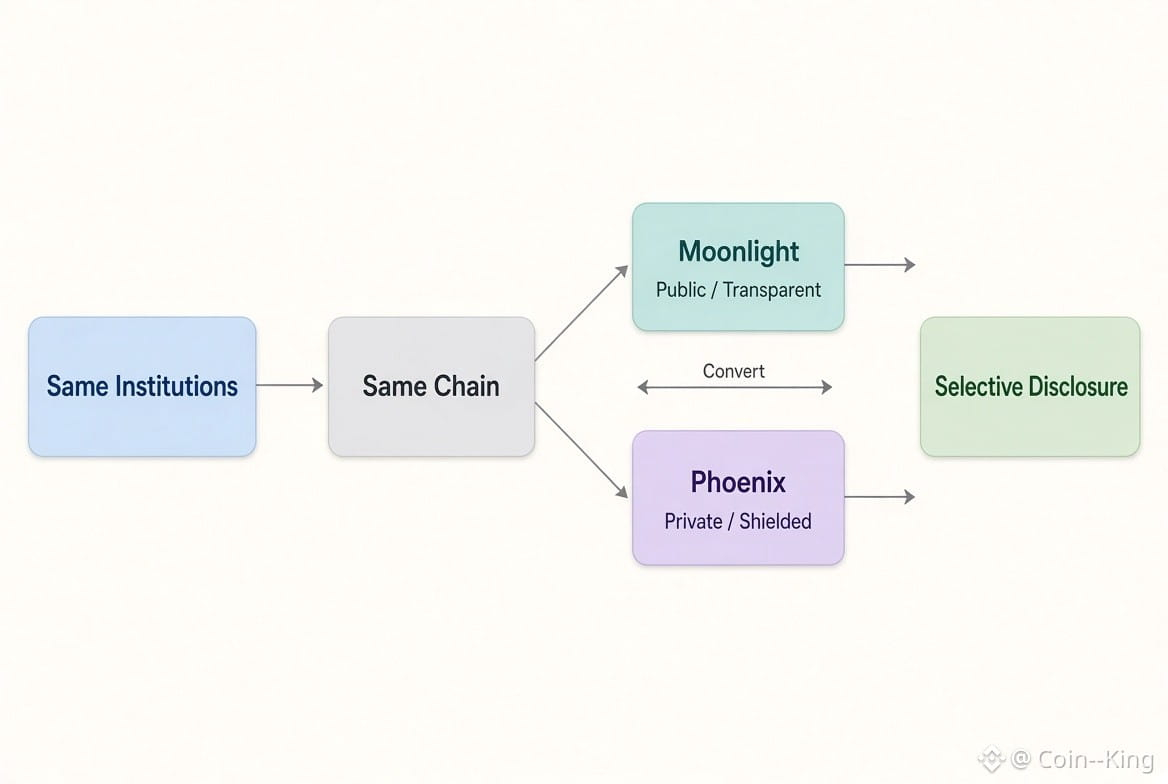
Most chains force a single posture. Either everything is public and institutions can plug in easily, or everything is private and compliance becomes a headache. Dusk runs both on the same settlement layer. Moonlight is just regular accounts with visible balances and transfers. Phoenix keeps funds as encrypted notes and proves the math with zero-knowledge without showing amounts or links to outsiders. You convert between them through the same transfer contract, so value never leaves the chain.
That means the network itself doesn’t have to pick a side. A treasury flow or exchange deposit can stay fully auditable on Moonlight. A position transfer or internal rebalance can sit in Phoenix and only surface details through viewing keys when an auditor or regulator actually needs them. The institutions and the legal wrappers stay the same. Only the visibility of the transaction changes.
I’ve noticed most current activity still leans Moonlight, which makes sense while bridges and exchanges are the main on-ramps. Privacy costs more in attention and sometimes in speed, so people default to the transparent path unless they have a real reason not to. That usage pattern is the real test of whether the dual model holds up over time.
Does the ability to switch posture like this actually lower the barrier for regulated players, or does it just create two parallel liquidity pools that rarely talk to each other?
#dusk $DUSK @Dusk
Most chains force a single posture. Either everything is public and institutions can plug in easily, or everything is private and compliance becomes a headache. Dusk runs both on the same settlement layer. Moonlight is just regular accounts with visible balances and transfers. Phoenix keeps funds as encrypted notes and proves the math with zero-knowledge without showing amounts or links to outsiders. You convert between them through the same transfer contract, so value never leaves the chain.
That means the network itself doesn’t have to pick a side. A treasury flow or exchange deposit can stay fully auditable on Moonlight. A position transfer or internal rebalance can sit in Phoenix and only surface details through viewing keys when an auditor or regulator actually needs them. The institutions and the legal wrappers stay the same. Only the visibility of the transaction changes.
I’ve noticed most current activity still leans Moonlight, which makes sense while bridges and exchanges are the main on-ramps. Privacy costs more in attention and sometimes in speed, so people default to the transparent path unless they have a real reason not to. That usage pattern is the real test of whether the dual model holds up over time.
Does the ability to switch posture like this actually lower the barrier for regulated players, or does it just create two parallel liquidity pools that rarely talk to each other?
#dusk $DUSK @Dusk
·
--
🎙️ DUSK Live: Trading the Next Privacy Wave
Завершено
02 ч 11 мин 23 сек
521
1
I’ve been following Dusk’s setup for months and the way they split transactions still feels like the most practical part of the design.
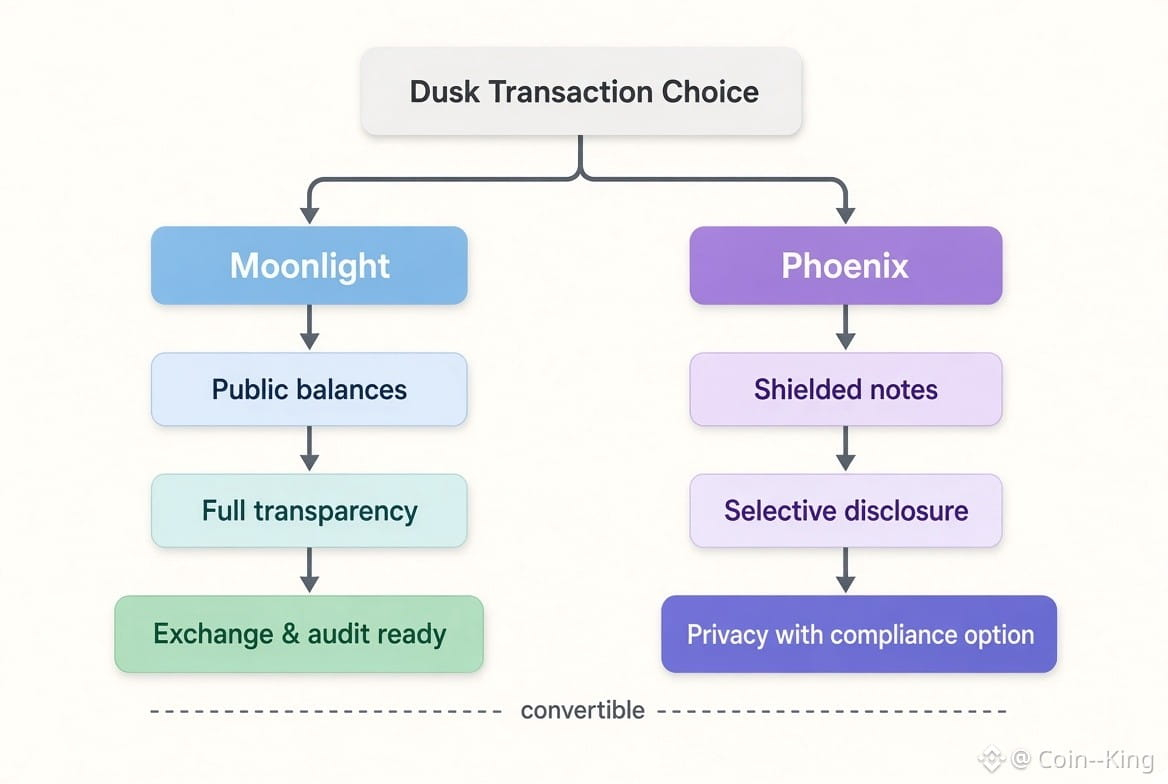
Moonlight works like a normal bank ledger everyone can see. Balances, who sent what, and the amounts sit in the open. That posture lines up with what exchanges and compliance teams need right now. Easy to monitor, easy to report, fewer arguments with regulators who want full visibility. It’s the path of least resistance for getting listed and keeping the rails open.
Phoenix takes the opposite stance. Funds move as shielded notes. The chain still checks that everything adds up correctly, but outsiders can’t see the size of the transfer or easily link the parties. Selective disclosure exists if an auditor or counterparty needs proof, yet the default is privacy. That posture is closer to how real institutions already handle sensitive positions offline.
Having both on the same settlement layer, with a clean conversion between them, matters more than most people talk about. It creates a real choice for users and apps. But it also creates friction. Privacy often costs more in computation and feels slower, so liquidity and daily activity might naturally drift toward the transparent side unless the incentives push otherwise.
I’m still wondering which posture institutions will actually lean on once bigger regulated volume arrives. Will operational ease win, or will competitive privacy hold its ground?
#dusk $DUSK @Dusk
Moonlight works like a normal bank ledger everyone can see. Balances, who sent what, and the amounts sit in the open. That posture lines up with what exchanges and compliance teams need right now. Easy to monitor, easy to report, fewer arguments with regulators who want full visibility. It’s the path of least resistance for getting listed and keeping the rails open.
Phoenix takes the opposite stance. Funds move as shielded notes. The chain still checks that everything adds up correctly, but outsiders can’t see the size of the transfer or easily link the parties. Selective disclosure exists if an auditor or counterparty needs proof, yet the default is privacy. That posture is closer to how real institutions already handle sensitive positions offline.
Having both on the same settlement layer, with a clean conversion between them, matters more than most people talk about. It creates a real choice for users and apps. But it also creates friction. Privacy often costs more in computation and feels slower, so liquidity and daily activity might naturally drift toward the transparent side unless the incentives push otherwise.
I’m still wondering which posture institutions will actually lean on once bigger regulated volume arrives. Will operational ease win, or will competitive privacy hold its ground?
#dusk $DUSK @Dusk
Войдите, чтобы посмотреть больше материала