
KING BRO 1
22k Публикации

KING BRO 1
 Square Verified+
Content Creator 😎 Future Trade 📊 Market Analyst 📈 Technical Analysis 🔍 On-Chain Insights
Открытая сделка
Трейдер с частыми сделками
11.2 мес.
115 подписок(и/а)
48.1K+ подписчиков(а)
49.9K+ понравилось
Посты
Портфель
Все
Цитирования
Активно
PINNED
🎁 3000 Gifts are LIVE.🎉🎁
The Square Family is on fire and the red pockets are flying.💯🎊🎁
FOLLOW LIKE COMMENT PLZ 🎉 🎉 🎉 👏
SHARE REPOST 🎉🎉🎉🎉👈
BIG CLAME REWARD 🎁 🎁 👈 ✅
GOOD NIGHT ALL FRIENDS 😘 💤 💤 💤 💤
#TSMCJulyRevenueJumps45% #USRedirects55VesselsUnderHormuzBlockade #SouthKoreaLawmakerToDelayCryptoTaxTo2030 #KoreanChipStocksFallAsFundsRotateOut #NYSEDevelopingTokenizedSecuritiesPaymentPlatform
$SOL
$MAGMA
$龙虾
The Square Family is on fire and the red pockets are flying.💯🎊🎁
FOLLOW LIKE COMMENT PLZ 🎉 🎉 🎉 👏
SHARE REPOST 🎉🎉🎉🎉👈
BIG CLAME REWARD 🎁 🎁 👈 ✅
GOOD NIGHT ALL FRIENDS 😘 💤 💤 💤 💤
#TSMCJulyRevenueJumps45% #USRedirects55VesselsUnderHormuzBlockade #SouthKoreaLawmakerToDelayCryptoTaxTo2030 #KoreanChipStocksFallAsFundsRotateOut #NYSEDevelopingTokenizedSecuritiesPaymentPlatform
$SOL
$MAGMA
$龙虾

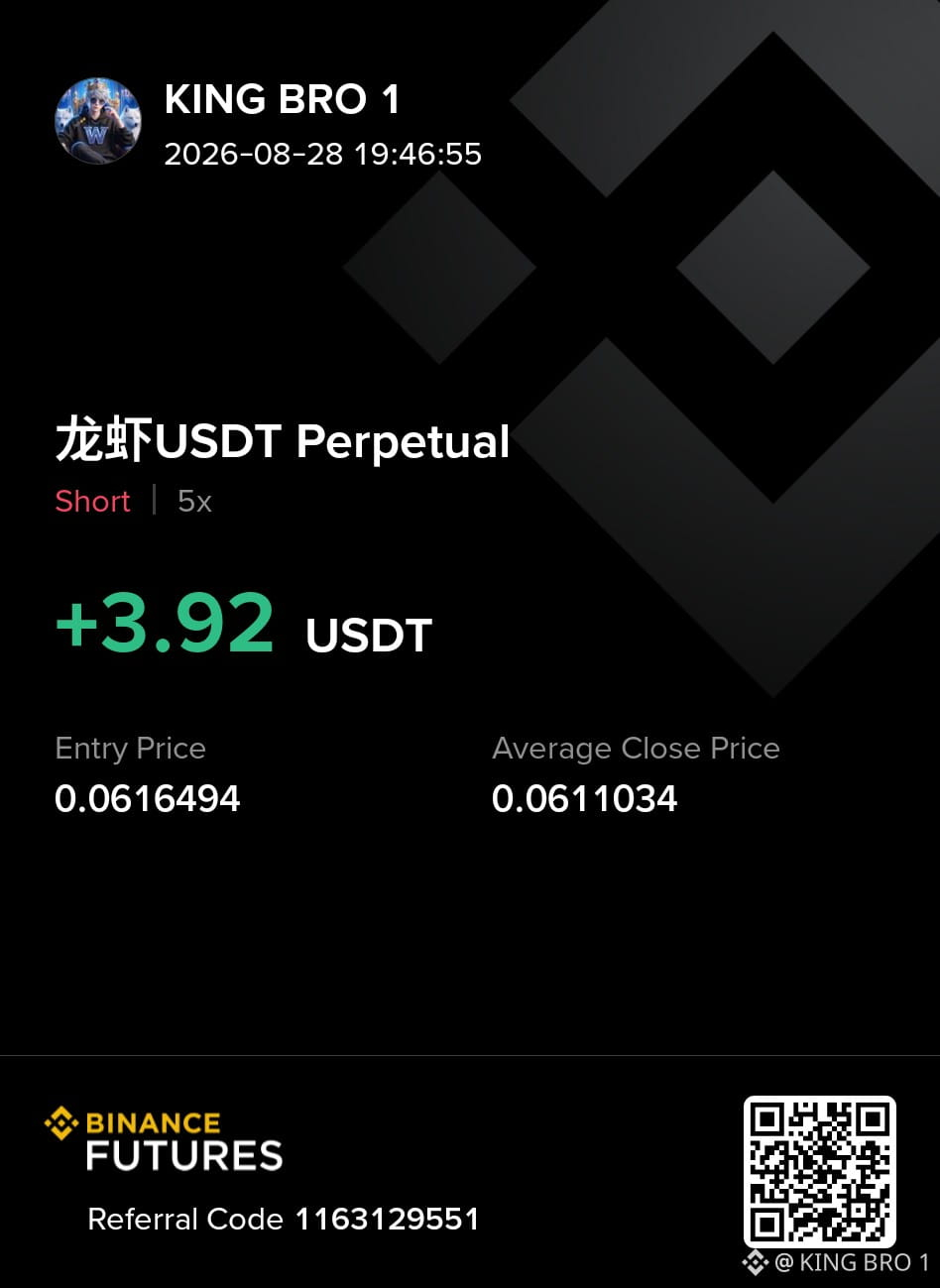
🚀 Market Top 3 Gainers — Futures
i’m keeping an eye on the strongest movers in the market right now, and these three are clearly standing out:
🥇 $龙虾 USDT Perp — +74.48%
Price: $0.062601 | ≈ Rs17.37
🥈 $AKE USDT Perp — +54.41%
Price: $0.011448 | ≈ Rs3.17
🥉 $MAGMA USDT Perp — strong momentum
Price: around $0.52
LOBSTER is leading the move with the biggest percentage gain, while AKE is also showing strong momentum. MAGMA is continuing to attract attention after a significant price increase.
What i find interesting is how quickly these moves can develop when momentum and trading activity increase. At the same time, sharp rallies can also bring much higher volatility and sudden reversals.
i’m watching price action, volume and momentum closely rather than chasing green candles. The market is moving fast, and discipline matters more than FOMO.
📊 Momentum is strong.
⚠️ Volatility is also high.
👀 i’m watching the next move carefully.
#Crypto #Futures #MarketUpdate #Write2Earn
#kingbro1
i’m keeping an eye on the strongest movers in the market right now, and these three are clearly standing out:
🥇 $龙虾 USDT Perp — +74.48%
Price: $0.062601 | ≈ Rs17.37
🥈 $AKE USDT Perp — +54.41%
Price: $0.011448 | ≈ Rs3.17
🥉 $MAGMA USDT Perp — strong momentum
Price: around $0.52
LOBSTER is leading the move with the biggest percentage gain, while AKE is also showing strong momentum. MAGMA is continuing to attract attention after a significant price increase.
What i find interesting is how quickly these moves can develop when momentum and trading activity increase. At the same time, sharp rallies can also bring much higher volatility and sudden reversals.
i’m watching price action, volume and momentum closely rather than chasing green candles. The market is moving fast, and discipline matters more than FOMO.
📊 Momentum is strong.
⚠️ Volatility is also high.
👀 i’m watching the next move carefully.
#Crypto #Futures #MarketUpdate #Write2Earn
#kingbro1
🚀Strong moves, stay!!
📊Volume looks strong!
🔥Patience beats FOMO!
👀Momentum needs care.
21 ч. осталось
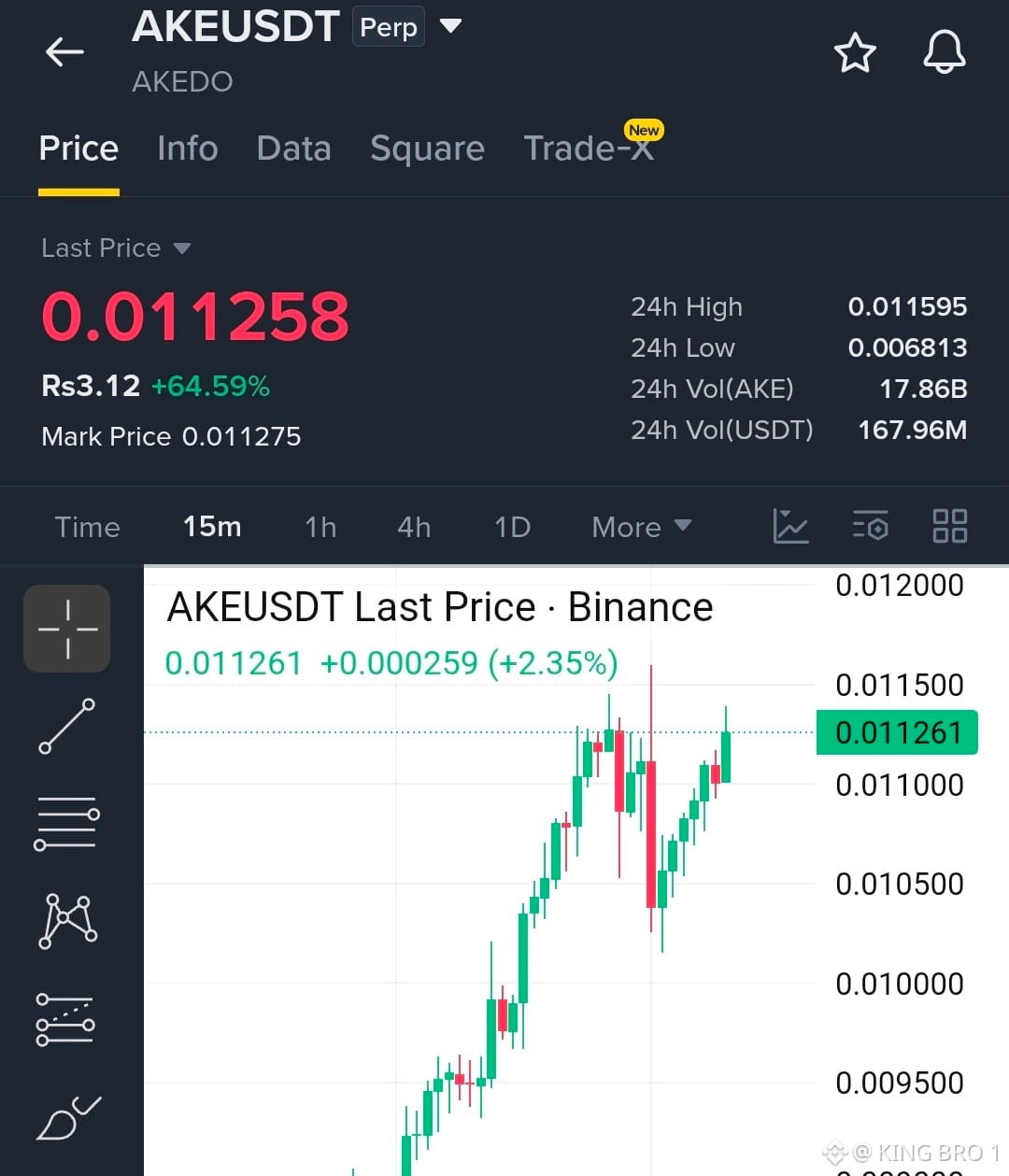
👑 $AKE bullish momentum as price holds above key support.
Trading Plan LONG: $AKE
Entry: 0.01100–0.01120
Stop-Loss: 0.01050
TP1: 0.01160
TP2: 0.01200
TP3: 0.01250
$AKE is showing strong buying pressure after a sharp move, with resistance near 0.01160. Holding the entry zone keeps the bullish structure intact; a breakout could target higher liquidity.
Click and Trade $AKE here 👇
Trading Plan LONG: $AKE
Entry: 0.01100–0.01120
Stop-Loss: 0.01050
TP1: 0.01160
TP2: 0.01200
TP3: 0.01250
$AKE is showing strong buying pressure after a sharp move, with resistance near 0.01160. Holding the entry zone keeps the bullish structure intact; a breakout could target higher liquidity.
Click and Trade $AKE here 👇
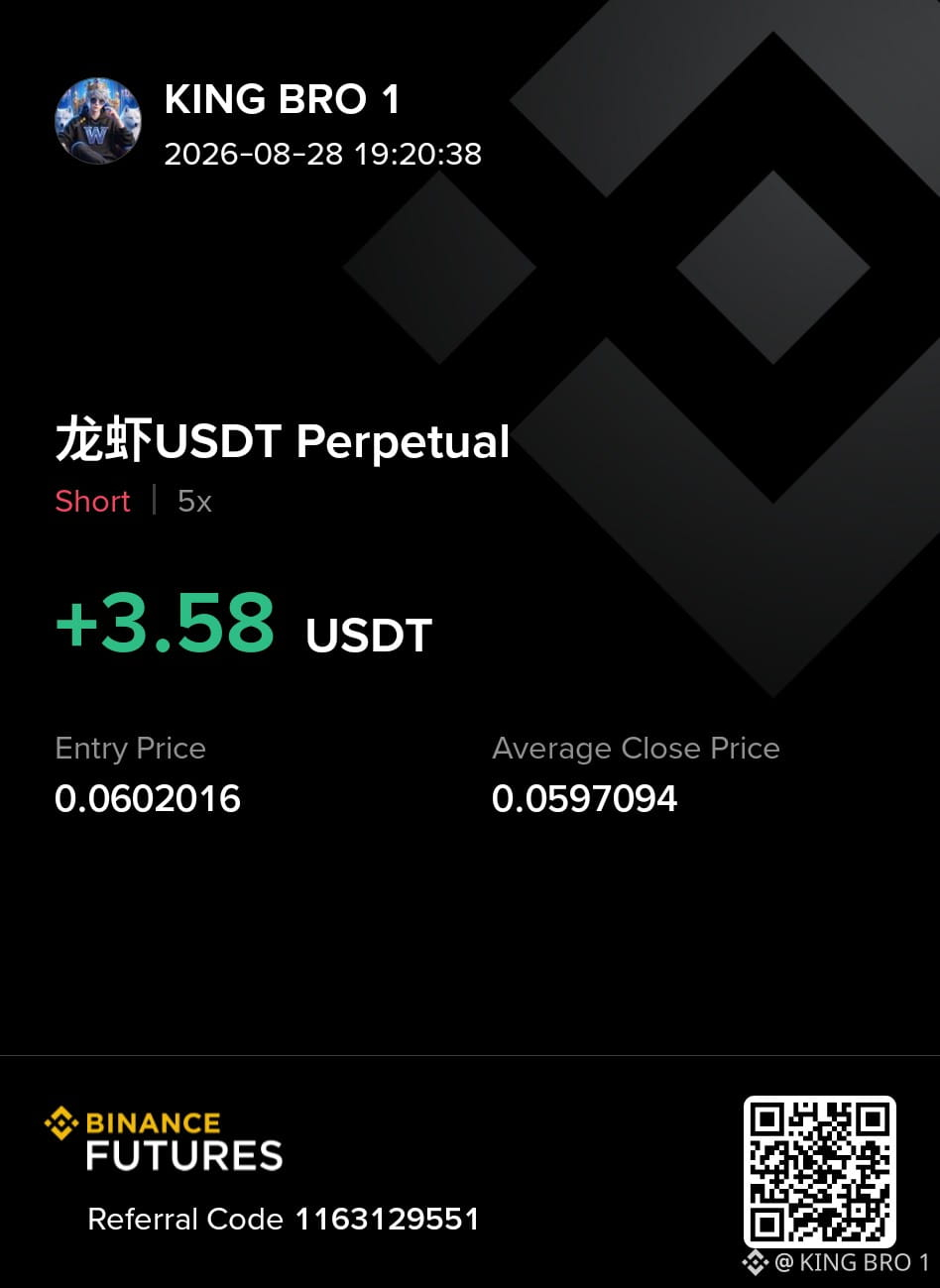
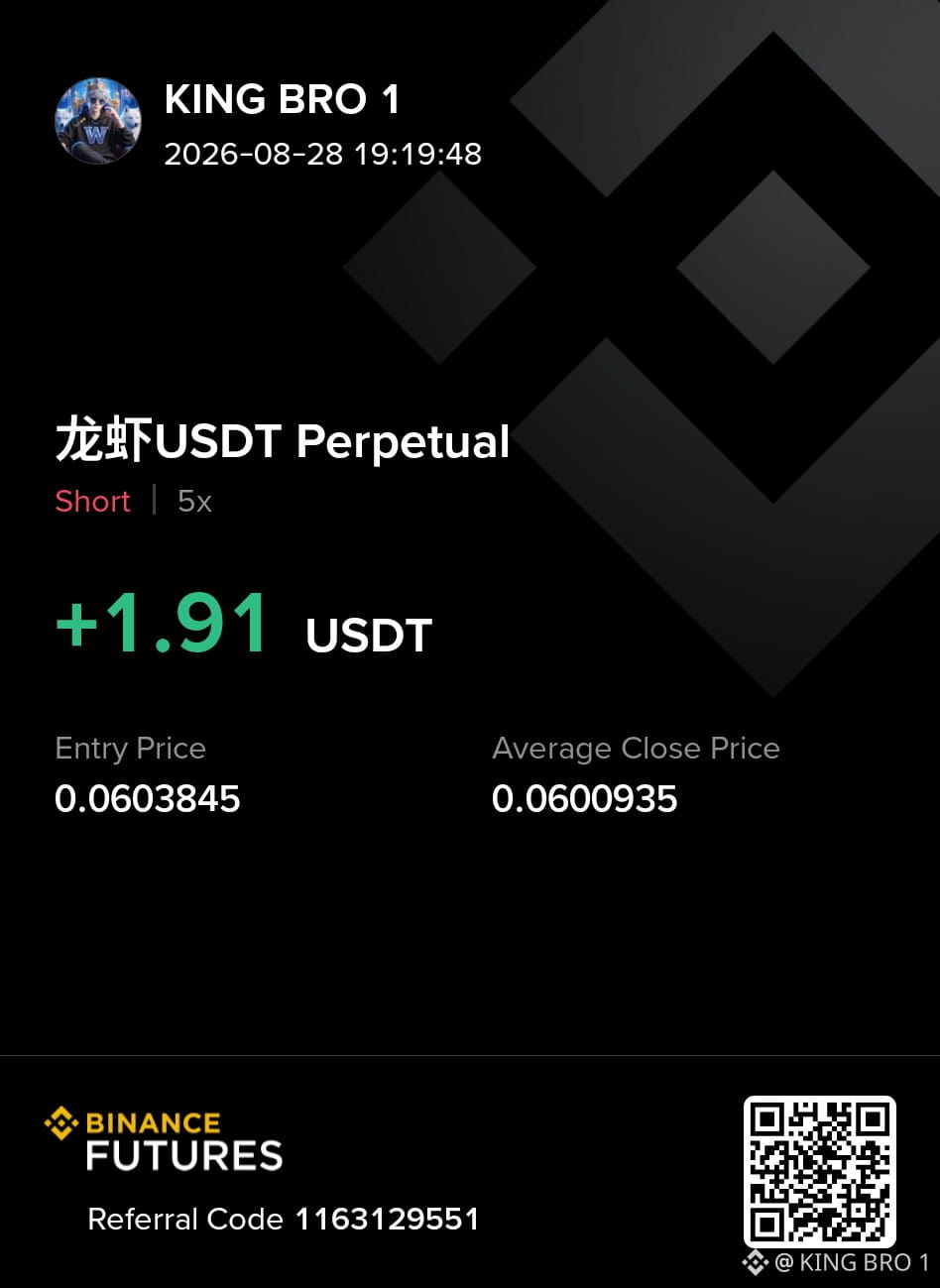
😮💨 i took this $龙虾 short trade step by step!
🔻 EP: 0.060201
🎯 TP: 0.059709
⚡ Leverage 5x
💰 Profit: +3.58 USDT
💰 Profit :+1.92 USDT
Clean entry, patience, and a little timing 😞🔥
i’ll take the small wins and keep moving.
#FutureTarding #Binance #CryptoTrader #Write2Earn
#kingbro1
🔻 EP: 0.060201
🎯 TP: 0.059709
⚡ Leverage 5x
💰 Profit: +3.58 USDT
💰 Profit :+1.92 USDT
Clean entry, patience, and a little timing 😞🔥
i’ll take the small wins and keep moving.
#FutureTarding #Binance #CryptoTrader #Write2Earn
#kingbro1
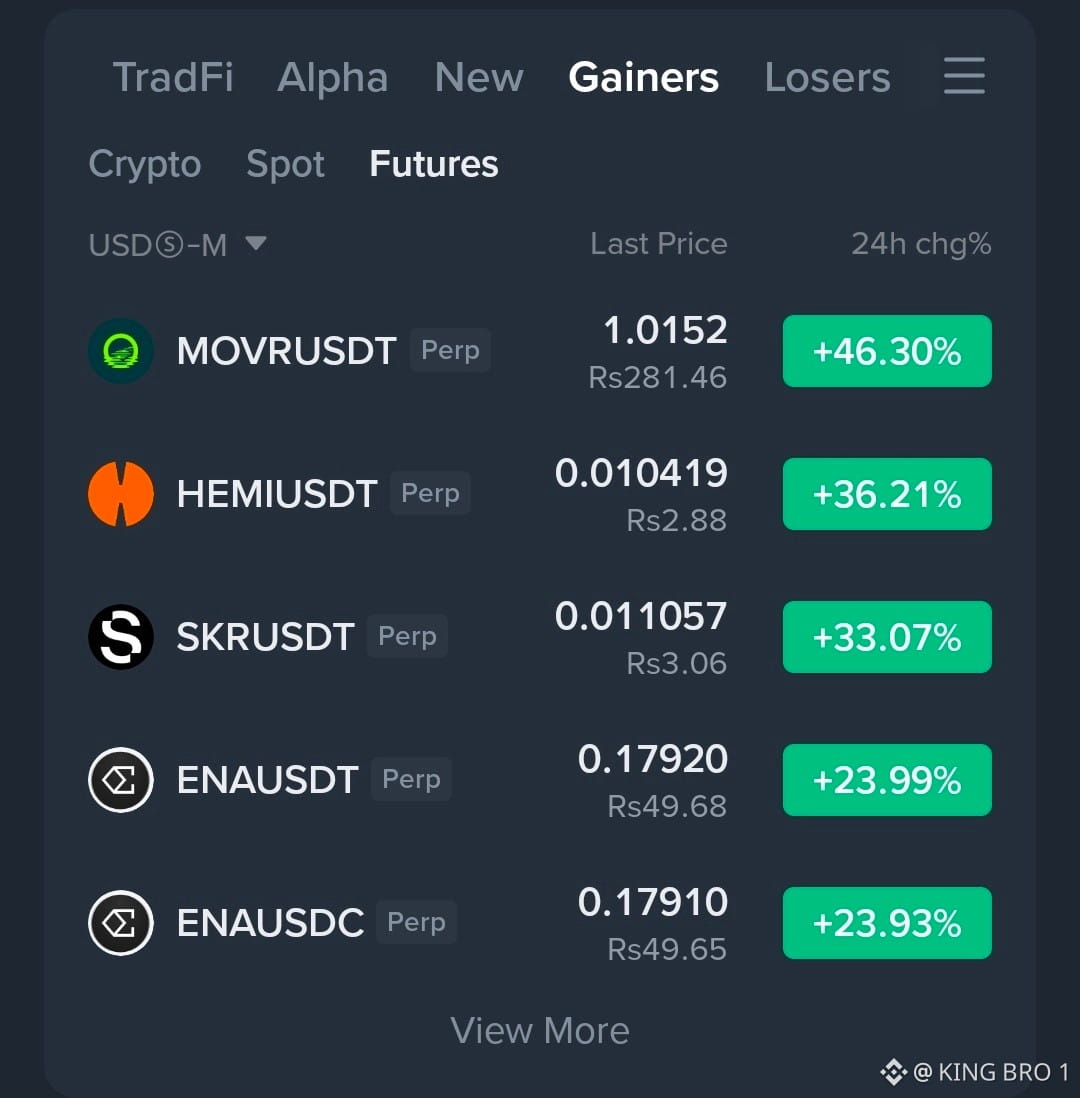
🆕🆕 BREAKING NEWS
The SEC just sent a new crypto custody rule to the White House — and this could be a major shift.
The proposal is marked as deregulation, moving away from the stricter custody approach under Gensler.
If it takes effect, banks, funds, and investment advisers could have a clearer path to legally custody assets like BTC and ETH for clients.
The new rule is expected in October under Atkins.
That could make it easier for firms like BlackRock and Fidelity to offer crypto custody using systems such as multisig and MPC.
The bigger question is simple:
Would you trust a bank to hold your Bitcoin, or would you still choose self-custody?
This could bring massive institutional money into crypto.
Bullish or bearish?
$BTC
#secsendscryptocustodyruletowhitehouse
#BREAKING #news #CryptoNews #BTC
The SEC just sent a new crypto custody rule to the White House — and this could be a major shift.
The proposal is marked as deregulation, moving away from the stricter custody approach under Gensler.
If it takes effect, banks, funds, and investment advisers could have a clearer path to legally custody assets like BTC and ETH for clients.
The new rule is expected in October under Atkins.
That could make it easier for firms like BlackRock and Fidelity to offer crypto custody using systems such as multisig and MPC.
The bigger question is simple:
Would you trust a bank to hold your Bitcoin, or would you still choose self-custody?
This could bring massive institutional money into crypto.
Bullish or bearish?
$BTC
#secsendscryptocustodyruletowhitehouse
#BREAKING #news #CryptoNews #BTC
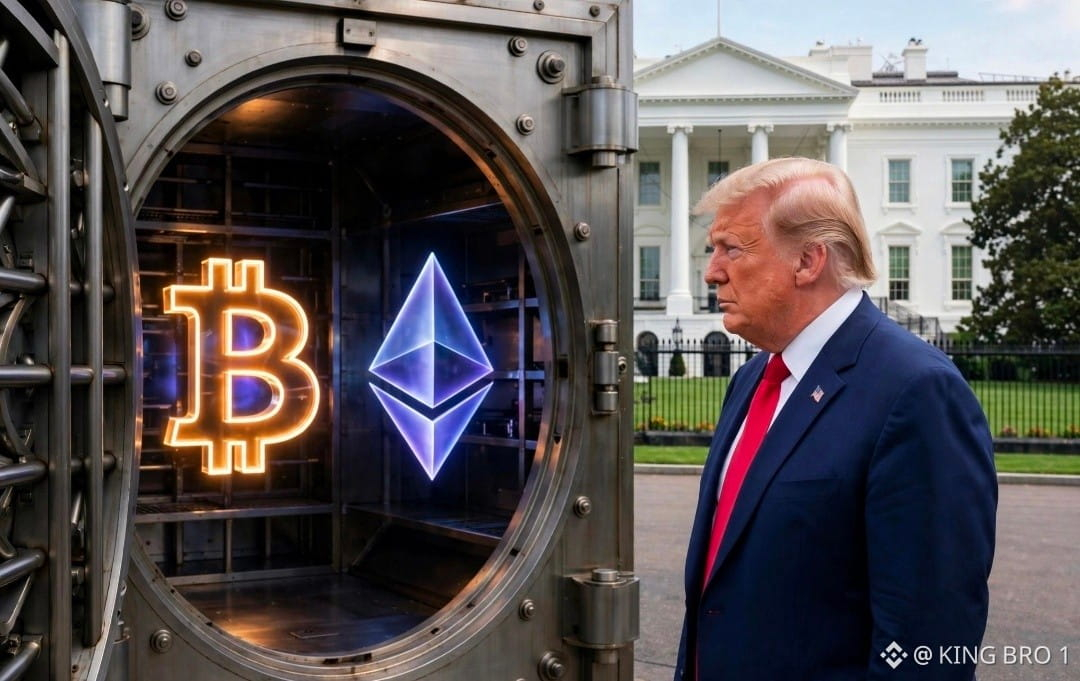
👑 $BTR Bearish pressure building near resistance.
Trading Plan SHORT: $BTR
Entry: 0.128–0.132
Stop-Loss: 0.137
TP1: 0.123
TP2: 0.120
TP3: 0.115
Price is struggling below resistance after a sharp rally. Sellers may defend the 0.128–0.132 zone, while losing 0.120 could open downside liquidity. Wait for rejection before entry.
Click and Trade $BTR here 👇
Trading Plan SHORT: $BTR
Entry: 0.128–0.132
Stop-Loss: 0.137
TP1: 0.123
TP2: 0.120
TP3: 0.115
Price is struggling below resistance after a sharp rally. Sellers may defend the 0.128–0.132 zone, while losing 0.120 could open downside liquidity. Wait for rejection before entry.
Click and Trade $BTR here 👇
Проверено
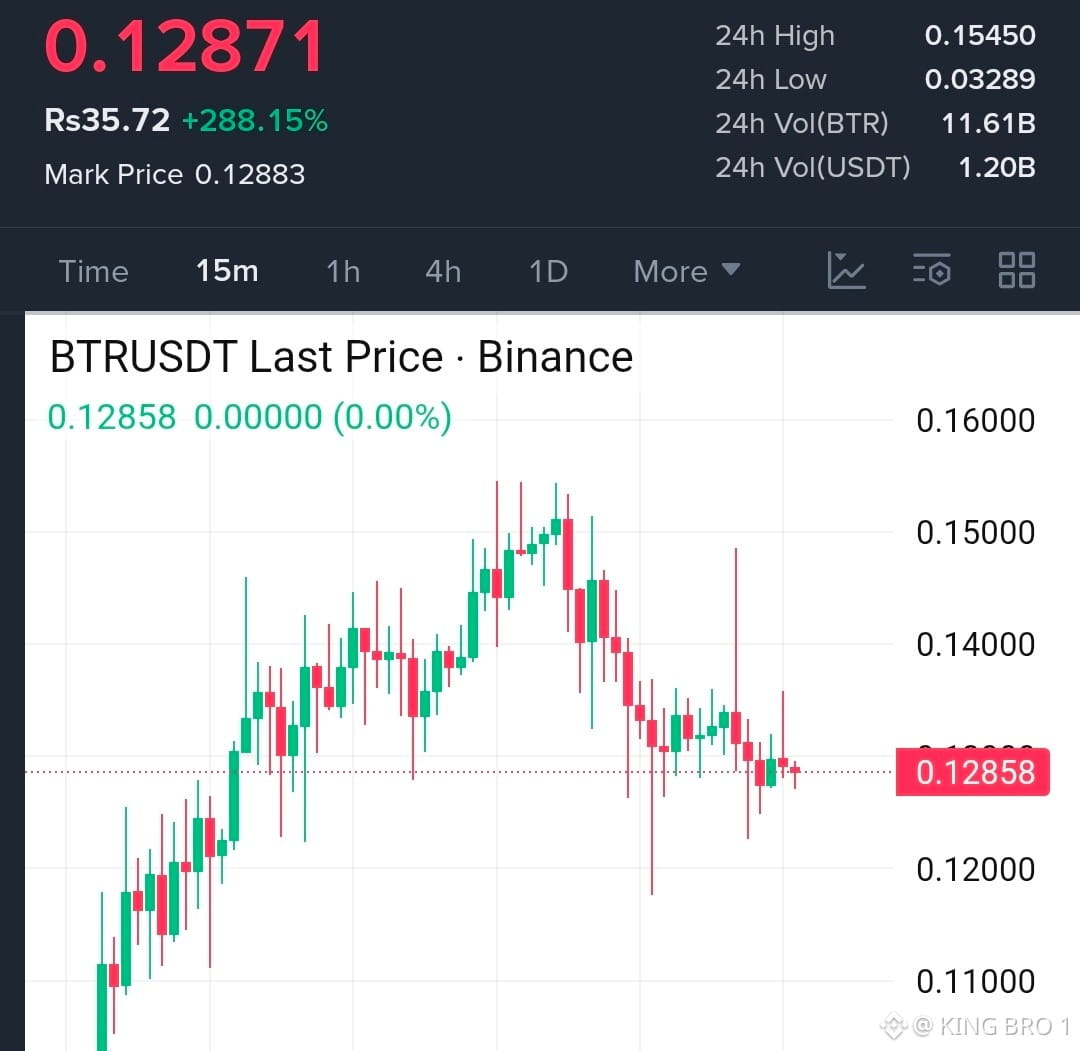
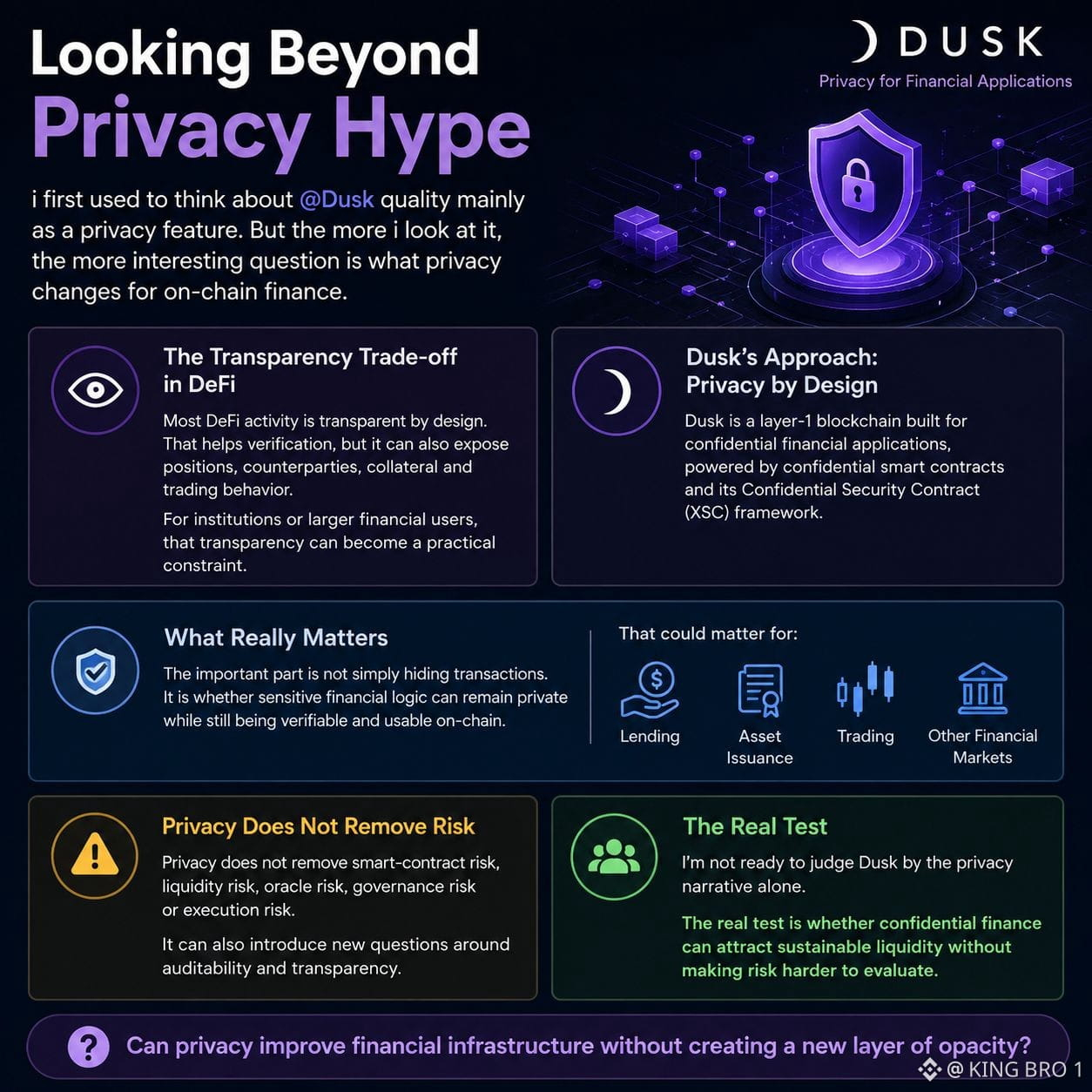
i first used to think about @Dusk quality mainly as a privacy feature. But the more i look at it, the more interesting question is what privacy changes for on-chain finance.
Most DeFi activity is transparent by design. That helps verification, but it can also expose positions, counterparties, collateral and trading behavior. For institutions or larger financial users, that transparency can become a practical constraint.
Dusk approaches this through a layer-1 designed for confidential financial applications, with confidential smart contracts and its Confidential Security Contract (XSC) framework.
The important part is not simply hiding transactions. It is whether sensitive financial logic can remain private while still being verifiable and usable on-chain.
That could matter for lending, asset issuance, trading and other financial markets where revealing every position is undesirable.
But privacy does not remove smart-contract risk, liquidity risk, oracle risk, governance risk or execution risk. It can also introduce new questions around auditability and transparency.
So i’m not ready to judge Dusk by the privacy narrative alone.
The real test is whether confidential finance can attract sustainable liquidity without making risk harder to evaluate.
Can privacy improve financial infrastructure without creating a new layer of opacity?
@Dusk #dusk $DUSK
Most DeFi activity is transparent by design. That helps verification, but it can also expose positions, counterparties, collateral and trading behavior. For institutions or larger financial users, that transparency can become a practical constraint.
Dusk approaches this through a layer-1 designed for confidential financial applications, with confidential smart contracts and its Confidential Security Contract (XSC) framework.
The important part is not simply hiding transactions. It is whether sensitive financial logic can remain private while still being verifiable and usable on-chain.
That could matter for lending, asset issuance, trading and other financial markets where revealing every position is undesirable.
But privacy does not remove smart-contract risk, liquidity risk, oracle risk, governance risk or execution risk. It can also introduce new questions around auditability and transparency.
So i’m not ready to judge Dusk by the privacy narrative alone.
The real test is whether confidential finance can attract sustainable liquidity without making risk harder to evaluate.
Can privacy improve financial infrastructure without creating a new layer of opacity?
@Dusk #dusk $DUSK
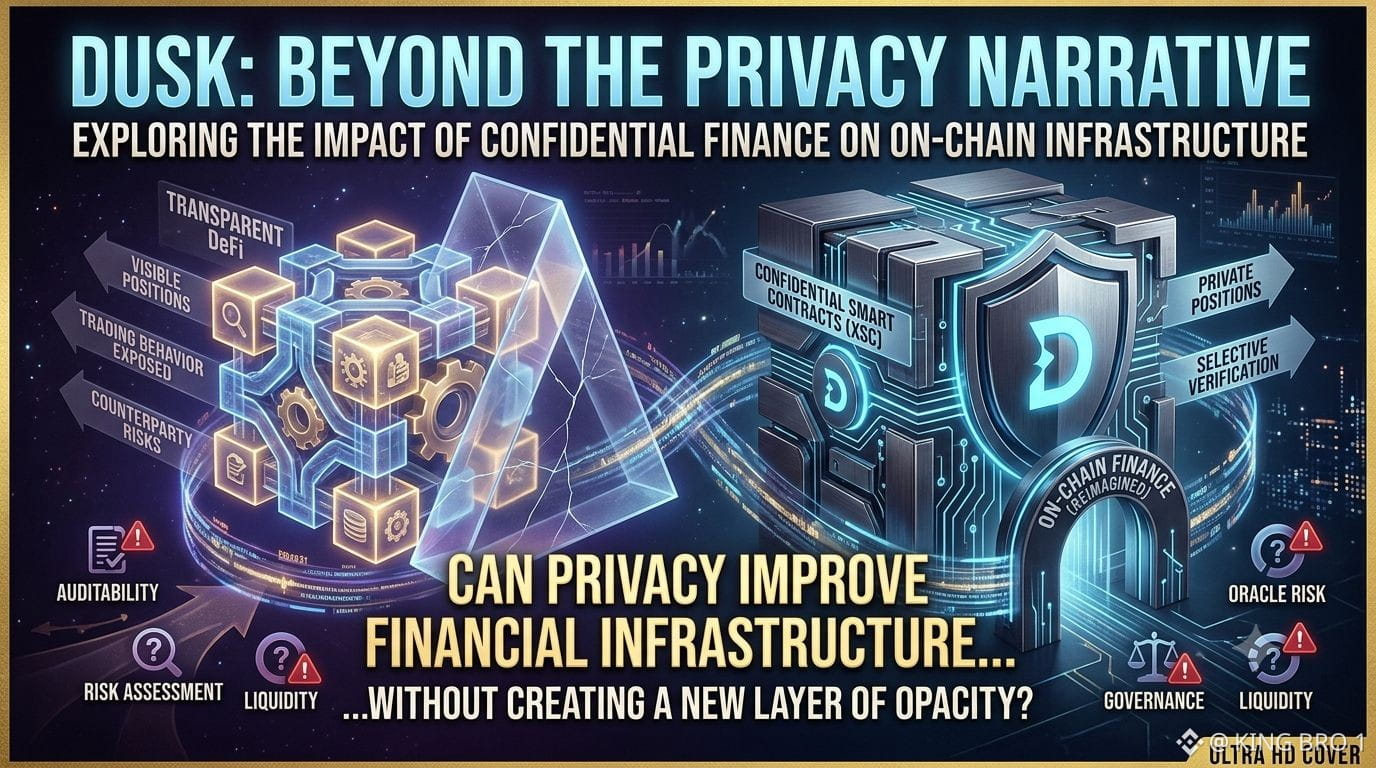
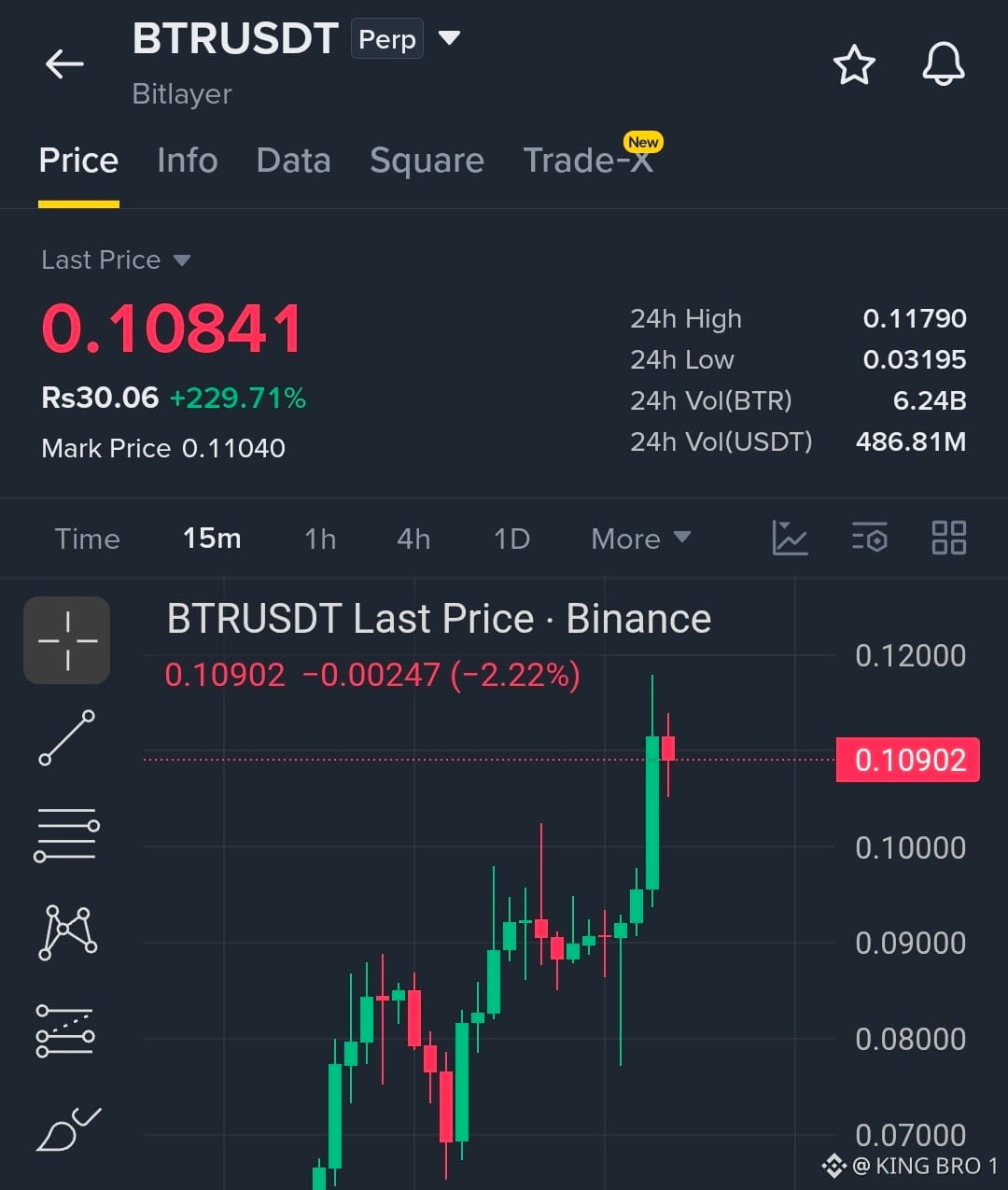
$BTR USDT SHORT SETUP 🚀
Price stretched hard — now watching for a clean rejection.
🔻 EP: 0.109–0.110
🎯 TP1: 0.107 ✅✅🚀
🎯 TP2: 0.101
🛑 SL: 0.114
Wait for confirmation — don’t chase the candle.
SI: High volatility ⚠️ Manage risk.
Price stretched hard — now watching for a clean rejection.
🔻 EP: 0.109–0.110
🎯 TP1: 0.107 ✅✅🚀
🎯 TP2: 0.101
🛑 SL: 0.114
Wait for confirmation — don’t chase the candle.
SI: High volatility ⚠️ Manage risk.
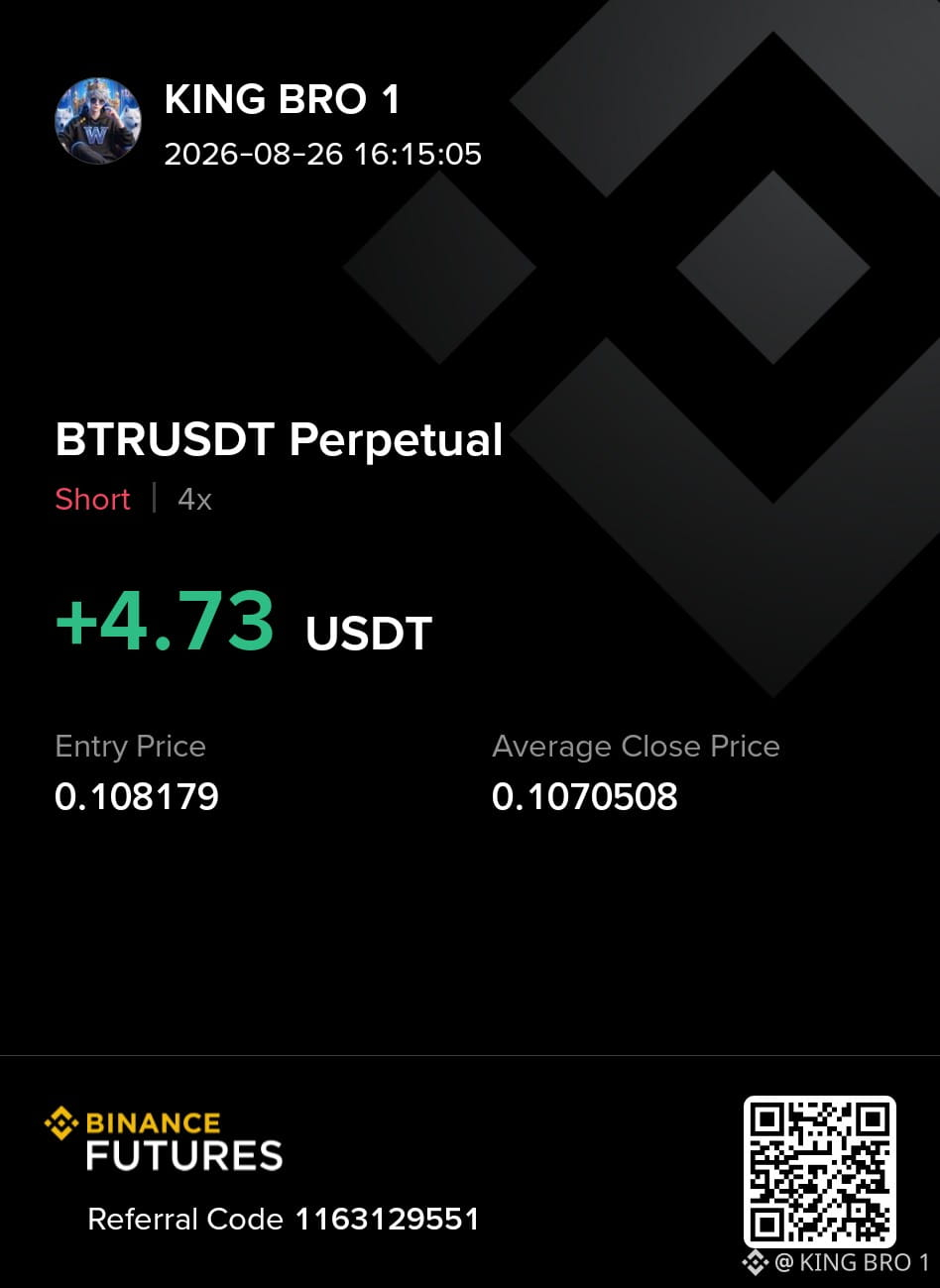
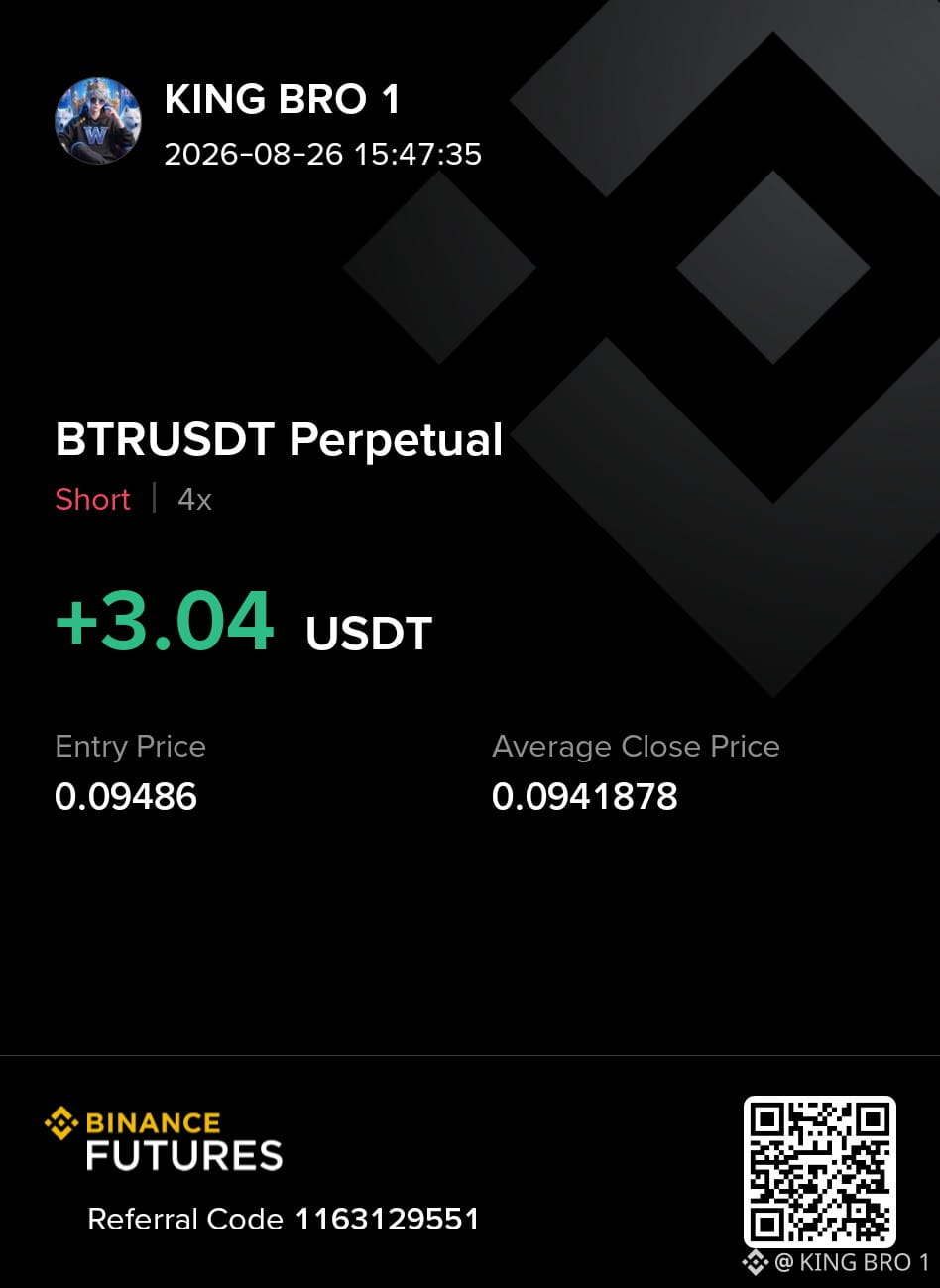
🚨 $BTR SHORT TRADE ALERT 🚨
📊 Leverage: 4X
🎯 EP: 0.09486
💰 TP: 0.09418
✅ Profit: +3.04 USDT
Clean short move captured! 🔥📉
Stay disciplined, manage risk, and trade the setup—not the emotions. 🚀
#BTR #BinanceFutures #FutureTarding #crypto
#kingbro1
📊 Leverage: 4X
🎯 EP: 0.09486
💰 TP: 0.09418
✅ Profit: +3.04 USDT
Clean short move captured! 🔥📉
Stay disciplined, manage risk, and trade the setup—not the emotions. 🚀
#BTR #BinanceFutures #FutureTarding #crypto
#kingbro1
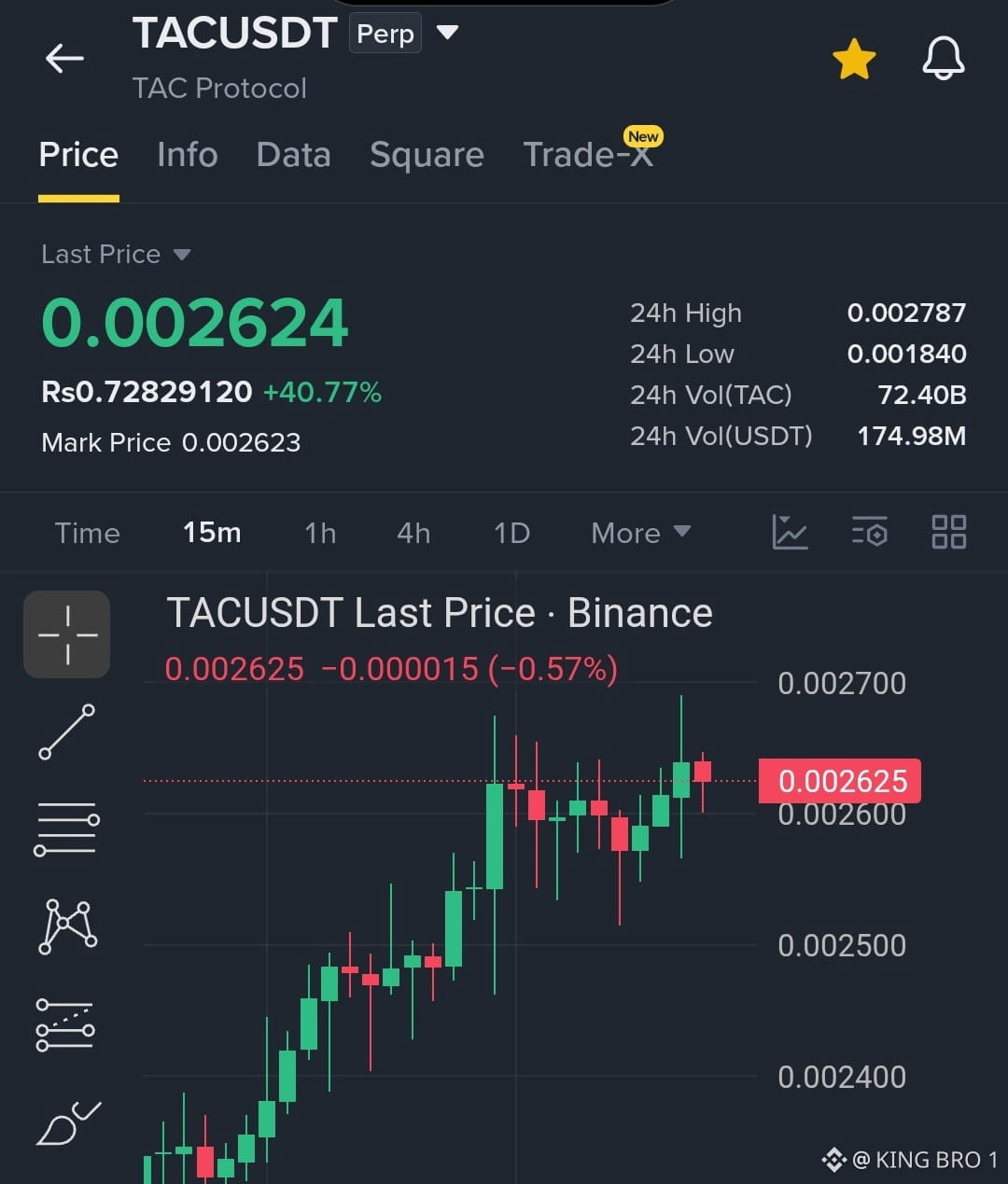
👑 $TAC bearish below resistance as price trades near $0.002624.
Trading Plan SHORT: TAC
Entry: $0.00262–$0.00270
Stop-Loss: $0.00280
TP1: $0.00250
TP2: $0.00240
TP3: $0.00220
$TAC is facing selling pressure after rejecting the $0.00270–$0.00280 liquidity zone. Buyers need to reclaim resistance to shift momentum bullish. A breakdown below $0.00260 could open the next support levels.
Click and Trade $TAC here 👇
Trading Plan SHORT: TAC
Entry: $0.00262–$0.00270
Stop-Loss: $0.00280
TP1: $0.00250
TP2: $0.00240
TP3: $0.00220
$TAC is facing selling pressure after rejecting the $0.00270–$0.00280 liquidity zone. Buyers need to reclaim resistance to shift momentum bullish. A breakdown below $0.00260 could open the next support levels.
Click and Trade $TAC here 👇
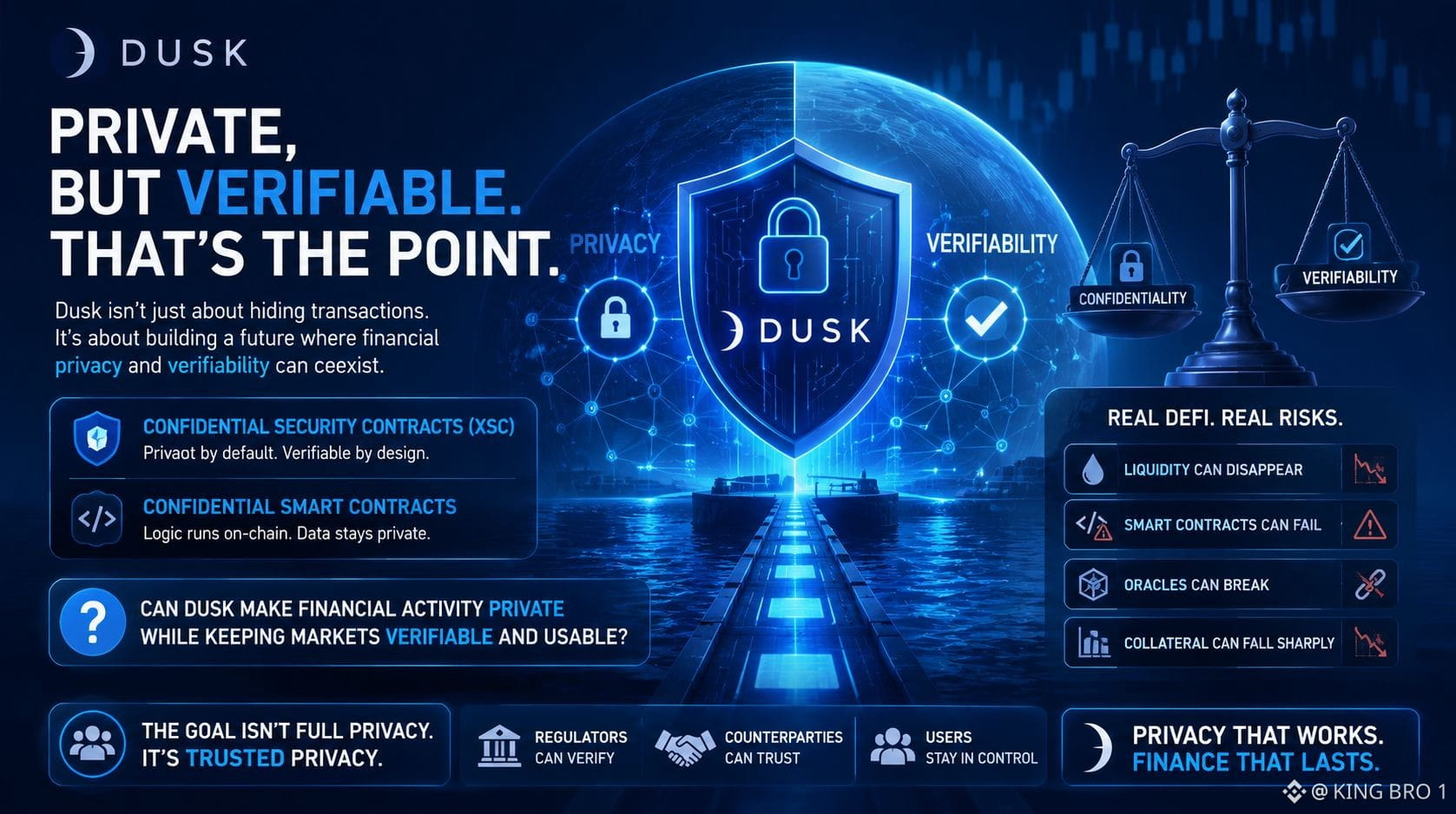
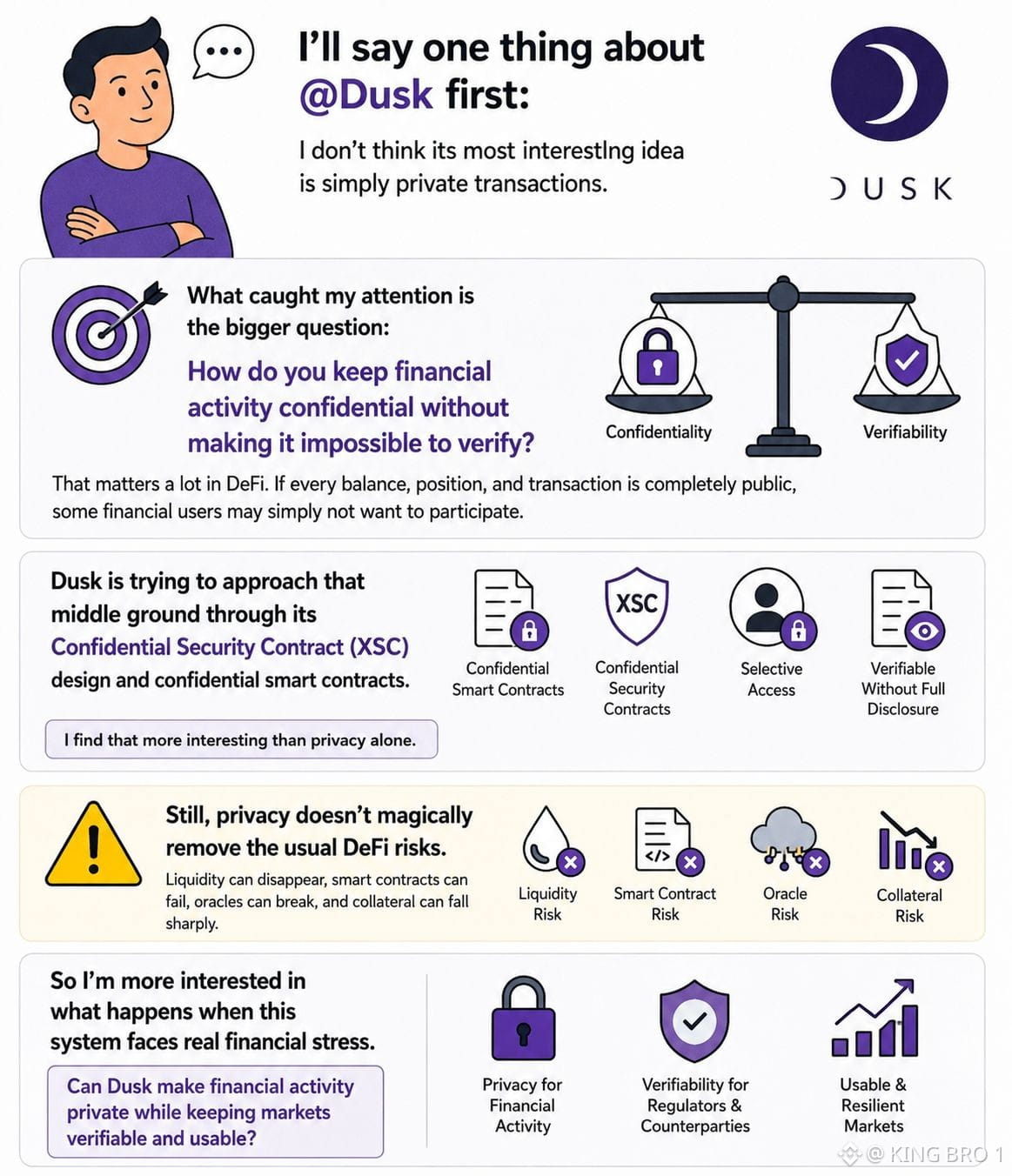
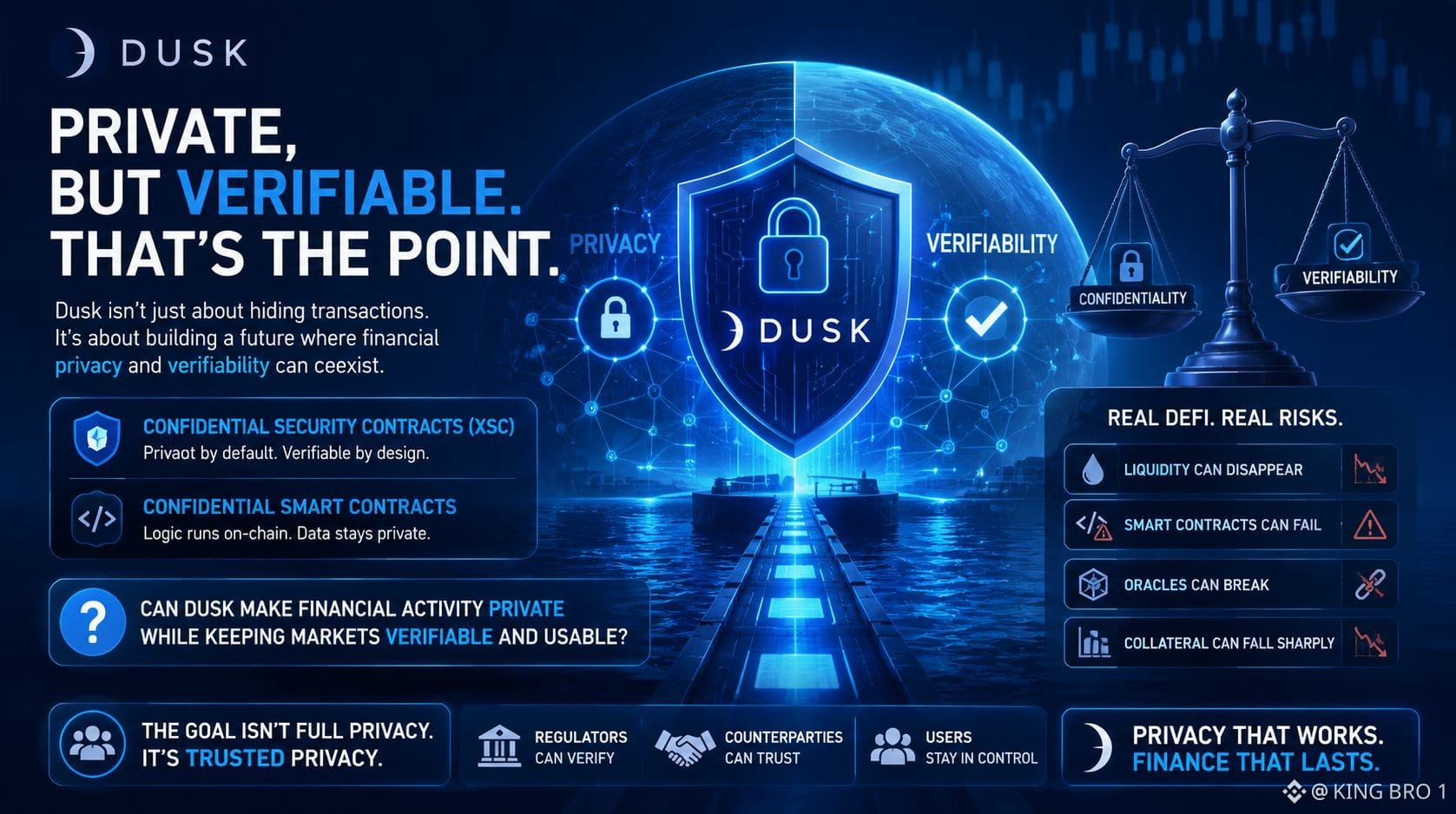
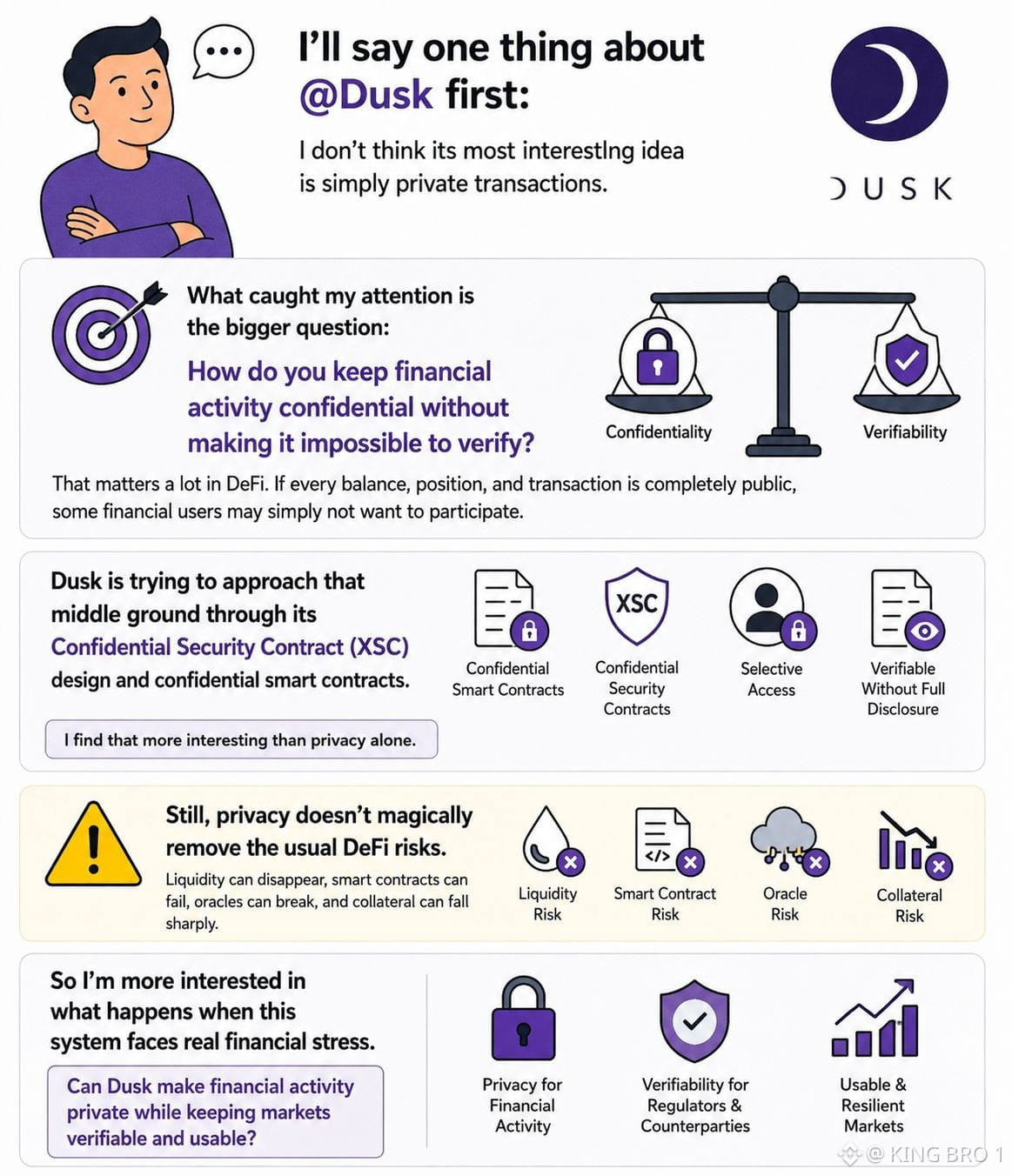
I’ll say one thing about @Dusk first:
I don’t think its most interesting idea is simply private transactions.
What caught my attention is the bigger question: how do you keep financial activity confidential without making it impossible to verify?
That matters a lot in DeFi. If every balance, position, and transaction is completely public, some financial users may simply not want to participate. But going fully private creates another problem: how do regulators, counterparties, or other authorized parties know that the activity is legitimate?
Dusk is trying to approach that middle ground through its Confidential Security Contract (XSC) design and confidential smart contracts.
I find that more interesting than privacy alone.
Still, privacy doesn’t magically remove the usual DeFi risks. Liquidity can disappear, smart contracts can fail, oracles can break, and collateral can fall sharply.
So I’m more interested in what happens when this system faces real financial stress.
Can Dusk make financial activity private while keeping markets verifiable and usable?
@Dusk #dusk $DUSK
I don’t think its most interesting idea is simply private transactions.
What caught my attention is the bigger question: how do you keep financial activity confidential without making it impossible to verify?
That matters a lot in DeFi. If every balance, position, and transaction is completely public, some financial users may simply not want to participate. But going fully private creates another problem: how do regulators, counterparties, or other authorized parties know that the activity is legitimate?
Dusk is trying to approach that middle ground through its Confidential Security Contract (XSC) design and confidential smart contracts.
I find that more interesting than privacy alone.
Still, privacy doesn’t magically remove the usual DeFi risks. Liquidity can disappear, smart contracts can fail, oracles can break, and collateral can fall sharply.
So I’m more interested in what happens when this system faces real financial stress.
Can Dusk make financial activity private while keeping markets verifiable and usable?
@Dusk #dusk $DUSK
Проверено
I’ll say one thing about @Dusk first:
I don’t think its most interesting idea is simply private transactions.
What caught my attention is the bigger question: how do you keep financial activity confidential without making it impossible to verify?
That matters a lot in DeFi. If every balance, position, and transaction is completely public, some financial users may simply not want to participate. But going fully private creates another problem: how do regulators, counterparties, or other authorized parties know that the activity is legitimate?
Dusk is trying to approach that middle ground through its Confidential Security Contract (XSC) design and confidential smart contracts.
I find that more interesting than privacy alone.
Still, privacy doesn’t magically remove the usual DeFi risks. Liquidity can disappear, smart contracts can fail, oracles can break, and collateral can fall sharply.
So I’m more interested in what happens when this system faces real financial stress.
Can Dusk make financial activity private while keeping markets verifiable and usable?
I don’t think its most interesting idea is simply private transactions.
What caught my attention is the bigger question: how do you keep financial activity confidential without making it impossible to verify?
That matters a lot in DeFi. If every balance, position, and transaction is completely public, some financial users may simply not want to participate. But going fully private creates another problem: how do regulators, counterparties, or other authorized parties know that the activity is legitimate?
Dusk is trying to approach that middle ground through its Confidential Security Contract (XSC) design and confidential smart contracts.
I find that more interesting than privacy alone.
Still, privacy doesn’t magically remove the usual DeFi risks. Liquidity can disappear, smart contracts can fail, oracles can break, and collateral can fall sharply.
So I’m more interested in what happens when this system faces real financial stress.
Can Dusk make financial activity private while keeping markets verifiable and usable?
hello guys like comment Plzz 👋👋👋
$PORTAL $GRASS $PROM
$PORTAL $GRASS $PROM

PRO TRADER 66
·
--
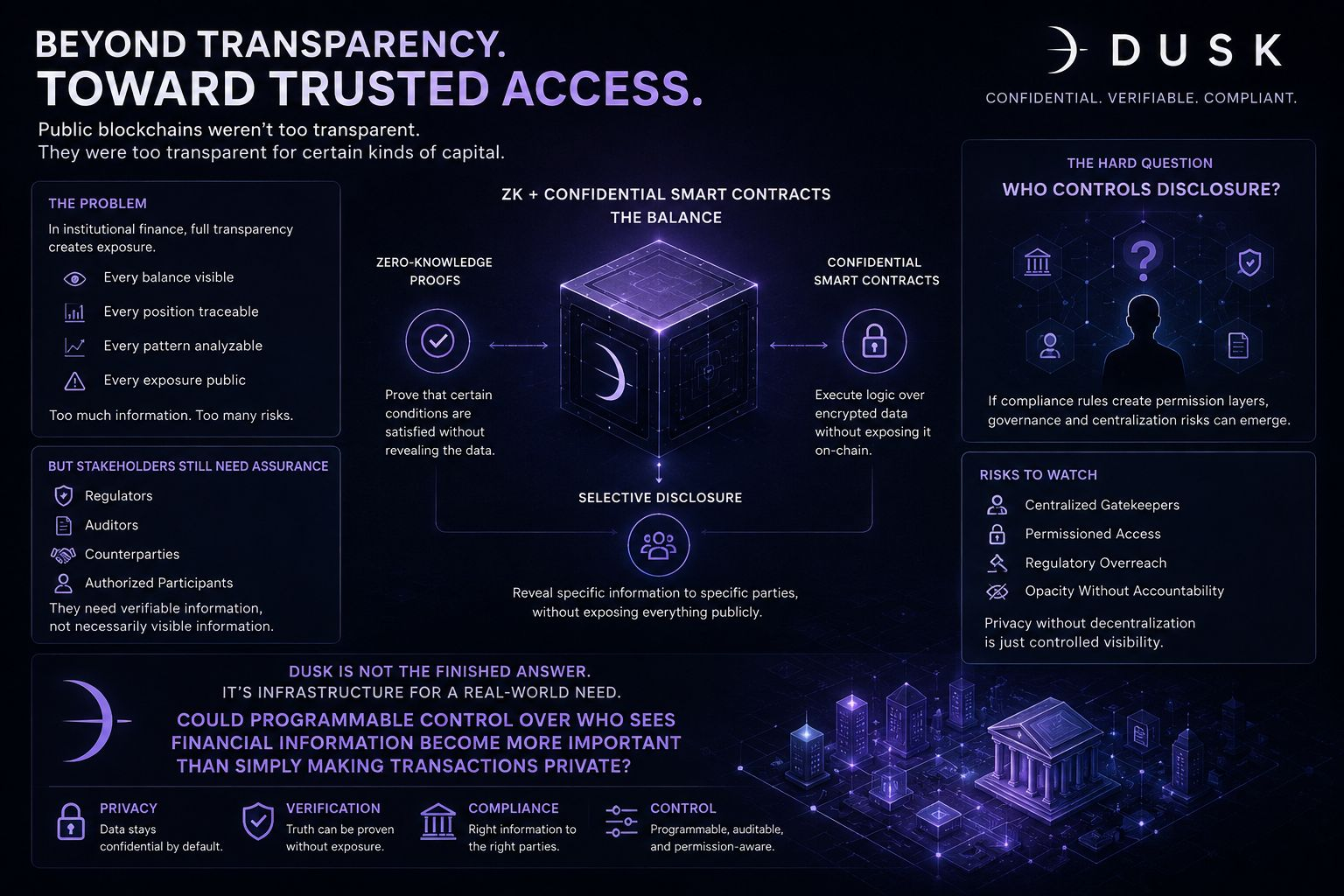
Падениеi've been thinking about @Dusk and a question that goes beyond private transactions.
Maybe public blockchains were never too transparent in general; perhaps they were simply too transparent for certain kinds of capital.
For institutional finance, making every balance, position, transaction pattern, and exposure visible can create problems. Yet regulators, auditors, counterparties, and authorized participants still need verifiable information.
That is where Dusk’s approach becomes interesting.
Privacy is not the same as confidentiality. Zero-knowledge proofs are not the same as access control. And selective disclosure means something different again: revealing specific information to specific parties without exposing everything publicly.
Confidential smart contracts and ZK proofs can potentially make that balance possible: prove that certain conditions are satisfied while limiting unnecessary exposure.
But the hard question remains: who controls disclosure?
If compliance rules create permission layers, governance and centralization risks can emerge.
I see Dusk less as a finished answer and more as an attempt to solve a real infrastructure problem.
Could programmable control over who sees financial information become more important than simply making transactions private?
@Dusk #dusk $DUSK
$SUPER
$UAI
Maybe public blockchains were never too transparent in general; perhaps they were simply too transparent for certain kinds of capital.
For institutional finance, making every balance, position, transaction pattern, and exposure visible can create problems. Yet regulators, auditors, counterparties, and authorized participants still need verifiable information.
That is where Dusk’s approach becomes interesting.
Privacy is not the same as confidentiality. Zero-knowledge proofs are not the same as access control. And selective disclosure means something different again: revealing specific information to specific parties without exposing everything publicly.
Confidential smart contracts and ZK proofs can potentially make that balance possible: prove that certain conditions are satisfied while limiting unnecessary exposure.
But the hard question remains: who controls disclosure?
If compliance rules create permission layers, governance and centralization risks can emerge.
I see Dusk less as a finished answer and more as an attempt to solve a real infrastructure problem.
Could programmable control over who sees financial information become more important than simply making transactions private?
@Dusk #dusk $DUSK
$SUPER
$UAI
Проверено
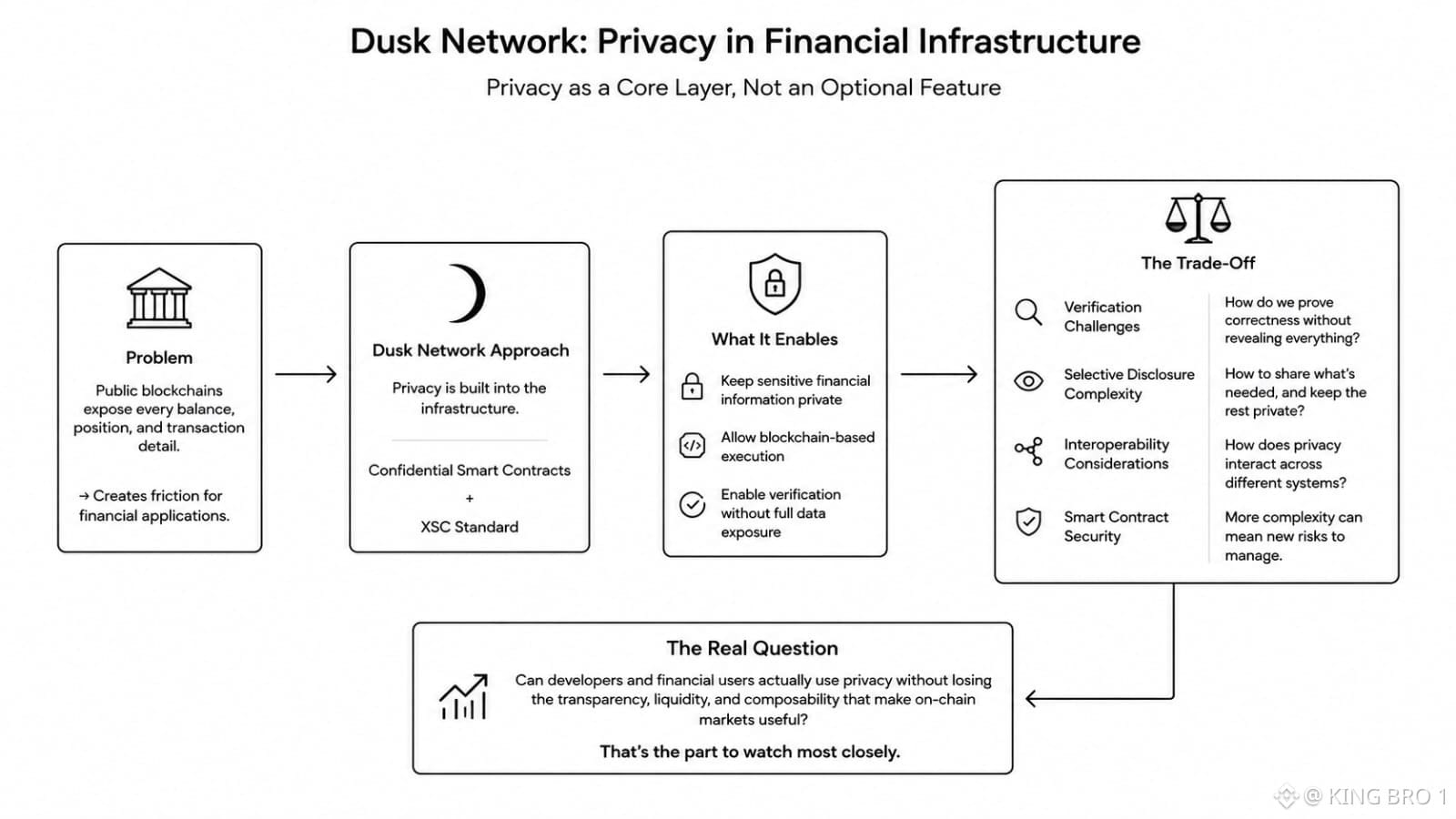
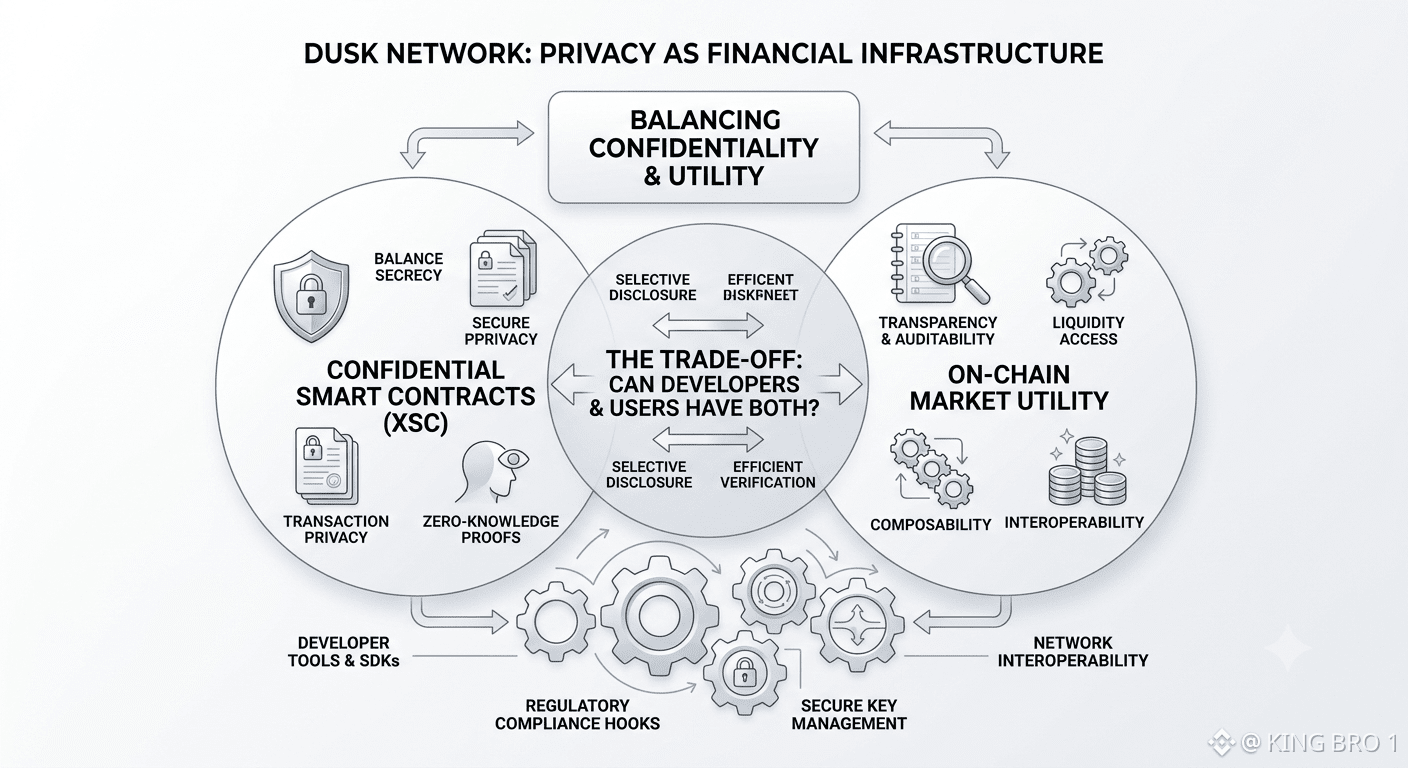
i’ve been looking at one thing about Dusk Network that stands out to me: privacy is treated as part of the financial infrastructure, not simply an optional feature.
For financial applications, putting every balance, position, and transaction detail on a public blockchain can create real friction. Dusk is designed around confidential smart contracts and its XSC standard, aiming to keep sensitive financial information private while still allowing blockchain-based execution and verification.
What interests me is the trade-off.
Privacy can make financial systems more practical for sensitive use cases, but it also raises harder questions around verification, selective disclosure, interoperability, and smart-contract security.
So I wouldn’t judge Dusk simply by its privacy claims.
The more important question is whether developers and financial users can actually use that privacy without losing the transparency, liquidity, and composability that make on-chain markets useful.
That’s the part I’d watch most closely.
@Dusk #dusk $DUSK
For financial applications, putting every balance, position, and transaction detail on a public blockchain can create real friction. Dusk is designed around confidential smart contracts and its XSC standard, aiming to keep sensitive financial information private while still allowing blockchain-based execution and verification.
What interests me is the trade-off.
Privacy can make financial systems more practical for sensitive use cases, but it also raises harder questions around verification, selective disclosure, interoperability, and smart-contract security.
So I wouldn’t judge Dusk simply by its privacy claims.
The more important question is whether developers and financial users can actually use that privacy without losing the transparency, liquidity, and composability that make on-chain markets useful.
That’s the part I’d watch most closely.
@Dusk #dusk $DUSK
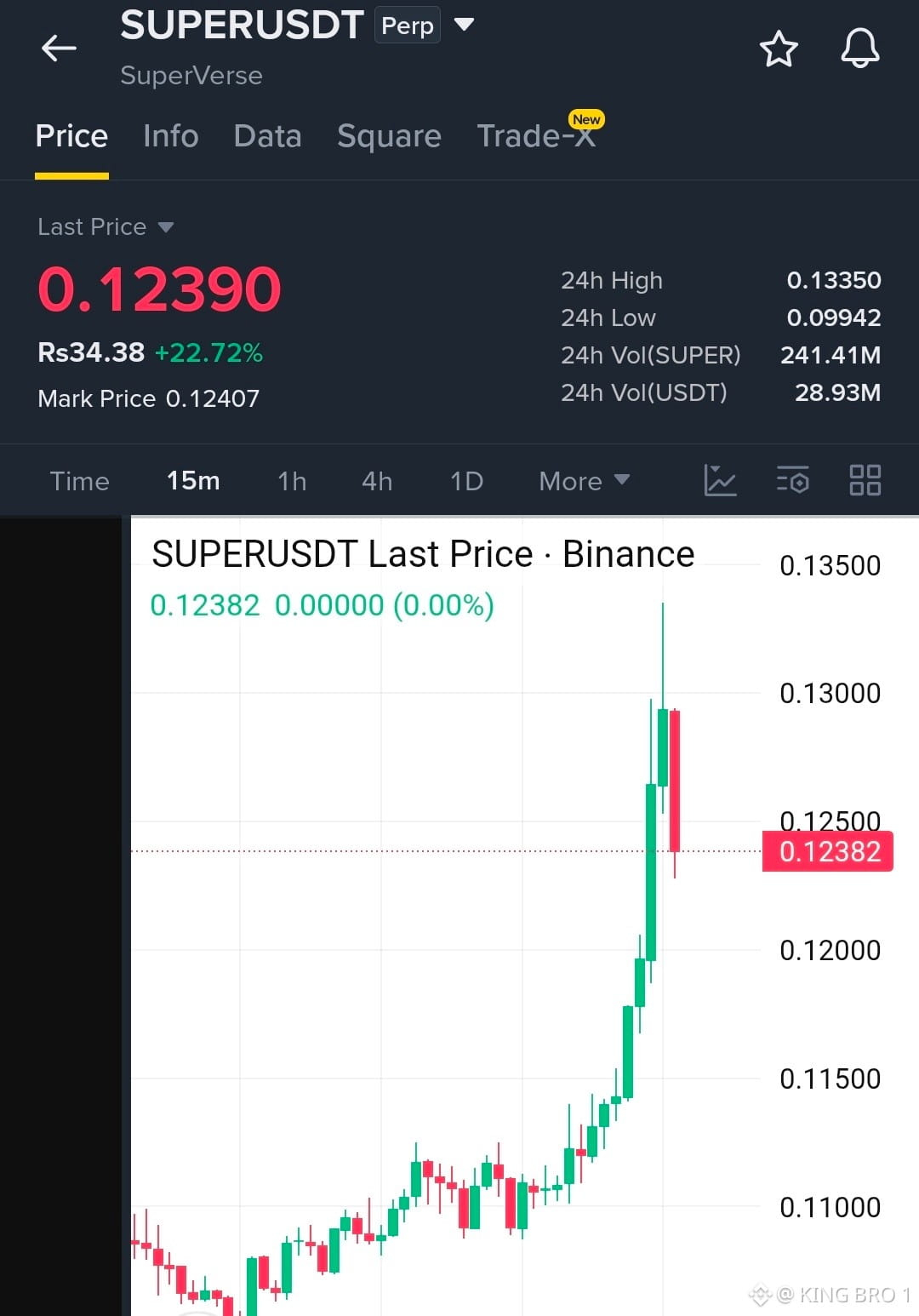
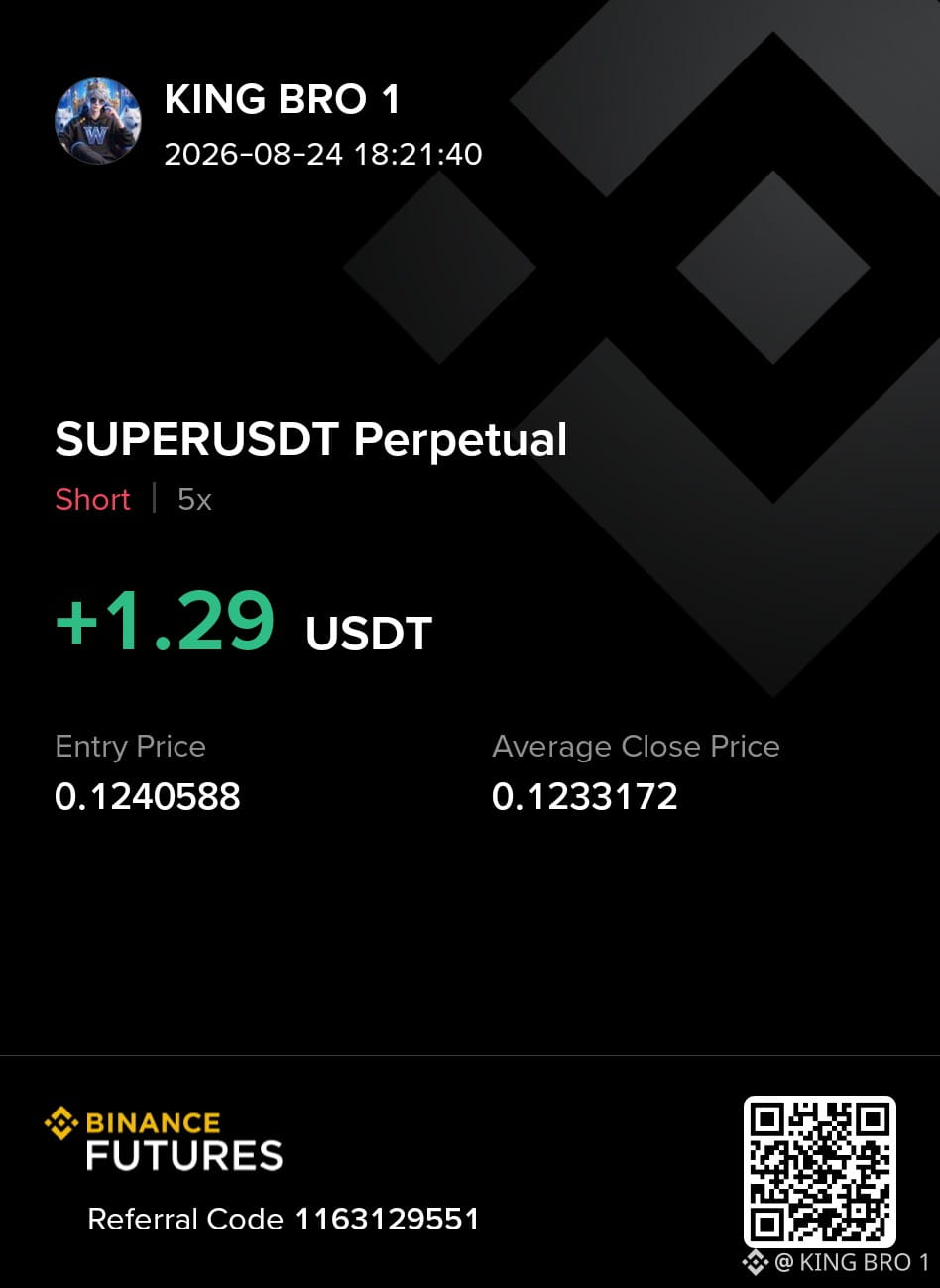
👑 $SUPER bearish setup forming after a sharp rejection from resistance.
Trading Plan — SHORT: $SUPER USDT
Entry: 0.124 – 0.125
Stop-Loss: 0.1285
TP1: 0.123
TP2: 0.122
TP3: 0.120
Current Price: 0.1239
$SUPER has strong short-term momentum, but price is facing selling pressure after failing to hold the higher range. The 0.1250–0.1285 area is key resistance/liquidity, while 0.1200 is the first important support.
A rejection from entry with continued lower highs could favor a move toward the next liquidity zones. If price reclaims 0.1285, the bearish setup is invalidated.
Educational setup — manage risk carefully.
#SUPER #crypto #trading
Trading Plan — SHORT: $SUPER USDT
Entry: 0.124 – 0.125
Stop-Loss: 0.1285
TP1: 0.123
TP2: 0.122
TP3: 0.120
Current Price: 0.1239
$SUPER has strong short-term momentum, but price is facing selling pressure after failing to hold the higher range. The 0.1250–0.1285 area is key resistance/liquidity, while 0.1200 is the first important support.
A rejection from entry with continued lower highs could favor a move toward the next liquidity zones. If price reclaims 0.1285, the bearish setup is invalidated.
Educational setup — manage risk carefully.
#SUPER #crypto #trading
I’ve been looking at $DUSK lately.
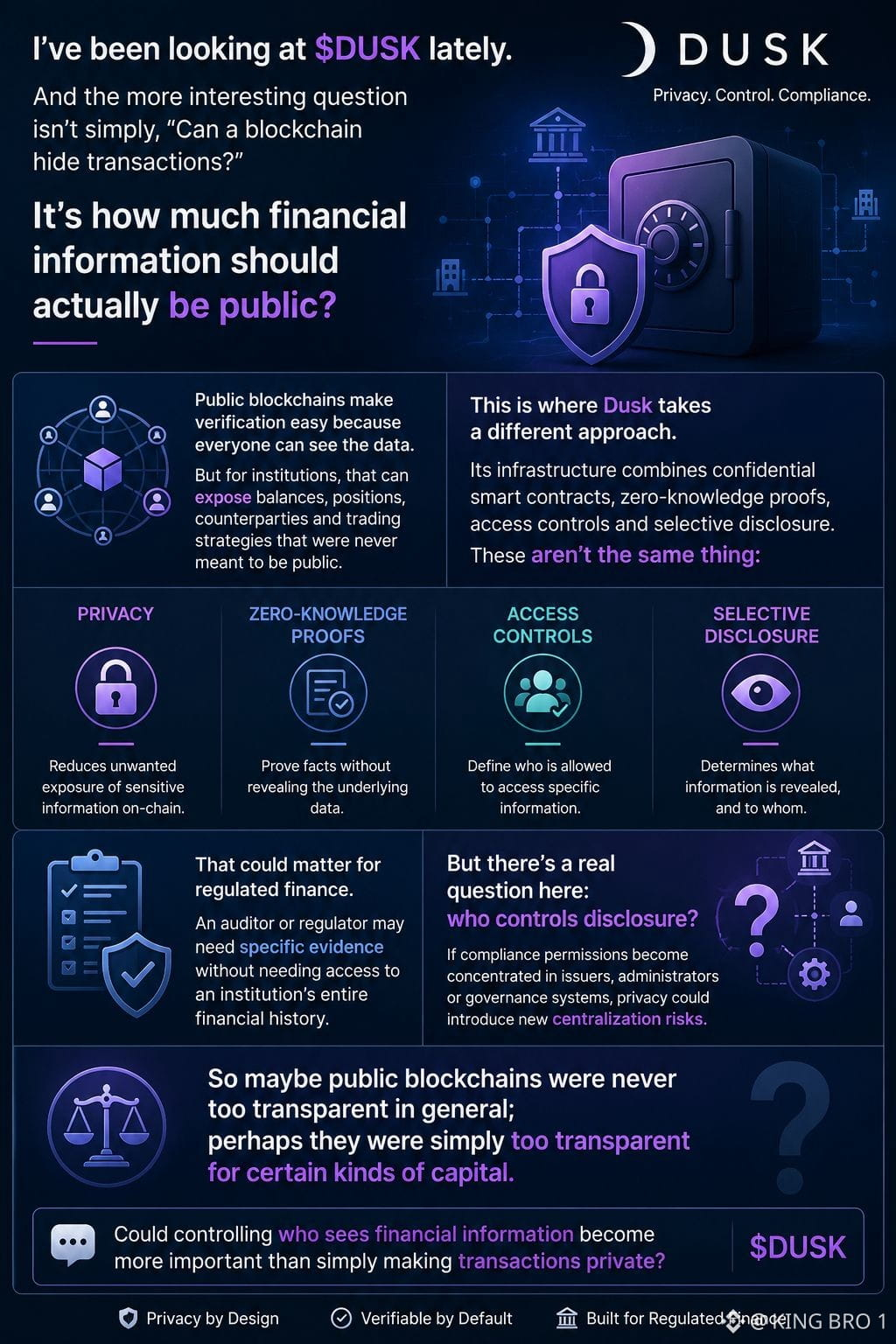
And the more interesting question isn’t simply, “Can a blockchain hide transactions?”
It’s how much financial information should actually be public?
Public blockchains make verification easy because everyone can see the data. But for institutions, that can expose balances, positions, counterparties and trading strategies that were never meant to be public.
This is where Dusk takes a different approach. Its infrastructure combines confidential smart contracts, zero-knowledge proofs, access controls and selective disclosure. These aren’t the same thing: privacy reduces unwanted exposure, ZK proofs can prove facts without revealing underlying data, while selective disclosure determines what information is revealed, and to whom.
That could matter for regulated finance. An auditor or regulator may need specific evidence without needing access to an institution’s entire financial history.
But there’s a real question here: who controls disclosure?
If compliance permissions become concentrated in issuers, administrators or governance systems, privacy could introduce new centralization risks.
So maybe public blockchains were never too transparent in general; perhaps they were simply too transparent for certain kinds of capital.
Could controlling who sees financial information become more important than simply making transactions private?
@Dusk #dusk $DUSK
And the more interesting question isn’t simply, “Can a blockchain hide transactions?”
It’s how much financial information should actually be public?
Public blockchains make verification easy because everyone can see the data. But for institutions, that can expose balances, positions, counterparties and trading strategies that were never meant to be public.
This is where Dusk takes a different approach. Its infrastructure combines confidential smart contracts, zero-knowledge proofs, access controls and selective disclosure. These aren’t the same thing: privacy reduces unwanted exposure, ZK proofs can prove facts without revealing underlying data, while selective disclosure determines what information is revealed, and to whom.
That could matter for regulated finance. An auditor or regulator may need specific evidence without needing access to an institution’s entire financial history.
But there’s a real question here: who controls disclosure?
If compliance permissions become concentrated in issuers, administrators or governance systems, privacy could introduce new centralization risks.
So maybe public blockchains were never too transparent in general; perhaps they were simply too transparent for certain kinds of capital.
Could controlling who sees financial information become more important than simply making transactions private?
@Dusk #dusk $DUSK
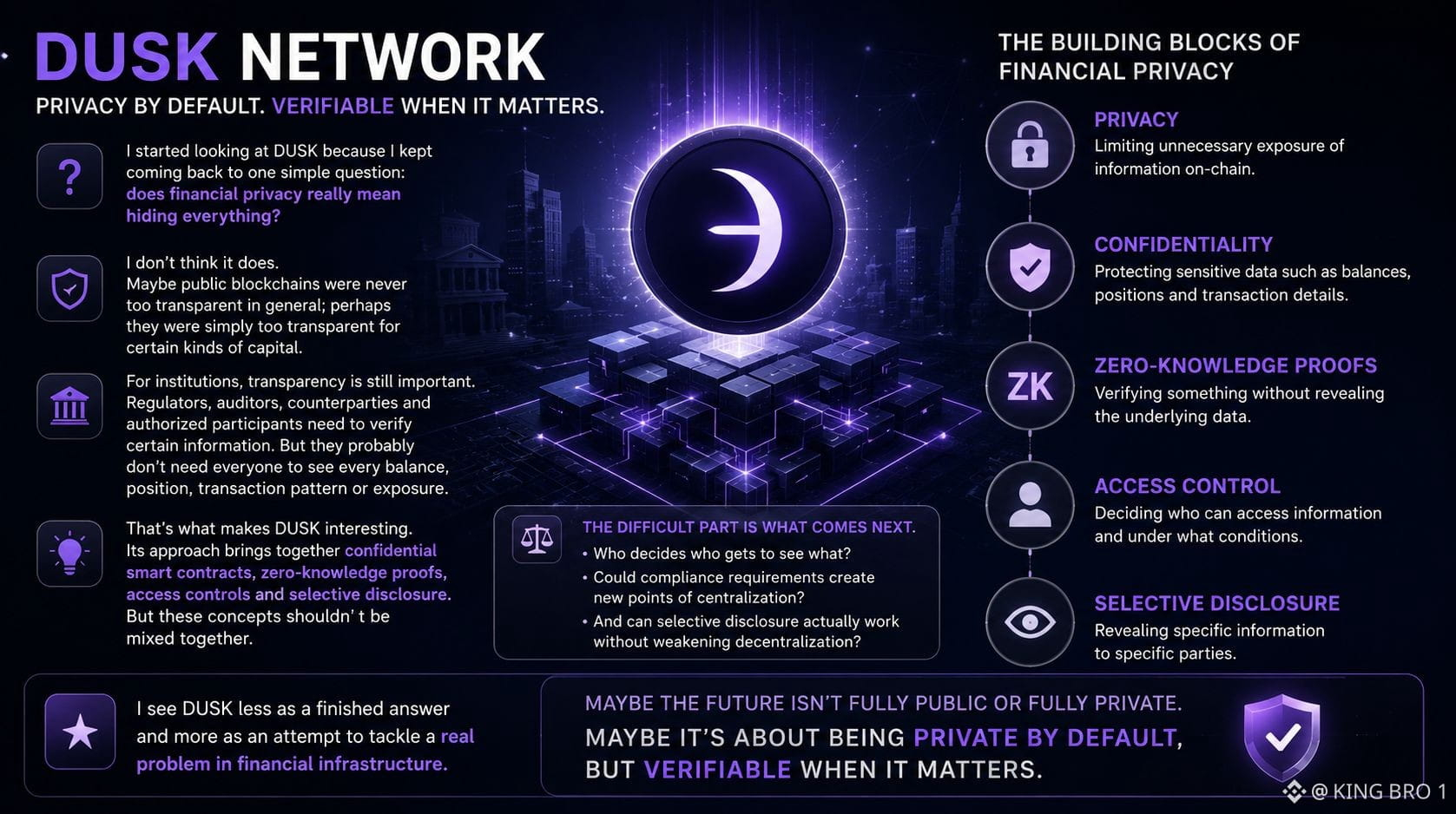
I started looking at DUSK because I kept coming back to one simple question: does financial privacy really mean hiding everything?
I don’t think it does.
Maybe public blockchains were never too transparent in general; perhaps they were simply too transparent for certain kinds of capital.
For institutions, transparency is still important. Regulators, auditors, counterparties and authorized participants need to verify certain information. But they probably don’t need everyone to see every balance, position, transaction pattern or exposure.
That’s what makes DUSK interesting to me.
Its approach brings together confidential smart contracts, zero-knowledge proofs, access controls and selective disclosure. But these concepts shouldn’t be mixed together.
Privacy is about limiting unnecessary exposure. Confidentiality protects sensitive information. Zero-knowledge proofs can verify something without revealing the underlying data. Access control decides who can access information. Selective disclosure is about revealing specific information to specific parties.
The difficult part is what comes next.
Who decides who gets to see what? Could compliance requirements create new points of centralization? And can selective disclosure actually work without weakening decentralization?
I see DUSK less as a finished answer and more as an attempt to tackle a real problem in financial infrastructure.
Maybe the future isn’t fully public or fully private.
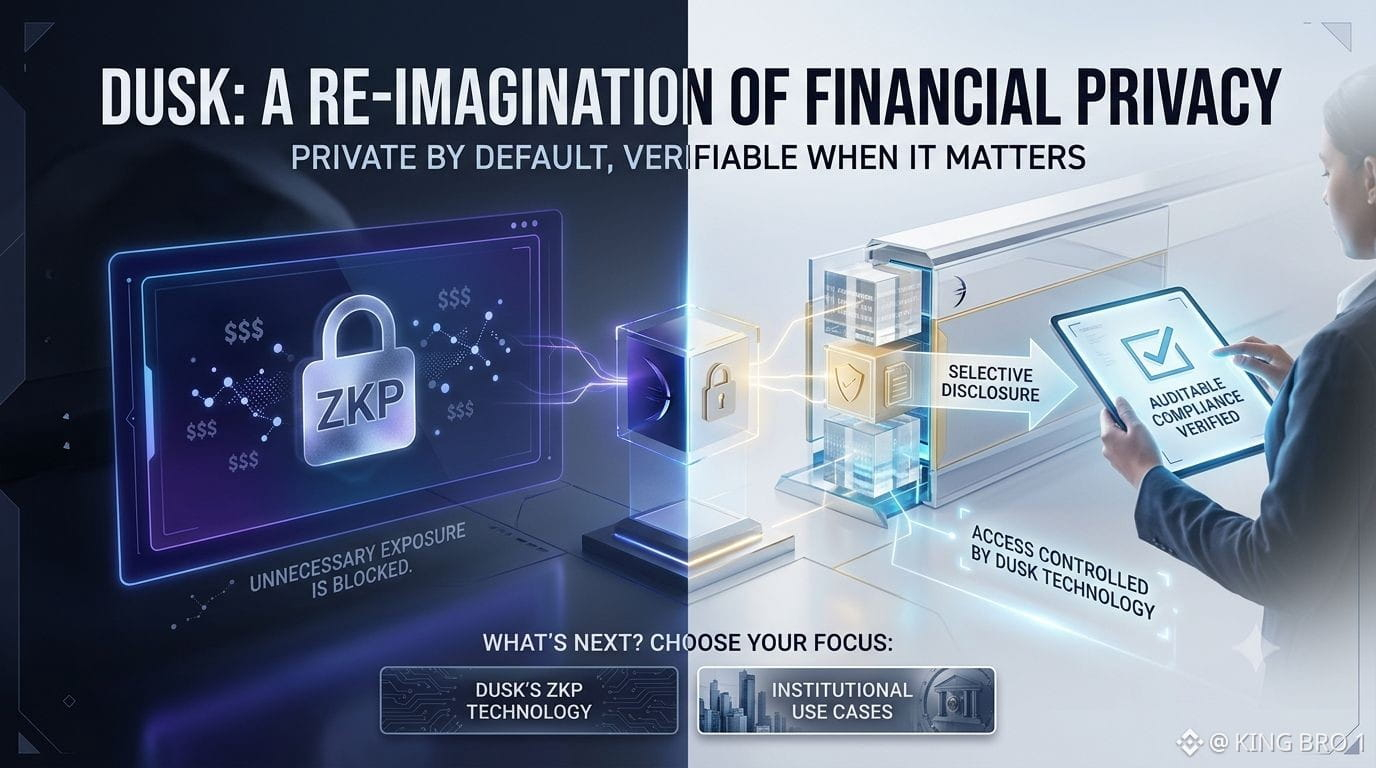
Maybe it’s about being private by default, but verifiable when it matters.
Would you rather see the next post focus on DUSK’s technology or its institutional use case?
@Dusk #dusk $DUSK
I don’t think it does.
Maybe public blockchains were never too transparent in general; perhaps they were simply too transparent for certain kinds of capital.
For institutions, transparency is still important. Regulators, auditors, counterparties and authorized participants need to verify certain information. But they probably don’t need everyone to see every balance, position, transaction pattern or exposure.
That’s what makes DUSK interesting to me.
Its approach brings together confidential smart contracts, zero-knowledge proofs, access controls and selective disclosure. But these concepts shouldn’t be mixed together.
Privacy is about limiting unnecessary exposure. Confidentiality protects sensitive information. Zero-knowledge proofs can verify something without revealing the underlying data. Access control decides who can access information. Selective disclosure is about revealing specific information to specific parties.
The difficult part is what comes next.
Who decides who gets to see what? Could compliance requirements create new points of centralization? And can selective disclosure actually work without weakening decentralization?
I see DUSK less as a finished answer and more as an attempt to tackle a real problem in financial infrastructure.
Maybe the future isn’t fully public or fully private.
Maybe it’s about being private by default, but verifiable when it matters.
Would you rather see the next post focus on DUSK’s technology or its institutional use case?
@Dusk #dusk $DUSK
I assumed that if I lent through a fixed-rate market, the main benefit was simply knowing what I would earn.
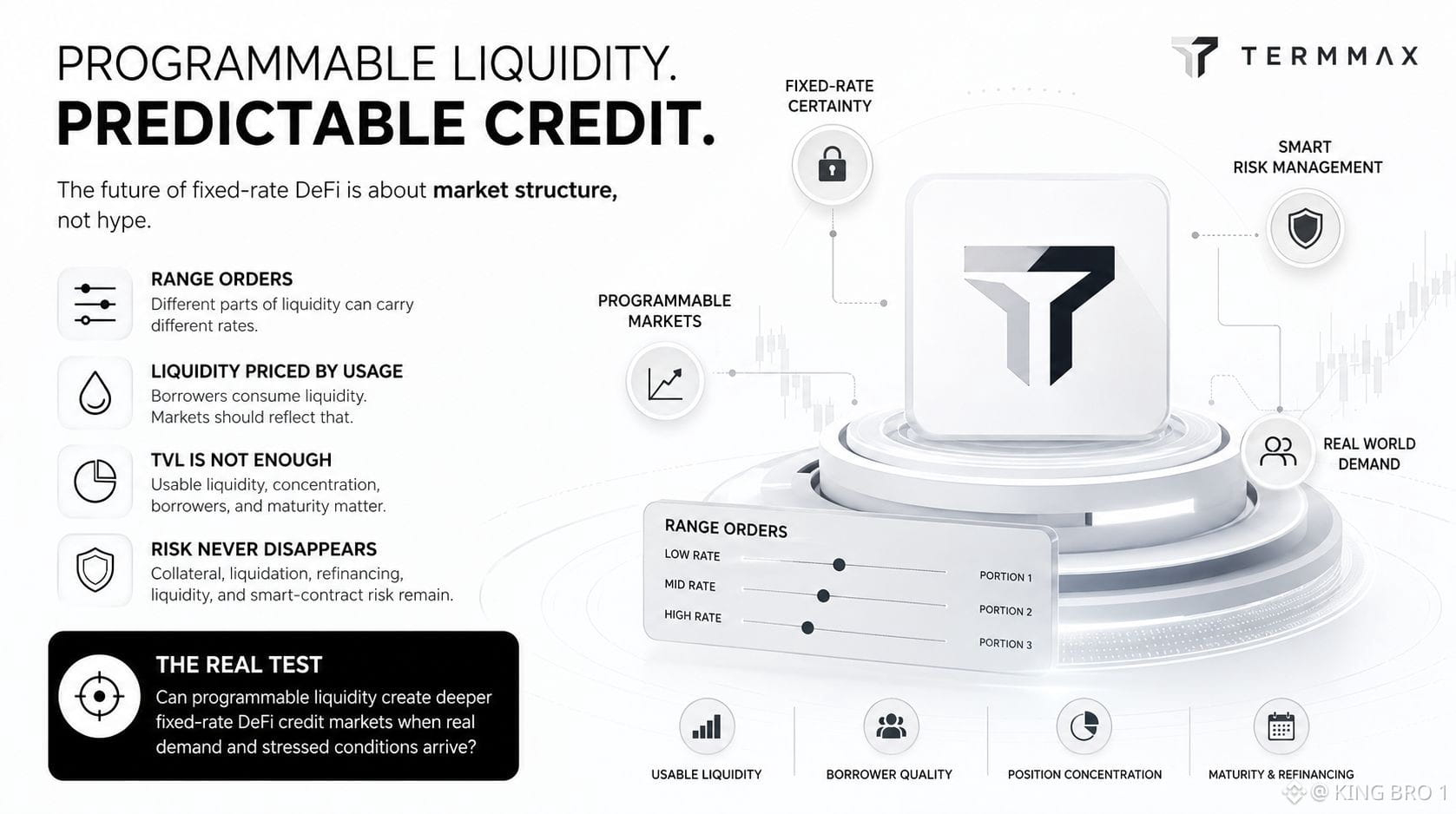
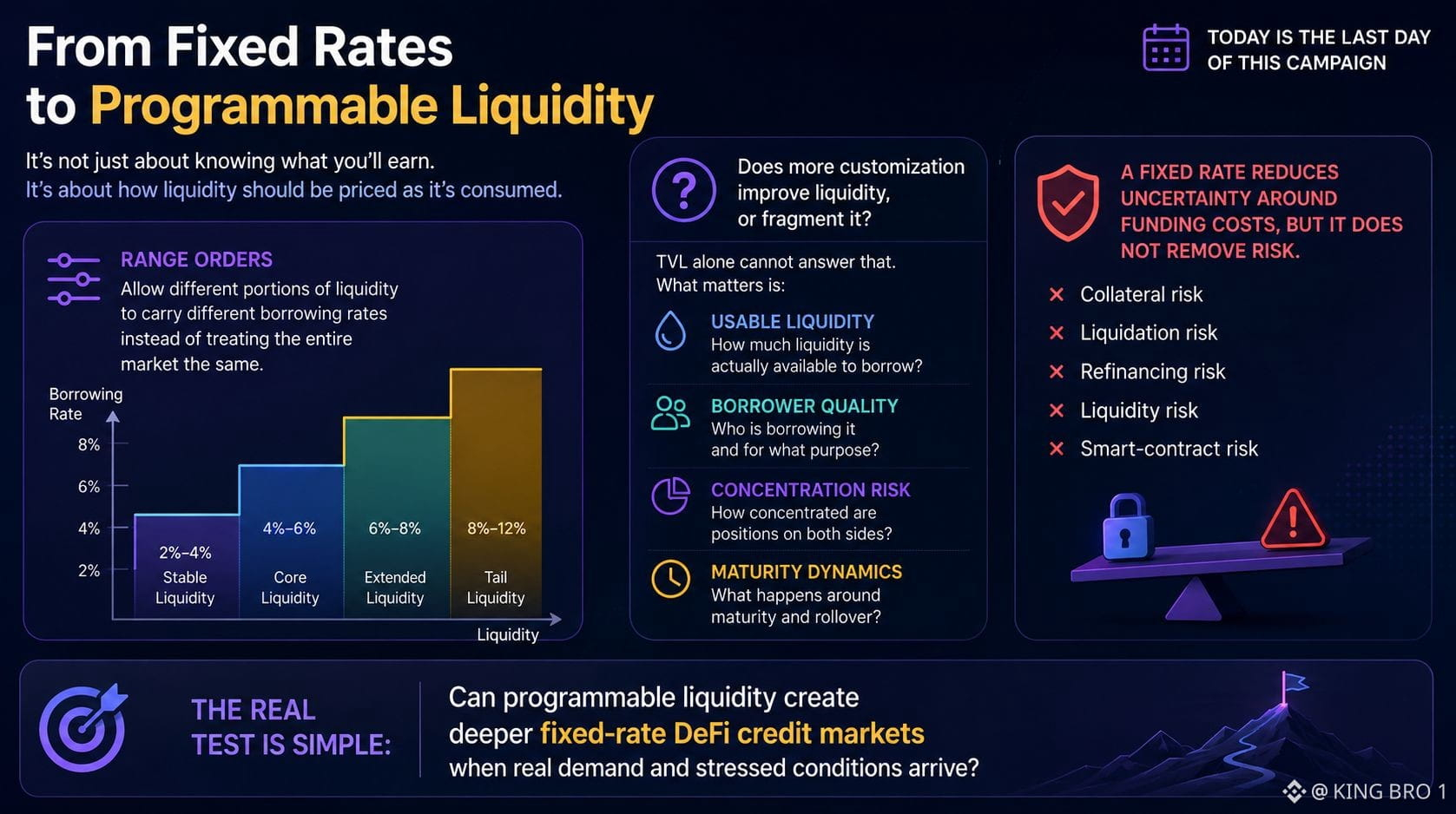
But studying TermMax made me look deeper. The bigger question is how liquidity should be priced as borrowers consume it.
That is where Range Orders become interesting. They allow different portions of liquidity to carry different borrowing rates instead of treating the entire market the same.
I think this can make fixed-rate credit more flexible, but it also raises another DeFi question: does more customization improve liquidity, or fragment it?
TVL alone cannot answer that. What matters is how much liquidity is actually usable, who is borrowing it, how concentrated the positions are, and what happens around maturity.
A fixed rate can reduce uncertainty around funding costs, but it does not remove collateral, liquidation, refinancing, liquidity, or smart-contract risk.
Today is the last day of this campaign TermMax , so I wanted to make this final post about the part I find most interesting: market structure rather than hype.
The real test is simple:
Can programmable liquidity create deeper fixed-rate DeFi credit markets when real demand and stressed conditions arrive?
@TermMax #TermMax
But studying TermMax made me look deeper. The bigger question is how liquidity should be priced as borrowers consume it.
That is where Range Orders become interesting. They allow different portions of liquidity to carry different borrowing rates instead of treating the entire market the same.
I think this can make fixed-rate credit more flexible, but it also raises another DeFi question: does more customization improve liquidity, or fragment it?
TVL alone cannot answer that. What matters is how much liquidity is actually usable, who is borrowing it, how concentrated the positions are, and what happens around maturity.
A fixed rate can reduce uncertainty around funding costs, but it does not remove collateral, liquidation, refinancing, liquidity, or smart-contract risk.
Today is the last day of this campaign TermMax , so I wanted to make this final post about the part I find most interesting: market structure rather than hype.
The real test is simple:
Can programmable liquidity create deeper fixed-rate DeFi credit markets when real demand and stressed conditions arrive?
@TermMax #TermMax
Войдите, чтобы посмотреть больше материала