
天宇-DarkShadow
1.6k Публикации

天宇-DarkShadow
 Square Verified+
Отправить жалобу
Заблокировать пользователя
Открытая сделка
Трейдер с частыми сделками
1.7 г
114 подписок(и/а)
42.1K+ подписчиков(а)
24.0K+ понравилось
Посты
Портфель
Все
Активно
PINNED
$EDGE Short trade (long term)
Entry point 👉0.69-0.7
TP 👉 0.55,0.43
SL -No
$EDGE Short trade (long term)
Entry point 👉0.69-0.7
TP 👉 0.55,0.43
SL -No
Entry point 👉0.69-0.7
TP 👉 0.55,0.43
SL -No
1
340

$TRUMP Long trade
entry point 👉 2.13-2.15
TP 👉 2.24,2.3,2.4
SL- 2.04
$TRUMP Long trade
entry point 👉 2.13-2.15
TP 👉 2.24,2.3,2.4
SL- 2.04
entry point 👉 2.13-2.15
TP 👉 2.24,2.3,2.4
SL- 2.04
340
$GIGGLE Long trade
Entry point 👉 36-36.3
TP 👉 38.5,39.5,41
SL- 34
$GIGGLE Long trade
Entry point 👉 36-36.3
TP 👉 38.5,39.5,41
SL- 34
Entry point 👉 36-36.3
TP 👉 38.5,39.5,41
SL- 34
531
$ESP short trade
entry point 👉0.0935-0.0948
TP 👉 0.088, 0.083
SL-NO
$ESP short trade
entry point 👉0.0935-0.0948
TP 👉 0.088, 0.083
SL-NO
entry point 👉0.0935-0.0948
TP 👉 0.088, 0.083
SL-NO
291
$VVV short trade
entry point 👉 25.8-262
TP 👉 24.3,22
SL👉 No 🙂↔️
$VVV short trade
entry point 👉 25.8-262
TP 👉 24.3,22
SL👉 No 🙂↔️
entry point 👉 25.8-262
TP 👉 24.3,22
SL👉 No 🙂↔️
272
$SOPH Momentum Is Strong, But Can It Break Higher?
SOPH is up 35%+, trading around $0.00567 after bouncing strongly from $0.00541.
On the 15M chart, momentum is still bullish and price is holding above the Supertrend. The main resistance is $0.00576–$0.00580.
A clean breakout with volume could push SOPH toward $0.0060 → $0.0064 → $0.0068.
But if it loses $0.00540, momentum could weaken quickly.
🎯 Signal
LONG: $0.00550–$0.00565
TP: $0.0060 / $0.0064 / $0.0068
SL: $0.00515
I’d rather wait for confirmation than chase the pump.
DYOR — Not financial advice.
{future}(AKEUSDT)
{spot}(ARUSDT)
{spot}(SOPHUSDT)
#SOPH #crypto #Binance #trading
$SOPH Momentum Is Strong, But Can It Break Higher?
SOPH is up 35%+, trading around $0.00567 after bouncing strongly from $0.00541.
On the 15M chart, momentum is still bullish and price is holding above the Supertrend. The main resistance is $0.00576–$0.00580.
A clean breakout with volume could push SOPH toward $0.0060 → $0.0064 → $0.0068.
But if it loses $0.00540, momentum could weaken quickly.
🎯 Signal
LONG: $0.00550–$0.00565
TP: $0.0060 / $0.0064 / $0.0068
SL: $0.00515
I’d rather wait for confirmation than chase the pump.
DYOR — Not financial advice.
#SOPH #crypto #Binance #trading
SOPH is up 35%+, trading around $0.00567 after bouncing strongly from $0.00541.
On the 15M chart, momentum is still bullish and price is holding above the Supertrend. The main resistance is $0.00576–$0.00580.
A clean breakout with volume could push SOPH toward $0.0060 → $0.0064 → $0.0068.
But if it loses $0.00540, momentum could weaken quickly.
🎯 Signal
LONG: $0.00550–$0.00565
TP: $0.0060 / $0.0064 / $0.0068
SL: $0.00515
I’d rather wait for confirmation than chase the pump.
DYOR — Not financial advice.
#SOPH #crypto #Binance #trading
3
444
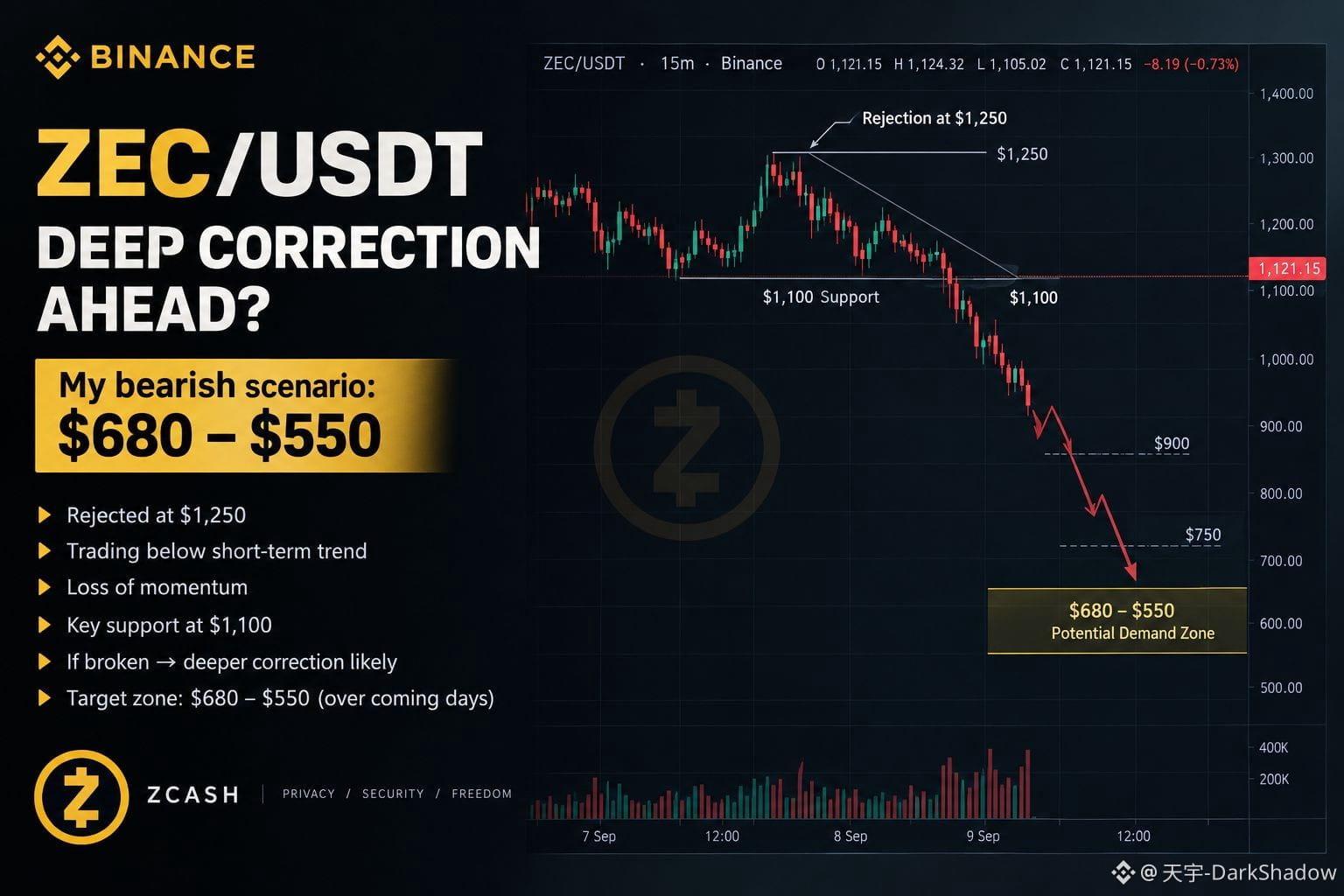
$ZEC has made an impressive move, but after a rally of this magnitude, I’m starting to look at the downside rather than chasing the pump.
On the 15M chart, price has already rejected the $1,240–$1,250 area and is showing a clear loss of short-term momentum. The price is also trading below the short-term trend indicator, while consecutive lower highs are beginning to form.
What concerns me more is the risk/reward at current levels.
If ZEC fails to reclaim $1,200–$1,220 and loses the $1,100 support zone, I would expect the correction to extend much deeper.
My personal bearish scenario is:
$1,100 → $900 → $750 → $680–$550
I’m not expecting this entire move to happen instantly. My view is that if the current support structure keeps breaking, ZEC could gradually move into the $680–$550 region over the coming days through multiple relief bounces and lower highs.
The reason I’m watching that zone is the possibility of a larger Fibonacci retracement + liquidity reset after such an aggressive vertical expansion. Momentum indicators are also showing signs that the rally is becoming overheated, while volatility remains extremely high. �
CoinLore +1
Of course, this is my personal market view, not a prediction with certainty.
If ZEC gets back above $1,220–$1,250 and holds it with strong volume, I’ll reconsider this bearish setup.
But until then, I personally wouldn’t be comfortable chasing ZEC at these levels.
The next few days could be very interesting.
#zec #zcash #Crypto #Binance #trading
$ZEC has made an impressive move, but after a rally of this magnitude, I’m starting to look at the downside rather than chasing the pump.
On the 15M chart, price has already rejected the $1,240–$1,250 area and is showing a clear loss of short-term momentum. The price is also trading below the short-term trend indicator, while consecutive lower highs are beginning to form.
What concerns me more is the risk/reward at current levels.
If ZEC fails to reclaim $1,200–$1,220 and loses the $1,100 support zone, I would expect the correction to extend much deeper.
My personal bearish scenario is:
$1,100 → $900 → $750 → $680–$550
I’m not expecting this entire move to happen instantly. My view is that if the current support structure keeps breaking, ZEC could gradually move into the $680–$550 region over the coming days through multiple relief bounces and lower highs.
The reason I’m watching that zone is the possibility of a larger Fibonacci retracement + liquidity reset after such an aggressive vertical expansion. Momentum indicators are also showing signs that the rally is becoming overheated, while volatility remains extremely high. �
CoinLore +1
Of course, this is my personal market view, not a prediction with certainty.
If ZEC gets back above $1,220–$1,250 and holds it with strong volume, I’ll reconsider this bearish setup.
But until then, I personally wouldn’t be comfortable chasing ZEC at these levels.
The next few days could be very interesting.
#zec #zcash #Crypto #Binance #trading
On the 15M chart, price has already rejected the $1,240–$1,250 area and is showing a clear loss of short-term momentum. The price is also trading below the short-term trend indicator, while consecutive lower highs are beginning to form.
What concerns me more is the risk/reward at current levels.
If ZEC fails to reclaim $1,200–$1,220 and loses the $1,100 support zone, I would expect the correction to extend much deeper.
My personal bearish scenario is:
$1,100 → $900 → $750 → $680–$550
I’m not expecting this entire move to happen instantly. My view is that if the current support structure keeps breaking, ZEC could gradually move into the $680–$550 region over the coming days through multiple relief bounces and lower highs.
The reason I’m watching that zone is the possibility of a larger Fibonacci retracement + liquidity reset after such an aggressive vertical expansion. Momentum indicators are also showing signs that the rally is becoming overheated, while volatility remains extremely high. �
CoinLore +1
Of course, this is my personal market view, not a prediction with certainty.
If ZEC gets back above $1,220–$1,250 and holds it with strong volume, I’ll reconsider this bearish setup.
But until then, I personally wouldn’t be comfortable chasing ZEC at these levels.
The next few days could be very interesting.
#zec #zcash #Crypto #Binance #trading
3
331
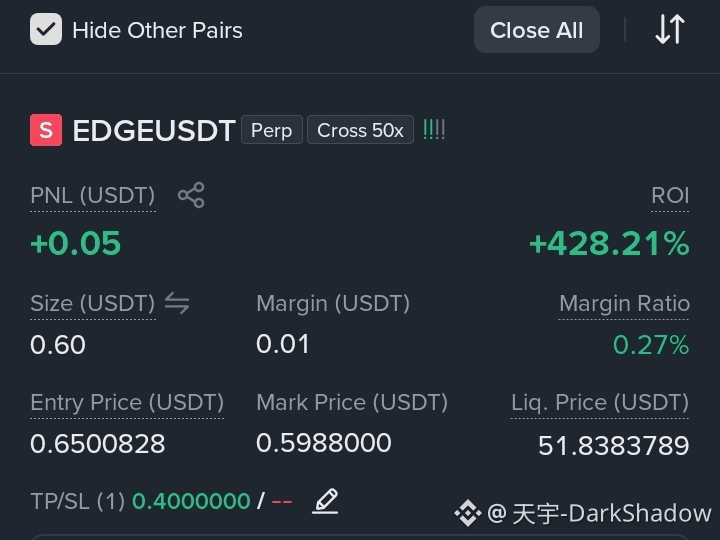
$EDGE 50X leverage with $0.01 margin… 🤣
Made $0.05 profit and felt like a full-time trader 💀
Be honest, what would you do with this $0.05? 😂💀
$EDGE 50X leverage with $0.01 margin… 🤣
Made $0.05 profit and felt like a full-time trader 💀
Be honest, what would you do with this $0.05? 😂💀
Made $0.05 profit and felt like a full-time trader 💀
Be honest, what would you do with this $0.05? 😂💀
246
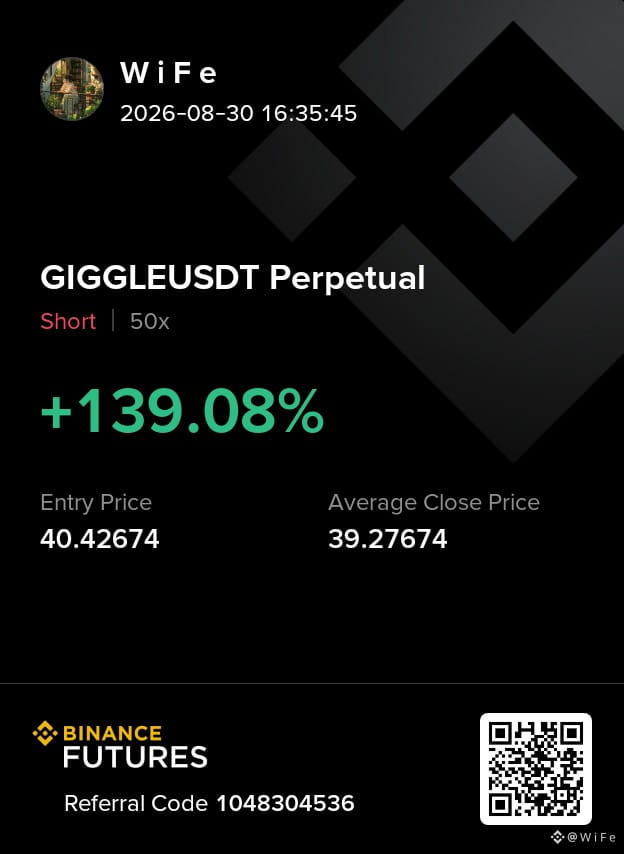
$GIGGLE Short trade
entry point 👉 38.57-38.33
TP👉 37.2,36
DYOR
{spot}(GIGGLEUSDT)
$GIGGLE Short trade
entry point 👉 38.57-38.33
TP👉 37.2,36
DYOR
entry point 👉 38.57-38.33
TP👉 37.2,36
DYOR
1
1
217
[https://web3.binance.com/referral?ref=TXRHTAVG](https://web3.binance.com/referral?ref=TXRHTAVG) koi nhi hai kamre par.....
https://web3.binance.com/referral?ref=TXRHTAVG koi nhi hai kamre par.....
1
106
How DuskDS is Re-engineering Institutional Financial Settlement 🏛️
In traditional capital markets, the post-trade settlement cycle (Clearing, Custody, and Settlement) remains plagued by legacy intermediaries, multi-day delays (T+1/T+2), and counterparty risk. While standard public blockchains offer instant settlement, they fail financial market infrastructure (FMI) standards due to strict privacy and regulatory mandates.
To bridge this institutional divide, @Dusk_Foundation developed DuskDS—a purpose-built distributed settlement infrastructure tailored specifically for regulated financial institutions.
Atomic Post-Trade Finality: DuskDS eliminates multi-day reconciliation by executing clearing and settlement simultaneously in real time, drastically reducing counterparty credit exposure.
Confidential Asset Custody: Financial institutions can manage client assets, collateral, and order books on-chain while keeping sensitive commercial positions strictly shielded from competitors.
Direct Integration with Existing FMIs: Rather than forcing institutions to abandon regulatory frameworks, DuskDS integrates compliant reporting interfaces directly into the settlement layer.
By delivering atomic, privacy-preserving settlement that meets strict regulatory standards, @Dusk is building the critical digital plumbing needed to transition legacy capital markets onto decentralized rails.
$DUSK #dusk
How DuskDS is Re-engineering Institutional Financial Settlement 🏛️
In traditional capital markets, the post-trade settlement cycle (Clearing, Custody, and Settlement) remains plagued by legacy intermediaries, multi-day delays (T+1/T+2), and counterparty risk. While standard public blockchains offer instant settlement, they fail financial market infrastructure (FMI) standards due to strict privacy and regulatory mandates.
To bridge this institutional divide, @Dusk developed DuskDS—a purpose-built distributed settlement infrastructure tailored specifically for regulated financial institutions.
Atomic Post-Trade Finality: DuskDS eliminates multi-day reconciliation by executing clearing and settlement simultaneously in real time, drastically reducing counterparty credit exposure.
Confidential Asset Custody: Financial institutions can manage client assets, collateral, and order books on-chain while keeping sensitive commercial positions strictly shielded from competitors.
Direct Integration with Existing FMIs: Rather than forcing institutions to abandon regulatory frameworks, DuskDS integrates compliant reporting interfaces directly into the settlement layer.
By delivering atomic, privacy-preserving settlement that meets strict regulatory standards, @Dusk is building the critical digital plumbing needed to transition legacy capital markets onto decentralized rails.
$DUSK #dusk
In traditional capital markets, the post-trade settlement cycle (Clearing, Custody, and Settlement) remains plagued by legacy intermediaries, multi-day delays (T+1/T+2), and counterparty risk. While standard public blockchains offer instant settlement, they fail financial market infrastructure (FMI) standards due to strict privacy and regulatory mandates.
To bridge this institutional divide, @Dusk developed DuskDS—a purpose-built distributed settlement infrastructure tailored specifically for regulated financial institutions.
Atomic Post-Trade Finality: DuskDS eliminates multi-day reconciliation by executing clearing and settlement simultaneously in real time, drastically reducing counterparty credit exposure.
Confidential Asset Custody: Financial institutions can manage client assets, collateral, and order books on-chain while keeping sensitive commercial positions strictly shielded from competitors.
Direct Integration with Existing FMIs: Rather than forcing institutions to abandon regulatory frameworks, DuskDS integrates compliant reporting interfaces directly into the settlement layer.
By delivering atomic, privacy-preserving settlement that meets strict regulatory standards, @Dusk is building the critical digital plumbing needed to transition legacy capital markets onto decentralized rails.
$DUSK #dusk
1
202
Why the Moonlight Account Model is a Breakthrough for Web3 Privacy 🌙
Most blockchains force users into an extreme: complete transparency (like standard public addresses) or total privacy (which breaks compliance and contract interaction).
To solve this friction, @Dusk_Foundation developed the Moonlight Account Model, a dual-state architecture that enables transparent and confidential interactions within the exact same network.
Dual Balance Flexibility: Users can seamlessly toggle between public balances (for transparent smart contract calls) and shielded balances (for private wealth and value transfers) without relying on risky third-party bridging.
Frictionless Compliance: Moonlight enables selective viewing capabilities, allowing enterprises to prove asset ownership and tax compliance to regulators without leaking their entire financial history to the public.
Gas-Efficient Execution: By separating public state transitions from Zero-Knowledge proof verification, transactions remain fast and keep gas costs predictable.
This balance between operational privacy and regulatory accessibility is what makes @Dusk ready for real-world financial infrastructure.
$DUSK #dusk
Why the Moonlight Account Model is a Breakthrough for Web3 Privacy 🌙
Most blockchains force users into an extreme: complete transparency (like standard public addresses) or total privacy (which breaks compliance and contract interaction).
To solve this friction, @Dusk developed the Moonlight Account Model, a dual-state architecture that enables transparent and confidential interactions within the exact same network.
Dual Balance Flexibility: Users can seamlessly toggle between public balances (for transparent smart contract calls) and shielded balances (for private wealth and value transfers) without relying on risky third-party bridging.
Frictionless Compliance: Moonlight enables selective viewing capabilities, allowing enterprises to prove asset ownership and tax compliance to regulators without leaking their entire financial history to the public.
Gas-Efficient Execution: By separating public state transitions from Zero-Knowledge proof verification, transactions remain fast and keep gas costs predictable.
This balance between operational privacy and regulatory accessibility is what makes @Dusk ready for real-world financial infrastructure.
$DUSK #dusk
Most blockchains force users into an extreme: complete transparency (like standard public addresses) or total privacy (which breaks compliance and contract interaction).
To solve this friction, @Dusk developed the Moonlight Account Model, a dual-state architecture that enables transparent and confidential interactions within the exact same network.
Dual Balance Flexibility: Users can seamlessly toggle between public balances (for transparent smart contract calls) and shielded balances (for private wealth and value transfers) without relying on risky third-party bridging.
Frictionless Compliance: Moonlight enables selective viewing capabilities, allowing enterprises to prove asset ownership and tax compliance to regulators without leaking their entire financial history to the public.
Gas-Efficient Execution: By separating public state transitions from Zero-Knowledge proof verification, transactions remain fast and keep gas costs predictable.
This balance between operational privacy and regulatory accessibility is what makes @Dusk ready for real-world financial infrastructure.
$DUSK #dusk
374
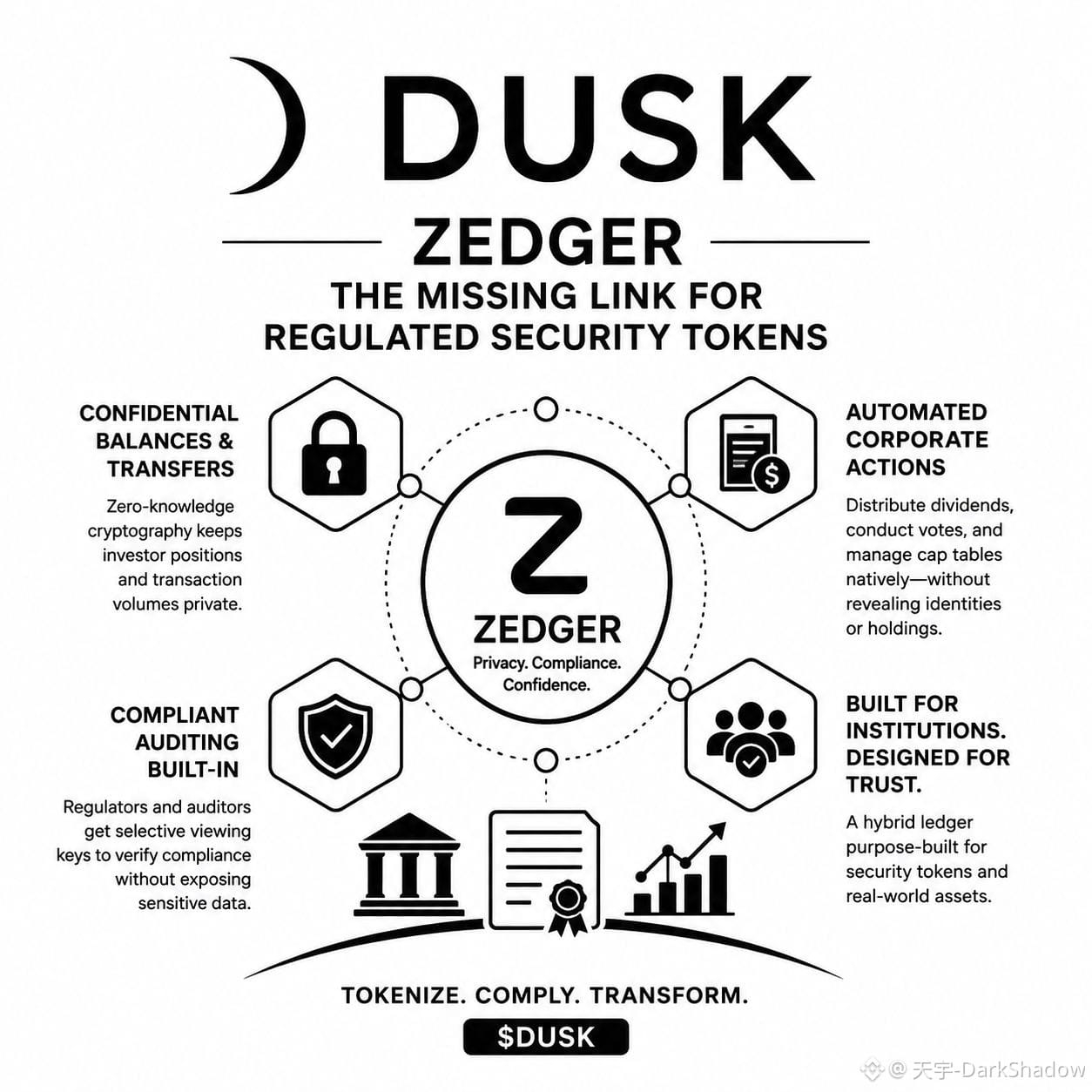
Why Zedger is the Missing Link for Regulated Security Tokens 📊
In the world of tokenized securities, public blockchains face a massive dilemma: traditional finance requires instant dividend distributions, voting rights, and strict compliance, but no institutional firm wants its cap table and balance sheet exposed to the entire market.
Standard ERC-20 style tokens can't handle these complex corporate actions privately. That’s where @Dusk_Foundation introduces Zedger, a specialized hybrid ledger model designed exclusively for security tokens.
Confidential Balances & Transfers: Zedger uses zero-knowledge cryptography so that investor positions and transaction volumes remain private from public view.
Automated Corporate Actions: It allows asset issuers to distribute dividends, conduct shareholder votes, and manage cap tables natively without revealing individual shareholder identities or holdings.
Compliant Auditing Built-In: Regulators and auditors can be granted selective cryptographic viewing keys to verify compliance without broadcasting sensitive enterprise data to the wider blockchain.
By engineering privacy directly into the asset-servicing layer, @Dusk_Foundation gives institutions a practical framework to tokenize traditional securities on-chain with full legal and operational confidence.
$DUSK #dusk
Why Zedger is the Missing Link for Regulated Security Tokens 📊
In the world of tokenized securities, public blockchains face a massive dilemma: traditional finance requires instant dividend distributions, voting rights, and strict compliance, but no institutional firm wants its cap table and balance sheet exposed to the entire market.
Standard ERC-20 style tokens can't handle these complex corporate actions privately. That’s where @Dusk introduces Zedger, a specialized hybrid ledger model designed exclusively for security tokens.
Confidential Balances & Transfers: Zedger uses zero-knowledge cryptography so that investor positions and transaction volumes remain private from public view.
Automated Corporate Actions: It allows asset issuers to distribute dividends, conduct shareholder votes, and manage cap tables natively without revealing individual shareholder identities or holdings.
Compliant Auditing Built-In: Regulators and auditors can be granted selective cryptographic viewing keys to verify compliance without broadcasting sensitive enterprise data to the wider blockchain.
By engineering privacy directly into the asset-servicing layer, @Dusk gives institutions a practical framework to tokenize traditional securities on-chain with full legal and operational confidence.
$DUSK #dusk
In the world of tokenized securities, public blockchains face a massive dilemma: traditional finance requires instant dividend distributions, voting rights, and strict compliance, but no institutional firm wants its cap table and balance sheet exposed to the entire market.
Standard ERC-20 style tokens can't handle these complex corporate actions privately. That’s where @Dusk introduces Zedger, a specialized hybrid ledger model designed exclusively for security tokens.
Confidential Balances & Transfers: Zedger uses zero-knowledge cryptography so that investor positions and transaction volumes remain private from public view.
Automated Corporate Actions: It allows asset issuers to distribute dividends, conduct shareholder votes, and manage cap tables natively without revealing individual shareholder identities or holdings.
Compliant Auditing Built-In: Regulators and auditors can be granted selective cryptographic viewing keys to verify compliance without broadcasting sensitive enterprise data to the wider blockchain.
By engineering privacy directly into the asset-servicing layer, @Dusk gives institutions a practical framework to tokenize traditional securities on-chain with full legal and operational confidence.
$DUSK #dusk
2
4
538
Проверено
Why the Phoenix Transaction Model is Critical for On-Chain Confidentiality 🔐
Public blockchains face a major structural tradeoff: standard transparent UTXO or Account models expose full transaction graphs, while typical privacy coins struggle with auditability and smart contract integration.
To bridge this gap, @Dusk_Foundation engineered the Phoenix Transaction Model, a novel transactional framework built specifically for privacy-preserving, high-throughput smart contracts.
Decoupled Privacy: Phoenix separates transaction spendability from identity disclosure using Zero-Knowledge proofs, allowing transfers to settle without leaking sender, receiver, or balance data.
Double-Spend Prevention Without Traceability: It utilizes cryptographic nullifiers that verify whether an asset has been spent without connecting it back to the original owner's wallet history.
Native Contract Interoperability: Unlike legacy privacy models that only support basic transfers, Phoenix is designed from the ground up to integrate directly with confidential smart contract execution.
Building native confidentiality directly into the transaction layer—rather than relying on external mixers—is what makes @Dusk uniquely positioned for institutional financial operations.
$DUSK #dusk
Why the Phoenix Transaction Model is Critical for On-Chain Confidentiality 🔐
Public blockchains face a major structural tradeoff: standard transparent UTXO or Account models expose full transaction graphs, while typical privacy coins struggle with auditability and smart contract integration.
To bridge this gap, @Dusk engineered the Phoenix Transaction Model, a novel transactional framework built specifically for privacy-preserving, high-throughput smart contracts.
Decoupled Privacy: Phoenix separates transaction spendability from identity disclosure using Zero-Knowledge proofs, allowing transfers to settle without leaking sender, receiver, or balance data.
Double-Spend Prevention Without Traceability: It utilizes cryptographic nullifiers that verify whether an asset has been spent without connecting it back to the original owner's wallet history.
Native Contract Interoperability: Unlike legacy privacy models that only support basic transfers, Phoenix is designed from the ground up to integrate directly with confidential smart contract execution.
Building native confidentiality directly into the transaction layer—rather than relying on external mixers—is what makes @Dusk uniquely positioned for institutional financial operations.
$DUSK #dusk
Public blockchains face a major structural tradeoff: standard transparent UTXO or Account models expose full transaction graphs, while typical privacy coins struggle with auditability and smart contract integration.
To bridge this gap, @Dusk engineered the Phoenix Transaction Model, a novel transactional framework built specifically for privacy-preserving, high-throughput smart contracts.
Decoupled Privacy: Phoenix separates transaction spendability from identity disclosure using Zero-Knowledge proofs, allowing transfers to settle without leaking sender, receiver, or balance data.
Double-Spend Prevention Without Traceability: It utilizes cryptographic nullifiers that verify whether an asset has been spent without connecting it back to the original owner's wallet history.
Native Contract Interoperability: Unlike legacy privacy models that only support basic transfers, Phoenix is designed from the ground up to integrate directly with confidential smart contract execution.
Building native confidentiality directly into the transaction layer—rather than relying on external mixers—is what makes @Dusk uniquely positioned for institutional financial operations.
$DUSK #dusk
2
4
756
The biggest obstacle for institutions adopting Web3 isn't volatility—it's settlement uncertainty and front-running. Most public chains face fork risks, slow finality windows, and predatory MEV attacks that drain capital.
To solve this, @Dusk_Foundation built Succinct Attestation, a consensus model designed specifically for high-stakes finance:
Instant Finality: Blocks achieve deterministic, non-forkable settlement in seconds, removing chain reorganization risks entirely.
Built-in MEV Protection: Verifiable random validator selection stops malicious nodes from predicting order flows and manipulating transactions.
Lightweight ZK Proofs: Committee validations are compressed into succinct cryptographic proofs, keeping network speed fast without exposing private transaction data.
For regulated markets and digital securities, deterministic execution is non-negotiable. This consensus layer provides the exact backbone real-world finance needs.
$DUSK #dusk
The biggest obstacle for institutions adopting Web3 isn't volatility—it's settlement uncertainty and front-running. Most public chains face fork risks, slow finality windows, and predatory MEV attacks that drain capital.
To solve this, @Dusk built Succinct Attestation, a consensus model designed specifically for high-stakes finance:
Instant Finality: Blocks achieve deterministic, non-forkable settlement in seconds, removing chain reorganization risks entirely.
Built-in MEV Protection: Verifiable random validator selection stops malicious nodes from predicting order flows and manipulating transactions.
Lightweight ZK Proofs: Committee validations are compressed into succinct cryptographic proofs, keeping network speed fast without exposing private transaction data.
For regulated markets and digital securities, deterministic execution is non-negotiable. This consensus layer provides the exact backbone real-world finance needs.
$DUSK #dusk
To solve this, @Dusk built Succinct Attestation, a consensus model designed specifically for high-stakes finance:
Instant Finality: Blocks achieve deterministic, non-forkable settlement in seconds, removing chain reorganization risks entirely.
Built-in MEV Protection: Verifiable random validator selection stops malicious nodes from predicting order flows and manipulating transactions.
Lightweight ZK Proofs: Committee validations are compressed into succinct cryptographic proofs, keeping network speed fast without exposing private transaction data.
For regulated markets and digital securities, deterministic execution is non-negotiable. This consensus layer provides the exact backbone real-world finance needs.
$DUSK #dusk
3
564
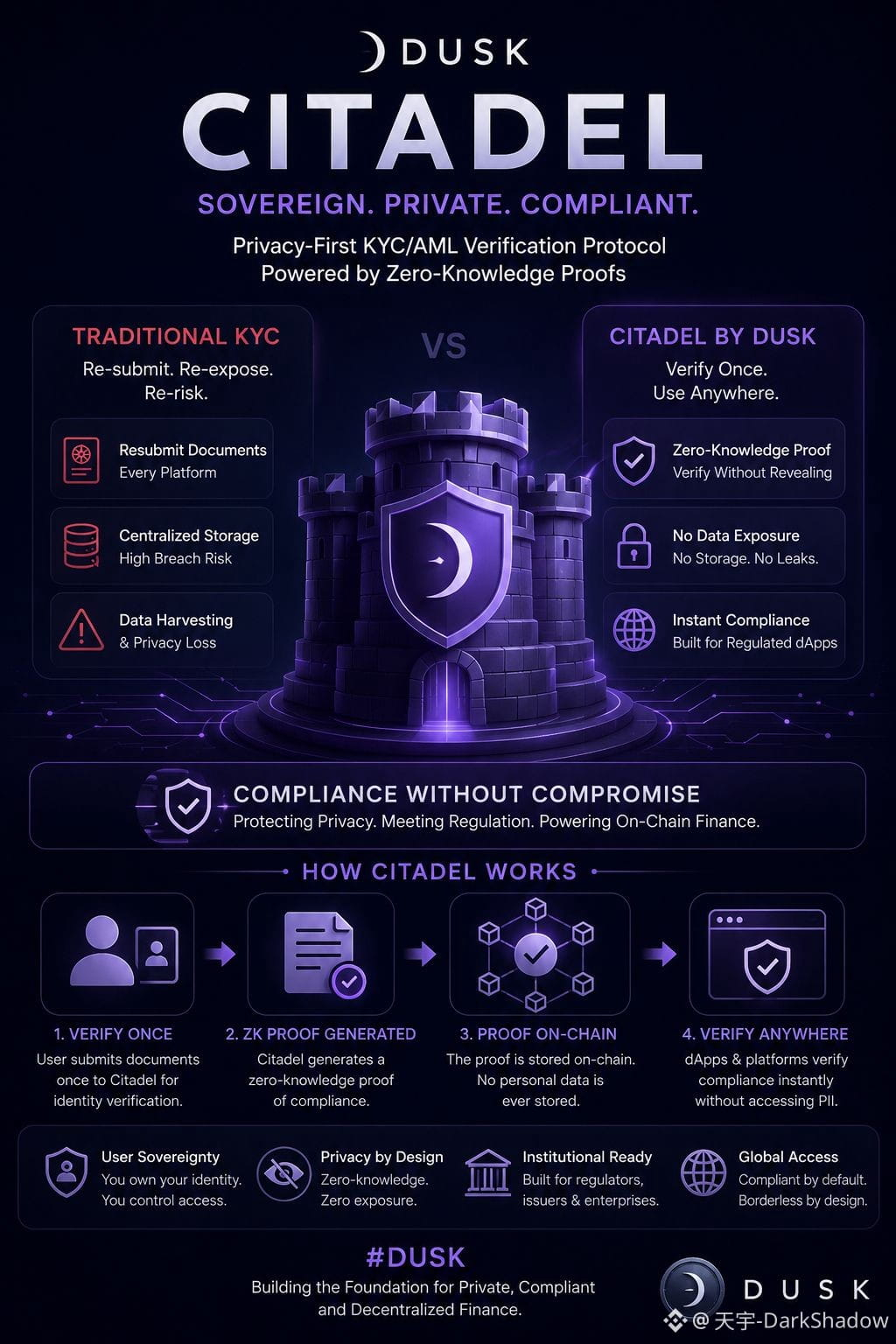
KYC is still one of the biggest pain points when traditional finance moves into Web3.
Every new platform can mean uploading your ID, passport or other personal documents again. That creates more copies of sensitive data and, with it, more chances for leaks or misuse.
This is where @Dusk_Foundation Citadel gets interesting.
Instead of sharing your actual identity again and again, Citadel uses Zero-Knowledge proofs to show that you meet the required compliance rules without exposing the underlying personal data.
The idea is simple:
Verify once → generate a proof → use that proof across compliant platforms.
No unnecessary document sharing.
No need for every platform to hold your PII.
And regulated dApps can still apply rules around things like age, jurisdiction and accreditation.
Privacy and compliance don’t have to work against each other.
That’s what makes Citadel an important piece for the future of on-chain finance.
$DUSK #dusk
KYC is still one of the biggest pain points when traditional finance moves into Web3.
Every new platform can mean uploading your ID, passport or other personal documents again. That creates more copies of sensitive data and, with it, more chances for leaks or misuse.
This is where @Dusk Citadel gets interesting.
Instead of sharing your actual identity again and again, Citadel uses Zero-Knowledge proofs to show that you meet the required compliance rules without exposing the underlying personal data.
The idea is simple:
Verify once → generate a proof → use that proof across compliant platforms.
No unnecessary document sharing.
No need for every platform to hold your PII.
And regulated dApps can still apply rules around things like age, jurisdiction and accreditation.
Privacy and compliance don’t have to work against each other.
That’s what makes Citadel an important piece for the future of on-chain finance.
$DUSK #dusk
Every new platform can mean uploading your ID, passport or other personal documents again. That creates more copies of sensitive data and, with it, more chances for leaks or misuse.
This is where @Dusk Citadel gets interesting.
Instead of sharing your actual identity again and again, Citadel uses Zero-Knowledge proofs to show that you meet the required compliance rules without exposing the underlying personal data.
The idea is simple:
Verify once → generate a proof → use that proof across compliant platforms.
No unnecessary document sharing.
No need for every platform to hold your PII.
And regulated dApps can still apply rules around things like age, jurisdiction and accreditation.
Privacy and compliance don’t have to work against each other.
That’s what makes Citadel an important piece for the future of on-chain finance.
$DUSK #dusk
1
3
369
#dusk $DUSK @Dusk_Foundation
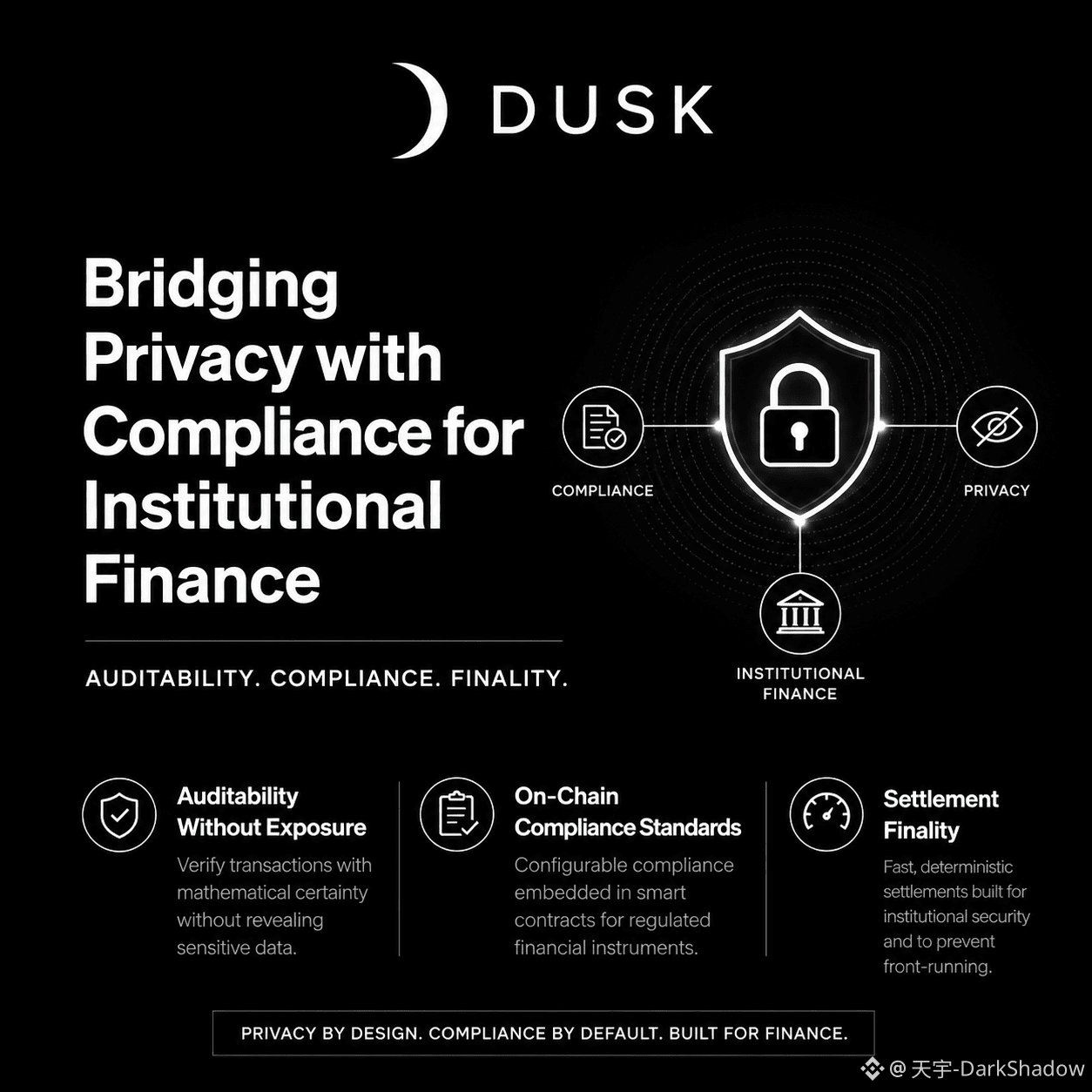
Why is institutional adoption of Web3 still moving slower than expected?
A big reason is the conflict between regulatory compliance and data privacy.
Institutions manage trillions in RWAs, securities and private portfolios. They can’t put every balance, trade size and strategy on a fully public ledger. But fully opaque networks also don’t work when KYC/AML compliance is required.
That’s where @Dusk_Foundation comes in.
With native ZKPs and a purpose-built Layer-1, Dusk aims to give institutions:
Auditability without exposing sensitive data
Compliance built directly into smart contracts
Fast and deterministic settlement
The goal is simple: bring regulated finance on-chain without giving up privacy.
As RWAs and regulated DeFi grow, this kind of infrastructure could become a key part of institutional adoption.
#dusk $DUSK @Dusk
Why is institutional adoption of Web3 still moving slower than expected?
A big reason is the conflict between regulatory compliance and data privacy.
Institutions manage trillions in RWAs, securities and private portfolios. They can’t put every balance, trade size and strategy on a fully public ledger. But fully opaque networks also don’t work when KYC/AML compliance is required.
That’s where @Dusk comes in.
With native ZKPs and a purpose-built Layer-1, Dusk aims to give institutions:
Auditability without exposing sensitive data
Compliance built directly into smart contracts
Fast and deterministic settlement
The goal is simple: bring regulated finance on-chain without giving up privacy.
As RWAs and regulated DeFi grow, this kind of infrastructure could become a key part of institutional adoption.
Why is institutional adoption of Web3 still moving slower than expected?
A big reason is the conflict between regulatory compliance and data privacy.
Institutions manage trillions in RWAs, securities and private portfolios. They can’t put every balance, trade size and strategy on a fully public ledger. But fully opaque networks also don’t work when KYC/AML compliance is required.
That’s where @Dusk comes in.
With native ZKPs and a purpose-built Layer-1, Dusk aims to give institutions:
Auditability without exposing sensitive data
Compliance built directly into smart contracts
Fast and deterministic settlement
The goal is simple: bring regulated finance on-chain without giving up privacy.
As RWAs and regulated DeFi grow, this kind of infrastructure could become a key part of institutional adoption.
5
6
888
Войдите, чтобы посмотреть больше материала
Присоединяйтесь к пользователям криптовалют по всему миру на Binance Square
⚡️ Получайте новейшую и полезную информацию о криптоактивах.
💬 Нам доверяет крупнейшая в мире криптобиржа.
👍 Получите достоверные аналитические данные от верифицированных создателей контента.
Эл. почта/номер телефона
В тренде
AppleDebutsFoldablePhone
Просмотров: 672
60 обсуждают
#appledebutsfoldablephone iPhone Fold 2026: Apple’s Secret Plan to Kill the Samsung Galaxy Z Fold 8iPhone Fold 2026: Apple’s Secret Plan to Kill the Samsung Galaxy Z Fold 8
Apple is poised to make its long-anticipated entry into the foldable smartphone market with the iPhone Fold, set for release in 2026. This strategic move positions Apple as a direct competitor to Samsung, which has maintained a dominant presence in the foldable segment since the launch of its Galaxy Z Fold series in 2019. By using its globally recognized brand and tightly integrated ecosystem, Apple aims to challenge Samsung’s leadership. However, this ambitious step brings with it critical considerations, including pricing strategies, supply chain readiness, and consumer trust in a first-generation foldable device.$NIL $IDOL $SPORTFUN
Isabella-I
·Лайков: 1
·Просмотров: 15
US10YTreasuryYieldHitsHighestSinceNov2023
Просмотров: 4,937
132 обсуждают
USTreasuryToBuyBackUpTo$6BLongDatedDebt
Просмотров: 8,693
127 обсуждают