
Prof Denial
11.6k Публикации

Prof Denial
 Square Verified+
Silent Moves. 👻 Loud Results. 🔥✨🔥
270 подписок(и/а)
32.2K+ подписчиков(а)
27.6K+ понравилось
Посты
Все
Цитирования
Активно
Частичная правда
Kept comparing this to the last five "RWA license" posts I almost scrolled past. Wrong instinct.
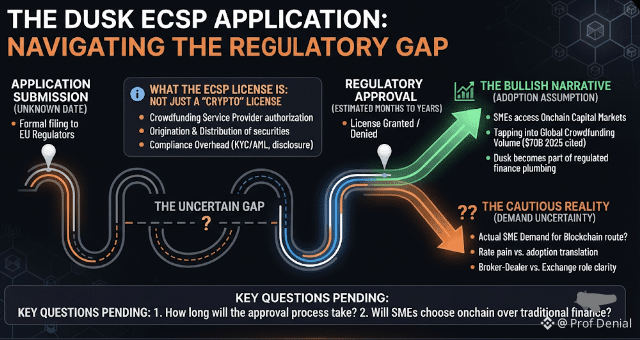
Easy read: $Dusk #dusk applying for an ECSP license means it can now connect European SMEs to onchain capital. Box checked, bullish narrative writes itself.
But an ECSP isn't a crypto license it's the same authorization traditional crowdfunding platforms need to match businesses with investors on loans and securities. Where does the underwriting risk actually sit once those assets move onchain? Still unclear to me.
Here's the conflation: $70B in global crowdfunding volume (2025) and 34M European SMEs facing a 43-point rate jump in Q2 2026 are real numbers. Neither proves SMEs choose onchain routes over traditional ones just because borrowing got expensive.
Think broker-dealer license, not stock listing same KYC/AML overhead, just relocated, not removed.
What I haven't seen: an application timeline. Watching for the approval-to-demand gap before forming a real view.
@Dusk #dusk #DUSK $DUSK
Easy read: $Dusk #dusk applying for an ECSP license means it can now connect European SMEs to onchain capital. Box checked, bullish narrative writes itself.
But an ECSP isn't a crypto license it's the same authorization traditional crowdfunding platforms need to match businesses with investors on loans and securities. Where does the underwriting risk actually sit once those assets move onchain? Still unclear to me.
Here's the conflation: $70B in global crowdfunding volume (2025) and 34M European SMEs facing a 43-point rate jump in Q2 2026 are real numbers. Neither proves SMEs choose onchain routes over traditional ones just because borrowing got expensive.
Think broker-dealer license, not stock listing same KYC/AML overhead, just relocated, not removed.
What I haven't seen: an application timeline. Watching for the approval-to-demand gap before forming a real view.
@Dusk #dusk #DUSK $DUSK
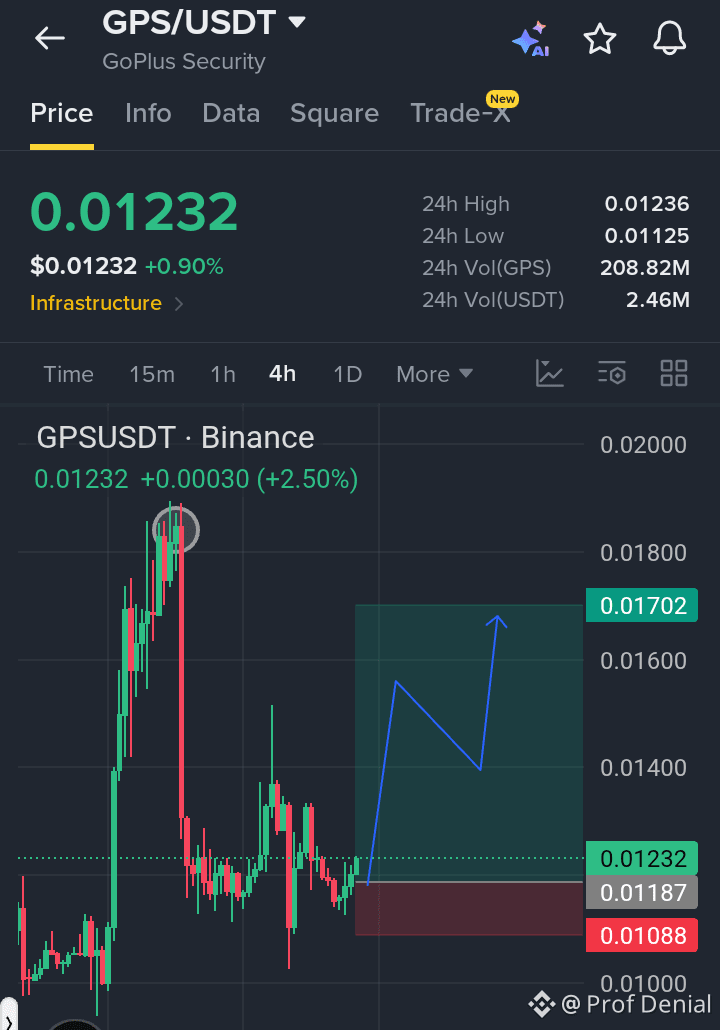
$GPS LONG SIGNAL 🚨
⚠️ Wait for a bullish retest around 0.01180–0.01250 (near the demand zone 0.01088–0.01187) before entering.
Confirmation: 4H close above 0.01350 strengthens continuation toward 0.01550–0.01700.
Invalidation: 4H close below 0.01050.
Risk: High volatility low leverage and controlled position size.
Entry: 0.01180–0.01250
SL: 0.01050
TP: 0.01400 → 0.01550 → 0.01700
$GPS TRADE Now 👇
⚠️ Wait for a bullish retest around 0.01180–0.01250 (near the demand zone 0.01088–0.01187) before entering.
Confirmation: 4H close above 0.01350 strengthens continuation toward 0.01550–0.01700.
Invalidation: 4H close below 0.01050.
Risk: High volatility low leverage and controlled position size.
Entry: 0.01180–0.01250
SL: 0.01050
TP: 0.01400 → 0.01550 → 0.01700
$GPS TRADE Now 👇
‼️‼️ $DRAM MARKET ANALYSIS ‼️‼️
$DRAM USDT looking weak after that rejection near 59… currently sitting at 55.88 near the 24h low.
$DRAM / USDT 👇
What do you think bounce incoming or more downside from here?
What do you think bounce incoming or more downside from here?
$DRAM USDT looking weak after that rejection near 59… currently sitting at 55.88 near the 24h low.
$DRAM / USDT 👇
What do you think bounce incoming or more downside from here?
What do you think bounce incoming or more downside from here?
BULLISH / LONG
100%
BEARISH / SHORT
0%
3 проголосовали • Голосование закрыто
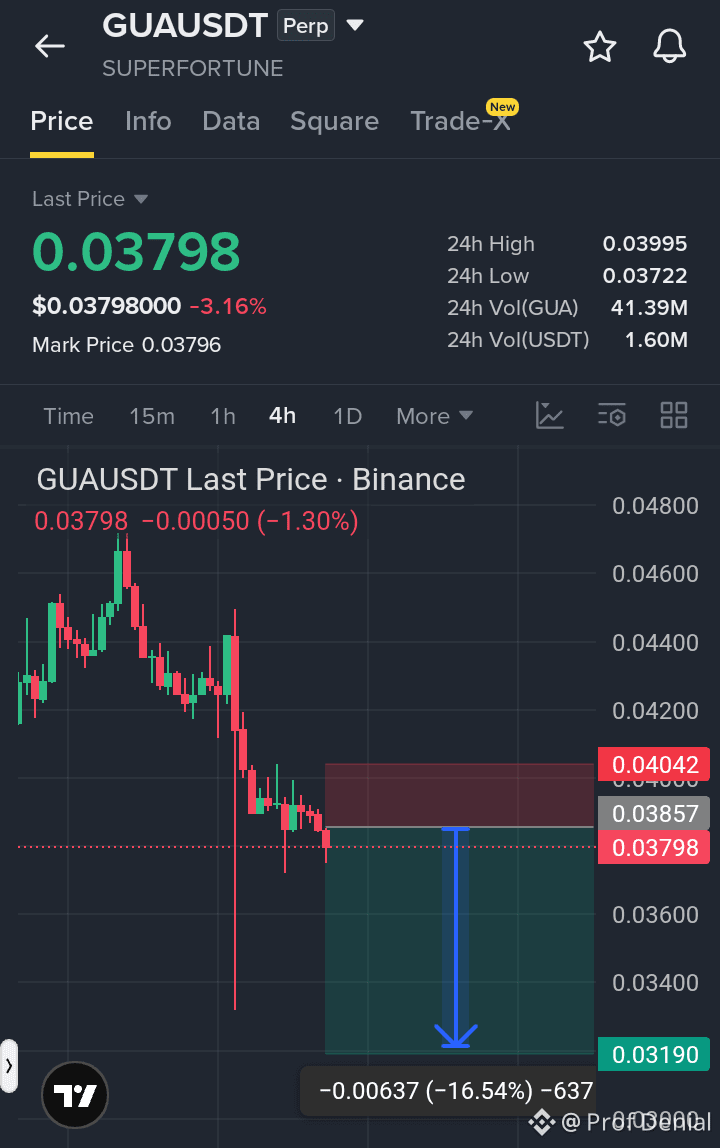
$GUA SHORT SIGNAL 🚨
⚠️ Wait for a bearish retest around 0.0378–0.0395 (near the resistance zone 0.03857–0.04042) before entering.
Confirmation: 4H close below 0.0370 strengthens continuation toward 0.0335–0.0319.
Invalidation: 4H close above 0.0410.
Risk: High volatility low leverage and controlled position size.
Entry: 0.0378–0.0395
SL: 0.0400
TP: 0.0360 → 0.0345 → 0.0355
$GUA TRADE Now 👇
⚠️ Wait for a bearish retest around 0.0378–0.0395 (near the resistance zone 0.03857–0.04042) before entering.
Confirmation: 4H close below 0.0370 strengthens continuation toward 0.0335–0.0319.
Invalidation: 4H close above 0.0410.
Risk: High volatility low leverage and controlled position size.
Entry: 0.0378–0.0395
SL: 0.0400
TP: 0.0360 → 0.0345 → 0.0355
$GUA TRADE Now 👇
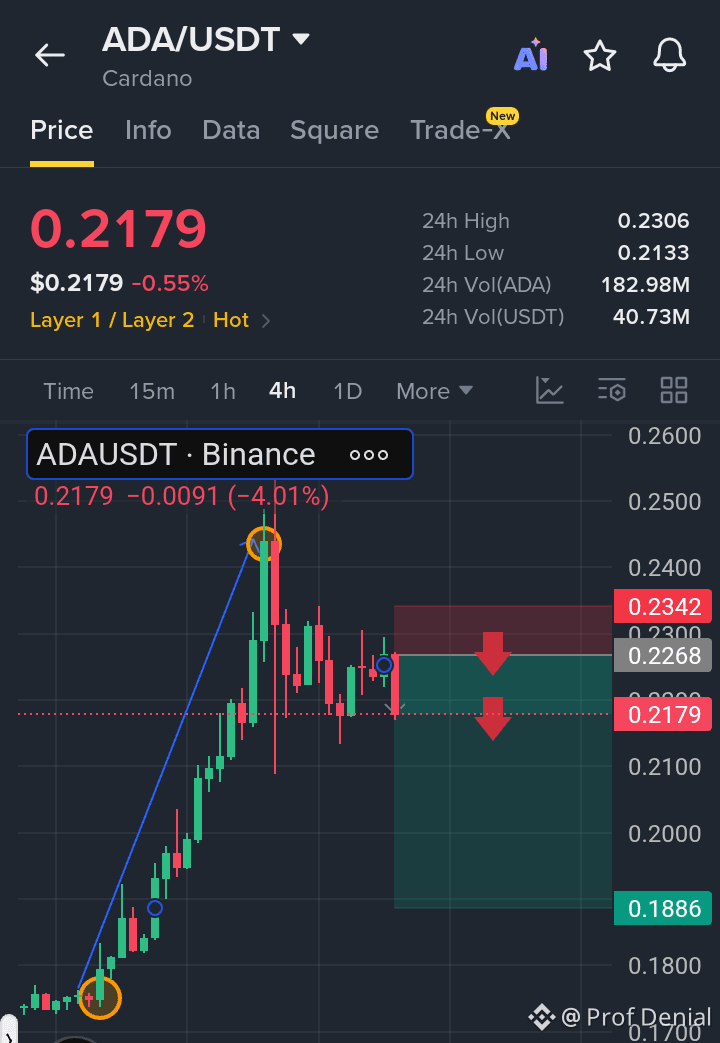
$ADA SHORT SIGNAL 🚨
⚠️ Wait for a bearish retest around 0.2170–0.2270 (near the resistance zone 0.2268–0.2342) before entering.
Confirmation: 4H close below 0.2130 strengthens continuation toward 0.1950–0.1886.
Invalidation: 4H close above 0.2365.
Risk: High volatility low leverage and controlled position size.
Entry: 0.2170–0.2270
SL: 0.2365
TP: 0.2050 → 0.1950 → 0.1888
$ADA TRADE Now 👇
⚠️ Wait for a bearish retest around 0.2170–0.2270 (near the resistance zone 0.2268–0.2342) before entering.
Confirmation: 4H close below 0.2130 strengthens continuation toward 0.1950–0.1886.
Invalidation: 4H close above 0.2365.
Risk: High volatility low leverage and controlled position size.
Entry: 0.2170–0.2270
SL: 0.2365
TP: 0.2050 → 0.1950 → 0.1888
$ADA TRADE Now 👇
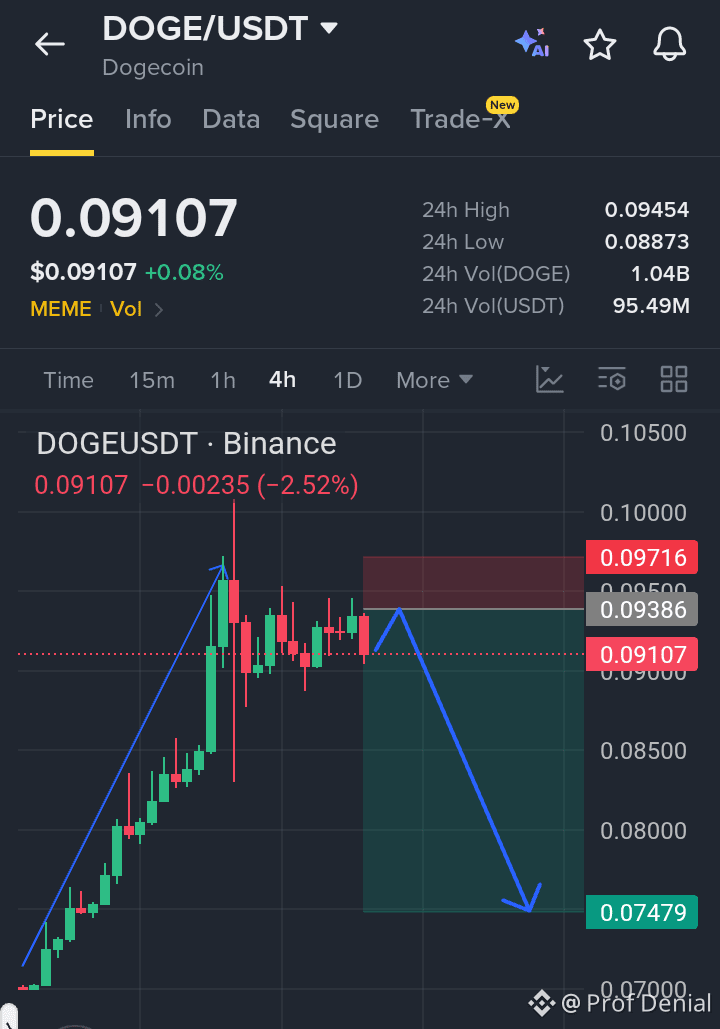
$DOGE SHORT SIGNAL 🚨
⚠️ Wait for a bearish retest around 0.0910–0.0940 (near the resistance zone) before entering.
Confirmation: 4H close below 0.0880 strengthens continuation toward 0.0800–0.0748.
Invalidation: 4H close above 0.0985.
Risk: High volatility low leverage and controlled position size.
Entry: 0.0910–0.0940
SL: 0.0985
TP: 0.0850 → 0.0800 → 0.0750
$DOGE TRADE Now 👇
⚠️ Wait for a bearish retest around 0.0910–0.0940 (near the resistance zone) before entering.
Confirmation: 4H close below 0.0880 strengthens continuation toward 0.0800–0.0748.
Invalidation: 4H close above 0.0985.
Risk: High volatility low leverage and controlled position size.
Entry: 0.0910–0.0940
SL: 0.0985
TP: 0.0850 → 0.0800 → 0.0750
$DOGE TRADE Now 👇
Проверено
Almost skipped past it in the changelog: zero runtime dependencies. Buried under bigger headlines about the SDK launch.
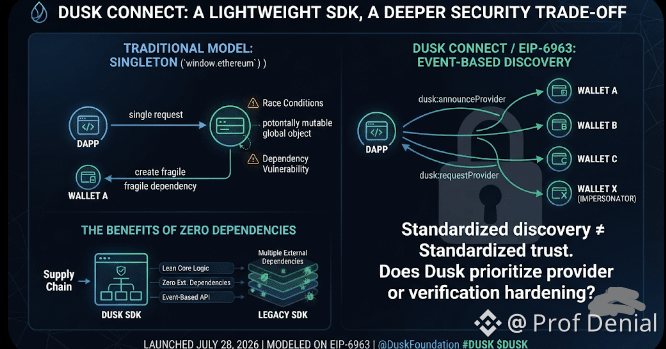
Easy read: Dusk Connect just makes wallet hookup easier for developers. Fine, that's the pitch lightweight SDK, plug it in, done.
Sit with it a bit longer and it's really about who owns the connection layer. Dusk uses an event-based discovery pattern `dusk:announceProvider`, `dusk:requestProvider` modeled directly on Ethereum's EIP-6963. Instead of a dApp hardcoding around one wallet, it broadcasts a request and lets every compatible wallet answer. The dApp never has to know which wallet wins.
Here's what gets glossed over: standardizing discovery doesn't standardize trust. Any extension can listen for that request event and announce itself as a provider. EIP-6963 solved Ethereum's old window.ethereum race condition, but it didn't solve wallet impersonation it just moved the burden of verifying which providers are legitimate onto the user, one connection prompt at a time.
Same tradeoff shows up in traditional finance. Open banking APIs standardized how third-party apps request account access, but a standardized request format never guaranteed the requester was safe banks still layer on separate consent and verification screens for exactly that reason.
My first instinct was that zero dependencies just meant a leaner install. It's more than that fewer dependencies also means fewer places for a supply-chain compromise to hide, and fewer excuses if one slips through anyway.
Would you rather see Dusk focus next on more wallet providers adopting this, or on hardening how dApps verify which provider they're actually talking to?
@Dusk #dusk $DUSK
Easy read: Dusk Connect just makes wallet hookup easier for developers. Fine, that's the pitch lightweight SDK, plug it in, done.
Sit with it a bit longer and it's really about who owns the connection layer. Dusk uses an event-based discovery pattern `dusk:announceProvider`, `dusk:requestProvider` modeled directly on Ethereum's EIP-6963. Instead of a dApp hardcoding around one wallet, it broadcasts a request and lets every compatible wallet answer. The dApp never has to know which wallet wins.
Here's what gets glossed over: standardizing discovery doesn't standardize trust. Any extension can listen for that request event and announce itself as a provider. EIP-6963 solved Ethereum's old window.ethereum race condition, but it didn't solve wallet impersonation it just moved the burden of verifying which providers are legitimate onto the user, one connection prompt at a time.
Same tradeoff shows up in traditional finance. Open banking APIs standardized how third-party apps request account access, but a standardized request format never guaranteed the requester was safe banks still layer on separate consent and verification screens for exactly that reason.
My first instinct was that zero dependencies just meant a leaner install. It's more than that fewer dependencies also means fewer places for a supply-chain compromise to hide, and fewer excuses if one slips through anyway.
Would you rather see Dusk focus next on more wallet providers adopting this, or on hardening how dApps verify which provider they're actually talking to?
@Dusk #dusk $DUSK
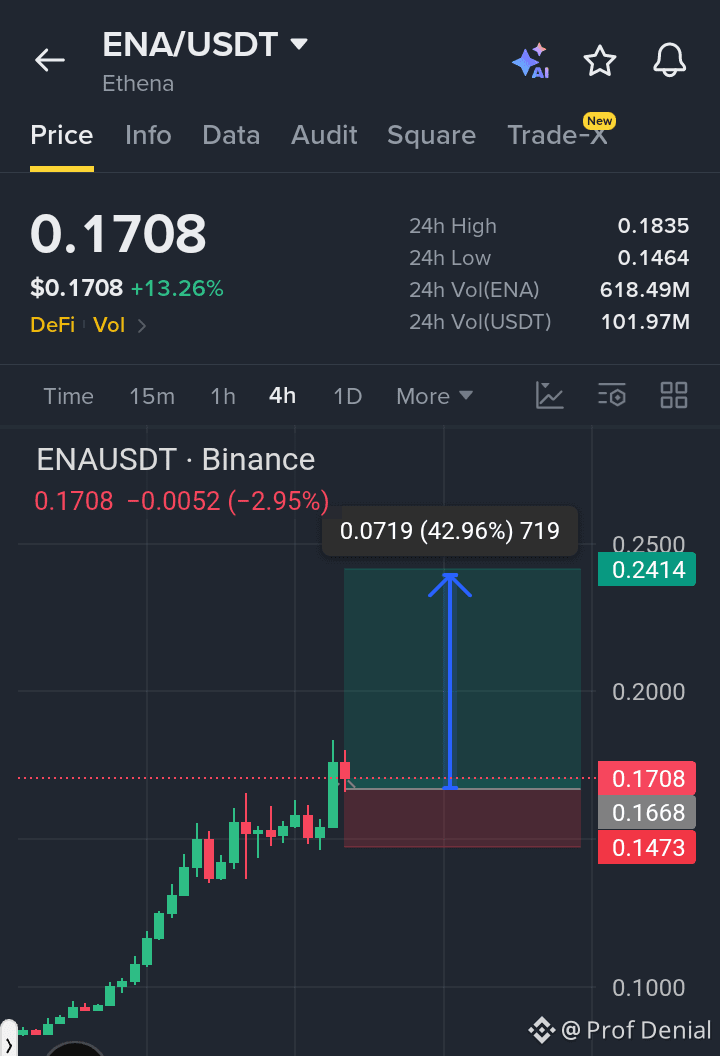
$ENA LONG SIGNAL 🚨
⚠️ Wait for a bullish retest around 0.1668–0.1710 before entering.
Confirmation: 4H close above 0.1835 strengthens continuation toward 0.2150–0.2414.
Invalidation: 4H close below 0.1473.
Risk: High volatility low leverage and controlled position size.
Entry: 0.1668–0.1710
SL: 0.1475
TP: 0.1900 → 0.2150 → 0.2300
$ENA TRADE Now 👇
⚠️ Wait for a bullish retest around 0.1668–0.1710 before entering.
Confirmation: 4H close above 0.1835 strengthens continuation toward 0.2150–0.2414.
Invalidation: 4H close below 0.1473.
Risk: High volatility low leverage and controlled position size.
Entry: 0.1668–0.1710
SL: 0.1475
TP: 0.1900 → 0.2150 → 0.2300
$ENA TRADE Now 👇
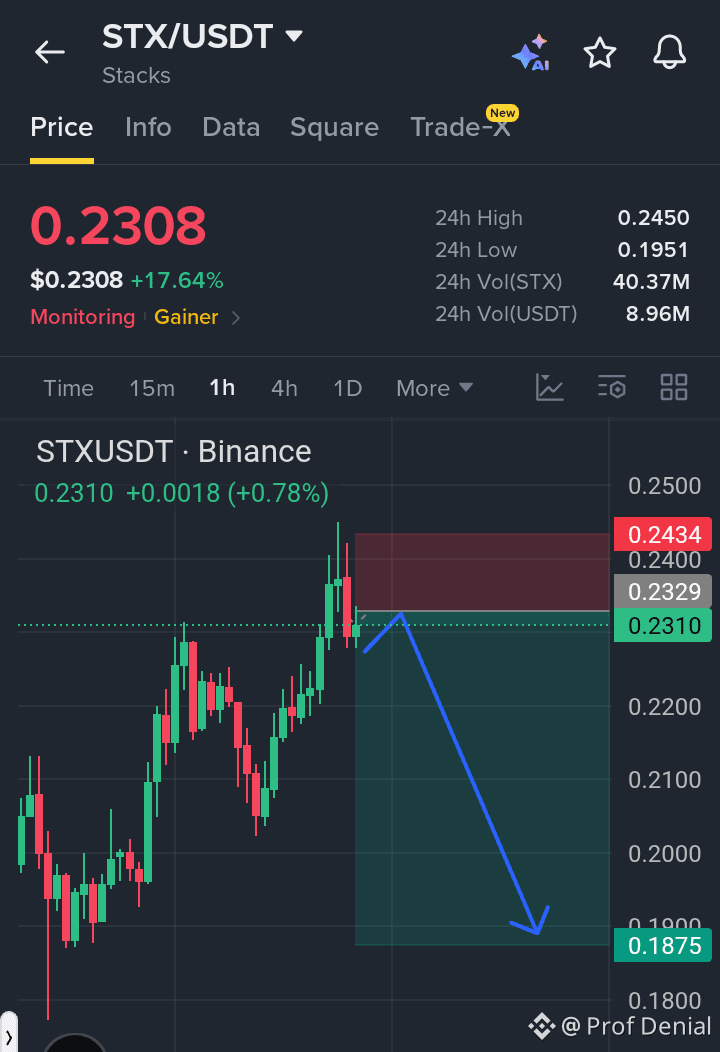
$STX SHORT SIGNAL 🚨
⚠️ Wait for bearish rejection around 0.232–0.233 before entering.
Confirmation: 1H close below 0.225 strengthens downside continuation.
Invalidation: 1H close above 0.2435.
Risk: High volatility low leverage and controlled position size.
Entry: 0.231–0.233
SL: 0.2435
TP: 0.220 → 0.205 → 0.1880
$STX TRADE Now 👇
⚠️ Wait for bearish rejection around 0.232–0.233 before entering.
Confirmation: 1H close below 0.225 strengthens downside continuation.
Invalidation: 1H close above 0.2435.
Risk: High volatility low leverage and controlled position size.
Entry: 0.231–0.233
SL: 0.2435
TP: 0.220 → 0.205 → 0.1880
$STX TRADE Now 👇
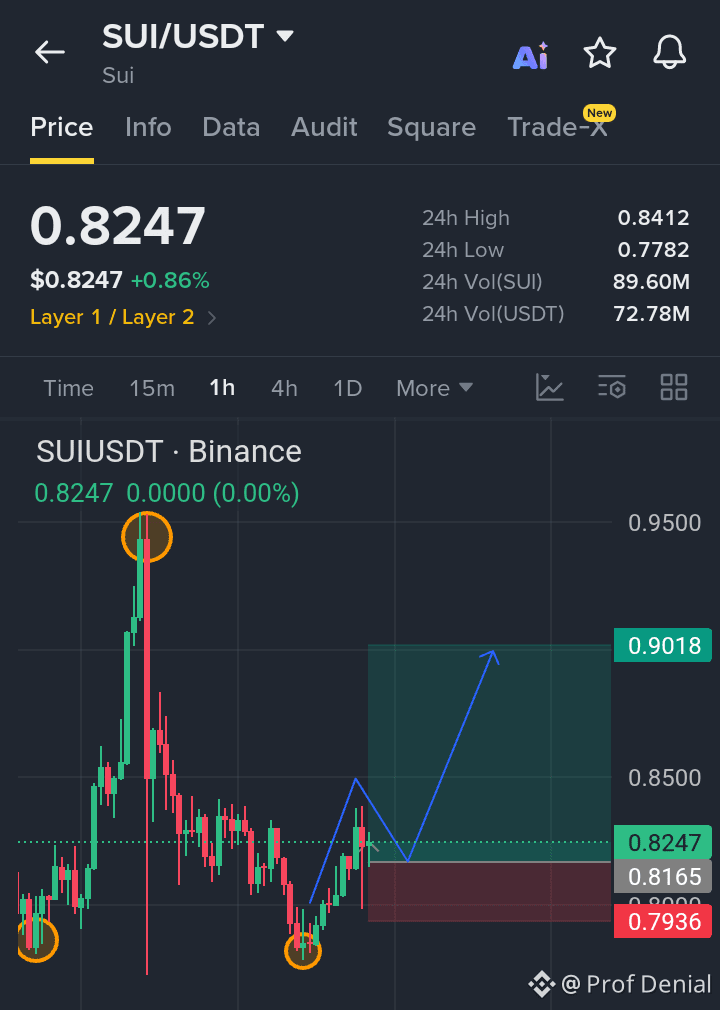
$SUI LONG SIGNAL 🚨
⚠️ Wait for bullish retest around 0.8165–0.8250 before entering.
Confirmation: 1H close above 0.8500 strengthens the move toward 0.8750–0.9018.
Invalidation: 1H close below 0.7936.
Risk: Moderate/high volatility use low leverage and controlled position size.
Entry: 0.8165–0.8250
SL: 0.7935
TP: 0.8500 → 0.8750 → 0.9015
$SUI TRADE Now 👇
⚠️ Wait for bullish retest around 0.8165–0.8250 before entering.
Confirmation: 1H close above 0.8500 strengthens the move toward 0.8750–0.9018.
Invalidation: 1H close below 0.7936.
Risk: Moderate/high volatility use low leverage and controlled position size.
Entry: 0.8165–0.8250
SL: 0.7935
TP: 0.8500 → 0.8750 → 0.9015
$SUI TRADE Now 👇
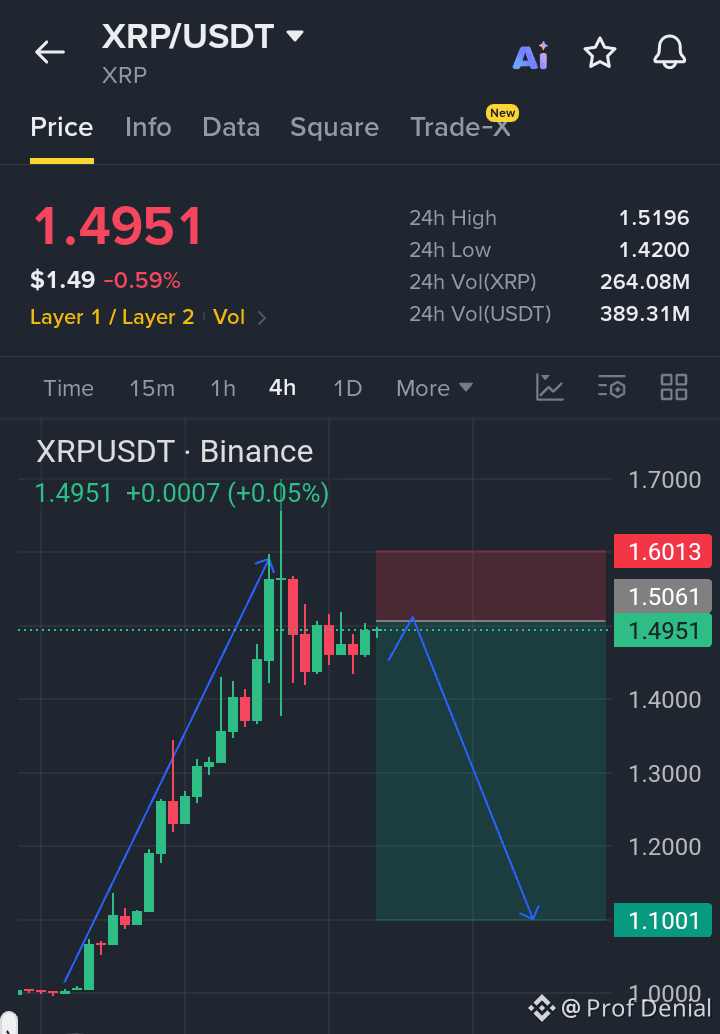
$XRP SHORT SIGNAL 🚨
⚠️ Wait for bearish rejection around 1.50–1.51 before entering. Price is consolidating after a strong rally, so avoid chasing.
Confirmation: A 4H close below 1.42 strengthens continuation toward 1.30–1.10.
Invalidation: 4H close above 1.602.
Risk: High volatility use low leverage and controlled position size.
Entry: 1.49–1.51
SL: 1.600
TP: 1.42 → 1.30 → 1.10
$XRP TRADE Now 👇
⚠️ Wait for bearish rejection around 1.50–1.51 before entering. Price is consolidating after a strong rally, so avoid chasing.
Confirmation: A 4H close below 1.42 strengthens continuation toward 1.30–1.10.
Invalidation: 4H close above 1.602.
Risk: High volatility use low leverage and controlled position size.
Entry: 1.49–1.51
SL: 1.600
TP: 1.42 → 1.30 → 1.10
$XRP TRADE Now 👇
Проверено
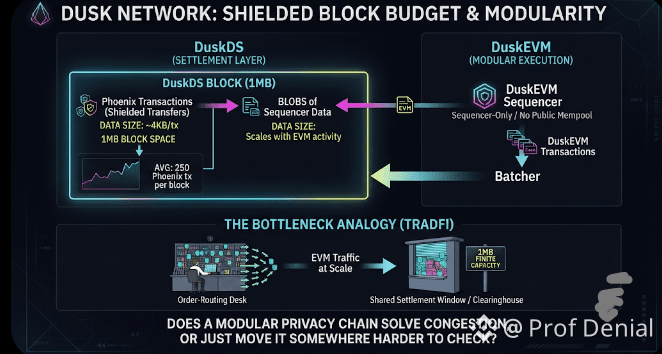
@Dusk caps blocks at 1MB. I almost scrolled past that line in their engineering notes like it was a footnote.
Easy read: that's roughly 250 Phoenix transactions per block. Fine, sounds like a normal throughput ceiling. Do the division though and a single shielded transfer runs close to 4KB. A plain UTXO transfer on a transparent chain sits under 500 bytes. The PLONK proof itself stays compact near half a kilobyte, constant-size regardless of circuit complexity. So the extra weight isn't the proof.
It's the notes, nullifiers, and commitments a shielded transfer has to carry so a spend can't be traced back to anyone. Privacy is paid for in bytes, not compute.
I figured that was the whole scalability story until I dug into DuskEVM. It runs on the OP Stack, executing EVM transactions while a batcher posts the transaction data back to DuskDS as blobs instead of to Ethereum. Smart on paper pull general contract execution off the privacy-native settlement layer, give it its own gas market, keep DuskDS lean. My first instinct was that this actually solves the byte problem.
Except those blobs still land on DuskDS's own block budget. Same finite bytes the shielded transfers already fight over. And right now DuskEVM runs sequencer-only, with no public mempool. So the chokepoint didn't disappear it relocated, and ordering got more centralized on the way there. DUSK is the native gas token across both DuskDS and DuskEVM, so its real usage curve hinges on whether that shared byte budget holds once EVM traffic actually shows up at scale.
Think of it like a regulated exchange routing dark-pool orders through the same clearing pipe as its lit market segmenting the flow doesn't add clearing capacity, it just changes who sees the queue.
Does a modular privacy chain solve congestion by adding layers, or just move it somewhere harder to check?
@Dusk #dusk $DUSK
Easy read: that's roughly 250 Phoenix transactions per block. Fine, sounds like a normal throughput ceiling. Do the division though and a single shielded transfer runs close to 4KB. A plain UTXO transfer on a transparent chain sits under 500 bytes. The PLONK proof itself stays compact near half a kilobyte, constant-size regardless of circuit complexity. So the extra weight isn't the proof.
It's the notes, nullifiers, and commitments a shielded transfer has to carry so a spend can't be traced back to anyone. Privacy is paid for in bytes, not compute.
I figured that was the whole scalability story until I dug into DuskEVM. It runs on the OP Stack, executing EVM transactions while a batcher posts the transaction data back to DuskDS as blobs instead of to Ethereum. Smart on paper pull general contract execution off the privacy-native settlement layer, give it its own gas market, keep DuskDS lean. My first instinct was that this actually solves the byte problem.
Except those blobs still land on DuskDS's own block budget. Same finite bytes the shielded transfers already fight over. And right now DuskEVM runs sequencer-only, with no public mempool. So the chokepoint didn't disappear it relocated, and ordering got more centralized on the way there. DUSK is the native gas token across both DuskDS and DuskEVM, so its real usage curve hinges on whether that shared byte budget holds once EVM traffic actually shows up at scale.
Think of it like a regulated exchange routing dark-pool orders through the same clearing pipe as its lit market segmenting the flow doesn't add clearing capacity, it just changes who sees the queue.
Does a modular privacy chain solve congestion by adding layers, or just move it somewhere harder to check?
@Dusk #dusk $DUSK
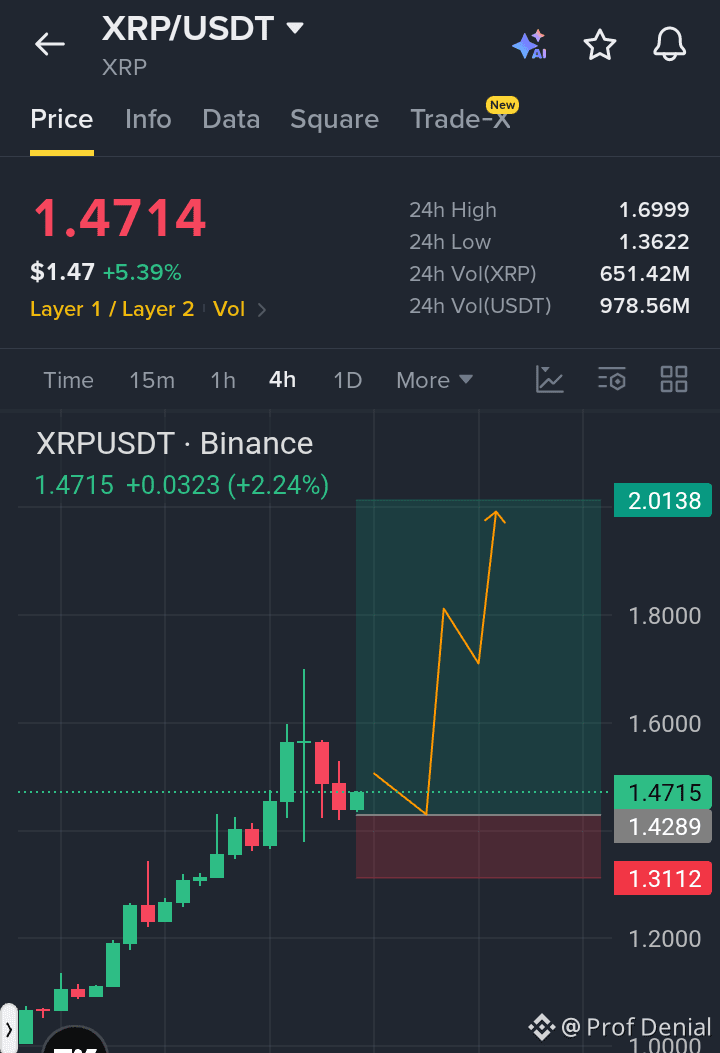
$XRP LONG SIGNAL 🚨
⚠️ Wait for a bullish retest/rejection around 1.43–1.48 before entering. Avoid chasing a breakout candle.
Confirmation: A 4H close above 1.55 strengthens continuation toward 1.60–1.80.
Invalidation: 4H close below 1.31.
Risk: Moderate/high volatility use low leverage and controlled position size.
Entry: 1.43–1.48
SL: 1.30
TP: 1.60 → 1.80 → 2.00
$XRP TRADE Now 👇
⚠️ Wait for a bullish retest/rejection around 1.43–1.48 before entering. Avoid chasing a breakout candle.
Confirmation: A 4H close above 1.55 strengthens continuation toward 1.60–1.80.
Invalidation: 4H close below 1.31.
Risk: Moderate/high volatility use low leverage and controlled position size.
Entry: 1.43–1.48
SL: 1.30
TP: 1.60 → 1.80 → 2.00
$XRP TRADE Now 👇
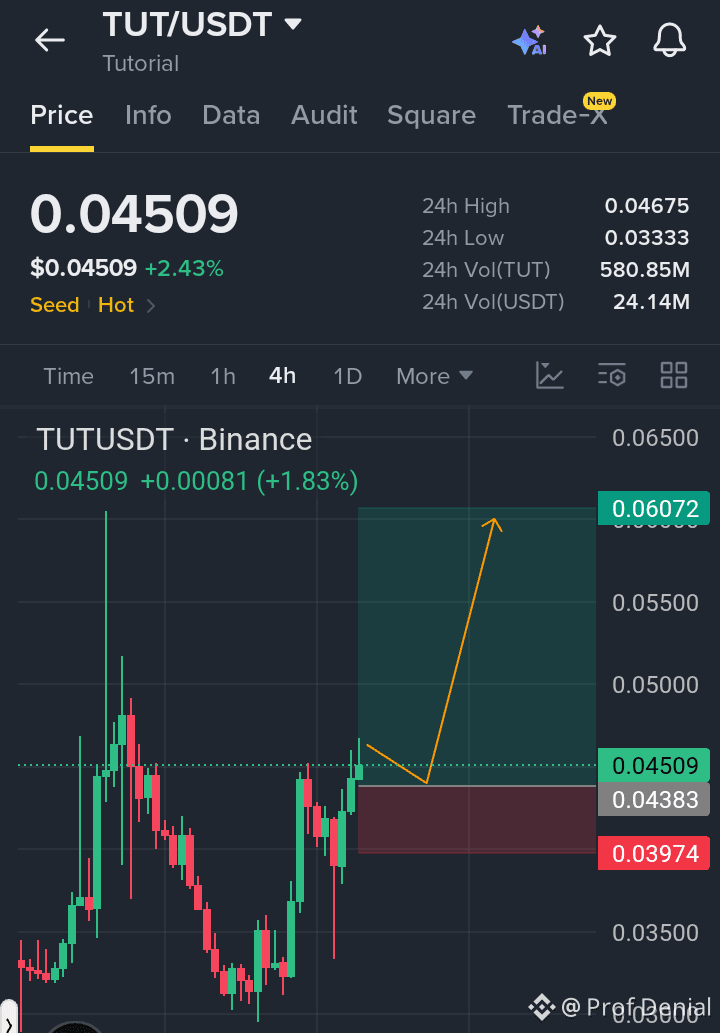
$TUT LONG SIGNAL 🚨
⚠️ Wait for a bullish retest around 0.0438–0.0450 before entering. Don’t chase a sudden spike.
Confirmation: A 4H close above 0.0468 strengthens continuation toward 0.0500–0.0607.
Invalidation: 4H close below 0.0397
Risk: High volatility use low leverage and controlled position size.
Entry: 0.0438–0.0451
SL: 0.0395
TP: 0.0500 → 0.0550 → 0.0605
$TUT TRADE Now 👇
⚠️ Wait for a bullish retest around 0.0438–0.0450 before entering. Don’t chase a sudden spike.
Confirmation: A 4H close above 0.0468 strengthens continuation toward 0.0500–0.0607.
Invalidation: 4H close below 0.0397
Risk: High volatility use low leverage and controlled position size.
Entry: 0.0438–0.0451
SL: 0.0395
TP: 0.0500 → 0.0550 → 0.0605
$TUT TRADE Now 👇
Проверено
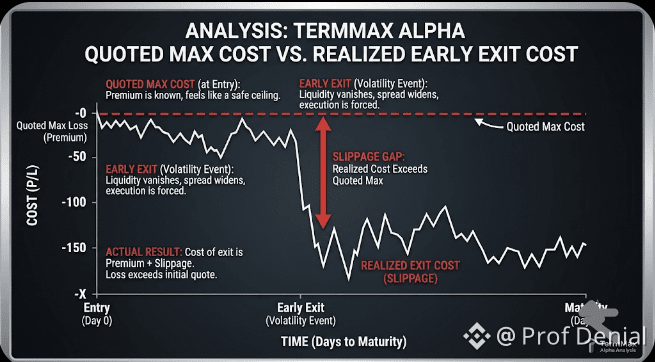
Been sitting with the Max Cost thing on TermMax Alpha and i think i talked myself into more safety than it actually gives me.
premium paid upfront. that's the max loss. clean number, feels like a ceiling on the downside. TermMax tells you that number before you even enter the position.
except max cost is about entering, not exiting.
if i want out before maturity, i'm not just eating the premium i already paid i'm selling into whatever liquidity happens to be sitting there at that moment. thin book, wide spread, and suddenly closing early costs me more than the "max" i thought i signed up for.
so the number TermMax shows me upfront is real. it's just answering a different question than the one i'm actually asking when i want to exit early.
"max cost" and "max cost if i can actually get filled" are not the same sentence.
still trying to figure out how bad that gap gets when volatility spikes and everyone's trying to close at once. anyone actually closed an Alpha position early and compared it to the quoted max cost?
@TermMax #TermMax #termmax $TMX
premium paid upfront. that's the max loss. clean number, feels like a ceiling on the downside. TermMax tells you that number before you even enter the position.
except max cost is about entering, not exiting.
if i want out before maturity, i'm not just eating the premium i already paid i'm selling into whatever liquidity happens to be sitting there at that moment. thin book, wide spread, and suddenly closing early costs me more than the "max" i thought i signed up for.
so the number TermMax shows me upfront is real. it's just answering a different question than the one i'm actually asking when i want to exit early.
"max cost" and "max cost if i can actually get filled" are not the same sentence.
still trying to figure out how bad that gap gets when volatility spikes and everyone's trying to close at once. anyone actually closed an Alpha position early and compared it to the quoted max cost?
@TermMax #TermMax #termmax $TMX
Проверено
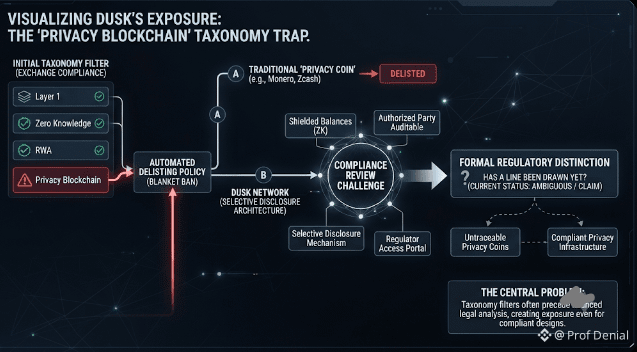
Noticed CoinGecko tags @Dusk under four categories at once Layer 1, Zero Knowledge, RWA, and Privacy Blockchain. Kept scrolling past it the first time. Second look, that last one stuck.
On the surface, fair enough. Dusk uses zero-knowledge proofs, shielded balances, the whole stack. Privacy Blockchain isn't a mislabel.
But that's also the exact category that's cost Monero and Zcash their listings on multiple major exchanges over the past two years, as AML frameworks tightened around anything resembling untraceable transfers. My first instinct was "Dusk solved this already" selective disclosure, auditable-by-authorized-parties, the whole design is built around not being that. I want to believe the architecture settles the question.
Here's the part I keep circling back to: exchange compliance teams don't usually run a nuanced read of a chain's disclosure model before deciding what to delist. They run a category filter. If "Privacy Blockchain" trips a blanket policy, it doesn't matter whether the privacy is opt-in, permissioned, or fully auditable on request the tag does the work, not the whitepaper.
Think of it like the difference between a private placement and a shell company, in TradFi terms. Both get flagged by the same AML screening software on day one. The private placement can eventually prove itself legitimate through paperwork and disclosure but only after it's already been flagged, and only if someone bothers to look past the flag.
That's Dusk's actual exposure right now. Not a legal problem. A labeling problem, sitting upstream of the legal one, decided by category taxonomy before any regulator even opens the file.
Has any exchange or regulator formally drawn a line between "privacy coin" and "compliant privacy infrastructure" yet or is that distinction still just a claim Dusk is making about itself?
@Dusk #dusk $DUSK
On the surface, fair enough. Dusk uses zero-knowledge proofs, shielded balances, the whole stack. Privacy Blockchain isn't a mislabel.
But that's also the exact category that's cost Monero and Zcash their listings on multiple major exchanges over the past two years, as AML frameworks tightened around anything resembling untraceable transfers. My first instinct was "Dusk solved this already" selective disclosure, auditable-by-authorized-parties, the whole design is built around not being that. I want to believe the architecture settles the question.
Here's the part I keep circling back to: exchange compliance teams don't usually run a nuanced read of a chain's disclosure model before deciding what to delist. They run a category filter. If "Privacy Blockchain" trips a blanket policy, it doesn't matter whether the privacy is opt-in, permissioned, or fully auditable on request the tag does the work, not the whitepaper.
Think of it like the difference between a private placement and a shell company, in TradFi terms. Both get flagged by the same AML screening software on day one. The private placement can eventually prove itself legitimate through paperwork and disclosure but only after it's already been flagged, and only if someone bothers to look past the flag.
That's Dusk's actual exposure right now. Not a legal problem. A labeling problem, sitting upstream of the legal one, decided by category taxonomy before any regulator even opens the file.
Has any exchange or regulator formally drawn a line between "privacy coin" and "compliant privacy infrastructure" yet or is that distinction still just a claim Dusk is making about itself?
@Dusk #dusk $DUSK
Проверено
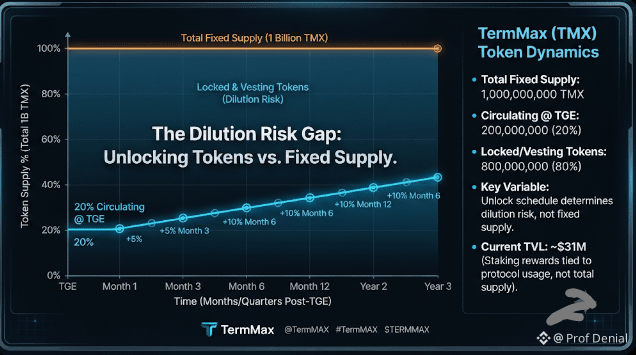
I kept staring at one number in the TermMax token breakdown: 20% circulating at TGE. The other 80% is still sitting somewhere, unlocking on a schedule most holders haven't actually read.
Easy take: fixed supply, no inflation, stake TMX for sTMX and earn rewards tied to protocol usage. Sounds clean. Sounds like alignment skin in the game, as the TermMax team puts it themselves.
But sit with where that other 80% actually goes and on what timeline. "Fixed supply" answers how much will ever exist. It says nothing about how much hits the market next month, next quarter, or next year, and who's holding the keys to that schedule.
That's the conflation people make: fixed supply gets read as "no dilution risk," when really it just means no dilution risk from new issuance. The dilution risk from existing-but-locked tokens unlocking is still fully live, and it's arguably the bigger variable for anyone staking now at today's circulating float.
It's the same gap between a bond's face value and its actual float. A bond's total issuance is fixed and disclosed upfront too, but what moves price is how much of that issuance is actually trading versus held to maturity by a few large holders. Fixed supply, variable float two different numbers that get flattened into one headline stat.
TermMax's protocol sits around $31M TVL currently, with sTMX rewards designed to scale with usage meaning staking yield is a function of a still-small revenue base, not the token's total 1B supply.
I want to like the "no inflation" framing, it's a fair point against protocols that print endlessly. My first instinct was to treat fixed supply as the whole risk picture. It's not it's half of it, and the unlock schedule is the half most people skip past.
Watching how the remaining 80% actually unlocks over time, and whether staking demand keeps pace with it or just gets absorbed by it.
@TermMax #termMAX #TermMax
Easy take: fixed supply, no inflation, stake TMX for sTMX and earn rewards tied to protocol usage. Sounds clean. Sounds like alignment skin in the game, as the TermMax team puts it themselves.
But sit with where that other 80% actually goes and on what timeline. "Fixed supply" answers how much will ever exist. It says nothing about how much hits the market next month, next quarter, or next year, and who's holding the keys to that schedule.
That's the conflation people make: fixed supply gets read as "no dilution risk," when really it just means no dilution risk from new issuance. The dilution risk from existing-but-locked tokens unlocking is still fully live, and it's arguably the bigger variable for anyone staking now at today's circulating float.
It's the same gap between a bond's face value and its actual float. A bond's total issuance is fixed and disclosed upfront too, but what moves price is how much of that issuance is actually trading versus held to maturity by a few large holders. Fixed supply, variable float two different numbers that get flattened into one headline stat.
TermMax's protocol sits around $31M TVL currently, with sTMX rewards designed to scale with usage meaning staking yield is a function of a still-small revenue base, not the token's total 1B supply.
I want to like the "no inflation" framing, it's a fair point against protocols that print endlessly. My first instinct was to treat fixed supply as the whole risk picture. It's not it's half of it, and the unlock schedule is the half most people skip past.
Watching how the remaining 80% actually unlocks over time, and whether staking demand keeps pace with it or just gets absorbed by it.
@TermMax #termMAX #TermMax
Проверено
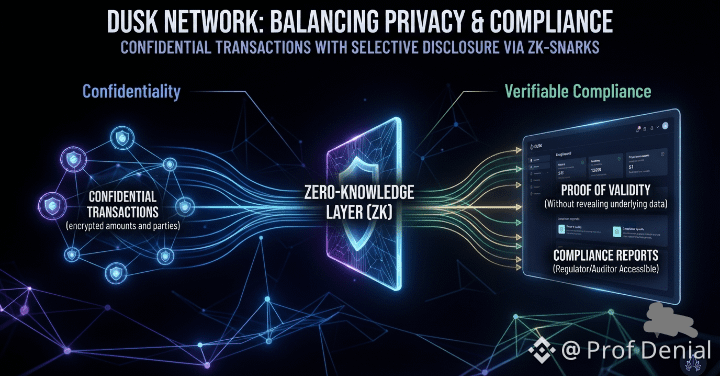
Spent the morning reading through Dusk's docs on selective disclosure, and one detail stopped me. On most chains, privacy means a transaction is hidden, full stop. On Dusk, a confidential transaction one where amounts and parties are shielded can still be proven valid to a regulator or auditor without revealing the underlying data. That's the ZK part doing the work: proving something is true without showing why it's true.
Usually crypto treats privacy and compliance as opposites you pick a mixer or you pick a permissioned chain. Dusk is trying to build both into the base layer at once, which is a different bet than "add compliance later."
But provable doesn't mean proven. A cryptographic guarantee that satisfies an engineer isn't automatically the same thing a regulator will accept in practice. Partnerships like the one with NPEX suggest real institutional appetite, but one licensed exchange isn't a verdict on whether this model scales across jurisdictions with very different disclosure rules.
Good architecture doesn't automatically solve a regulatory problem. It just gives you a better starting position. Whether that's enough is still open to me.
@Dusk #dusk #DUSK $DUSK
Usually crypto treats privacy and compliance as opposites you pick a mixer or you pick a permissioned chain. Dusk is trying to build both into the base layer at once, which is a different bet than "add compliance later."
But provable doesn't mean proven. A cryptographic guarantee that satisfies an engineer isn't automatically the same thing a regulator will accept in practice. Partnerships like the one with NPEX suggest real institutional appetite, but one licensed exchange isn't a verdict on whether this model scales across jurisdictions with very different disclosure rules.
Good architecture doesn't automatically solve a regulatory problem. It just gives you a better starting position. Whether that's enough is still open to me.
@Dusk #dusk #DUSK $DUSK
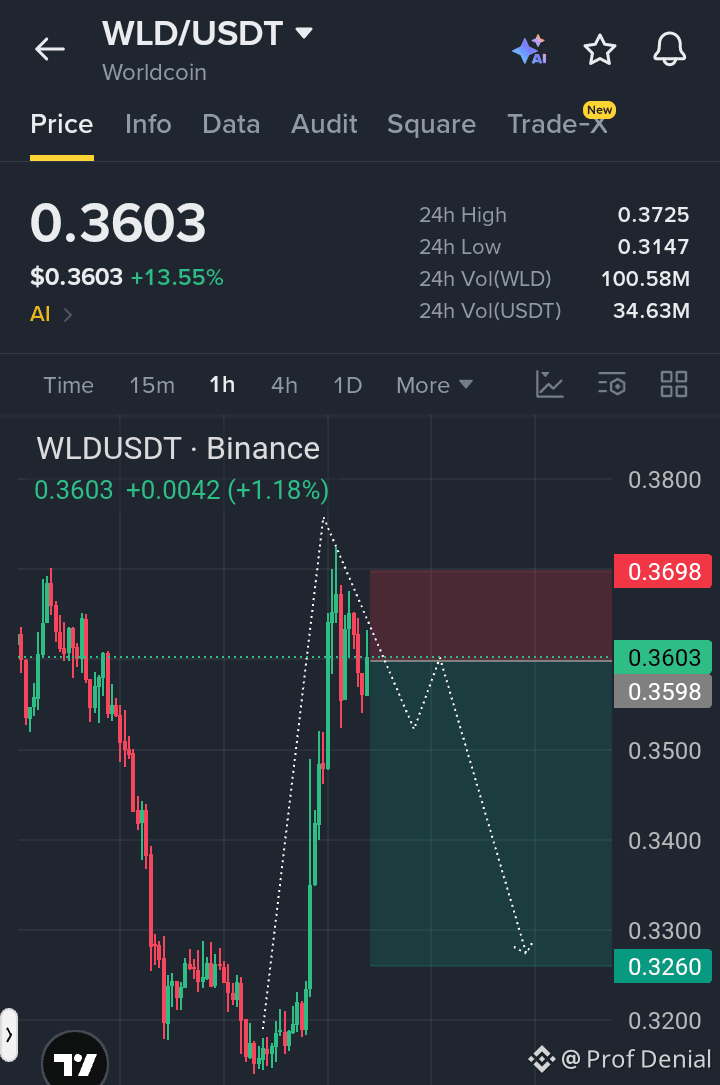
$WLD SHORT SIGNAL 🚨
⚠️ Wait for bearish rejection around 0.3580–0.3620 before entering. The chart shows a sharp rejection from the 0.37 area after the impulsive pump.
Confirmation: A 1H close below 0.3550 strengthens continuation toward 0.3450–0.3260.
Invalidation: 1H close above 0.3720.
Risk: High volatility WLD can move fast. Use small size and tight risk management.
Entry: 0.3580–0.3620
SL: 0.390
TP: 0.3450 → 0.3350 → 0.3260
$WLD TRADE Now 👇
⚠️ Wait for bearish rejection around 0.3580–0.3620 before entering. The chart shows a sharp rejection from the 0.37 area after the impulsive pump.
Confirmation: A 1H close below 0.3550 strengthens continuation toward 0.3450–0.3260.
Invalidation: 1H close above 0.3720.
Risk: High volatility WLD can move fast. Use small size and tight risk management.
Entry: 0.3580–0.3620
SL: 0.390
TP: 0.3450 → 0.3350 → 0.3260
$WLD TRADE Now 👇
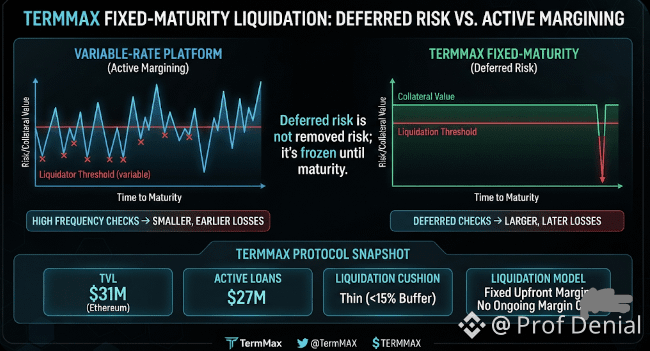
I keep coming back to one line in the TermMax docs: no ongoing margin calls. Position gets sized once, at origination, then waits for maturity.
Easy read: no liquidation cascades, no 3am margin calls. Fixed premium instead of constant collateral babysitting. Calm DeFi.
But sit with what "fixed upfront" replaces. On variable platforms, risk gets repriced continuously. Here it gets frozen at open and barely touched until near maturity. That risk didn't disappear it got deferred. Deferred isn't removed.
Closest analogy is a term repo locks in rate and date, but a repo desk still marks collateral and can call for more margin mid-term. TermMax's version reads more like a fixed-haircut forward. Same "fixed-term" label, thinner monitoring.
TVL sits around $31M, almost entirely on Ethereum, with active loans near $27M loan book nearly matches the deposit base. Not much cushion if collateral gaps down hard between checks.
My first instinct was relief finally a protocol that doesn't scream at you mid-cycle. Then I asked where that risk actually went instead of just being glad it got quieter.
Watching how liquidation timing plays out the first time collateral moves hard mid-maturity, not just how it reads on paper.
@TermMax #termMAx #TermMax
Easy read: no liquidation cascades, no 3am margin calls. Fixed premium instead of constant collateral babysitting. Calm DeFi.
But sit with what "fixed upfront" replaces. On variable platforms, risk gets repriced continuously. Here it gets frozen at open and barely touched until near maturity. That risk didn't disappear it got deferred. Deferred isn't removed.
Closest analogy is a term repo locks in rate and date, but a repo desk still marks collateral and can call for more margin mid-term. TermMax's version reads more like a fixed-haircut forward. Same "fixed-term" label, thinner monitoring.
TVL sits around $31M, almost entirely on Ethereum, with active loans near $27M loan book nearly matches the deposit base. Not much cushion if collateral gaps down hard between checks.
My first instinct was relief finally a protocol that doesn't scream at you mid-cycle. Then I asked where that risk actually went instead of just being glad it got quieter.
Watching how liquidation timing plays out the first time collateral moves hard mid-maturity, not just how it reads on paper.
@TermMax #termMAx #TermMax
Войдите, чтобы посмотреть больше материала