
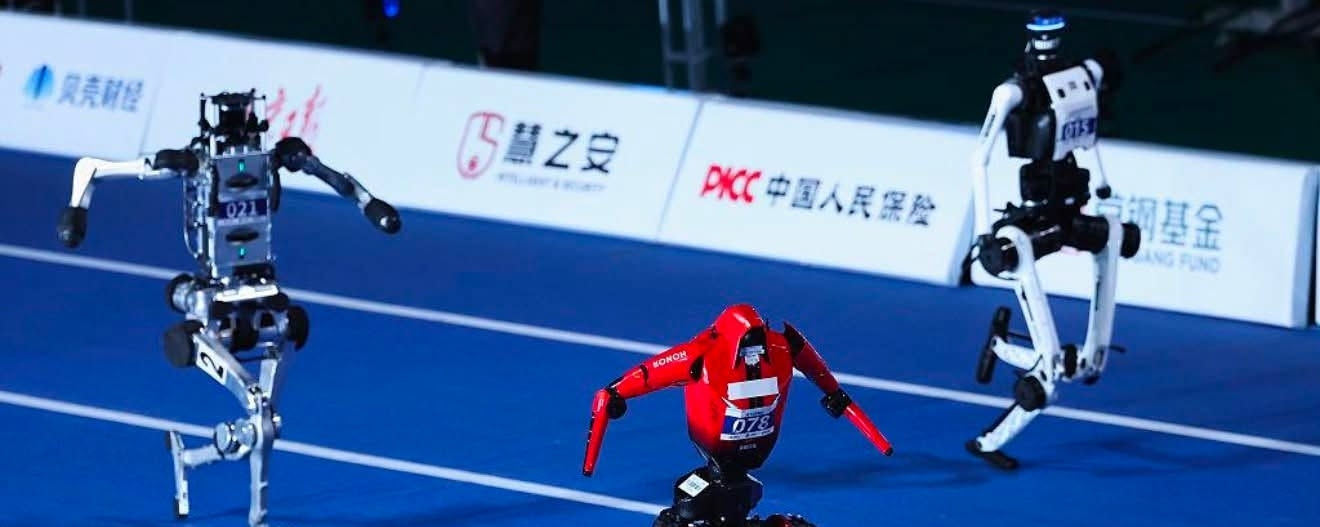

Footage from the World Humanoid Robot Games in Beijing looks like a demonstration of the future that has come a little earlier than we expected, but so far it only looks like this…
More than 2,000 robots, 666 teams from 16 countries. Robots run, play football, table tennis, perform production tasks.
But what is happening outside these spectacular demonstrations is much more interesting.
China seems to have already won the first stage of the humanoid race - the production of the "hardware" itself. But the next stage turned out to be much more difficult.
For a robot to simply pick up a glass and pour water into it, it is not enough for it to "know" what a glass is. It must sense its position in space, correctly calculate the force of the grip, take into account the fragility of the glass, the weight of the object, the movement of the liquid and hundreds of other physical parameters.
A piece of hardware needs a brain. And in this direction, the West still maintains its leadership.
But China is trying very hard)) deploying a huge infrastructure for training robots. According to Interact Analysis, 53 specialized centers are already operating in the country, another 34 are being built or planned. And there, as always, they will steal, copy from Western technologies and in checkers))
In one of these training centers, in Wuhan, up to a hundred robots spend hours watching people and repeating their movements: pouring coffee, laying out goods, working on an improvised production line. However, the results of such training are not so impressive yet.
Another point. About 80% of Chinese robot training centers are supported by the state. Local authorities buy robots, finance infrastructure, collect data and, in fact, simultaneously subsidize demand for products from Chinese manufacturers.
Morgan Stanley predicts that by 2030, China can produce about 450 thousand humanoids per year. At the same time, The Economist believes that a full-fledged commercial market for universal humanoids may not arise by the end of the decade.
Let me remind you that there are actually three years left until the end of the decade. And if the war drags on, there is a pretty good chance that we will see a slew of humanoid robots on the front lines. This is facilitated by both the explosive development of AI (the brain of the iron) and banal mathematics - such a robot will definitely cost less in monetary terms than a person.