
BTC_Fahmi
14.3k Публикации

BTC_Fahmi
 Square Verified+
Content Creator | Crypto & Technical Analyst | Trading Expert | Blockchain & Web3 Specialist | X : @btc_fahmi
Трейдер с частыми сделками
2 г
140 подписок(и/а)
55.6K+ подписчиков(а)
55.8K+ понравилось
Посты
Все
Цитирования
Видео
Активно
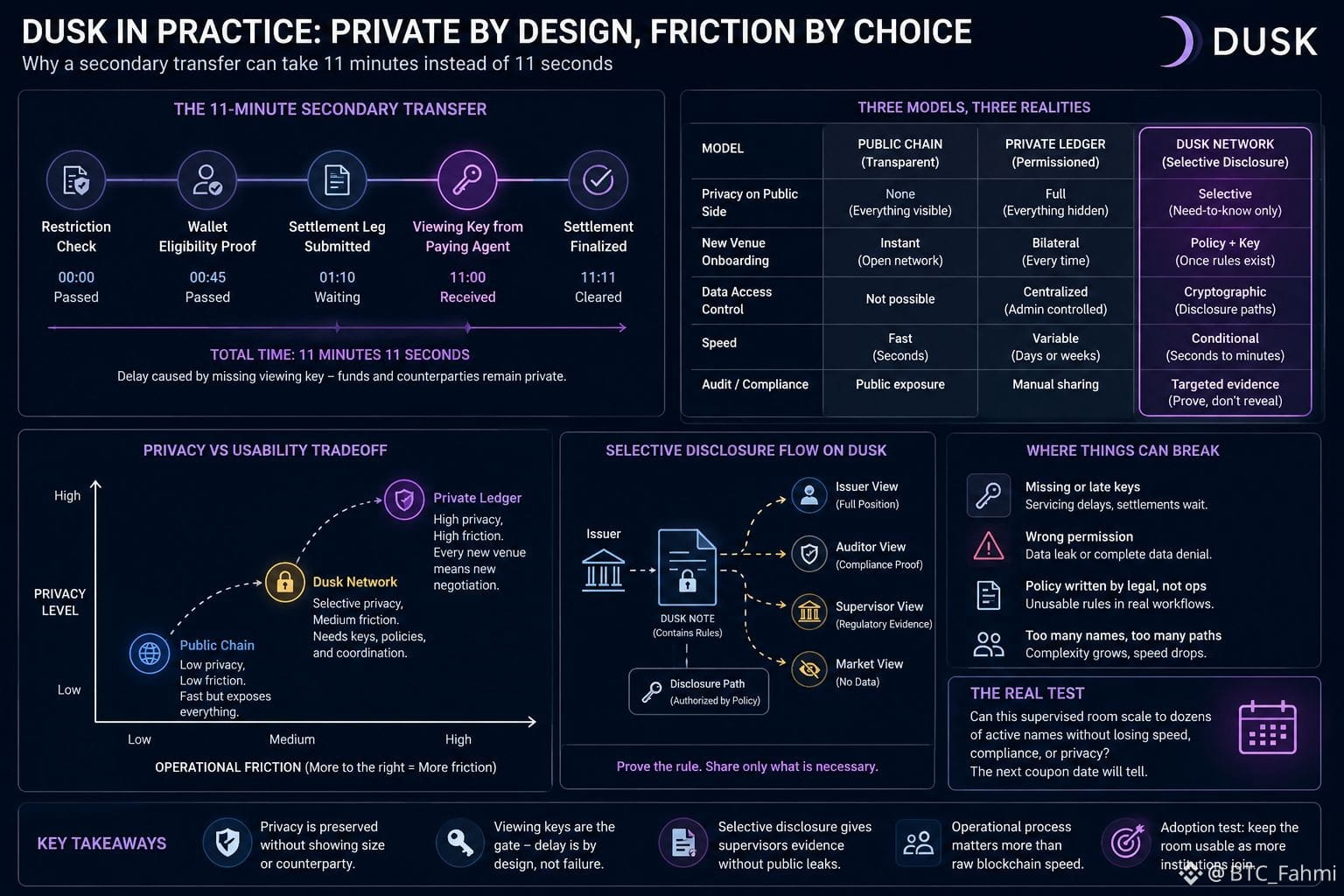
#dusk $DUSK @Dusk I watched eleven minutes burn on a secondary transfer on Dusk that shouldn’t have needed them. Not stuck. Just waiting. Restriction check passed, wallet proved eligible, and the settlement leg still wouldn’t clear until the paying agent’s viewing key showed up. Nobody on the public side could see size or counterparty. That lag is the point. Also the friction.
Banks care that the book stays a book. Public rails publish the register the second a note moves. Private ledgers keep it private but turn every new venue into another bilateral negotiation. On Dusk the note just carried its own rules. No holder list on the public side. Coupon waterfalls stayed quiet until someone with the right disclosure path asked. Useful. Also slower than a spreadsheet when the keys are late or legal wrote the policy instead of ops.
I keep wondering if the selective view becomes the new bottleneck. Supervisors get evidence, the street gets nothing, and the issuer still decides who can reconstruct the full position. One wrong permission and the leak is back. One missing and servicing grinds. People stop treating the chain like a broadcast and start treating it like a supervised room with cryptographic receipts. Whether that room stays usable once a few dozen names are live is the actual test. I’ll watch the next coupon date.
Banks care that the book stays a book. Public rails publish the register the second a note moves. Private ledgers keep it private but turn every new venue into another bilateral negotiation. On Dusk the note just carried its own rules. No holder list on the public side. Coupon waterfalls stayed quiet until someone with the right disclosure path asked. Useful. Also slower than a spreadsheet when the keys are late or legal wrote the policy instead of ops.
I keep wondering if the selective view becomes the new bottleneck. Supervisors get evidence, the street gets nothing, and the issuer still decides who can reconstruct the full position. One wrong permission and the leak is back. One missing and servicing grinds. People stop treating the chain like a broadcast and start treating it like a supervised room with cryptographic receipts. Whether that room stays usable once a few dozen names are live is the actual test. I’ll watch the next coupon date.
·
--
🎙️ $DUSK Under Pressure — What Happens Next?

Завершено
02 ч 56 мин 51 сек
541
0
·
--
🎙️ DUSK Under Pressure, What Happens Next?

Завершено
05 ч 59 мин 50 сек
804
0

join

ROCKING_CRYPTO
·
--
[Повтор] 🎙️ $DUSK live trading #dusk
01 ч 32 мин 28 сек · Слушатели: 54
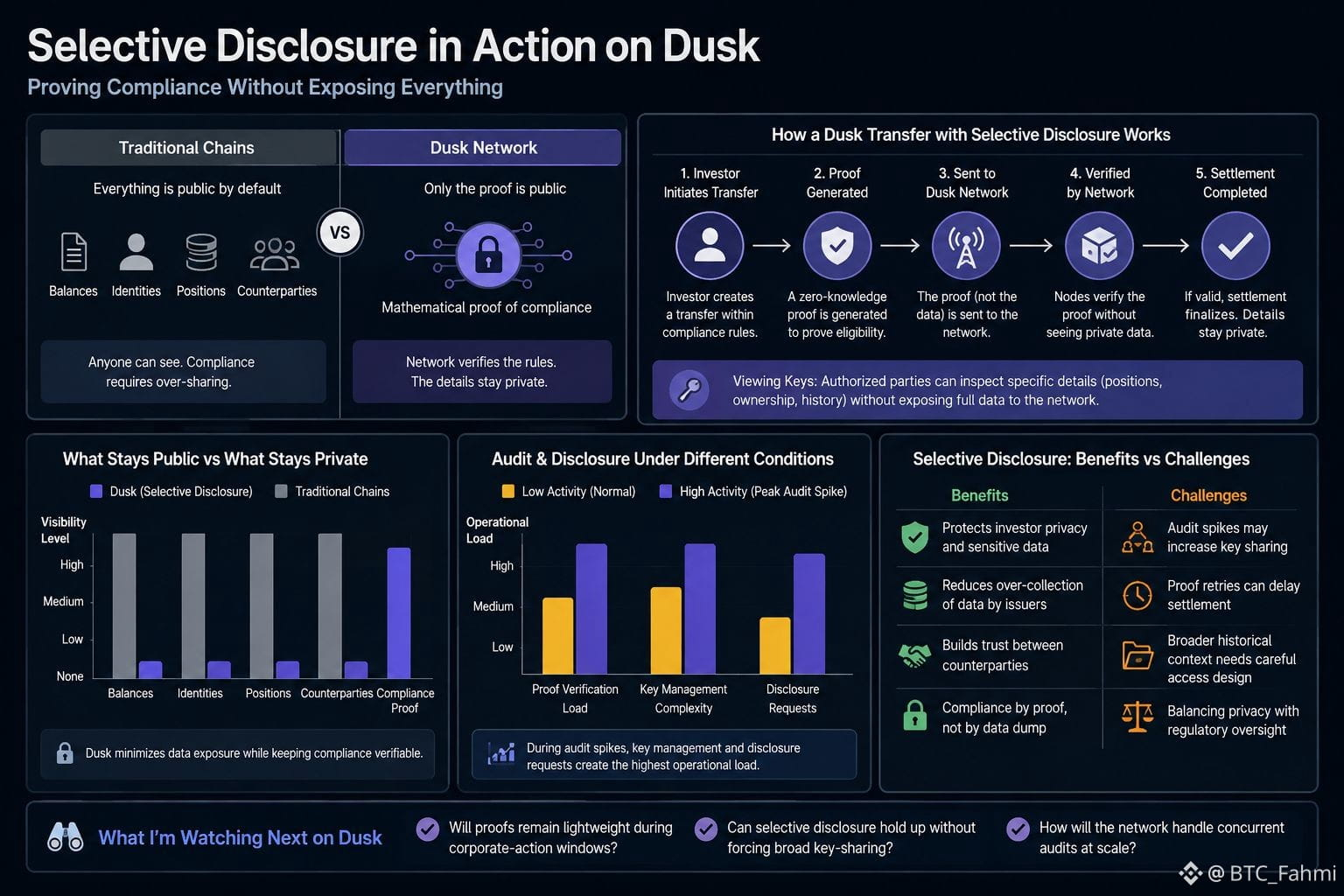
#dusk $DUSK @Dusk I watched a settlement retry fail twice last week on a tokenized bond flow running on Dusk. Not a hard crash just the proof that should have confirmed eligibility sat there, unverified. While the other side waited. Someone had to dig for the right viewing key instead of the whole ledger lighting up with balances and names.
That’s the part that kept bothering me about how the system actually behaves on Dusk. Most chains force you to broadcast everything so anyone can check the rules. Here the network only sees the mathematical claim that the transfer stayed inside the constraints. The actual positions, the investor details, the size—none of it has to surface. Compliance becomes something you prove rather than something you dump into a shared state.
It starts shifting what people bother collecting. Issuers stop over-collecting data just to stay safe. Counterparties don’t have to trust that the other side will hand over the right files later. The protocol itself carries the verification on Dusk.
Still, I’m not sure how cleanly this scales on Dusk when the number of concurrent audits spikes or when a supervisor wants broader historical context. The selective disclosure works in the quiet moments. Under real pressure it might force more key-sharing than the design intends. Or maybe it won’t hard to tell yet.
I’ll be watching the next corporate-action window on Dusk closely to see whether the proofs stay lightweight or start dragging operational weight with them.
That’s the part that kept bothering me about how the system actually behaves on Dusk. Most chains force you to broadcast everything so anyone can check the rules. Here the network only sees the mathematical claim that the transfer stayed inside the constraints. The actual positions, the investor details, the size—none of it has to surface. Compliance becomes something you prove rather than something you dump into a shared state.
It starts shifting what people bother collecting. Issuers stop over-collecting data just to stay safe. Counterparties don’t have to trust that the other side will hand over the right files later. The protocol itself carries the verification on Dusk.
Still, I’m not sure how cleanly this scales on Dusk when the number of concurrent audits spikes or when a supervisor wants broader historical context. The selective disclosure works in the quiet moments. Under real pressure it might force more key-sharing than the design intends. Or maybe it won’t hard to tell yet.
I’ll be watching the next corporate-action window on Dusk closely to see whether the proofs stay lightweight or start dragging operational weight with them.

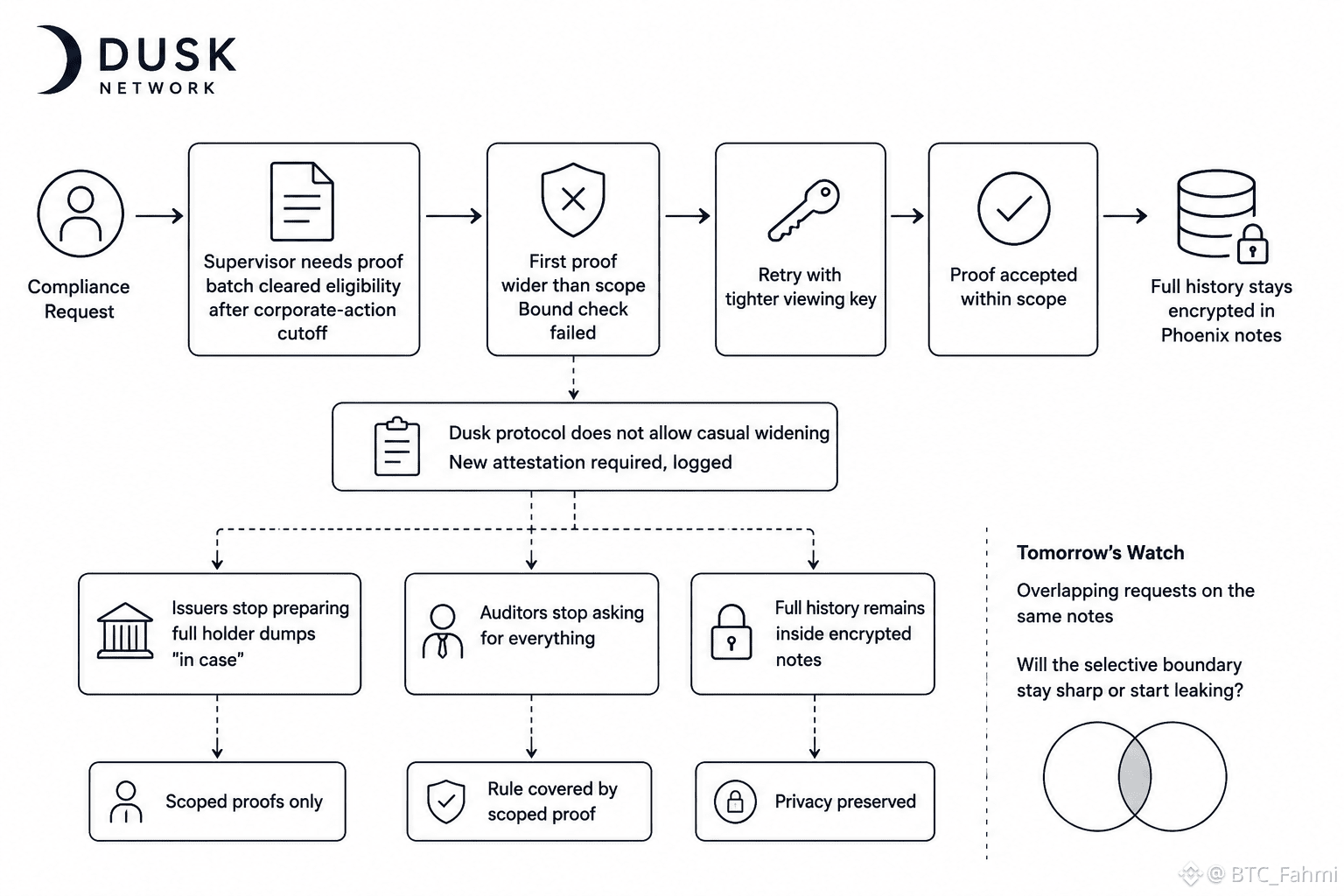
#dusk $DUSK @Dusk I watched a compliance pull hit the Phoenix notes on Dusk this morning. Supervisor needed proof the batch still cleared eligibility after the corporate action cutoff. Request looked routine. First proof on Dusk came back wider than the scope almost like the system wanted to hand over the whole map just to be thorough. Bound check failed. Retried with a tighter viewing key.
That retry stuck with me. Dusk’s protocol doesn’t let you casually widen the window. New attestation required, logged. Changes how people act. Issuers quit prepping full holder dumps “in case.” Auditors stop asking for everything because the scoped proof already covers the rule. Full history stays inside the encrypted notes on Dusk.
Still not sure how it holds under real pressure. Regulator pushes for broader access during an actual investigation. Or two auditors request overlapping scopes on the same notes at the same time. Math looks clean when everything’s calm. Coordination on Dusk gets messier when it isn’t.
Tomorrow I’m watching what happens with those overlapping requests. See if the selective boundary stays sharp or starts leaking.
That retry stuck with me. Dusk’s protocol doesn’t let you casually widen the window. New attestation required, logged. Changes how people act. Issuers quit prepping full holder dumps “in case.” Auditors stop asking for everything because the scoped proof already covers the rule. Full history stays inside the encrypted notes on Dusk.
Still not sure how it holds under real pressure. Regulator pushes for broader access during an actual investigation. Or two auditors request overlapping scopes on the same notes at the same time. Math looks clean when everything’s calm. Coordination on Dusk gets messier when it isn’t.
Tomorrow I’m watching what happens with those overlapping requests. See if the selective boundary stays sharp or starts leaking.

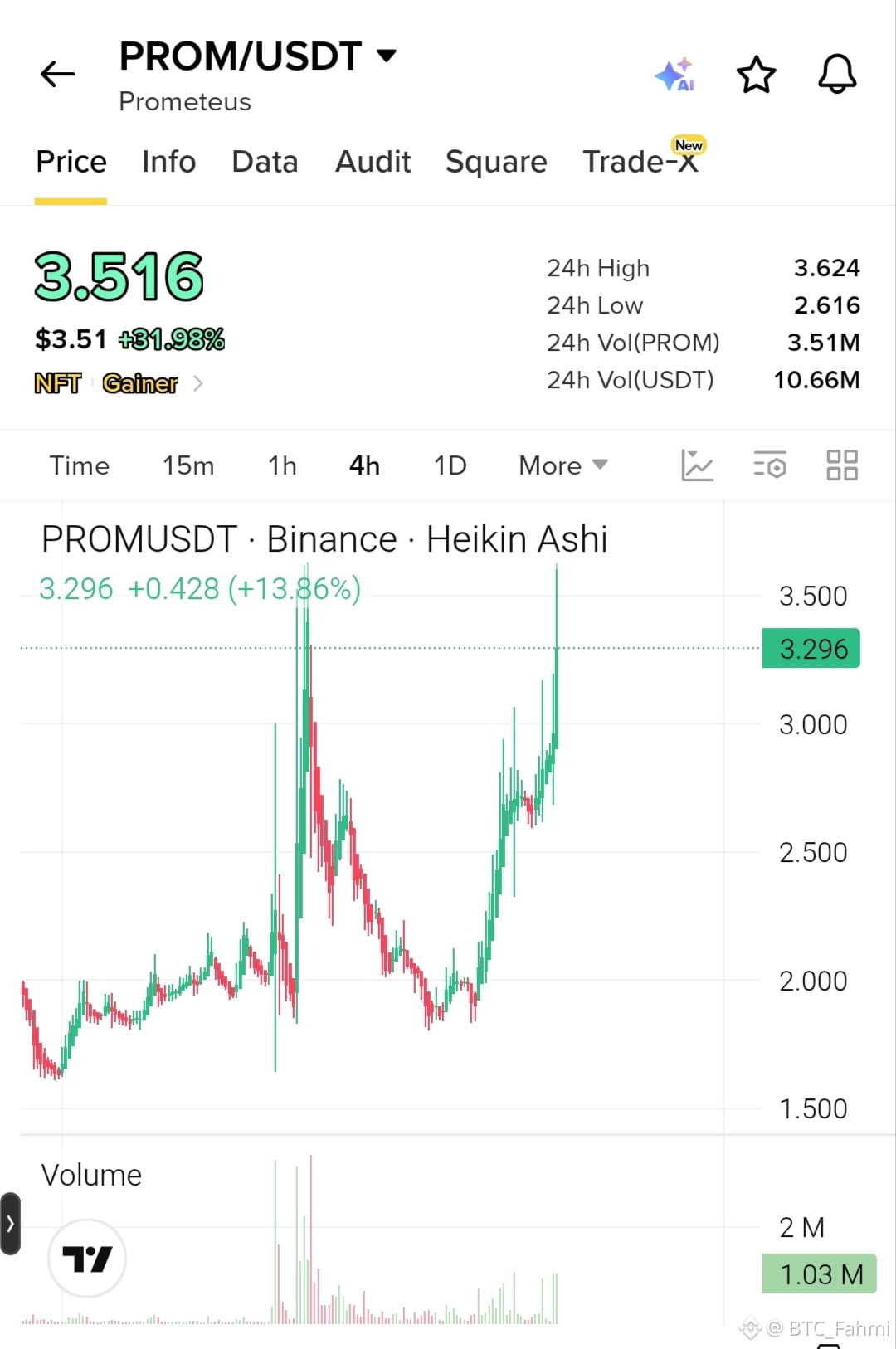
$PROM BULLISH BREAKOUT MOMENTUM, BUY THE RECLAIM
🟢 LONG $PROM (⏱️ Timeframe: 4H) 📍 Entry: 3.30 - 3.45 🛑 SL: 3.08 🎯 TP1: 3.62 🎯 TP2: 3.85 🎯 TP3: 4.20
PROM has reclaimed the 3.00 area with strong upside momentum after forming a higher-low structure. The 3.20-3.30 zone is the key demand/retest area, while 3.62 is the immediate resistance and liquidity target. A clean hold above 3.30 could open the way toward 3.85 and 4.20, while losing 3.08 would invalidate the bullish setup.
Trade Here 👉$PROM
#PROM #TradeSetup #TechnicalAnalysis #WriteToEarnUpgrade #Write2Earn
⚠️ Not financial advice. Always manage your risk.
🟢 LONG $PROM (⏱️ Timeframe: 4H) 📍 Entry: 3.30 - 3.45 🛑 SL: 3.08 🎯 TP1: 3.62 🎯 TP2: 3.85 🎯 TP3: 4.20
PROM has reclaimed the 3.00 area with strong upside momentum after forming a higher-low structure. The 3.20-3.30 zone is the key demand/retest area, while 3.62 is the immediate resistance and liquidity target. A clean hold above 3.30 could open the way toward 3.85 and 4.20, while losing 3.08 would invalidate the bullish setup.
Trade Here 👉$PROM
#PROM #TradeSetup #TechnicalAnalysis #WriteToEarnUpgrade #Write2Earn
⚠️ Not financial advice. Always manage your risk.
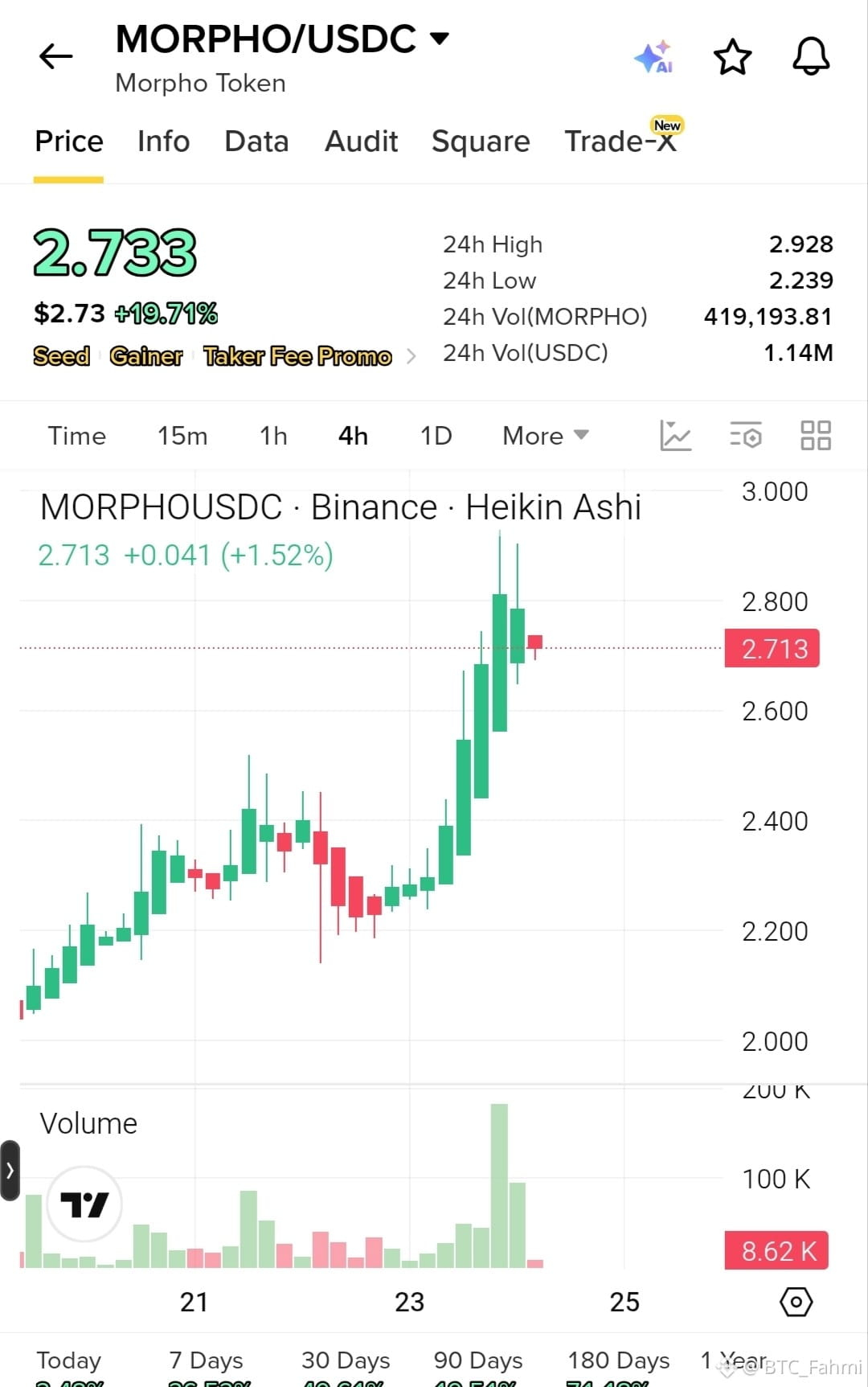
$MORPHO BULLISH MOMENTUM SURGING, RECLAIM SETUP
🟢 LONG $MORPHO (⏱️ Timeframe: 4H) 📍 Entry: $2.65 - $2.72 🛑 SL: $2.52 🎯 TP1: $2.82 🎯 TP2: $2.92 🎯 TP3: $3.05
The 4H structure shows a strong breakout from the $2.40 area with expanding momentum and heavy buying volume. A hold above $2.65-$2.70 could turn the previous resistance into demand, opening room toward the $2.82-$3.05 zone. A clean loss of $2.52 invalidates the bullish setup.
Trade Here 👉$MORPHO
#MORPHO #TradeSetup #TechnicalAnalysis #WriteToEarnUpgrade #Write2Earn
⚠️ Not financial advice. Always manage your risk.
🟢 LONG $MORPHO (⏱️ Timeframe: 4H) 📍 Entry: $2.65 - $2.72 🛑 SL: $2.52 🎯 TP1: $2.82 🎯 TP2: $2.92 🎯 TP3: $3.05
The 4H structure shows a strong breakout from the $2.40 area with expanding momentum and heavy buying volume. A hold above $2.65-$2.70 could turn the previous resistance into demand, opening room toward the $2.82-$3.05 zone. A clean loss of $2.52 invalidates the bullish setup.
Trade Here 👉$MORPHO
#MORPHO #TradeSetup #TechnicalAnalysis #WriteToEarnUpgrade #Write2Earn
⚠️ Not financial advice. Always manage your risk.
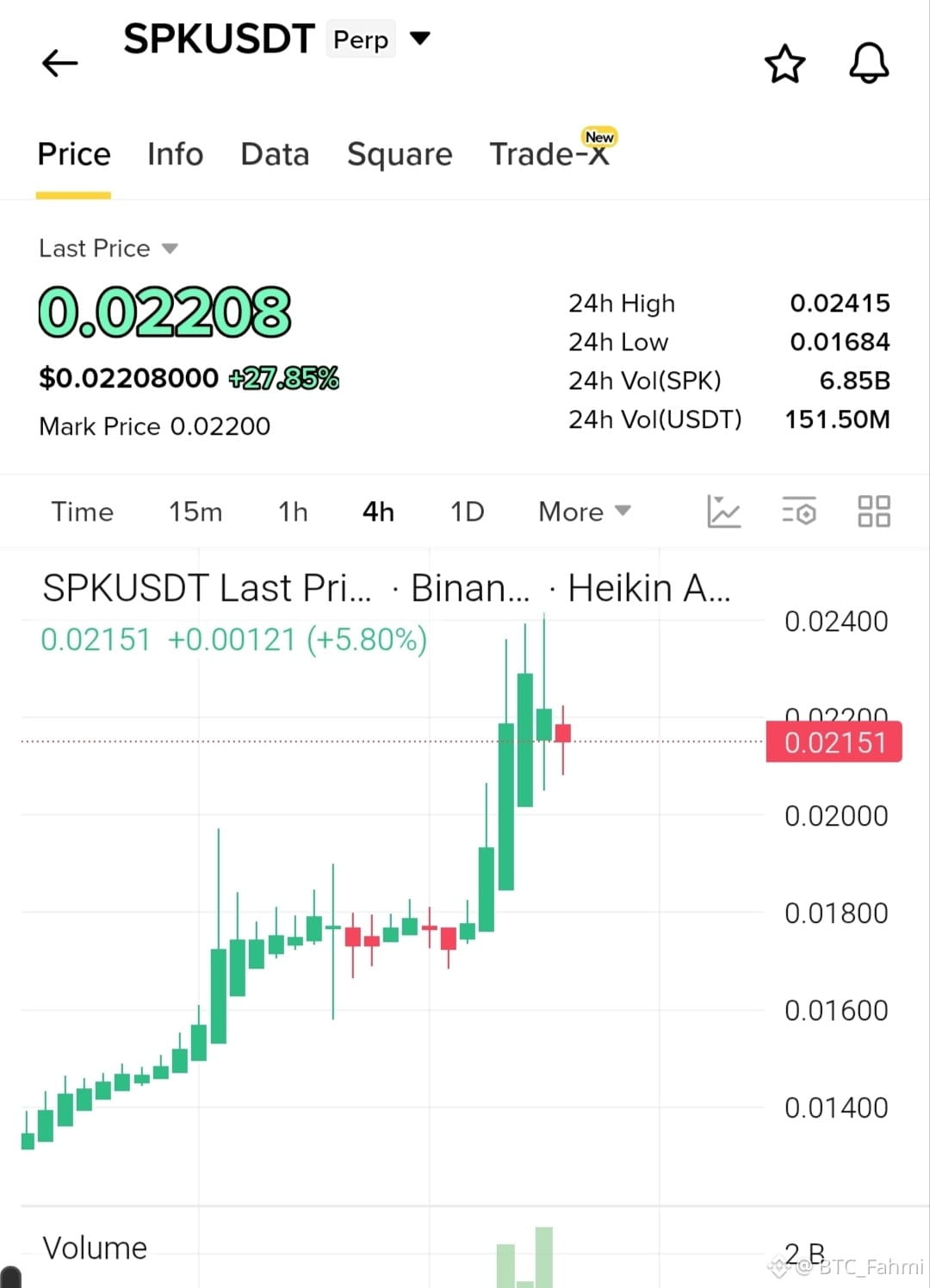
$SPK BULLISH MOMENTUM HOLDS AFTER SHARP BREAKOUT
🟢 LONG $SPK (⏱️ Timeframe: 4H) 📍 Entry: 0.02080 - 0.02150 🛑 SL: 0.01950 🎯 TP1: 0.02350 🎯 TP2: 0.02415 🎯 TP3: 0.02600
SPK is holding a strong higher-high structure after breaking above the 0.0180 area with heavy buying pressure. The 0.0208–0.0215 zone can act as a demand/reclaim area; holding it keeps the breakout structure intact, while 0.02415 is the key liquidity resistance. A clean break above that high could open the way toward 0.02600.
Trade Here 👉$SPK
#SPK #TradeSetup #TechnicalAnalysis #WriteToEarnUpgrade #Write2Earn
⚠️ Not financial advice. Always manage your risk.
🟢 LONG $SPK (⏱️ Timeframe: 4H) 📍 Entry: 0.02080 - 0.02150 🛑 SL: 0.01950 🎯 TP1: 0.02350 🎯 TP2: 0.02415 🎯 TP3: 0.02600
SPK is holding a strong higher-high structure after breaking above the 0.0180 area with heavy buying pressure. The 0.0208–0.0215 zone can act as a demand/reclaim area; holding it keeps the breakout structure intact, while 0.02415 is the key liquidity resistance. A clean break above that high could open the way toward 0.02600.
Trade Here 👉$SPK
#SPK #TradeSetup #TechnicalAnalysis #WriteToEarnUpgrade #Write2Earn
⚠️ Not financial advice. Always manage your risk.
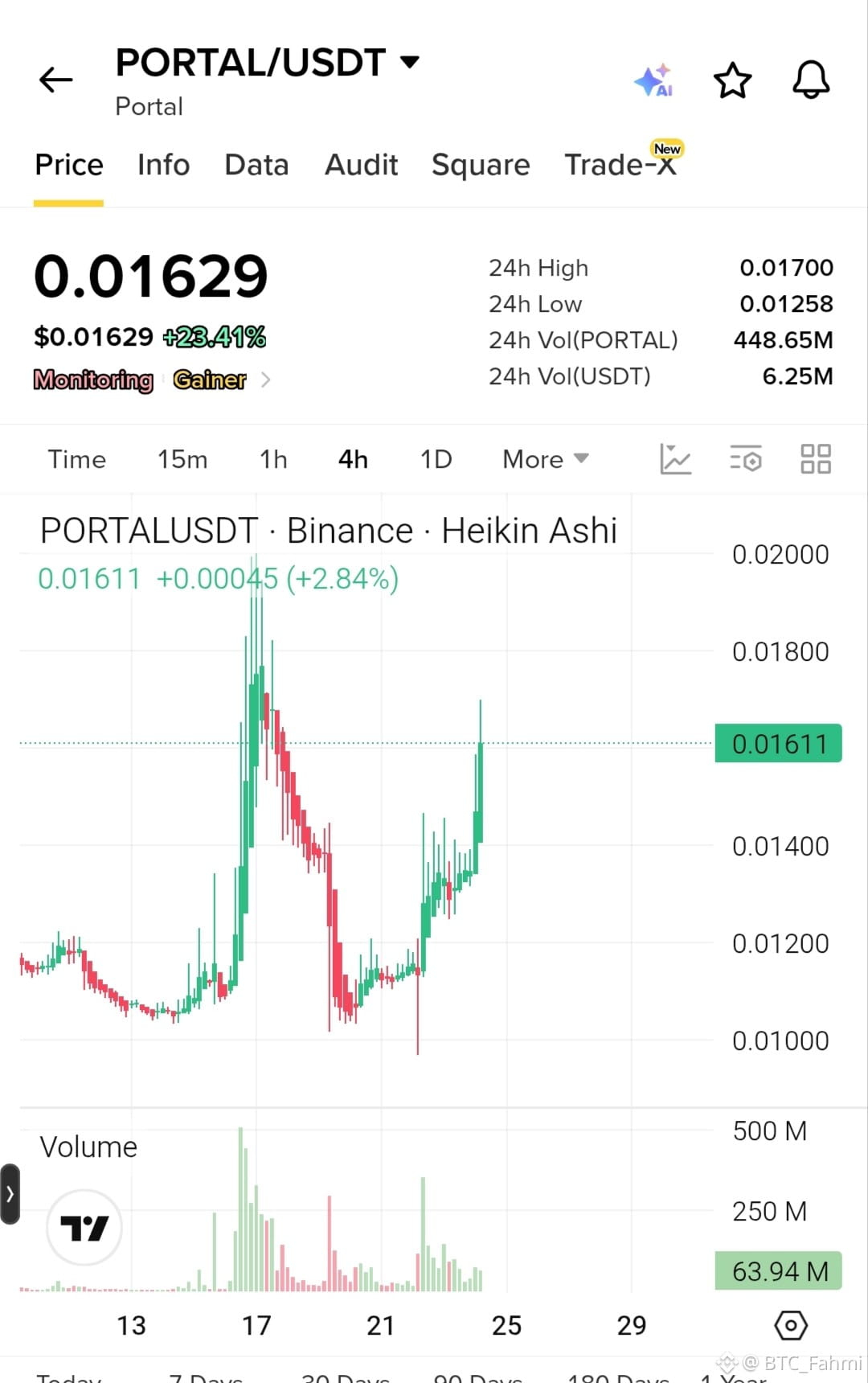
$PORTAL BULLISH BREAKOUT, MOMENTUM ACCELERATING
🟢 LONG $PORTAL /USDT (⏱️ Timeframe: 4H)📍 Entry: 0.01530 - 0.01580
🛑 SL: 0.01420
🎯 TP1: 0.01700
🎯 TP2: 0.01820
🎯 TP3: 0.01950
PORTAL has reclaimed the 0.0140 resistance zone with strong buying pressure and rising volume. The pullback into 0.0153–0.0158 offers a cleaner entry if previous resistance holds as support, while 0.0170 is the first liquidity target. A sustained breakout above that area could open the path toward 0.0182 and 0.0195.
Trade Here 👉$PORTAL
$DOT
#PORTAL #TradeSetup #TechnicalAnalysis #WriteToEarnUpgrade #Write2Earn
⚠️ Not financial advice. Always manage your risk.
🟢 LONG $PORTAL /USDT (⏱️ Timeframe: 4H)📍 Entry: 0.01530 - 0.01580
🛑 SL: 0.01420
🎯 TP1: 0.01700
🎯 TP2: 0.01820
🎯 TP3: 0.01950
PORTAL has reclaimed the 0.0140 resistance zone with strong buying pressure and rising volume. The pullback into 0.0153–0.0158 offers a cleaner entry if previous resistance holds as support, while 0.0170 is the first liquidity target. A sustained breakout above that area could open the path toward 0.0182 and 0.0195.
Trade Here 👉$PORTAL
$DOT
#PORTAL #TradeSetup #TechnicalAnalysis #WriteToEarnUpgrade #Write2Earn
⚠️ Not financial advice. Always manage your risk.
🟢 LONG $SPK /USDT (⏱️ Timeframe: 4H) 📍 Entry: $0.0208 - $0.0215
🛑 SL: $0.0194
🎯 TP1: $0.0228
🎯 TP2: $0.0241
🎯 TP3: $0.0260
SPK has broken sharply out of the $0.0175-$0.0180 base and is now cooling after tagging the $0.0241 area. I’d rather buy the pullback than chase the spike, with $0.0208-$0.0215 acting as the key retest zone. Holding above $0.0200 keeps the breakout structure intact, while reclaiming $0.0228 would open the path toward the recent high and potentially $0.0260. A clean loss of $0.0194 invalidates the setup.
Trade Here 👉
$ACE
$AKE
#SPK #TradeSetup #TechnicalAnalysis #WriteToEarnUpgrade #Write2Earn
⚠️ Not financial advice. Always manage your risk.
🛑 SL: $0.0194
🎯 TP1: $0.0228
🎯 TP2: $0.0241
🎯 TP3: $0.0260
SPK has broken sharply out of the $0.0175-$0.0180 base and is now cooling after tagging the $0.0241 area. I’d rather buy the pullback than chase the spike, with $0.0208-$0.0215 acting as the key retest zone. Holding above $0.0200 keeps the breakout structure intact, while reclaiming $0.0228 would open the path toward the recent high and potentially $0.0260. A clean loss of $0.0194 invalidates the setup.
Trade Here 👉
$ACE
$AKE
#SPK #TradeSetup #TechnicalAnalysis #WriteToEarnUpgrade #Write2Earn
⚠️ Not financial advice. Always manage your risk.
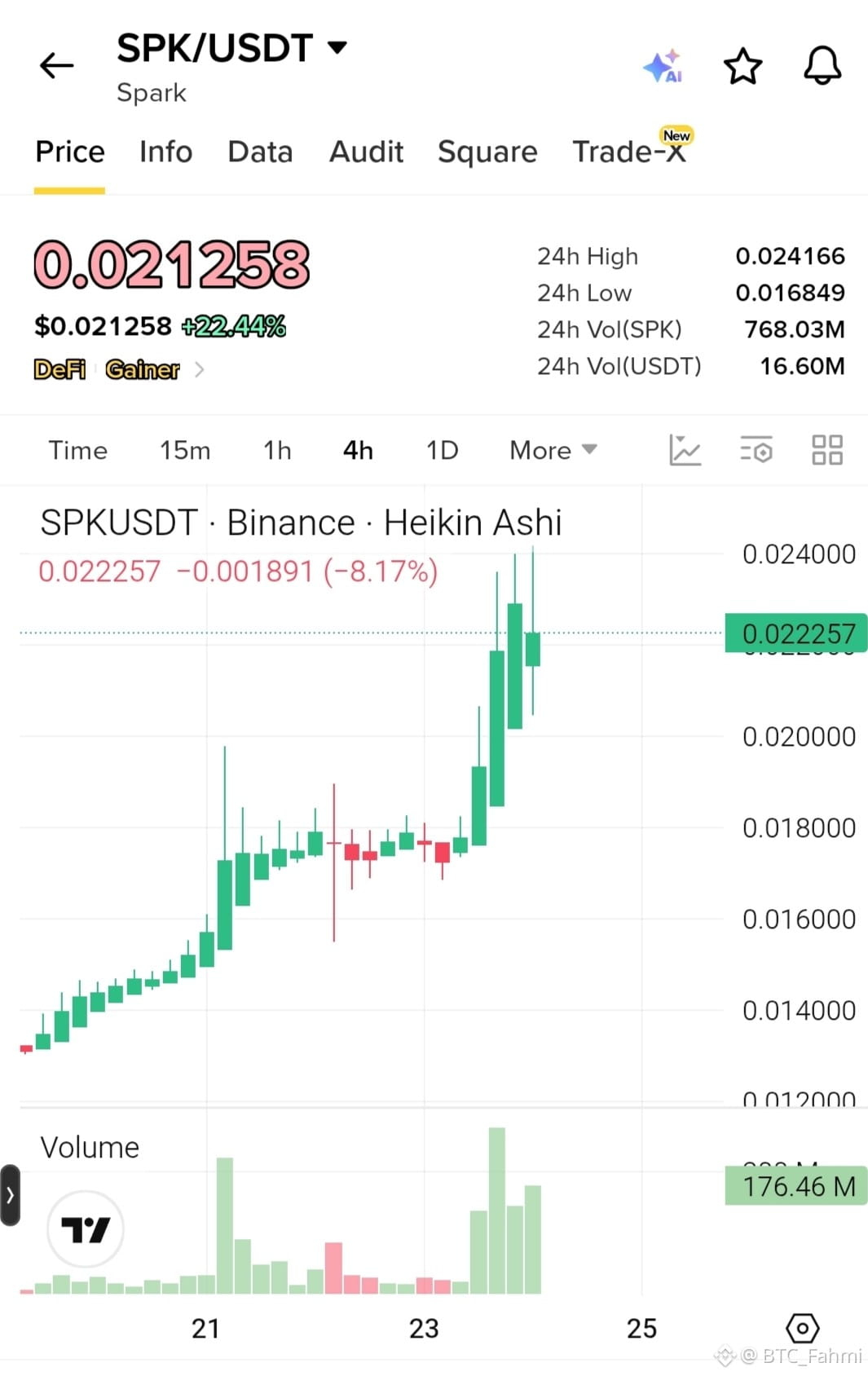
🟢 LONG $SPK /USDT
⏱️ Timeframe: 4H
📍 Entry Range: 0.02280 – 0.02350
🛑 Stop Loss: 0.02080
🎯 TP1: 0.02520
🎯 TP2: 0.02750
🎯 TP3: 0.03000
Clean higher-high structure with strong demand reclaim and expanding volume on the latest push. Price has flipped prior resistance into support and is holding firmly above the mid-range base, setting up for another leg higher as liquidity above recent highs gets targeted.
Trade Here 👉$SPK
$TUT
#SPK #TradeSetup #TechnicalAnalysis #WriteToEarnUpgrade #Write2Earn
⚠️ Not financial advice. Always manage your risk.
⏱️ Timeframe: 4H
📍 Entry Range: 0.02280 – 0.02350
🛑 Stop Loss: 0.02080
🎯 TP1: 0.02520
🎯 TP2: 0.02750
🎯 TP3: 0.03000
Clean higher-high structure with strong demand reclaim and expanding volume on the latest push. Price has flipped prior resistance into support and is holding firmly above the mid-range base, setting up for another leg higher as liquidity above recent highs gets targeted.
Trade Here 👉$SPK
$TUT
#SPK #TradeSetup #TechnicalAnalysis #WriteToEarnUpgrade #Write2Earn
⚠️ Not financial advice. Always manage your risk.
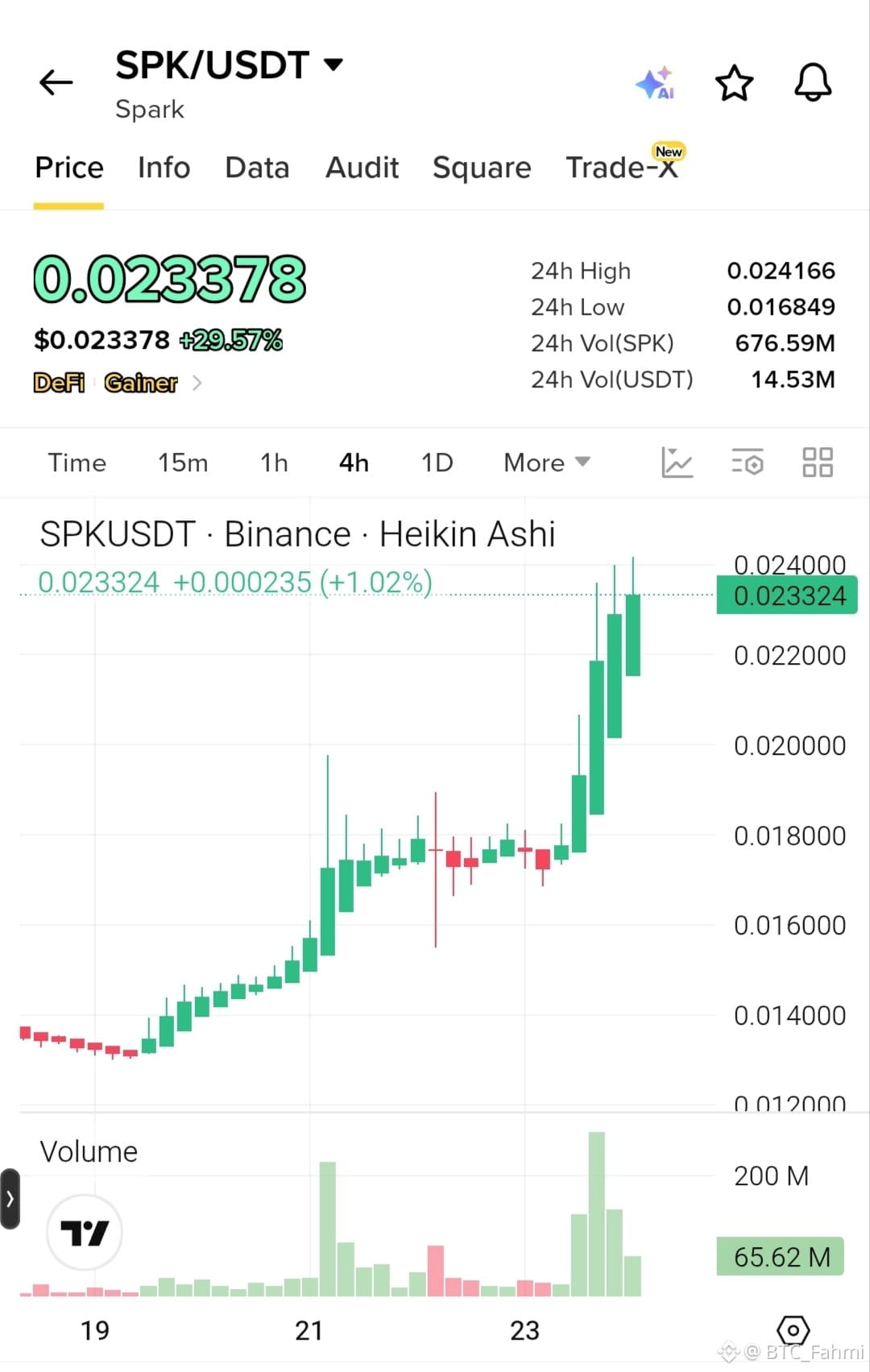
Проверено
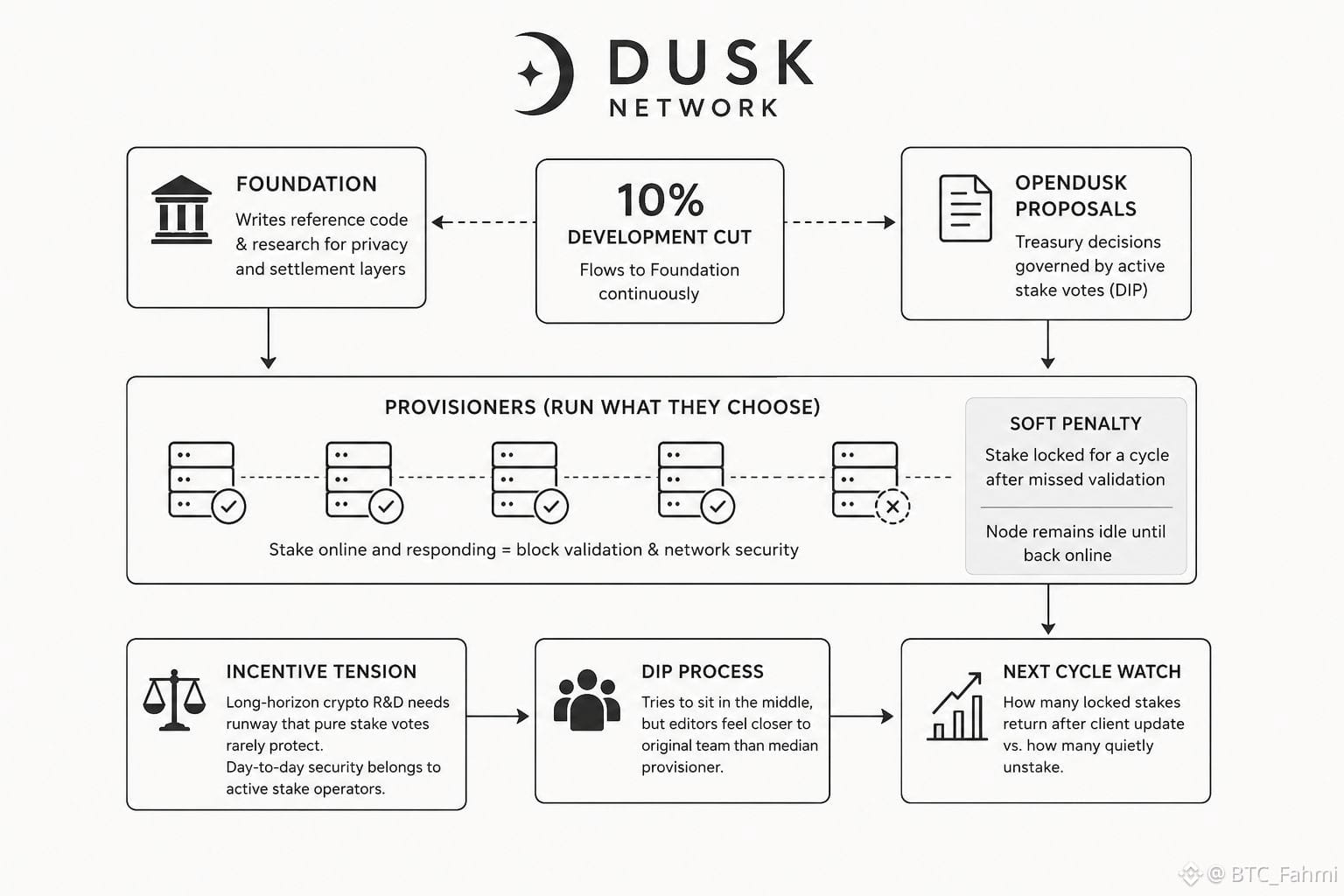
#dusk $DUSK @Dusk I was watching a provisioner node sit idle after a soft penalty for a missed validation step. Not a hard slash, just the stake locked for a cycle while the rest of the committee kept ratifying blocks without it. Hardware was fine. Keys were there. The lag between the latest client push and what the network actually expected just showed up as dead weight in the active set.
That’s the split in plain sight. Foundation still writes most of the reference code and the research that keeps the privacy and settlement layers something institutions can even talk to. Provisioners only run what they choose to run. The 10% development cut keeps moving either way. OpenDusk style proposals sit on the other side of the same ledger, waiting for enough active stake to move treasury without needing the legal entity’s sign-off first.
Incentives pull both directions at once. Long-horizon cryptographic work needs a runway that pure stake-weighted votes rarely protect. Day to day security already belongs to whoever keeps stake online and answering. DIP process tries to sit in the middle, but the editors still feel closer to the original team than to the median provisioner who’s just trying to stay eligible.
I’m not sure the handoff stays clean once emissions keep declining and the regulated counterparties start asking for clearer contact points again. Next cycle I’ll just watch how many of those locked stakes come back online after the following client update versus how many quietly unstake.
$TUT
$UAI
That’s the split in plain sight. Foundation still writes most of the reference code and the research that keeps the privacy and settlement layers something institutions can even talk to. Provisioners only run what they choose to run. The 10% development cut keeps moving either way. OpenDusk style proposals sit on the other side of the same ledger, waiting for enough active stake to move treasury without needing the legal entity’s sign-off first.
Incentives pull both directions at once. Long-horizon cryptographic work needs a runway that pure stake-weighted votes rarely protect. Day to day security already belongs to whoever keeps stake online and answering. DIP process tries to sit in the middle, but the editors still feel closer to the original team than to the median provisioner who’s just trying to stay eligible.
I’m not sure the handoff stays clean once emissions keep declining and the regulated counterparties start asking for clearer contact points again. Next cycle I’ll just watch how many of those locked stakes come back online after the following client update versus how many quietly unstake.
$TUT
$UAI

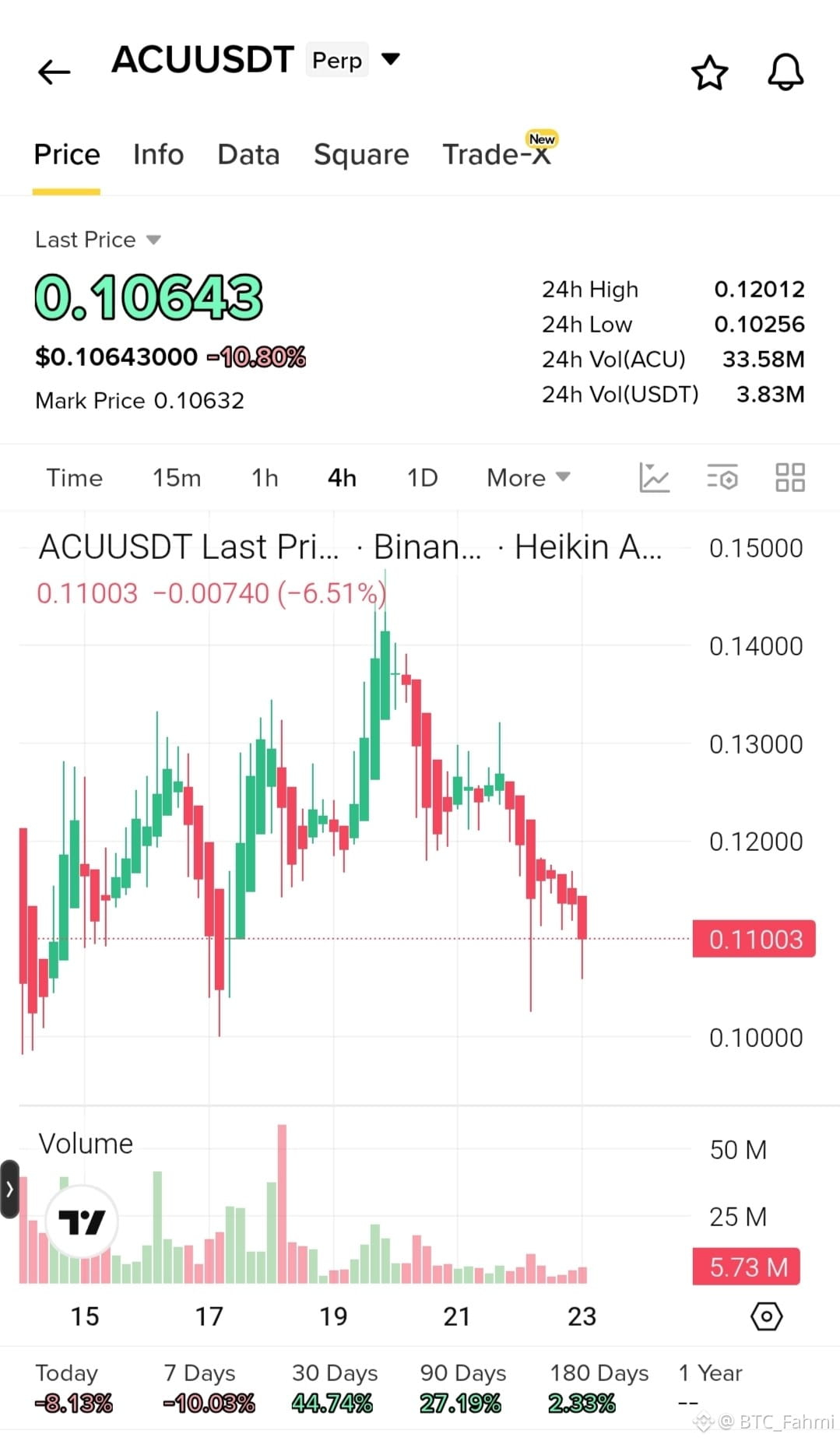
🔴 SHORT $ACU USDT (⏱️ Timeframe: 4H) 📍 Entry: 0.1085 - 0.1110
🛑 SL: 0.1165
🎯 TP1: 0.1045
🎯 TP2: 0.1015
🎯 TP3: 0.0980
The 4H structure remains bearish after rejection from the 0.125-0.130 supply area, with consistent lower highs and weakening rebounds. A pullback into 0.1085-0.1110 could offer a cleaner short, targeting the 0.1045-0.1015 support/liquidity zone; losing that area opens room toward 0.0980. A reclaim above 0.1165 invalidates the setup.
Trade Here 👇
$TUT
$ACE
#ACU #TradeSetup #TechnicalAnalysis #WriteToEarnUpgrade #Write2Earn
⚠️ Not financial advice. Always manage your risk.
🛑 SL: 0.1165
🎯 TP1: 0.1045
🎯 TP2: 0.1015
🎯 TP3: 0.0980
The 4H structure remains bearish after rejection from the 0.125-0.130 supply area, with consistent lower highs and weakening rebounds. A pullback into 0.1085-0.1110 could offer a cleaner short, targeting the 0.1045-0.1015 support/liquidity zone; losing that area opens room toward 0.0980. A reclaim above 0.1165 invalidates the setup.
Trade Here 👇
$TUT
$ACE
#ACU #TradeSetup #TechnicalAnalysis #WriteToEarnUpgrade #Write2Earn
⚠️ Not financial advice. Always manage your risk.
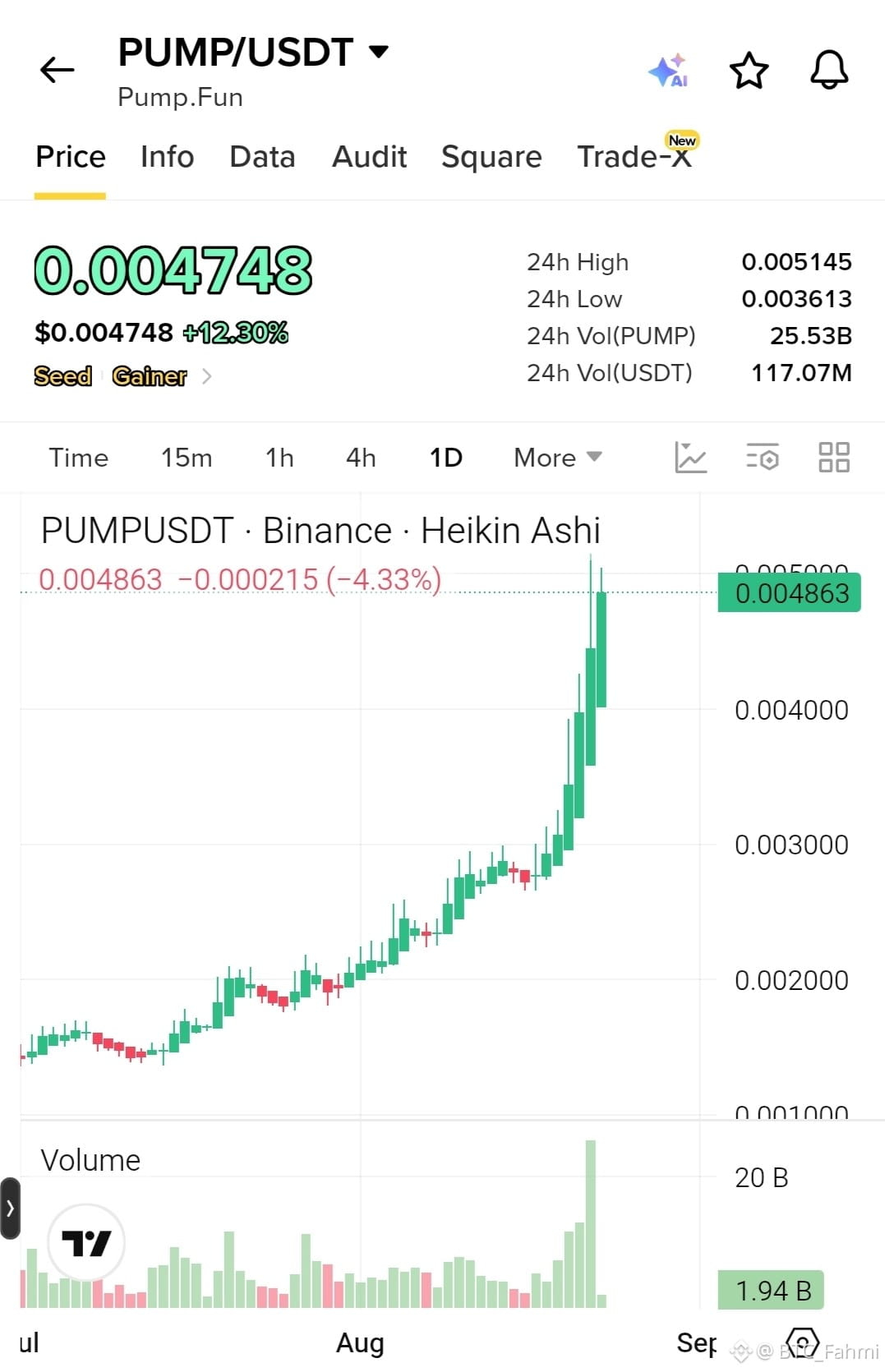
🟢 LONG $PUMP /USDT
⏱️ Timeframe: 1D
📍 Entry Range: 0.00455 – 0.00480
🛑 Stop Loss: 0.00410
🎯 TP1: 0.00525
🎯 TP2: 0.00580
🎯 TP3: 0.00650
Price is riding a clean higher-high structure after reclaiming the mid-August base, with the latest impulse candle and volume surge confirming buyers are still in full control. As long as it holds above the recent demand zone near 0.0043–0.0045, the path of least resistance remains higher toward the previous liquidity high and beyond.
Trade Here 👉 $PUMP
#PUMP #TradeSetup #TechnicalAnalysis #WriteToEarnUpgrade #Write2Earn
⚠️ Not financial advice. Always manage your risk.
⏱️ Timeframe: 1D
📍 Entry Range: 0.00455 – 0.00480
🛑 Stop Loss: 0.00410
🎯 TP1: 0.00525
🎯 TP2: 0.00580
🎯 TP3: 0.00650
Price is riding a clean higher-high structure after reclaiming the mid-August base, with the latest impulse candle and volume surge confirming buyers are still in full control. As long as it holds above the recent demand zone near 0.0043–0.0045, the path of least resistance remains higher toward the previous liquidity high and beyond.
Trade Here 👉 $PUMP
#PUMP #TradeSetup #TechnicalAnalysis #WriteToEarnUpgrade #Write2Earn
⚠️ Not financial advice. Always manage your risk.
Войдите, чтобы посмотреть больше материала