The AI boom has a power problem.
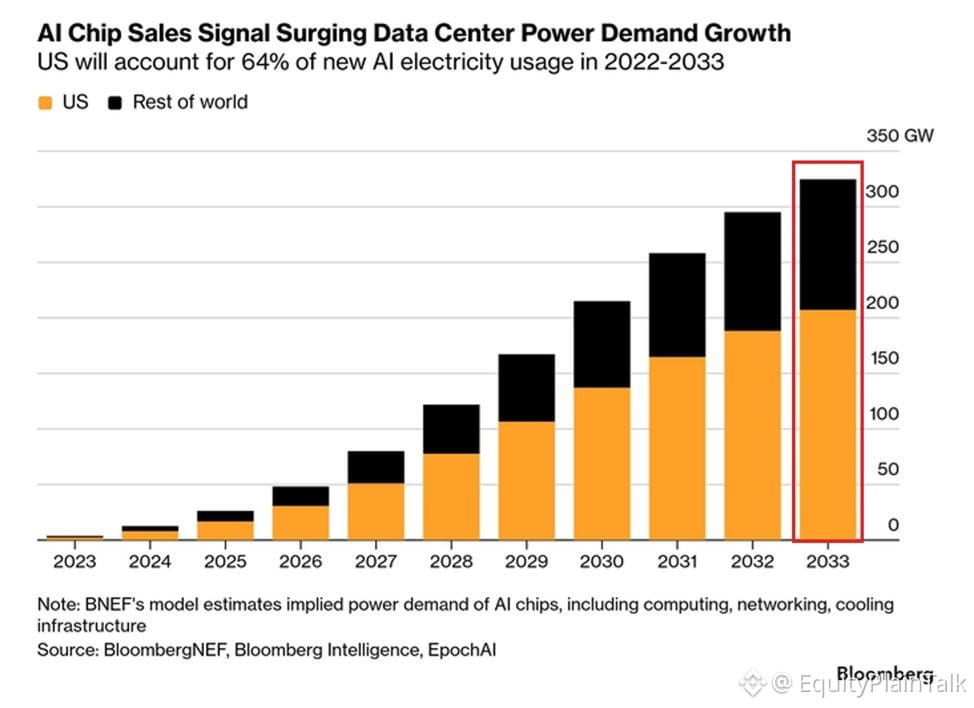
Global AI chip electricity demand is expected to hit 315 gigawatts by 2033—an 1,100% jump from 2025. The U.S. alone will account for roughly 64% of that surge, around 200 GW.
But it's not just about total capacity. AI data centers create wild power swings. During model training, hundreds of thousands of GPUs fire up and down at once, spiking usage as much as 50% above design limits. That kind of volatility wears down batteries, generators, and cooling systems fast—driving up maintenance and replacement costs.
Bottom line: we're running into a serious infrastructure bottleneck. Energy companies, utilities, and data center operators will need to invest heavily in grid upgrades and backup systems just to keep pace.
This isn't just a tech story—it's an energy, infrastructure, and capex story. Watch names in utilities, power generation, grid infrastructure, and battery storage. The buildout is just beginning.
Global AI chip electricity demand is expected to hit 315 gigawatts by 2033—an 1,100% jump from 2025. The U.S. alone will account for roughly 64% of that surge, around 200 GW.
But it's not just about total capacity. AI data centers create wild power swings. During model training, hundreds of thousands of GPUs fire up and down at once, spiking usage as much as 50% above design limits. That kind of volatility wears down batteries, generators, and cooling systems fast—driving up maintenance and replacement costs.
Bottom line: we're running into a serious infrastructure bottleneck. Energy companies, utilities, and data center operators will need to invest heavily in grid upgrades and backup systems just to keep pace.
This isn't just a tech story—it's an energy, infrastructure, and capex story. Watch names in utilities, power generation, grid infrastructure, and battery storage. The buildout is just beginning.