#dusk $DUSK @Dusk
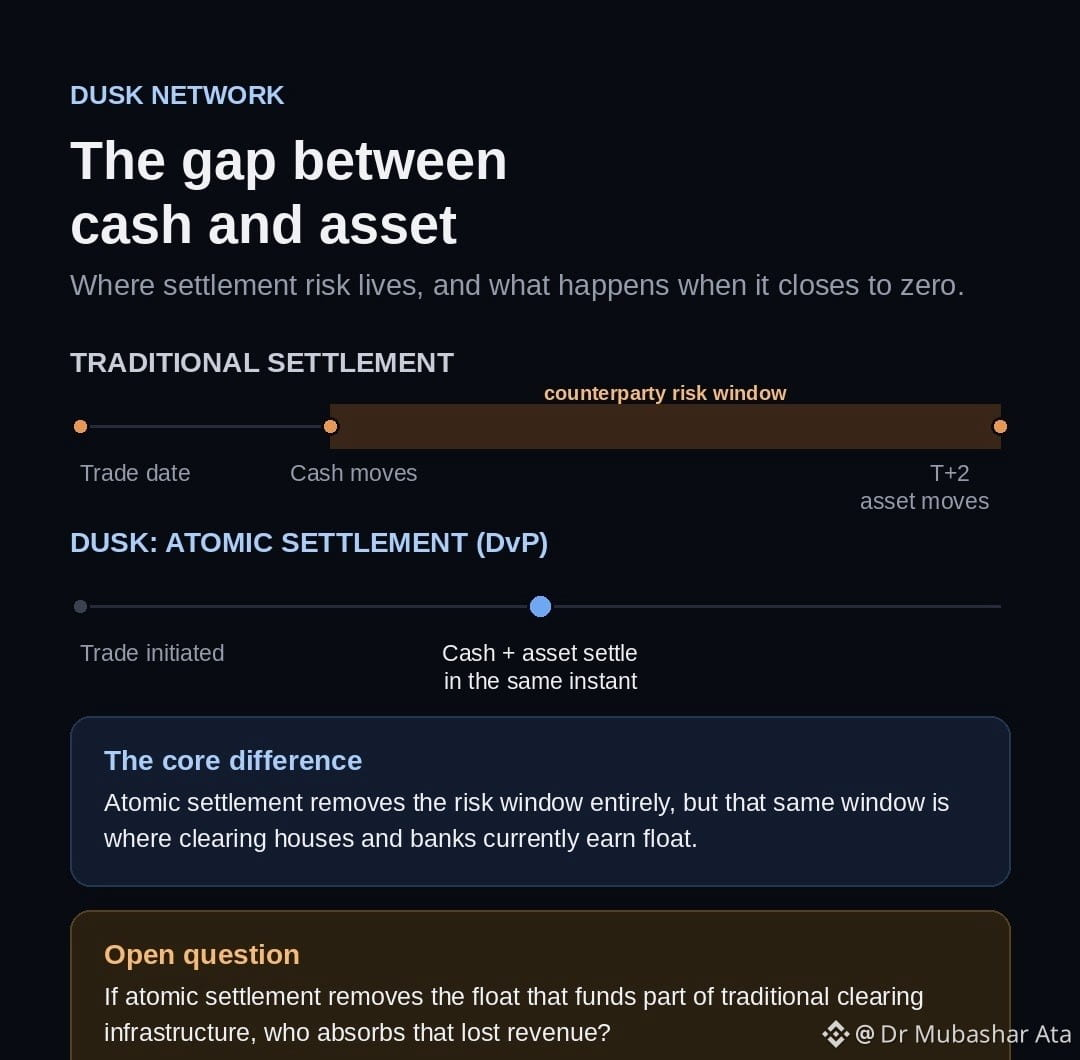
A friend who works in trade ops once explained why settlement still takes T+2 in traditional markets. Not a tech limit, it's counterparty risk protocol, built around the gap between when cash moves and when the asset actually moves.
Dusk's own site describes deterministic finality and delivery-versus-payment-ready workflows for settlement between assets and payments. Atomic means the asset and the cash move in the same instant. Neither side is exposed while waiting on the other.
That gap Dusk removes is exactly the one that caused Herstatt risk decades ago and still shows up in modern settlement failures today. But that same gap is also where clearing houses and banks quietly earn float during the settlement window.
Not saying that's wrong. Just noting where the money currently sits.
If atomic settlement removes the float that funds part of traditional clearing infrastructure, who exactly absorbs that lost revenue?
A friend who works in trade ops once explained why settlement still takes T+2 in traditional markets. Not a tech limit, it's counterparty risk protocol, built around the gap between when cash moves and when the asset actually moves.
Dusk's own site describes deterministic finality and delivery-versus-payment-ready workflows for settlement between assets and payments. Atomic means the asset and the cash move in the same instant. Neither side is exposed while waiting on the other.
That gap Dusk removes is exactly the one that caused Herstatt risk decades ago and still shows up in modern settlement failures today. But that same gap is also where clearing houses and banks quietly earn float during the settlement window.
Not saying that's wrong. Just noting where the money currently sits.
If atomic settlement removes the float that funds part of traditional clearing infrastructure, who exactly absorbs that lost revenue?