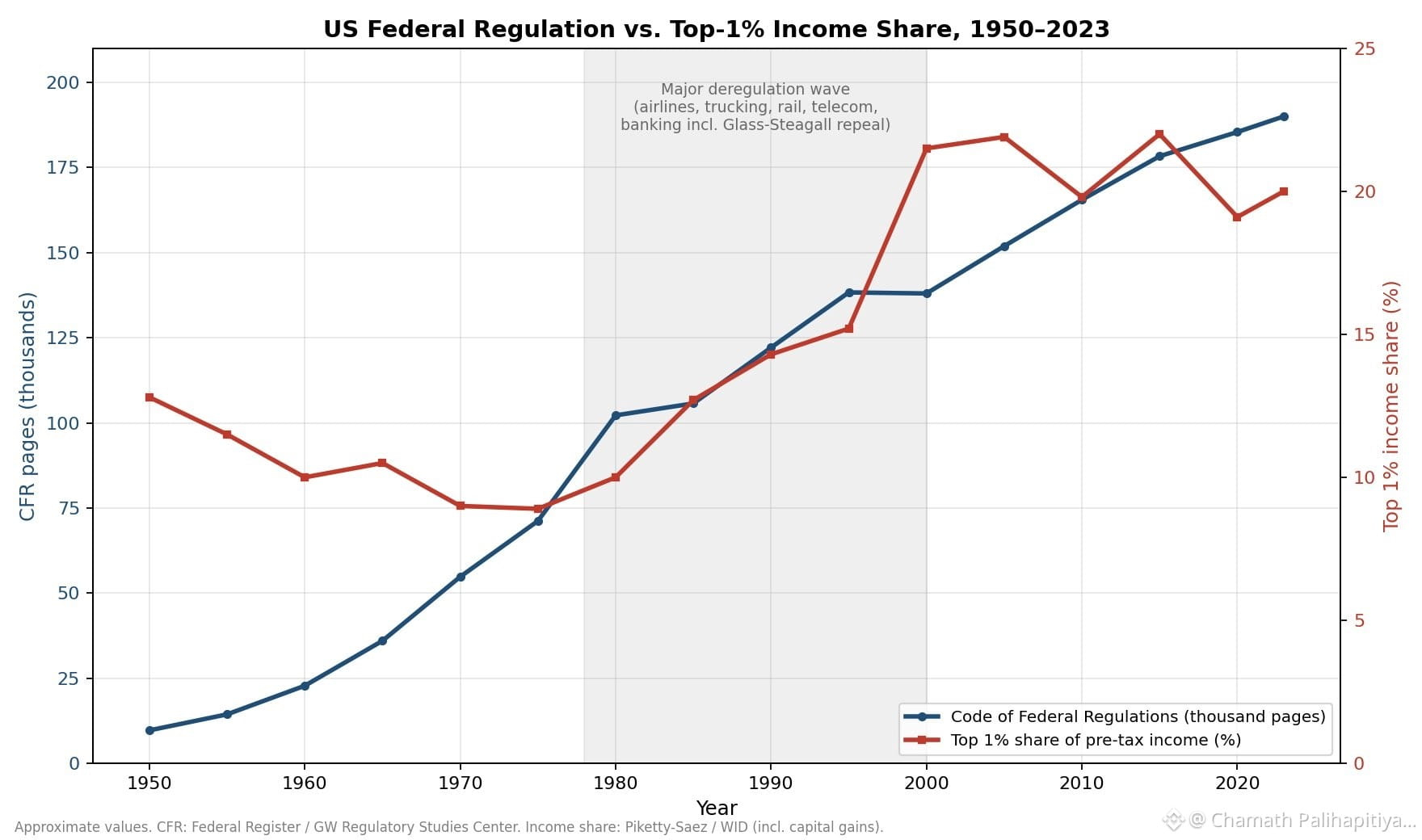
Although history classes often highlight the deregulation trends of the 1980s and 1990s, the reality is that regulatory frameworks were never actually streamlined during that era. Instead, the volume of restrictions continued to expand without any real interruption.
Ultimately, complex regulations cater to a single demographic: the established market leaders. These incumbents are the ones who effectively dictate the guidelines, either doing so firsthand or relying on their chosen representatives.
When a market operates with fewer restrictions, it naturally invites greater competition, which consistently challenges those entrenched powers. As the dominance of established players fades, the economy experiences a much faster and more vibrant circulation of both income and wealth.
However, as long as our regulatory systems continue to grow increasingly convoluted, those already at the top will keep reaping the rewards. They will continue to profit without needing to demonstrate genuine skill or put in actual effort, which ultimately seems like a highly illogical way to operate.
Ultimately, complex regulations cater to a single demographic: the established market leaders. These incumbents are the ones who effectively dictate the guidelines, either doing so firsthand or relying on their chosen representatives.
When a market operates with fewer restrictions, it naturally invites greater competition, which consistently challenges those entrenched powers. As the dominance of established players fades, the economy experiences a much faster and more vibrant circulation of both income and wealth.
However, as long as our regulatory systems continue to grow increasingly convoluted, those already at the top will keep reaping the rewards. They will continue to profit without needing to demonstrate genuine skill or put in actual effort, which ultimately seems like a highly illogical way to operate.