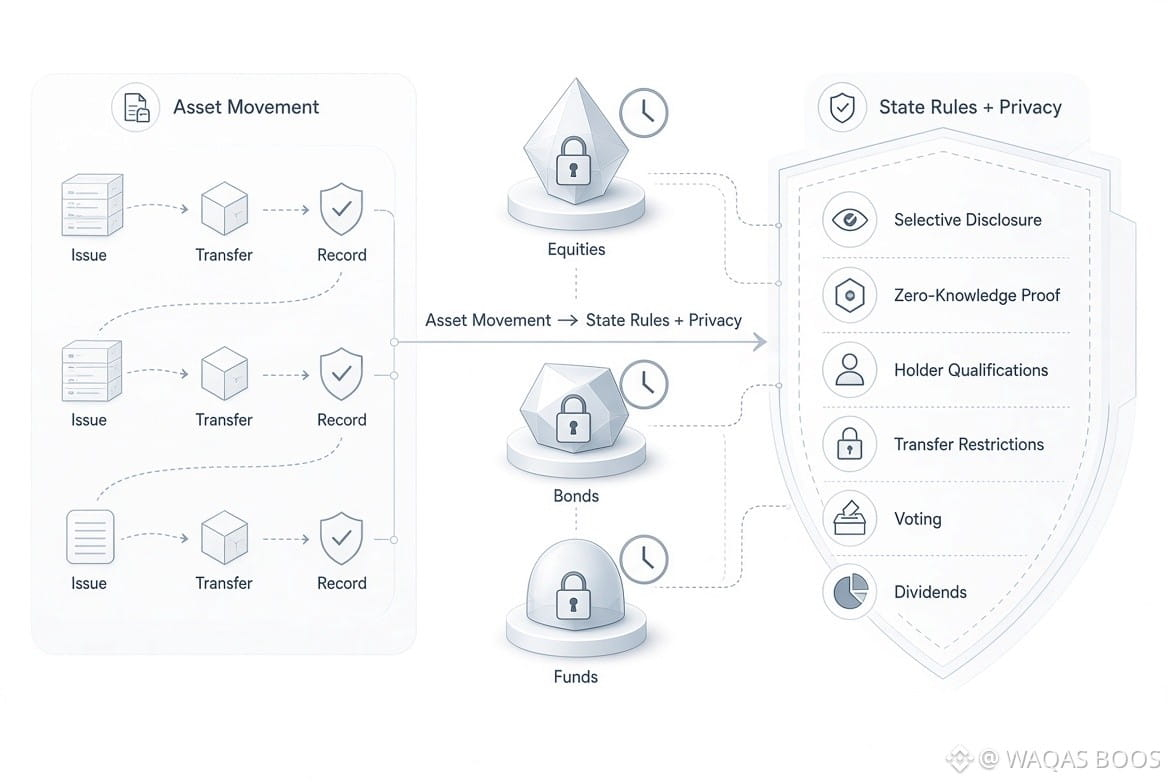
I’ve watched enough cycles to know the pattern. Most projects obsess over moving assets around. Transfer this, swap that, settle the balance and call it done. Then someone actually tries to put equities or bonds or funds on-chain and the real friction shows up: who is allowed to hold what, when transfers are restricted, how dividends get paid, how votes happen, which states change over time. Public ledgers record the moves. They don’t enforce the rules that make those assets what they are. So a lot of “tokenization” stays surface-level.
Something about Dusk keeps pulling my attention differently. Phoenix for shielded transactions that still prove validity. Zedger trying to carry regulated asset logic with privacy intact. Citadel letting people prove they meet a condition without dumping their whole identity. DuskDS underneath handling consensus and settlement. It doesn’t feel like privacy bolted onto an existing chain. It feels like they’re redesigning the operating layer so verification and concealment can exist in the same place.
I’ve seen ambitious stacks before. Most of them stayed theory or got diluted by the usual incentives. I’m not sure yet whether the pieces will hold under real institutional pressure or whether adoption will lag the design. But the problem they’re pointing at is real, and most of the noise still pretends it isn’t. That alone makes me keep watching.
@Dusk #dusk $DUSK