I assumed leverage always came with the same basic risk: if the collateral moved against me far enough, my position could be liquidated.
@TermMax 's own documentation describes something structurally different in its Alpha market. Long and Short positions there are options: you pay a premium upfront, and that premium is defined as the position's maximum possible loss.
TermMax's own materials describe this as leveraged exposure with zero liquidation risk.
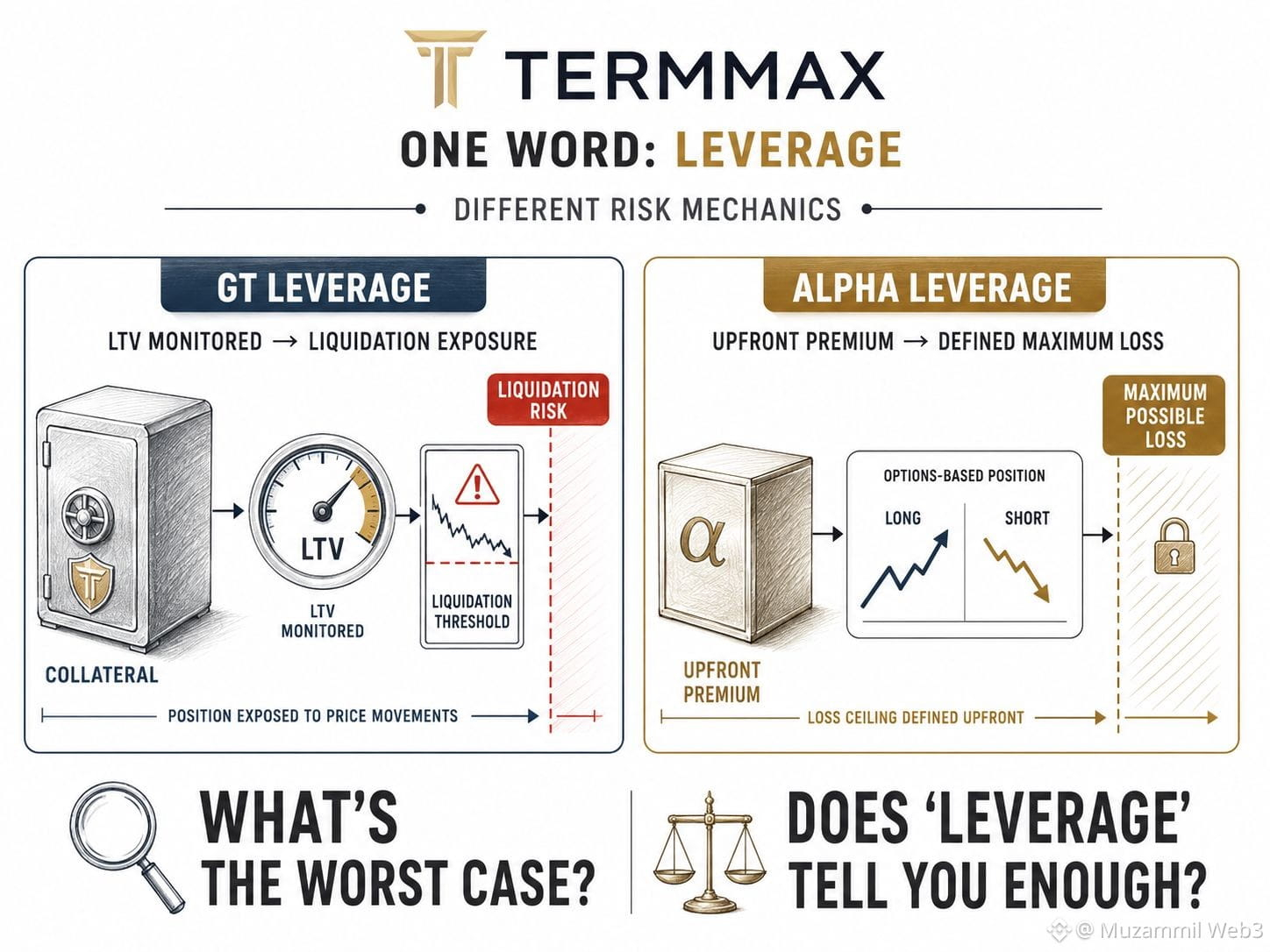
That changed how I think about "TermMax leverage" as a single concept. GT-based leverage still carries liquidation risk tied to LTV. Alpha's options-based leverage doesn't work that way; the upfront premium is defined as the position's maximum possible loss.
I don't think this makes Alpha risk-free; it changes the form of the risk. One position has a defined maximum loss upfront, while the other remains exposed to LTV and liquidation.
Two products, same brand, same word "leverage," and two completely different answers to the question "what's the worst case here?"
If two products called "leverage" can have such different worst-case outcomes, should leverage itself tell me anything about my downside, or do I need to understand the risk model underneath it first?
#termmax @TermMax
@TermMax 's own documentation describes something structurally different in its Alpha market. Long and Short positions there are options: you pay a premium upfront, and that premium is defined as the position's maximum possible loss.
TermMax's own materials describe this as leveraged exposure with zero liquidation risk.
That changed how I think about "TermMax leverage" as a single concept. GT-based leverage still carries liquidation risk tied to LTV. Alpha's options-based leverage doesn't work that way; the upfront premium is defined as the position's maximum possible loss.
I don't think this makes Alpha risk-free; it changes the form of the risk. One position has a defined maximum loss upfront, while the other remains exposed to LTV and liquidation.
Two products, same brand, same word "leverage," and two completely different answers to the question "what's the worst case here?"
If two products called "leverage" can have such different worst-case outcomes, should leverage itself tell me anything about my downside, or do I need to understand the risk model underneath it first?
#termmax @TermMax