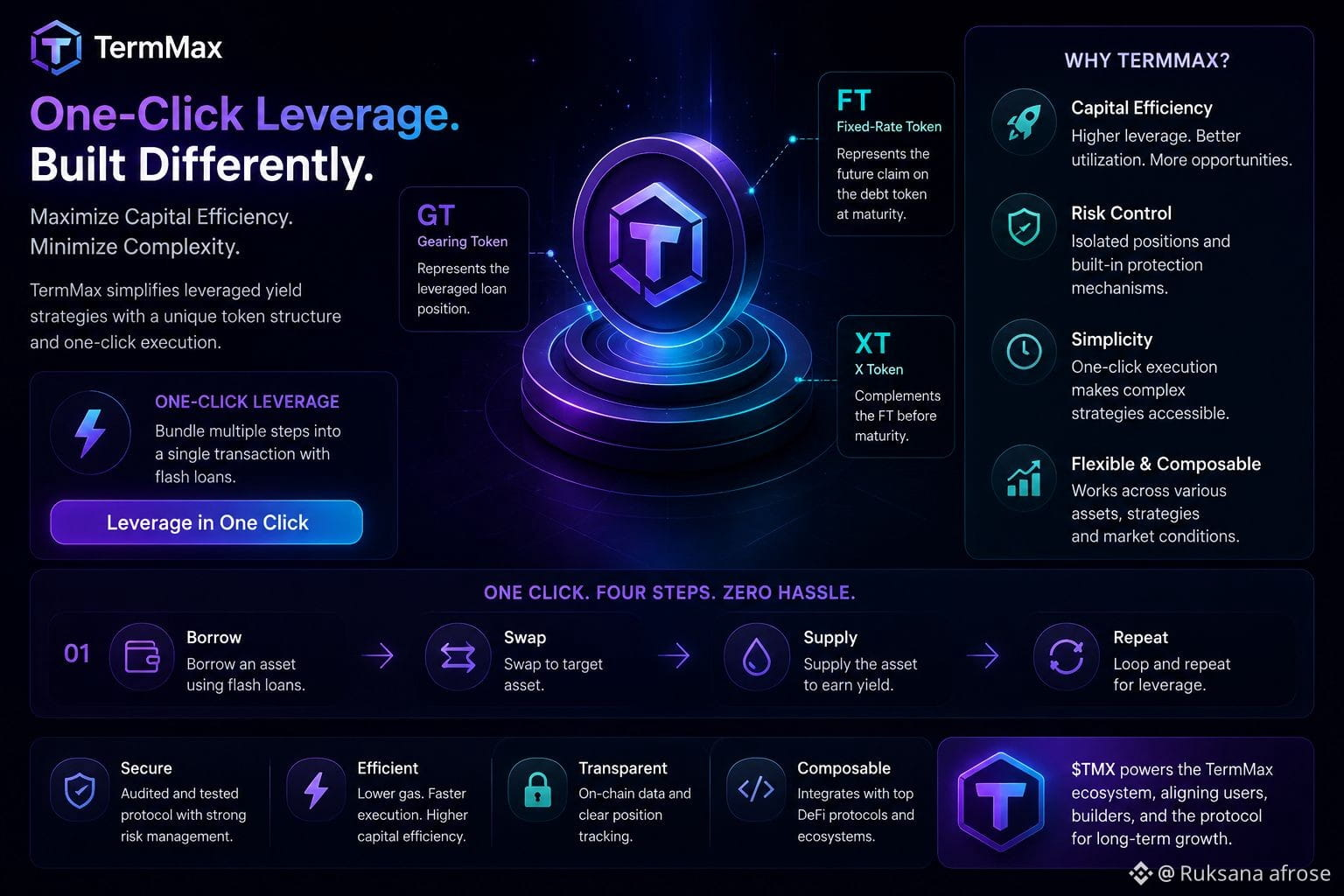
One thing I keep coming back to when looking at DeFi lending is the question of what happens when the collateral itself is difficult to liquidate.
Most lending systems naturally favor assets with deep liquidity because selling collateral quickly is important when a position becomes unsafe. That makes sense, but it also creates a limitation: assets with lower liquidity can struggle to fit into the same framework.
@TermMax takes a more flexible approach. Its liquidation design includes a physical delivery mechanism, where collateral can potentially be delivered directly to lenders instead of relying entirely on selling it through the market during stressful conditions.
I find this idea interesting because it changes the way I think about collateral risk. The question is no longer simply “Can this asset be sold instantly?” but also “What other way can the lender be compensated if market liquidity becomes limited?”
That could be particularly relevant when considering low-liquidity assets and even real-world assets.
For me, #TermMax is interesting because it is trying to expand the design space of DeFi lending instead of assuming every useful asset will have the same level of market liquidity.
#termmax @TermMax
Most lending systems naturally favor assets with deep liquidity because selling collateral quickly is important when a position becomes unsafe. That makes sense, but it also creates a limitation: assets with lower liquidity can struggle to fit into the same framework.
@TermMax takes a more flexible approach. Its liquidation design includes a physical delivery mechanism, where collateral can potentially be delivered directly to lenders instead of relying entirely on selling it through the market during stressful conditions.
I find this idea interesting because it changes the way I think about collateral risk. The question is no longer simply “Can this asset be sold instantly?” but also “What other way can the lender be compensated if market liquidity becomes limited?”
That could be particularly relevant when considering low-liquidity assets and even real-world assets.
For me, #TermMax is interesting because it is trying to expand the design space of DeFi lending instead of assuming every useful asset will have the same level of market liquidity.
#termmax @TermMax