I've noticed that in most on-chain lending markets, the real price of capital isn't set by the borrowers and lenders you see in the interface. It's set by a handful of market makers running strategies most users never notice. Retail participants just take the posted rate without knowing who's shaping it.
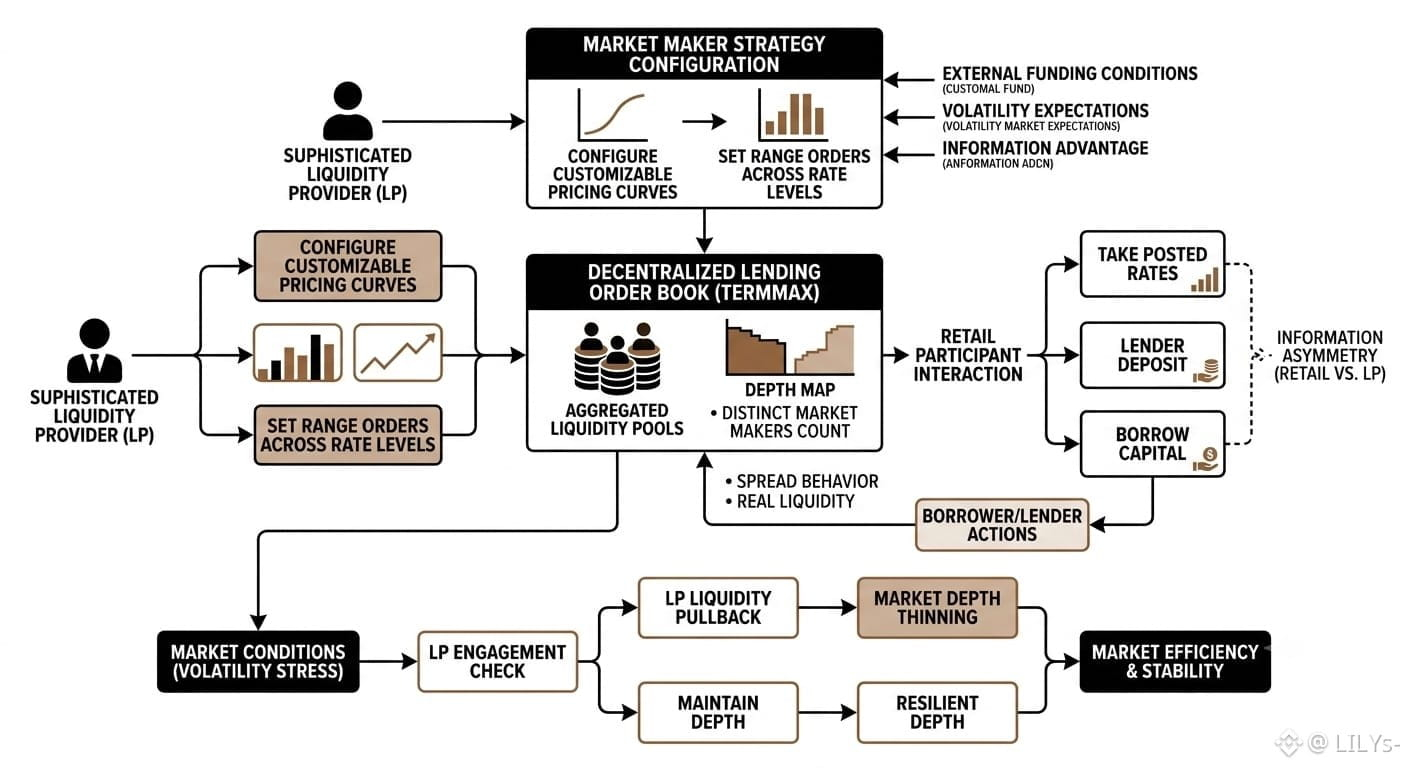
That's what caught my eye in how TermMax handles order flow. Market makers can configure range orders with custom pricing curves instead of posting one flat rate. It behaves less like a savings account and more like a lending order book, where sophisticated players actively manage liquidity across different rate levels.
What's worth sitting with is the information asymmetry this creates. A market maker adjusting curve parameters based on conditions elsewhere is effectively pricing in information most lenders don't have. Aggregating those orders gives borrowers more choice, but the rate you see still reflects someone else's read on the market, not a neutral average.
That structure carries a cost. Range orders only work if the makers running them stay engaged, and DeFi has enough history of liquidity providers stepping back the moment conditions turn. If curve configuration concentrates among a few sophisticated actors, depth could thin out exactly when volatility hits hardest.
What I'd track isn't the number of active markets, it's how many distinct makers are posting range orders per market and whether that holds through stress. Spread behavior between posted and executed rates during volatile periods tells me more than any total value locked figure.
I don't know yet if this pricing structure ends up more efficient for lenders or just relocates the information gap somewhere less visible. That's the kind of question only real stress reveals.#termmax @TermMax
$BTW $HEMI $BR
#UAESaysItDetectedTwoIranianBallisticMissiles #USStorageStocksExtendLosses #US30YearYieldHitsHighestSince2002 #CitiPlansBitcoinCustodyForInstitutionsThisYear
That's what caught my eye in how TermMax handles order flow. Market makers can configure range orders with custom pricing curves instead of posting one flat rate. It behaves less like a savings account and more like a lending order book, where sophisticated players actively manage liquidity across different rate levels.
What's worth sitting with is the information asymmetry this creates. A market maker adjusting curve parameters based on conditions elsewhere is effectively pricing in information most lenders don't have. Aggregating those orders gives borrowers more choice, but the rate you see still reflects someone else's read on the market, not a neutral average.
That structure carries a cost. Range orders only work if the makers running them stay engaged, and DeFi has enough history of liquidity providers stepping back the moment conditions turn. If curve configuration concentrates among a few sophisticated actors, depth could thin out exactly when volatility hits hardest.
What I'd track isn't the number of active markets, it's how many distinct makers are posting range orders per market and whether that holds through stress. Spread behavior between posted and executed rates during volatile periods tells me more than any total value locked figure.
I don't know yet if this pricing structure ends up more efficient for lenders or just relocates the information gap somewhere less visible. That's the kind of question only real stress reveals.#termmax @TermMax
$BTW $HEMI $BR
#UAESaysItDetectedTwoIranianBallisticMissiles #USStorageStocksExtendLosses #US30YearYieldHitsHighestSince2002 #CitiPlansBitcoinCustodyForInstitutionsThisYear