After several DeFi seasons, the most annoying feeling is not whether the rate is high or low. It is that one fixed rate borrowing decision still has to pass through too many screens, from collateral, pending orders, maturity date, to the position after execution.
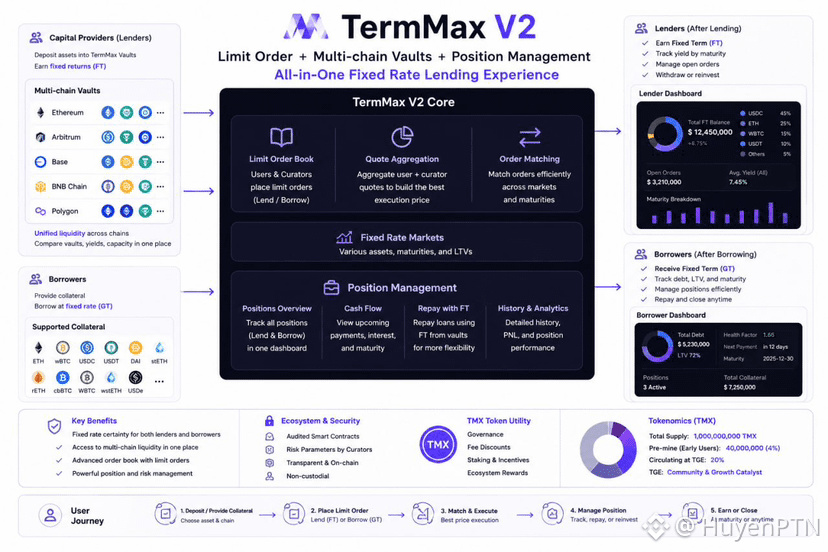
TermMax V2 goes straight at that pain point. Limit orders sit inside the borrowing and lending flow, while quotes from curators and users are aggregated to create clearer execution pricing. Multi chain vaults give capital movement more context, instead of forcing users to remember where each asset is sitting.
What makes TermMax worth analyzing is how the project packages fixed rate lending into position management. Borrowers track GT, debt, and maturity date in the same dashboard, while lenders see FT, vault shares, open orders, and yield by maturity. Repayment with FT also makes the position more flexible before everything piles up at the end of the term.
The numbers give the story more footing. The project documents state a total TMX supply of one billion tokens, forty million TMX allocated to early user pre mine, and twenty percent circulating at TGE. For TermMax, TGE is when the market tests real demand for fixed rates.
I still keep some distance from this clean experience. Vaults have curators, orders may not fill, liquidity in each market can be thin, collateral still fluctuates, and smart contracts remain the base layer risk. TermMax V2 is only strong if the interface helps users understand borrowing costs more clearly, not forget risk more quickly.
The paradox is that the more a product feels like fintech, the easier self custody responsibility becomes blurred. TGE may bring more people in to try it, but after the rewards, how many will stay because they genuinely need fixed rate borrowing, fixed rate lending, and position management in one place.
#termmax @TermMax
TermMax V2 goes straight at that pain point. Limit orders sit inside the borrowing and lending flow, while quotes from curators and users are aggregated to create clearer execution pricing. Multi chain vaults give capital movement more context, instead of forcing users to remember where each asset is sitting.
What makes TermMax worth analyzing is how the project packages fixed rate lending into position management. Borrowers track GT, debt, and maturity date in the same dashboard, while lenders see FT, vault shares, open orders, and yield by maturity. Repayment with FT also makes the position more flexible before everything piles up at the end of the term.
The numbers give the story more footing. The project documents state a total TMX supply of one billion tokens, forty million TMX allocated to early user pre mine, and twenty percent circulating at TGE. For TermMax, TGE is when the market tests real demand for fixed rates.
I still keep some distance from this clean experience. Vaults have curators, orders may not fill, liquidity in each market can be thin, collateral still fluctuates, and smart contracts remain the base layer risk. TermMax V2 is only strong if the interface helps users understand borrowing costs more clearly, not forget risk more quickly.
The paradox is that the more a product feels like fintech, the easier self custody responsibility becomes blurred. TGE may bring more people in to try it, but after the rewards, how many will stay because they genuinely need fixed rate borrowing, fixed rate lending, and position management in one place.
#termmax @TermMax