#termmax $BTW $ACE $RICE @TermMax
i keep thinking if the lender Fixed-Rate Token (FT) moves to somebody else, then something about the borrower side should have to move too.
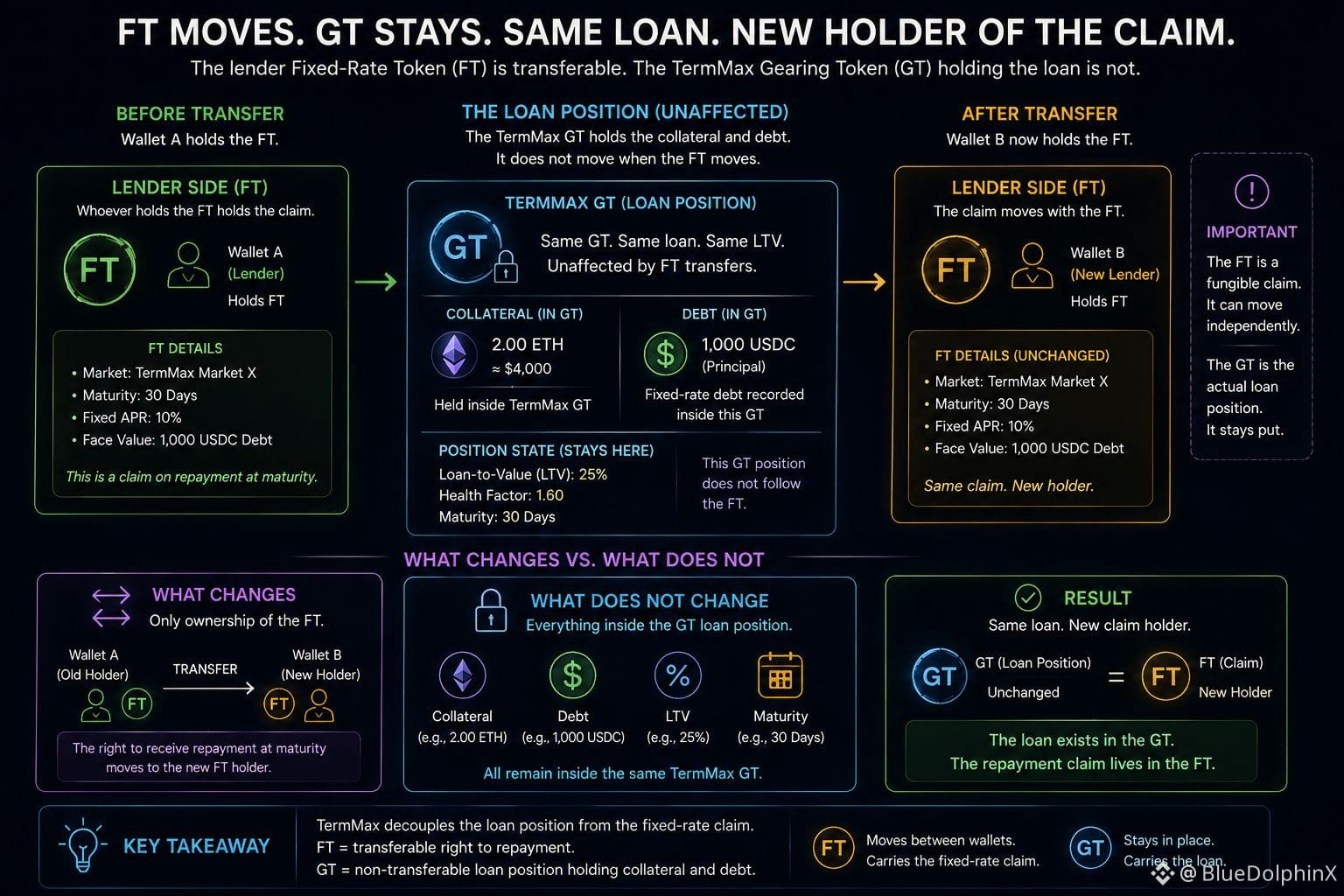
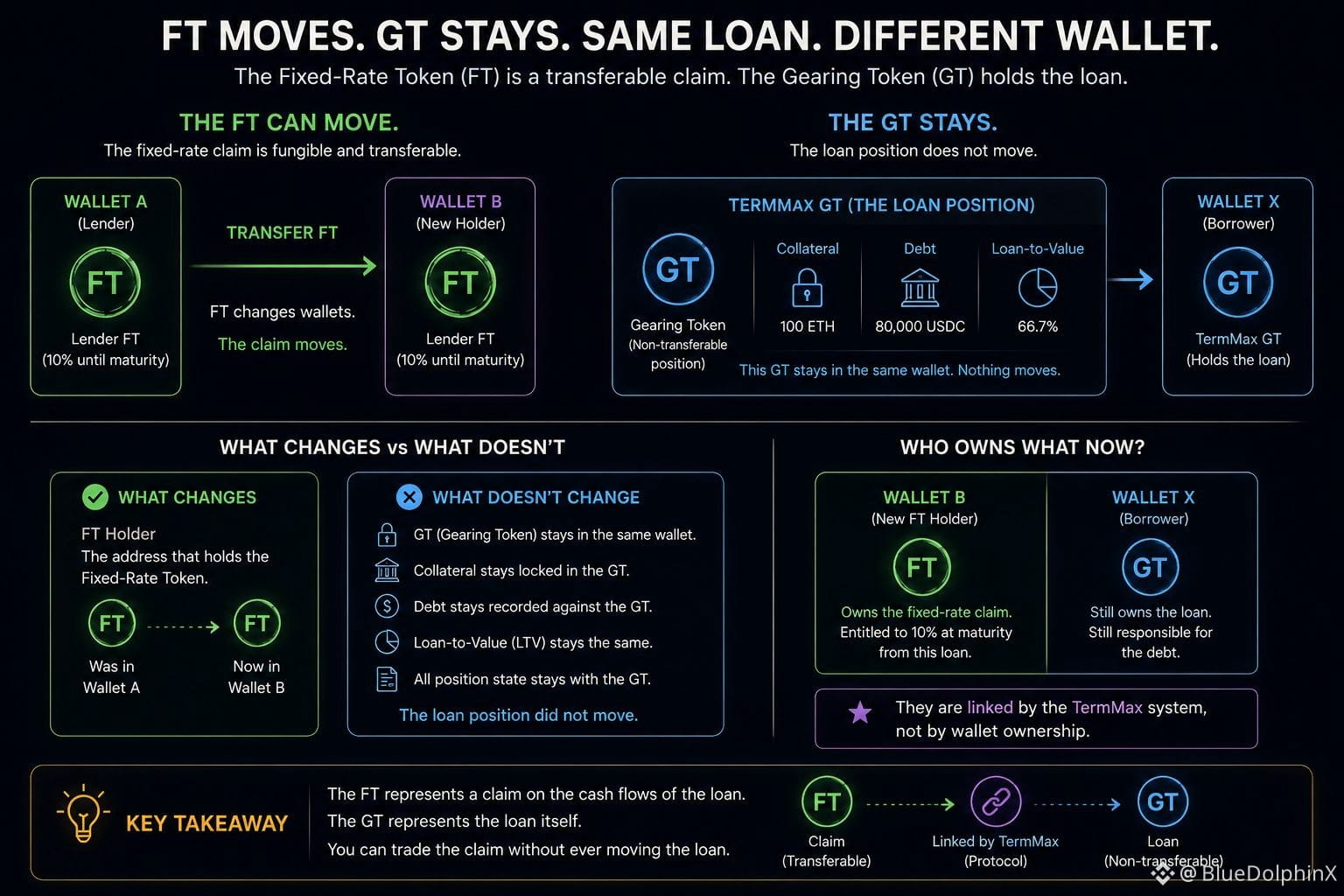
like there is one TermMax loan underneath this. one Gearing Token (GT) holding the collateral and the debt, one FT carrying the maturity claim.
so if that FT changes wallets... whose loan is this now?
apparently the TermMax GT is still sitting there with the same collateral and debt.
and that is the part my brain keeps trying to merge together.
TermMax lets the FT move because the claim is fungible. whoever holds it can hold that fixed-rate claim toward maturity. but the GT does not follow it around. the collateral is still inside the same TermMax GT, the debt is still recorded there, the Loan-to-Value still belongs to that position.
“the claim moved. the debt position didn’t.”
which sounds simple until i actually picture it.
the FT can be in one wallet today and another tomorrow, while that same GT keeps carrying the collateral and debt underneath it. none of that position state followed the FT out.
so what exactly changed?
who holds the FT changed.
not the GT collateral. not the debt recorded against it. not the Loan-to-Value sitting on that TermMax position.
and somehow that feels weirder than just saying the claim is transferable.
the FT can travel through TermMax without dragging the GT position behind it.
FT changed wallets. the collateral and debt are still sitting there like nothing followed it out.
i keep thinking if the lender Fixed-Rate Token (FT) moves to somebody else, then something about the borrower side should have to move too.
like there is one TermMax loan underneath this. one Gearing Token (GT) holding the collateral and the debt, one FT carrying the maturity claim.
so if that FT changes wallets... whose loan is this now?
apparently the TermMax GT is still sitting there with the same collateral and debt.
and that is the part my brain keeps trying to merge together.
TermMax lets the FT move because the claim is fungible. whoever holds it can hold that fixed-rate claim toward maturity. but the GT does not follow it around. the collateral is still inside the same TermMax GT, the debt is still recorded there, the Loan-to-Value still belongs to that position.
“the claim moved. the debt position didn’t.”
which sounds simple until i actually picture it.
the FT can be in one wallet today and another tomorrow, while that same GT keeps carrying the collateral and debt underneath it. none of that position state followed the FT out.
so what exactly changed?
who holds the FT changed.
not the GT collateral. not the debt recorded against it. not the Loan-to-Value sitting on that TermMax position.
and somehow that feels weirder than just saying the claim is transferable.
the FT can travel through TermMax without dragging the GT position behind it.
FT changed wallets. the collateral and debt are still sitting there like nothing followed it out.