


The real test for a payment rail is not when things work normally. It is when someone powerful wants to stop a transaction from settling. For years, the promise of censorship resistant digital money felt like it ended with the asset itself owning Bitcoin. The infrastructure to move value, especially the stablecoins that people actually use for commerce, remained tangled in legacy systems and corporate controlled blockchains where a compliance flag could freeze funds. What good is a resilient asset if the settlement layer has a built in kill switch. This is the specific, unglamorous problem PLASMA targets. It is not trying to be the fastest or the cheapest Layer 1 for everything. After reviewing its technical documentation and the architecture outlined on plasma.to, what stands out to me is a design that trades some generic scalability for a specific kind of sovereign guarantee, aiming to make the movement of stablecoins as politically neutral as the aspiration behind Bitcoin itself.
At its core, PLASMA describes itself as a "Bitcoin anchored" Layer 1. This is not just marketing poetry. The mechanics, which I studied in the project docs, involve periodically committing the state of its EVM compatible chain all those USDT and USDC transfers directly into the Bitcoin blockchain. It uses Bitcoin as a canonical bulletin board. This means the entire history and final state of transactions on PLASMA are cemented onto the most immutable and decentralized ledger we have. If the PLASMA chain were ever attacked or attempts were made to rewrite its history, the cryptographic proof of that attempt would be visible and verifiable against the anchor in Bitcoin. The security assumption shifts subtly. It is not just about PLASMA own validator set, it is about inheriting the unforgeable costliness of Bitcoin proof of work. For institutions thinking about payment channels, this externalized settlement assurance is the kind of feature that moves a blockchain from a conceptual experiment to a viable risk model.
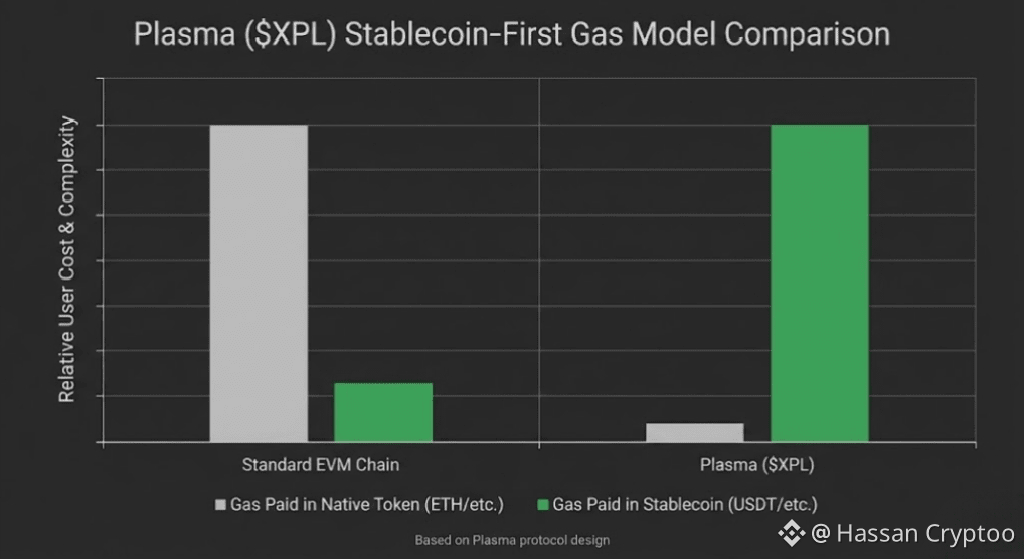
This design directly enables its other headline features, gasless USDT transfers and stablecoin first gas. These are not mere conveniences. At their core, they represent structured catalysts. By removing the friction of needing a volatile native token just to move stablecoins, PLASMA attempts to align its utility with its security goal. The more stablecoin settlement activity it attracts, the more frequent and valuable those Bitcoin checkpoints become. It creates a feedback loop where usage enhances security, which in turn makes the network more attractive for serious payment volume. The team focus is evident in their partnerships, like the integration with stablecoin issuer Mountain Protocol for its USDM, announced on their X account in early 2024. They are courting the very assets that need this kind of neutral settlement layer.
Of course, a model anchored to Bitcoin faces inherent trade offs. Finality on PLASMA itself is sub second via its PlasmaBFT consensus, but the absolute, Bitcoin level settlement occurs with each checkpoint. There is a latency and cost consideration for writing data to Bitcoin. The PLASMA whitepaper argues this is a worthy compromise for the security grade it achieves. It is a choice that clearly defines its niche, it will not compete with high throughput chains for pure DeFi speculation, but it carves out a lane for payment flows where the risk of intervention outweighs the need for nanosecond finality. Think cross border trade finance, humanitarian aid disbursements, or simply individuals in jurisdictions facing capital controls. The network utility token, XPL, functions within this system for governance and to pay for services like premium transaction ordering, tying its economic activity to the health of the settlement ecosystem.
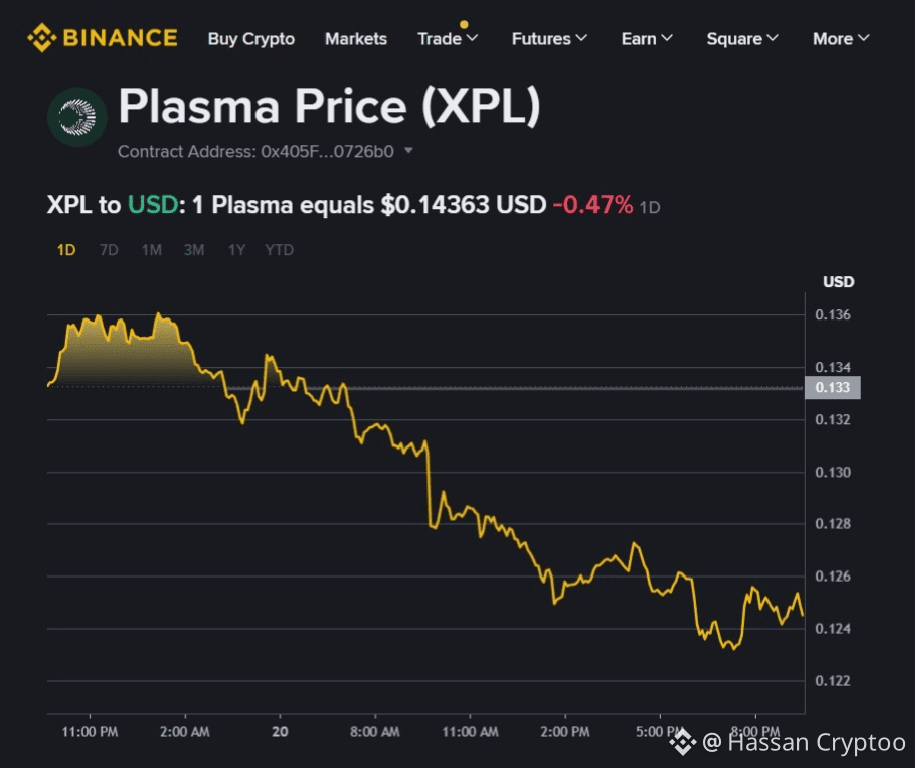
Analyzing the XPL token on Binance Spot today shows a market still evaluating this proposition. The chart reveals a price consolidating after the broader market adjustments of the past quarter. Trading volume often spikes around network updates, like the mainnet launch news shared by the team on their official X channel. On chain, the metrics that matter for a chain like PLASMA will differ from a meme coin, I look less for sheer transaction count and more for the total stablecoin value settled and the consistency of those Bitcoin checkpoints. The competitive dynamics of the Layer 1 blockchain sector are intense, and PLASMA’s market capitalization as reflected in its CoinMarketCap profile, confirms the project’s status as an emerging participant. Its true test will not be a price chart in isolation, but whether it can onboard the targeted "institutions in payments/finance". The recent governance proposals, viewable on their platform, show an active community starting to steer the network, which is a positive early sign of decentralization beyond the foundational code.
The ambition here is quietly profound. PLASMA is not just building another smart contract platform. It is attempting to rewire the foundation of digital payment infrastructure by borrowing the oldest and most robust form of cryptographic security. In a landscape where regulatory scrutiny on stablecoins and their underlying blockchains is intensifying, this kind of architectural foresight might be its most valuable asset. Achieving success depends on effective implementation and acceptance by users who truly require its distinctive value, a payment network in which the final authority lies not with a corporation or foundation, but with Bitcoin’s unchangeable ledger.
by Hassan Cryptoo