@Dusk #dusk $DUSK I've seen this detail get skipped in almost every privacy-chain breakdown, and it's the part that actually matters.
What happens when money enters a system openly, then someone wants to spend it privately?
Staking rewards, gas refunds, exchange deposits — plenty of value starts out fully visible.
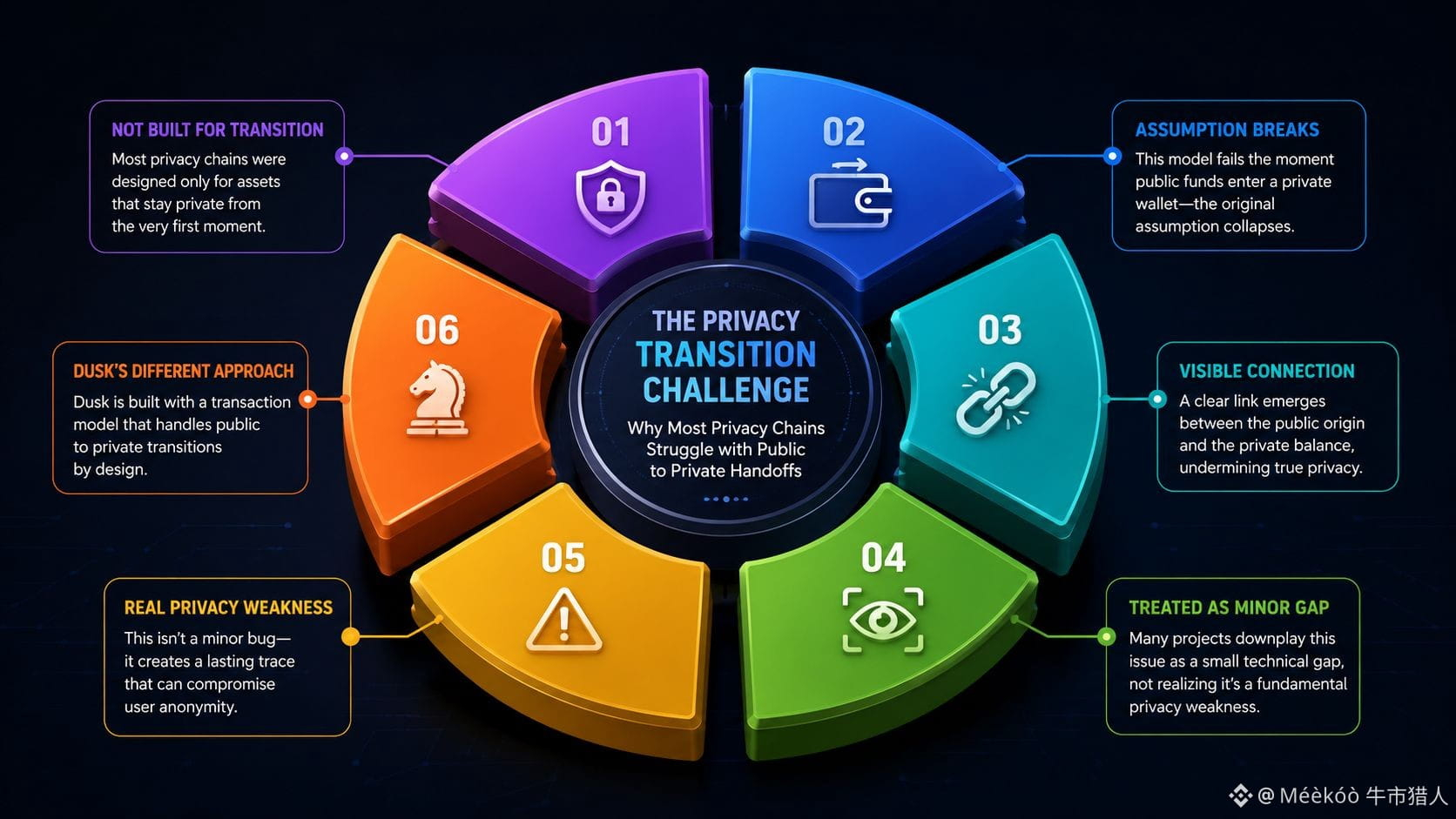
Most privacy chains were never built with that transition in mind.
Their whole design assumed funds stayed hidden from the very first moment.
That assumption falls apart the instant a public transaction lands in a private wallet.
Suddenly there's a visible thread connecting a public origin to a supposedly private balance.
Several projects just treated this as a minor technical gap, not a real weakness.
Dusk approached it differently, building a transaction model meant to handle exactly this handoff.
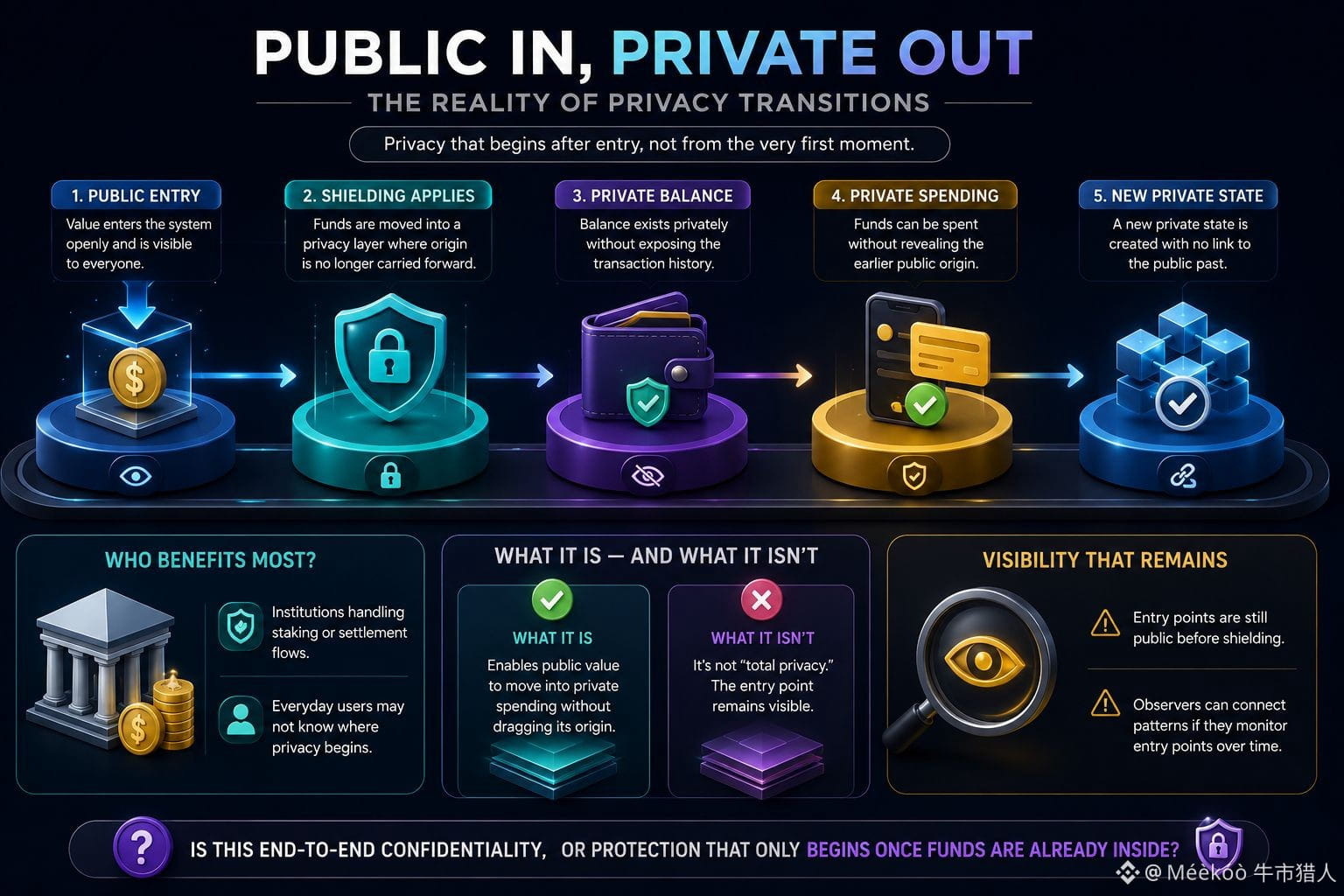
The idea is that public value can move into private spending without dragging its origin along.
A staking reward received openly can later be spent without exposing that history.
That's a narrower promise than "total privacy," and it's worth naming honestly.
The public entry point itself is still visible before any shielding applies.
Someone watching those entry points consistently could still piece together patterns over time.
Institutions managing staking flows or settlement probably gain the most from this design.
Everyday users may not realize where their privacy actually starts and where it doesn't.
So is this real end-to-end confidentiality, or protection that only begins once funds are already inside?
$PORTAL
$AIO
What happens when money enters a system openly, then someone wants to spend it privately?
Staking rewards, gas refunds, exchange deposits — plenty of value starts out fully visible.
Most privacy chains were never built with that transition in mind.
Their whole design assumed funds stayed hidden from the very first moment.
That assumption falls apart the instant a public transaction lands in a private wallet.
Suddenly there's a visible thread connecting a public origin to a supposedly private balance.
Several projects just treated this as a minor technical gap, not a real weakness.
Dusk approached it differently, building a transaction model meant to handle exactly this handoff.
The idea is that public value can move into private spending without dragging its origin along.
A staking reward received openly can later be spent without exposing that history.
That's a narrower promise than "total privacy," and it's worth naming honestly.
The public entry point itself is still visible before any shielding applies.
Someone watching those entry points consistently could still piece together patterns over time.
Institutions managing staking flows or settlement probably gain the most from this design.
Everyday users may not realize where their privacy actually starts and where it doesn't.
So is this real end-to-end confidentiality, or protection that only begins once funds are already inside?
$PORTAL
$AIO