Napkin math on what T+2 actually costs.
Take a 300M EUR book. Under T+2 settlement, capital sits locked for two days. Conservative funding cost - 3% annually:
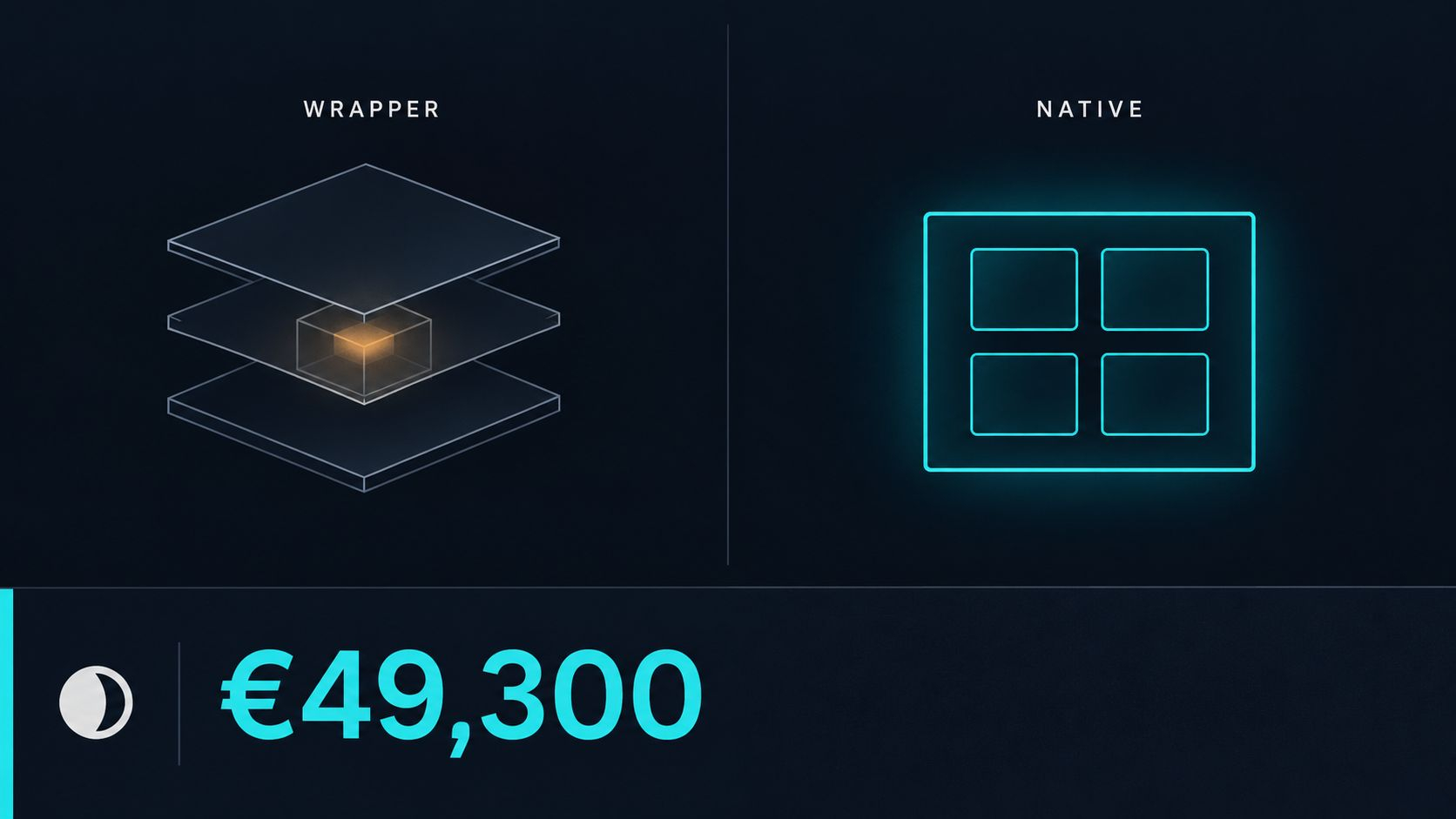
300,000,000 × 0.03 × 2 / 365 ≈ €49,300
That's one cycle. Not a year. Just the fee for running infrastructure designed in the 90s.
Why 300M: NPEX an AFM-regulated exchange licensed as MTF, Broker and ECSP plans to bring 300M+ EUR of assets onchain via @Dusk
Now the part most people skip.
Tokenization ≠ native issuance.
Tokenizing a bond means minting a digital wrapper. The asset still lives in a CSD, with the same intermediaries and the same T+2. You got a token. You didn't get a new system.
Native issuance means the asset exists onchain from day one - issuance, custody, settlement, redemption. No wrapper, because there's nothing left to wrap.
So why hasn't this happened already? Privacy. No fund will expose its positions in a transparent ledger. And full anonymity doesn't clear compliance.
Dusk targets exactly that gap. Hedger combines homomorphic encryption with zero-knowledge proofs: positions stay shielded, while an authorized party sees precisely what it's required to see. Selective disclosure instead of choosing between "everything visible" and "nothing visible".
On top sits DuskEVM - Solidity and familiar tooling, so builders don't need a new language to touch regulated assets. And Dusk Trade as a neobroker for MMFs, ETFs, bonds and RWAs.
My take: 90% of what the market calls "RWA tokenization" is wrappers. The real shift starts when licensed issuers move to native issuance. The networks that win will be the ones where compliance is built into the protocol, not bolted on top.
Disagree with the €49,300? Run it with your own funding rate and post the number below
$DUSK #dusk
Take a 300M EUR book. Under T+2 settlement, capital sits locked for two days. Conservative funding cost - 3% annually:
300,000,000 × 0.03 × 2 / 365 ≈ €49,300
That's one cycle. Not a year. Just the fee for running infrastructure designed in the 90s.
Why 300M: NPEX an AFM-regulated exchange licensed as MTF, Broker and ECSP plans to bring 300M+ EUR of assets onchain via @Dusk
Now the part most people skip.
Tokenization ≠ native issuance.
Tokenizing a bond means minting a digital wrapper. The asset still lives in a CSD, with the same intermediaries and the same T+2. You got a token. You didn't get a new system.
Native issuance means the asset exists onchain from day one - issuance, custody, settlement, redemption. No wrapper, because there's nothing left to wrap.
So why hasn't this happened already? Privacy. No fund will expose its positions in a transparent ledger. And full anonymity doesn't clear compliance.
Dusk targets exactly that gap. Hedger combines homomorphic encryption with zero-knowledge proofs: positions stay shielded, while an authorized party sees precisely what it's required to see. Selective disclosure instead of choosing between "everything visible" and "nothing visible".
On top sits DuskEVM - Solidity and familiar tooling, so builders don't need a new language to touch regulated assets. And Dusk Trade as a neobroker for MMFs, ETFs, bonds and RWAs.
My take: 90% of what the market calls "RWA tokenization" is wrappers. The real shift starts when licensed issuers move to native issuance. The networks that win will be the ones where compliance is built into the protocol, not bolted on top.
Disagree with the €49,300? Run it with your own funding rate and post the number below
$DUSK #dusk