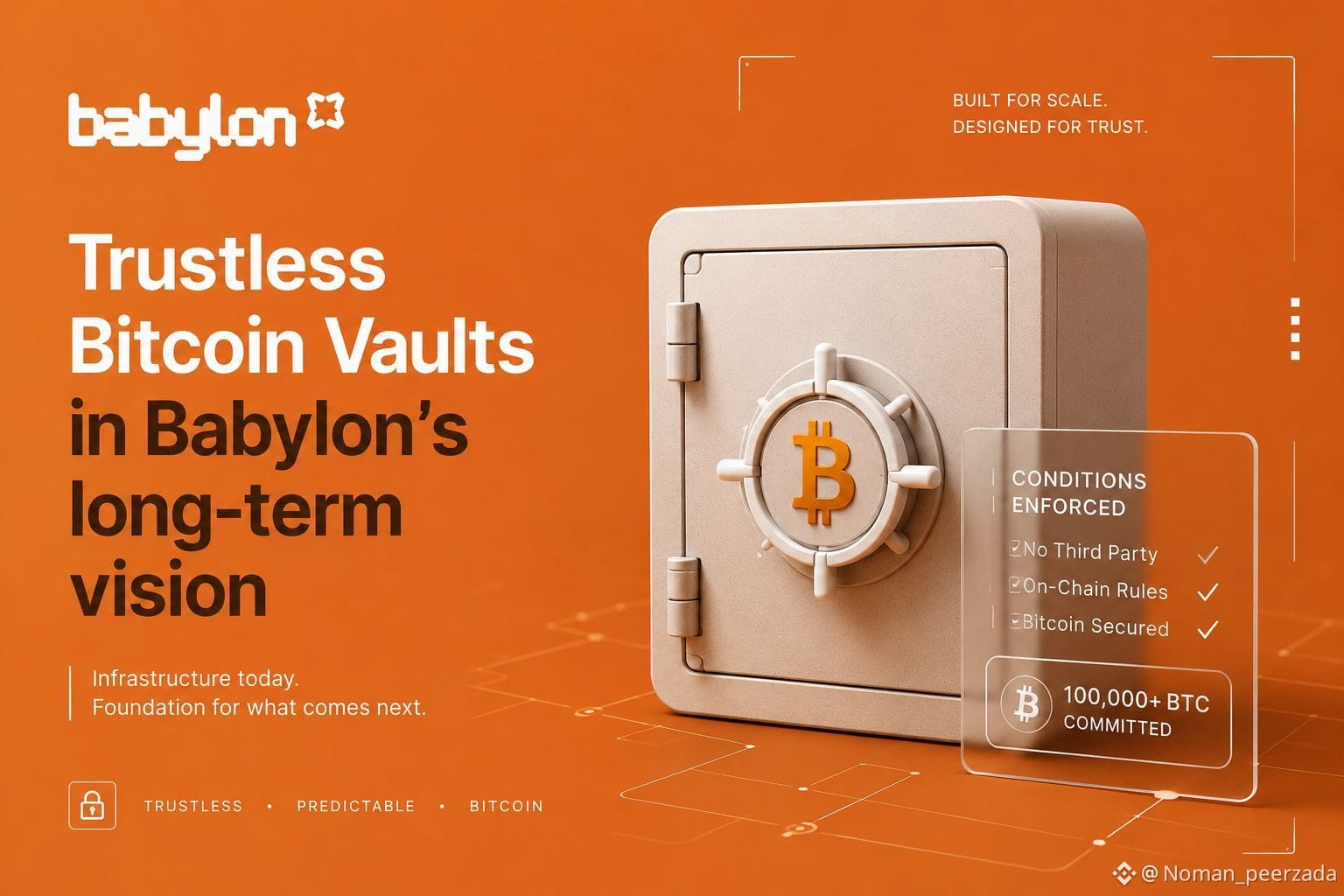

One thing that stood out after spending time with Babylon is that Trustless Bitcoin Vaults don't really feel like a feature designed for today. They feel like infrastructure that only becomes valuable once more activity starts depending on Bitcoin.
Babylon has already attracted 100,000+ BTC in committed stake. That's a meaningful number. But as participation grows, one question keeps coming back to me: how do you give Bitcoin more jobs without asking holders to accept more trust assumptions?
That's where the vault idea started making more sense to me.
The interesting part isn't that coins stay under predefined spending conditions. It's that those conditions become predictable enough for other systems to build around them. That feels much closer to Babylon's long-term direction than simply creating another yield opportunity.
I still think there's a trade-off.
Bitcoin holders have spent years optimizing for simplicity. One wallet. One key. Minimal interaction. Introducing vault logic, even if it's trustless, adds another layer people need to understand before they're comfortable locking meaningful amounts of BTC.
That hesitation matters.
Infrastructure only works if people are willing to use it, and Bitcoin users are usually slower than most communities to change habits. Maybe that's exactly why Babylon is building these pieces before they seem necessary.
If Bitcoin is eventually going to secure more than just itself, the foundation probably has to be built before anyone notices it's there.
I'm still watching whether the extra flexibility ends up feeling like an advantage... or just another thing long-term holders would rather avoid.
@BabylonLabs_io $BABY #baby $DEXE $LAB
Babylon has already attracted 100,000+ BTC in committed stake. That's a meaningful number. But as participation grows, one question keeps coming back to me: how do you give Bitcoin more jobs without asking holders to accept more trust assumptions?
That's where the vault idea started making more sense to me.
The interesting part isn't that coins stay under predefined spending conditions. It's that those conditions become predictable enough for other systems to build around them. That feels much closer to Babylon's long-term direction than simply creating another yield opportunity.
I still think there's a trade-off.
Bitcoin holders have spent years optimizing for simplicity. One wallet. One key. Minimal interaction. Introducing vault logic, even if it's trustless, adds another layer people need to understand before they're comfortable locking meaningful amounts of BTC.
That hesitation matters.
Infrastructure only works if people are willing to use it, and Bitcoin users are usually slower than most communities to change habits. Maybe that's exactly why Babylon is building these pieces before they seem necessary.
If Bitcoin is eventually going to secure more than just itself, the foundation probably has to be built before anyone notices it's there.
I'm still watching whether the extra flexibility ends up feeling like an advantage... or just another thing long-term holders would rather avoid.
@BabylonLabs_io $BABY #baby $DEXE $LAB