#opg $OPG @OpenGradient
The more I think about OpenGradient, the more I feel its significance goes beyond technology itself.
We're entering a future where artificial intelligence is shaping how people learn, work, create, and make decisions. Yet much of that power remains concentrated in systems that most people cannot see, influence, or fully understand. That's why OpenGradient immediately caught my attention.
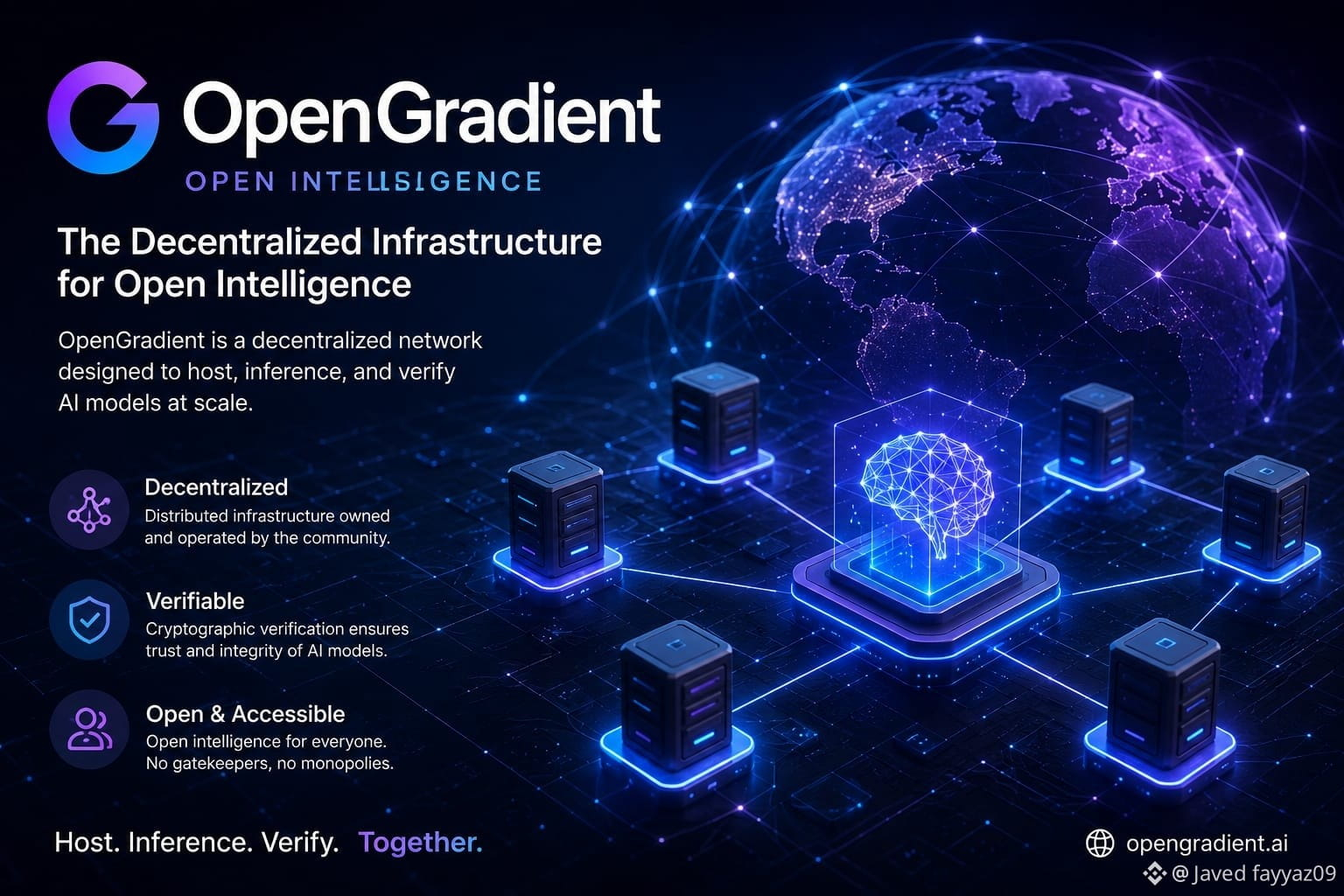
Its vision of Open Intelligence feels timely: a decentralized network designed to host, run, and verify AI models at scale. On the surface, it offers something many people are searching for—greater openness, broader participation, and a chance to rethink who gets access to the infrastructure powering the next generation of innovation.
But the longer I reflect on it, the more important questions begin to emerge.
Can openness remain meaningful as a network grows more complex? When value is created, who benefits most? And when things don't go as planned, who carries the responsibility?
These aren't criticisms. They're the kinds of questions every ambitious project should welcome.
What makes OpenGradient interesting isn't that it claims to have all the answers. It's that it is attempting to address challenges that are becoming impossible to ignore. The real measure of its success won't be how impressive the vision looks today, but whether transparency, accountability, and trust remain intact as the network evolves over time.
The more I think about OpenGradient, the more I feel its significance goes beyond technology itself.
We're entering a future where artificial intelligence is shaping how people learn, work, create, and make decisions. Yet much of that power remains concentrated in systems that most people cannot see, influence, or fully understand. That's why OpenGradient immediately caught my attention.
Its vision of Open Intelligence feels timely: a decentralized network designed to host, run, and verify AI models at scale. On the surface, it offers something many people are searching for—greater openness, broader participation, and a chance to rethink who gets access to the infrastructure powering the next generation of innovation.
But the longer I reflect on it, the more important questions begin to emerge.
Can openness remain meaningful as a network grows more complex? When value is created, who benefits most? And when things don't go as planned, who carries the responsibility?
These aren't criticisms. They're the kinds of questions every ambitious project should welcome.
What makes OpenGradient interesting isn't that it claims to have all the answers. It's that it is attempting to address challenges that are becoming impossible to ignore. The real measure of its success won't be how impressive the vision looks today, but whether transparency, accountability, and trust remain intact as the network evolves over time.