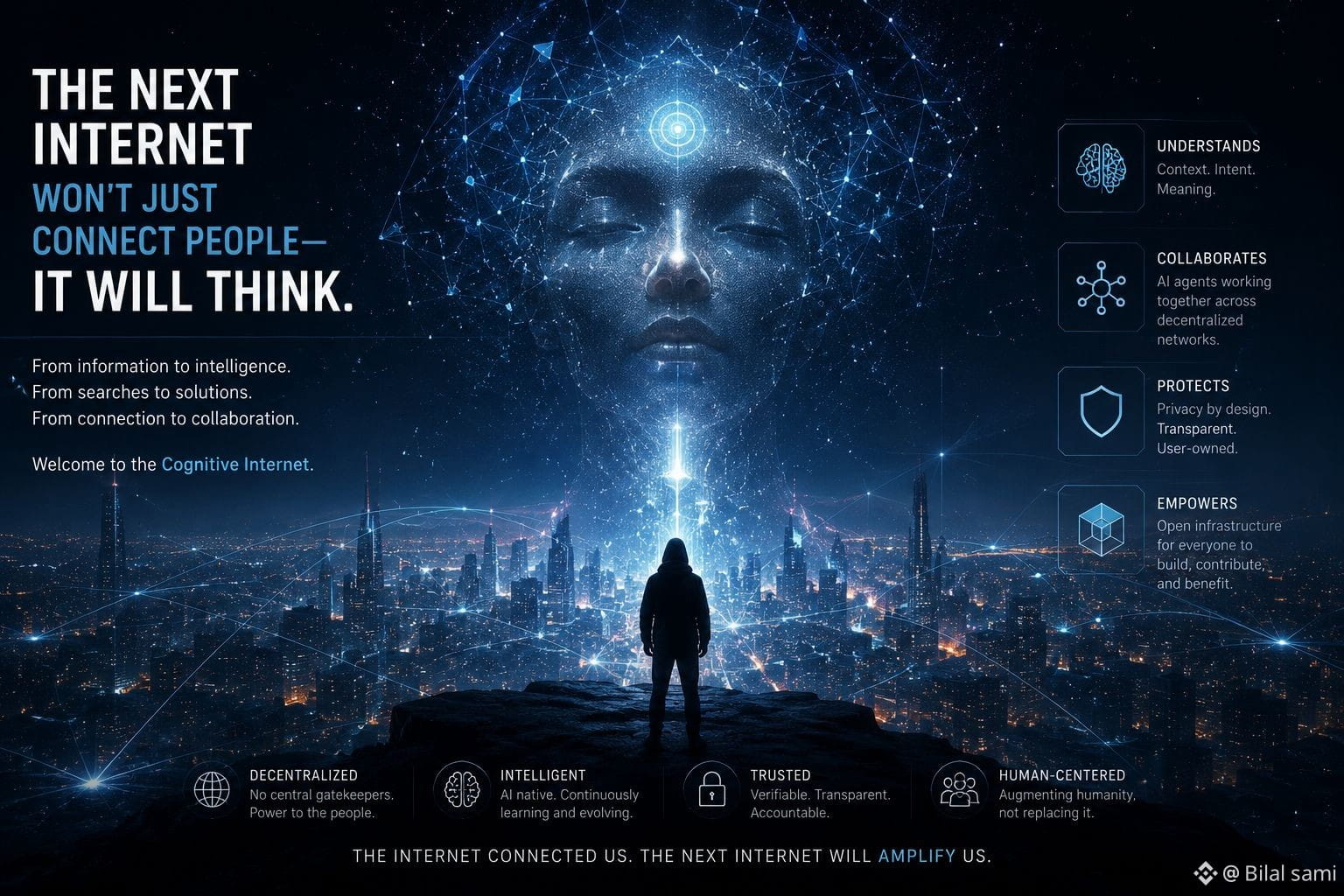
The Next Internet Won't Just Connect People—It Will Think..
The internet transformed the world by connecting people. It allowed us to communicate instantly, share ideas across continents, and access humanity's collective knowledge with a few clicks. But what if the next evolution of the internet goes beyond connection? What if it can think, learn, and collaborate alongside us?
We are entering an era where artificial intelligence is becoming a native part of digital infrastructure. The next internet won't simply move information from one device to another—it will understand context, anticipate needs, and help solve problems in real time. Instead of searching for answers, we may interact with intelligent systems that reason, create, and adapt on our behalf.
Imagine a network where AI agents work together across decentralized platforms, verifying information, optimizing resources, and delivering personalized experiences without relying on a handful of centralized gatekeepers. In this future, intelligence becomes as accessible as connectivity is today.
But this transformation raises an important question: who owns that intelligence? If the next internet can think, it must also be transparent, accountable, and open. The benefits of AI should not be controlled by a small group of corporations. Instead, the infrastructure powering intelligent systems should be shared, verifiable, and accessible to everyone.
Projects building decentralized AI networks are laying the foundation for this future. By combining blockchain technology with artificial intelligence, they aim to create systems where users contribute, participate, and even own a portion of the intelligence they help create.
The internet connected humanity. The next internet will amplify it. It won't replace human creativity or decision-making—it will extend our capabilities in ways we are only beginning to imagine.
The future isn't just connected.
It's intelligent.#opg $OPG @OpenGradient
The internet transformed the world by connecting people. It allowed us to communicate instantly, share ideas across continents, and access humanity's collective knowledge with a few clicks. But what if the next evolution of the internet goes beyond connection? What if it can think, learn, and collaborate alongside us?
We are entering an era where artificial intelligence is becoming a native part of digital infrastructure. The next internet won't simply move information from one device to another—it will understand context, anticipate needs, and help solve problems in real time. Instead of searching for answers, we may interact with intelligent systems that reason, create, and adapt on our behalf.
Imagine a network where AI agents work together across decentralized platforms, verifying information, optimizing resources, and delivering personalized experiences without relying on a handful of centralized gatekeepers. In this future, intelligence becomes as accessible as connectivity is today.
But this transformation raises an important question: who owns that intelligence? If the next internet can think, it must also be transparent, accountable, and open. The benefits of AI should not be controlled by a small group of corporations. Instead, the infrastructure powering intelligent systems should be shared, verifiable, and accessible to everyone.
Projects building decentralized AI networks are laying the foundation for this future. By combining blockchain technology with artificial intelligence, they aim to create systems where users contribute, participate, and even own a portion of the intelligence they help create.
The internet connected humanity. The next internet will amplify it. It won't replace human creativity or decision-making—it will extend our capabilities in ways we are only beginning to imagine.
The future isn't just connected.
It's intelligent.#opg $OPG @OpenGradient