


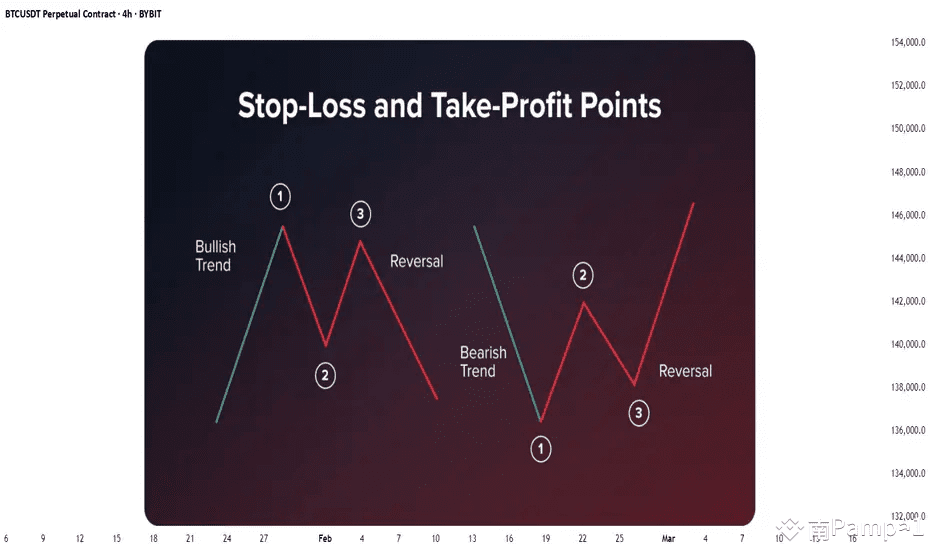
In the world of crypto trading, success is not just about making big wins—it’s about protecting your capital and minimizing losses. Risk management is the backbone of sustainable trading, ensuring that you stay in the game even when the market gets unpredictable. In this comprehensive guide, we’ll explore essential principles and strategies to safeguard your trading account while maximizing your profit potential.
---
🎯 1. Risk-Reward Ratio: The Foundation of Every Trade
✅ What it is:
The risk-reward ratio (RRR) measures how much potential reward you’re targeting compared to the risk you’re willing to take. A common standard in trading is maintaining a 1:2 or 1:3 ratio, where your potential profit is at least double or triple your potential loss.
✅ How to Apply It:
Predefine your risk-reward ratio before entering any trade.
For swing traders, aim for a minimum of 1:2 or 1:3 to justify holding overnight positions.
Adjust your RRR based on market volatility and trade setup.
📊 Pro Tip: Always stick to your planned RRR and avoid emotional decisions that deviate from your trading strategy.
---
📏 2. Position Sizing: The Key to Capital Preservation
✅ Why Position Sizing Matters:
Incorrect position sizing can wipe out your account after just a few losing trades. Position sizing ensures that no single trade has the power to devastate your portfolio.
✅ Formula for Position Sizing:
Use this formula:
Position Size = (Account Risk $ ÷ (Entry Price – Stop-Loss Price))
📚 Example:
If you’re risking $100 per trade and the distance between your entry and stop-loss is $5, your position size should be:
👉 Position Size = 100 ÷ 5 = 20 units
💡 Golden Rule: Never risk more than 1% – 2% of your total account balance on a single trade.
---
🛑 3. Stop-Loss Orders: Your Emergency Brake
✅ What is a Stop-Loss?
A stop-loss order automatically closes your position if the price moves against you by a certain amount, preventing catastrophic losses.
✅ Best Practices for Setting Stop-Losses:
Use technical analysis to place stop-losses below support for long trades and above resistance for short trades.
Avoid setting stop-losses too close to your entry point to prevent getting stopped out by small fluctuations.
📉 Pro Tip: Consider using ATR (Average True Range) to adjust your stop-loss distance based on market volatility.
---
📊 4. Diversification: Don’t Put All Your Eggs in One Basket
✅ Why Diversification Works:
Spreading your capital across multiple trades or asset classes reduces the impact of any single loss. Diversification protects your portfolio by minimizing overall risk exposure.
✅ How to Diversify Effectively:
Trade across different cryptocurrencies to mitigate sector-specific risks.
Avoid overexposure to correlated assets (e.g., BTC and ETH often move in the same direction).
Consider allocating a portion of your portfolio to stablecoins during uncertain market conditions.
🌊 Pro Tip: In bear markets, shift focus to lower volatility pairs or stable assets to preserve capital.
---
🧠 5. Emotional Discipline: Winning the Mental Game
✅ Why Emotional Discipline is Critical:
Even the best trading strategies can fail if fear, greed, or impatience take control. Emotional trading often leads to impulsive decisions and unnecessary losses.
✅ How to Maintain Discipline:
Stick to your trading plan—no matter what!
Use mental techniques such as meditation, journaling, or regular exercise to stay calm and focused.
Avoid revenge trading after a loss—take a break and analyze your mistakes objectively.
📝 Pro Tip: Keep a trading journal to reflect on your emotional state and identify recurring patterns.
---
📊 6. Dynamic Risk Management: Adapting to Changing Markets
✅ Why You Should Adjust Your Strategy:
Markets are dynamic, and volatility can change rapidly. Your risk management strategy should adapt accordingly.
✅ How to Use ATR for Dynamic Risk Management:
ATR (Average True Range): A great tool to measure market volatility. Use ATR to adjust your stop-loss distance in volatile markets.
During high volatility, widen your stop-loss to avoid unnecessary liquidation.
Reduce position size during periods of uncertainty to minimize exposure.
📉 Pro Tip: Scale out of your position as it approaches your target to lock in partial profits.
---
📚 7. Track and Review Your Trades: Learn from Every Move
✅ Why a Trading Journal is Important:
Every trade is a learning opportunity. By tracking your trades, you gain insights into what’s working and what needs improvement.
✅ What to Include in Your Journal:
Entry and Exit Points
Risk-Reward Ratio
Reasoning for Trade Execution
Mistakes or Deviations from the Plan
Lessons Learned
📊 Pro Tip: Review your trading journal weekly to identify patterns and improve your strategy over time.
---
🎯 Final Thoughts: Plan the Trade, Trade the Plan
Risk management isn’t just a skill—it’s a habit that separates successful traders from those who blow up their accounts. By understanding and applying risk-reward ratios, position sizing, and emotional discipline, you can protect your capital and maximize long-term success.
💡 Reflection Time:
✅ Are you following a defined risk-reward strategy?
✅ Do you track and review your trades regularly?
✅ How well do you adapt to changing market conditions?
---
🔥 Ready to Level Up Your Trading Game?
Drop your thoughts in the comments, and let us know how you manage risk in your trades! If this guide was helpful, hit the like button and follow us for more expert tips and daily crypto insights! 🚀