



Understanding Decentralization in Cryptocurrency
Decentralization is a fundamental principle in the realm of cryptocurrencies. It refers to the distribution of power and control away from a centralized authority, such as a government or financial institution, to a distributed network of participants. This concept is not only central to the operation of most cryptocurrencies but also forms the ideological backbone of the entire blockchain technology.
The Concept of Decentralization
In traditional financial systems, central authorities like banks and governments control the issuance and regulation of money. They maintain ledgers of transactions, manage interest rates, and impose monetary policies. In contrast, cryptocurrencies like Bitcoin and Ethereum employ decentralized networks where thousands of nodes (computers) validate and record transactions in a public ledger known as the blockchain.
Image Source: ( @Binance Academy )
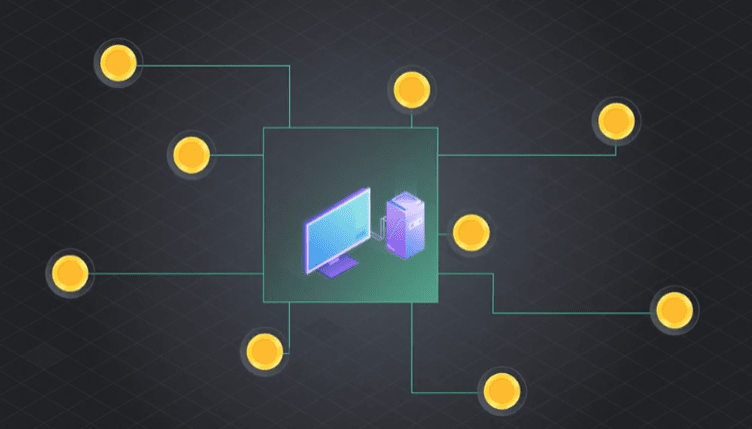
How Decentralization Works
Blockchain Technology
At the heart of decentralization is blockchain technology. A blockchain is a chain of blocks where each block contains a list of transactions. These blocks are linked and secured using cryptographic principles. Here’s how it fundamentally works:
Distributed Ledger: A record of all transactions is maintained across all nodes in the network. This ensures transparency and security as no single entity controls the data.
Consensus Mechanisms: Algorithms like Proof of Work (PoW) and Proof of Stake (PoS) are used to achieve agreement among nodes on the validity of transactions.
Immutability: Once a transaction is recorded in a block and added to the blockchain, it cannot be altered or deleted, ensuring a high level of security and trust.
The Role of Decentralization in Cryptocurrencies
Decentralization plays a crucial role in enhancing the security, transparency, and efficiency of cryptocurrencies. Here are some key benefits:
Security: Decentralized networks are highly resistant to attacks. To compromise such a network, an attacker would need to control more than 50% of the nodes, which is practically infeasible for large networks.
Transparency and Trust: All transactions are visible to all participants, fostering a high level of trust and reducing the likelihood of fraud.
Reduced Costs: Decentralization eliminates the need for intermediaries, reducing transaction costs and increasing efficiency.
Image Source: ( @null )
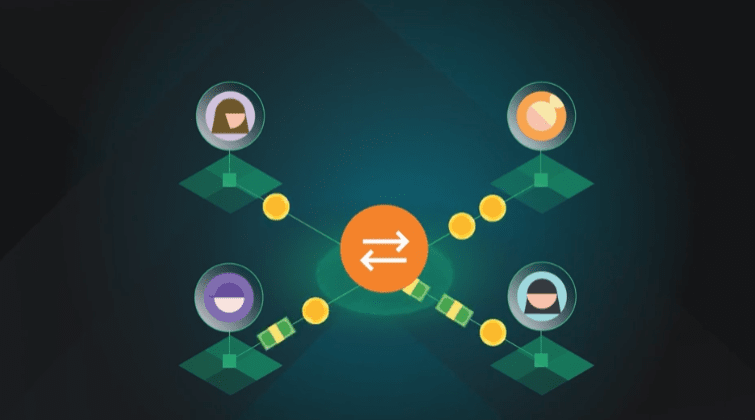
Centralization Payment Mathods
Challenges of Decentralization
While decentralization offers numerous advantages, it is not without its challenges:
Scalability: Decentralized networks can struggle with scalability issues, as seen with Bitcoin's transaction speed and cost during high demand periods.
Regulatory Concerns: Governments and regulatory bodies are still grappling with how to regulate decentralized systems which do not fall under traditional frameworks.
Energy Consumption: Consensus mechanisms like PoW require significant computational power, leading to high energy consumption.
Binance's Role in Decentralization
Binance, one of the world's largest cryptocurrency exchanges, has been a significant player in advancing the cause of decentralization. Here’s how:
Decentralized Exchange (DEX)
Binance has launched Binance DEX, a decentralized exchange built on Binance Chain. Unlike centralized exchanges, Binance DEX allows users to trade cryptocurrencies directly from their wallets, maintaining custody of their assets and ensuring higher security and privacy.
Support for Decentralized Finance (DeFi)
Binance has been a strong proponent of DeFi, a movement that aims to recreate traditional financial systems like loans and savings on the blockchain. Binance has listed numerous DeFi tokens and launched Binance Smart Chain (BSC), which supports DeFi applications with smart contract functionality.
Educational Initiatives
Binance actively educates the public about the benefits and workings of decentralized systems through its Academy, fostering greater understanding and adoption of cryptocurrency and blockchain technology.
Image Source: ( @null )

Conclusion
Decentralization in cryptocurrency represents a paradigm shift from traditional centralized systems. It enhances security, transparency, and efficiency while addressing the need for financial inclusivity and autonomy. Leading players like Binance are at the forefront of this revolution, driving innovation and adoption through decentralized exchanges, support for DeFi, and educational efforts. As the world continues to embrace this technology, the principles of decentralization will likely reshape the future of finance and beyond.
#CPI_BTC_Watch #TON #DOGSONBINANCE #BNBChainMemecoins #TelegramCEO $BTC $ETH $BNB


