
#scamcallcenters
scamcallcenters
Просмотров: 0
2 обсуждают
Популярные
Новые

·
--
Статья
Ukraine's Scam Call Center Industry: How Criminal Business Gets a "Roof"When people think about crypto scams, they usually imagine a Telegram account, a fake website or a lone fraudster.
In Ukraine, some operations are much larger.
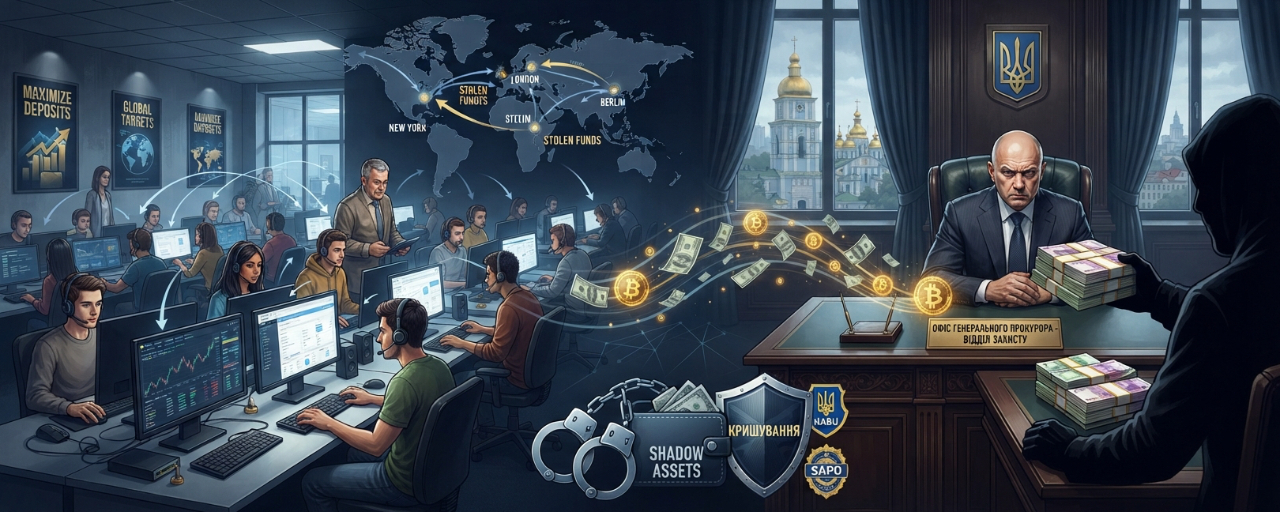
They can have offices, hundreds of employees, sales scripts, databases of victims, fake investment platforms and cryptocurrency wallets for moving stolen funds.
And recent Ukrainian investigations suggest that, in some cases, these businesses allegedly paid law-enforcement officials for protection.
This is an industry, not just a scam
In December 2025, Eurojust announced the dismantling of an international fraud network based in Ukraine.
The network reportedly employed around 100 people and had defrauded more than 400 identified victims of over €10 million. Operators could receive commissions of up to 7% of the money taken from victims.
In August 2026, Ukrainian authorities announced another nationwide crackdown: 411 searches and 94 fraudulent call centers shut down, with around 1,794 operator positions identified.
The centers targeted not only Ukrainians, but also victims in the EU and other countries. Authorities estimated the known losses at more than UAH 100 million.
These numbers give a better picture of what is happening.
This is not simply “people scamming on the internet.”
It can operate like a fraud factory.
Then there is “kryshuvannya”
Ukraine has a word that is difficult to translate: kryshuvannya (“providing a roof”).
In criminal slang, it means paying influential officials or law-enforcement personnel to protect an illegal business from enforcement.
The model is simple:
You make money illegally. We make sure the state does not stop you.
In September 2026, Ukraine’s National Anti-Corruption Bureau (NABU) and Specialized Anti-Corruption Prosecutor’s Office (SAPO) announced “Operation Carthage.”
According to investigators, a senior official inside the Office of the Prosecutor General allegedly organized a criminal group that collected regular payments from fraudulent call centers in exchange for non-interference by law enforcement.
Five people were identified as suspects. Investigators also allege that tens of millions of hryvnias were used to acquire and conceal valuable assets.
This is an active criminal investigation, not a court verdict, so the suspects remain legally presumed innocent.
How big was the alleged protection network?
This is the part that is harder to verify independently.
Ukrainska Pravda, citing law-enforcement sources, reported that officials allegedly received about $7,000 per month from each protected call center.
The same sources claimed that as many as 500 call centers could have been operating under this protection at the peak.
The number of 500 has not been established by a court and should therefore be treated as an investigative-source claim, not an official statistic.
But even without that estimate, the official investigations show that the underlying scam-center market is substantial.
And the Prosecutor General?
This is where careful wording matters.
Ruslan Kravchenko, Ukraine’s Prosecutor General, was not charged in the call-center case and denied involvement in protecting scam businesses.
Nevertheless, the scandal led to his removal. On September 15, 2026, Ukraine’s parliament approved his dismissal, and President Volodymyr Zelenskyy formally removed him from office the same day.
There is no established finding that Kravchenko personally ran the alleged scheme.
The significant fact is narrower:
a senior official inside the institution headed by the Prosecutor General is accused of organizing a protection racket for fraudulent businesses.
Why should crypto users care?
Because the person calling you may be speaking English.
The website may look American or European.
The “broker” may claim to work for an international investment company.
But the operation itself may be physically located thousands of kilometers away.
And once cryptocurrency enters the picture, stolen funds can be moved through wallets and multiple jurisdictions extremely quickly.
The important question is therefore not:
“Does this website look professional?”
It is:
“Who actually controls my money, and what happens when I try to withdraw it?”
A professional office, a convincing website and a personal account manager do not prove that the underlying assets exist.
The latest Ukrainian investigations suggest something even more troubling:
for some criminal businesses, avoiding the state may itself have become a service that can be bought.
#ukraine #Cryptoscam #ScamCallCenters #Corruption #cryptocurrency
Ukraine's Scam Call Center Industry: How Criminal Business Gets a "Roof"
When people think about crypto scams, they usually imagine a Telegram account, a fake website or a lone fraudster.
In Ukraine, some operations are much larger.
They can have offices, hundreds of employees, sales scripts, databases of victims, fake investment platforms and cryptocurrency wallets for moving stolen funds.
And recent Ukrainian investigations suggest that, in some cases, these businesses allegedly paid law-enforcement officials for protection.
This is an industry, not just a scam
In December 2025, Eurojust announced the dismantling of an international fraud network based in Ukraine.
The network reportedly employed around 100 people and had defrauded more than 400 identified victims of over €10 million. Operators could receive commissions of up to 7% of the money taken from victims.
In August 2026, Ukrainian authorities announced another nationwide crackdown: 411 searches and 94 fraudulent call centers shut down, with around 1,794 operator positions identified.
The centers targeted not only Ukrainians, but also victims in the EU and other countries. Authorities estimated the known losses at more than UAH 100 million.
These numbers give a better picture of what is happening.
This is not simply “people scamming on the internet.”
It can operate like a fraud factory.
Then there is “kryshuvannya”
Ukraine has a word that is difficult to translate: kryshuvannya (“providing a roof”).
In criminal slang, it means paying influential officials or law-enforcement personnel to protect an illegal business from enforcement.
The model is simple:
You make money illegally. We make sure the state does not stop you.
In September 2026, Ukraine’s National Anti-Corruption Bureau (NABU) and Specialized Anti-Corruption Prosecutor’s Office (SAPO) announced “Operation Carthage.”
According to investigators, a senior official inside the Office of the Prosecutor General allegedly organized a criminal group that collected regular payments from fraudulent call centers in exchange for non-interference by law enforcement.
Five people were identified as suspects. Investigators also allege that tens of millions of hryvnias were used to acquire and conceal valuable assets.
This is an active criminal investigation, not a court verdict, so the suspects remain legally presumed innocent.
How big was the alleged protection network?
This is the part that is harder to verify independently.
Ukrainska Pravda, citing law-enforcement sources, reported that officials allegedly received about $7,000 per month from each protected call center.
The same sources claimed that as many as 500 call centers could have been operating under this protection at the peak.
The number of 500 has not been established by a court and should therefore be treated as an investigative-source claim, not an official statistic.
But even without that estimate, the official investigations show that the underlying scam-center market is substantial.
And the Prosecutor General?
This is where careful wording matters.
Ruslan Kravchenko, Ukraine’s Prosecutor General, was not charged in the call-center case and denied involvement in protecting scam businesses.
Nevertheless, the scandal led to his removal. On September 15, 2026, Ukraine’s parliament approved his dismissal, and President Volodymyr Zelenskyy formally removed him from office the same day.
There is no established finding that Kravchenko personally ran the alleged scheme.
The significant fact is narrower:
a senior official inside the institution headed by the Prosecutor General is accused of organizing a protection racket for fraudulent businesses.
Why should crypto users care?
Because the person calling you may be speaking English.
The website may look American or European.
The “broker” may claim to work for an international investment company.
But the operation itself may be physically located thousands of kilometers away.
And once cryptocurrency enters the picture, stolen funds can be moved through wallets and multiple jurisdictions extremely quickly.
The important question is therefore not:
“Does this website look professional?”
It is:
“Who actually controls my money, and what happens when I try to withdraw it?”
A professional office, a convincing website and a personal account manager do not prove that the underlying assets exist.
The latest Ukrainian investigations suggest something even more troubling:
for some criminal businesses, avoiding the state may itself have become a service that can be bought.
#ukraine #Cryptoscam #ScamCallCenters #Corruption #cryptocurrency
In Ukraine, some operations are much larger.
They can have offices, hundreds of employees, sales scripts, databases of victims, fake investment platforms and cryptocurrency wallets for moving stolen funds.
And recent Ukrainian investigations suggest that, in some cases, these businesses allegedly paid law-enforcement officials for protection.
This is an industry, not just a scam
In December 2025, Eurojust announced the dismantling of an international fraud network based in Ukraine.
The network reportedly employed around 100 people and had defrauded more than 400 identified victims of over €10 million. Operators could receive commissions of up to 7% of the money taken from victims.
In August 2026, Ukrainian authorities announced another nationwide crackdown: 411 searches and 94 fraudulent call centers shut down, with around 1,794 operator positions identified.
The centers targeted not only Ukrainians, but also victims in the EU and other countries. Authorities estimated the known losses at more than UAH 100 million.
These numbers give a better picture of what is happening.
This is not simply “people scamming on the internet.”
It can operate like a fraud factory.
Then there is “kryshuvannya”
Ukraine has a word that is difficult to translate: kryshuvannya (“providing a roof”).
In criminal slang, it means paying influential officials or law-enforcement personnel to protect an illegal business from enforcement.
The model is simple:
You make money illegally. We make sure the state does not stop you.
In September 2026, Ukraine’s National Anti-Corruption Bureau (NABU) and Specialized Anti-Corruption Prosecutor’s Office (SAPO) announced “Operation Carthage.”
According to investigators, a senior official inside the Office of the Prosecutor General allegedly organized a criminal group that collected regular payments from fraudulent call centers in exchange for non-interference by law enforcement.
Five people were identified as suspects. Investigators also allege that tens of millions of hryvnias were used to acquire and conceal valuable assets.
This is an active criminal investigation, not a court verdict, so the suspects remain legally presumed innocent.
How big was the alleged protection network?
This is the part that is harder to verify independently.
Ukrainska Pravda, citing law-enforcement sources, reported that officials allegedly received about $7,000 per month from each protected call center.
The same sources claimed that as many as 500 call centers could have been operating under this protection at the peak.
The number of 500 has not been established by a court and should therefore be treated as an investigative-source claim, not an official statistic.
But even without that estimate, the official investigations show that the underlying scam-center market is substantial.
And the Prosecutor General?
This is where careful wording matters.
Ruslan Kravchenko, Ukraine’s Prosecutor General, was not charged in the call-center case and denied involvement in protecting scam businesses.
Nevertheless, the scandal led to his removal. On September 15, 2026, Ukraine’s parliament approved his dismissal, and President Volodymyr Zelenskyy formally removed him from office the same day.
There is no established finding that Kravchenko personally ran the alleged scheme.
The significant fact is narrower:
a senior official inside the institution headed by the Prosecutor General is accused of organizing a protection racket for fraudulent businesses.
Why should crypto users care?
Because the person calling you may be speaking English.
The website may look American or European.
The “broker” may claim to work for an international investment company.
But the operation itself may be physically located thousands of kilometers away.
And once cryptocurrency enters the picture, stolen funds can be moved through wallets and multiple jurisdictions extremely quickly.
The important question is therefore not:
“Does this website look professional?”
It is:
“Who actually controls my money, and what happens when I try to withdraw it?”
A professional office, a convincing website and a personal account manager do not prove that the underlying assets exist.
The latest Ukrainian investigations suggest something even more troubling:
for some criminal businesses, avoiding the state may itself have become a service that can be bought.
#ukraine #Cryptoscam #ScamCallCenters #Corruption #cryptocurrency
67
Войдите, чтобы посмотреть больше материала
Присоединяйтесь к пользователям криптовалют по всему миру на Binance Square
⚡️ Получайте новейшую и полезную информацию о криптоактивах.
💬 Нам доверяет крупнейшая в мире криптобиржа.
👍 Получите достоверные аналитические данные от верифицированных создателей контента.
Эл. почта/номер телефона
В тренде
1
#FedRateWatch
Просмотров: 1.2M
5,548 обсуждают
2
#ZcashRises6%
Просмотров: 5,852
152 обсуждают
3
#XRPSinks10%
Просмотров: 2,726
104 обсуждают
4
#BitcoinETFsShed$450M
Просмотров: 520
30 обсуждают
5
#CircleOpensArcMainnet
Просмотров: 2,036
65 обсуждают
6
#ZcashHoldersBackNU7Upgrade
Просмотров: 10,855
232 обсуждают
7
#MSTRTradingVolumeSurpassesMorganStanley
Просмотров: 13,628
421 обсуждают
8
#BitcoinFalls4%
Просмотров: 30,633
701 обсуждают
9
#SKHynixInTalksToMakeMemoryChipsInUS
Просмотров: 14,257
294 обсуждают
10
#OpenAIDiscussesNewFundingAt$1.2TValuation
Просмотров: 3,254
47 обсуждают