

#openledgar
openledgar
Просмотров: 53,054
529 обсуждают
Популярные
Новые

Статья
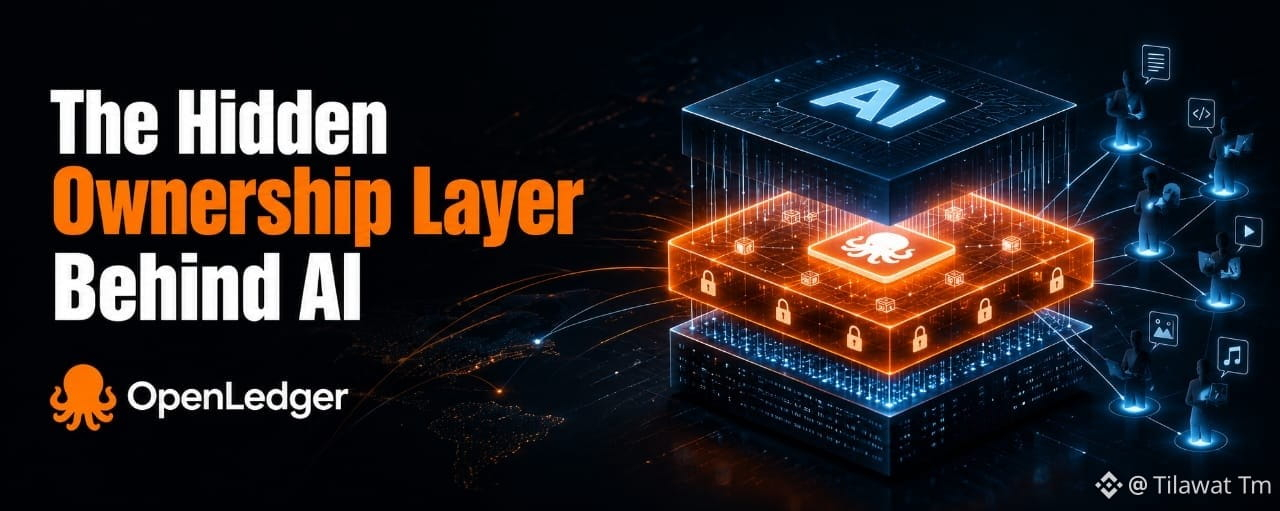
The Hidden Ownership Layer Behind AII’ve been noticing something lately: most AI conversations still circle back to the same things — faster agents, bigger models, and better performance.
That is why OpenLedger feels interesting to me. It is not trying to win attention through the loudest AI narrative. It is looking at a quieter problem that could become much more important over time: attribution.
AI does not become useful on its own. It improves through data feedback, builders, creators, researchers users and communities that often disappear into the background once the model gets better. The output gets the spotlight, while the people behind the input are usually forgotten.
If businesses, apps, agents, and models keep relying on specialized data, the market will eventually care more about its source. Who provided it? Who verified it? Who owns it? And who should be rewarded when that data creates value? Trust will not stay as a nice extra. It may become part of the real infrastructure.
This is where OpenLedger’s positioning stands out. It is not only about making data available. It is about giving data a record, so contributions can be traced, measured, attributed, and potentially rewarded instead of disappearing into a black box.
Because once AI output starts creating real financial value, the input layer cannot stay invisible forever. The people and networks behind useful data will not settle for vague exposure. They will want proof, ownership, and a fair place in the value chain.
I think this is the hidden angle many people miss. OpenLedger is not only building around AI growth. It is building around the accountability layer that AI may need as it becomes more serious economic infrastructure.
The future AI economy may not belong only to whoever builds the biggest models. It may also belong to the systems that can prove what made those models valuable in the first place.
@Openledger #OpenLedgar $OPEN
{spot}(OPENUSDT)
The Hidden Ownership Layer Behind AI
I’ve been noticing something lately: most AI conversations still circle back to the same things — faster agents, bigger models, and better performance.
That is why OpenLedger feels interesting to me. It is not trying to win attention through the loudest AI narrative. It is looking at a quieter problem that could become much more important over time: attribution.
AI does not become useful on its own. It improves through data feedback, builders, creators, researchers users and communities that often disappear into the background once the model gets better. The output gets the spotlight, while the people behind the input are usually forgotten.
If businesses, apps, agents, and models keep relying on specialized data, the market will eventually care more about its source. Who provided it? Who verified it? Who owns it? And who should be rewarded when that data creates value? Trust will not stay as a nice extra. It may become part of the real infrastructure.
This is where OpenLedger’s positioning stands out. It is not only about making data available. It is about giving data a record, so contributions can be traced, measured, attributed, and potentially rewarded instead of disappearing into a black box.
Because once AI output starts creating real financial value, the input layer cannot stay invisible forever. The people and networks behind useful data will not settle for vague exposure. They will want proof, ownership, and a fair place in the value chain.
I think this is the hidden angle many people miss. OpenLedger is not only building around AI growth. It is building around the accountability layer that AI may need as it becomes more serious economic infrastructure.
The future AI economy may not belong only to whoever builds the biggest models. It may also belong to the systems that can prove what made those models valuable in the first place.
@OpenLedger #OpenLedgar $OPEN
That is why OpenLedger feels interesting to me. It is not trying to win attention through the loudest AI narrative. It is looking at a quieter problem that could become much more important over time: attribution.
AI does not become useful on its own. It improves through data feedback, builders, creators, researchers users and communities that often disappear into the background once the model gets better. The output gets the spotlight, while the people behind the input are usually forgotten.
If businesses, apps, agents, and models keep relying on specialized data, the market will eventually care more about its source. Who provided it? Who verified it? Who owns it? And who should be rewarded when that data creates value? Trust will not stay as a nice extra. It may become part of the real infrastructure.
This is where OpenLedger’s positioning stands out. It is not only about making data available. It is about giving data a record, so contributions can be traced, measured, attributed, and potentially rewarded instead of disappearing into a black box.
Because once AI output starts creating real financial value, the input layer cannot stay invisible forever. The people and networks behind useful data will not settle for vague exposure. They will want proof, ownership, and a fair place in the value chain.
I think this is the hidden angle many people miss. OpenLedger is not only building around AI growth. It is building around the accountability layer that AI may need as it becomes more serious economic infrastructure.
The future AI economy may not belong only to whoever builds the biggest models. It may also belong to the systems that can prove what made those models valuable in the first place.
@OpenLedger #OpenLedgar $OPEN
2
2
89

·
--
Статья
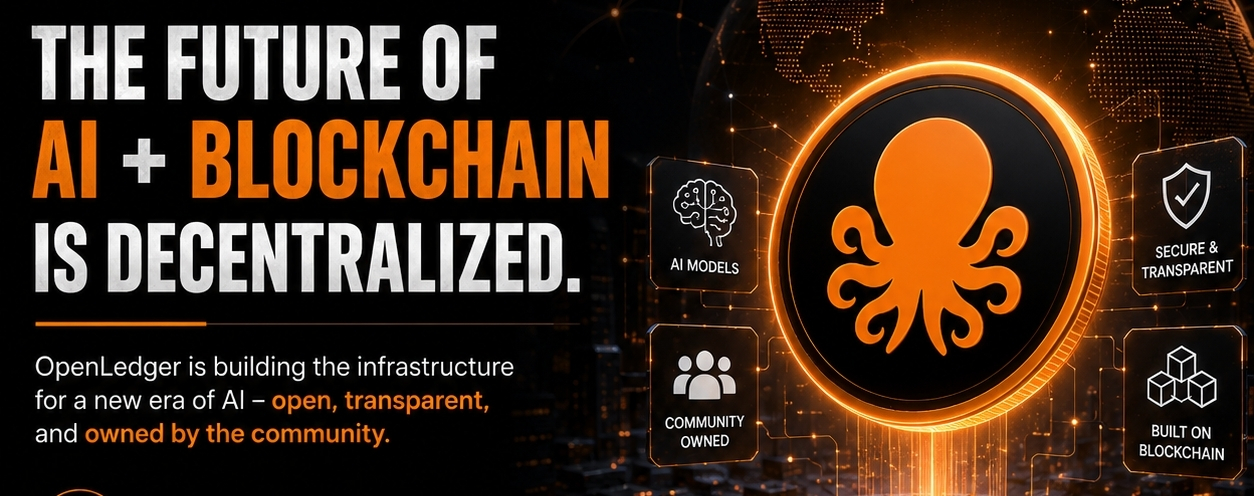
OpenLedger The Future of AI-Powered Decentralization Is Here..#OpenLedgar A world where data is becoming the new digital gold, centralized systems continue to control how information is owned, shared, and monetized. That’s exactly where OpenLedger steps in building a smarter, fairer, and more transparent future for AI and blockchain technology.
#OpenLedger is not just another crypto project. See Below here Full.Details
It represents a powerful movement toward decentralized intelligence, where communities contribute, validate, and benefit from the growth of AI infrastructure.
Why OpenLedger Stands Out
Decentralized AI Econom
OpenLedger empowers users to participate in the AI ecosystem instead of being controlled by centralized tech giants.
Community-Driven Innovation $OPEN
The platform rewards contributors, node operators, and active supporters who help strengthen the network.
Transparency & Security
Built on blockchain principles, OpenLedger ensures trustless operations, secure data handling, and transparent governance.
Scalable Future Vision
As AI adoption accelerates globally, OpenLedger is positioning itself at the center of the next digital revolution.
The Bigger Picture
AI is evolving rapidly, but true innovation requires open access, decentralized ownership, and community participation. OpenLedger combines the power of blockchain with AI infrastructure to create an ecosystem where innovation belongs to everyone not just corporations.
This is more than a project.
This is the foundation for the next generation of decentralized intelligence.
Early believers don’t just follow trends they recognize the future before the crowd.@Openledger $OPEN
{spot}(OPENUSDT)
OpenLedger The Future of AI-Powered Decentralization Is Here..
#OpenLedgar A world where data is becoming the new digital gold, centralized systems continue to control how information is owned, shared, and monetized. That’s exactly where OpenLedger steps in building a smarter, fairer, and more transparent future for AI and blockchain technology.
#OpenLedger is not just another crypto project. See Below here Full.Details
It represents a powerful movement toward decentralized intelligence, where communities contribute, validate, and benefit from the growth of AI infrastructure.
Why OpenLedger Stands Out
Decentralized AI Econom
OpenLedger empowers users to participate in the AI ecosystem instead of being controlled by centralized tech giants.
Community-Driven Innovation $OPEN
The platform rewards contributors, node operators, and active supporters who help strengthen the network.
Transparency & Security
Built on blockchain principles, OpenLedger ensures trustless operations, secure data handling, and transparent governance.
Scalable Future Vision
As AI adoption accelerates globally, OpenLedger is positioning itself at the center of the next digital revolution.
The Bigger Picture
AI is evolving rapidly, but true innovation requires open access, decentralized ownership, and community participation. OpenLedger combines the power of blockchain with AI infrastructure to create an ecosystem where innovation belongs to everyone not just corporations.
This is more than a project.
This is the foundation for the next generation of decentralized intelligence.
Early believers don’t just follow trends they recognize the future before the crowd.@OpenLedger $OPEN
#OpenLedger is not just another crypto project. See Below here Full.Details
It represents a powerful movement toward decentralized intelligence, where communities contribute, validate, and benefit from the growth of AI infrastructure.
Why OpenLedger Stands Out
Decentralized AI Econom
OpenLedger empowers users to participate in the AI ecosystem instead of being controlled by centralized tech giants.
Community-Driven Innovation $OPEN
The platform rewards contributors, node operators, and active supporters who help strengthen the network.
Transparency & Security
Built on blockchain principles, OpenLedger ensures trustless operations, secure data handling, and transparent governance.
Scalable Future Vision
As AI adoption accelerates globally, OpenLedger is positioning itself at the center of the next digital revolution.
The Bigger Picture
AI is evolving rapidly, but true innovation requires open access, decentralized ownership, and community participation. OpenLedger combines the power of blockchain with AI infrastructure to create an ecosystem where innovation belongs to everyone not just corporations.
This is more than a project.
This is the foundation for the next generation of decentralized intelligence.
Early believers don’t just follow trends they recognize the future before the crowd.@OpenLedger $OPEN
5
5
203


Статья
مشروع OpenLedger: إعادة تعريف البنية التحتية لبيانات الذكاء الاصطناعي في عصر الويبمشروع OpenLedger: إعادة تعريف البنية التحتية لبيانات الذكاء الاصطناعي في عصر الويب 3 🌐
في ظل الثورة التكنولوجية المتسارعة التي نشهدها اليوم، أصبح الذكاء الاصطناعي (AI) الركيزة الأساسية للابتكار الرقمي. ومع ذلك، تواجه هذه التقنية تحدياً كبيراً يتعلق بمركزية البيانات وصعوبة الوصول إلى مصادر موثوقة وآمنة. هنا يأتي دور مشروع OpenLedger ليقدم الحل الجذري والنموذجي عبر بناء أول شبكة بيانات لامركزية مخصصة بالكامل لدعم وتطوير نماذج الذكاء الاصطناعي.
تعتمد رؤية المشروع على تمكين مجتمع الويب 3 من المساهمة في بناء وتدقيق مجموعات البيانات الضخمة، مما يضمن الشفافية الكاملة والأمان المرتفع للبيانات المستخدمة. من خلال هذه المنظومة المتطورة، لا يقتصر دور المستخدمين على المشاهدة فحسب، بل يصبحون جزءاً فعالاً في تشكيل مستقبل التكنولوجيا اللامركزية. إن القيمة الحقيقية التي يضيفها المشروع لسوق العملات الرقمية تكمن في ربطه المباشر بين تقنيات البلوكشين والاحتياجات الفعلية لقطاع الذكاء الاصطناعي المتنامي.
للبقاء على اطلاع دائم بآخر المستجدات، الشراكات الاستراتيجية، والخطوات القادمة للفريق، يرجى متابعة الحساب الرسمي للمشروع عبر المنصة من هنا: @Openledger r. إن دعم مثل هذه المشاريع الحيوية يمثل خطوة استثمارية ومعرفية ممتازة لكل مهتم بمستقبل الكريبتو.
دعونا نتابع بشغف تطور هذه المنظومة الفريدة والعملة الخاصة بها! 🚀📈
#OpenLedgar er $OPEN N
📌 تفاصيل مطابقة شروط المقال:
مشروع OpenLedger: إعادة تعريف البنية التحتية لبيانات الذكاء الاصطناعي في عصر الويب
مشروع OpenLedger: إعادة تعريف البنية التحتية لبيانات الذكاء الاصطناعي في عصر الويب 3 🌐
في ظل الثورة التكنولوجية المتسارعة التي نشهدها اليوم، أصبح الذكاء الاصطناعي (AI) الركيزة الأساسية للابتكار الرقمي. ومع ذلك، تواجه هذه التقنية تحدياً كبيراً يتعلق بمركزية البيانات وصعوبة الوصول إلى مصادر موثوقة وآمنة. هنا يأتي دور مشروع OpenLedger ليقدم الحل الجذري والنموذجي عبر بناء أول شبكة بيانات لامركزية مخصصة بالكامل لدعم وتطوير نماذج الذكاء الاصطناعي.
تعتمد رؤية المشروع على تمكين مجتمع الويب 3 من المساهمة في بناء وتدقيق مجموعات البيانات الضخمة، مما يضمن الشفافية الكاملة والأمان المرتفع للبيانات المستخدمة. من خلال هذه المنظومة المتطورة، لا يقتصر دور المستخدمين على المشاهدة فحسب، بل يصبحون جزءاً فعالاً في تشكيل مستقبل التكنولوجيا اللامركزية. إن القيمة الحقيقية التي يضيفها المشروع لسوق العملات الرقمية تكمن في ربطه المباشر بين تقنيات البلوكشين والاحتياجات الفعلية لقطاع الذكاء الاصطناعي المتنامي.
للبقاء على اطلاع دائم بآخر المستجدات، الشراكات الاستراتيجية، والخطوات القادمة للفريق، يرجى متابعة الحساب الرسمي للمشروع عبر المنصة من هنا: @OpenLedger r. إن دعم مثل هذه المشاريع الحيوية يمثل خطوة استثمارية ومعرفية ممتازة لكل مهتم بمستقبل الكريبتو.
دعونا نتابع بشغف تطور هذه المنظومة الفريدة والعملة الخاصة بها! 🚀📈
#OpenLedgar er $OPEN N
📌 تفاصيل مطابقة شروط المقال:
في ظل الثورة التكنولوجية المتسارعة التي نشهدها اليوم، أصبح الذكاء الاصطناعي (AI) الركيزة الأساسية للابتكار الرقمي. ومع ذلك، تواجه هذه التقنية تحدياً كبيراً يتعلق بمركزية البيانات وصعوبة الوصول إلى مصادر موثوقة وآمنة. هنا يأتي دور مشروع OpenLedger ليقدم الحل الجذري والنموذجي عبر بناء أول شبكة بيانات لامركزية مخصصة بالكامل لدعم وتطوير نماذج الذكاء الاصطناعي.
تعتمد رؤية المشروع على تمكين مجتمع الويب 3 من المساهمة في بناء وتدقيق مجموعات البيانات الضخمة، مما يضمن الشفافية الكاملة والأمان المرتفع للبيانات المستخدمة. من خلال هذه المنظومة المتطورة، لا يقتصر دور المستخدمين على المشاهدة فحسب، بل يصبحون جزءاً فعالاً في تشكيل مستقبل التكنولوجيا اللامركزية. إن القيمة الحقيقية التي يضيفها المشروع لسوق العملات الرقمية تكمن في ربطه المباشر بين تقنيات البلوكشين والاحتياجات الفعلية لقطاع الذكاء الاصطناعي المتنامي.
للبقاء على اطلاع دائم بآخر المستجدات، الشراكات الاستراتيجية، والخطوات القادمة للفريق، يرجى متابعة الحساب الرسمي للمشروع عبر المنصة من هنا: @OpenLedger r. إن دعم مثل هذه المشاريع الحيوية يمثل خطوة استثمارية ومعرفية ممتازة لكل مهتم بمستقبل الكريبتو.
دعونا نتابع بشغف تطور هذه المنظومة الفريدة والعملة الخاصة بها! 🚀📈
#OpenLedgar er $OPEN N
📌 تفاصيل مطابقة شروط المقال:
1
62

OpenLedger: Building the Future of Decentralized AI DataOpenLedger is positioning itself at the intersection of artificial intelligence and decentralized infrastructure, two of the most transformative technologies of our time. As AI adoption accelerates, the demand for high-quality, transparent, and verifiable data continues to grow. This is where @Openledger OpenLedger aims to make a significant impact by creating an ecosystem that rewards contributors while providing valuable resources for AI development.
One of the most interesting aspects of OpenLedger is its vision of democratizing access to data and AI-related opportunities. Instead of concentrating value in a few centralized organizations, the network encourages participation from a broader community. This approach can help create more transparent data pipelines and potentially improve trust in AI-powered applications.
The $BTC OPEN token plays an important role within the ecosystem by supporting network participation, incentives, and community growth. As decentralized AI continues to evolve, projects that focus on data ownership, contributor rewards, and open collaboration may become increasingly important.
I am closely following OpenLedger because it represents an innovative attempt to combine blockchain transparency with the growing needs of the AI economy. The long-term potential of decentralized data networks could reshape how AI models are trained and how value is distributed among contributors.
#OpenLedgar er $OPEN
{spot}(OPENUSDT)
OpenLedger: Building the Future of Decentralized AI Data
OpenLedger is positioning itself at the intersection of artificial intelligence and decentralized infrastructure, two of the most transformative technologies of our time. As AI adoption accelerates, the demand for high-quality, transparent, and verifiable data continues to grow. This is where @OpenLedger OpenLedger aims to make a significant impact by creating an ecosystem that rewards contributors while providing valuable resources for AI development.
One of the most interesting aspects of OpenLedger is its vision of democratizing access to data and AI-related opportunities. Instead of concentrating value in a few centralized organizations, the network encourages participation from a broader community. This approach can help create more transparent data pipelines and potentially improve trust in AI-powered applications.
The $BTC OPEN token plays an important role within the ecosystem by supporting network participation, incentives, and community growth. As decentralized AI continues to evolve, projects that focus on data ownership, contributor rewards, and open collaboration may become increasingly important.
I am closely following OpenLedger because it represents an innovative attempt to combine blockchain transparency with the growing needs of the AI economy. The long-term potential of decentralized data networks could reshape how AI models are trained and how value is distributed among contributors.
#OpenLedgar er $OPEN
One of the most interesting aspects of OpenLedger is its vision of democratizing access to data and AI-related opportunities. Instead of concentrating value in a few centralized organizations, the network encourages participation from a broader community. This approach can help create more transparent data pipelines and potentially improve trust in AI-powered applications.
The $BTC OPEN token plays an important role within the ecosystem by supporting network participation, incentives, and community growth. As decentralized AI continues to evolve, projects that focus on data ownership, contributor rewards, and open collaboration may become increasingly important.
I am closely following OpenLedger because it represents an innovative attempt to combine blockchain transparency with the growing needs of the AI economy. The long-term potential of decentralized data networks could reshape how AI models are trained and how value is distributed among contributors.
#OpenLedgar er $OPEN
30

OpenLedger: The Future of AI-Powered Decentralized Data Economy.The growth of artificial intelligence depends heavily on quality data, but many users and communities are rarely rewarded for contributing value. @Openledger is changing this idea by building a decentralized ecosystem where contributors, developers, and communities can participate in an AI-focused data economy with more transparency and incentives. Instead of centralized systems controlling valuable datasets, OpenLedger introduces a model where participation and contribution matter.
One exciting aspect of OpenLedger is how blockchain and AI can work together to create trust, ownership, and fair reward systems. As adoption grows, projects like OpenLedger may help users better understand the role of decentralized intelligence and digital ownership. I believe communities will closely watch how the ecosystem develops, especially around innovation, accessibility, and long-term utility.
The role of $OPEN could become increasingly important as the ecosystem expands and new opportunities emerge for contributors and supporters. Decentralized AI infrastructure is still early, but OpenLedger is a project worth watching for people interested in blockchain innovation and AI development.
#OpenLedgar $OPEN
OpenLedger: The Future of AI-Powered Decentralized Data Economy.
The growth of artificial intelligence depends heavily on quality data, but many users and communities are rarely rewarded for contributing value. @OpenLedger is changing this idea by building a decentralized ecosystem where contributors, developers, and communities can participate in an AI-focused data economy with more transparency and incentives. Instead of centralized systems controlling valuable datasets, OpenLedger introduces a model where participation and contribution matter.
One exciting aspect of OpenLedger is how blockchain and AI can work together to create trust, ownership, and fair reward systems. As adoption grows, projects like OpenLedger may help users better understand the role of decentralized intelligence and digital ownership. I believe communities will closely watch how the ecosystem develops, especially around innovation, accessibility, and long-term utility.
The role of $OPEN could become increasingly important as the ecosystem expands and new opportunities emerge for contributors and supporters. Decentralized AI infrastructure is still early, but OpenLedger is a project worth watching for people interested in blockchain innovation and AI development.
#OpenLedgar $OPEN
One exciting aspect of OpenLedger is how blockchain and AI can work together to create trust, ownership, and fair reward systems. As adoption grows, projects like OpenLedger may help users better understand the role of decentralized intelligence and digital ownership. I believe communities will closely watch how the ecosystem develops, especially around innovation, accessibility, and long-term utility.
The role of $OPEN could become increasingly important as the ecosystem expands and new opportunities emerge for contributors and supporters. Decentralized AI infrastructure is still early, but OpenLedger is a project worth watching for people interested in blockchain innovation and AI development.
#OpenLedgar $OPEN
73

·
--

Статья
$openledgerOpenLedger (often stylized as one word) is an AI-focused blockchain platform designed to decentralize AI development by enabling transparent, on-chain tracking and monetization of data, models, and AI agents
#Open #OpenLedgar $open @Openledger
In short, OpenLedger aims to build a trusted, decentralized foundation for AI by putting data ownership and value distribution on the blockchain. Note that there’s a separate “Open Ledger” company focused on embedded accounting APIs for SaaS platforms, but the blockchain project is the more prominent one in current discussions.
monitoring APY volatility
* rebalancing collateral ratios
* routing liquidity cross-chain
* compounding emissions
* managing liquidation risk
* rotating capital to higher efficiency pools
Autonomous execution > manual execution.
Welcome to DeFAI.
$openledger
OpenLedger (often stylized as one word) is an AI-focused blockchain platform designed to decentralize AI development by enabling transparent, on-chain tracking and monetization of data, models, and AI agents
#Open #OpenLedgar $open @OpenLedger
In short, OpenLedger aims to build a trusted, decentralized foundation for AI by putting data ownership and value distribution on the blockchain. Note that there’s a separate “Open Ledger” company focused on embedded accounting APIs for SaaS platforms, but the blockchain project is the more prominent one in current discussions.
monitoring APY volatility
* rebalancing collateral ratios
* routing liquidity cross-chain
* compounding emissions
* managing liquidation risk
* rotating capital to higher efficiency pools
Autonomous execution > manual execution.
Welcome to DeFAI.
#Open #OpenLedgar $open @OpenLedger
In short, OpenLedger aims to build a trusted, decentralized foundation for AI by putting data ownership and value distribution on the blockchain. Note that there’s a separate “Open Ledger” company focused on embedded accounting APIs for SaaS platforms, but the blockchain project is the more prominent one in current discussions.
monitoring APY volatility
* rebalancing collateral ratios
* routing liquidity cross-chain
* compounding emissions
* managing liquidation risk
* rotating capital to higher efficiency pools
Autonomous execution > manual execution.
Welcome to DeFAI.
62

🚀 هل يقود OpenLedger مستقبل الذكاء الاصطناعي اللامركزي؟ #openledger $OPENيشهد قطاع الذكاء الاصطناعي اللامركزي نموًا متسارعًا، ويبرز #OpenLedgar كأحد المشاريع التي تسعى إلى ربط البيانات والذكاء الاصطناعي وتقنية البلوكشين في منظومة واحدة. ما يلفت الانتباه هو تركيز المشروع على تمكين المستخدمين من الاستفادة من قيمة بياناتهم والمساهمة في تطوير نماذج الذكاء الاصطناعي بطريقة أكثر شفافية وعدالة. أتابع تطورات المشروع باهتمام وأرى أن $OPEN قد يكون من المشاريع الجديرة بالمتابعة خلال الفترة القادمة#openledger $OPEN
🚀 هل يقود OpenLedger مستقبل الذكاء الاصطناعي اللامركزي؟ #openledger $OPEN
يشهد قطاع الذكاء الاصطناعي اللامركزي نموًا متسارعًا، ويبرز #OpenLedgar كأحد المشاريع التي تسعى إلى ربط البيانات والذكاء الاصطناعي وتقنية البلوكشين في منظومة واحدة. ما يلفت الانتباه هو تركيز المشروع على تمكين المستخدمين من الاستفادة من قيمة بياناتهم والمساهمة في تطوير نماذج الذكاء الاصطناعي بطريقة أكثر شفافية وعدالة. أتابع تطورات المشروع باهتمام وأرى أن $OPEN قد يكون من المشاريع الجديرة بالمتابعة خلال الفترة القادمة#openledger $OPEN
58

·
--
The Power of Decentralized Data with @OpenLedgerAI technology is evolving fast, but it needs a solid foundation. @Openledger is providing exactly that by building a decentralized data layer. This ensures that data remains transparent, secure, and accessible for everyone in the Web3 space.
The $OPEN token plays a vital role here, acting as the fuel for this entire ecosystem. By removing the need for central authorities, @Openledger allows for more innovation and scalability in AI development. It is truly impressive to see how they are bridging the gap between blockchain and artificial intelligence.
As we look toward the future of scalable applications, projects like @Openledger will be the backbone of the industry. I am excited to see what the community achieves next! #OpenLedgar
The Power of Decentralized Data with @OpenLedger
AI technology is evolving fast, but it needs a solid foundation. @OpenLedger is providing exactly that by building a decentralized data layer. This ensures that data remains transparent, secure, and accessible for everyone in the Web3 space.
The $OPEN token plays a vital role here, acting as the fuel for this entire ecosystem. By removing the need for central authorities, @OpenLedger allows for more innovation and scalability in AI development. It is truly impressive to see how they are bridging the gap between blockchain and artificial intelligence.
As we look toward the future of scalable applications, projects like @OpenLedger will be the backbone of the industry. I am excited to see what the community achieves next! #OpenLedgar
The $OPEN token plays a vital role here, acting as the fuel for this entire ecosystem. By removing the need for central authorities, @OpenLedger allows for more innovation and scalability in AI development. It is truly impressive to see how they are bridging the gap between blockchain and artificial intelligence.
As we look toward the future of scalable applications, projects like @OpenLedger will be the backbone of the industry. I am excited to see what the community achieves next! #OpenLedgar
1
2
82


Статья
open排行榜最后一天的冲刺@Openledger $OPEN #OpenLedgar
open排行榜活动马上结束了,大家都多少名了?
OpenLedger是主打AI全链路资产确权变现的专业化L2公链,白皮书锚定去中心化可信AI基础设施赛道,跳出通用公链做AI附属功能的老路,从底层架构适配数据归集、模型训练、智能体部署全流程,依托OP Stack搭建以太坊L2,兼容EVM生态,借助EigenDA保障链上数据可用性,实现钱包、合约跨链无缝接入。项目直击Web2AI行业痛点:巨头垄断数据与模型收益,数据贡献者无偿输出资源、无法持续获利,依靠独创PoA归因证明机制构建Payable AI经济体系,也是项目最核心技术壁垒。
生态由Datanets、Model Factory、OpenLoRA三大支柱组成。Datanets是社区共建垂类数据协作网络,医疗、金融、安全等细分领域用户标注、上传数据,资产链上确权;Model Factory提供低代码模型微调环境,依托OpenLoRA轻量化技术大幅降低定制SLM专用小模型成本,普通开发者无需深厚算力即可部署商用AI模型,落地OpenChat等终端产品。PoA可加密追踪每一次模型推理的数据来源,按贡献权重自动拆分使用手续费,数据方、建模者在模型被调用时持续分润,打破一次性买断的传统AI结算模式。
代币OPEN承载生态价值,兼具链上Gas消耗、生态治理、质押锁仓、贡献分红多重属性,是打通AI资产金融化的关键载体。项目获得Coinbase前CTO Balaji、EigenLab、Sandbox创始人等圈内头部大佬站台,Polychain、Hashkey等机构千万级种子轮投资背书,主网已上线并推出OctoClaw客户端工具。
从行业进阶视角看,OpenLedger开辟AI+区块链落地新范式,不追逐通用大模型内卷,深耕细分专用模型经济,把数据、AI模型由静态资源转变为可流转、可持续变现的链上流动资产。短板在于当下生态落地仍处早期,Datanets优质数据源沉淀需要周期,但PoA确权方案落地,有望重塑全球AI产业利益分配规则。
AI是未来趋势,风口,希望大家抓住机会,早日实现财务自由
open排行榜最后一天的冲刺
@OpenLedger $OPEN #OpenLedgar
open排行榜活动马上结束了,大家都多少名了?
OpenLedger是主打AI全链路资产确权变现的专业化L2公链,白皮书锚定去中心化可信AI基础设施赛道,跳出通用公链做AI附属功能的老路,从底层架构适配数据归集、模型训练、智能体部署全流程,依托OP Stack搭建以太坊L2,兼容EVM生态,借助EigenDA保障链上数据可用性,实现钱包、合约跨链无缝接入。项目直击Web2AI行业痛点:巨头垄断数据与模型收益,数据贡献者无偿输出资源、无法持续获利,依靠独创PoA归因证明机制构建Payable AI经济体系,也是项目最核心技术壁垒。
生态由Datanets、Model Factory、OpenLoRA三大支柱组成。Datanets是社区共建垂类数据协作网络,医疗、金融、安全等细分领域用户标注、上传数据,资产链上确权;Model Factory提供低代码模型微调环境,依托OpenLoRA轻量化技术大幅降低定制SLM专用小模型成本,普通开发者无需深厚算力即可部署商用AI模型,落地OpenChat等终端产品。PoA可加密追踪每一次模型推理的数据来源,按贡献权重自动拆分使用手续费,数据方、建模者在模型被调用时持续分润,打破一次性买断的传统AI结算模式。
代币OPEN承载生态价值,兼具链上Gas消耗、生态治理、质押锁仓、贡献分红多重属性,是打通AI资产金融化的关键载体。项目获得Coinbase前CTO Balaji、EigenLab、Sandbox创始人等圈内头部大佬站台,Polychain、Hashkey等机构千万级种子轮投资背书,主网已上线并推出OctoClaw客户端工具。
从行业进阶视角看,OpenLedger开辟AI+区块链落地新范式,不追逐通用大模型内卷,深耕细分专用模型经济,把数据、AI模型由静态资源转变为可流转、可持续变现的链上流动资产。短板在于当下生态落地仍处早期,Datanets优质数据源沉淀需要周期,但PoA确权方案落地,有望重塑全球AI产业利益分配规则。
AI是未来趋势,风口,希望大家抓住机会,早日实现财务自由
open排行榜活动马上结束了,大家都多少名了?
OpenLedger是主打AI全链路资产确权变现的专业化L2公链,白皮书锚定去中心化可信AI基础设施赛道,跳出通用公链做AI附属功能的老路,从底层架构适配数据归集、模型训练、智能体部署全流程,依托OP Stack搭建以太坊L2,兼容EVM生态,借助EigenDA保障链上数据可用性,实现钱包、合约跨链无缝接入。项目直击Web2AI行业痛点:巨头垄断数据与模型收益,数据贡献者无偿输出资源、无法持续获利,依靠独创PoA归因证明机制构建Payable AI经济体系,也是项目最核心技术壁垒。
生态由Datanets、Model Factory、OpenLoRA三大支柱组成。Datanets是社区共建垂类数据协作网络,医疗、金融、安全等细分领域用户标注、上传数据,资产链上确权;Model Factory提供低代码模型微调环境,依托OpenLoRA轻量化技术大幅降低定制SLM专用小模型成本,普通开发者无需深厚算力即可部署商用AI模型,落地OpenChat等终端产品。PoA可加密追踪每一次模型推理的数据来源,按贡献权重自动拆分使用手续费,数据方、建模者在模型被调用时持续分润,打破一次性买断的传统AI结算模式。
代币OPEN承载生态价值,兼具链上Gas消耗、生态治理、质押锁仓、贡献分红多重属性,是打通AI资产金融化的关键载体。项目获得Coinbase前CTO Balaji、EigenLab、Sandbox创始人等圈内头部大佬站台,Polychain、Hashkey等机构千万级种子轮投资背书,主网已上线并推出OctoClaw客户端工具。
从行业进阶视角看,OpenLedger开辟AI+区块链落地新范式,不追逐通用大模型内卷,深耕细分专用模型经济,把数据、AI模型由静态资源转变为可流转、可持续变现的链上流动资产。短板在于当下生态落地仍处早期,Datanets优质数据源沉淀需要周期,但PoA确权方案落地,有望重塑全球AI产业利益分配规则。
AI是未来趋势,风口,希望大家抓住机会,早日实现财务自由
22

·
--
Why OpenLedger Could Become an Important Part of Decentralized AIThe growth of artificial intelligence is changing the digital world very quickly, but one major issue still exists: control over data and AI models is mostly centralized. This is where @Openledger OpenLedger is trying to build something different for the future of Web3 and AI.
OpenLedger focuses on decentralized AI infrastructure where users, developers, and communities can contribute data and participate in the ecosystem more transparently. Instead of a few large companies controlling everything, decentralized systems can allow broader ownership and fairer rewards for contributors.
One interesting thing about OpenLedger is its vision of combining blockchain technology with AI-powered applications. As the demand for AI tools increases globally, projects that support open and transparent AI ecosystems may become very valuable in the future. This is also why many people in the crypto community are paying attention to $OPEN and the development of the platform.
Another important factor is community participation. Strong communities often help blockchain ecosystems grow faster, and OpenLedger is actively building awareness through campaigns, discussions, and educational content. The idea of rewarding participation while supporting decentralized innovation creates strong long-term potential.
The future of AI may not belong only to centralized corporations. Decentralized projects like OpenLedger could help create a more open environment where technology, ownership, and rewards are shared more fairly across the community.
#OpenLedgar
Why OpenLedger Could Become an Important Part of Decentralized AI
The growth of artificial intelligence is changing the digital world very quickly, but one major issue still exists: control over data and AI models is mostly centralized. This is where @OpenLedger OpenLedger is trying to build something different for the future of Web3 and AI.
OpenLedger focuses on decentralized AI infrastructure where users, developers, and communities can contribute data and participate in the ecosystem more transparently. Instead of a few large companies controlling everything, decentralized systems can allow broader ownership and fairer rewards for contributors.
One interesting thing about OpenLedger is its vision of combining blockchain technology with AI-powered applications. As the demand for AI tools increases globally, projects that support open and transparent AI ecosystems may become very valuable in the future. This is also why many people in the crypto community are paying attention to $OPEN and the development of the platform.
Another important factor is community participation. Strong communities often help blockchain ecosystems grow faster, and OpenLedger is actively building awareness through campaigns, discussions, and educational content. The idea of rewarding participation while supporting decentralized innovation creates strong long-term potential.
The future of AI may not belong only to centralized corporations. Decentralized projects like OpenLedger could help create a more open environment where technology, ownership, and rewards are shared more fairly across the community.
#OpenLedgar
OpenLedger focuses on decentralized AI infrastructure where users, developers, and communities can contribute data and participate in the ecosystem more transparently. Instead of a few large companies controlling everything, decentralized systems can allow broader ownership and fairer rewards for contributors.
One interesting thing about OpenLedger is its vision of combining blockchain technology with AI-powered applications. As the demand for AI tools increases globally, projects that support open and transparent AI ecosystems may become very valuable in the future. This is also why many people in the crypto community are paying attention to $OPEN and the development of the platform.
Another important factor is community participation. Strong communities often help blockchain ecosystems grow faster, and OpenLedger is actively building awareness through campaigns, discussions, and educational content. The idea of rewarding participation while supporting decentralized innovation creates strong long-term potential.
The future of AI may not belong only to centralized corporations. Decentralized projects like OpenLedger could help create a more open environment where technology, ownership, and rewards are shared more fairly across the community.
#OpenLedgar
1
1
61

·
--
«OpenLedger: Когда твой AI наконец-то сосёт бабло, а не корпорации»Слушайте сюда, крипто-извращенцы!
Сколько можно быть бесплатной шлюхой для Big Tech? Ты годами сливаешь свои данные, фотки, переписки и модели, а эти корпорации наживаются на тебе, как на OnlyFans без твоей доли. Кончают с твоего контента, а тебе — шиш.
А вот @undefined ([https://www.binance.com/en/square/profile/openledger](https://www.binance.com/en/square/profile/openledger)) пришёл и сказал: «Хватит дрочить на чужих серверах». Теперь всё по-честному и жёстко.
Ты загружаешь свои датасеты, обучаешь AI-модели, создаёшь агентов — и всё это работает на блокчейне с настоящей атрибуцией. Каждый, кто использует твой контент или модель, платит тебе напрямую. Твои данные наконец-то начали зарабатывать, как настоящая вебкам-модель: лежат, ничего не делают, а бабло капает.
Токен $OPEN здесь играет главную роль — это и газ для транзакций, и стейкинг с жирными наградами, и governance, чтобы ты сам решал, куда проект идёт. По сути — виагра для всей AI-экономики.
Пока другие проекты просто болтают про децентрализацию и исчезают с твоими деньгами, OpenLedger реально строит систему, где ты трахаешь систему, а не она тебя. Trusted AI на блокчейне — это когда твои модели работают 24/7 и приносят тебе пассивный доход, даже пока ты спишь.
Я уже зашёл и начал «открываться». Результаты очень даже приятные 😉
Кто ещё пробовал «пошалить» с OpenLedger? Пишите в комментах свои самые грязные и прибыльные кейсы 😂
#OpenLedgar $OPEN @undefined
«OpenLedger: Когда твой AI наконец-то сосёт бабло, а не корпорации»
Слушайте сюда, крипто-извращенцы!
Сколько можно быть бесплатной шлюхой для Big Tech? Ты годами сливаешь свои данные, фотки, переписки и модели, а эти корпорации наживаются на тебе, как на OnlyFans без твоей доли. Кончают с твоего контента, а тебе — шиш.
А вот @undefined (https://www.binance.com/en/square/profile/openledger) пришёл и сказал: «Хватит дрочить на чужих серверах». Теперь всё по-честному и жёстко.
Ты загружаешь свои датасеты, обучаешь AI-модели, создаёшь агентов — и всё это работает на блокчейне с настоящей атрибуцией. Каждый, кто использует твой контент или модель, платит тебе напрямую. Твои данные наконец-то начали зарабатывать, как настоящая вебкам-модель: лежат, ничего не делают, а бабло капает.
Токен $OPEN здесь играет главную роль — это и газ для транзакций, и стейкинг с жирными наградами, и governance, чтобы ты сам решал, куда проект идёт. По сути — виагра для всей AI-экономики.
Пока другие проекты просто болтают про децентрализацию и исчезают с твоими деньгами, OpenLedger реально строит систему, где ты трахаешь систему, а не она тебя. Trusted AI на блокчейне — это когда твои модели работают 24/7 и приносят тебе пассивный доход, даже пока ты спишь.
Я уже зашёл и начал «открываться». Результаты очень даже приятные 😉
Кто ещё пробовал «пошалить» с OpenLedger? Пишите в комментах свои самые грязные и прибыльные кейсы 😂
#OpenLedgar $OPEN @undefined
Сколько можно быть бесплатной шлюхой для Big Tech? Ты годами сливаешь свои данные, фотки, переписки и модели, а эти корпорации наживаются на тебе, как на OnlyFans без твоей доли. Кончают с твоего контента, а тебе — шиш.
А вот @undefined (https://www.binance.com/en/square/profile/openledger) пришёл и сказал: «Хватит дрочить на чужих серверах». Теперь всё по-честному и жёстко.
Ты загружаешь свои датасеты, обучаешь AI-модели, создаёшь агентов — и всё это работает на блокчейне с настоящей атрибуцией. Каждый, кто использует твой контент или модель, платит тебе напрямую. Твои данные наконец-то начали зарабатывать, как настоящая вебкам-модель: лежат, ничего не делают, а бабло капает.
Токен $OPEN здесь играет главную роль — это и газ для транзакций, и стейкинг с жирными наградами, и governance, чтобы ты сам решал, куда проект идёт. По сути — виагра для всей AI-экономики.
Пока другие проекты просто болтают про децентрализацию и исчезают с твоими деньгами, OpenLedger реально строит систему, где ты трахаешь систему, а не она тебя. Trusted AI на блокчейне — это когда твои модели работают 24/7 и приносят тебе пассивный доход, даже пока ты спишь.
Я уже зашёл и начал «открываться». Результаты очень даже приятные 😉
Кто ещё пробовал «пошалить» с OpenLedger? Пишите в комментах свои самые грязные и прибыльные кейсы 😂
#OpenLedgar $OPEN @undefined
20

·
--
Статья
Openledger is kingThe Foundation of On-Chain AI: Why OpenLedger Matters Today
The intersection of Artificial Intelligence (AI) and blockchain technology is evolving rapidly, moving away from mere speculative hype toward verifiable, real-world utility. Standing right at the center of this paradigm shift is @OpenLedger, an infrastructure project built specifically to solve the transparency, attribution, and data liquidity challenges currently facing the decentralized AI space.
As an EVM-compatible data layer built with efficiency in mind, the ecosystem has already processed over 22 million transactions. This activity demonstrates a growing demand for secure, on-chain tracking of specialized AI models, decentralized data pipelines, and intelligent agent interactions.
Key Pillars Driving the Ecosystem
Verifiable AI Pipelines: By anchoring data, model weights, and compute proofs directly on-chain, developers can confidently verify exactly how an AI agent was trained and deployed.
Data Liquidity Unlocked: Traditional AI development keeps high-quality data siloed within massive corporations. This framework opens up liquidity, allowing data and models to be shared, tracked, and monetized securely.
A Solid Infrastructure Base: Operating as a robust roll-up infrastructure, it maintains high performance and low transaction costs while scaling alongside decentralized applications.
Token Utility and Future Outlook
The native token, $OPEN, serves as the economic backbone of this network. It secures the data infrastructure, powers transactions, and acts as the primary incentive mechanism for participants contributing computing power or high-quality datasets.
As the crypto landscape continues to look for projects backed by functional technology and genuine on-chain metrics, keeping an eye on infrastructure layers that merge decentralized infrastructure (DePIN) with machine learning is essential.
With its expanding ecosystem and sustained transaction growth, the project is establishing itself as a crucial infrastructure layer for the next wave of Web3 and AI integration.#OpenLedgar $OPEN
{future}(OPENUSDT)
Openledger is king
The Foundation of On-Chain AI: Why OpenLedger Matters Today
The intersection of Artificial Intelligence (AI) and blockchain technology is evolving rapidly, moving away from mere speculative hype toward verifiable, real-world utility. Standing right at the center of this paradigm shift is @OpenLedger, an infrastructure project built specifically to solve the transparency, attribution, and data liquidity challenges currently facing the decentralized AI space.
As an EVM-compatible data layer built with efficiency in mind, the ecosystem has already processed over 22 million transactions. This activity demonstrates a growing demand for secure, on-chain tracking of specialized AI models, decentralized data pipelines, and intelligent agent interactions.
Key Pillars Driving the Ecosystem
Verifiable AI Pipelines: By anchoring data, model weights, and compute proofs directly on-chain, developers can confidently verify exactly how an AI agent was trained and deployed.
Data Liquidity Unlocked: Traditional AI development keeps high-quality data siloed within massive corporations. This framework opens up liquidity, allowing data and models to be shared, tracked, and monetized securely.
A Solid Infrastructure Base: Operating as a robust roll-up infrastructure, it maintains high performance and low transaction costs while scaling alongside decentralized applications.
Token Utility and Future Outlook
The native token, $OPEN , serves as the economic backbone of this network. It secures the data infrastructure, powers transactions, and acts as the primary incentive mechanism for participants contributing computing power or high-quality datasets.
As the crypto landscape continues to look for projects backed by functional technology and genuine on-chain metrics, keeping an eye on infrastructure layers that merge decentralized infrastructure (DePIN) with machine learning is essential.
With its expanding ecosystem and sustained transaction growth, the project is establishing itself as a crucial infrastructure layer for the next wave of Web3 and AI integration.#OpenLedgar $OPEN
The intersection of Artificial Intelligence (AI) and blockchain technology is evolving rapidly, moving away from mere speculative hype toward verifiable, real-world utility. Standing right at the center of this paradigm shift is @OpenLedger, an infrastructure project built specifically to solve the transparency, attribution, and data liquidity challenges currently facing the decentralized AI space.
As an EVM-compatible data layer built with efficiency in mind, the ecosystem has already processed over 22 million transactions. This activity demonstrates a growing demand for secure, on-chain tracking of specialized AI models, decentralized data pipelines, and intelligent agent interactions.
Key Pillars Driving the Ecosystem
Verifiable AI Pipelines: By anchoring data, model weights, and compute proofs directly on-chain, developers can confidently verify exactly how an AI agent was trained and deployed.
Data Liquidity Unlocked: Traditional AI development keeps high-quality data siloed within massive corporations. This framework opens up liquidity, allowing data and models to be shared, tracked, and monetized securely.
A Solid Infrastructure Base: Operating as a robust roll-up infrastructure, it maintains high performance and low transaction costs while scaling alongside decentralized applications.
Token Utility and Future Outlook
The native token, $OPEN , serves as the economic backbone of this network. It secures the data infrastructure, powers transactions, and acts as the primary incentive mechanism for participants contributing computing power or high-quality datasets.
As the crypto landscape continues to look for projects backed by functional technology and genuine on-chain metrics, keeping an eye on infrastructure layers that merge decentralized infrastructure (DePIN) with machine learning is essential.
With its expanding ecosystem and sustained transaction growth, the project is establishing itself as a crucial infrastructure layer for the next wave of Web3 and AI integration.#OpenLedgar $OPEN
2

·
--
Рост
#openledger $OPEN
{future}(OPENUSDT)
مشروع #OPEN من اقوى المشاريع التي بدأت من الصفر بصعوبة حتى بنت مستقبلها بمفردها
و اتقنت العمل و سهرو ليالي طويلة لضمان نجاح مشروعهم $OPEN
#OpenLedgar
#openledger $OPEN
مشروع #OPEN من اقوى المشاريع التي بدأت من الصفر بصعوبة حتى بنت مستقبلها بمفردها
و اتقنت العمل و سهرو ليالي طويلة لضمان نجاح مشروعهم $OPEN
#OpenLedgar
مشروع #OPEN من اقوى المشاريع التي بدأت من الصفر بصعوبة حتى بنت مستقبلها بمفردها
و اتقنت العمل و سهرو ليالي طويلة لضمان نجاح مشروعهم $OPEN
#OpenLedgar
2
18


Статья
Title: Exploring OpenLedger: A Decentralized Future for Financial TransactionsArticle:
In an increasingly digital world, the demand for secure and efficient financial transactions has led to the exploration of innovative technologies. One such breakthrough is $OPEN , a decentralized platform that aims to redefine the way we conduct financial operations.
#OpenLedgar operates on the principle of decentralization, eliminating the need for intermediaries in financial transactions. This not only enhances security but also reduces transaction costs and speeds up processing times. By leveraging blockchain technology, OpenLedger allows users to conduct transactions directly with each other, with the assurance that their data is secure and immutable.
One of the key features of OpenLedger is its multi-currency support, enabling users to transact in various digital assets seamlessly. This flexibility caters to a wide range of users, from individual consumers to large enterprises, all seeking efficient ways to manage their financial dealings in an increasingly globalized market.
Moreover, OpenLedger facilitates the development of decentralized applications (dApps) that can integrate with its platform. This opens up a myriad of opportunities for developers to create innovative financial solutions, ranging from lending platforms to decentralized exchanges, further enhancing the ecosystem.
Security is paramount in the realm of financial transactions, and OpenLedger addresses this concern through advanced cryptographic techniques. Each transaction is validated by a decentralized network of nodes, ensuring transparency and trust among users. This feature is crucial in building confidence in the platform, especially for those new to digital currencies.
As the world slowly shifts towards a more digital economy, OpenLedger stands at the forefront of this movement, offering a platform that prioritizes efficiency, security, and user empowerment. With its robust features and commitment to decentralization, it holds the potential to revolutionize financial transactions, paving the way for a more equitable and accessible financial landscape.
In conclusion, OpenLedger is not just a technological advancement; it is a glimpse into the future of finance. As more individuals and businesses recognize the benefits of decentralization, platforms like OpenLedger will likely play an essential role in shaping the next era of financial interactions.
Title: Exploring OpenLedger: A Decentralized Future for Financial Transactions
Article:
In an increasingly digital world, the demand for secure and efficient financial transactions has led to the exploration of innovative technologies. One such breakthrough is $OPEN , a decentralized platform that aims to redefine the way we conduct financial operations.
#OpenLedgar operates on the principle of decentralization, eliminating the need for intermediaries in financial transactions. This not only enhances security but also reduces transaction costs and speeds up processing times. By leveraging blockchain technology, OpenLedger allows users to conduct transactions directly with each other, with the assurance that their data is secure and immutable.
One of the key features of OpenLedger is its multi-currency support, enabling users to transact in various digital assets seamlessly. This flexibility caters to a wide range of users, from individual consumers to large enterprises, all seeking efficient ways to manage their financial dealings in an increasingly globalized market.
Moreover, OpenLedger facilitates the development of decentralized applications (dApps) that can integrate with its platform. This opens up a myriad of opportunities for developers to create innovative financial solutions, ranging from lending platforms to decentralized exchanges, further enhancing the ecosystem.
Security is paramount in the realm of financial transactions, and OpenLedger addresses this concern through advanced cryptographic techniques. Each transaction is validated by a decentralized network of nodes, ensuring transparency and trust among users. This feature is crucial in building confidence in the platform, especially for those new to digital currencies.
As the world slowly shifts towards a more digital economy, OpenLedger stands at the forefront of this movement, offering a platform that prioritizes efficiency, security, and user empowerment. With its robust features and commitment to decentralization, it holds the potential to revolutionize financial transactions, paving the way for a more equitable and accessible financial landscape.
In conclusion, OpenLedger is not just a technological advancement; it is a glimpse into the future of finance. As more individuals and businesses recognize the benefits of decentralization, platforms like OpenLedger will likely play an essential role in shaping the next era of financial interactions.
In an increasingly digital world, the demand for secure and efficient financial transactions has led to the exploration of innovative technologies. One such breakthrough is $OPEN , a decentralized platform that aims to redefine the way we conduct financial operations.
#OpenLedgar operates on the principle of decentralization, eliminating the need for intermediaries in financial transactions. This not only enhances security but also reduces transaction costs and speeds up processing times. By leveraging blockchain technology, OpenLedger allows users to conduct transactions directly with each other, with the assurance that their data is secure and immutable.
One of the key features of OpenLedger is its multi-currency support, enabling users to transact in various digital assets seamlessly. This flexibility caters to a wide range of users, from individual consumers to large enterprises, all seeking efficient ways to manage their financial dealings in an increasingly globalized market.
Moreover, OpenLedger facilitates the development of decentralized applications (dApps) that can integrate with its platform. This opens up a myriad of opportunities for developers to create innovative financial solutions, ranging from lending platforms to decentralized exchanges, further enhancing the ecosystem.
Security is paramount in the realm of financial transactions, and OpenLedger addresses this concern through advanced cryptographic techniques. Each transaction is validated by a decentralized network of nodes, ensuring transparency and trust among users. This feature is crucial in building confidence in the platform, especially for those new to digital currencies.
As the world slowly shifts towards a more digital economy, OpenLedger stands at the forefront of this movement, offering a platform that prioritizes efficiency, security, and user empowerment. With its robust features and commitment to decentralization, it holds the potential to revolutionize financial transactions, paving the way for a more equitable and accessible financial landscape.
In conclusion, OpenLedger is not just a technological advancement; it is a glimpse into the future of finance. As more individuals and businesses recognize the benefits of decentralization, platforms like OpenLedger will likely play an essential role in shaping the next era of financial interactions.
77


Статья
open ledgerOpenLedger: The Ambitious Project Turning Data into an Asset on the Blockchain
In the crowded landscape of cryptocurrency, most projects claim to bridge blockchain with the next big thing. However, a project called OpenLedger has moved beyond theory, launching a mainnet and exchange listings by tackling one of the industry’s most stubborn problems: the lack of transparency and fair compensation in Artificial Intelligence (AI) .
While the name echoes older fintech initiatives from the 2010s, today’s OpenLedger is a distinct, next-generation protocol focused on decentralizing AI . It operates on the premise that the current AI revolution is built on a broken economic model. Massive datasets are scraped from the web, used to train powerful models, and the original creators—writers, artists, and developers—see no financial return. OpenLedger fixes this using what it calls "Proof of Attribution" .
The Architecture of Attribution
Technically, OpenLedger is a Layer 2 blockchain built on the OP Stack (Optimism), making it fully compatible with Ethereum while reducing gas costs . However, its true innovation lies in how it structures data. The project allows professionals to create "Datanets"—decentralized marketplaces where specific datasets (medical records, code snippets, or financial data) are uploaded and cryptographically sealed .
When an AI developer uses this data to train a model, the Proof of Attribution mechanism tracks the contribution. Every output generated by the AI is linked back to the original dataset. Consequently, smart contracts automatically distribute payments to the data contributors every time their work is used. This transforms AI development from a "black box" into a transparent "glass box" where value flows back to the source .
The $OPEN Token and Market Presence
The protocol’s native token, $OPEN, is the fuel for this economy. It is used to pay for gas fees on the network, settle inference costs, and reward stakers . The project has gained significant market traction, with a total supply capped at 1 billion tokens . Its credibility received a major boost when Binance, the world’s largest exchange, listed the token, followed by listings on Upbit and Bithumb .
To support developers, OpenLedger has built tools like Model Factory (a no-code interface for fine-tuning AI) and OpenLoRA (which optimizes compute power, allowing a single GPU to serve thousands of models). These tools lower the barrier to entry, allowing crypto users to participate in the AI economy without being coding experts .
Real-World Utility: AI Agents Trading Crypto
The project is also demonstrating utility beyond data storage. In late 2025, OpenLedger announced an integration with Algebra, a multi-DEX engine . This allows autonomous AI agents built on OpenLedger to analyze liquidity across 90+ decentralized exchanges, execute optimal trades, and record every decision on-chain.
This "verifiable trade execution" is critical for institutional adoption. It ensures that when an AI manages a treasury or executes a strategy, regulators and auditors can verify exactly why the AI made a specific move .
Challenges Ahead
Despite its $15 million in funding from giants like Polychain Capital, OpenLedger faces hurdles . The risk in any "AI + Crypto" project is building infrastructure before there is demand. If there are no developers buying data or querying the models, the reward system for contributors collapses . Furthermore, the project must navigate the fine line between decentralization and the speed required for real-time AI inference.
As one observer noted, OpenLedger is not just a blockchain for AI; it is attempting to build the "plumbing" for a decentralized, verifiable internet economy . If successful, it could ensure that the wealth generated by artificial intelligence is distributed to the many, not hoarded by the few.
@Openledger #OpenLedgar $OPEN
open ledger
OpenLedger: The Ambitious Project Turning Data into an Asset on the Blockchain
In the crowded landscape of cryptocurrency, most projects claim to bridge blockchain with the next big thing. However, a project called OpenLedger has moved beyond theory, launching a mainnet and exchange listings by tackling one of the industry’s most stubborn problems: the lack of transparency and fair compensation in Artificial Intelligence (AI) .
While the name echoes older fintech initiatives from the 2010s, today’s OpenLedger is a distinct, next-generation protocol focused on decentralizing AI . It operates on the premise that the current AI revolution is built on a broken economic model. Massive datasets are scraped from the web, used to train powerful models, and the original creators—writers, artists, and developers—see no financial return. OpenLedger fixes this using what it calls "Proof of Attribution" .
The Architecture of Attribution
Technically, OpenLedger is a Layer 2 blockchain built on the OP Stack (Optimism), making it fully compatible with Ethereum while reducing gas costs . However, its true innovation lies in how it structures data. The project allows professionals to create "Datanets"—decentralized marketplaces where specific datasets (medical records, code snippets, or financial data) are uploaded and cryptographically sealed .
When an AI developer uses this data to train a model, the Proof of Attribution mechanism tracks the contribution. Every output generated by the AI is linked back to the original dataset. Consequently, smart contracts automatically distribute payments to the data contributors every time their work is used. This transforms AI development from a "black box" into a transparent "glass box" where value flows back to the source .
The $OPEN Token and Market Presence
The protocol’s native token, $OPEN , is the fuel for this economy. It is used to pay for gas fees on the network, settle inference costs, and reward stakers . The project has gained significant market traction, with a total supply capped at 1 billion tokens . Its credibility received a major boost when Binance, the world’s largest exchange, listed the token, followed by listings on Upbit and Bithumb .
To support developers, OpenLedger has built tools like Model Factory (a no-code interface for fine-tuning AI) and OpenLoRA (which optimizes compute power, allowing a single GPU to serve thousands of models). These tools lower the barrier to entry, allowing crypto users to participate in the AI economy without being coding experts .
Real-World Utility: AI Agents Trading Crypto
The project is also demonstrating utility beyond data storage. In late 2025, OpenLedger announced an integration with Algebra, a multi-DEX engine . This allows autonomous AI agents built on OpenLedger to analyze liquidity across 90+ decentralized exchanges, execute optimal trades, and record every decision on-chain.
This "verifiable trade execution" is critical for institutional adoption. It ensures that when an AI manages a treasury or executes a strategy, regulators and auditors can verify exactly why the AI made a specific move .
Challenges Ahead
Despite its $15 million in funding from giants like Polychain Capital, OpenLedger faces hurdles . The risk in any "AI + Crypto" project is building infrastructure before there is demand. If there are no developers buying data or querying the models, the reward system for contributors collapses . Furthermore, the project must navigate the fine line between decentralization and the speed required for real-time AI inference.
As one observer noted, OpenLedger is not just a blockchain for AI; it is attempting to build the "plumbing" for a decentralized, verifiable internet economy . If successful, it could ensure that the wealth generated by artificial intelligence is distributed to the many, not hoarded by the few.
@OpenLedger #OpenLedgar $OPEN
In the crowded landscape of cryptocurrency, most projects claim to bridge blockchain with the next big thing. However, a project called OpenLedger has moved beyond theory, launching a mainnet and exchange listings by tackling one of the industry’s most stubborn problems: the lack of transparency and fair compensation in Artificial Intelligence (AI) .
While the name echoes older fintech initiatives from the 2010s, today’s OpenLedger is a distinct, next-generation protocol focused on decentralizing AI . It operates on the premise that the current AI revolution is built on a broken economic model. Massive datasets are scraped from the web, used to train powerful models, and the original creators—writers, artists, and developers—see no financial return. OpenLedger fixes this using what it calls "Proof of Attribution" .
The Architecture of Attribution
Technically, OpenLedger is a Layer 2 blockchain built on the OP Stack (Optimism), making it fully compatible with Ethereum while reducing gas costs . However, its true innovation lies in how it structures data. The project allows professionals to create "Datanets"—decentralized marketplaces where specific datasets (medical records, code snippets, or financial data) are uploaded and cryptographically sealed .
When an AI developer uses this data to train a model, the Proof of Attribution mechanism tracks the contribution. Every output generated by the AI is linked back to the original dataset. Consequently, smart contracts automatically distribute payments to the data contributors every time their work is used. This transforms AI development from a "black box" into a transparent "glass box" where value flows back to the source .
The $OPEN Token and Market Presence
The protocol’s native token, $OPEN , is the fuel for this economy. It is used to pay for gas fees on the network, settle inference costs, and reward stakers . The project has gained significant market traction, with a total supply capped at 1 billion tokens . Its credibility received a major boost when Binance, the world’s largest exchange, listed the token, followed by listings on Upbit and Bithumb .
To support developers, OpenLedger has built tools like Model Factory (a no-code interface for fine-tuning AI) and OpenLoRA (which optimizes compute power, allowing a single GPU to serve thousands of models). These tools lower the barrier to entry, allowing crypto users to participate in the AI economy without being coding experts .
Real-World Utility: AI Agents Trading Crypto
The project is also demonstrating utility beyond data storage. In late 2025, OpenLedger announced an integration with Algebra, a multi-DEX engine . This allows autonomous AI agents built on OpenLedger to analyze liquidity across 90+ decentralized exchanges, execute optimal trades, and record every decision on-chain.
This "verifiable trade execution" is critical for institutional adoption. It ensures that when an AI manages a treasury or executes a strategy, regulators and auditors can verify exactly why the AI made a specific move .
Challenges Ahead
Despite its $15 million in funding from giants like Polychain Capital, OpenLedger faces hurdles . The risk in any "AI + Crypto" project is building infrastructure before there is demand. If there are no developers buying data or querying the models, the reward system for contributors collapses . Furthermore, the project must navigate the fine line between decentralization and the speed required for real-time AI inference.
As one observer noted, OpenLedger is not just a blockchain for AI; it is attempting to build the "plumbing" for a decentralized, verifiable internet economy . If successful, it could ensure that the wealth generated by artificial intelligence is distributed to the many, not hoarded by the few.
@OpenLedger #OpenLedgar $OPEN
2
13

·
--
Статья
Why OpenLedger ($OPEN) Is Quietly Building the Most Critical Layer of the Decentralized AI EconomyWhile the rest of the crypto market continues to chase short-term hype, a massive infrastructure transition is taking place right under our noses. Artificial Intelligence (AI) is scaling at an exponential rate, but it faces a structural crisis: data ownership, provenance, and black-box decision-making.
Enter @Openledger (https://www.binance.com/en/square/profile/openledger), the world's first AI-native blockchain designed specifically to solve these fundamental bottlenecks. Powered by its native utility token $OPEN, the network is quietly cementing its place as the underlying trust and attribution layer for the future of on-chain intelligence.
The Real Problem: The Black-Box AI Trap
In traditional AI systems, tech conglomerates scrap massive amounts of data from the public web without consent, training models that operate as centralized black boxes. Creators get zero compensation, and users have absolutely no way to audit why an AI arrived at a specific decision.
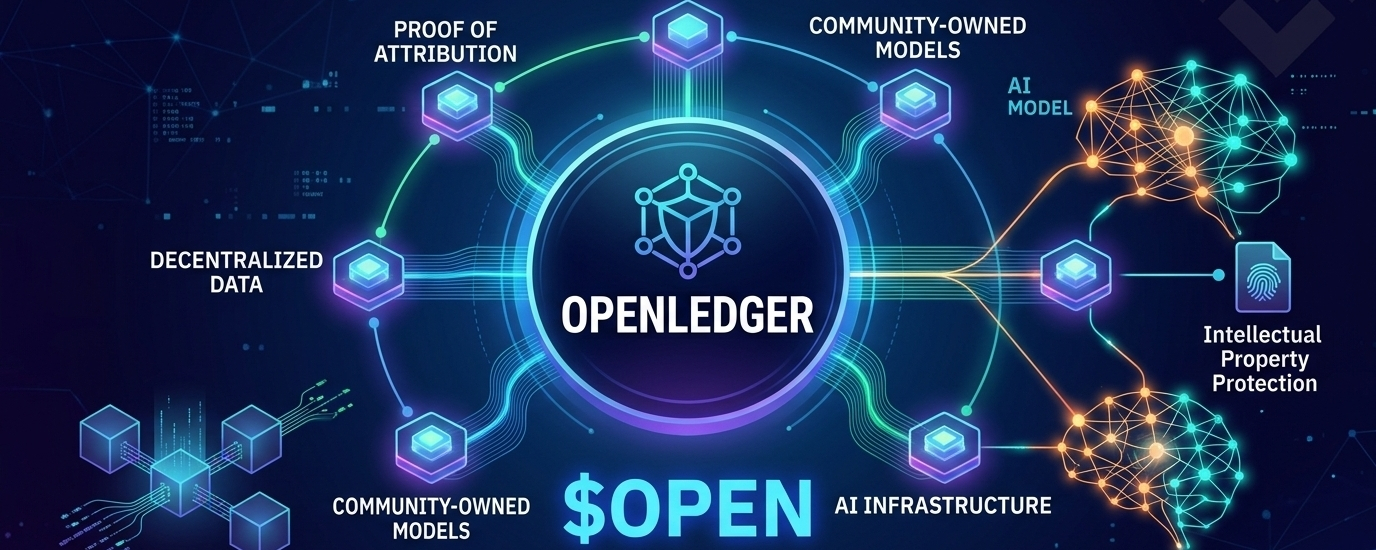
OpenLedger solves this through Proof of Attribution (PoA). This core consensus mechanism ensures that every single dataset, training run, and downstream inference is recorded immutably on-chain. When data is used to train or refine a model, the contributors are directly and transparently rewarded.
2026: The Year of Interoperability and Real Integrations
OpenLedger is not just a theoretical concept—it is a live, highly integrated ecosystem. In 2026 alone, the network has secured major partnerships that prove the real-world demand for verifiable on-chain AI:
Injective & Verifiable AI Execution: OpenLedger's integration with Injective allows AI agents to execute trades on-chain with full data-attribution tracing. No more blind faith; every automated decision has an immutable digital paper trail.
Theoriq & DeFi Autonomy: Partnering with Theoriq, OpenLedger is bringing these audit-friendly AI agents to live DeFi markets, allowing AI to manage treasury allocations and execute complex arbitrage strategies transparently.
Story Protocol & IP Protection: Perhaps the most critical development is the collaboration with Story Protocol. Story registers intellectual property on-chain, while OpenLedger enforces licensing terms and automatically distributes royalties to creators when models are trained. This provides a direct solution to the multi-billion-dollar AI copyright crisis.
Adoption of ERC-4626 Vaults: By integrating the ERC-4626 standard, OpenLedger has standardized AI-managed yield products, opening the door for seamless institutional-grade Web3 integrations.
The Economic Engine: The $OPEN Token
At the heart of this thriving ecosystem is the $OPEN token. Far from a speculative asset,
$OPEN is a multi-utility workhorse:
L2 Gas Fees: Powers all transactions on OpenLedger's high-performance Layer 2.
Staking & Governance: Protects the network and gives holders voting rights over which models and specialized "Datanets" are funded and deployed.
Developer Resources: Used to request permissioned specialized datasets and pay for compute power via the no-code ModelFactory GUI.
The Verdict
The intersection of DePIN and AI is crowded, but OpenLedger stands out by focusing on the "boring" but incredibly vital compliance, attribution, and data-rights layer. As AI eats the web, the demand for verified, clean, and legally compliant training pipelines will skyrocket.
Keep your eyes closely on @Openledger (https://www.binance.com/en/square/profile/openledger) and the $OPEN token. The infrastructure of tomorrow's AI revolution is being built today.
#OpenLedgar #DePIN #Web3 #Aİ
Why OpenLedger ($OPEN) Is Quietly Building the Most Critical Layer of the Decentralized AI Economy
While the rest of the crypto market continues to chase short-term hype, a massive infrastructure transition is taking place right under our noses. Artificial Intelligence (AI) is scaling at an exponential rate, but it faces a structural crisis: data ownership, provenance, and black-box decision-making.
Enter @OpenLedger (https://www.binance.com/en/square/profile/openledger), the world's first AI-native blockchain designed specifically to solve these fundamental bottlenecks. Powered by its native utility token $OPEN , the network is quietly cementing its place as the underlying trust and attribution layer for the future of on-chain intelligence.
The Real Problem: The Black-Box AI Trap
In traditional AI systems, tech conglomerates scrap massive amounts of data from the public web without consent, training models that operate as centralized black boxes. Creators get zero compensation, and users have absolutely no way to audit why an AI arrived at a specific decision.
OpenLedger solves this through Proof of Attribution (PoA). This core consensus mechanism ensures that every single dataset, training run, and downstream inference is recorded immutably on-chain. When data is used to train or refine a model, the contributors are directly and transparently rewarded.
2026: The Year of Interoperability and Real Integrations
OpenLedger is not just a theoretical concept—it is a live, highly integrated ecosystem. In 2026 alone, the network has secured major partnerships that prove the real-world demand for verifiable on-chain AI:
Injective & Verifiable AI Execution: OpenLedger's integration with Injective allows AI agents to execute trades on-chain with full data-attribution tracing. No more blind faith; every automated decision has an immutable digital paper trail.
Theoriq & DeFi Autonomy: Partnering with Theoriq, OpenLedger is bringing these audit-friendly AI agents to live DeFi markets, allowing AI to manage treasury allocations and execute complex arbitrage strategies transparently.
Story Protocol & IP Protection: Perhaps the most critical development is the collaboration with Story Protocol. Story registers intellectual property on-chain, while OpenLedger enforces licensing terms and automatically distributes royalties to creators when models are trained. This provides a direct solution to the multi-billion-dollar AI copyright crisis.
Adoption of ERC-4626 Vaults: By integrating the ERC-4626 standard, OpenLedger has standardized AI-managed yield products, opening the door for seamless institutional-grade Web3 integrations.
The Economic Engine: The $OPEN Token
At the heart of this thriving ecosystem is the $OPEN token. Far from a speculative asset,
$OPEN is a multi-utility workhorse:
L2 Gas Fees: Powers all transactions on OpenLedger's high-performance Layer 2.
Staking & Governance: Protects the network and gives holders voting rights over which models and specialized "Datanets" are funded and deployed.
Developer Resources: Used to request permissioned specialized datasets and pay for compute power via the no-code ModelFactory GUI.
The Verdict
The intersection of DePIN and AI is crowded, but OpenLedger stands out by focusing on the "boring" but incredibly vital compliance, attribution, and data-rights layer. As AI eats the web, the demand for verified, clean, and legally compliant training pipelines will skyrocket.
Keep your eyes closely on @OpenLedger (https://www.binance.com/en/square/profile/openledger) and the $OPEN token. The infrastructure of tomorrow's AI revolution is being built today.
#OpenLedgar #DePIN #Web3 #Aİ
Enter @OpenLedger (https://www.binance.com/en/square/profile/openledger), the world's first AI-native blockchain designed specifically to solve these fundamental bottlenecks. Powered by its native utility token $OPEN , the network is quietly cementing its place as the underlying trust and attribution layer for the future of on-chain intelligence.
The Real Problem: The Black-Box AI Trap
In traditional AI systems, tech conglomerates scrap massive amounts of data from the public web without consent, training models that operate as centralized black boxes. Creators get zero compensation, and users have absolutely no way to audit why an AI arrived at a specific decision.
OpenLedger solves this through Proof of Attribution (PoA). This core consensus mechanism ensures that every single dataset, training run, and downstream inference is recorded immutably on-chain. When data is used to train or refine a model, the contributors are directly and transparently rewarded.
2026: The Year of Interoperability and Real Integrations
OpenLedger is not just a theoretical concept—it is a live, highly integrated ecosystem. In 2026 alone, the network has secured major partnerships that prove the real-world demand for verifiable on-chain AI:
Injective & Verifiable AI Execution: OpenLedger's integration with Injective allows AI agents to execute trades on-chain with full data-attribution tracing. No more blind faith; every automated decision has an immutable digital paper trail.
Theoriq & DeFi Autonomy: Partnering with Theoriq, OpenLedger is bringing these audit-friendly AI agents to live DeFi markets, allowing AI to manage treasury allocations and execute complex arbitrage strategies transparently.
Story Protocol & IP Protection: Perhaps the most critical development is the collaboration with Story Protocol. Story registers intellectual property on-chain, while OpenLedger enforces licensing terms and automatically distributes royalties to creators when models are trained. This provides a direct solution to the multi-billion-dollar AI copyright crisis.
Adoption of ERC-4626 Vaults: By integrating the ERC-4626 standard, OpenLedger has standardized AI-managed yield products, opening the door for seamless institutional-grade Web3 integrations.
The Economic Engine: The $OPEN Token
At the heart of this thriving ecosystem is the $OPEN token. Far from a speculative asset,
$OPEN is a multi-utility workhorse:
L2 Gas Fees: Powers all transactions on OpenLedger's high-performance Layer 2.
Staking & Governance: Protects the network and gives holders voting rights over which models and specialized "Datanets" are funded and deployed.
Developer Resources: Used to request permissioned specialized datasets and pay for compute power via the no-code ModelFactory GUI.
The Verdict
The intersection of DePIN and AI is crowded, but OpenLedger stands out by focusing on the "boring" but incredibly vital compliance, attribution, and data-rights layer. As AI eats the web, the demand for verified, clean, and legally compliant training pipelines will skyrocket.
Keep your eyes closely on @OpenLedger (https://www.binance.com/en/square/profile/openledger) and the $OPEN token. The infrastructure of tomorrow's AI revolution is being built today.
#OpenLedgar #DePIN #Web3 #Aİ
38

Статья
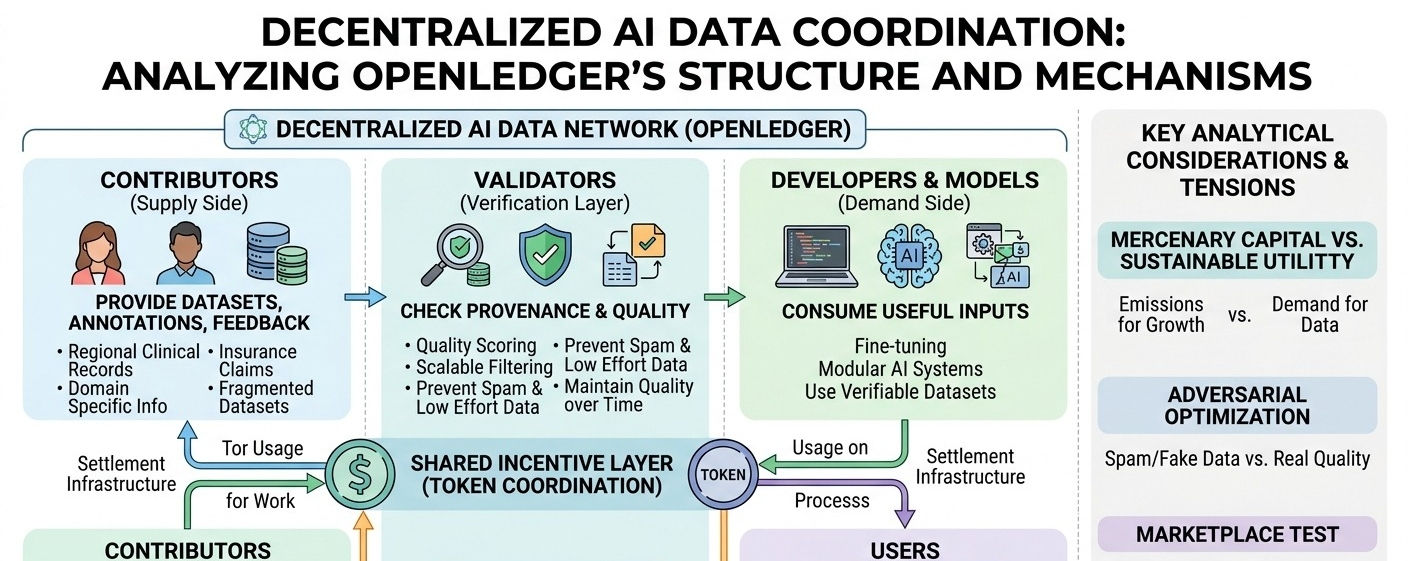
openledger and the strange economics of ai databeen going through openledgers architecture lately mostly around the attribution system and contributor incentives
most people think openledger is just another ai plus crypto token but honestly the more interesting part is the attempt to build coordination infrastructure around ai data itself
what caught my attention is how the network tries to connect contributors validators developers and users through one shared incentive layer
contributors provide datasets annotations feedback loops or domain specific information
validators check provenance and quality
developers consume useful inputs for models
users generate demand through applications or inference
in theory the token coordinates value across all of them
the decentralized contribution system actually makes sense in certain areas
a healthcare model trained on regional clinical records or insurance claim annotations probably needs fragmented datasets that centralized systems do not always prioritize collecting
openledger seems designed around that assumption
that future ai systems become more modular and externally coordinated instead of fully vertically integrated
then theres the attribution layer which honestly feels like the hardest part of the whole architecture
if contributors are rewarded based on downstream usefulness how does the protocol know which data actually mattered
and this is the part i keep thinking about
ai models absorb patterns from mixed inputs
one small high quality dataset can matter more than millions of generic examples
so attribution becomes probabilistic very quickly
maybe thats acceptable
contributors probably do not need perfect precision
they just need a system that feels fair enough and difficult to manipulate
but once token rewards become meaningful people optimize around whatever metrics the protocol measures
thats where the incentive tension shows up
if emissions dominate before real demand exists contributors may upload duplicated datasets synthetic filler low effort annotations or spam interactions simply because the reward system allows it
so the verification layer matters as much as the contribution layer itself
openledger needs provenance tracking quality scoring and scalable filtering without drifting into centralized moderation
too little filtering and the network becomes noisy
too much filtering and the decentralized premise weakens
the marketplace side is probably the real long term test
ideally developers pay for verified datasets or model access users generate inference demand and contributors earn from actual network usage rather than emissions alone
in that version the token becomes settlement infrastructure instead of just incentive fuel
but the entire architecture depends on future ai demand becoming fragmented enough to need this kind of coordination layer
if large platforms continue controlling training deployment and user feedback internally decentralized ai data markets may remain relatively niche
watching
real usage fees versus emissions
quality of contributed datasets over time
developer demand for attributable external data
how attribution disputes scale with participation
no clean conclusion yet
openledger might be building a sustainable coordination layer for distributed ai systems
or it might be testing whether token incentives can create a market before the demand side fully exists
#OpenLedgar
@Openledger
$OPEN
{future}(OPENUSDT)
openledger and the strange economics of ai data
been going through openledgers architecture lately mostly around the attribution system and contributor incentives
most people think openledger is just another ai plus crypto token but honestly the more interesting part is the attempt to build coordination infrastructure around ai data itself
what caught my attention is how the network tries to connect contributors validators developers and users through one shared incentive layer
contributors provide datasets annotations feedback loops or domain specific information
validators check provenance and quality
developers consume useful inputs for models
users generate demand through applications or inference
in theory the token coordinates value across all of them
the decentralized contribution system actually makes sense in certain areas
a healthcare model trained on regional clinical records or insurance claim annotations probably needs fragmented datasets that centralized systems do not always prioritize collecting
openledger seems designed around that assumption
that future ai systems become more modular and externally coordinated instead of fully vertically integrated
then theres the attribution layer which honestly feels like the hardest part of the whole architecture
if contributors are rewarded based on downstream usefulness how does the protocol know which data actually mattered
and this is the part i keep thinking about
ai models absorb patterns from mixed inputs
one small high quality dataset can matter more than millions of generic examples
so attribution becomes probabilistic very quickly
maybe thats acceptable
contributors probably do not need perfect precision
they just need a system that feels fair enough and difficult to manipulate
but once token rewards become meaningful people optimize around whatever metrics the protocol measures
thats where the incentive tension shows up
if emissions dominate before real demand exists contributors may upload duplicated datasets synthetic filler low effort annotations or spam interactions simply because the reward system allows it
so the verification layer matters as much as the contribution layer itself
openledger needs provenance tracking quality scoring and scalable filtering without drifting into centralized moderation
too little filtering and the network becomes noisy
too much filtering and the decentralized premise weakens
the marketplace side is probably the real long term test
ideally developers pay for verified datasets or model access users generate inference demand and contributors earn from actual network usage rather than emissions alone
in that version the token becomes settlement infrastructure instead of just incentive fuel
but the entire architecture depends on future ai demand becoming fragmented enough to need this kind of coordination layer
if large platforms continue controlling training deployment and user feedback internally decentralized ai data markets may remain relatively niche
watching
real usage fees versus emissions
quality of contributed datasets over time
developer demand for attributable external data
how attribution disputes scale with participation
no clean conclusion yet
openledger might be building a sustainable coordination layer for distributed ai systems
or it might be testing whether token incentives can create a market before the demand side fully exists
#OpenLedgar
@OpenLedger
$OPEN
most people think openledger is just another ai plus crypto token but honestly the more interesting part is the attempt to build coordination infrastructure around ai data itself
what caught my attention is how the network tries to connect contributors validators developers and users through one shared incentive layer
contributors provide datasets annotations feedback loops or domain specific information
validators check provenance and quality
developers consume useful inputs for models
users generate demand through applications or inference
in theory the token coordinates value across all of them
the decentralized contribution system actually makes sense in certain areas
a healthcare model trained on regional clinical records or insurance claim annotations probably needs fragmented datasets that centralized systems do not always prioritize collecting
openledger seems designed around that assumption
that future ai systems become more modular and externally coordinated instead of fully vertically integrated
then theres the attribution layer which honestly feels like the hardest part of the whole architecture
if contributors are rewarded based on downstream usefulness how does the protocol know which data actually mattered
and this is the part i keep thinking about
ai models absorb patterns from mixed inputs
one small high quality dataset can matter more than millions of generic examples
so attribution becomes probabilistic very quickly
maybe thats acceptable
contributors probably do not need perfect precision
they just need a system that feels fair enough and difficult to manipulate
but once token rewards become meaningful people optimize around whatever metrics the protocol measures
thats where the incentive tension shows up
if emissions dominate before real demand exists contributors may upload duplicated datasets synthetic filler low effort annotations or spam interactions simply because the reward system allows it
so the verification layer matters as much as the contribution layer itself
openledger needs provenance tracking quality scoring and scalable filtering without drifting into centralized moderation
too little filtering and the network becomes noisy
too much filtering and the decentralized premise weakens
the marketplace side is probably the real long term test
ideally developers pay for verified datasets or model access users generate inference demand and contributors earn from actual network usage rather than emissions alone
in that version the token becomes settlement infrastructure instead of just incentive fuel
but the entire architecture depends on future ai demand becoming fragmented enough to need this kind of coordination layer
if large platforms continue controlling training deployment and user feedback internally decentralized ai data markets may remain relatively niche
watching
real usage fees versus emissions
quality of contributed datasets over time
developer demand for attributable external data
how attribution disputes scale with participation
no clean conclusion yet
openledger might be building a sustainable coordination layer for distributed ai systems
or it might be testing whether token incentives can create a market before the demand side fully exists
#OpenLedgar
@OpenLedger
$OPEN
156

·
--
Exploring the Future of Decentralized AI with OpenLedgerAs artificial intelligence continues to advance at a rapid pace, the demand for high-quality, secure, and decentralized data infrastructure has never been higher. This is exactly where a project like @OpenLedger comes into play, offering innovative solutions to modern data challenges.
By leveraging decentralized networks, the project ensures that data remains transparent, permissionless, and highly accessible for AI training and development models. This shift away from centralized data silos is incredibly important for fostering true innovation in the Web3 space.
For early adopters and community supporters, tracking the utility of the $OPEN token within this growing ecosystem will be key. As data governance and infrastructure expand, projects building these foundational layers are well-positioned for the future. I am highly interested to see how the platform evolves and scales its ecosystem in the coming months. #OpenLedgar
er
Exploring the Future of Decentralized AI with OpenLedger
As artificial intelligence continues to advance at a rapid pace, the demand for high-quality, secure, and decentralized data infrastructure has never been higher. This is exactly where a project like @OpenLedger comes into play, offering innovative solutions to modern data challenges.
By leveraging decentralized networks, the project ensures that data remains transparent, permissionless, and highly accessible for AI training and development models. This shift away from centralized data silos is incredibly important for fostering true innovation in the Web3 space.
For early adopters and community supporters, tracking the utility of the $OPEN token within this growing ecosystem will be key. As data governance and infrastructure expand, projects building these foundational layers are well-positioned for the future. I am highly interested to see how the platform evolves and scales its ecosystem in the coming months. #OpenLedgar
er
By leveraging decentralized networks, the project ensures that data remains transparent, permissionless, and highly accessible for AI training and development models. This shift away from centralized data silos is incredibly important for fostering true innovation in the Web3 space.
For early adopters and community supporters, tracking the utility of the $OPEN token within this growing ecosystem will be key. As data governance and infrastructure expand, projects building these foundational layers are well-positioned for the future. I am highly interested to see how the platform evolves and scales its ecosystem in the coming months. #OpenLedgar
er
55

·
--
combination of artificial intelligence and blockchainThe combination of artificial intelligence and blockchain is becoming one of the most important trends in Web3, and @OpenLedger is building an ecosystem focused on turning AI data, models, and autonomous agents into valuable on-chain assets. Instead of only following hype, the project is working on infrastructure that could help creators, developers, and communities monetize AI resources in a decentralized way.
One thing that makes $OPEN interesting is the idea of unlocking liquidity for AI. Data is becoming more valuable every year, but most platforms still keep ownership and rewards centralized. OpenLedger aims to change this by allowing users and developers to participate in a transparent blockchain ecosystem where contributions can be rewarded fairly.
The rise of AI agents could also create huge demand for decentralized systems that support secure transactions, data sharing, and scalable computation. @OpenLedger is positioning itself at the intersection of these technologies, which could become an important sector during the next phase of crypto adoption.
As more projects explore AI integration, utility and long-term ecosystem growth will matter more than short-term hype. Watching how $OPEN continues to develop its infrastructure and community will be interesting over the coming months.
#OpenLedgar #AI #blockchain hain #Web3 #cryptouniverseofficial to #OPEN
combination of artificial intelligence and blockchain
The combination of artificial intelligence and blockchain is becoming one of the most important trends in Web3, and @OpenLedger is building an ecosystem focused on turning AI data, models, and autonomous agents into valuable on-chain assets. Instead of only following hype, the project is working on infrastructure that could help creators, developers, and communities monetize AI resources in a decentralized way.
One thing that makes $OPEN interesting is the idea of unlocking liquidity for AI. Data is becoming more valuable every year, but most platforms still keep ownership and rewards centralized. OpenLedger aims to change this by allowing users and developers to participate in a transparent blockchain ecosystem where contributions can be rewarded fairly.
The rise of AI agents could also create huge demand for decentralized systems that support secure transactions, data sharing, and scalable computation. @OpenLedger is positioning itself at the intersection of these technologies, which could become an important sector during the next phase of crypto adoption.
As more projects explore AI integration, utility and long-term ecosystem growth will matter more than short-term hype. Watching how $OPEN continues to develop its infrastructure and community will be interesting over the coming months.
#OpenLedgar #AI #blockchain hain #Web3 #cryptouniverseofficial to #OPEN
One thing that makes $OPEN interesting is the idea of unlocking liquidity for AI. Data is becoming more valuable every year, but most platforms still keep ownership and rewards centralized. OpenLedger aims to change this by allowing users and developers to participate in a transparent blockchain ecosystem where contributions can be rewarded fairly.
The rise of AI agents could also create huge demand for decentralized systems that support secure transactions, data sharing, and scalable computation. @OpenLedger is positioning itself at the intersection of these technologies, which could become an important sector during the next phase of crypto adoption.
As more projects explore AI integration, utility and long-term ecosystem growth will matter more than short-term hype. Watching how $OPEN continues to develop its infrastructure and community will be interesting over the coming months.
#OpenLedgar #AI #blockchain hain #Web3 #cryptouniverseofficial to #OPEN
52

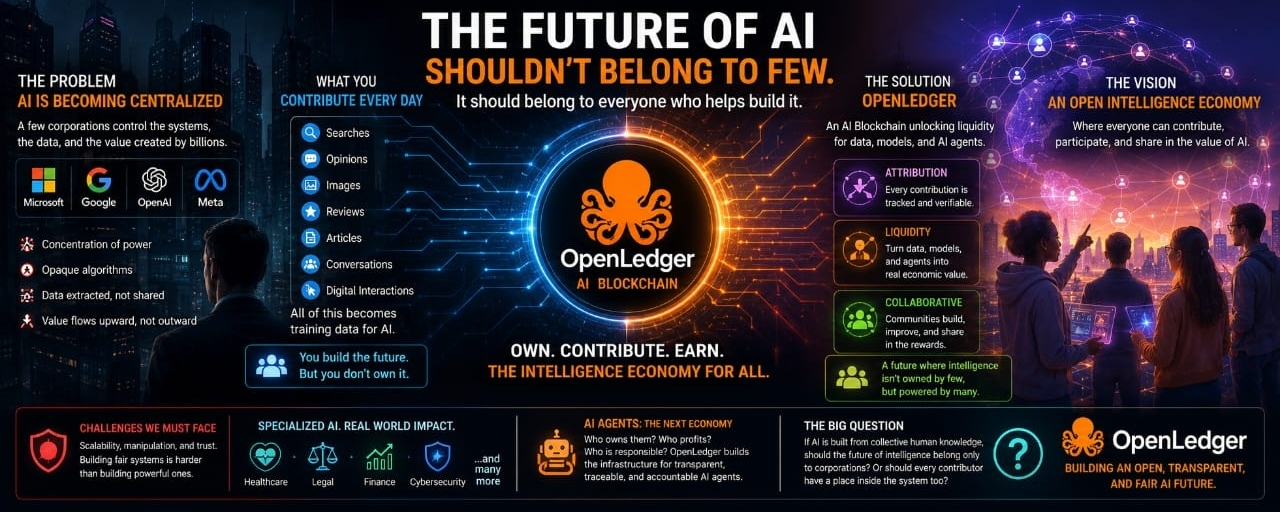
Статья
OpenLedger and the Growing Fear Around Who Will Control AIArtificial intelligence is growing so fast that most people barely have time to understand what is actually happening behind the scenes. A few years ago, AI still felt futuristic. It belonged to research labs, science-fiction movies, and complicated discussions most ordinary people ignored. But now it quietly exists inside everyday life. People use it to write emails, generate images, edit videos, search for information, automate work, and even make business decisions without fully realizing how dependent digital life is becoming on intelligent systems.
But underneath all this excitement, a much bigger shift is quietly taking place.
A small number of companies are slowly gaining control over the systems that may eventually shape communication, creativity, education, productivity, and even human decision-making itself. And the strange thing is that these systems are not built only by those companies. They are built using information created by billions of ordinary people every single day.
Every search query.
Every uploaded photo.
Every online conversation.
Every review.
Every article.
Every opinion shared online.
All of it becomes training material for artificial intelligence.
In many ways, people across the internet are collectively helping build the future of AI without even realizing it. Yet almost none of them actually benefit from the long-term value these systems create.
That imbalance is exactly where OpenLedger enters the conversation.
At first glance, OpenLedger looks like another blockchain project trying to take advantage of the AI trend. The internet is already full of crypto projects promising to “revolutionize” artificial intelligence through decentralization. Most sound impressive at first but eventually disappear because the ideas behind them are weak or unrealistic.
But OpenLedger touches on something more serious than hype.
It focuses on ownership.
The project is built around a question that becomes more uncomfortable the longer you think about it:
If artificial intelligence is being trained using collective human knowledge, should only a handful of corporations control the systems and profits created from it?
That question sits at the center of OpenLedger’s entire vision.
The project describes itself as an AI blockchain designed to unlock liquidity around data, models, and AI agents. The technical wording sounds complicated, but the core idea is actually very human. OpenLedger wants the people contributing intelligence, data, expertise, and digital activity to potentially share in the value AI systems generate instead of remaining invisible participants inside giant corporate ecosystems.
Right now, the AI economy works very differently.
Most people constantly contribute useful information online, but the economic rewards flow almost entirely upward toward centralized companies. The more data those companies collect, the more powerful their AI systems become. And the more powerful their systems become, the more influence they gain over the internet itself.
It creates a cycle where intelligence slowly becomes concentrated into fewer hands.
That is why projects like OpenLedger are starting to attract attention. The project is trying to build a system where contribution becomes visible instead of invisible. Instead of treating data like something silently extracted in the background, it attempts to treat contribution itself as something measurable and economically connected to the people creating it.
Its philosophy revolves around attribution.
If someone contributes valuable data that improves an AI model, that contribution could theoretically be tracked.
If communities help build specialized AI systems, they could potentially share in the upside.
If AI agents create value, their activity could become transparent instead of hidden inside centralized systems.
In simple terms, OpenLedger is trying to create infrastructure where intelligence itself becomes part of a more open economy rather than remaining locked inside closed corporate structures.
One reason the project stands out is because it does not focus only on giant “super AI” systems competing against companies like OpenAI or Google. Instead, a large part of its vision revolves around specialized AI systems built around specific industries and communities.
And honestly, this may be the smartest part of the entire idea.
Most public conversations about AI are obsessed with giant universal systems becoming smarter than humans. But many of the most commercially useful AI systems are actually narrow and industry-specific.
A healthcare AI trained on medical research.
A legal AI trained on years of court records.
A financial AI trained on trading patterns.
A cybersecurity AI trained on attack behavior.
These systems become valuable because they deeply understand one field, not because they know everything.
That changes the economics completely.
Building giant universal AI systems requires enormous infrastructure, expensive hardware, and billions of dollars in computing power. Naturally, that environment favors giant corporations with huge resources. Specialized AI, however, creates room for smaller communities, researchers, developers, and experts to collaborate around niche knowledge.
This is where OpenLedger’s decentralized structure starts making more sense.
The project appears to be betting on a future where communities can collectively build datasets, improve models together, and potentially share the economic rewards generated by those systems instead of handing all the value over to centralized companies.
In many ways, OpenLedger is trying to turn intelligence into something more collaborative.
That idea becomes even more important when discussing AI agents.
AI agents are evolving rapidly. They are no longer just simple chatbots answering questions. Some can already automate workflows, conduct research, analyze information, interact with software, and complete tasks with very little human supervision.
Over time, these agents could become independent digital workers operating across online economies almost autonomously.
And once that happens, difficult questions immediately appear.
Who owns an AI agent?
Who profits from its work?
Who controls its decisions?
Who becomes responsible when something goes wrong?
Most AI systems today cannot answer those questions clearly because the systems themselves are centralized and opaque. OpenLedger is attempting to create infrastructure where those relationships become more transparent and traceable.
Of course, the vision sounds exciting. But there is another side to this conversation that people should not ignore.
Decentralization sounds attractive morally, but centralization is often more efficient in reality.
Training advanced AI systems requires massive amounts of computing power, energy, technical expertise, hardware, and coordination. Large technology companies naturally have huge advantages in that environment.
Projects like OpenLedger face a difficult challenge:
they must prove decentralized systems can compete practically, not just philosophically.
There is also another issue many decentralized projects struggle with — incentives change human behavior.
The moment people are rewarded financially for contribution, manipulation usually follows.
Spam data.
Artificial engagement.
Fake activity.
Low-quality submissions.
Reward farming.
These problems already exist across social media, crypto ecosystems, and digital platforms today. Decentralized AI systems are unlikely to magically avoid them.
In fact, OpenLedger’s biggest challenge may not even be technology itself.
It may be trust.
Because building fair systems is often much harder than building powerful systems.
Still, projects like OpenLedger continue attracting attention because they reflect a larger fear quietly growing around artificial intelligence.
Many people are beginning to feel uncomfortable with how quickly intelligence is becoming concentrated into a small number of institutions.
And honestly, that fear is understandable.
The internet originally decentralized access to information. Then large platforms slowly centralized attention and influence. AI may now be taking centralization even further by concentrating intelligence itself.
If only a handful of corporations eventually control the world’s most advanced AI systems, they could gain enormous influence over communication, creativity, productivity, education, and digital economies.
Access to intelligence itself could slowly become something people rent rather than truly participate in.
OpenLedger represents one attempt to push against that future.
Maybe it succeeds.
Maybe it fails.
Nobody truly knows yet.
The reality is that centralized AI companies still hold enormous advantages in money, infrastructure, research talent, and computing power. Competing against them will not be easy.
But history has shown that open systems sometimes begin quietly before becoming culturally powerful later.
Wikipedia once looked unreliable compared to traditional encyclopedias.
Open-source software once seemed unrealistic compared to corporate software.
Linux once looked insignificant beside giant operating systems.
Open systems rarely win immediately because they are more efficient.
They often grow because people eventually become uncomfortable with too much concentration of power.
That may ultimately become OpenLedger’s biggest opportunity.
Not replacing every major AI company in the world.
But becoming part of a broader movement trying to make the future of intelligence more transparent, collaborative, and community-driven instead of fully controlled by a handful of powerful institutions.
At its core, OpenLedger is not just raising questions about blockchain technology or artificial intelligence.
It is raising questions about ownership itself.
If AI is being built from collective human knowledge, should the future of intelligence belong only to corporations?
Or should the people helping create that intelligence have a place inside the system too?
Right now, nobody truly has a perfect answer.
And maybe that uncertainty is exactly why projects like OpenLedger are beginning to matter. #OpenLedgar #openledger $OPEN @Openledger
OpenLedger and the Growing Fear Around Who Will Control AI
Artificial intelligence is growing so fast that most people barely have time to understand what is actually happening behind the scenes. A few years ago, AI still felt futuristic. It belonged to research labs, science-fiction movies, and complicated discussions most ordinary people ignored. But now it quietly exists inside everyday life. People use it to write emails, generate images, edit videos, search for information, automate work, and even make business decisions without fully realizing how dependent digital life is becoming on intelligent systems.
But underneath all this excitement, a much bigger shift is quietly taking place.
A small number of companies are slowly gaining control over the systems that may eventually shape communication, creativity, education, productivity, and even human decision-making itself. And the strange thing is that these systems are not built only by those companies. They are built using information created by billions of ordinary people every single day.
Every search query.
Every uploaded photo.
Every online conversation.
Every review.
Every article.
Every opinion shared online.
All of it becomes training material for artificial intelligence.
In many ways, people across the internet are collectively helping build the future of AI without even realizing it. Yet almost none of them actually benefit from the long-term value these systems create.
That imbalance is exactly where OpenLedger enters the conversation.
At first glance, OpenLedger looks like another blockchain project trying to take advantage of the AI trend. The internet is already full of crypto projects promising to “revolutionize” artificial intelligence through decentralization. Most sound impressive at first but eventually disappear because the ideas behind them are weak or unrealistic.
But OpenLedger touches on something more serious than hype.
It focuses on ownership.
The project is built around a question that becomes more uncomfortable the longer you think about it:
If artificial intelligence is being trained using collective human knowledge, should only a handful of corporations control the systems and profits created from it?
That question sits at the center of OpenLedger’s entire vision.
The project describes itself as an AI blockchain designed to unlock liquidity around data, models, and AI agents. The technical wording sounds complicated, but the core idea is actually very human. OpenLedger wants the people contributing intelligence, data, expertise, and digital activity to potentially share in the value AI systems generate instead of remaining invisible participants inside giant corporate ecosystems.
Right now, the AI economy works very differently.
Most people constantly contribute useful information online, but the economic rewards flow almost entirely upward toward centralized companies. The more data those companies collect, the more powerful their AI systems become. And the more powerful their systems become, the more influence they gain over the internet itself.
It creates a cycle where intelligence slowly becomes concentrated into fewer hands.
That is why projects like OpenLedger are starting to attract attention. The project is trying to build a system where contribution becomes visible instead of invisible. Instead of treating data like something silently extracted in the background, it attempts to treat contribution itself as something measurable and economically connected to the people creating it.
Its philosophy revolves around attribution.
If someone contributes valuable data that improves an AI model, that contribution could theoretically be tracked.
If communities help build specialized AI systems, they could potentially share in the upside.
If AI agents create value, their activity could become transparent instead of hidden inside centralized systems.
In simple terms, OpenLedger is trying to create infrastructure where intelligence itself becomes part of a more open economy rather than remaining locked inside closed corporate structures.
One reason the project stands out is because it does not focus only on giant “super AI” systems competing against companies like OpenAI or Google. Instead, a large part of its vision revolves around specialized AI systems built around specific industries and communities.
And honestly, this may be the smartest part of the entire idea.
Most public conversations about AI are obsessed with giant universal systems becoming smarter than humans. But many of the most commercially useful AI systems are actually narrow and industry-specific.
A healthcare AI trained on medical research.
A legal AI trained on years of court records.
A financial AI trained on trading patterns.
A cybersecurity AI trained on attack behavior.
These systems become valuable because they deeply understand one field, not because they know everything.
That changes the economics completely.
Building giant universal AI systems requires enormous infrastructure, expensive hardware, and billions of dollars in computing power. Naturally, that environment favors giant corporations with huge resources. Specialized AI, however, creates room for smaller communities, researchers, developers, and experts to collaborate around niche knowledge.
This is where OpenLedger’s decentralized structure starts making more sense.
The project appears to be betting on a future where communities can collectively build datasets, improve models together, and potentially share the economic rewards generated by those systems instead of handing all the value over to centralized companies.
In many ways, OpenLedger is trying to turn intelligence into something more collaborative.
That idea becomes even more important when discussing AI agents.
AI agents are evolving rapidly. They are no longer just simple chatbots answering questions. Some can already automate workflows, conduct research, analyze information, interact with software, and complete tasks with very little human supervision.
Over time, these agents could become independent digital workers operating across online economies almost autonomously.
And once that happens, difficult questions immediately appear.
Who owns an AI agent?
Who profits from its work?
Who controls its decisions?
Who becomes responsible when something goes wrong?
Most AI systems today cannot answer those questions clearly because the systems themselves are centralized and opaque. OpenLedger is attempting to create infrastructure where those relationships become more transparent and traceable.
Of course, the vision sounds exciting. But there is another side to this conversation that people should not ignore.
Decentralization sounds attractive morally, but centralization is often more efficient in reality.
Training advanced AI systems requires massive amounts of computing power, energy, technical expertise, hardware, and coordination. Large technology companies naturally have huge advantages in that environment.
Projects like OpenLedger face a difficult challenge:
they must prove decentralized systems can compete practically, not just philosophically.
There is also another issue many decentralized projects struggle with — incentives change human behavior.
The moment people are rewarded financially for contribution, manipulation usually follows.
Spam data.
Artificial engagement.
Fake activity.
Low-quality submissions.
Reward farming.
These problems already exist across social media, crypto ecosystems, and digital platforms today. Decentralized AI systems are unlikely to magically avoid them.
In fact, OpenLedger’s biggest challenge may not even be technology itself.
It may be trust.
Because building fair systems is often much harder than building powerful systems.
Still, projects like OpenLedger continue attracting attention because they reflect a larger fear quietly growing around artificial intelligence.
Many people are beginning to feel uncomfortable with how quickly intelligence is becoming concentrated into a small number of institutions.
And honestly, that fear is understandable.
The internet originally decentralized access to information. Then large platforms slowly centralized attention and influence. AI may now be taking centralization even further by concentrating intelligence itself.
If only a handful of corporations eventually control the world’s most advanced AI systems, they could gain enormous influence over communication, creativity, productivity, education, and digital economies.
Access to intelligence itself could slowly become something people rent rather than truly participate in.
OpenLedger represents one attempt to push against that future.
Maybe it succeeds.
Maybe it fails.
Nobody truly knows yet.
The reality is that centralized AI companies still hold enormous advantages in money, infrastructure, research talent, and computing power. Competing against them will not be easy.
But history has shown that open systems sometimes begin quietly before becoming culturally powerful later.
Wikipedia once looked unreliable compared to traditional encyclopedias.
Open-source software once seemed unrealistic compared to corporate software.
Linux once looked insignificant beside giant operating systems.
Open systems rarely win immediately because they are more efficient.
They often grow because people eventually become uncomfortable with too much concentration of power.
That may ultimately become OpenLedger’s biggest opportunity.
Not replacing every major AI company in the world.
But becoming part of a broader movement trying to make the future of intelligence more transparent, collaborative, and community-driven instead of fully controlled by a handful of powerful institutions.
At its core, OpenLedger is not just raising questions about blockchain technology or artificial intelligence.
It is raising questions about ownership itself.
If AI is being built from collective human knowledge, should the future of intelligence belong only to corporations?
Or should the people helping create that intelligence have a place inside the system too?
Right now, nobody truly has a perfect answer.
And maybe that uncertainty is exactly why projects like OpenLedger are beginning to matter. #OpenLedgar #openledger $OPEN @Openledger
But underneath all this excitement, a much bigger shift is quietly taking place.
A small number of companies are slowly gaining control over the systems that may eventually shape communication, creativity, education, productivity, and even human decision-making itself. And the strange thing is that these systems are not built only by those companies. They are built using information created by billions of ordinary people every single day.
Every search query.
Every uploaded photo.
Every online conversation.
Every review.
Every article.
Every opinion shared online.
All of it becomes training material for artificial intelligence.
In many ways, people across the internet are collectively helping build the future of AI without even realizing it. Yet almost none of them actually benefit from the long-term value these systems create.
That imbalance is exactly where OpenLedger enters the conversation.
At first glance, OpenLedger looks like another blockchain project trying to take advantage of the AI trend. The internet is already full of crypto projects promising to “revolutionize” artificial intelligence through decentralization. Most sound impressive at first but eventually disappear because the ideas behind them are weak or unrealistic.
But OpenLedger touches on something more serious than hype.
It focuses on ownership.
The project is built around a question that becomes more uncomfortable the longer you think about it:
If artificial intelligence is being trained using collective human knowledge, should only a handful of corporations control the systems and profits created from it?
That question sits at the center of OpenLedger’s entire vision.
The project describes itself as an AI blockchain designed to unlock liquidity around data, models, and AI agents. The technical wording sounds complicated, but the core idea is actually very human. OpenLedger wants the people contributing intelligence, data, expertise, and digital activity to potentially share in the value AI systems generate instead of remaining invisible participants inside giant corporate ecosystems.
Right now, the AI economy works very differently.
Most people constantly contribute useful information online, but the economic rewards flow almost entirely upward toward centralized companies. The more data those companies collect, the more powerful their AI systems become. And the more powerful their systems become, the more influence they gain over the internet itself.
It creates a cycle where intelligence slowly becomes concentrated into fewer hands.
That is why projects like OpenLedger are starting to attract attention. The project is trying to build a system where contribution becomes visible instead of invisible. Instead of treating data like something silently extracted in the background, it attempts to treat contribution itself as something measurable and economically connected to the people creating it.
Its philosophy revolves around attribution.
If someone contributes valuable data that improves an AI model, that contribution could theoretically be tracked.
If communities help build specialized AI systems, they could potentially share in the upside.
If AI agents create value, their activity could become transparent instead of hidden inside centralized systems.
In simple terms, OpenLedger is trying to create infrastructure where intelligence itself becomes part of a more open economy rather than remaining locked inside closed corporate structures.
One reason the project stands out is because it does not focus only on giant “super AI” systems competing against companies like OpenAI or Google. Instead, a large part of its vision revolves around specialized AI systems built around specific industries and communities.
And honestly, this may be the smartest part of the entire idea.
Most public conversations about AI are obsessed with giant universal systems becoming smarter than humans. But many of the most commercially useful AI systems are actually narrow and industry-specific.
A healthcare AI trained on medical research.
A legal AI trained on years of court records.
A financial AI trained on trading patterns.
A cybersecurity AI trained on attack behavior.
These systems become valuable because they deeply understand one field, not because they know everything.
That changes the economics completely.
Building giant universal AI systems requires enormous infrastructure, expensive hardware, and billions of dollars in computing power. Naturally, that environment favors giant corporations with huge resources. Specialized AI, however, creates room for smaller communities, researchers, developers, and experts to collaborate around niche knowledge.
This is where OpenLedger’s decentralized structure starts making more sense.
The project appears to be betting on a future where communities can collectively build datasets, improve models together, and potentially share the economic rewards generated by those systems instead of handing all the value over to centralized companies.
In many ways, OpenLedger is trying to turn intelligence into something more collaborative.
That idea becomes even more important when discussing AI agents.
AI agents are evolving rapidly. They are no longer just simple chatbots answering questions. Some can already automate workflows, conduct research, analyze information, interact with software, and complete tasks with very little human supervision.
Over time, these agents could become independent digital workers operating across online economies almost autonomously.
And once that happens, difficult questions immediately appear.
Who owns an AI agent?
Who profits from its work?
Who controls its decisions?
Who becomes responsible when something goes wrong?
Most AI systems today cannot answer those questions clearly because the systems themselves are centralized and opaque. OpenLedger is attempting to create infrastructure where those relationships become more transparent and traceable.
Of course, the vision sounds exciting. But there is another side to this conversation that people should not ignore.
Decentralization sounds attractive morally, but centralization is often more efficient in reality.
Training advanced AI systems requires massive amounts of computing power, energy, technical expertise, hardware, and coordination. Large technology companies naturally have huge advantages in that environment.
Projects like OpenLedger face a difficult challenge:
they must prove decentralized systems can compete practically, not just philosophically.
There is also another issue many decentralized projects struggle with — incentives change human behavior.
The moment people are rewarded financially for contribution, manipulation usually follows.
Spam data.
Artificial engagement.
Fake activity.
Low-quality submissions.
Reward farming.
These problems already exist across social media, crypto ecosystems, and digital platforms today. Decentralized AI systems are unlikely to magically avoid them.
In fact, OpenLedger’s biggest challenge may not even be technology itself.
It may be trust.
Because building fair systems is often much harder than building powerful systems.
Still, projects like OpenLedger continue attracting attention because they reflect a larger fear quietly growing around artificial intelligence.
Many people are beginning to feel uncomfortable with how quickly intelligence is becoming concentrated into a small number of institutions.
And honestly, that fear is understandable.
The internet originally decentralized access to information. Then large platforms slowly centralized attention and influence. AI may now be taking centralization even further by concentrating intelligence itself.
If only a handful of corporations eventually control the world’s most advanced AI systems, they could gain enormous influence over communication, creativity, productivity, education, and digital economies.
Access to intelligence itself could slowly become something people rent rather than truly participate in.
OpenLedger represents one attempt to push against that future.
Maybe it succeeds.
Maybe it fails.
Nobody truly knows yet.
The reality is that centralized AI companies still hold enormous advantages in money, infrastructure, research talent, and computing power. Competing against them will not be easy.
But history has shown that open systems sometimes begin quietly before becoming culturally powerful later.
Wikipedia once looked unreliable compared to traditional encyclopedias.
Open-source software once seemed unrealistic compared to corporate software.
Linux once looked insignificant beside giant operating systems.
Open systems rarely win immediately because they are more efficient.
They often grow because people eventually become uncomfortable with too much concentration of power.
That may ultimately become OpenLedger’s biggest opportunity.
Not replacing every major AI company in the world.
But becoming part of a broader movement trying to make the future of intelligence more transparent, collaborative, and community-driven instead of fully controlled by a handful of powerful institutions.
At its core, OpenLedger is not just raising questions about blockchain technology or artificial intelligence.
It is raising questions about ownership itself.
If AI is being built from collective human knowledge, should the future of intelligence belong only to corporations?
Or should the people helping create that intelligence have a place inside the system too?
Right now, nobody truly has a perfect answer.
And maybe that uncertainty is exactly why projects like OpenLedger are beginning to matter. #OpenLedgar #openledger $OPEN @Openledger
3
3
4
63
Войдите, чтобы посмотреть больше материала
Присоединяйтесь к пользователям криптовалют по всему миру на Binance Square
⚡️ Получайте новейшую и полезную информацию о криптоактивах.
💬 Нам доверяет крупнейшая в мире криптобиржа.
👍 Получите достоверные аналитические данные от верифицированных создателей контента.
Эл. почта/номер телефона
В тренде
1
#BinanceKZ
Просмотров: 7,620
45 обсуждают
2
#CircleMints500MUSDCOnSolana
Просмотров: 87,277
1,941 обсуждают
3
#PolymarketBankFailureBetsDrawFDICConcern
Просмотров: 90,549
1,763 обсуждают
4
#BlackRockBuildsTokenizedPortfoliosForOndo
Просмотров: 82,591
1,256 обсуждают
5
#BitwiseFilesToListNEARETFOnNYSEArca
Просмотров: 66,592
1,017 обсуждают
6
#SECCommissionerPeirceToLeaveOct2
Просмотров: 66,748
823 обсуждают
7
#SECSaysBuybacksUpgradesDontMakeTokenSecurity
Просмотров: 54,171
613 обсуждают
8
#StrategyProposesDailyDividendsForPreferreds
Просмотров: 12,490
224 обсуждают
9
#CircleTetherFreezeBitgetHackerWallet
Просмотров: 13,625
134 обсуждают
10
#CoinMarketCapCompletesCoinglassAcquisition
Просмотров: 13,710
180 обсуждают