
#opengreadient
opengreadient
Просмотров: 3,187
68 обсуждают
Популярные
Новые

·
--
#opg $OPG
I am really excited to explore what @OpenGradient is building! The innovative approach they are taking with @OpenGradient Chat is truly impressive and represents a significant step forward in the ecosystem. I am definitely keeping a close watch on the $OPG token as the project continues to develop and gain momentum. It is fascinating to see how they are integrating advanced features to enhance user interaction and decentralized communication. Everyone should definitely check out #OPG to see the potential of this project firsthand!
$OPG #OpenGreadient
@OpenGradient
#opg $OPG
I am really excited to explore what @OpenGradient is building! The innovative approach they are taking with @OpenGradient Chat is truly impressive and represents a significant step forward in the ecosystem. I am definitely keeping a close watch on the $OPG token as the project continues to develop and gain momentum. It is fascinating to see how they are integrating advanced features to enhance user interaction and decentralized communication. Everyone should definitely check out #OPG to see the potential of this project firsthand!
$OPG #OpenGreadient
@OpenGradient
I am really excited to explore what @OpenGradient is building! The innovative approach they are taking with @OpenGradient Chat is truly impressive and represents a significant step forward in the ecosystem. I am definitely keeping a close watch on the $OPG token as the project continues to develop and gain momentum. It is fascinating to see how they are integrating advanced features to enhance user interaction and decentralized communication. Everyone should definitely check out #OPG to see the potential of this project firsthand!
$OPG #OpenGreadient
@OpenGradient
66

OPG/USDT 4H Market Analysis by Professor Ghulam Abbas#OPG
#OpenGreadient
#Binance
#texhnicalanalysis
The 4-hour chart of OPG/USDT shows that the market is still under bearish pressure after failing to hold above the recent swing high of $0.1828. A series of strong red candles pushed the price down toward $0.1223, where buyers finally stepped in and prevented further losses. This suggests that the current area is acting as an important short-term support zone.
At the time of analysis, OPG is trading around $0.1253. Although the overall trend remains bearish, selling momentum appears to be slowing. The recent candles have become smaller, indicating that sellers are losing strength while buyers are gradually trying to regain control.
From a technical perspective, the price is trading below the 7 EMA ($0.1274), 25 EMA ($0.1405), and 99 EMA ($0.1579). This confirms that the broader trend is still negative, and any upward move should be viewed as a recovery unless the price breaks above these resistance levels with strong trading volume.
The KDJ indicator is recovering from the oversold region, which often signals that a short-term rebound may be developing. However, confirmation will only come if buyers manage to push the price above the immediate resistance near $0.128–$0.132.
The key support remains between $0.1220 and $0.1200. Holding this level could allow OPG to rebound toward $0.132 and potentially $0.140. On the other hand, if sellers break below $0.1220 with strong volume, the next downside target may lie around $0.118–$0.115.
Overall, traders should remain patient. The chart suggests that OPG is attempting to build a base after a sharp decline, but a confirmed trend reversal has not yet occurred. Waiting for a breakout above resistance or a strong bullish confirmation candle would provide a safer trading opportunity.
Analysis by Professor Ghulam Abbas 📊🚀
This analysis is for educational purposes only and should not be considered financial advice.
OPG/USDT 4H Market Analysis by Professor Ghulam Abbas
#OPG
#OpenGreadient
#Binance
#texhnicalanalysis
The 4-hour chart of OPG/USDT shows that the market is still under bearish pressure after failing to hold above the recent swing high of $0.1828. A series of strong red candles pushed the price down toward $0.1223, where buyers finally stepped in and prevented further losses. This suggests that the current area is acting as an important short-term support zone.
At the time of analysis, OPG is trading around $0.1253. Although the overall trend remains bearish, selling momentum appears to be slowing. The recent candles have become smaller, indicating that sellers are losing strength while buyers are gradually trying to regain control.
From a technical perspective, the price is trading below the 7 EMA ($0.1274), 25 EMA ($0.1405), and 99 EMA ($0.1579). This confirms that the broader trend is still negative, and any upward move should be viewed as a recovery unless the price breaks above these resistance levels with strong trading volume.
The KDJ indicator is recovering from the oversold region, which often signals that a short-term rebound may be developing. However, confirmation will only come if buyers manage to push the price above the immediate resistance near $0.128–$0.132.
The key support remains between $0.1220 and $0.1200. Holding this level could allow OPG to rebound toward $0.132 and potentially $0.140. On the other hand, if sellers break below $0.1220 with strong volume, the next downside target may lie around $0.118–$0.115.
Overall, traders should remain patient. The chart suggests that OPG is attempting to build a base after a sharp decline, but a confirmed trend reversal has not yet occurred. Waiting for a breakout above resistance or a strong bullish confirmation candle would provide a safer trading opportunity.
Analysis by Professor Ghulam Abbas 📊🚀
This analysis is for educational purposes only and should not be considered financial advice.
#OpenGreadient
#Binance
#texhnicalanalysis
The 4-hour chart of OPG/USDT shows that the market is still under bearish pressure after failing to hold above the recent swing high of $0.1828. A series of strong red candles pushed the price down toward $0.1223, where buyers finally stepped in and prevented further losses. This suggests that the current area is acting as an important short-term support zone.
At the time of analysis, OPG is trading around $0.1253. Although the overall trend remains bearish, selling momentum appears to be slowing. The recent candles have become smaller, indicating that sellers are losing strength while buyers are gradually trying to regain control.
From a technical perspective, the price is trading below the 7 EMA ($0.1274), 25 EMA ($0.1405), and 99 EMA ($0.1579). This confirms that the broader trend is still negative, and any upward move should be viewed as a recovery unless the price breaks above these resistance levels with strong trading volume.
The KDJ indicator is recovering from the oversold region, which often signals that a short-term rebound may be developing. However, confirmation will only come if buyers manage to push the price above the immediate resistance near $0.128–$0.132.
The key support remains between $0.1220 and $0.1200. Holding this level could allow OPG to rebound toward $0.132 and potentially $0.140. On the other hand, if sellers break below $0.1220 with strong volume, the next downside target may lie around $0.118–$0.115.
Overall, traders should remain patient. The chart suggests that OPG is attempting to build a base after a sharp decline, but a confirmed trend reversal has not yet occurred. Waiting for a breakout above resistance or a strong bullish confirmation candle would provide a safer trading opportunity.
Analysis by Professor Ghulam Abbas 📊🚀
This analysis is for educational purposes only and should not be considered financial advice.
1
2
51

·
--
#opg $OPG
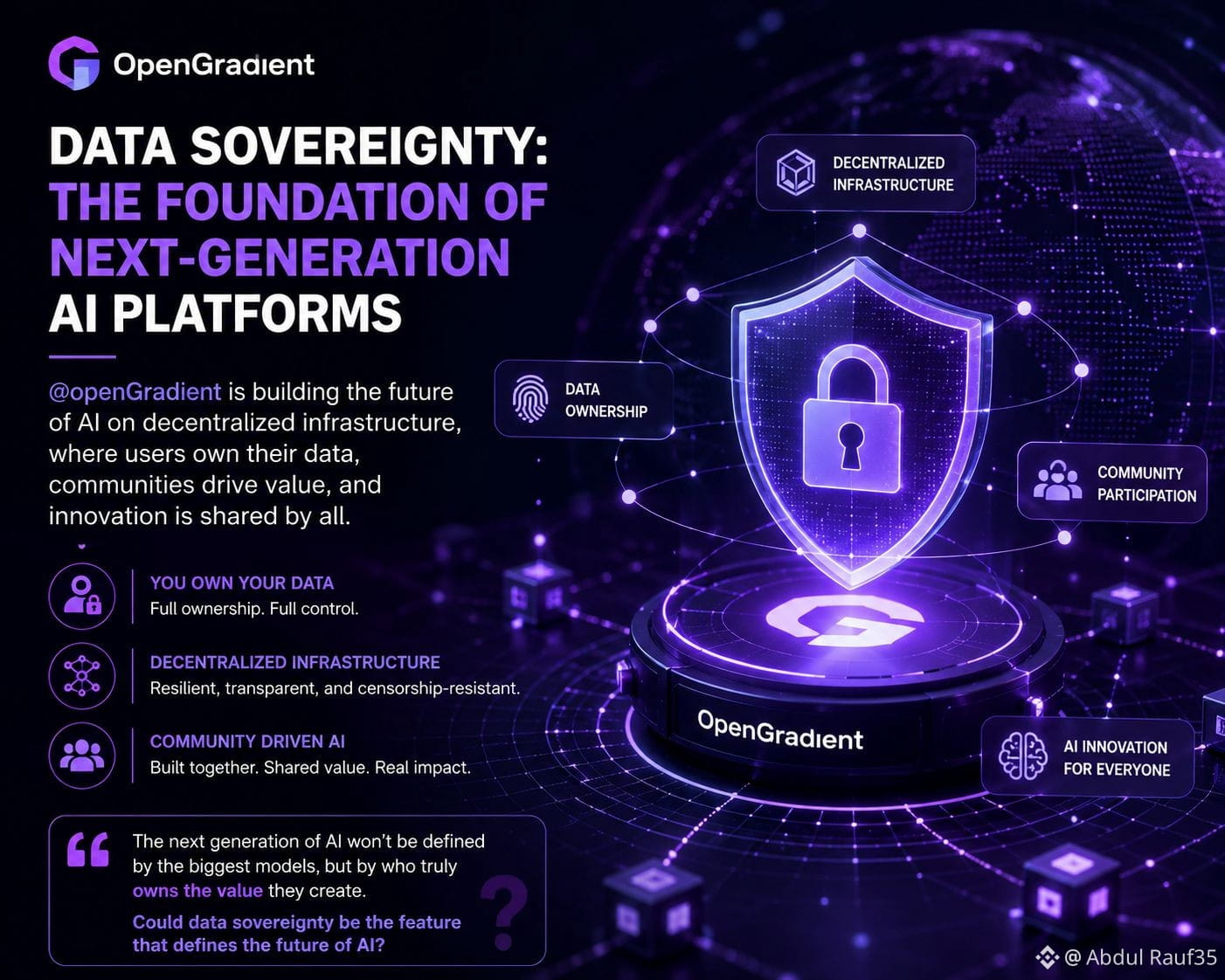
I've been thinking a lot about how AI evolves, and @openGradient stands out because it treats data sovereignty as a foundation rather than an afterthought. When users have greater ownership and verifiable control over their data, AI can become both more trustworthy and more collaborative.
To me, @openGradient shows how decentralized infrastructure and Web3 incentives can align innovation with community participation instead of relying only on centralized control. The next generation of AI may not be defined by the biggest models, but by who truly owns the value they create. Could data sovereignty become the feature that defines the future of AI?
#OpenGreadient $OPG @OpenGradient
#opg $OPG
I've been thinking a lot about how AI evolves, and @openGradient stands out because it treats data sovereignty as a foundation rather than an afterthought. When users have greater ownership and verifiable control over their data, AI can become both more trustworthy and more collaborative.
To me, @openGradient shows how decentralized infrastructure and Web3 incentives can align innovation with community participation instead of relying only on centralized control. The next generation of AI may not be defined by the biggest models, but by who truly owns the value they create. Could data sovereignty become the feature that defines the future of AI?
#OpenGreadient $OPG @OpenGradient
I've been thinking a lot about how AI evolves, and @openGradient stands out because it treats data sovereignty as a foundation rather than an afterthought. When users have greater ownership and verifiable control over their data, AI can become both more trustworthy and more collaborative.
To me, @openGradient shows how decentralized infrastructure and Web3 incentives can align innovation with community participation instead of relying only on centralized control. The next generation of AI may not be defined by the biggest models, but by who truly owns the value they create. Could data sovereignty become the feature that defines the future of AI?
#OpenGreadient $OPG @OpenGradient
4
2
101

·
--
Рост
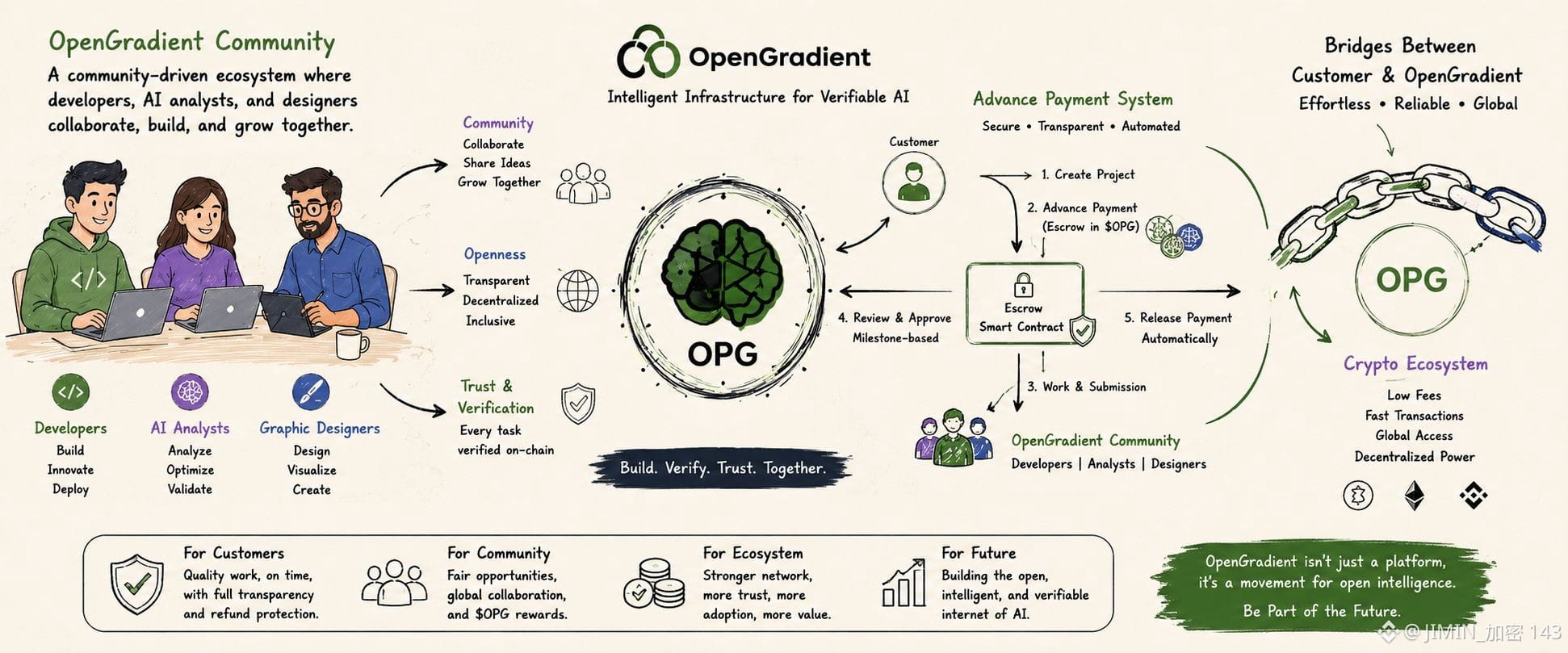
$OPG Artificial intelligence is gradually entering a phase where reliability matters as much as capability. Whether AI is used in research, finance, education, or digital applications, confidence in the underlying computation is becoming increasingly important. This shift is encouraging the development of infrastructure that focuses on transparency alongside performance.
An open gradient is contributing to this direction by building a decentralized environment where AI workloads can be executed with an emphasis on verification. Instead of depending entirely on centralized services, the network explores ways to help participants validate that computations were carried out as intended. This approach can strengthen trust between developers, application builders, infrastructure providers, and end users.
An open ecosystem also creates opportunities for broader collaboration.@OpenGradient Independent contributors can participate in supporting compute resources, developing applications, and expanding the network, helping reduce dependence on a single organization. As decentralized technologies continue to evolve, this model may encourage greater resilience while supporting innovation across multiple industries.
The future of AI is likely to be shaped not only by increasingly capable models but also by the systems that make those models trustworthy and transparent. Infrastructure designed around openness, verification, and accessibility could become an important foundation for next-generation applications. Open gradient represents an effort to explore that vision, supporting an ecosystem where confidence is built into the technology itself rather than relying solely on reputation or centralized control.
#opg $OPG #OpenGreadient @OpenGradient $OPG #opgblockchain
{spot}(OPGUSDT)
$OPG Artificial intelligence is gradually entering a phase where reliability matters as much as capability. Whether AI is used in research, finance, education, or digital applications, confidence in the underlying computation is becoming increasingly important. This shift is encouraging the development of infrastructure that focuses on transparency alongside performance.
An open gradient is contributing to this direction by building a decentralized environment where AI workloads can be executed with an emphasis on verification. Instead of depending entirely on centralized services, the network explores ways to help participants validate that computations were carried out as intended. This approach can strengthen trust between developers, application builders, infrastructure providers, and end users.
An open ecosystem also creates opportunities for broader collaboration.@OpenGradient Independent contributors can participate in supporting compute resources, developing applications, and expanding the network, helping reduce dependence on a single organization. As decentralized technologies continue to evolve, this model may encourage greater resilience while supporting innovation across multiple industries.
The future of AI is likely to be shaped not only by increasingly capable models but also by the systems that make those models trustworthy and transparent. Infrastructure designed around openness, verification, and accessibility could become an important foundation for next-generation applications. Open gradient represents an effort to explore that vision, supporting an ecosystem where confidence is built into the technology itself rather than relying solely on reputation or centralized control.
#opg $OPG #OpenGreadient @OpenGradient $OPG #opgblockchain
An open gradient is contributing to this direction by building a decentralized environment where AI workloads can be executed with an emphasis on verification. Instead of depending entirely on centralized services, the network explores ways to help participants validate that computations were carried out as intended. This approach can strengthen trust between developers, application builders, infrastructure providers, and end users.
An open ecosystem also creates opportunities for broader collaboration.@OpenGradient Independent contributors can participate in supporting compute resources, developing applications, and expanding the network, helping reduce dependence on a single organization. As decentralized technologies continue to evolve, this model may encourage greater resilience while supporting innovation across multiple industries.
The future of AI is likely to be shaped not only by increasingly capable models but also by the systems that make those models trustworthy and transparent. Infrastructure designed around openness, verification, and accessibility could become an important foundation for next-generation applications. Open gradient represents an effort to explore that vision, supporting an ecosystem where confidence is built into the technology itself rather than relying solely on reputation or centralized control.
#opg $OPG #OpenGreadient @OpenGradient $OPG #opgblockchain
55
25
553
·
--
$BTC $OPG @OpenGradient #OpenGreadient 我盯着手里的 OPG 已经半年了,想加仓跑验证节点,TEE 硬件门槛和技术成本够喝一壶;直接割肉吧,又怕错过 AI 推理赛道的爆发红利。这种"捏着筹码却上不了桌"的憋屈感,相信不少早期玩家都懂。而 @OpenGradient 推出的 OPG 委托质押,我亲自跑了一遍后,确实摸到了它想解决的核心痛点:让代币变成"活钱",而不是锁死在钱包里的数字砖头。
这次的委托机制不是随便塞个节点就完事。平台对验证者的准入结合了 TEE 硬件认证、历史证明准确率、在线时长、佣金率多重维度,不是单看谁质押量大谁就坐庄。这种设计能筛掉浑水摸鱼的节点,我自己挑验证者时,链上的证明提交频率和罚没记录一目了然,能看出团队在网络安全这层做了扎实的风控。
不过风险也清晰。要是 AI 推理的真实需求不及预期,链上调用量萎缩,大量委托的 OPG 集中解锁退出,势必增加短期流通量。别忘了生态池还有大量代币在长线释放,叠加质押解锁的抛压,价格波动风险是实打实悬在头顶的,每个委托人都该算清楚这笔账。
10% 的质押奖励池看似给持币者托底,线性释放的设计能稳住长期信心,避免踩踏出逃。但也容易让部分玩家放松警惕,觉得"有收益兜底"就忽略 AI 基础设施本身的高不确定性。我始终觉得,这类质押只是代币周转和网络安全工具,绝非稳赚不赔的储蓄罐。
在我看来,OpenGradient 这套设计是真正站在持币者和开发者两边做的优化,而非虚有其表的噱头。它既盘活了闲置代币的流动性,又让 OPG 在推理支付、模型变现、验证者激励上有了实际场景——200 万+次推理已经跑在链上,那是真实需求,不是 PPT 数字。即便存在解锁抛压的潜在风险,但只要理性把控委托比例,不押单一验证者,对玩家和整个网络都是实打实的正向优化。
$BTC $OPG @OpenGradient #OpenGreadient 我盯着手里的 OPG 已经半年了,想加仓跑验证节点,TEE 硬件门槛和技术成本够喝一壶;直接割肉吧,又怕错过 AI 推理赛道的爆发红利。这种"捏着筹码却上不了桌"的憋屈感,相信不少早期玩家都懂。而 @OpenGradient 推出的 OPG 委托质押,我亲自跑了一遍后,确实摸到了它想解决的核心痛点:让代币变成"活钱",而不是锁死在钱包里的数字砖头。
这次的委托机制不是随便塞个节点就完事。平台对验证者的准入结合了 TEE 硬件认证、历史证明准确率、在线时长、佣金率多重维度,不是单看谁质押量大谁就坐庄。这种设计能筛掉浑水摸鱼的节点,我自己挑验证者时,链上的证明提交频率和罚没记录一目了然,能看出团队在网络安全这层做了扎实的风控。
不过风险也清晰。要是 AI 推理的真实需求不及预期,链上调用量萎缩,大量委托的 OPG 集中解锁退出,势必增加短期流通量。别忘了生态池还有大量代币在长线释放,叠加质押解锁的抛压,价格波动风险是实打实悬在头顶的,每个委托人都该算清楚这笔账。
10% 的质押奖励池看似给持币者托底,线性释放的设计能稳住长期信心,避免踩踏出逃。但也容易让部分玩家放松警惕,觉得"有收益兜底"就忽略 AI 基础设施本身的高不确定性。我始终觉得,这类质押只是代币周转和网络安全工具,绝非稳赚不赔的储蓄罐。
在我看来,OpenGradient 这套设计是真正站在持币者和开发者两边做的优化,而非虚有其表的噱头。它既盘活了闲置代币的流动性,又让 OPG 在推理支付、模型变现、验证者激励上有了实际场景——200 万+次推理已经跑在链上,那是真实需求,不是 PPT 数字。即便存在解锁抛压的潜在风险,但只要理性把控委托比例,不押单一验证者,对玩家和整个网络都是实打实的正向优化。
这次的委托机制不是随便塞个节点就完事。平台对验证者的准入结合了 TEE 硬件认证、历史证明准确率、在线时长、佣金率多重维度,不是单看谁质押量大谁就坐庄。这种设计能筛掉浑水摸鱼的节点,我自己挑验证者时,链上的证明提交频率和罚没记录一目了然,能看出团队在网络安全这层做了扎实的风控。
不过风险也清晰。要是 AI 推理的真实需求不及预期,链上调用量萎缩,大量委托的 OPG 集中解锁退出,势必增加短期流通量。别忘了生态池还有大量代币在长线释放,叠加质押解锁的抛压,价格波动风险是实打实悬在头顶的,每个委托人都该算清楚这笔账。
10% 的质押奖励池看似给持币者托底,线性释放的设计能稳住长期信心,避免踩踏出逃。但也容易让部分玩家放松警惕,觉得"有收益兜底"就忽略 AI 基础设施本身的高不确定性。我始终觉得,这类质押只是代币周转和网络安全工具,绝非稳赚不赔的储蓄罐。
在我看来,OpenGradient 这套设计是真正站在持币者和开发者两边做的优化,而非虚有其表的噱头。它既盘活了闲置代币的流动性,又让 OPG 在推理支付、模型变现、验证者激励上有了实际场景——200 万+次推理已经跑在链上,那是真实需求,不是 PPT 数字。即便存在解锁抛压的潜在风险,但只要理性把控委托比例,不押单一验证者,对玩家和整个网络都是实打实的正向优化。
127

#opg $OPG
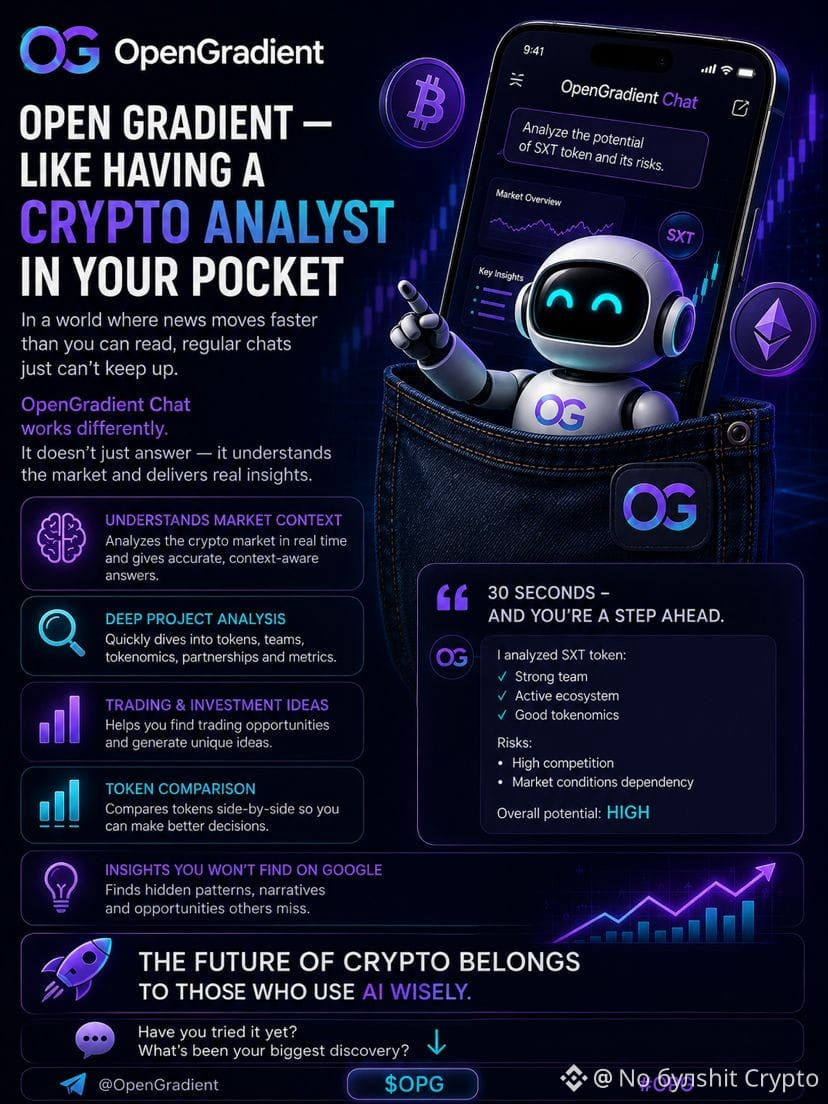
🤖 OpenGradient - це як кишеньковий криптоа-анвлітик
В сучасному світі, де новини зʼявляються швидше, ніж ти встигаєш їх прочитати, стандартні чати вже не встигають.
OpenGradient Chat працює інакше. Він не просто дає суху відповідь - він розуміє контекст ринку, швидко робить аналіз ринку, робить порівняння токенів та допомагає знаходити неочевидні інсайти.
Особливо круто, коли дуже швидко потрібно отримати думку по новому токену або перевірити, чи варта уваги якась ідея. Доя мене він як повноціний член команди.
Майбутнє крипти - хто використовує AI грамотно. OpenGradient займає лідерські позиції.
Вже пробували користуватися?
#OPG #OpenGreadient
{future}(OPGUSDT)
#opg $OPG
🤖 OpenGradient - це як кишеньковий криптоа-анвлітик
В сучасному світі, де новини зʼявляються швидше, ніж ти встигаєш їх прочитати, стандартні чати вже не встигають.
OpenGradient Chat працює інакше. Він не просто дає суху відповідь - він розуміє контекст ринку, швидко робить аналіз ринку, робить порівняння токенів та допомагає знаходити неочевидні інсайти.
Особливо круто, коли дуже швидко потрібно отримати думку по новому токену або перевірити, чи варта уваги якась ідея. Доя мене він як повноціний член команди.
Майбутнє крипти - хто використовує AI грамотно. OpenGradient займає лідерські позиції.
Вже пробували користуватися?
#OPG #OpenGreadient
🤖 OpenGradient - це як кишеньковий криптоа-анвлітик
В сучасному світі, де новини зʼявляються швидше, ніж ти встигаєш їх прочитати, стандартні чати вже не встигають.
OpenGradient Chat працює інакше. Він не просто дає суху відповідь - він розуміє контекст ринку, швидко робить аналіз ринку, робить порівняння токенів та допомагає знаходити неочевидні інсайти.
Особливо круто, коли дуже швидко потрібно отримати думку по новому токену або перевірити, чи варта уваги якась ідея. Доя мене він як повноціний член команди.
Майбутнє крипти - хто використовує AI грамотно. OpenGradient займає лідерські позиції.
Вже пробували користуватися?
#OPG #OpenGreadient
3
96

·
--
Рост
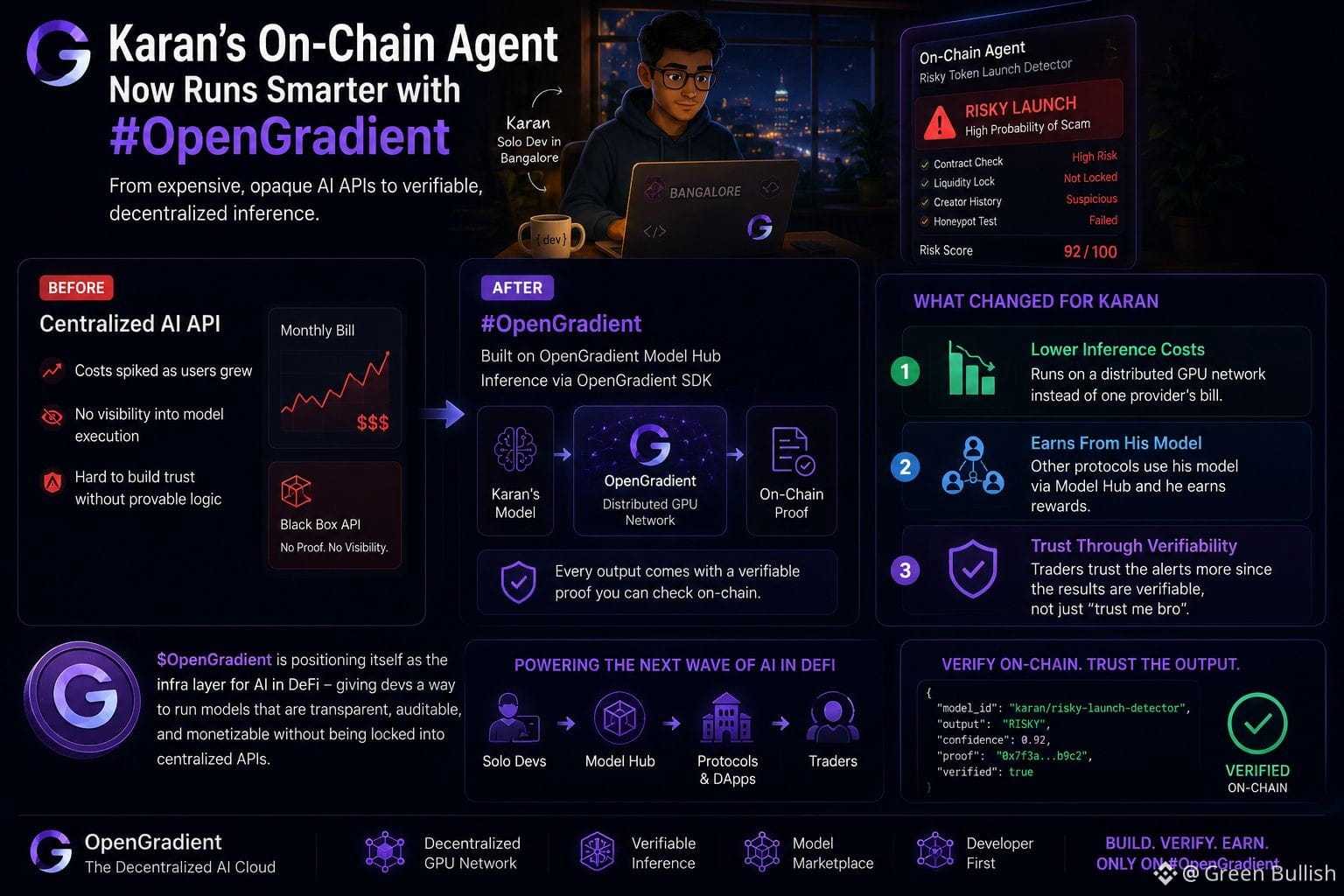
My friend Karan, a solo dev in Bangalore, was building an on-chain agent that flags risky token launches for traders.
He started with a centralized AI API. It was fine at first, but as soon as his agent got more users, the costs spiked and he had zero visibility into whether the model was actually running what he uploaded. Hard to build trust when you can’t prove it.
He switched to #OpenGreadient
He pushed his detection model to the Model Hub and runs inference through the SDK. Now every output comes with a proof you can check on-chain, so anyone using his agent can verify the logic wasn’t changed behind the scenes.
What changed for him
1. Inference costs dropped because it runs on a distributed GPU network instead of one provider’s bill.
2. Other protocols started pulling his model for their own dashboards and he earns rewards for it.
3. Traders trust the alerts more since the results are verifiable, not just “trust me bro”.
$OpenGradient is positioning itself as the infra layer for AI in DeFi - giving devs a way to run models that are transparent, auditable, and monetizable without being locked into centralized APIs. #opg $OPG
My friend Karan, a solo dev in Bangalore, was building an on-chain agent that flags risky token launches for traders.
He started with a centralized AI API. It was fine at first, but as soon as his agent got more users, the costs spiked and he had zero visibility into whether the model was actually running what he uploaded. Hard to build trust when you can’t prove it.
He switched to #OpenGreadient
He pushed his detection model to the Model Hub and runs inference through the SDK. Now every output comes with a proof you can check on-chain, so anyone using his agent can verify the logic wasn’t changed behind the scenes.
What changed for him
1. Inference costs dropped because it runs on a distributed GPU network instead of one provider’s bill.
2. Other protocols started pulling his model for their own dashboards and he earns rewards for it.
3. Traders trust the alerts more since the results are verifiable, not just “trust me bro”.
$OpenGradient is positioning itself as the infra layer for AI in DeFi - giving devs a way to run models that are transparent, auditable, and monetizable without being locked into centralized APIs. #opg $OPG
He started with a centralized AI API. It was fine at first, but as soon as his agent got more users, the costs spiked and he had zero visibility into whether the model was actually running what he uploaded. Hard to build trust when you can’t prove it.
He switched to #OpenGreadient
He pushed his detection model to the Model Hub and runs inference through the SDK. Now every output comes with a proof you can check on-chain, so anyone using his agent can verify the logic wasn’t changed behind the scenes.
What changed for him
1. Inference costs dropped because it runs on a distributed GPU network instead of one provider’s bill.
2. Other protocols started pulling his model for their own dashboards and he earns rewards for it.
3. Traders trust the alerts more since the results are verifiable, not just “trust me bro”.
$OpenGradient is positioning itself as the infra layer for AI in DeFi - giving devs a way to run models that are transparent, auditable, and monetizable without being locked into centralized APIs. #opg $OPG
77


·
--
Статья
Why OpenGradient Could Be the Next Blockchain Revolution, And Why GPU Miners Should Take NoteAfter diving deep into the technical architecture of OpenGradient, I’ve come to a striking realization: we are likely standing at the threshold of a major turning point for the entire blockchain industry.
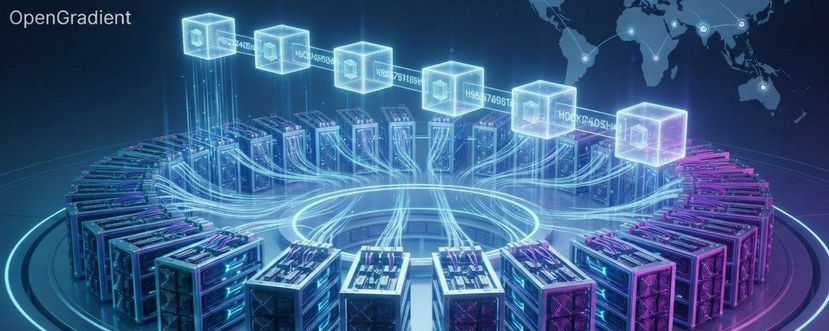
Most projects in this space focus on simple transactions or asset speculation. OpenGradient, however, is aiming for something far more foundational. They are building a decentralized, verifiable infrastructure for AI. By tackling the "black box" nature of artificial intelligence through Zero-Knowledge Machine Learning (zkML) and Trusted Execution Environments (TEEs), they are essentially trying to make AI honest, auditable, and transparent.
Why This Is a Paradigm Shift
If OpenGradient succeeds in its goals, we won't just see another dApp; we will witness a fundamental shift in how trust is constructed in the digital age. Imagine an internet where AI decision making whether in finance, law, or healthcare can be mathematically verified on the blockchain.
We are moving past the era of trust me and into the era of verify me. For anyone who believes in the true promise of Web3, this is the kind of breakthrough that makes the wait worthwhile.
A Call to Action for the GPU Mining Community
What I find most fascinating and perhaps the most overlooked aspect of this project is its alignment with the hardware community.
For a long time, GPU miners have been a backbone of the decentralized world. With the shift in consensus mechanisms for major chains, many of these powerful GPU farms have been searching for their next true utility. OpenGradient isn’t just a project that requires computational power; it is a project that needs the distributed hardware base that miners have spent years building.
If OpenGradient truly becomes the decentralized engine for AI inference, it presents a massive opportunity for GPU miners to pivot from traditional mining to providing the high-performance compute resources required for verifiable AI. Supporting this project isn't just about token price; it’s about repurposing one of the most powerful distributed networks in history to power the next generation of global intelligence.
My Take
I’m rarely this optimistic about a protocol's long-term vision, but OpenGradient feels different. The backing from heavyweights like a16z and NVIDIA speaks to the seriousness of their ambition. But for me, it’s about the convergence: when you align the need for verifiable AI with the vast, underutilized potential of global GPU power, you create a recipe for a massive, structural industry upgrade.
If this team delivers on their roadmap, we aren’t just looking at a crypto trend. We are looking at the essential infrastructure of the future. It’s a vision that deserves the support of the developer community, the investors, and crucially the GPU miners who have the hardware to make this dream a reality.
Does this version hit the right note for you, especially regarding the connection to the mining community?
@OpenGradient #OpenGreadient #OPG #miners $OPG
Why OpenGradient Could Be the Next Blockchain Revolution, And Why GPU Miners Should Take Note
After diving deep into the technical architecture of OpenGradient, I’ve come to a striking realization: we are likely standing at the threshold of a major turning point for the entire blockchain industry.
Most projects in this space focus on simple transactions or asset speculation. OpenGradient, however, is aiming for something far more foundational. They are building a decentralized, verifiable infrastructure for AI. By tackling the "black box" nature of artificial intelligence through Zero-Knowledge Machine Learning (zkML) and Trusted Execution Environments (TEEs), they are essentially trying to make AI honest, auditable, and transparent.
Why This Is a Paradigm Shift
If OpenGradient succeeds in its goals, we won't just see another dApp; we will witness a fundamental shift in how trust is constructed in the digital age. Imagine an internet where AI decision making whether in finance, law, or healthcare can be mathematically verified on the blockchain.
We are moving past the era of trust me and into the era of verify me. For anyone who believes in the true promise of Web3, this is the kind of breakthrough that makes the wait worthwhile.
A Call to Action for the GPU Mining Community
What I find most fascinating and perhaps the most overlooked aspect of this project is its alignment with the hardware community.
For a long time, GPU miners have been a backbone of the decentralized world. With the shift in consensus mechanisms for major chains, many of these powerful GPU farms have been searching for their next true utility. OpenGradient isn’t just a project that requires computational power; it is a project that needs the distributed hardware base that miners have spent years building.
If OpenGradient truly becomes the decentralized engine for AI inference, it presents a massive opportunity for GPU miners to pivot from traditional mining to providing the high-performance compute resources required for verifiable AI. Supporting this project isn't just about token price; it’s about repurposing one of the most powerful distributed networks in history to power the next generation of global intelligence.
My Take
I’m rarely this optimistic about a protocol's long-term vision, but OpenGradient feels different. The backing from heavyweights like a16z and NVIDIA speaks to the seriousness of their ambition. But for me, it’s about the convergence: when you align the need for verifiable AI with the vast, underutilized potential of global GPU power, you create a recipe for a massive, structural industry upgrade.
If this team delivers on their roadmap, we aren’t just looking at a crypto trend. We are looking at the essential infrastructure of the future. It’s a vision that deserves the support of the developer community, the investors, and crucially the GPU miners who have the hardware to make this dream a reality.
Does this version hit the right note for you, especially regarding the connection to the mining community?
@OpenGradient #OpenGreadient #OPG #miners $OPG
Most projects in this space focus on simple transactions or asset speculation. OpenGradient, however, is aiming for something far more foundational. They are building a decentralized, verifiable infrastructure for AI. By tackling the "black box" nature of artificial intelligence through Zero-Knowledge Machine Learning (zkML) and Trusted Execution Environments (TEEs), they are essentially trying to make AI honest, auditable, and transparent.
Why This Is a Paradigm Shift
If OpenGradient succeeds in its goals, we won't just see another dApp; we will witness a fundamental shift in how trust is constructed in the digital age. Imagine an internet where AI decision making whether in finance, law, or healthcare can be mathematically verified on the blockchain.
We are moving past the era of trust me and into the era of verify me. For anyone who believes in the true promise of Web3, this is the kind of breakthrough that makes the wait worthwhile.
A Call to Action for the GPU Mining Community
What I find most fascinating and perhaps the most overlooked aspect of this project is its alignment with the hardware community.
For a long time, GPU miners have been a backbone of the decentralized world. With the shift in consensus mechanisms for major chains, many of these powerful GPU farms have been searching for their next true utility. OpenGradient isn’t just a project that requires computational power; it is a project that needs the distributed hardware base that miners have spent years building.
If OpenGradient truly becomes the decentralized engine for AI inference, it presents a massive opportunity for GPU miners to pivot from traditional mining to providing the high-performance compute resources required for verifiable AI. Supporting this project isn't just about token price; it’s about repurposing one of the most powerful distributed networks in history to power the next generation of global intelligence.
My Take
I’m rarely this optimistic about a protocol's long-term vision, but OpenGradient feels different. The backing from heavyweights like a16z and NVIDIA speaks to the seriousness of their ambition. But for me, it’s about the convergence: when you align the need for verifiable AI with the vast, underutilized potential of global GPU power, you create a recipe for a massive, structural industry upgrade.
If this team delivers on their roadmap, we aren’t just looking at a crypto trend. We are looking at the essential infrastructure of the future. It’s a vision that deserves the support of the developer community, the investors, and crucially the GPU miners who have the hardware to make this dream a reality.
Does this version hit the right note for you, especially regarding the connection to the mining community?
@OpenGradient #OpenGreadient #OPG #miners $OPG
1
97

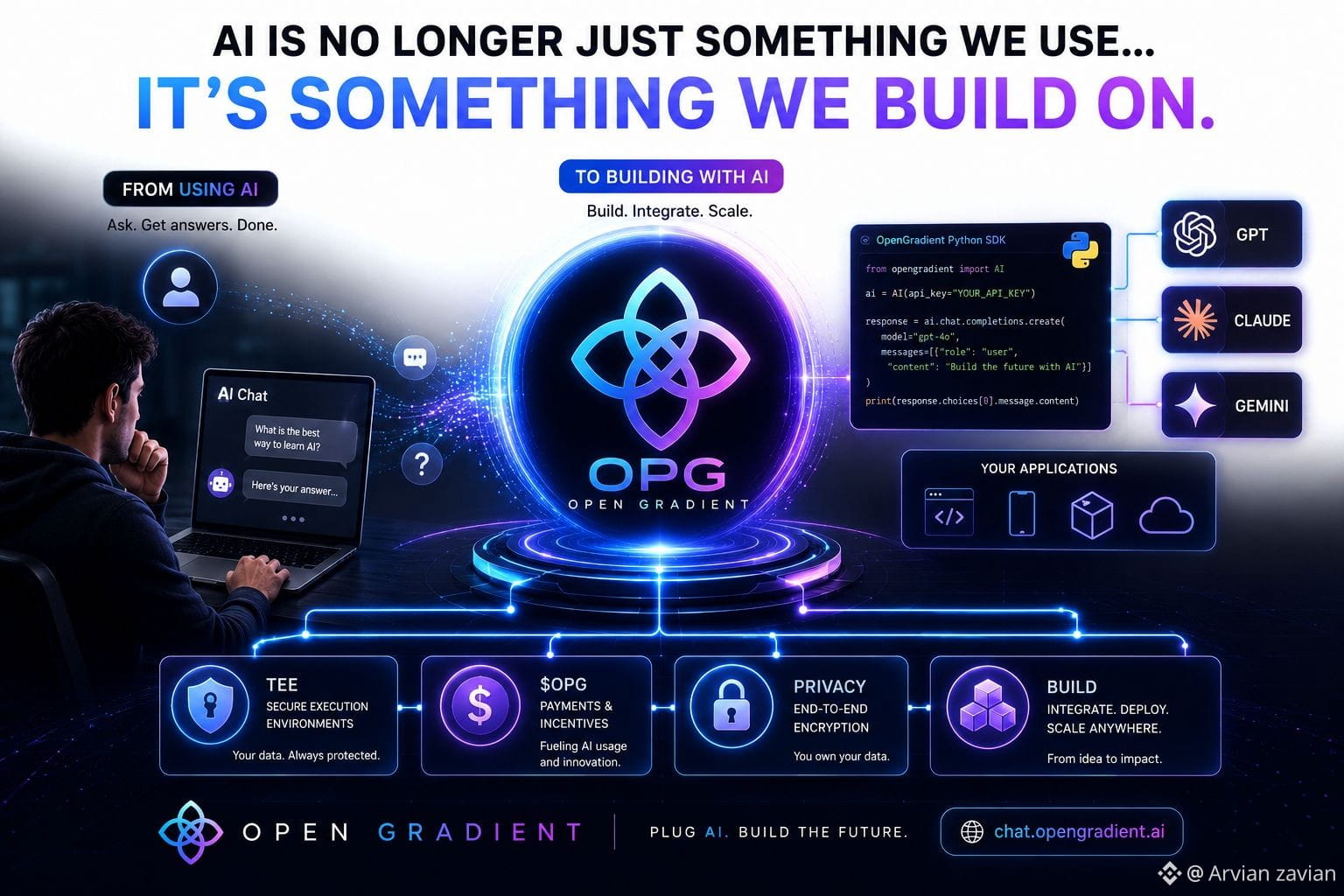
I used to think AI was just a simple chat tool where you ask questions and get answers instantly.
But when I looked into OpenGradient Python SDK, it changed how I see AI completely.
It’s not just about using AI anymore — developers can actually plug models like GPT, Claude, or Gemini directly into their own applications with simple code. So instead of just talking to AI, you can actually build with it.
What I find more interesting is how everything is getting connected. AI usage, payments through OPG, and privacy through secure execution environments like TEE are becoming part of one system.
It feels less like a single tool and more like a full infrastructure layer being built quietly in the background.
Maybe the bigger shift is this — AI is no longer just something we use… it’s something we build on.
Try it here: https://chat.opengradient.ai
@OpenGradient
#OpenGreadient
#OPG
$OPG
{spot}(OPGUSDT)
$SYN
{spot}(SYNUSDT)
$UB
{future}(UBUSDT)
I used to think AI was just a simple chat tool where you ask questions and get answers instantly.
But when I looked into OpenGradient Python SDK, it changed how I see AI completely.
It’s not just about using AI anymore — developers can actually plug models like GPT, Claude, or Gemini directly into their own applications with simple code. So instead of just talking to AI, you can actually build with it.
What I find more interesting is how everything is getting connected. AI usage, payments through OPG, and privacy through secure execution environments like TEE are becoming part of one system.
It feels less like a single tool and more like a full infrastructure layer being built quietly in the background.
Maybe the bigger shift is this — AI is no longer just something we use… it’s something we build on.
Try it here: https://chat.opengradient.ai
@OpenGradient
#OpenGreadient
#OPG
$OPG
$SYN
$UB
But when I looked into OpenGradient Python SDK, it changed how I see AI completely.
It’s not just about using AI anymore — developers can actually plug models like GPT, Claude, or Gemini directly into their own applications with simple code. So instead of just talking to AI, you can actually build with it.
What I find more interesting is how everything is getting connected. AI usage, payments through OPG, and privacy through secure execution environments like TEE are becoming part of one system.
It feels less like a single tool and more like a full infrastructure layer being built quietly in the background.
Maybe the bigger shift is this — AI is no longer just something we use… it’s something we build on.
Try it here: https://chat.opengradient.ai
@OpenGradient
#OpenGreadient
#OPG
$OPG
$SYN
$UB
123
55
1.2k

·
--
Рост
#OpenGreadient
$OPG
@OpenGradient
I’ve been playing around with OpenGradient Chat for the past couple of days, and honestly.
The architecture behind it is exactly what the AI space needs right now.
Most people are just looking at which LLM is faster or smarter, but nobody is talking about data privacy.
Every time you type a sensitive question or paste some proprietary code into standard AI tools. You are literally handing that data over to train their next model.
What @OpenGradient is doing with their chat platform is completely changing the game.
Instead of just trusting a corporate privacy policy.
They’ve built a system that uses TEEs (Trusted Execution Environments) and Oblivious HTTP so you can actually verify that your data isn't being logged or tied to your IP.
Plus, having ChatGPT, Claude, and Gemini all in a single workspace where you can switch mid-chat is incredibly convenient.
It's great to see a project focusing on the infrastructure layer of decentralized intelligence rather than just building another generic wrapper.
Definitely keeping a close eye on how the utility for $OPG expands as more developers tap into their verifiable compute network.
#OPG
$OPG
@OpenGradient
#OpenGreadient
$OPG
@OpenGradient
I’ve been playing around with OpenGradient Chat for the past couple of days, and honestly.
The architecture behind it is exactly what the AI space needs right now.
Most people are just looking at which LLM is faster or smarter, but nobody is talking about data privacy.
Every time you type a sensitive question or paste some proprietary code into standard AI tools. You are literally handing that data over to train their next model.
What @OpenGradient is doing with their chat platform is completely changing the game.
Instead of just trusting a corporate privacy policy.
They’ve built a system that uses TEEs (Trusted Execution Environments) and Oblivious HTTP so you can actually verify that your data isn't being logged or tied to your IP.
Plus, having ChatGPT, Claude, and Gemini all in a single workspace where you can switch mid-chat is incredibly convenient.
It's great to see a project focusing on the infrastructure layer of decentralized intelligence rather than just building another generic wrapper.
Definitely keeping a close eye on how the utility for $OPG expands as more developers tap into their verifiable compute network.
#OPG
$OPG
@OpenGradient
$OPG
@OpenGradient
I’ve been playing around with OpenGradient Chat for the past couple of days, and honestly.
The architecture behind it is exactly what the AI space needs right now.
Most people are just looking at which LLM is faster or smarter, but nobody is talking about data privacy.
Every time you type a sensitive question or paste some proprietary code into standard AI tools. You are literally handing that data over to train their next model.
What @OpenGradient is doing with their chat platform is completely changing the game.
Instead of just trusting a corporate privacy policy.
They’ve built a system that uses TEEs (Trusted Execution Environments) and Oblivious HTTP so you can actually verify that your data isn't being logged or tied to your IP.
Plus, having ChatGPT, Claude, and Gemini all in a single workspace where you can switch mid-chat is incredibly convenient.
It's great to see a project focusing on the infrastructure layer of decentralized intelligence rather than just building another generic wrapper.
Definitely keeping a close eye on how the utility for $OPG expands as more developers tap into their verifiable compute network.
#OPG
$OPG
@OpenGradient
74

·
--
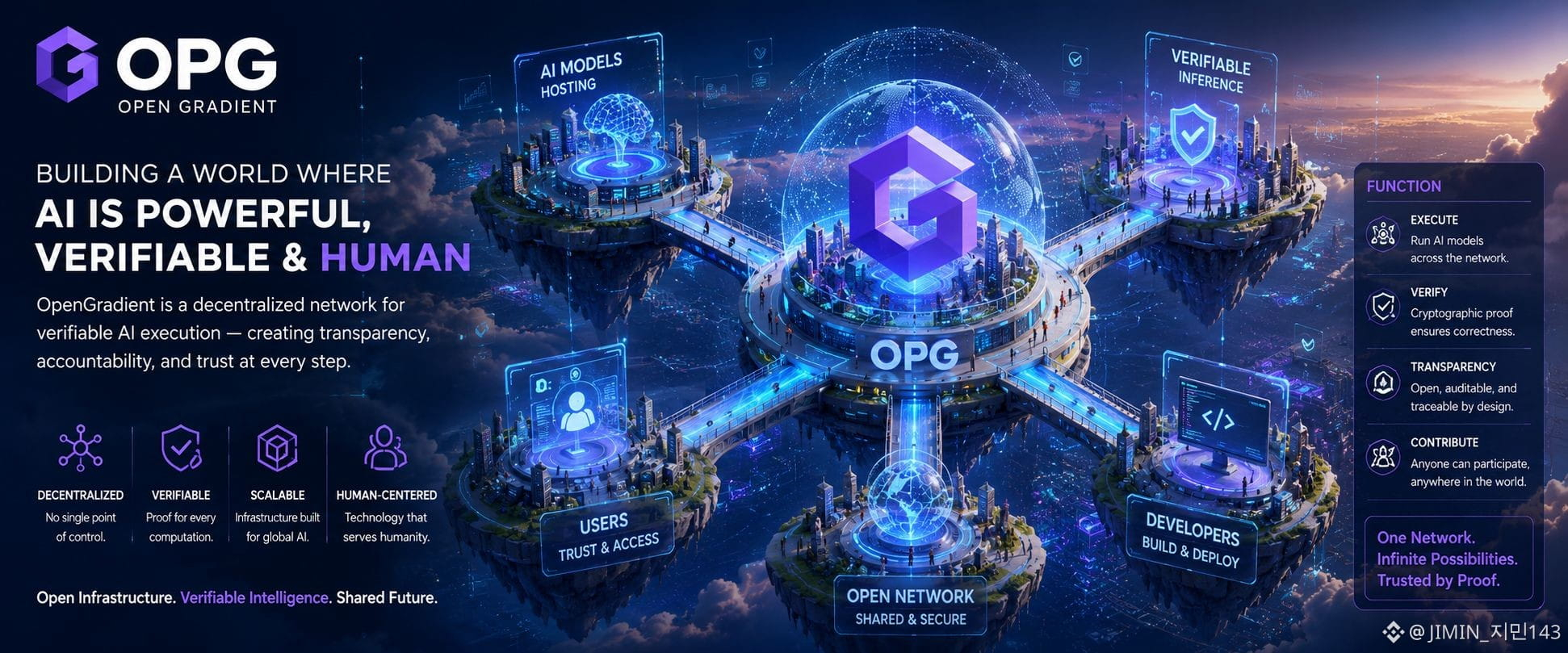
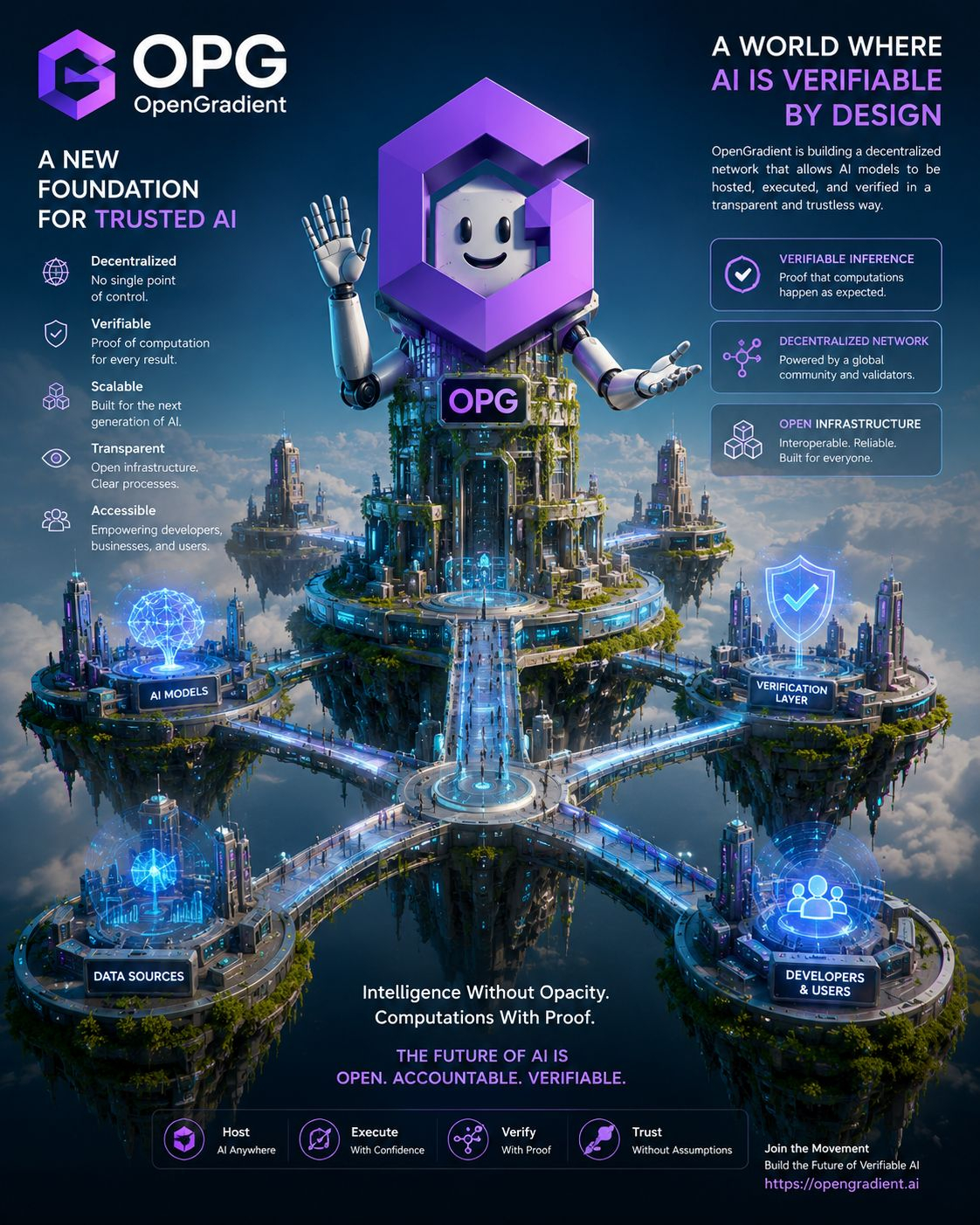
$OPG ,OpenGradient is building native on-chain AI inference, designed to deliver seamless and scalable inference secured by state-of-the-art cryptography. The OpenGradient Network is an EVM blockchain network that is a composable execution layer for on-chain AI. The network features access to scalable and secure model inference, allowing developers to seamlessly leverage AI models in composable smart contracts to create powerful decentralized applications and enable new use-cases.@OpenGradient #OpenGreadient .
$OPG ,OpenGradient is building native on-chain AI inference, designed to deliver seamless and scalable inference secured by state-of-the-art cryptography. The OpenGradient Network is an EVM blockchain network that is a composable execution layer for on-chain AI. The network features access to scalable and secure model inference, allowing developers to seamlessly leverage AI models in composable smart contracts to create powerful decentralized applications and enable new use-cases.@OpenGradient #OpenGreadient .
4
1
90
·
--
The conversation around artificial intelligence often focuses on model capabilities, benchmarks, and performance improvements. While these areas are important, Open gradient highlights another critical question: how can users verify that an AI system is functioning as intended? Rather than treating trust as an assumption, the project seeks to make it a measurable part of the AI experience.
The Open gradient is developing a decentralized network designed to support AI execution while providing mechanisms that help verify computational processes.$OPG This approach aims to reduce reliance on opaque systems and create greater transparency around how AI-generated outputs are produced. In a world where AI applications continue to expand, the ability to verify computations could become an increasingly valuable feature.
The project also represents a broader shift in thinking about AI infrastructure. Instead of concentrating solely on building more advanced models,@OpenGradient Open gradient focuses on creating the framework that allows intelligence to operate in an open, accountable, and scalable manner. This infrastructure-first perspective recognizes that trust, transparency, and accessibility are becoming essential components of AI adoption.
As organizations and individuals rely more heavily on machine intelligence, expectations around accountability will likely continue to grow. Open Gradient's vision suggests a future where AI systems can provide not only useful outputs but also confidence in the processes that generated them. If successful, this model could contribute to a more transparent and resilient AI ecosystem that balances innovation with trust.#opg $OPG #OpenGreadient $OPG
The conversation around artificial intelligence often focuses on model capabilities, benchmarks, and performance improvements. While these areas are important, Open gradient highlights another critical question: how can users verify that an AI system is functioning as intended? Rather than treating trust as an assumption, the project seeks to make it a measurable part of the AI experience.
The Open gradient is developing a decentralized network designed to support AI execution while providing mechanisms that help verify computational processes.$OPG This approach aims to reduce reliance on opaque systems and create greater transparency around how AI-generated outputs are produced. In a world where AI applications continue to expand, the ability to verify computations could become an increasingly valuable feature.
The project also represents a broader shift in thinking about AI infrastructure. Instead of concentrating solely on building more advanced models,@OpenGradient Open gradient focuses on creating the framework that allows intelligence to operate in an open, accountable, and scalable manner. This infrastructure-first perspective recognizes that trust, transparency, and accessibility are becoming essential components of AI adoption.
As organizations and individuals rely more heavily on machine intelligence, expectations around accountability will likely continue to grow. Open Gradient's vision suggests a future where AI systems can provide not only useful outputs but also confidence in the processes that generated them. If successful, this model could contribute to a more transparent and resilient AI ecosystem that balances innovation with trust.#opg $OPG #OpenGreadient $OPG
The Open gradient is developing a decentralized network designed to support AI execution while providing mechanisms that help verify computational processes.$OPG This approach aims to reduce reliance on opaque systems and create greater transparency around how AI-generated outputs are produced. In a world where AI applications continue to expand, the ability to verify computations could become an increasingly valuable feature.
The project also represents a broader shift in thinking about AI infrastructure. Instead of concentrating solely on building more advanced models,@OpenGradient Open gradient focuses on creating the framework that allows intelligence to operate in an open, accountable, and scalable manner. This infrastructure-first perspective recognizes that trust, transparency, and accessibility are becoming essential components of AI adoption.
As organizations and individuals rely more heavily on machine intelligence, expectations around accountability will likely continue to grow. Open Gradient's vision suggests a future where AI systems can provide not only useful outputs but also confidence in the processes that generated them. If successful, this model could contribute to a more transparent and resilient AI ecosystem that balances innovation with trust.#opg $OPG #OpenGreadient $OPG
78
30
487
·
--
Tell me about OpenGradient and NVIDIA
@OpenGradient
OpenGradient is a privacy-focused chat application that allows users to interact with AI models while protecting their identity and data. It uses several advanced technologies to ensure privacy:
Requests go through an OHTTP relay that removes the user's IP address before forwarding to a gateway running in an AWS Nitro Trusted Execution Environment (TEE). This means the relay sees the user's IP but not what they asked, while the gateway sees the prompt content but not the IP.
The gateway processes prompts in plaintext within sealed enclave memory that even the OpenGradient operator cannot access or log. Conversations are not persisted.
The model provider (in this case, NVIDIA) receives an anonymized request without any identifying user information. So while NVIDIA does see the prompt contents, they don't know who sent it.
Chat history is encrypted client-side in the user's browser and locked to a key stored only on their device. OpenGradient's servers never store conversation data.
Each response from the AI is#OpenGreadient cryptographically signed by the enclave, allowing users to verify its authenticity.$OPG .
Tell me about OpenGradient and NVIDIA
@OpenGradient
OpenGradient is a privacy-focused chat application that allows users to interact with AI models while protecting their identity and data. It uses several advanced technologies to ensure privacy:
Requests go through an OHTTP relay that removes the user's IP address before forwarding to a gateway running in an AWS Nitro Trusted Execution Environment (TEE). This means the relay sees the user's IP but not what they asked, while the gateway sees the prompt content but not the IP.
The gateway processes prompts in plaintext within sealed enclave memory that even the OpenGradient operator cannot access or log. Conversations are not persisted.
The model provider (in this case, NVIDIA) receives an anonymized request without any identifying user information. So while NVIDIA does see the prompt contents, they don't know who sent it.
Chat history is encrypted client-side in the user's browser and locked to a key stored only on their device. OpenGradient's servers never store conversation data.
Each response from the AI is#OpenGreadient cryptographically signed by the enclave, allowing users to verify its authenticity.$OPG .
@OpenGradient
OpenGradient is a privacy-focused chat application that allows users to interact with AI models while protecting their identity and data. It uses several advanced technologies to ensure privacy:
Requests go through an OHTTP relay that removes the user's IP address before forwarding to a gateway running in an AWS Nitro Trusted Execution Environment (TEE). This means the relay sees the user's IP but not what they asked, while the gateway sees the prompt content but not the IP.
The gateway processes prompts in plaintext within sealed enclave memory that even the OpenGradient operator cannot access or log. Conversations are not persisted.
The model provider (in this case, NVIDIA) receives an anonymized request without any identifying user information. So while NVIDIA does see the prompt contents, they don't know who sent it.
Chat history is encrypted client-side in the user's browser and locked to a key stored only on their device. OpenGradient's servers never store conversation data.
Each response from the AI is#OpenGreadient cryptographically signed by the enclave, allowing users to verify its authenticity.$OPG .

3
138

·
--
#opg $OPG
openGradient (OPG)is building the future of decentralised AI by combining blockchain technology with powerful AI solutions, the project aims to create an open and innovative ecosystem where developers and users can benefit from transparent and scalable AI infrastructure
#OpenGreadient
$OPG
{spot}(OPGUSDT)
#opg $OPG
openGradient (OPG)is building the future of decentralised AI by combining blockchain technology with powerful AI solutions, the project aims to create an open and innovative ecosystem where developers and users can benefit from transparent and scalable AI infrastructure
#OpenGreadient
$OPG
openGradient (OPG)is building the future of decentralised AI by combining blockchain technology with powerful AI solutions, the project aims to create an open and innovative ecosystem where developers and users can benefit from transparent and scalable AI infrastructure
#OpenGreadient
$OPG
1
95

#opg $OPG
To be honest, I was surprised when I dug into OpenGradient OPG. I’ve seen 50+ “AI x Web3” pitches this year and 49 of them still end with “and then we call an oracle”.
The real problem is simple. Today’s smart contracts are dumb. They can’t run a model. So every “AI dApp” outsources thinking off-chain, then drags the answer back on-chain with a proof. That’s not intelligence inside the chain. That’s intelligence standing next to it, waiting for a callback.
What OpenGradient actually does is different. It’s building a decentralized network designed to host, run, and verify AI models at scale. Not just store weights. Actually inference. The model runs as part of the network, and the output can be verified by other nodes.
Instead of forcing Solidity to do ML, they treat inference like a network service. Developers submit a task, the network routes it to nodes that can run it, and the result comes back with cryptographic verification. So you get trust without centralizing everything on one GPU cluster.
If models can live and run on-chain infrastructure, the whole game changes. Autonomous agents that actually reason before they transact. DeFi strategies that adapt to market conditions without a human in the loop. Gaming NPCs that aren’t just if-else scripts. Right now we’re missing that because verification is expensive and hosting is centralized.
My take after reading their research: They’re not wrapping OpenAI with a token. They’re attacking the root bottleneck - where does the compute happen and who verifies it. That’s the harder problem. Adoption is still unproven, sure. But at least they’re not pretending an API call is “on-chain AI”.
Question for you: If smart contracts could actually run and verify models natively, what’s the first app you’d build that’s impossible today?
@OpenGradient #OpenGreadient
#opg $OPG
To be honest, I was surprised when I dug into OpenGradient OPG. I’ve seen 50+ “AI x Web3” pitches this year and 49 of them still end with “and then we call an oracle”.
The real problem is simple. Today’s smart contracts are dumb. They can’t run a model. So every “AI dApp” outsources thinking off-chain, then drags the answer back on-chain with a proof. That’s not intelligence inside the chain. That’s intelligence standing next to it, waiting for a callback.
What OpenGradient actually does is different. It’s building a decentralized network designed to host, run, and verify AI models at scale. Not just store weights. Actually inference. The model runs as part of the network, and the output can be verified by other nodes.
Instead of forcing Solidity to do ML, they treat inference like a network service. Developers submit a task, the network routes it to nodes that can run it, and the result comes back with cryptographic verification. So you get trust without centralizing everything on one GPU cluster.
If models can live and run on-chain infrastructure, the whole game changes. Autonomous agents that actually reason before they transact. DeFi strategies that adapt to market conditions without a human in the loop. Gaming NPCs that aren’t just if-else scripts. Right now we’re missing that because verification is expensive and hosting is centralized.
My take after reading their research: They’re not wrapping OpenAI with a token. They’re attacking the root bottleneck - where does the compute happen and who verifies it. That’s the harder problem. Adoption is still unproven, sure. But at least they’re not pretending an API call is “on-chain AI”.
Question for you: If smart contracts could actually run and verify models natively, what’s the first app you’d build that’s impossible today?
@OpenGradient #OpenGreadient
To be honest, I was surprised when I dug into OpenGradient OPG. I’ve seen 50+ “AI x Web3” pitches this year and 49 of them still end with “and then we call an oracle”.
The real problem is simple. Today’s smart contracts are dumb. They can’t run a model. So every “AI dApp” outsources thinking off-chain, then drags the answer back on-chain with a proof. That’s not intelligence inside the chain. That’s intelligence standing next to it, waiting for a callback.
What OpenGradient actually does is different. It’s building a decentralized network designed to host, run, and verify AI models at scale. Not just store weights. Actually inference. The model runs as part of the network, and the output can be verified by other nodes.
Instead of forcing Solidity to do ML, they treat inference like a network service. Developers submit a task, the network routes it to nodes that can run it, and the result comes back with cryptographic verification. So you get trust without centralizing everything on one GPU cluster.
If models can live and run on-chain infrastructure, the whole game changes. Autonomous agents that actually reason before they transact. DeFi strategies that adapt to market conditions without a human in the loop. Gaming NPCs that aren’t just if-else scripts. Right now we’re missing that because verification is expensive and hosting is centralized.
My take after reading their research: They’re not wrapping OpenAI with a token. They’re attacking the root bottleneck - where does the compute happen and who verifies it. That’s the harder problem. Adoption is still unproven, sure. But at least they’re not pretending an API call is “on-chain AI”.
Question for you: If smart contracts could actually run and verify models natively, what’s the first app you’d build that’s impossible today?
@OpenGradient #OpenGreadient

8
7
279

·
--
你算过Gas费,却从没给"模型黑盒"记过账。
调过ChatGPT API的人心里都清楚,每发一次请求,表面扣几美分,实际还有一笔更难量化的成本:你不知道那台机器跑的是不是宣传版本,不知道你的prompt有没有被喂给下一代产品,更不知道那几秒钟里到底发生了什么。除了OpenAI的logo,你没有任何验证手段。
更隐蔽的损耗在后面。当追问推理透明度太麻烦,大脑会自动节能:算了,大厂总不会骗我吧。你以为只是懒了一次,实际上几个月下来,你对"智能"的定义就缩成了"我有订阅的那几个仪表盘"。这不是工具选型,是认知投降在无声收窄你的技术主权。
OpenGradient想插手的,就是这个被当成空气默认项的环节。你写合约或做分析,需要调用模型,不需要把数据押给加州公司的服务器,系统在链上把推理过程和权重来源摊开给你看。它要的不是省几美分API费,是把"我刚才到底信了什么"这个心理负担彻底划掉。
当然,透明从来不是免费的。自己跑本地模型的人,用硬件成本换主权——能手动核对激活值的人,握着一层额外的否决权。OpenGradient替你链上验证,意味着这层否决权也被外包了。它验证对了你省心力,某天验证网络被攻破,"可证明"标签也可能变废纸。
这不是开源派和商用派谁更优越的问题,而是一个比以前任何时候都更赤裸的交换条件:你愿不愿意为了"不再追问模型背后到底是什么",让渡一部分你从未真正行使、却一直假装拥有的审查权。OPG没有替你画押,只是把这张弃权声明书第一次用你能看懂的字号印在了你面前。#OpenGreadient OPG @OpenGradient
#opg $OPG
你算过Gas费,却从没给"模型黑盒"记过账。
调过ChatGPT API的人心里都清楚,每发一次请求,表面扣几美分,实际还有一笔更难量化的成本:你不知道那台机器跑的是不是宣传版本,不知道你的prompt有没有被喂给下一代产品,更不知道那几秒钟里到底发生了什么。除了OpenAI的logo,你没有任何验证手段。
更隐蔽的损耗在后面。当追问推理透明度太麻烦,大脑会自动节能:算了,大厂总不会骗我吧。你以为只是懒了一次,实际上几个月下来,你对"智能"的定义就缩成了"我有订阅的那几个仪表盘"。这不是工具选型,是认知投降在无声收窄你的技术主权。
OpenGradient想插手的,就是这个被当成空气默认项的环节。你写合约或做分析,需要调用模型,不需要把数据押给加州公司的服务器,系统在链上把推理过程和权重来源摊开给你看。它要的不是省几美分API费,是把"我刚才到底信了什么"这个心理负担彻底划掉。
当然,透明从来不是免费的。自己跑本地模型的人,用硬件成本换主权——能手动核对激活值的人,握着一层额外的否决权。OpenGradient替你链上验证,意味着这层否决权也被外包了。它验证对了你省心力,某天验证网络被攻破,"可证明"标签也可能变废纸。
这不是开源派和商用派谁更优越的问题,而是一个比以前任何时候都更赤裸的交换条件:你愿不愿意为了"不再追问模型背后到底是什么",让渡一部分你从未真正行使、却一直假装拥有的审查权。OPG没有替你画押,只是把这张弃权声明书第一次用你能看懂的字号印在了你面前。#OpenGreadient OPG @OpenGradient
#opg $OPG
调过ChatGPT API的人心里都清楚,每发一次请求,表面扣几美分,实际还有一笔更难量化的成本:你不知道那台机器跑的是不是宣传版本,不知道你的prompt有没有被喂给下一代产品,更不知道那几秒钟里到底发生了什么。除了OpenAI的logo,你没有任何验证手段。
更隐蔽的损耗在后面。当追问推理透明度太麻烦,大脑会自动节能:算了,大厂总不会骗我吧。你以为只是懒了一次,实际上几个月下来,你对"智能"的定义就缩成了"我有订阅的那几个仪表盘"。这不是工具选型,是认知投降在无声收窄你的技术主权。
OpenGradient想插手的,就是这个被当成空气默认项的环节。你写合约或做分析,需要调用模型,不需要把数据押给加州公司的服务器,系统在链上把推理过程和权重来源摊开给你看。它要的不是省几美分API费,是把"我刚才到底信了什么"这个心理负担彻底划掉。
当然,透明从来不是免费的。自己跑本地模型的人,用硬件成本换主权——能手动核对激活值的人,握着一层额外的否决权。OpenGradient替你链上验证,意味着这层否决权也被外包了。它验证对了你省心力,某天验证网络被攻破,"可证明"标签也可能变废纸。
这不是开源派和商用派谁更优越的问题,而是一个比以前任何时候都更赤裸的交换条件:你愿不愿意为了"不再追问模型背后到底是什么",让渡一部分你从未真正行使、却一直假装拥有的审查权。OPG没有替你画押,只是把这张弃权声明书第一次用你能看懂的字号印在了你面前。#OpenGreadient OPG @OpenGradient
#opg $OPG
91


Статья
OPG$OPG
{future}(OPGUSDT)
I’ll be honest—I’m exhausted. Not from the charts. Not from the volatility. Not even from watching people draw 47 trendlines on the same candle.
I’m exhausted from pretending that AI outputs are somehow “trustworthy” just because they arrive in a confident tone. 😏
Think about it. We obsess over verifying oracles, validating signatures, and auditing smart contracts down to the last line of code. Yet when an AI gives us a complex answer, we basically shrug and say, “Looks smart enough.”
The process goes something like this:
🤖 Send prompt.
🤖 Receive answer.
🤖 Pray.
That’s not verification. That’s gambling with better branding.
It’s like ordering a mystery meal in complete darkness and only turning on the lights after you’ve already swallowed. Sure, it might be fine. Or it might explain why your stomach is making blockchain noises.
And somehow we’ve normalized this.
We’ve built systems that move capital based on sentiment scores generated by a single model. We ignore hallucinations because speed is alpha. We celebrate automation while quietly accepting that nobody can fully explain how the conclusion was reached.
Then along comes OpenGradient, essentially saying, “What if we actually proved the inference happened the way we claim it did?”
Crazy concept, I know.
The promise isn’t just AI. It’s verifiable AI. Every inference cryptographically anchored instead of wrapped in a blanket of trust-me-bro economics.
And then there’s persistent context.
Most AI systems treat every conversation like a first date. No memory. No continuity. No accountability.
OpenGradient wants models that remember prior reasoning, validate it against new information, and produce outputs that come with their own audit trail—as if every answer arrives carrying a notarized birth certificate. 📜😂
Now here’s the uncomfortable part.
If every inference becomes verifiable, we lose our favorite excuse.
No more blaming the oracle.
No more blaming the model.
No more blaming the black box.
At some point, the only thing left to question is our own judgment.
And honestly? That’s far more terrifying than any hallucinating AI.
Because a transparent mirror doesn’t just reveal the machine.
It reveals the person staring into it. 🪞
#OpenGreadient
OPG
$OPG
I’ll be honest—I’m exhausted. Not from the charts. Not from the volatility. Not even from watching people draw 47 trendlines on the same candle.
I’m exhausted from pretending that AI outputs are somehow “trustworthy” just because they arrive in a confident tone. 😏
Think about it. We obsess over verifying oracles, validating signatures, and auditing smart contracts down to the last line of code. Yet when an AI gives us a complex answer, we basically shrug and say, “Looks smart enough.”
The process goes something like this:
🤖 Send prompt.
🤖 Receive answer.
🤖 Pray.
That’s not verification. That’s gambling with better branding.
It’s like ordering a mystery meal in complete darkness and only turning on the lights after you’ve already swallowed. Sure, it might be fine. Or it might explain why your stomach is making blockchain noises.
And somehow we’ve normalized this.
We’ve built systems that move capital based on sentiment scores generated by a single model. We ignore hallucinations because speed is alpha. We celebrate automation while quietly accepting that nobody can fully explain how the conclusion was reached.
Then along comes OpenGradient, essentially saying, “What if we actually proved the inference happened the way we claim it did?”
Crazy concept, I know.
The promise isn’t just AI. It’s verifiable AI. Every inference cryptographically anchored instead of wrapped in a blanket of trust-me-bro economics.
And then there’s persistent context.
Most AI systems treat every conversation like a first date. No memory. No continuity. No accountability.
OpenGradient wants models that remember prior reasoning, validate it against new information, and produce outputs that come with their own audit trail—as if every answer arrives carrying a notarized birth certificate. 📜😂
Now here’s the uncomfortable part.
If every inference becomes verifiable, we lose our favorite excuse.
No more blaming the oracle.
No more blaming the model.
No more blaming the black box.
At some point, the only thing left to question is our own judgment.
And honestly? That’s far more terrifying than any hallucinating AI.
Because a transparent mirror doesn’t just reveal the machine.
It reveals the person staring into it. 🪞
#OpenGreadient
I’ll be honest—I’m exhausted. Not from the charts. Not from the volatility. Not even from watching people draw 47 trendlines on the same candle.
I’m exhausted from pretending that AI outputs are somehow “trustworthy” just because they arrive in a confident tone. 😏
Think about it. We obsess over verifying oracles, validating signatures, and auditing smart contracts down to the last line of code. Yet when an AI gives us a complex answer, we basically shrug and say, “Looks smart enough.”
The process goes something like this:
🤖 Send prompt.
🤖 Receive answer.
🤖 Pray.
That’s not verification. That’s gambling with better branding.
It’s like ordering a mystery meal in complete darkness and only turning on the lights after you’ve already swallowed. Sure, it might be fine. Or it might explain why your stomach is making blockchain noises.
And somehow we’ve normalized this.
We’ve built systems that move capital based on sentiment scores generated by a single model. We ignore hallucinations because speed is alpha. We celebrate automation while quietly accepting that nobody can fully explain how the conclusion was reached.
Then along comes OpenGradient, essentially saying, “What if we actually proved the inference happened the way we claim it did?”
Crazy concept, I know.
The promise isn’t just AI. It’s verifiable AI. Every inference cryptographically anchored instead of wrapped in a blanket of trust-me-bro economics.
And then there’s persistent context.
Most AI systems treat every conversation like a first date. No memory. No continuity. No accountability.
OpenGradient wants models that remember prior reasoning, validate it against new information, and produce outputs that come with their own audit trail—as if every answer arrives carrying a notarized birth certificate. 📜😂
Now here’s the uncomfortable part.
If every inference becomes verifiable, we lose our favorite excuse.
No more blaming the oracle.
No more blaming the model.
No more blaming the black box.
At some point, the only thing left to question is our own judgment.
And honestly? That’s far more terrifying than any hallucinating AI.
Because a transparent mirror doesn’t just reveal the machine.
It reveals the person staring into it. 🪞
#OpenGreadient
53

·
--
#opg $OPG
جربت OpenGradient Chat اليوم على بينانس سكوير الذكاء الاصطناعي تبعهم سريع ويفهم الأسئلة التقنية كويس. مشروع $OPG شكله قوي بالمستقبل والـ #OPG نقاطهم محفزة للاستمرار. @OpenGradient شكراً على التحديثات اليومية .
#OpenGreadient
#OPG
#opg $OPG
جربت OpenGradient Chat اليوم على بينانس سكوير الذكاء الاصطناعي تبعهم سريع ويفهم الأسئلة التقنية كويس. مشروع $OPG شكله قوي بالمستقبل والـ #OPG نقاطهم محفزة للاستمرار. @OpenGradient شكراً على التحديثات اليومية .
#OpenGreadient
#OPG
جربت OpenGradient Chat اليوم على بينانس سكوير الذكاء الاصطناعي تبعهم سريع ويفهم الأسئلة التقنية كويس. مشروع $OPG شكله قوي بالمستقبل والـ #OPG نقاطهم محفزة للاستمرار. @OpenGradient شكراً على التحديثات اليومية .
#OpenGreadient
#OPG
21

#opg $OPG
يواصل مشروع OpenGradient ترسيخ مكانته كأحد أبرز مشاريع البنية التحتية للذكاء الاصطناعي اللامركزي حيث يوفر شبكة متخصصة لتشغيل نماذج الذكاء الاصطناعي والتحقق من نتائجها بشكل شفاف وقابل للتدقيق عبر البلوكيشين تابع اخر الاخبار والتحديثات والتطورات @OpenGradient بالرمز المميز OPG$
#OpenGreadient
#opg $OPG
يواصل مشروع OpenGradient ترسيخ مكانته كأحد أبرز مشاريع البنية التحتية للذكاء الاصطناعي اللامركزي حيث يوفر شبكة متخصصة لتشغيل نماذج الذكاء الاصطناعي والتحقق من نتائجها بشكل شفاف وقابل للتدقيق عبر البلوكيشين تابع اخر الاخبار والتحديثات والتطورات @OpenGradient بالرمز المميز OPG$
#OpenGreadient
يواصل مشروع OpenGradient ترسيخ مكانته كأحد أبرز مشاريع البنية التحتية للذكاء الاصطناعي اللامركزي حيث يوفر شبكة متخصصة لتشغيل نماذج الذكاء الاصطناعي والتحقق من نتائجها بشكل شفاف وقابل للتدقيق عبر البلوكيشين تابع اخر الاخبار والتحديثات والتطورات @OpenGradient بالرمز المميز OPG$
#OpenGreadient
17

·
--
#opg $OPG #opg $OPG 🚀 Bullish Scenario
OPG is positioned in the fast-growing AI + Blockchain sector, focusing on verifiable AI inference.
Token utility includes AI inference payments, staking, validator rewards, and governance, giving it real ecosystem use cases.
#OPG
#OpenGreadient
{future}(OPGUSDT)
#opg $OPG #opg $OPG 🚀 Bullish Scenario
OPG is positioned in the fast-growing AI + Blockchain sector, focusing on verifiable AI inference.
Token utility includes AI inference payments, staking, validator rewards, and governance, giving it real ecosystem use cases.
#OPG
#OpenGreadient
OPG is positioned in the fast-growing AI + Blockchain sector, focusing on verifiable AI inference.
Token utility includes AI inference payments, staking, validator rewards, and governance, giving it real ecosystem use cases.
#OPG
#OpenGreadient
90
Войдите, чтобы посмотреть больше материала
Присоединяйтесь к пользователям криптовалют по всему миру на Binance Square
⚡️ Получайте новейшую и полезную информацию о криптоактивах.
💬 Нам доверяет крупнейшая в мире криптобиржа.
👍 Получите достоверные аналитические данные от верифицированных создателей контента.
Эл. почта/номер телефона
В тренде
1
#FedRateWatch
Просмотров: 1.2M
5,642 обсуждают
2
#ZcashRises6%
Просмотров: 9,169
199 обсуждают
3
#XRPSinks10%
Просмотров: 5,093
133 обсуждают
4
#BitcoinETFsShed$450M
Просмотров: 835
33 обсуждают
5
#CircleOpensArcMainnet
Просмотров: 3,286
81 обсуждают
6
#ZcashHoldersBackNU7Upgrade
Просмотров: 12,002
248 обсуждают
7
#MSTRTradingVolumeSurpassesMorganStanley
Просмотров: 14,634
438 обсуждают
8
#BitcoinFalls4%
Просмотров: 32,516
731 обсуждают
9
#SKHynixInTalksToMakeMemoryChipsInUS
Просмотров: 14,832
299 обсуждают
10
#OpenAIDiscussesNewFundingAt$1.2TValuation
Просмотров: 3,443
49 обсуждают