
#keelinfrastructure
keelinfrastructure
Просмотров: 210
7 обсуждают
Популярные
Новые

Статья
Keel Infrastructure liquida su reserva de Bitcoin y apuesta todo a la IAAnálisis basado en los resultados del tercer trimestre de 2026 de la antigua Bitfarms
Keel Infrastructure, la minera que cotiza en Nasdaq y que hasta hace poco se llamaba Bitfarms, ha dejado de acumular Bitcoin. En el trimestre cerrado el 30 de septiembre vendió 2,520 BTC: toda su reserva (2,261 BTC) más 259 monedas recién minadas. La operación le dejó unos 192 millones de dólares en caja.
Los números de la venta
El precio medio de venta rondó los 76,200 dólares por BTC. La compañía asegura que vendió "en periodos de fortaleza", pero su estado de resultados refleja una pérdida realizada de 32 millones de dólares, lo que sugiere que parte de esas monedas se había adquirido o valorado a precios superiores.
A partir de ahora, la política es vender a diario lo que se mine en sus instalaciones de Quebec. Con una producción cercana a tres BTC por día, hablamos de ventas pequeñas en términos de mercado. Lo relevante no es el volumen, sino el cambio de estrategia: Keel renuncia a usar Bitcoin como activo de tesorería.
¿Sigue siendo una acción ligada a Bitcoin?
Solo en parte. Al no mantener reservas, la empresa elimina el riesgo de ver su balance oscilar con el precio de la moneda. Pero su propio informe trimestral advierte que la volatilidad de Bitcoin seguirá afectando sus resultados, porque la minería continúa siendo una de sus pocas fuentes de ingresos actuales. En otras palabras: Keel ya no posee$BTC, pero aún vive de él hasta que lleguen los clientes de inteligencia artificial.
Para el accionista, esto tiene una consecuencia directa: desaparece la tesis de "acción proxy de Bitcoin" que atraía a parte del mercado. El título cayó 9.5% hasta 1.90 dólares el jueves y acumula una baja cercana a 18% en cinco días.
El giro hacia los centros de datos de IA
La razón del cambio es el destino del dinero. Keel está reconvirtiendo sus sitios con acceso a energía en centros de datos de computación de alto rendimiento (HPC), el tipo de infraestructura que demanda la IA. Las obras comenzaron en septiembre en Moses Lake, Washington, y los primeros ingresos de HPC se esperan en 2027.
No está sola. Riot Platforms vendió 79% de su Bitcoin en el mismo periodo para financiar centros de datos de IA en Texas, y la tendencia sectorial apunta a que los mineros se convierten en vendedores netos de las monedas que producen.
Liquidez sólida, pero con riesgos
El director financiero, Jonathan Mir, afirmó que la compañía cuenta con unos 780 millones de dólares en liquidez y que no necesita deuda ni emisión de acciones antes de firmar un contrato de arrendamiento. Aun así, el balance muestra una deuda a largo plazo de 1,020 millones de dólares, y los ingresos cayeron 59% hasta 28 millones.
El CEO, Ben Gagnon, indicó que varios candidatos solventes negocian en tres sitios, con horizonte de corto plazo, pero todavía no hay ningún contrato firmado. Ese es el punto crítico de la tesis. Entre los riesgos que la empresa enumera figuran una orden ejecutiva de Pensilvania sobre centros de datos y la oposición local a este tipo de proyectos.
Qué vigilar
• Primer contrato de arrendamiento: es el catalizador que validaría el giro a HPC.
• Calendario de obras en Moses Lake: cualquier retraso afecta los ingresos previstos para 2027.
• Evolución de los ingresos por minería: seguirán dependiendo del precio de Bitcoin mientras no haya clientes de IA.
• Carga de deuda frente a liquidez: 780 millones en caja contra 1,020 millones de deuda a largo plazo.
• Entorno regulatorio y social alrededor de los centros de datos.
Conclusión
Keel ha convertido una reserva de Bitcoin en munición para una apuesta de largo plazo en infraestructura de IA. Es una transición coherente con la del sector, pero deja a la empresa en un punto intermedio incómodo: sin el respaldo de una reserva cripto y sin ingresos de IA todavía. Hasta que se firme el primer contrato, la acción dependerá de la confianza del mercado en la ejecución.
Este artículo es informativo y no constituye asesoría financiera.
#BTC #KeelInfrastructure
Keel Infrastructure liquida su reserva de Bitcoin y apuesta todo a la IA
Análisis basado en los resultados del tercer trimestre de 2026 de la antigua Bitfarms
Keel Infrastructure, la minera que cotiza en Nasdaq y que hasta hace poco se llamaba Bitfarms, ha dejado de acumular Bitcoin. En el trimestre cerrado el 30 de septiembre vendió 2,520 BTC: toda su reserva (2,261 BTC) más 259 monedas recién minadas. La operación le dejó unos 192 millones de dólares en caja.
Los números de la venta
El precio medio de venta rondó los 76,200 dólares por BTC. La compañía asegura que vendió "en periodos de fortaleza", pero su estado de resultados refleja una pérdida realizada de 32 millones de dólares, lo que sugiere que parte de esas monedas se había adquirido o valorado a precios superiores.
A partir de ahora, la política es vender a diario lo que se mine en sus instalaciones de Quebec. Con una producción cercana a tres BTC por día, hablamos de ventas pequeñas en términos de mercado. Lo relevante no es el volumen, sino el cambio de estrategia: Keel renuncia a usar Bitcoin como activo de tesorería.
¿Sigue siendo una acción ligada a Bitcoin?
Solo en parte. Al no mantener reservas, la empresa elimina el riesgo de ver su balance oscilar con el precio de la moneda. Pero su propio informe trimestral advierte que la volatilidad de Bitcoin seguirá afectando sus resultados, porque la minería continúa siendo una de sus pocas fuentes de ingresos actuales. En otras palabras: Keel ya no posee$BTC, pero aún vive de él hasta que lleguen los clientes de inteligencia artificial.
Para el accionista, esto tiene una consecuencia directa: desaparece la tesis de "acción proxy de Bitcoin" que atraía a parte del mercado. El título cayó 9.5% hasta 1.90 dólares el jueves y acumula una baja cercana a 18% en cinco días.
El giro hacia los centros de datos de IA
La razón del cambio es el destino del dinero. Keel está reconvirtiendo sus sitios con acceso a energía en centros de datos de computación de alto rendimiento (HPC), el tipo de infraestructura que demanda la IA. Las obras comenzaron en septiembre en Moses Lake, Washington, y los primeros ingresos de HPC se esperan en 2027.
No está sola. Riot Platforms vendió 79% de su Bitcoin en el mismo periodo para financiar centros de datos de IA en Texas, y la tendencia sectorial apunta a que los mineros se convierten en vendedores netos de las monedas que producen.
Liquidez sólida, pero con riesgos
El director financiero, Jonathan Mir, afirmó que la compañía cuenta con unos 780 millones de dólares en liquidez y que no necesita deuda ni emisión de acciones antes de firmar un contrato de arrendamiento. Aun así, el balance muestra una deuda a largo plazo de 1,020 millones de dólares, y los ingresos cayeron 59% hasta 28 millones.
El CEO, Ben Gagnon, indicó que varios candidatos solventes negocian en tres sitios, con horizonte de corto plazo, pero todavía no hay ningún contrato firmado. Ese es el punto crítico de la tesis. Entre los riesgos que la empresa enumera figuran una orden ejecutiva de Pensilvania sobre centros de datos y la oposición local a este tipo de proyectos.
Qué vigilar
• Primer contrato de arrendamiento: es el catalizador que validaría el giro a HPC.
• Calendario de obras en Moses Lake: cualquier retraso afecta los ingresos previstos para 2027.
• Evolución de los ingresos por minería: seguirán dependiendo del precio de Bitcoin mientras no haya clientes de IA.
• Carga de deuda frente a liquidez: 780 millones en caja contra 1,020 millones de deuda a largo plazo.
• Entorno regulatorio y social alrededor de los centros de datos.
Conclusión
Keel ha convertido una reserva de Bitcoin en munición para una apuesta de largo plazo en infraestructura de IA. Es una transición coherente con la del sector, pero deja a la empresa en un punto intermedio incómodo: sin el respaldo de una reserva cripto y sin ingresos de IA todavía. Hasta que se firme el primer contrato, la acción dependerá de la confianza del mercado en la ejecución.
Este artículo es informativo y no constituye asesoría financiera.
#BTC #KeelInfrastructure
94

·
--
🚨 $BITCOIN MINER MAKES A BOLD AI PIVOT😐
Keel Infrastructure (NASDAQ: KEEL), formerly Bitfarms, is officially moving away from Bitcoin mining.
The company has shut down its remaining U.S. Bitcoin mining operations and is converting its power infrastructure into AI and high-performance computing (HPC) data centers.
📉 Q2 revenue fell 50% YoY to $30.4M, while the company reported a $65M net loss.
₿ Keel also sold 1,085 BTC for about $75M between April and August 7.
🤖 The bigger story: Bitcoin miners are increasingly repurposing their power infrastructure for AI, where demand for data-center capacity is surging.
Is AI becoming a bigger opportunity than Bitcoin mining for miners? 👀
#KeelInfrastructure #AI #BinanceNews

BTC-4,31%
KEELUS-6,34%
79

·
--
Статья
Keel Infrastructure (Formerly Bitfarms) Fully Exits U.S. Bitcoin Mining, Doubles Down on AI Data••••# Keel Infrastructure (Formerly Bitfarms) Fully Exits U.S. Bitcoin Mining, Doubles Down on AI Data Centers
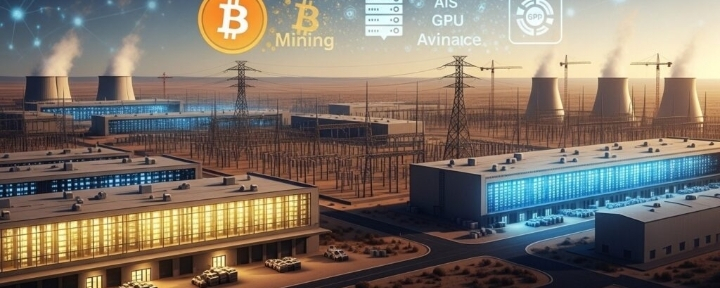
Keel Infrastructure Corp., the company that used to be known as Bitfarms, has officially closed the book on its U.S. Bitcoin mining business. In its second-quarter 2026 earnings report released this week, the company confirmed that as of June 29, 2026, every one of its American mining sites had been decommissioned, with the properties now being converted into artificial intelligence and high-performance computing (HPC) data centers. Combined with the earlier divestment of its Argentina and Paraguay operations, this move effectively dismantles the Latin American and North American mining footprint that Bitfarms had spent nearly a decade building.
## Selling Down the Bitcoin Stack
The mining wind-down came alongside a steady liquidation of the company's Bitcoin treasury. Between April 1 and August 7, 2026, Keel sold 1,085 BTC for roughly $75 million, leaving it with a balance of 1,861 BTC as of early August. Management has indicated it intends to continue liquidating the remaining Bitcoin holdings through the rest of 2026 to help fund its data center build-out. Even with the sales, Keel still holds a meaningful chunk of BTC on its balance sheet, valued at well over $100 million based on recent prices.
## A Rough Quarter On Paper
The numbers tell a story of a company in the middle of a costly pivot. Q2 2026 revenue came in at $30.4 million, down roughly 50% year-over-year from $60.9 million in the same period last year, largely a result of lower average Bitcoin prices and the shutdown of legacy mining sites, including the closure of the Moses Lake facility in Washington back in April. First-half 2026 revenue totaled $67.4 million.
Losses widened sharply too. The company posted a net loss of $65.0 million for the quarter and $210.3 million for the first six months of the year, compared to losses of just $5.5 million and $61.1 million over the same periods a year earlier. A big chunk of that came from $63 million in accelerated depreciation tied to shutting down mining rigs at its Panther Creek and Scrubgrass sites. Adjusted EBITDA swung to negative $23.7–24 million, versus a positive figure a year ago. General and administrative costs also jumped more than 60%, reflecting aggressive hiring of engineering and project-management talent to support the HPC transition.
## But the Balance Sheet Looks Strong
Despite the red ink, Keel's leadership has been keen to stress that the company is better capitalized than at any point in its history. As of August 7, total liquidity stood at approximately $819 million, made up of roughly $698–715 million in cash and around $121 million in unencumbered Bitcoin. That war chest was boosted in June by a $458 million convertible senior notes offering, which came in well above the initially planned $350 million raise. CEO Ben Gagnon and CFO Jonathan Mir have both framed this liquidity as giving the company room to develop its sites on its own timeline rather than being forced into rushed commercial decisions.
## Where the AI Pivot Stands
On the ground, Keel says its three priority sites are closing in on full permitting:
- **Moses Lake, Washington** — on track to become Keel's first fully permitted data center, with commissioning targeted for 2027 and permitting expected by late Q3 2026. Initial Vertiv power modules have already been accepted on site.
- **Panther Creek, Pennsylvania** — has secured 350 MW of power capacity, with potential expansion to 500 MW or more, and is expected to be power-ready in 2027.
- **Sharon, Pennsylvania** — has secured zoning and land-development approval, with environmental permits progressing.
Beyond these three, Keel is also advancing a roughly 2-gigawatt Pennsylvania expansion pipeline, with an update expected around December or January, and has signed an agreement in Sherbrooke, Quebec, for the conditional transfer of 96 MW of power capacity tied to a potential Canadian HPC and AI facility. Management says several potential tenants are already in discussions for the converted sites, though no binding leases have been announced yet.
## Why This Matters for the Broader Market
Keel's transformation is part of a much bigger trend sweeping through the Bitcoin mining sector in 2026. Several large-scale miners have been redirecting their power infrastructure — arguably their most valuable asset in an AI-hungry economy — away from Bitcoin hashing and toward renting compute capacity to AI and cloud companies. The logic is straightforward: with hashrate difficulty climbing and mining margins compressing, the same megawatts that once powered ASIC rigs can often generate far more predictable, higher-margin revenue under a long-term HPC lease.
For Bitcoin holders and miners watching this trend, Keel's move raises a familiar question: does the industry-wide shift of power capacity away from mining act as a long-term tailwind for network difficulty and decentralization, or does it simply mark natural consolidation as unprofitable operators exit? Either way, Keel's stock reaction — shares fell over 11% following the earnings release — shows that Wall Street is still digesting whether the AI pivot will pay off before the balance sheet is tested further.
Keel's next major checkpoints will be the completion of permitting at Moses Lake, progress on the Pennsylvania power pipeline, and — perhaps most closely watched by the crypto community — how quickly the remaining 1,861 BTC gets sold down as the company completes its transformation from Bitcoin miner to AI infrastructure developer.
#Bitcoin #KeelInfrastructure
#BitfarmsMining #AIDataCenters #CryptoMining
Keel Infrastructure (Formerly Bitfarms) Fully Exits U.S. Bitcoin Mining, Doubles Down on AI Data••••
# Keel Infrastructure (Formerly Bitfarms) Fully Exits U.S. Bitcoin Mining, Doubles Down on AI Data Centers
Keel Infrastructure Corp., the company that used to be known as Bitfarms, has officially closed the book on its U.S. Bitcoin mining business. In its second-quarter 2026 earnings report released this week, the company confirmed that as of June 29, 2026, every one of its American mining sites had been decommissioned, with the properties now being converted into artificial intelligence and high-performance computing (HPC) data centers. Combined with the earlier divestment of its Argentina and Paraguay operations, this move effectively dismantles the Latin American and North American mining footprint that Bitfarms had spent nearly a decade building.
## Selling Down the Bitcoin Stack
The mining wind-down came alongside a steady liquidation of the company's Bitcoin treasury. Between April 1 and August 7, 2026, Keel sold 1,085 BTC for roughly $75 million, leaving it with a balance of 1,861 BTC as of early August. Management has indicated it intends to continue liquidating the remaining Bitcoin holdings through the rest of 2026 to help fund its data center build-out. Even with the sales, Keel still holds a meaningful chunk of BTC on its balance sheet, valued at well over $100 million based on recent prices.
## A Rough Quarter On Paper
The numbers tell a story of a company in the middle of a costly pivot. Q2 2026 revenue came in at $30.4 million, down roughly 50% year-over-year from $60.9 million in the same period last year, largely a result of lower average Bitcoin prices and the shutdown of legacy mining sites, including the closure of the Moses Lake facility in Washington back in April. First-half 2026 revenue totaled $67.4 million.
Losses widened sharply too. The company posted a net loss of $65.0 million for the quarter and $210.3 million for the first six months of the year, compared to losses of just $5.5 million and $61.1 million over the same periods a year earlier. A big chunk of that came from $63 million in accelerated depreciation tied to shutting down mining rigs at its Panther Creek and Scrubgrass sites. Adjusted EBITDA swung to negative $23.7–24 million, versus a positive figure a year ago. General and administrative costs also jumped more than 60%, reflecting aggressive hiring of engineering and project-management talent to support the HPC transition.
## But the Balance Sheet Looks Strong
Despite the red ink, Keel's leadership has been keen to stress that the company is better capitalized than at any point in its history. As of August 7, total liquidity stood at approximately $819 million, made up of roughly $698–715 million in cash and around $121 million in unencumbered Bitcoin. That war chest was boosted in June by a $458 million convertible senior notes offering, which came in well above the initially planned $350 million raise. CEO Ben Gagnon and CFO Jonathan Mir have both framed this liquidity as giving the company room to develop its sites on its own timeline rather than being forced into rushed commercial decisions.
## Where the AI Pivot Stands
On the ground, Keel says its three priority sites are closing in on full permitting:
- **Moses Lake, Washington** — on track to become Keel's first fully permitted data center, with commissioning targeted for 2027 and permitting expected by late Q3 2026. Initial Vertiv power modules have already been accepted on site.
- **Panther Creek, Pennsylvania** — has secured 350 MW of power capacity, with potential expansion to 500 MW or more, and is expected to be power-ready in 2027.
- **Sharon, Pennsylvania** — has secured zoning and land-development approval, with environmental permits progressing.
Beyond these three, Keel is also advancing a roughly 2-gigawatt Pennsylvania expansion pipeline, with an update expected around December or January, and has signed an agreement in Sherbrooke, Quebec, for the conditional transfer of 96 MW of power capacity tied to a potential Canadian HPC and AI facility. Management says several potential tenants are already in discussions for the converted sites, though no binding leases have been announced yet.
## Why This Matters for the Broader Market
Keel's transformation is part of a much bigger trend sweeping through the Bitcoin mining sector in 2026. Several large-scale miners have been redirecting their power infrastructure — arguably their most valuable asset in an AI-hungry economy — away from Bitcoin hashing and toward renting compute capacity to AI and cloud companies. The logic is straightforward: with hashrate difficulty climbing and mining margins compressing, the same megawatts that once powered ASIC rigs can often generate far more predictable, higher-margin revenue under a long-term HPC lease.
For Bitcoin holders and miners watching this trend, Keel's move raises a familiar question: does the industry-wide shift of power capacity away from mining act as a long-term tailwind for network difficulty and decentralization, or does it simply mark natural consolidation as unprofitable operators exit? Either way, Keel's stock reaction — shares fell over 11% following the earnings release — shows that Wall Street is still digesting whether the AI pivot will pay off before the balance sheet is tested further.
Keel's next major checkpoints will be the completion of permitting at Moses Lake, progress on the Pennsylvania power pipeline, and — perhaps most closely watched by the crypto community — how quickly the remaining 1,861 BTC gets sold down as the company completes its transformation from Bitcoin miner to AI infrastructure developer.
#Bitcoin #KeelInfrastructure
#BitfarmsMining #AIDataCenters #CryptoMining
1
150


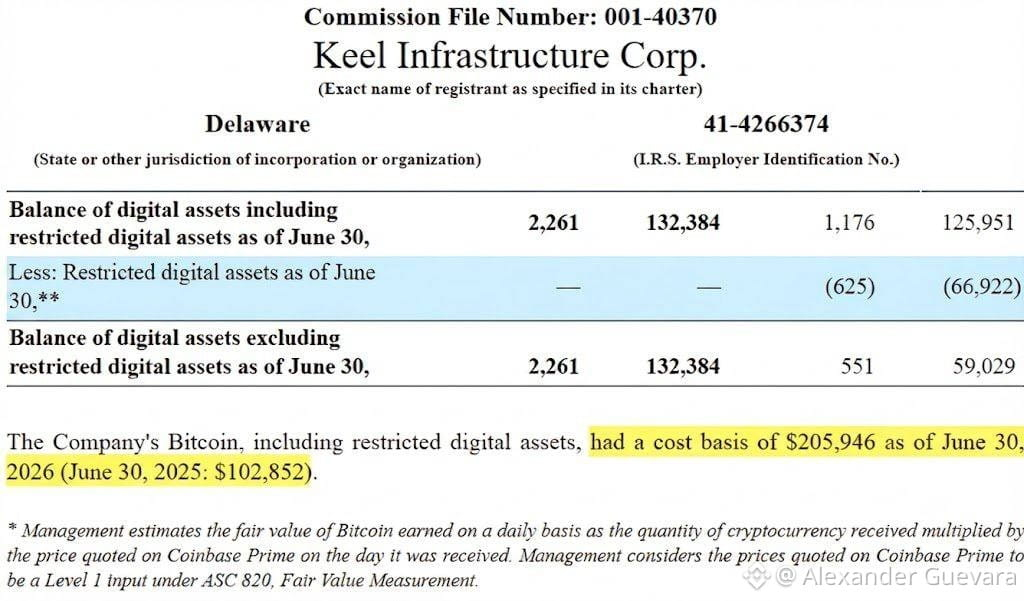
✅La base de coste de #bitcoin de Bitfarms (Keel Infra) salta a $205,946 👀🟢
• Vendió 1,670 BTC desde abril
• Aún posee 1,861 #BTC ($119M)
Eso es lo que pasa cuando vendes barato.
✅ÚLTIMA HORA: 🇺🇸 Riot vendió 5,886 BTC en el segundo trimestre por $400M
• Costo de minería: $49,912 por BTC
• Aún posee 11,380 BTC valorados en $728M
• 50% de las reservas publicadas como colateral
#IOT #ballenas #KeelInfrastructure $BTC $WBTC


237
Войдите, чтобы посмотреть больше материала
Присоединяйтесь к пользователям криптовалют по всему миру на Binance Square
⚡️ Получайте новейшую и полезную информацию о криптоактивах.
💬 Нам доверяет крупнейшая в мире криптобиржа.
👍 Получите достоверные аналитические данные от верифицированных создателей контента.
Эл. почта/номер телефона
В тренде
1
#USPPIMissMayEaseBTCPressure
Просмотров: 4,084
213 обсуждают
2
#BitcoinCoreDisclosesTorTrafficVulnerability
Просмотров: 1
15 обсуждают
3
#WhatWillDriveCryptoandStocks’NextRebound?
Просмотров: 92,569
1,216 обсуждают
4
#BitcoinBreaksBelow200WeekMovingAverage
Просмотров: 14,401
246 обсуждают
5
#SpaceXTeslaMergerTalksWouldCombine30220BTC
Просмотров: 5,269
124 обсуждают
6
#Anthropic’s6xIPODemandSignalsPotentialRecordRaise
Просмотров: 30,238
570 обсуждают
7
#USCryptoETFsLose$1.48BInFiveDays
Просмотров: 1,141
28 обсуждают
8
#KoreaDigitalAssetBasicActFinalDraftExpectedEarlyJanuary
Просмотров: 2,726
15 обсуждают
9
#RippleRLUSDMarketCapSurpassesPayPalPYUSD
Просмотров: 2,437
76 обсуждают
10
#JaneStreetNearlyOctuplesFidelityBitcoinETFHoldings
Просмотров: 10,711
183 обсуждают