

#filusdt
filusdt
Просмотров: 2M
1,962 обсуждают
Популярные
Новые

🛸 Đừng hỏi vì sao người ta đổi đời nhanh thế, hãy tự hỏi sao bản thân cứ mãi ôm khư khư tư duy cũ kỹ.
💰 LONG $FIL
Entry: 1.193
TP: 1.252 | SL: 1.0737
🧬 Blockchain là gen di truyền của sự minh bạch và công bằng tài chính.
📊 Chỉ báo Rainbow Oscillator cho thấy các dải giá đang mở rộng ra trên.
📚 Luôn cập nhật kiến thức mới vì thị trường crypto thay đổi rất nhanh chóng.
🌞 Mong bạn luôn giữ được nụ cười hạnh phúc giữa những sắc xanh của thị trường.
#FILUSDT $FILUSDT
🛸 Đừng hỏi vì sao người ta đổi đời nhanh thế, hãy tự hỏi sao bản thân cứ mãi ôm khư khư tư duy cũ kỹ.
💰 LONG $FIL
Entry: 1.193
TP: 1.252 | SL: 1.0737
🧬 Blockchain là gen di truyền của sự minh bạch và công bằng tài chính.
📊 Chỉ báo Rainbow Oscillator cho thấy các dải giá đang mở rộng ra trên.
📚 Luôn cập nhật kiến thức mới vì thị trường crypto thay đổi rất nhanh chóng.
🌞 Mong bạn luôn giữ được nụ cười hạnh phúc giữa những sắc xanh của thị trường.
#FILUSDT $FILUSDT
💰 LONG $FIL
Entry: 1.193
TP: 1.252 | SL: 1.0737
🧬 Blockchain là gen di truyền của sự minh bạch và công bằng tài chính.
📊 Chỉ báo Rainbow Oscillator cho thấy các dải giá đang mở rộng ra trên.
📚 Luôn cập nhật kiến thức mới vì thị trường crypto thay đổi rất nhanh chóng.
🌞 Mong bạn luôn giữ được nụ cười hạnh phúc giữa những sắc xanh của thị trường.
#FILUSDT $FILUSDT
18

·
--
🔥 $FIL
{spot}(FILUSDT)
| #FILUSDT — أنفجار شراء🚀
• الاتجاه: صعودي / زخم متزايد (Bullish Momentum) 🟢
• السعر الحالي: 1.184 (+12.0% خلال 24 ساعة)
• وقف الخسارة المقترح: 1.0800
🎯 الأهداف (في حال استمرار الزخم):
1️⃣ 1.2046 (اختبار القمة اليومية)
2️⃣ 1.2500
3️⃣ 1.3000
📊 التحليل:
يُظهر أداءً ممتازاً اليوم بارتفاع يتجاوز 12%، مستنداً إلى دعم قوي عند مستوى 1.044. الزخم الحالي يضع السعر في مواجهة مباشرة مع مقاومة القمة اليومية عند 1.2046. إذا نجح الزخم الشرائي في اختراق هذا المستوى بحجم تداول مرتفع، فقد يفتح ذلك الباب لمزيد من المكاسب. تجدر الإشارة إلى أن هناك ترقباً في أوساط المتداولين لتغيرات محتملة في ديناميكيات العرض في منتصف أكتوبر، لذا يُنصح بالالتزام بوقف الخسارة لحماية أرباحك في حال حدوث تذبذبات مفاجئة.
$RLC
{future}(RLCUSDT)
$BB
{future}(BBUSDT)
#jto #ONDO #viralpost #nft
🔥 $FIL
| #FILUSDT — أنفجار شراء🚀
• الاتجاه: صعودي / زخم متزايد (Bullish Momentum) 🟢
• السعر الحالي: 1.184 (+12.0% خلال 24 ساعة)
• وقف الخسارة المقترح: 1.0800
🎯 الأهداف (في حال استمرار الزخم):
1️⃣ 1.2046 (اختبار القمة اليومية)
2️⃣ 1.2500
3️⃣ 1.3000
📊 التحليل:
يُظهر أداءً ممتازاً اليوم بارتفاع يتجاوز 12%، مستنداً إلى دعم قوي عند مستوى 1.044. الزخم الحالي يضع السعر في مواجهة مباشرة مع مقاومة القمة اليومية عند 1.2046. إذا نجح الزخم الشرائي في اختراق هذا المستوى بحجم تداول مرتفع، فقد يفتح ذلك الباب لمزيد من المكاسب. تجدر الإشارة إلى أن هناك ترقباً في أوساط المتداولين لتغيرات محتملة في ديناميكيات العرض في منتصف أكتوبر، لذا يُنصح بالالتزام بوقف الخسارة لحماية أرباحك في حال حدوث تذبذبات مفاجئة.
$RLC
$BB
#jto #ONDO #viralpost #nft
| #FILUSDT — أنفجار شراء🚀
• الاتجاه: صعودي / زخم متزايد (Bullish Momentum) 🟢
• السعر الحالي: 1.184 (+12.0% خلال 24 ساعة)
• وقف الخسارة المقترح: 1.0800
🎯 الأهداف (في حال استمرار الزخم):
1️⃣ 1.2046 (اختبار القمة اليومية)
2️⃣ 1.2500
3️⃣ 1.3000
📊 التحليل:
يُظهر أداءً ممتازاً اليوم بارتفاع يتجاوز 12%، مستنداً إلى دعم قوي عند مستوى 1.044. الزخم الحالي يضع السعر في مواجهة مباشرة مع مقاومة القمة اليومية عند 1.2046. إذا نجح الزخم الشرائي في اختراق هذا المستوى بحجم تداول مرتفع، فقد يفتح ذلك الباب لمزيد من المكاسب. تجدر الإشارة إلى أن هناك ترقباً في أوساط المتداولين لتغيرات محتملة في ديناميكيات العرض في منتصف أكتوبر، لذا يُنصح بالالتزام بوقف الخسارة لحماية أرباحك في حال حدوث تذبذبات مفاجئة.
$RLC
$BB
#jto #ONDO #viralpost #nft
1
67
🥤 Luồng năng lượng tích cực từ đợt tăng giá này đang gắn kết và thúc đẩy cộng đồng Crypto phát triển ngày càng vững mạnh.
🚀 LONG $FIL
Entry: 1.154
TP: 1.212 | SL: 1.0392
🛡️ Sự phát triển của ví phần cứng giúp bảo vệ tài sản an toàn tuyệt đối.
📉 Bollinger Bands bắt đầu thắt chặt báo hiệu một đợt biến động lớn.
🧠 Một cái đầu lạnh sẽ đưa ra những quyết định sáng suốt hơn trái tim nóng.
🌸 Mong rằng may mắn sẽ luôn là người bạn thân thiết nhất của bạn trên sàn.
#FILUSDT $FILUSDT
🥤 Luồng năng lượng tích cực từ đợt tăng giá này đang gắn kết và thúc đẩy cộng đồng Crypto phát triển ngày càng vững mạnh.
🚀 LONG $FIL
Entry: 1.154
TP: 1.212 | SL: 1.0392
🛡️ Sự phát triển của ví phần cứng giúp bảo vệ tài sản an toàn tuyệt đối.
📉 Bollinger Bands bắt đầu thắt chặt báo hiệu một đợt biến động lớn.
🧠 Một cái đầu lạnh sẽ đưa ra những quyết định sáng suốt hơn trái tim nóng.
🌸 Mong rằng may mắn sẽ luôn là người bạn thân thiết nhất của bạn trên sàn.
#FILUSDT $FILUSDT
🚀 LONG $FIL
Entry: 1.154
TP: 1.212 | SL: 1.0392
🛡️ Sự phát triển của ví phần cứng giúp bảo vệ tài sản an toàn tuyệt đối.
📉 Bollinger Bands bắt đầu thắt chặt báo hiệu một đợt biến động lớn.
🧠 Một cái đầu lạnh sẽ đưa ra những quyết định sáng suốt hơn trái tim nóng.
🌸 Mong rằng may mắn sẽ luôn là người bạn thân thiết nhất của bạn trên sàn.
#FILUSDT $FILUSDT
36
·
--
🔥 $FIL
{future}(FILUSDT)
#FILUSDT — تنبيه زخم قوي! 🚀
• الاتجاه: صعودي / زخم متزايد (Bullish Momentum) 🟢
• السعر الحالي: 1.1286 (+7.5% خلال 24 ساعة)
• وقف الخسارة المقترح: 1.0500
🎯 الأهداف (في حال استمرار الزخم):
1️⃣ 1.1600
2️⃣ 1.2000
3️⃣ 1.2500
📊 التحليل:
يواصل $FIL أداءه الإيجابي مع ارتفاع ملحوظ بنسبة 7.5%، وهو ما يعزز ثقة المتداولين فيه. خلال الـ 15 دقيقة الأخيرة، حافظت العملة على زخم صعودي بنسبة 2.0%، مع سيولة قوية بلغت 652.2 ألف USDT، حيث مالت الكفة لصالح المشترين بنسبة 58%. حجم التداول اليومي البالغ 12.5 مليون USDT على منصة Binance يؤكد وجود اهتمام كبير ودعم لحركة السعر الحالية. رغم هذا الأداء الجيد، من المهم دائماً مراقبة مستويات المقاومة القريبة وإدارة الصفقات بحذر عبر وضع وقف خسارة مناسب لحماية أرباحك في حالة حدوث أي انعكاس مفاجئ في السوق.
$RLC
{future}(RLCUSDT)
#ZECUSDT #meme板块关注热点 #solana #BCH💰智能多空策略
🔥 $FIL
#FILUSDT — تنبيه زخم قوي! 🚀
• الاتجاه: صعودي / زخم متزايد (Bullish Momentum) 🟢
• السعر الحالي: 1.1286 (+7.5% خلال 24 ساعة)
• وقف الخسارة المقترح: 1.0500
🎯 الأهداف (في حال استمرار الزخم):
1️⃣ 1.1600
2️⃣ 1.2000
3️⃣ 1.2500
📊 التحليل:
يواصل $FIL أداءه الإيجابي مع ارتفاع ملحوظ بنسبة 7.5%، وهو ما يعزز ثقة المتداولين فيه. خلال الـ 15 دقيقة الأخيرة، حافظت العملة على زخم صعودي بنسبة 2.0%، مع سيولة قوية بلغت 652.2 ألف USDT، حيث مالت الكفة لصالح المشترين بنسبة 58%. حجم التداول اليومي البالغ 12.5 مليون USDT على منصة Binance يؤكد وجود اهتمام كبير ودعم لحركة السعر الحالية. رغم هذا الأداء الجيد، من المهم دائماً مراقبة مستويات المقاومة القريبة وإدارة الصفقات بحذر عبر وضع وقف خسارة مناسب لحماية أرباحك في حالة حدوث أي انعكاس مفاجئ في السوق.
$RLC
#ZECUSDT #meme板块关注热点 #solana #BCH💰智能多空策略
#FILUSDT — تنبيه زخم قوي! 🚀
• الاتجاه: صعودي / زخم متزايد (Bullish Momentum) 🟢
• السعر الحالي: 1.1286 (+7.5% خلال 24 ساعة)
• وقف الخسارة المقترح: 1.0500
🎯 الأهداف (في حال استمرار الزخم):
1️⃣ 1.1600
2️⃣ 1.2000
3️⃣ 1.2500
📊 التحليل:
يواصل $FIL أداءه الإيجابي مع ارتفاع ملحوظ بنسبة 7.5%، وهو ما يعزز ثقة المتداولين فيه. خلال الـ 15 دقيقة الأخيرة، حافظت العملة على زخم صعودي بنسبة 2.0%، مع سيولة قوية بلغت 652.2 ألف USDT، حيث مالت الكفة لصالح المشترين بنسبة 58%. حجم التداول اليومي البالغ 12.5 مليون USDT على منصة Binance يؤكد وجود اهتمام كبير ودعم لحركة السعر الحالية. رغم هذا الأداء الجيد، من المهم دائماً مراقبة مستويات المقاومة القريبة وإدارة الصفقات بحذر عبر وضع وقف خسارة مناسب لحماية أرباحك في حالة حدوث أي انعكاس مفاجئ في السوق.
$RLC
#ZECUSDT #meme板块关注热点 #solana #BCH💰智能多空策略
2
65


·
--
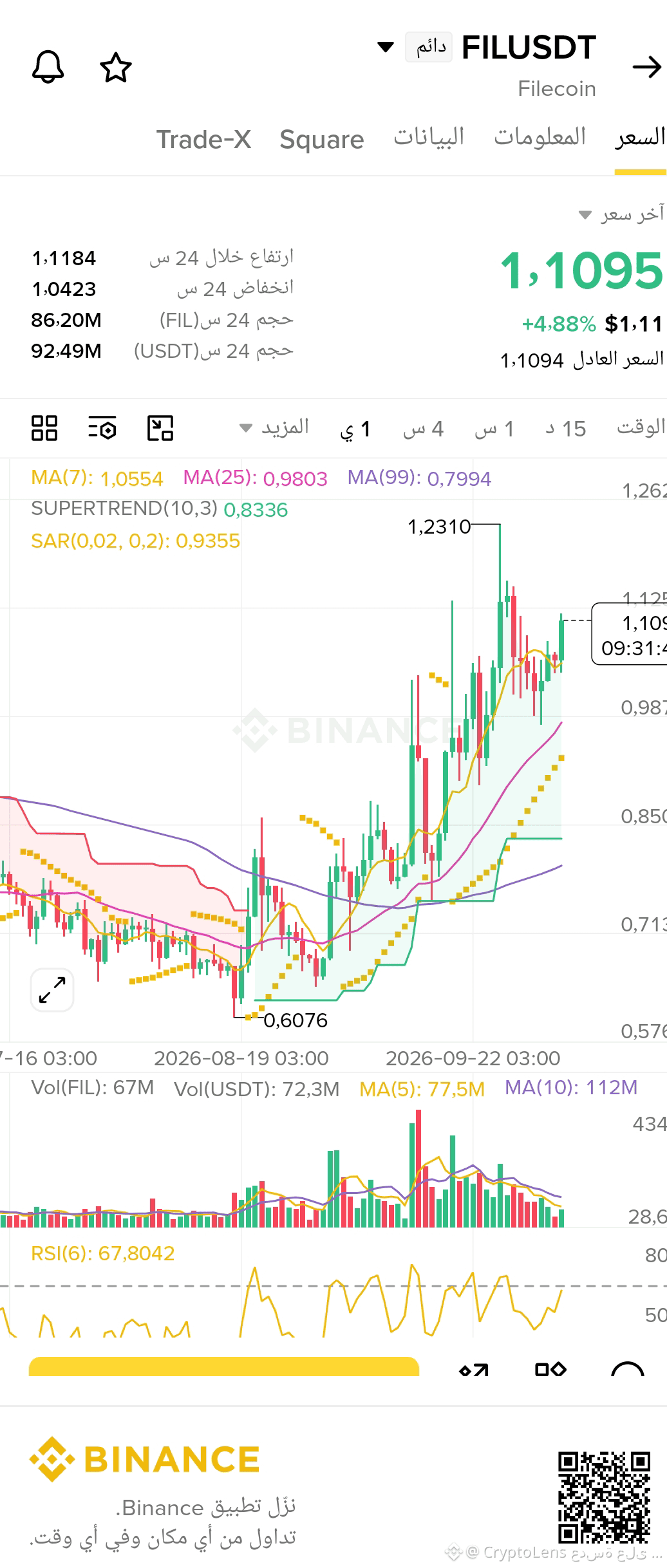
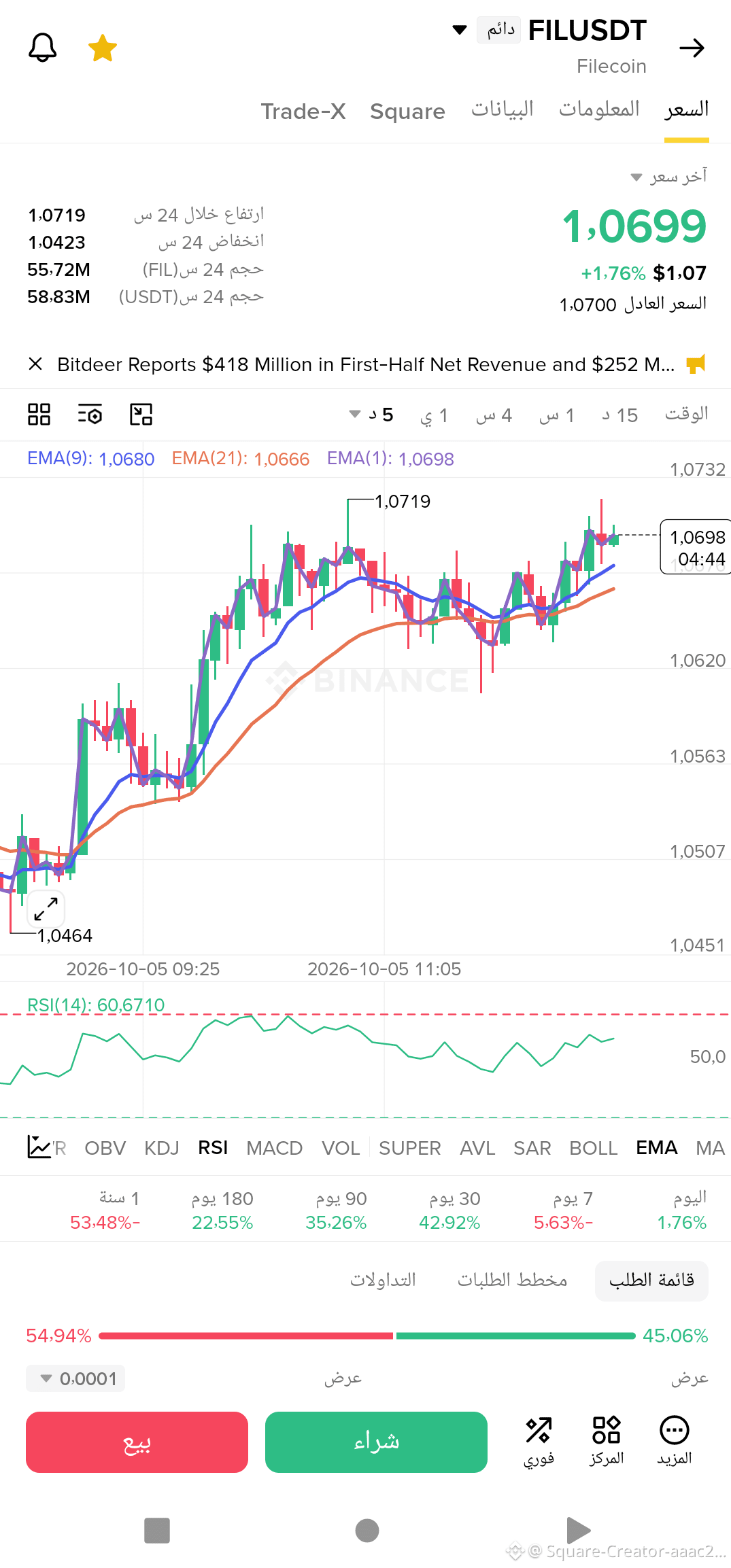
🐂 الثيران أم الدببة؟ 🐻
$FIL عند منطقة حساسة جدًا الآن 👀
السعر قرب 1.06$، والمواجهة الحقيقية تبدأ عند:
🔥 1.10$ ← اختراقها قد يفتح الطريق نحو 1.16$ ثم 1.30$
⚠️ 1.03$ ← كسرها قد يعيد FIL إلى 1.00$ ثم 0.98$
لكن السؤال لك أنت 👇
🎯 أين سيكون سعر FIL خلال الـ48 ساعة القادمة؟
اكتب رقمًا واحدًا فقط في التعليقات، مثل:
👉 1.18$
وسأعود بعد 48 ساعة لنرى من كان توقعه الأقرب 🎯🔥
هل FIL تستعد للانفجار أم أن الدببة ستسيطر؟ 🐂🐻
#FIL #Filecoin #FILUSDT #crypto #BinanceSquare #writetoearn
🐂 الثيران أم الدببة؟ 🐻
$FIL عند منطقة حساسة جدًا الآن 👀
السعر قرب 1.06$، والمواجهة الحقيقية تبدأ عند:
🔥 1.10$ ← اختراقها قد يفتح الطريق نحو 1.16$ ثم 1.30$
⚠️ 1.03$ ← كسرها قد يعيد FIL إلى 1.00$ ثم 0.98$
لكن السؤال لك أنت 👇
🎯 أين سيكون سعر FIL خلال الـ48 ساعة القادمة؟
اكتب رقمًا واحدًا فقط في التعليقات، مثل:
👉 1.18$
وسأعود بعد 48 ساعة لنرى من كان توقعه الأقرب 🎯🔥
هل FIL تستعد للانفجار أم أن الدببة ستسيطر؟ 🐂🐻
#FIL #Filecoin #FILUSDT #crypto #BinanceSquare #writetoearn
$FIL عند منطقة حساسة جدًا الآن 👀
السعر قرب 1.06$، والمواجهة الحقيقية تبدأ عند:
🔥 1.10$ ← اختراقها قد يفتح الطريق نحو 1.16$ ثم 1.30$
⚠️ 1.03$ ← كسرها قد يعيد FIL إلى 1.00$ ثم 0.98$
لكن السؤال لك أنت 👇
🎯 أين سيكون سعر FIL خلال الـ48 ساعة القادمة؟
اكتب رقمًا واحدًا فقط في التعليقات، مثل:
👉 1.18$
وسأعود بعد 48 ساعة لنرى من كان توقعه الأقرب 🎯🔥
هل FIL تستعد للانفجار أم أن الدببة ستسيطر؟ 🐂🐻
#FIL #Filecoin #FILUSDT #crypto #BinanceSquare #writetoearn
1
1
187

#FILUSDT (FIL) is an open-source, decentralized data storage network built as an economic layer on top of the InterPlanetary File System (IPFS). Developed by Protocol Labs, it allows individuals and businesses to buy and sell unused digital storage space in a global, peer-to-peer marketplace.
Core Concepts
Decentralized Cloud Storage: Instead of relying on centralized cloud providers (such as Amazon S3, Google Cloud, or Microsoft Azure), Filecoin distributes encrypted data fragments across a worldwide network of independent storage providers.
IPFS Synergy: IPFS handles content addressing and peer-to-peer file transfer, while Filecoin provides the economic incentives—rewarding providers for persisting data reliably over time.
Filecoin Virtual Machine (FVM): Introduced to bring Ethereum-compatible smart contracts directly to the network, enabling programmable storage, decentralized compute, and custom financial derivatives built on storage deals.
Key Participants
Storage Providers (Miners): Allocates hard drive capacity to store clients' data. To ensure honesty, providers must post FIL as collateral and continuously submit cryptographic proofs showing they are maintaining the data.
Retrieval Providers: Optimized for fast network delivery, retrieving and delivering requested data to clients.
Clients: Users or applications that spend FIL tokens to store and retrieve data from the network.
Consensus Mechanisms & Proofs
Filecoin relies on two specialized cryptographic proofs to secure storage integrity without central authority:
Proof-of-Replication (PoRep): Proves that a storage provider has created a distinct physical copy of the client’s data in dedicated hardware sectors.
Proof-of-Spacetime (PoSt): Continuously verifies that the provider is holding and preserving that data over the entire agreed contract duration.
Native Token (FIL)
Utility: FIL serves as the primary medium of exchange across the network. Clients pay in FIL for storage/retrieval deals, and storage providers receive
#FILUSDT (FIL) is an open-source, decentralized data storage network built as an economic layer on top of the InterPlanetary File System (IPFS). Developed by Protocol Labs, it allows individuals and businesses to buy and sell unused digital storage space in a global, peer-to-peer marketplace.
Core Concepts
Decentralized Cloud Storage: Instead of relying on centralized cloud providers (such as Amazon S3, Google Cloud, or Microsoft Azure), Filecoin distributes encrypted data fragments across a worldwide network of independent storage providers.
IPFS Synergy: IPFS handles content addressing and peer-to-peer file transfer, while Filecoin provides the economic incentives—rewarding providers for persisting data reliably over time.
Filecoin Virtual Machine (FVM): Introduced to bring Ethereum-compatible smart contracts directly to the network, enabling programmable storage, decentralized compute, and custom financial derivatives built on storage deals.
Key Participants
Storage Providers (Miners): Allocates hard drive capacity to store clients' data. To ensure honesty, providers must post FIL as collateral and continuously submit cryptographic proofs showing they are maintaining the data.
Retrieval Providers: Optimized for fast network delivery, retrieving and delivering requested data to clients.
Clients: Users or applications that spend FIL tokens to store and retrieve data from the network.
Consensus Mechanisms & Proofs
Filecoin relies on two specialized cryptographic proofs to secure storage integrity without central authority:
Proof-of-Replication (PoRep): Proves that a storage provider has created a distinct physical copy of the client’s data in dedicated hardware sectors.
Proof-of-Spacetime (PoSt): Continuously verifies that the provider is holding and preserving that data over the entire agreed contract duration.
Native Token (FIL)
Utility: FIL serves as the primary medium of exchange across the network. Clients pay in FIL for storage/retrieval deals, and storage providers receive
Core Concepts
Decentralized Cloud Storage: Instead of relying on centralized cloud providers (such as Amazon S3, Google Cloud, or Microsoft Azure), Filecoin distributes encrypted data fragments across a worldwide network of independent storage providers.
IPFS Synergy: IPFS handles content addressing and peer-to-peer file transfer, while Filecoin provides the economic incentives—rewarding providers for persisting data reliably over time.
Filecoin Virtual Machine (FVM): Introduced to bring Ethereum-compatible smart contracts directly to the network, enabling programmable storage, decentralized compute, and custom financial derivatives built on storage deals.
Key Participants
Storage Providers (Miners): Allocates hard drive capacity to store clients' data. To ensure honesty, providers must post FIL as collateral and continuously submit cryptographic proofs showing they are maintaining the data.
Retrieval Providers: Optimized for fast network delivery, retrieving and delivering requested data to clients.
Clients: Users or applications that spend FIL tokens to store and retrieve data from the network.
Consensus Mechanisms & Proofs
Filecoin relies on two specialized cryptographic proofs to secure storage integrity without central authority:
Proof-of-Replication (PoRep): Proves that a storage provider has created a distinct physical copy of the client’s data in dedicated hardware sectors.
Proof-of-Spacetime (PoSt): Continuously verifies that the provider is holding and preserving that data over the entire agreed contract duration.
Native Token (FIL)
Utility: FIL serves as the primary medium of exchange across the network. Clients pay in FIL for storage/retrieval deals, and storage providers receive
360

·
--
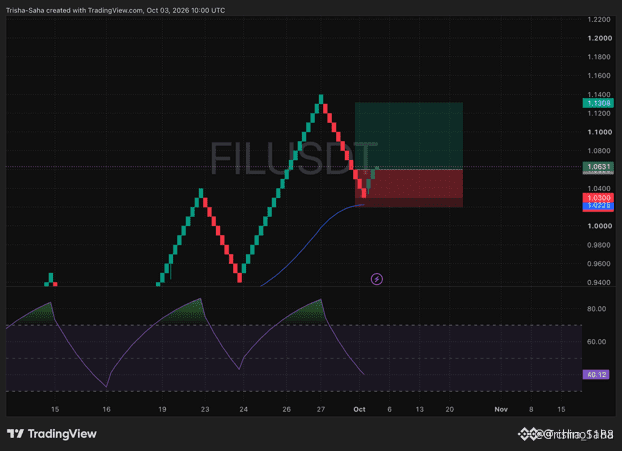
¡Rebote sólido con un soporte dinámico! ¿Está el $FIL gearing listo para su próximo y poderoso rally? 🚀📊
📍 Configuración de Trading:
🟢 Zona de Entrada: $1.0400 – $1.0631
🛑 Stop Loss: $1.02
🎯 Objetivo: $1.1308
📌 Información del Gráfico:
Defensa del Soporte: El precio retrocedió con fuerza tras volver a probar la media móvil dinámica, señalando un alto interés de los compradores y una estructura de momentum intacta.
Regla de Protección de Capital: Mueve tu Stop Loss a Break-Even (punto de equilibrio) de inmediato cuando tu operación gane +3% a +4% de rentabilidad. ¡Protege primero tu entrada y luego sigue la operación o sal cuando alcances tus objetivos!
Ya aseguré esta posición. ¿Te sumas a este movimiento de recuperación conmigo o esperas la ruptura de un máximo más alto? ¡Comparte tus ideas abajo! 👇
#FIL #FILUSDT #CryptoTrading
¡Rebote sólido con un soporte dinámico! ¿Está el $FIL gearing listo para su próximo y poderoso rally? 🚀📊
📍 Configuración de Trading:
🟢 Zona de Entrada: $1.0400 – $1.0631
🛑 Stop Loss: $1.02
🎯 Objetivo: $1.1308
📌 Información del Gráfico:
Defensa del Soporte: El precio retrocedió con fuerza tras volver a probar la media móvil dinámica, señalando un alto interés de los compradores y una estructura de momentum intacta.
Regla de Protección de Capital: Mueve tu Stop Loss a Break-Even (punto de equilibrio) de inmediato cuando tu operación gane +3% a +4% de rentabilidad. ¡Protege primero tu entrada y luego sigue la operación o sal cuando alcances tus objetivos!
Ya aseguré esta posición. ¿Te sumas a este movimiento de recuperación conmigo o esperas la ruptura de un máximo más alto? ¡Comparte tus ideas abajo! 👇
#FIL #FILUSDT #CryptoTrading
📍 Configuración de Trading:
🟢 Zona de Entrada: $1.0400 – $1.0631
🛑 Stop Loss: $1.02
🎯 Objetivo: $1.1308
📌 Información del Gráfico:
Defensa del Soporte: El precio retrocedió con fuerza tras volver a probar la media móvil dinámica, señalando un alto interés de los compradores y una estructura de momentum intacta.
Regla de Protección de Capital: Mueve tu Stop Loss a Break-Even (punto de equilibrio) de inmediato cuando tu operación gane +3% a +4% de rentabilidad. ¡Protege primero tu entrada y luego sigue la operación o sal cuando alcances tus objetivos!
Ya aseguré esta posición. ¿Te sumas a este movimiento de recuperación conmigo o esperas la ruptura de un máximo más alto? ¡Comparte tus ideas abajo! 👇
#FIL #FILUSDT #CryptoTrading
1
447

🚀 $FIL IS FLYING WHILE MARKET IS SLEEPING! 📈
Market is slightly down -0.12% but look who is leading?
Filecoin is up +2.25% today and marked as Rapid Riser! 🔥
Strong chart, strong volume, bullish vibes all over!
This is not just hype, this is real demand coming back for decentralized storage.
Are you IN or still just WATCHING? 👀💰
#FIL #Filecoin #Crypto #BullishMarket #FILUSDT
{future}(FILUSDT)
🚀 $FIL IS FLYING WHILE MARKET IS SLEEPING! 📈
Market is slightly down -0.12% but look who is leading?
Filecoin is up +2.25% today and marked as Rapid Riser! 🔥
Strong chart, strong volume, bullish vibes all over!
This is not just hype, this is real demand coming back for decentralized storage.
Are you IN or still just WATCHING? 👀💰
#FIL #Filecoin #Crypto #BullishMarket #FILUSDT
Market is slightly down -0.12% but look who is leading?
Filecoin is up +2.25% today and marked as Rapid Riser! 🔥
Strong chart, strong volume, bullish vibes all over!
This is not just hype, this is real demand coming back for decentralized storage.
Are you IN or still just WATCHING? 👀💰
#FIL #Filecoin #Crypto #BullishMarket #FILUSDT
6
628


·
--
Рост
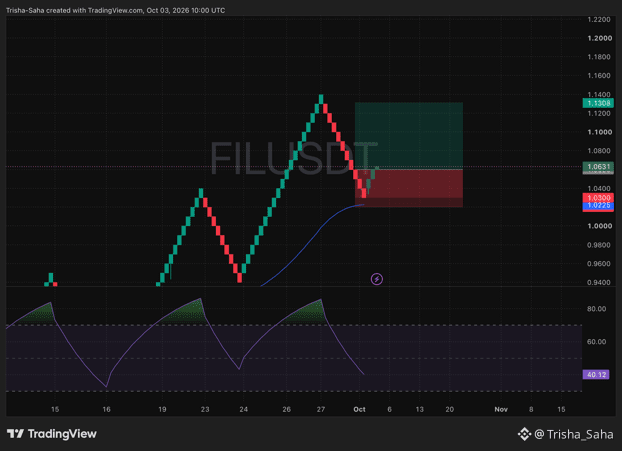
Solid bounce off dynamic support! Is $FIL gearing up for its next powerful rally? 🚀📊
📍 Trade Setup:
🟢 Entry Zone: $1.0400 – $1.0631
🛑 Stop Loss: $1.02
🎯 Target: $1.1308
📌 Chart Insights:
Support Defense: Price pushed back strongly after retesting the dynamic moving average, signaling high buyer interest and momentum structure intact.
Capital Protection Rule: Shift your Stop Loss to Break-Even immediately once your trade gains +3% to +4% profit. Protect your entry first, then trail or exit on your own targets!
I've already locked into this position. Are you taking this recovery move with me or waiting for a higher high break? Share your thoughts below! 👇
#FIL #FILUSDT #CryptoTrading #BinanceSquare
{future}(FILUSDT)
Solid bounce off dynamic support! Is $FIL gearing up for its next powerful rally? 🚀📊
📍 Trade Setup:
🟢 Entry Zone: $1.0400 – $1.0631
🛑 Stop Loss: $1.02
🎯 Target: $1.1308
📌 Chart Insights:
Support Defense: Price pushed back strongly after retesting the dynamic moving average, signaling high buyer interest and momentum structure intact.
Capital Protection Rule: Shift your Stop Loss to Break-Even immediately once your trade gains +3% to +4% profit. Protect your entry first, then trail or exit on your own targets!
I've already locked into this position. Are you taking this recovery move with me or waiting for a higher high break? Share your thoughts below! 👇
#FIL #FILUSDT #CryptoTrading #BinanceSquare
📍 Trade Setup:
🟢 Entry Zone: $1.0400 – $1.0631
🛑 Stop Loss: $1.02
🎯 Target: $1.1308
📌 Chart Insights:
Support Defense: Price pushed back strongly after retesting the dynamic moving average, signaling high buyer interest and momentum structure intact.
Capital Protection Rule: Shift your Stop Loss to Break-Even immediately once your trade gains +3% to +4% profit. Protect your entry first, then trail or exit on your own targets!
I've already locked into this position. Are you taking this recovery move with me or waiting for a higher high break? Share your thoughts below! 👇
#FIL #FILUSDT #CryptoTrading #BinanceSquare
_jocielmartins_:
compre #Clo
1
1
5
5.6k

FIL is ripping through the 7.5‑8.2 zone, eyes on the next swing. Momentum’s still raw.
🟢 $FIL LONG 📈
Entry $1.0517-$1.0539 | SL $1.0212 (-3.0%) | TP1 $1.0686 (+1.5%) | TP2 $1.1054 (+5.0%) | R/R 1:1.7 | Conf 64%
A CHoCH broke the prior swing low while CVD surged, confirming buying pressure. The fair‑value gap sits right under a fresh order block, creating a POI where the OB and FVG overlap. The structure now rides a clean bullish ladder, primed for a run.
A 3.0% stop is tight, so stick to modest leverage – 2x to 3x max.
Take a partial profit at the first target to lock in gains while the trade remains alive.
Not financial advice — always manage your own risk 🙏
$FIL #FILUSDT #nfpwatch #TradingSignals #Write2Earn
FIL is ripping through the 7.5‑8.2 zone, eyes on the next swing. Momentum’s still raw.
🟢 $FIL LONG 📈
Entry $1.0517-$1.0539 | SL $1.0212 (-3.0%) | TP1 $1.0686 (+1.5%) | TP2 $1.1054 (+5.0%) | R/R 1:1.7 | Conf 64%
A CHoCH broke the prior swing low while CVD surged, confirming buying pressure. The fair‑value gap sits right under a fresh order block, creating a POI where the OB and FVG overlap. The structure now rides a clean bullish ladder, primed for a run.
A 3.0% stop is tight, so stick to modest leverage – 2x to 3x max.
Take a partial profit at the first target to lock in gains while the trade remains alive.
Not financial advice — always manage your own risk 🙏
$FIL #FILUSDT #nfpwatch #TradingSignals #Write2Earn
🟢 $FIL LONG 📈
Entry $1.0517-$1.0539 | SL $1.0212 (-3.0%) | TP1 $1.0686 (+1.5%) | TP2 $1.1054 (+5.0%) | R/R 1:1.7 | Conf 64%
A CHoCH broke the prior swing low while CVD surged, confirming buying pressure. The fair‑value gap sits right under a fresh order block, creating a POI where the OB and FVG overlap. The structure now rides a clean bullish ladder, primed for a run.
A 3.0% stop is tight, so stick to modest leverage – 2x to 3x max.
Take a partial profit at the first target to lock in gains while the trade remains alive.
Not financial advice — always manage your own risk 🙏
$FIL #FILUSDT #nfpwatch #TradingSignals #Write2Earn
45
FIL just broke through a key resistance on the 4‑hour chart, and the bulls are sprinting toward the next supply zone. Momentum is roaring, making the next few candles critical.
🟢 $FIL LONG 📈 — Trade Plan
• Entry: $1.0492 – $1.0514
• Stop: $1.0188 (-3.0%)
• Target 1: $1.0661 (+1.5%)
• Target 2: $1.1028 (+5.0%)
• R/R 1:1.7 | Confidence 65%
The market structure flipped with a clear CHoCH, and the CVD surged, confirming buying pressure. A fresh fair‑value gap aligns perfectly with an order block, creating a POI where the OB and FVG overlap. All the pieces are in place for a clean push higher.
A 3.0% stop is fairly tight on this volatility, so stick to 2‑3x leverage to keep risk manageable.
Take half off the table once price hits the first target to lock in gains.
Not financial advice — always manage your own risk 🙏
$FIL #FILUSDT #AltcoinSeasonIndexHoldsAbove60For5Days #TradingSignals #Write2Earn
FIL just broke through a key resistance on the 4‑hour chart, and the bulls are sprinting toward the next supply zone. Momentum is roaring, making the next few candles critical.
🟢 $FIL LONG 📈 — Trade Plan
• Entry: $1.0492 – $1.0514
• Stop: $1.0188 (-3.0%)
• Target 1: $1.0661 (+1.5%)
• Target 2: $1.1028 (+5.0%)
• R/R 1:1.7 | Confidence 65%
The market structure flipped with a clear CHoCH, and the CVD surged, confirming buying pressure. A fresh fair‑value gap aligns perfectly with an order block, creating a POI where the OB and FVG overlap. All the pieces are in place for a clean push higher.
A 3.0% stop is fairly tight on this volatility, so stick to 2‑3x leverage to keep risk manageable.
Take half off the table once price hits the first target to lock in gains.
Not financial advice — always manage your own risk 🙏
$FIL #FILUSDT #AltcoinSeasonIndexHoldsAbove60For5Days #TradingSignals #Write2Earn
🟢 $FIL LONG 📈 — Trade Plan
• Entry: $1.0492 – $1.0514
• Stop: $1.0188 (-3.0%)
• Target 1: $1.0661 (+1.5%)
• Target 2: $1.1028 (+5.0%)
• R/R 1:1.7 | Confidence 65%
The market structure flipped with a clear CHoCH, and the CVD surged, confirming buying pressure. A fresh fair‑value gap aligns perfectly with an order block, creating a POI where the OB and FVG overlap. All the pieces are in place for a clean push higher.
A 3.0% stop is fairly tight on this volatility, so stick to 2‑3x leverage to keep risk manageable.
Take half off the table once price hits the first target to lock in gains.
Not financial advice — always manage your own risk 🙏
$FIL #FILUSDT #AltcoinSeasonIndexHoldsAbove60For5Days #TradingSignals #Write2Earn
23
FIL is testing the 2.45 resistance after a 4% pullback. Momentum is turning bearish as sellers dominate the order flow.
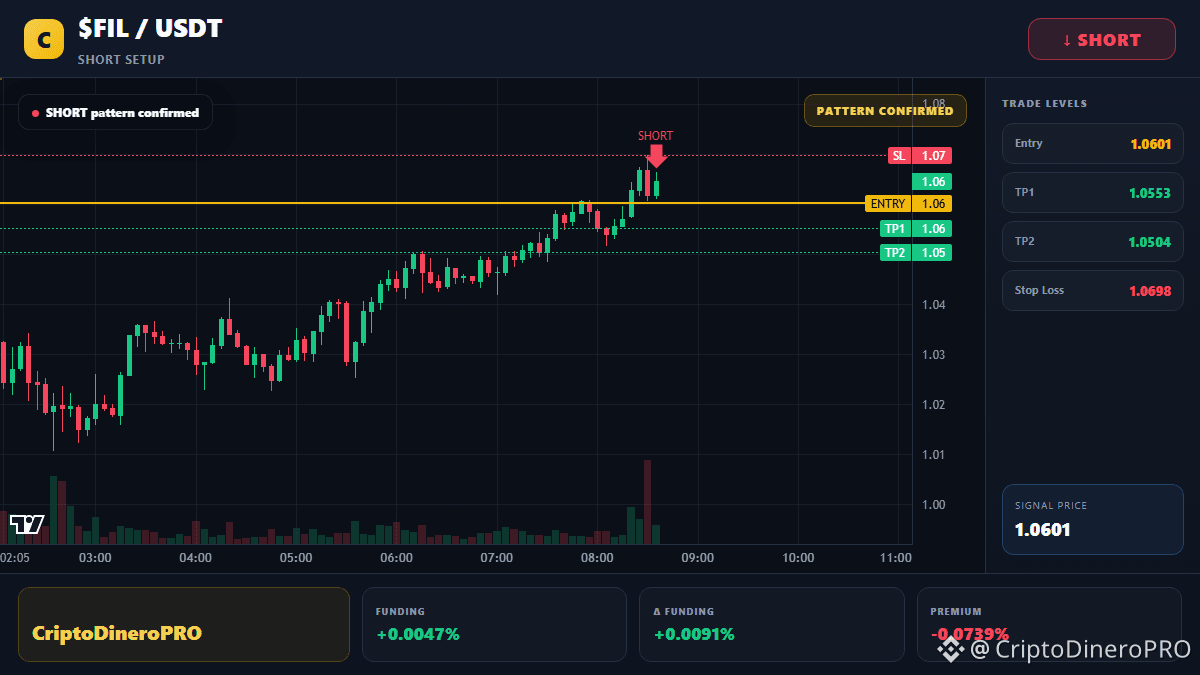
🔴 $FIL SHORT 📉
Entry $1.0551-$1.0573 | SL $1.0879 (-3.0%) | TP1 $1.0404 (+1.5%) | TP2 $1.0034 (+5.0%) | R/R 1:1.7 | Conf 65%
A clear change of character broke the higher low, triggering the CHoCH. CVD shows volume backing the downside, while a fair value gap and an order block line up as a POI confluence, reinforcing the short bias.
A 3.0% stop is tight, so keep leverage at 5x or lower.
Take half profit at the first target near 2.30.
As always: manage your risk, this is not financial advice 🙏
$FIL #FILUSDT #英伟达批准1500亿美元回购 #TradingSignals #Write2Earn
FIL is testing the 2.45 resistance after a 4% pullback. Momentum is turning bearish as sellers dominate the order flow.
🔴 $FIL SHORT 📉
Entry $1.0551-$1.0573 | SL $1.0879 (-3.0%) | TP1 $1.0404 (+1.5%) | TP2 $1.0034 (+5.0%) | R/R 1:1.7 | Conf 65%
A clear change of character broke the higher low, triggering the CHoCH. CVD shows volume backing the downside, while a fair value gap and an order block line up as a POI confluence, reinforcing the short bias.
A 3.0% stop is tight, so keep leverage at 5x or lower.
Take half profit at the first target near 2.30.
As always: manage your risk, this is not financial advice 🙏
$FIL #FILUSDT #英伟达批准1500亿美元回购 #TradingSignals #Write2Earn
🔴 $FIL SHORT 📉
Entry $1.0551-$1.0573 | SL $1.0879 (-3.0%) | TP1 $1.0404 (+1.5%) | TP2 $1.0034 (+5.0%) | R/R 1:1.7 | Conf 65%
A clear change of character broke the higher low, triggering the CHoCH. CVD shows volume backing the downside, while a fair value gap and an order block line up as a POI confluence, reinforcing the short bias.
A 3.0% stop is tight, so keep leverage at 5x or lower.
Take half profit at the first target near 2.30.
As always: manage your risk, this is not financial advice 🙏
$FIL #FILUSDT #英伟达批准1500亿美元回购 #TradingSignals #Write2Earn
31

·
--
$FIL | #FILUSDT
🟢 الاتجاه: Long
💰 الدخول: 1.106–1.110
🛑 وقف الخسارة: 1.090
🎯 الأهداف:
1️⃣ 1.120
2️⃣ 1.135
3️⃣ 1.155
📊 السبب: ارتفاع +7.0% خلال 24H مع استمرار الزخم +0.5% خلال دقيقة، وتوازن شرائي 50%، مع 3 تنبيهات خلال الساعة.
💧 السيولة: جيدة — حجم 24H حوالي 16.4M USDT، مع 270.8K خلال دقيقة.
⚡ الزخم: إيجابي وقائم على المدى القصير، لكن تدفق الشراء متوازن ولا يعطي أفضلية قوية.
🔴 إلغاء السيناريو: كسر 1.090.
⚠️ إدارة رأس المال ضرورية، خصوصًا مع ضعف أفضلية الشراء اللحظية.
{future}(FILUSDT)
$FIL | #FILUSDT
🟢 الاتجاه: Long
💰 الدخول: 1.106–1.110
🛑 وقف الخسارة: 1.090
🎯 الأهداف:
1️⃣ 1.120
2️⃣ 1.135
3️⃣ 1.155
📊 السبب: ارتفاع +7.0% خلال 24H مع استمرار الزخم +0.5% خلال دقيقة، وتوازن شرائي 50%، مع 3 تنبيهات خلال الساعة.
💧 السيولة: جيدة — حجم 24H حوالي 16.4M USDT، مع 270.8K خلال دقيقة.
⚡ الزخم: إيجابي وقائم على المدى القصير، لكن تدفق الشراء متوازن ولا يعطي أفضلية قوية.
🔴 إلغاء السيناريو: كسر 1.090.
⚠️ إدارة رأس المال ضرورية، خصوصًا مع ضعف أفضلية الشراء اللحظية.
🟢 الاتجاه: Long
💰 الدخول: 1.106–1.110
🛑 وقف الخسارة: 1.090
🎯 الأهداف:
1️⃣ 1.120
2️⃣ 1.135
3️⃣ 1.155
📊 السبب: ارتفاع +7.0% خلال 24H مع استمرار الزخم +0.5% خلال دقيقة، وتوازن شرائي 50%، مع 3 تنبيهات خلال الساعة.
💧 السيولة: جيدة — حجم 24H حوالي 16.4M USDT، مع 270.8K خلال دقيقة.
⚡ الزخم: إيجابي وقائم على المدى القصير، لكن تدفق الشراء متوازن ولا يعطي أفضلية قوية.
🔴 إلغاء السيناريو: كسر 1.090.
⚠️ إدارة رأس المال ضرورية، خصوصًا مع ضعف أفضلية الشراء اللحظية.
2
87


·
--
Рост
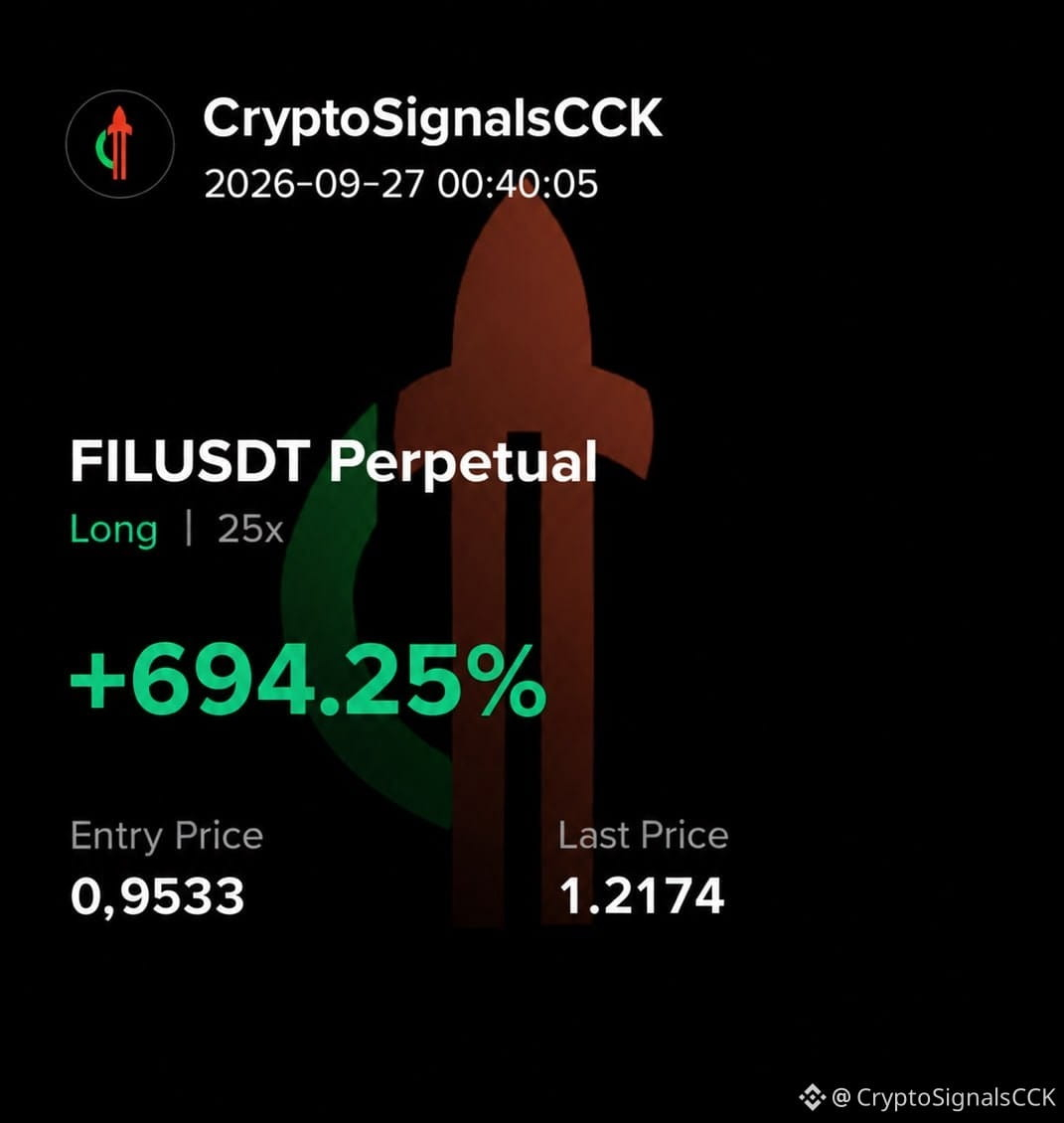
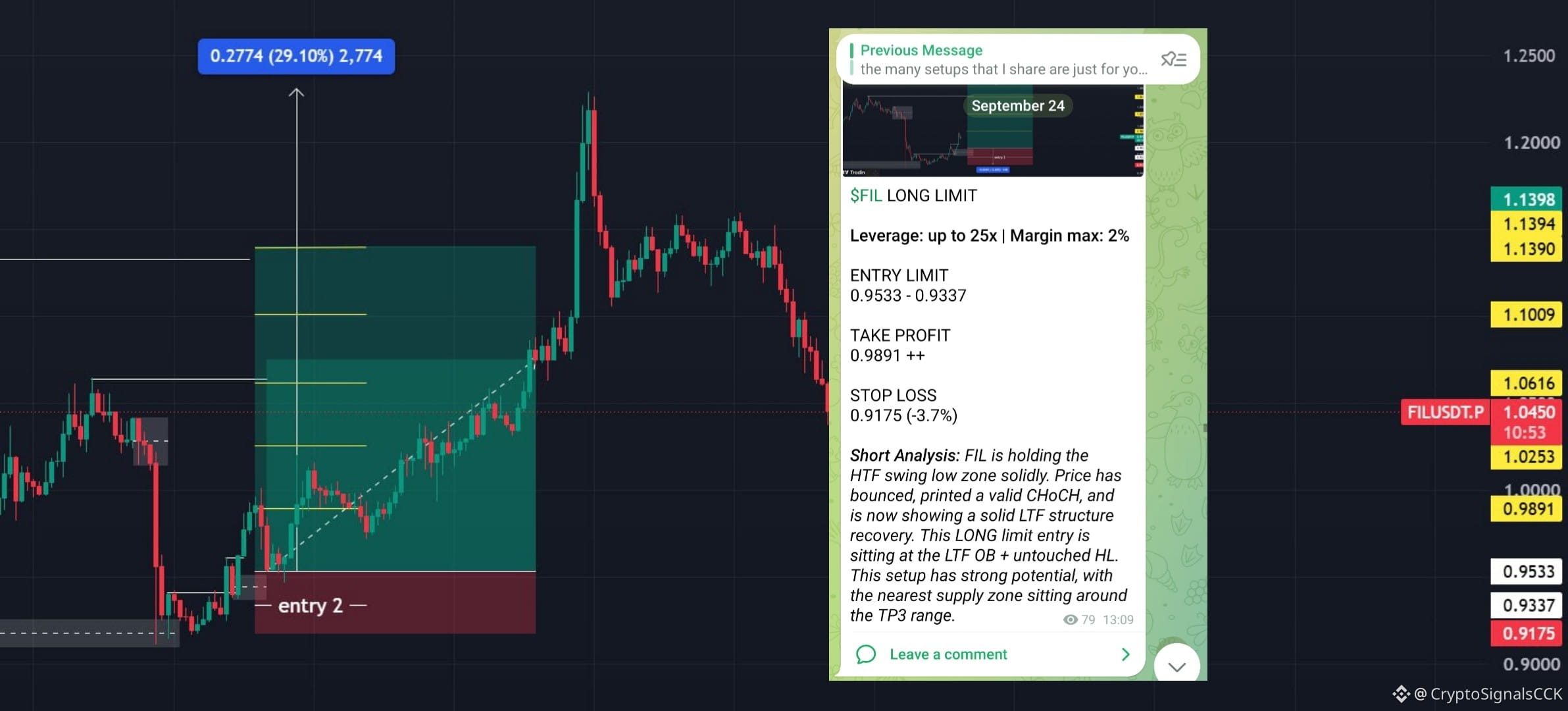
$FIL just printed a fresh HH above our ALL TP. 👀
Not enough with last week's 1:7 RR long sniper entry.
Filecoin still have room for a fresh re-entry long, targeting major supply at 1.3000.
#fil #FILUSDT #CryptoSignalsCCK
$FIL just printed a fresh HH above our ALL TP. 👀
Not enough with last week's 1:7 RR long sniper entry.
Filecoin still have room for a fresh re-entry long, targeting major supply at 1.3000.
#fil #FILUSDT #CryptoSignalsCCK
Not enough with last week's 1:7 RR long sniper entry.
Filecoin still have room for a fresh re-entry long, targeting major supply at 1.3000.
#fil #FILUSDT #CryptoSignalsCCK
2
655

·
--
Рост
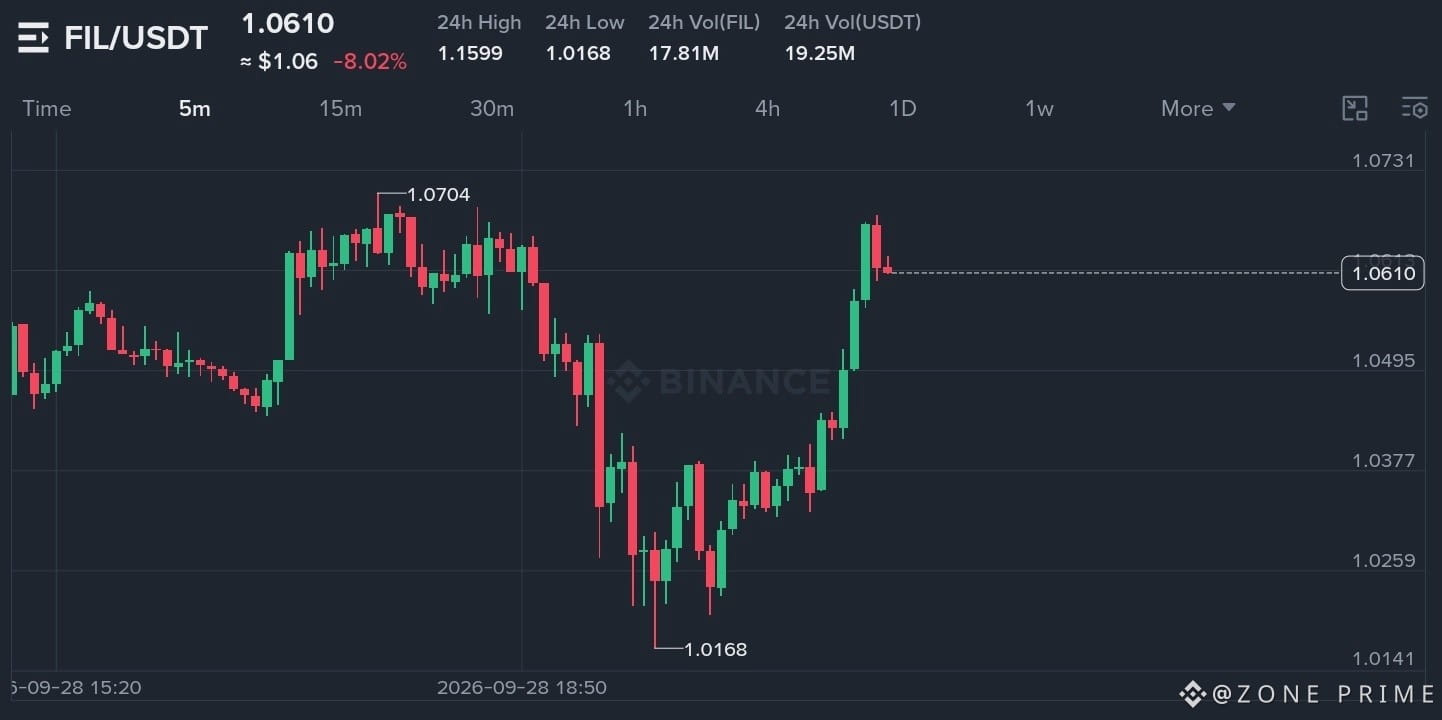
$FIL /USDT — LONG SETUP Go 📈 🚀 💯 😱
Entry: 1.0500 - 1.0620
TP1: 1.0700
TP2: 1.0850
TP3: 1.1000
Stop: 1.0350
A massive rebound off the 1.0168 swing low signals strong institutional interest.
Staying grounded above 1.0500 sets up a clear path toward testing local high targets.
#fil #filusdt #Write2Earn #crypto $FIL
{spot}(FILUSDT)
$FIL /USDT — LONG SETUP Go 📈 🚀 💯 😱
Entry: 1.0500 - 1.0620
TP1: 1.0700
TP2: 1.0850
TP3: 1.1000
Stop: 1.0350
A massive rebound off the 1.0168 swing low signals strong institutional interest.
Staying grounded above 1.0500 sets up a clear path toward testing local high targets.
#fil #filusdt #Write2Earn #crypto $FIL
Entry: 1.0500 - 1.0620
TP1: 1.0700
TP2: 1.0850
TP3: 1.1000
Stop: 1.0350
A massive rebound off the 1.0168 swing low signals strong institutional interest.
Staying grounded above 1.0500 sets up a clear path toward testing local high targets.
#fil #filusdt #Write2Earn #crypto $FIL
266

#FIL
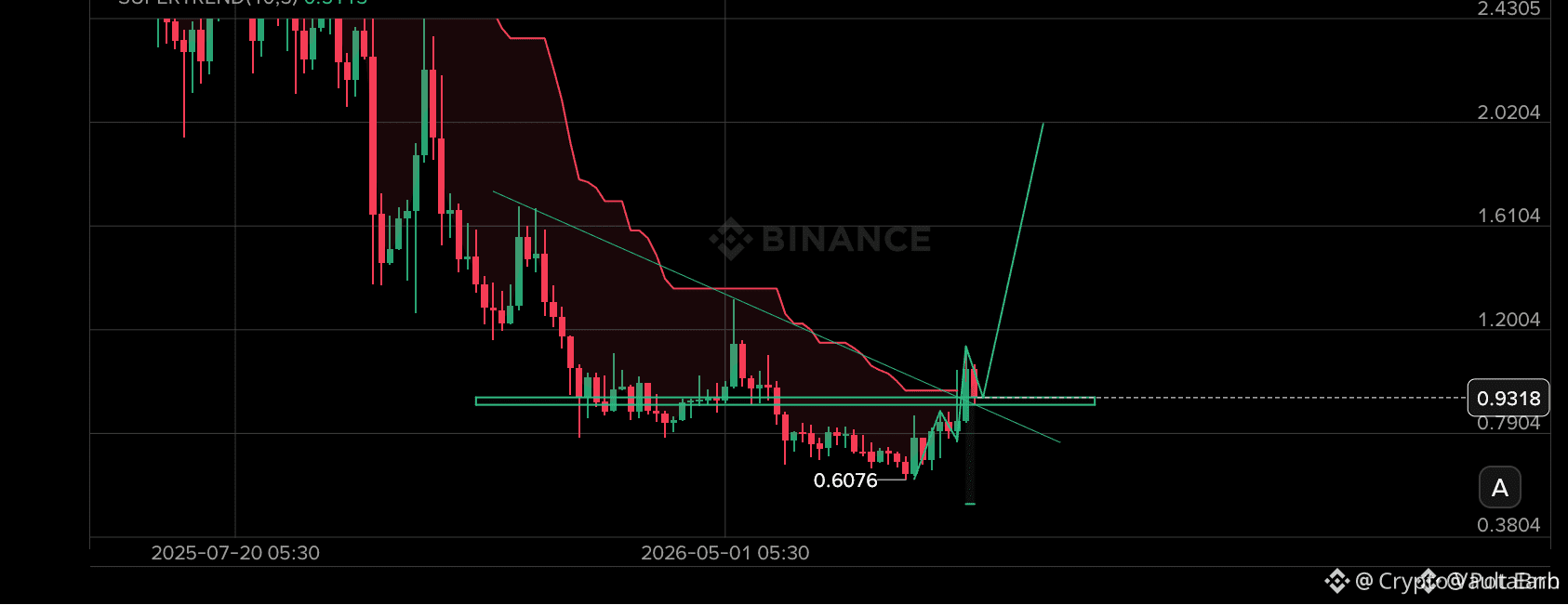
If you look at the chart there are so many retest even on higher time frame
The break out is clean the retest is a must once this thing pump it will surely pump massive see the chart bro
If you are still bearish dont buy 🚀🚀
#FILUSDT #FIL🔥🔥🥵 #FinancialGrowth
#FIL
If you look at the chart there are so many retest even on higher time frame
The break out is clean the retest is a must once this thing pump it will surely pump massive see the chart bro
If you are still bearish dont buy 🚀🚀
#FILUSDT #FIL🔥🔥🥵 #FinancialGrowth
If you look at the chart there are so many retest even on higher time frame
The break out is clean the retest is a must once this thing pump it will surely pump massive see the chart bro
If you are still bearish dont buy 🚀🚀
#FILUSDT #FIL🔥🔥🥵 #FinancialGrowth
382

·
--
Рост
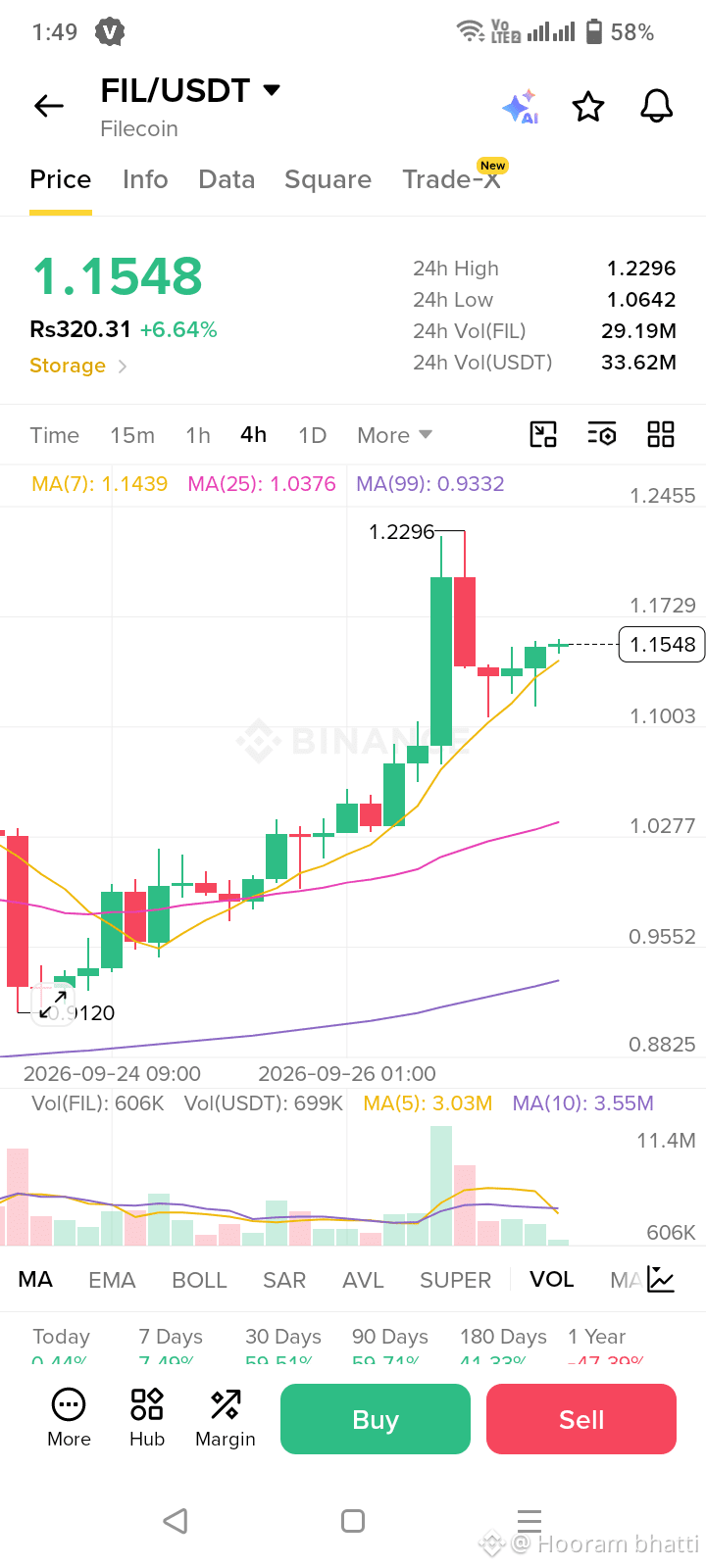
🔥 $FIL LONG SETUP — Buyers Holding Strong!
$FIL is consolidating after a strong +35% move, with buyers defending the $1.14 support zone.
{future}(FILUSDT)
📍 Entry: $1.14 – $1.1548
🛑 SL: $1.08
🎯 TP1: $1.20
🎯 TP2: $1.2296
🎯 TP3: $1.28 – $1.35
⚠️ If $1.14 breaks strongly, avoid chasing and wait for a better setup.
#fil #FILUSDT
🔥 $FIL LONG SETUP — Buyers Holding Strong!
$FIL is consolidating after a strong +35% move, with buyers defending the $1.14 support zone.
📍 Entry: $1.14 – $1.1548
🛑 SL: $1.08
🎯 TP1: $1.20
🎯 TP2: $1.2296
🎯 TP3: $1.28 – $1.35
⚠️ If $1.14 breaks strongly, avoid chasing and wait for a better setup.
#fil #FILUSDT
$FIL is consolidating after a strong +35% move, with buyers defending the $1.14 support zone.
📍 Entry: $1.14 – $1.1548
🛑 SL: $1.08
🎯 TP1: $1.20
🎯 TP2: $1.2296
🎯 TP3: $1.28 – $1.35
⚠️ If $1.14 breaks strongly, avoid chasing and wait for a better setup.
#fil #FILUSDT
286

·
--
$FIL
{future}(FILUSDT)
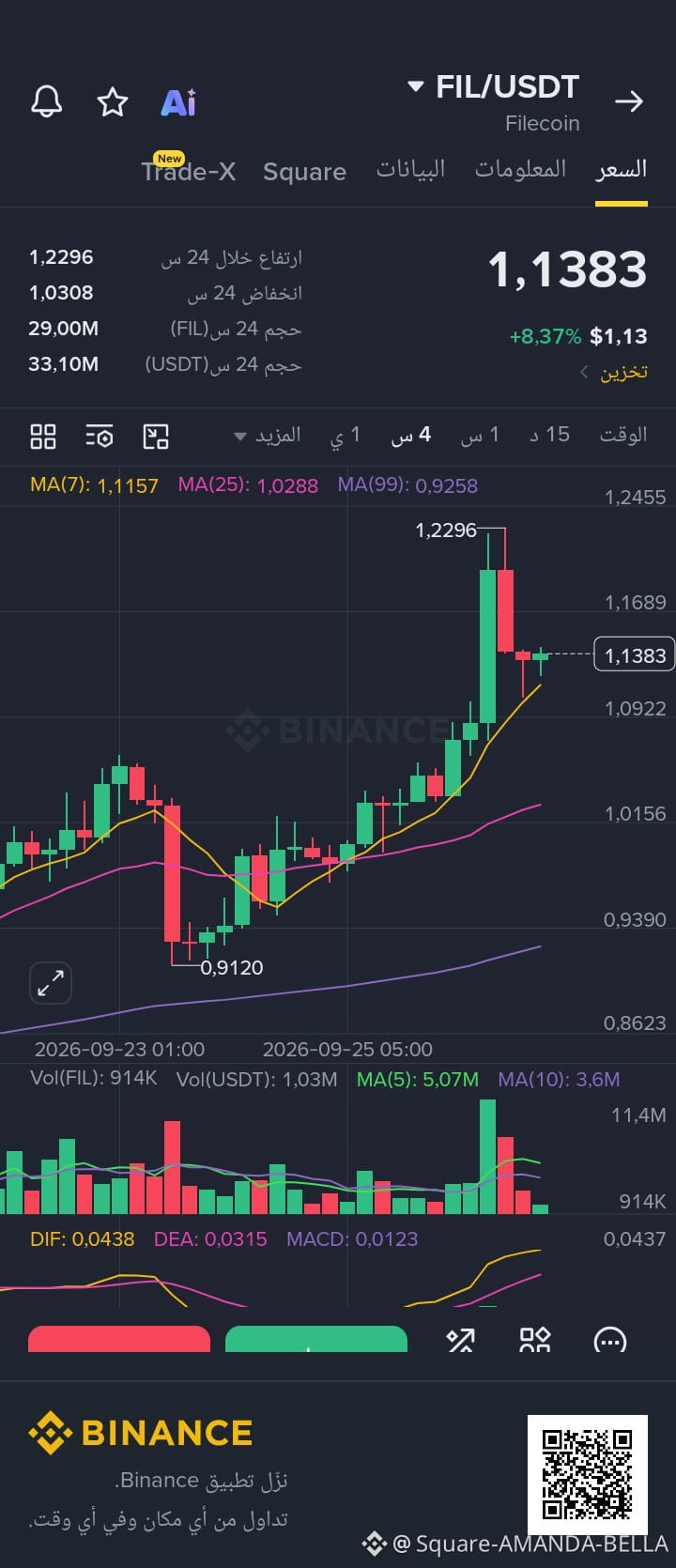
FIL يحلق من 0.91 إلى 1.22$.. هل هذه مجرد البداية؟ 🚀
FIL ملّ من القاع 0.9120$ وقرر أن يطير!
قمة جديدة عند 1.2296$**، صعود **+8.37%**، وحجم **33 مليون دولار يقول أن الحيتان دخلت اللعبة.
السعر الآن 1.1383$ يرتاح فوق الدعم الذهبي MA7 عند 1.1157$**، والزخم لا يزال صاعد فوق **MA99 عند 0.9258$.
خطة التداول:
الشراء: 1.11 - 1.13$
الهدف 1: 1.16$
الهدف 2: 1.2296$
الهدف 3: 1.35$
الوقف: إغلاق 4 ساعات تحت 1.03$
التصحيح الحالي فرصة، ليس فخاً.
#FIL #FILUSDT
$FIL
FIL يحلق من 0.91 إلى 1.22$.. هل هذه مجرد البداية؟ 🚀
FIL ملّ من القاع 0.9120$ وقرر أن يطير!
قمة جديدة عند 1.2296$**، صعود **+8.37%**، وحجم **33 مليون دولار يقول أن الحيتان دخلت اللعبة.
السعر الآن 1.1383$ يرتاح فوق الدعم الذهبي MA7 عند 1.1157$**، والزخم لا يزال صاعد فوق **MA99 عند 0.9258$.
خطة التداول:
الشراء: 1.11 - 1.13$
الهدف 1: 1.16$
الهدف 2: 1.2296$
الهدف 3: 1.35$
الوقف: إغلاق 4 ساعات تحت 1.03$
التصحيح الحالي فرصة، ليس فخاً.
#FIL #FILUSDT
FIL يحلق من 0.91 إلى 1.22$.. هل هذه مجرد البداية؟ 🚀
FIL ملّ من القاع 0.9120$ وقرر أن يطير!
قمة جديدة عند 1.2296$**، صعود **+8.37%**، وحجم **33 مليون دولار يقول أن الحيتان دخلت اللعبة.
السعر الآن 1.1383$ يرتاح فوق الدعم الذهبي MA7 عند 1.1157$**، والزخم لا يزال صاعد فوق **MA99 عند 0.9258$.
خطة التداول:
الشراء: 1.11 - 1.13$
الهدف 1: 1.16$
الهدف 2: 1.2296$
الهدف 3: 1.35$
الوقف: إغلاق 4 ساعات تحت 1.03$
التصحيح الحالي فرصة، ليس فخاً.
#FIL #FILUSDT
4
803
Войдите, чтобы посмотреть больше материала
Присоединяйтесь к пользователям криптовалют по всему миру на Binance Square
⚡️ Получайте новейшую и полезную информацию о криптоактивах.
💬 Нам доверяет крупнейшая в мире криптобиржа.
👍 Получите достоверные аналитические данные от верифицированных создателей контента.
Эл. почта/номер телефона
В тренде
1
#BinanceLaunchesBinanceIntelligence
Просмотров: 137,358
1,329 обсуждают
2
#StriveBuys2000BTCFor$169M
Просмотров: 5,508
60 обсуждают
3
#EvernorthXRPTreasuryCompletesSPACMerger
Просмотров: 83,226
855 обсуждают
4
#ADAGains10%Above$0.27
Просмотров: 43,375
238 обсуждают
5
#ETHUp70%InQ3ButLiquidityFalls
Просмотров: 286,007
1,921 обсуждают
6
#EthStakingExitQueueHits2026High
Просмотров: 107,909
1,280 обсуждают
7
#FedOctoberHoldOdds82.3%
Просмотров: 115,762
1,240 обсуждают
8
#Nikkei225Jumps2.5%ToThreeMonthHigh
Просмотров: 110,289
1,423 обсуждают
9
#CircleMints$2.75BUSDCOnSolanaIn7Days
Просмотров: 2,949
60 обсуждают
10
#DriftHackVictimsBeginClaims
Просмотров: 226,131
2,105 обсуждают