

#dusk
dusk
Просмотров: 22.5M
428,208 обсуждают
Популярные
Новые

$DUSK SHORT
Хладнокровный расчёт на откат от знаковой отметки требует предельной дисциплины и точного выстраивания позиций. Ключевой рубеж обороны выступает главным якорем для всего замысла, отделяя рабочий сценарий от пересмотра рисков. Разворотная логика строится на постепенном преодолении намеченных ориентиров по ходу движения вниз, где каждый новый этап закрепляет успех при условии удержания контрольной границы.
➡️Точка входа: 0.10771
✅Тейк 1: 0.10502943 (+2.49%)
✅Тейк 2: 0.10213886 (+5.17%)
✅Тейк 3: 0.097803 (+9.20%)
🛡Защита: 0.11225586 (-4.22%)
⚠️ Это не финансовая рекомендация. Торгуйте на свой страх и риск. DYOR.
#DUSK #BANKUSDT #EVAAUSDT 📈
$DUSK
$DUSK SHORT
Хладнокровный расчёт на откат от знаковой отметки требует предельной дисциплины и точного выстраивания позиций. Ключевой рубеж обороны выступает главным якорем для всего замысла, отделяя рабочий сценарий от пересмотра рисков. Разворотная логика строится на постепенном преодолении намеченных ориентиров по ходу движения вниз, где каждый новый этап закрепляет успех при условии удержания контрольной границы.
➡️Точка входа: 0.10771
✅Тейк 1: 0.10502943 (+2.49%)
✅Тейк 2: 0.10213886 (+5.17%)
✅Тейк 3: 0.097803 (+9.20%)
🛡Защита: 0.11225586 (-4.22%)
⚠️ Это не финансовая рекомендация. Торгуйте на свой страх и риск. DYOR.
#DUSK #BANKUSDT #EVAAUSDT 📈
$DUSK
Хладнокровный расчёт на откат от знаковой отметки требует предельной дисциплины и точного выстраивания позиций. Ключевой рубеж обороны выступает главным якорем для всего замысла, отделяя рабочий сценарий от пересмотра рисков. Разворотная логика строится на постепенном преодолении намеченных ориентиров по ходу движения вниз, где каждый новый этап закрепляет успех при условии удержания контрольной границы.
➡️Точка входа: 0.10771
✅Тейк 1: 0.10502943 (+2.49%)
✅Тейк 2: 0.10213886 (+5.17%)
✅Тейк 3: 0.097803 (+9.20%)
🛡Защита: 0.11225586 (-4.22%)
⚠️ Это не финансовая рекомендация. Торгуйте на свой страх и риск. DYOR.
#DUSK #BANKUSDT #EVAAUSDT 📈
$DUSK
1


·
--
Рост
Торговля за 30 дней $DUSK 367.1 USDT
🚀 DUSK: T-Minus 90 proqramı başladı!
3 dApp ideyadan Mainnet-ə cəmi 90 günə! 🔥
Dusk-un CTO-su Hein Dauven və T-Minus Dusk komandası seçilmiş layihələrə mentorluq edəcək.
🎯 İştirakçılara: ✅ Deployment xərclərinə dəstək ✅ Həftəlik mentor görüşləri ✅ 3 aylıq Claude Team ✅ Məhsul və təhlükəsizlik yoxlaması
📅 1 dekabr: Testnet-də işlək prototip
📅 1 fevral: Mainnet lansmanı
Ən yaxşı tərəfi? 🔥 Qurucular layihənin tam sahibliyini saxlayır — equity verilmir!
💡 Bu, Dusk ekosistemində real məhsullar yaratmaq istəyən developer-lər üçün böyük fürsətdir.
Sizcə, bu proqramdan hansı innovativ dApp-lər çıxa bilər?
#DUSK @Dusk_Foundation
$DUSK
🚀 DUSK: T-Minus 90 proqramı başladı!
3 dApp ideyadan Mainnet-ə cəmi 90 günə! 🔥
Dusk-un CTO-su Hein Dauven və T-Minus Dusk komandası seçilmiş layihələrə mentorluq edəcək.
🎯 İştirakçılara: ✅ Deployment xərclərinə dəstək ✅ Həftəlik mentor görüşləri ✅ 3 aylıq Claude Team ✅ Məhsul və təhlükəsizlik yoxlaması
📅 1 dekabr: Testnet-də işlək prototip
📅 1 fevral: Mainnet lansmanı
Ən yaxşı tərəfi? 🔥 Qurucular layihənin tam sahibliyini saxlayır — equity verilmir!
💡 Bu, Dusk ekosistemində real məhsullar yaratmaq istəyən developer-lər üçün böyük fürsətdir.
Sizcə, bu proqramdan hansı innovativ dApp-lər çıxa bilər?
#DUSK @Dusk
$DUSK
3 dApp ideyadan Mainnet-ə cəmi 90 günə! 🔥
Dusk-un CTO-su Hein Dauven və T-Minus Dusk komandası seçilmiş layihələrə mentorluq edəcək.
🎯 İştirakçılara: ✅ Deployment xərclərinə dəstək ✅ Həftəlik mentor görüşləri ✅ 3 aylıq Claude Team ✅ Məhsul və təhlükəsizlik yoxlaması
📅 1 dekabr: Testnet-də işlək prototip
📅 1 fevral: Mainnet lansmanı
Ən yaxşı tərəfi? 🔥 Qurucular layihənin tam sahibliyini saxlayır — equity verilmir!
💡 Bu, Dusk ekosistemində real məhsullar yaratmaq istəyən developer-lər üçün böyük fürsətdir.
Sizcə, bu proqramdan hansı innovativ dApp-lər çıxa bilər?
#DUSK @Dusk
$DUSK
TOLGAHANSUCU:
teşekkürler dostum
1
2
102

·
--
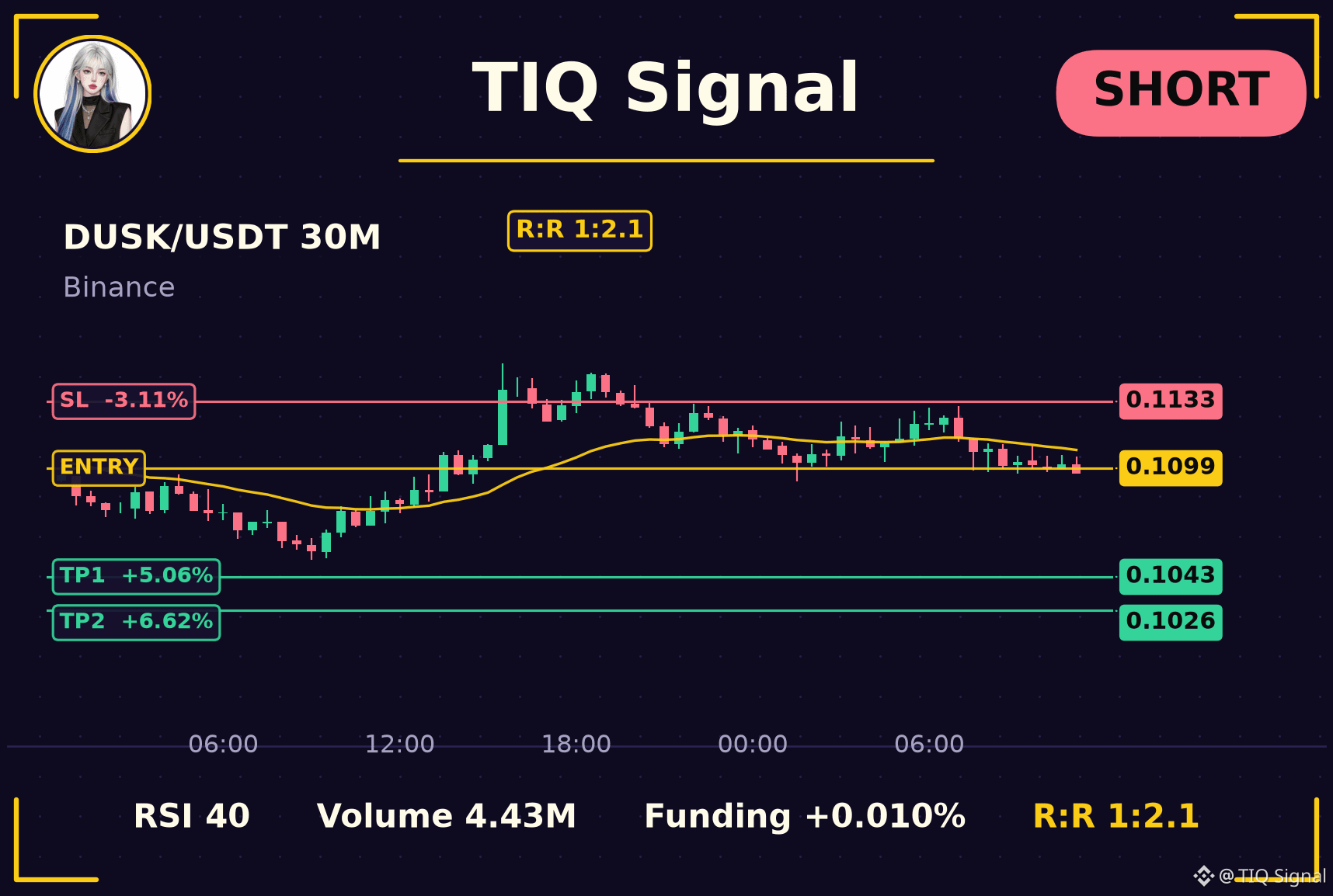
$DUSK just slid into my watchlist 👀
Momentum leaning bearish on the 30M.
Entry: 0.1099
TP: 0.1043 - 0.1026 - 0.1005
SL: 0.1133 (risk ~3.1%)
Love the chart, respect the stop loss.
#DUSK
⚠️ This signal is based on technical indicators and is not investment advice. Always set a stop-loss and manage your own risk.
$DUSK just slid into my watchlist 👀
Momentum leaning bearish on the 30M.
Entry: 0.1099
TP: 0.1043 - 0.1026 - 0.1005
SL: 0.1133 (risk ~3.1%)
Love the chart, respect the stop loss.
#DUSK
⚠️ This signal is based on technical indicators and is not investment advice. Always set a stop-loss and manage your own risk.
Momentum leaning bearish on the 30M.
Entry: 0.1099
TP: 0.1043 - 0.1026 - 0.1005
SL: 0.1133 (risk ~3.1%)
Love the chart, respect the stop loss.
#DUSK
⚠️ This signal is based on technical indicators and is not investment advice. Always set a stop-loss and manage your own risk.
·
--
Proteger el enrutamiento de transacciones frente al valor extraíble por los mineros (MEV) y el arbitraje predatorio es esencial para los participantes institucionales. La arquitectura de @Dusk utiliza pruebas de conocimiento cero (ZKPs) junto con un consenso nativo que garantiza la privacidad del mempool, previniendo la reordenación maliciosa de bloques. La infraestructura de $DUSK consolida la equidad e integridad en el comercio de activos digitales. #dusk
Proteger el enrutamiento de transacciones frente al valor extraíble por los mineros (MEV) y el arbitraje predatorio es esencial para los participantes institucionales. La arquitectura de @Dusk utiliza pruebas de conocimiento cero (ZKPs) junto con un consenso nativo que garantiza la privacidad del mempool, previniendo la reordenación maliciosa de bloques. La infraestructura de $DUSK consolida la equidad e integridad en el comercio de activos digitales. #dusk
105

⚡ $DUSK BREAKS RANGE HIGHS AND PRINTS A TEXTBOOK RECLAIM ABOVE SUPPORT! 🐂
Entry: 0.0705 - 0.0715 ⚡
Target: 0.0725 / 0.0740 / 0.0760 🚀
Stop Loss: 0.0690 ⚠️
Bulls just executed a clean range expansion on $DUSK , absorbing overhead supply before turning former resistance around 0.0700 into a firm demand floor. 📊 The shallow retest shows strong bid interest, confirming momentum remains firmly in control.
💡 A decisive break above the 0.0725 key level unlocks rapid expansion toward upper liquidity targets. 📌 Risk is clearly defined below the recent swing low, giving us a sharp risk-to-reward ratio for this continuation play. 💬 Are you loading the retest or waiting for 0.0725 to trigger the next leg? 👇
⚠️ Not financial advice. Always manage your risk. 🛡️
🏷️ #DUSK #Breakout #LongSetup #Crypto
🔥 💎
⚡ $DUSK BREAKS RANGE HIGHS AND PRINTS A TEXTBOOK RECLAIM ABOVE SUPPORT! 🐂
Entry: 0.0705 - 0.0715 ⚡
Target: 0.0725 / 0.0740 / 0.0760 🚀
Stop Loss: 0.0690 ⚠️
Bulls just executed a clean range expansion on $DUSK , absorbing overhead supply before turning former resistance around 0.0700 into a firm demand floor. 📊 The shallow retest shows strong bid interest, confirming momentum remains firmly in control.
💡 A decisive break above the 0.0725 key level unlocks rapid expansion toward upper liquidity targets. 📌 Risk is clearly defined below the recent swing low, giving us a sharp risk-to-reward ratio for this continuation play. 💬 Are you loading the retest or waiting for 0.0725 to trigger the next leg? 👇
⚠️ Not financial advice. Always manage your risk. 🛡️
🏷️ #DUSK #Breakout #LongSetup #Crypto
🔥 💎
Entry: 0.0705 - 0.0715 ⚡
Target: 0.0725 / 0.0740 / 0.0760 🚀
Stop Loss: 0.0690 ⚠️
Bulls just executed a clean range expansion on $DUSK , absorbing overhead supply before turning former resistance around 0.0700 into a firm demand floor. 📊 The shallow retest shows strong bid interest, confirming momentum remains firmly in control.
💡 A decisive break above the 0.0725 key level unlocks rapid expansion toward upper liquidity targets. 📌 Risk is clearly defined below the recent swing low, giving us a sharp risk-to-reward ratio for this continuation play. 💬 Are you loading the retest or waiting for 0.0725 to trigger the next leg? 👇
⚠️ Not financial advice. Always manage your risk. 🛡️
🏷️ #DUSK #Breakout #LongSetup #Crypto
🔥 💎
7
·
--
$DUSK BREAKING OUT ON SCHEDULE LOCK YOUR RISK-FREE RIDE NOW 🚀💥
$DUSK is executing the momentum playbook flawlessly. Sellers got swept clean on the initial move, and order flow is shifting heavily into buyer control as volume expands. 📊
If you took the entry, trail your stop loss straight to entry immediately. 📌 We are playing with house money while the next expansion leg loads up into overhead liquidity zones. ⚡
💬 Are you holding your full size through the next wave or locking in partials along the way? 👇
⚠️ Not financial advice. Always manage your risk. 🛡️
🏷️ #DUSK #Altcoins #Trading #Breakout #Crypto
🔥 💎
$DUSK BREAKING OUT ON SCHEDULE LOCK YOUR RISK-FREE RIDE NOW 🚀💥
$DUSK is executing the momentum playbook flawlessly. Sellers got swept clean on the initial move, and order flow is shifting heavily into buyer control as volume expands. 📊
If you took the entry, trail your stop loss straight to entry immediately. 📌 We are playing with house money while the next expansion leg loads up into overhead liquidity zones. ⚡
💬 Are you holding your full size through the next wave or locking in partials along the way? 👇
⚠️ Not financial advice. Always manage your risk. 🛡️
🏷️ #DUSK #Altcoins #Trading #Breakout #Crypto
🔥 💎
$DUSK is executing the momentum playbook flawlessly. Sellers got swept clean on the initial move, and order flow is shifting heavily into buyer control as volume expands. 📊
If you took the entry, trail your stop loss straight to entry immediately. 📌 We are playing with house money while the next expansion leg loads up into overhead liquidity zones. ⚡
💬 Are you holding your full size through the next wave or locking in partials along the way? 👇
⚠️ Not financial advice. Always manage your risk. 🛡️
🏷️ #DUSK #Altcoins #Trading #Breakout #Crypto
🔥 💎
11

·
--
$DUSK PLAYBOOK EXECUTED PERFECTLY — LOCK STOP LOSS AT ENTRY AND RIDE CONTINUATION! ⚡ 💥
$DUSK followed the technical trajectory to a tee, squeezing out late sellers and confirming high-conviction structure. Shift your stop loss directly to entry—we are officially playing with house money while buyers absorb remaining floating supply. 📊
Momentum indicators are coiling tight for the next expansion wave, with order flow showing aggressive spot absorption before the secondary sweep. ⚡ Sit back, stay disciplined, and let the trend run its full course. 💡 💬 Are you holding tight for the next expansion leg or taking partial profits here? 👇
⚠️ Not financial advice. Always manage your risk. 🛡️
🏷️ #DUSK #Altcoins #Breakout #Crypto #Trading
🔥 💎
$DUSK PLAYBOOK EXECUTED PERFECTLY — LOCK STOP LOSS AT ENTRY AND RIDE CONTINUATION! ⚡ 💥
$DUSK followed the technical trajectory to a tee, squeezing out late sellers and confirming high-conviction structure. Shift your stop loss directly to entry—we are officially playing with house money while buyers absorb remaining floating supply. 📊
Momentum indicators are coiling tight for the next expansion wave, with order flow showing aggressive spot absorption before the secondary sweep. ⚡ Sit back, stay disciplined, and let the trend run its full course. 💡 💬 Are you holding tight for the next expansion leg or taking partial profits here? 👇
⚠️ Not financial advice. Always manage your risk. 🛡️
🏷️ #DUSK #Altcoins #Breakout #Crypto #Trading
🔥 💎
$DUSK followed the technical trajectory to a tee, squeezing out late sellers and confirming high-conviction structure. Shift your stop loss directly to entry—we are officially playing with house money while buyers absorb remaining floating supply. 📊
Momentum indicators are coiling tight for the next expansion wave, with order flow showing aggressive spot absorption before the secondary sweep. ⚡ Sit back, stay disciplined, and let the trend run its full course. 💡 💬 Are you holding tight for the next expansion leg or taking partial profits here? 👇
⚠️ Not financial advice. Always manage your risk. 🛡️
🏷️ #DUSK #Altcoins #Breakout #Crypto #Trading
🔥 💎
14
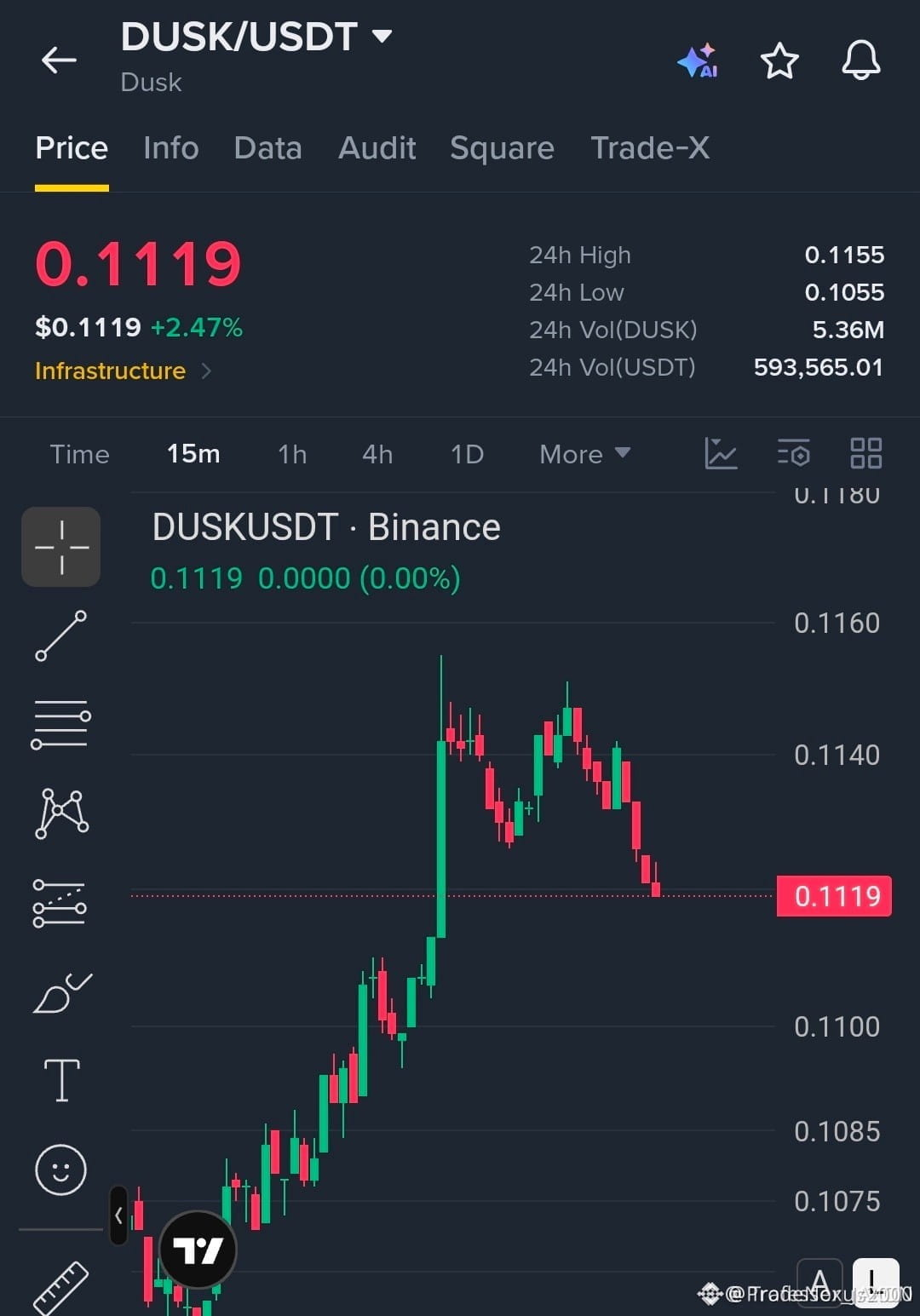
🔴 $DUSK SINKS AS BEAR PRESSURE ERODES KEY SUPPORT 🦈
Entry: 0.1118-0.1122 ⚡
Target: 0.1110 🚀
Target: 0.1100 🚀
Target: 0.1090 🚀
Stop Loss: 0.1135 ⚠️
📊 The 15‑minute chart recorded a decisive rejection at 0.1145, turning the prior bullish order block into a fresh supply zone. Sellers have drained the remaining buying interest, targeting the liquidity pocket just above 0.1120. 🔍
⚡ A breach of the 0.1118‑0.1122 band should unleash a down‑move toward the next demand cluster at 0.1110, with smart‑money stop‑hunts potentially dragging price to 0.1090. Volume spikes on the 5‑minute candles underscore the bearish thrust. 🦈
💬 Do you see the bears securing the lower liquidity ladder or is a reversal imminent? 👇
⚠️ Not financial advice. Always manage your risk. 🛡️
🏷️ #DUSK #ShortSetup #LiquiditySweep #Crypto
🔥 💎
🔴 $DUSK SINKS AS BEAR PRESSURE ERODES KEY SUPPORT 🦈
Entry: 0.1118-0.1122 ⚡
Target: 0.1110 🚀
Target: 0.1100 🚀
Target: 0.1090 🚀
Stop Loss: 0.1135 ⚠️
📊 The 15‑minute chart recorded a decisive rejection at 0.1145, turning the prior bullish order block into a fresh supply zone. Sellers have drained the remaining buying interest, targeting the liquidity pocket just above 0.1120. 🔍
⚡ A breach of the 0.1118‑0.1122 band should unleash a down‑move toward the next demand cluster at 0.1110, with smart‑money stop‑hunts potentially dragging price to 0.1090. Volume spikes on the 5‑minute candles underscore the bearish thrust. 🦈
💬 Do you see the bears securing the lower liquidity ladder or is a reversal imminent? 👇
⚠️ Not financial advice. Always manage your risk. 🛡️
🏷️ #DUSK #ShortSetup #LiquiditySweep #Crypto
🔥 💎
Entry: 0.1118-0.1122 ⚡
Target: 0.1110 🚀
Target: 0.1100 🚀
Target: 0.1090 🚀
Stop Loss: 0.1135 ⚠️
📊 The 15‑minute chart recorded a decisive rejection at 0.1145, turning the prior bullish order block into a fresh supply zone. Sellers have drained the remaining buying interest, targeting the liquidity pocket just above 0.1120. 🔍
⚡ A breach of the 0.1118‑0.1122 band should unleash a down‑move toward the next demand cluster at 0.1110, with smart‑money stop‑hunts potentially dragging price to 0.1090. Volume spikes on the 5‑minute candles underscore the bearish thrust. 🦈
💬 Do you see the bears securing the lower liquidity ladder or is a reversal imminent? 👇
⚠️ Not financial advice. Always manage your risk. 🛡️
🏷️ #DUSK #ShortSetup #LiquiditySweep #Crypto
🔥 💎
18

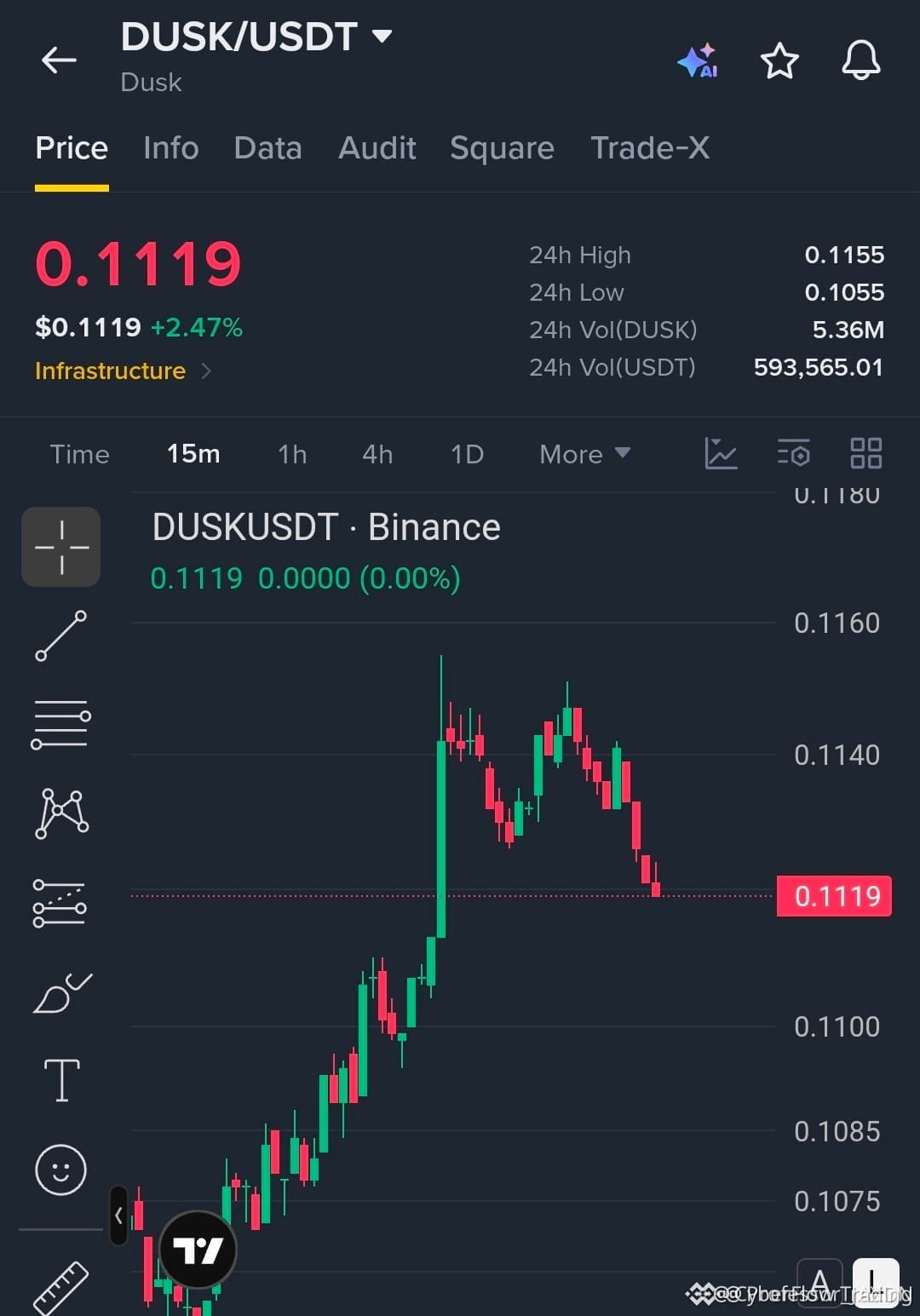
🔴 $DUSK SLIDES INTO BEAR ZONE AS LIQUIDITY SWEPT! 🦈
Entry: 0.1118-0.1122 ⚡
Target: 0.1110 🚀
Target: 0.1100 🚀
Target: 0.1090 🚀
Stop Loss: 0.1135 ⚠️
📊 The 15‑minute chart rejected at 0.1145 and bears are now ripping through the next liquidity bucket. Each dip below 0.1118 strips the last buyer cushion, exposing a smart‑money order block left wide open. 🦈
⚡ Volume spikes confirm the sweep, and the first support sits at 0.1110. A deeper dive to 0.1100‑0.1090 sets a tidy three‑tier target, while the stop sits snug at 0.1135. 📈
💬 Are you ready to ride the bear wave or waiting for a reversal? 👇
⚠️ Not financial advice. Always manage your risk. 🛡️
🏷️ #DUSK #ShortSetup #LiquiditySweep #Crypto
🔥 💎
🔴 $DUSK SLIDES INTO BEAR ZONE AS LIQUIDITY SWEPT! 🦈
Entry: 0.1118-0.1122 ⚡
Target: 0.1110 🚀
Target: 0.1100 🚀
Target: 0.1090 🚀
Stop Loss: 0.1135 ⚠️
📊 The 15‑minute chart rejected at 0.1145 and bears are now ripping through the next liquidity bucket. Each dip below 0.1118 strips the last buyer cushion, exposing a smart‑money order block left wide open. 🦈
⚡ Volume spikes confirm the sweep, and the first support sits at 0.1110. A deeper dive to 0.1100‑0.1090 sets a tidy three‑tier target, while the stop sits snug at 0.1135. 📈
💬 Are you ready to ride the bear wave or waiting for a reversal? 👇
⚠️ Not financial advice. Always manage your risk. 🛡️
🏷️ #DUSK #ShortSetup #LiquiditySweep #Crypto
🔥 💎
Entry: 0.1118-0.1122 ⚡
Target: 0.1110 🚀
Target: 0.1100 🚀
Target: 0.1090 🚀
Stop Loss: 0.1135 ⚠️
📊 The 15‑minute chart rejected at 0.1145 and bears are now ripping through the next liquidity bucket. Each dip below 0.1118 strips the last buyer cushion, exposing a smart‑money order block left wide open. 🦈
⚡ Volume spikes confirm the sweep, and the first support sits at 0.1110. A deeper dive to 0.1100‑0.1090 sets a tidy three‑tier target, while the stop sits snug at 0.1135. 📈
💬 Are you ready to ride the bear wave or waiting for a reversal? 👇
⚠️ Not financial advice. Always manage your risk. 🛡️
🏷️ #DUSK #ShortSetup #LiquiditySweep #Crypto
🔥 💎
13

·
--
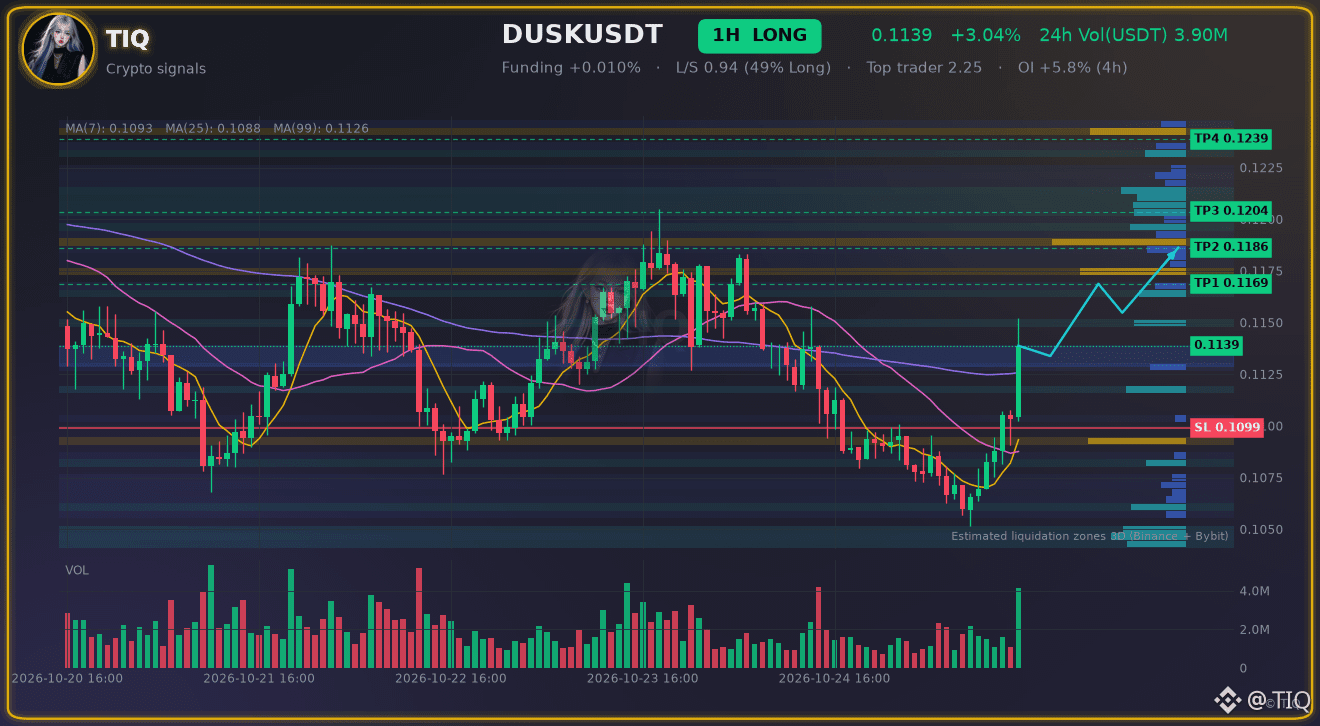
$DUSK Long (1H), the "less talk, more numbers" edition:
📍 0.1129 - 0.1139
🎯 0.1169 - 0.1186 - 0.1204 - 0.1239
🛑 0.1099 (risk ~3.1%)
Why: momentum leaning bullish.
#DUSK
⚠️ This signal is based on technical indicators and is not investment advice. Always set a stop-loss and manage your own risk.
$DUSK Long (1H), the "less talk, more numbers" edition:
📍 0.1129 - 0.1139
🎯 0.1169 - 0.1186 - 0.1204 - 0.1239
🛑 0.1099 (risk ~3.1%)
Why: momentum leaning bullish.
#DUSK
⚠️ This signal is based on technical indicators and is not investment advice. Always set a stop-loss and manage your own risk.
📍 0.1129 - 0.1139
🎯 0.1169 - 0.1186 - 0.1204 - 0.1239
🛑 0.1099 (risk ~3.1%)
Why: momentum leaning bullish.
#DUSK
⚠️ This signal is based on technical indicators and is not investment advice. Always set a stop-loss and manage your own risk.
459
🚨 $DUSK SHOWS HEAVY REJECTION AT SUPPLY AS BEARS PREPARE FOR MARKDOWN 📉
Entry: 0.07288 - 0.7616 🔻
Target: 0.07042 / 0.06652 / 0.05519 🎯
Stop Loss: 0.07899 ⚠️
Sellers are stepping in right at key overhead supply as $DUSK hits heavy resistance. Order flow shows aggressive distribution from smart money, sweeping local buy-side liquidity before setting up a major markdown phase. 📉
With downside momentum accelerating on shorter timeframes, the path of least resistance points toward lower support clusters. 📊 As long as price stays below our invalidation level, bears retain full control of the trend. 💡
Are you taking the short positioning down to demand, or waiting for a relief bounce first? 👇
⚠️ Not financial advice. Always manage your risk. 🛡️
🏷️ #DUSK #ShortSetup #Bearish #CryptoTrading
📉 🐻
🚨 $DUSK SHOWS HEAVY REJECTION AT SUPPLY AS BEARS PREPARE FOR MARKDOWN 📉
Entry: 0.07288 - 0.7616 🔻
Target: 0.07042 / 0.06652 / 0.05519 🎯
Stop Loss: 0.07899 ⚠️
Sellers are stepping in right at key overhead supply as $DUSK hits heavy resistance. Order flow shows aggressive distribution from smart money, sweeping local buy-side liquidity before setting up a major markdown phase. 📉
With downside momentum accelerating on shorter timeframes, the path of least resistance points toward lower support clusters. 📊 As long as price stays below our invalidation level, bears retain full control of the trend. 💡
Are you taking the short positioning down to demand, or waiting for a relief bounce first? 👇
⚠️ Not financial advice. Always manage your risk. 🛡️
🏷️ #DUSK #ShortSetup #Bearish #CryptoTrading
📉 🐻
Entry: 0.07288 - 0.7616 🔻
Target: 0.07042 / 0.06652 / 0.05519 🎯
Stop Loss: 0.07899 ⚠️
Sellers are stepping in right at key overhead supply as $DUSK hits heavy resistance. Order flow shows aggressive distribution from smart money, sweeping local buy-side liquidity before setting up a major markdown phase. 📉
With downside momentum accelerating on shorter timeframes, the path of least resistance points toward lower support clusters. 📊 As long as price stays below our invalidation level, bears retain full control of the trend. 💡
Are you taking the short positioning down to demand, or waiting for a relief bounce first? 👇
⚠️ Not financial advice. Always manage your risk. 🛡️
🏷️ #DUSK #ShortSetup #Bearish #CryptoTrading
📉 🐻
4

·
--
Рост
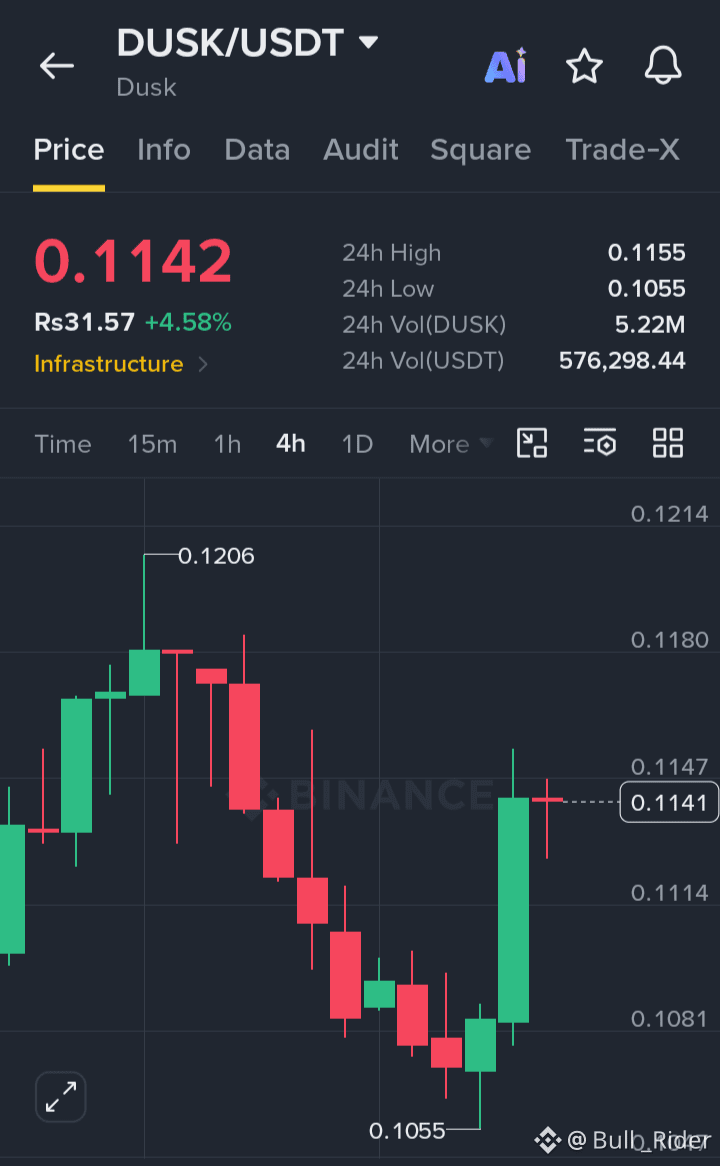
$DUSK is showing strength from support, with buyers gradually taking control and momentum building for a potential continuation move.
Entry: 0.1142
TP1: 0.1160
TP2: 0.1180
TP3: 0.1206
SL: 0.1114
Buy and Trade $龙虾
#DUSK $MUUB
{spot}(MUUBUSDT)
{future}(DUSKUSDT)
$DUSK is showing strength from support, with buyers gradually taking control and momentum building for a potential continuation move.
Entry: 0.1142
TP1: 0.1160
TP2: 0.1180
TP3: 0.1206
SL: 0.1114
Buy and Trade $龙虾
#DUSK $MUUB
Entry: 0.1142
TP1: 0.1160
TP2: 0.1180
TP3: 0.1206
SL: 0.1114
Buy and Trade $龙虾
#DUSK $MUUB
1
32


·
--
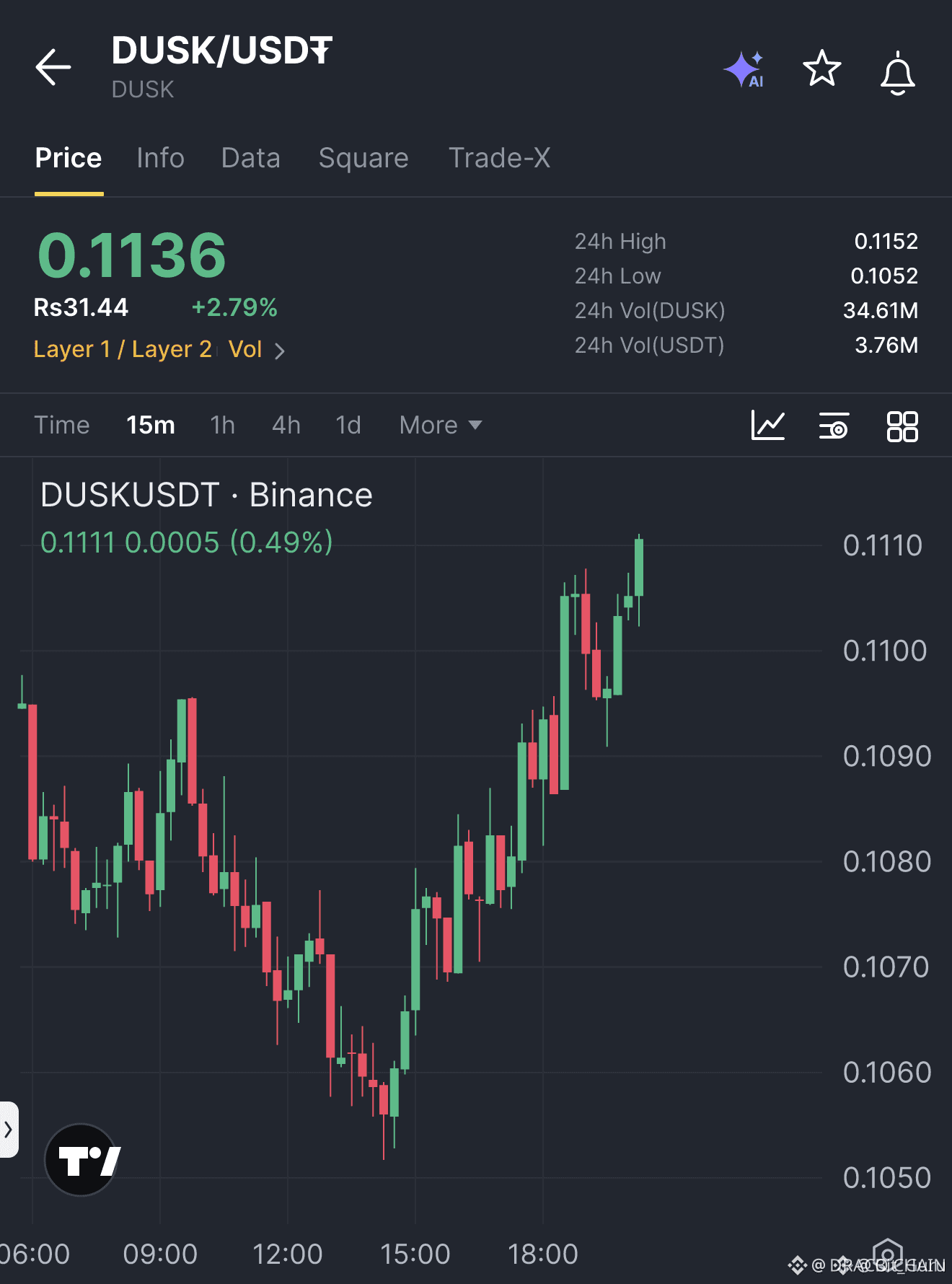
🚀 🟢 $DUSK BREAKS 0.11111 – BULLISH SWING SETUP UNVEILED
Entry: 0.11201 ⚡
Target: 0.11639 🚀
Target: 0.11931 🎯
Target: 0.12369 💥
Stop Loss: 0.10909 ⚠️
📊 The demand block at 0.11201 has been defending three successive pull‑backs, indicating smart‑money accumulation. 📈 Volume spikes on the 4H chart align with a classic liquidity sweep, pushing price into a higher‑timeframe bullish bias. 🌊 With the order block still intact, the next leg of upward thrust targets the clustered resistance zones at 0.116‑0.124, offering a clean risk‑reward profile. 💡 Patience on entry and disciplined stop placement are the hallmarks of an institutional‑grade play. 🤔 Are you ready to ride the next liquidity‑driven rally? 👇
⚠️ Not financial advice. Always manage your risk. 🛡️
🏷️ #DUSK #LongSetup #Liquidity #Crypto
🔥 💎
🚀 🟢 $DUSK BREAKS 0.11111 – BULLISH SWING SETUP UNVEILED
Entry: 0.11201 ⚡
Target: 0.11639 🚀
Target: 0.11931 🎯
Target: 0.12369 💥
Stop Loss: 0.10909 ⚠️
📊 The demand block at 0.11201 has been defending three successive pull‑backs, indicating smart‑money accumulation. 📈 Volume spikes on the 4H chart align with a classic liquidity sweep, pushing price into a higher‑timeframe bullish bias. 🌊 With the order block still intact, the next leg of upward thrust targets the clustered resistance zones at 0.116‑0.124, offering a clean risk‑reward profile. 💡 Patience on entry and disciplined stop placement are the hallmarks of an institutional‑grade play. 🤔 Are you ready to ride the next liquidity‑driven rally? 👇
⚠️ Not financial advice. Always manage your risk. 🛡️
🏷️ #DUSK #LongSetup #Liquidity #Crypto
🔥 💎
Entry: 0.11201 ⚡
Target: 0.11639 🚀
Target: 0.11931 🎯
Target: 0.12369 💥
Stop Loss: 0.10909 ⚠️
📊 The demand block at 0.11201 has been defending three successive pull‑backs, indicating smart‑money accumulation. 📈 Volume spikes on the 4H chart align with a classic liquidity sweep, pushing price into a higher‑timeframe bullish bias. 🌊 With the order block still intact, the next leg of upward thrust targets the clustered resistance zones at 0.116‑0.124, offering a clean risk‑reward profile. 💡 Patience on entry and disciplined stop placement are the hallmarks of an institutional‑grade play. 🤔 Are you ready to ride the next liquidity‑driven rally? 👇
⚠️ Not financial advice. Always manage your risk. 🛡️
🏷️ #DUSK #LongSetup #Liquidity #Crypto
🔥 💎
2
·
--
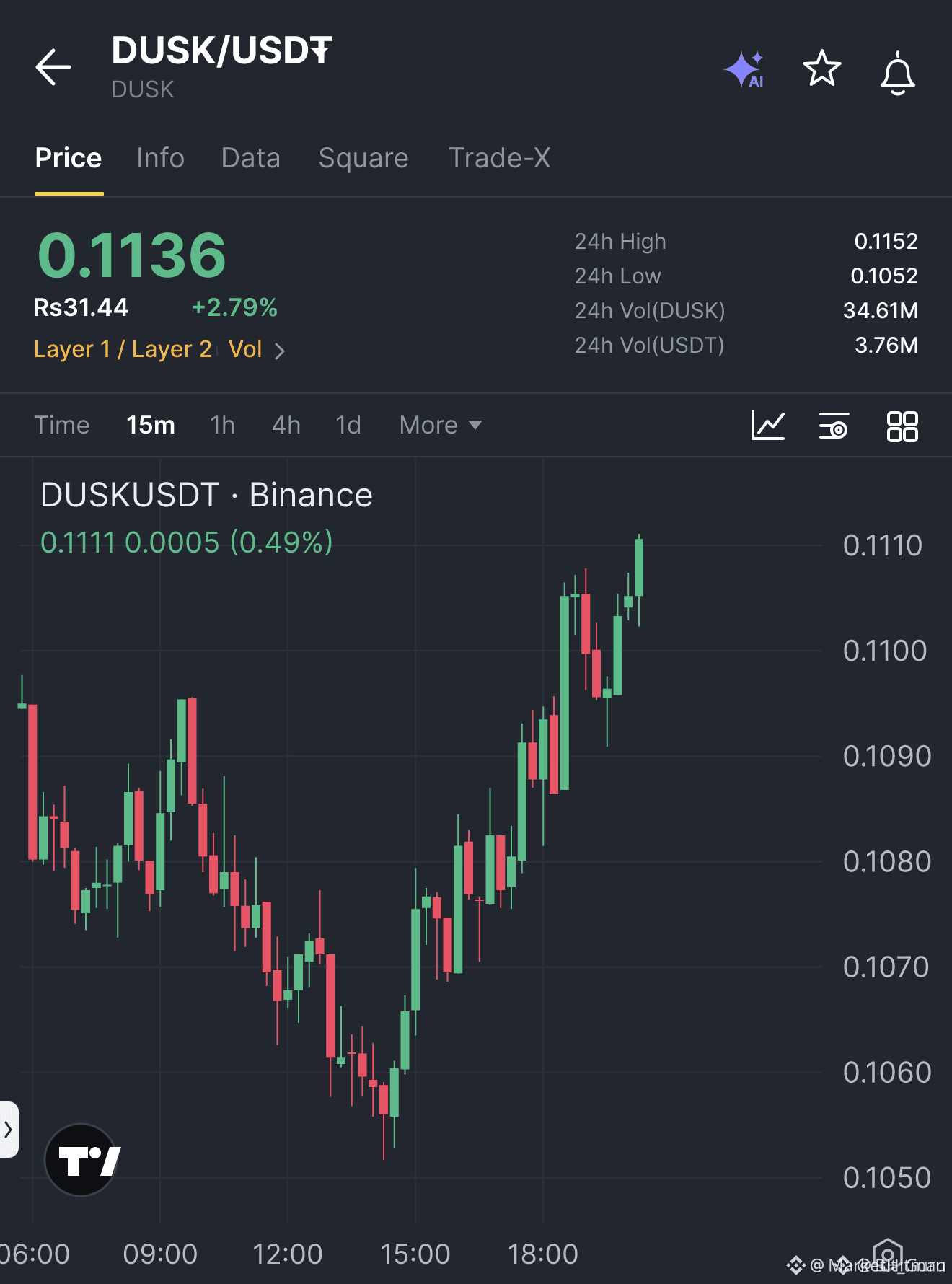
🚀 🟢 $DUSK BREAKING ABOVE 0.11111 – BULLISH MOMENTUM UNLEASHED!
Entry: 0.11201 ⚡
Target: 0.11639/0.11931/0.12369 🚀
Stop Loss: 0.10909 ⚠️
📊 The price is carving a fresh demand zone just above 0.11111, and smart‑money 🦈 whales are snapping up every dip. 📌 With volume swelling on the 4‑hour chart, the upside bias is reinforced by a rising RSI that’s still in bullish territory. ⚡ Hold the entry patience, let the order flow dictate the ride, and keep that stop tight as the market tests the next resistance ladder.
⚠️ Not financial advice. Always manage your risk. 🛡️
🏷️ #DUSK #LongSetup #Bullish #Crypto
🔥 💎
🚀 🟢 $DUSK BREAKING ABOVE 0.11111 – BULLISH MOMENTUM UNLEASHED!
Entry: 0.11201 ⚡
Target: 0.11639/0.11931/0.12369 🚀
Stop Loss: 0.10909 ⚠️
📊 The price is carving a fresh demand zone just above 0.11111, and smart‑money 🦈 whales are snapping up every dip. 📌 With volume swelling on the 4‑hour chart, the upside bias is reinforced by a rising RSI that’s still in bullish territory. ⚡ Hold the entry patience, let the order flow dictate the ride, and keep that stop tight as the market tests the next resistance ladder.
⚠️ Not financial advice. Always manage your risk. 🛡️
🏷️ #DUSK #LongSetup #Bullish #Crypto
🔥 💎
Entry: 0.11201 ⚡
Target: 0.11639/0.11931/0.12369 🚀
Stop Loss: 0.10909 ⚠️
📊 The price is carving a fresh demand zone just above 0.11111, and smart‑money 🦈 whales are snapping up every dip. 📌 With volume swelling on the 4‑hour chart, the upside bias is reinforced by a rising RSI that’s still in bullish territory. ⚡ Hold the entry patience, let the order flow dictate the ride, and keep that stop tight as the market tests the next resistance ladder.
⚠️ Not financial advice. Always manage your risk. 🛡️
🏷️ #DUSK #LongSetup #Bullish #Crypto
🔥 💎
3

·
--
Spent my CreatorPad hours poking around Dusk Foundation's recent moves and one thing snagged me — not the shiny stuff, the messy stuff. On Aug 16 the team flagged suspicious activity on a wallet tied to bridge ops. Bridge got paused. Still is, actually, as of writing. $DUSK #dusk @dusk
Here's the bit that stuck: the fix that shipped fastest wasn't some fancy zero-knowledge safeguard. It was a plain recipient blocklist bolted onto the Web Wallet — block known bad addresses before a tx even goes out. For a project whose whole pitch is privacy-meets-compliance via ZK proofs, the emergency patch was... the oldest trick in the book. Centralized list, manual curation, zero cryptographic elegance involved.
Hmm. Made me pause mid-scroll. Advanced tech gets you the headline, but when something actually breaks, the tool that saves the day is the boring one everyone already knows how to build. Makes sense, honestly — you don't prototype new cryptography mid-incident, you reach for what works right now.
Small anecdote — I almost filed this under "routine security notice" and moved on, bridge pauses happen. But sitting with it longer, it's a decent little window into how "advanced infra" projects actually triage risk versus how they market the tech.
Bridge's still closed while they finish the review ahead of DuskEVM. Wonder how long "temporary" ends up meaning here.
@Dusk_Foundation $DUSK #dusk
Spent my CreatorPad hours poking around Dusk Foundation's recent moves and one thing snagged me — not the shiny stuff, the messy stuff. On Aug 16 the team flagged suspicious activity on a wallet tied to bridge ops. Bridge got paused. Still is, actually, as of writing. $DUSK #dusk @dusk
Here's the bit that stuck: the fix that shipped fastest wasn't some fancy zero-knowledge safeguard. It was a plain recipient blocklist bolted onto the Web Wallet — block known bad addresses before a tx even goes out. For a project whose whole pitch is privacy-meets-compliance via ZK proofs, the emergency patch was... the oldest trick in the book. Centralized list, manual curation, zero cryptographic elegance involved.
Hmm. Made me pause mid-scroll. Advanced tech gets you the headline, but when something actually breaks, the tool that saves the day is the boring one everyone already knows how to build. Makes sense, honestly — you don't prototype new cryptography mid-incident, you reach for what works right now.
Small anecdote — I almost filed this under "routine security notice" and moved on, bridge pauses happen. But sitting with it longer, it's a decent little window into how "advanced infra" projects actually triage risk versus how they market the tech.
Bridge's still closed while they finish the review ahead of DuskEVM. Wonder how long "temporary" ends up meaning here.
@Dusk $DUSK #dusk
Here's the bit that stuck: the fix that shipped fastest wasn't some fancy zero-knowledge safeguard. It was a plain recipient blocklist bolted onto the Web Wallet — block known bad addresses before a tx even goes out. For a project whose whole pitch is privacy-meets-compliance via ZK proofs, the emergency patch was... the oldest trick in the book. Centralized list, manual curation, zero cryptographic elegance involved.
Hmm. Made me pause mid-scroll. Advanced tech gets you the headline, but when something actually breaks, the tool that saves the day is the boring one everyone already knows how to build. Makes sense, honestly — you don't prototype new cryptography mid-incident, you reach for what works right now.
Small anecdote — I almost filed this under "routine security notice" and moved on, bridge pauses happen. But sitting with it longer, it's a decent little window into how "advanced infra" projects actually triage risk versus how they market the tech.
Bridge's still closed while they finish the review ahead of DuskEVM. Wonder how long "temporary" ends up meaning here.
@Dusk $DUSK #dusk
326
·
--
Optimizar la auditoría de riesgos operativos sin vulnerar secretos comerciales es una necesidad imperativa para las instituciones financieras. La tecnología de @Dusk utiliza arquitecturas de conocimiento cero para validar métricas de solvencia y cumplimiento de capital en tiempo real sin revelar balances ni estrategias privadas. La adopción de $DUSK impulsa la seguridad en la infraestructura financiera Web3. #dusk
Optimizar la auditoría de riesgos operativos sin vulnerar secretos comerciales es una necesidad imperativa para las instituciones financieras. La tecnología de @Dusk utiliza arquitecturas de conocimiento cero para validar métricas de solvencia y cumplimiento de capital en tiempo real sin revelar balances ni estrategias privadas. La adopción de $DUSK impulsa la seguridad en la infraestructura financiera Web3. #dusk
1
172
$DUSK LONG
Ловим момент для входа на покупку при условии жесткого контроля риска. Структура движения позволяет рассчитывать на планомерный подъем к намеченным ориентирам.
➡️Точка входа: 0.1199
✅Тейк 1: 0.12234623 (+2.04%)
✅Тейк 2: 0.12559246 (+4.75%)
✅Тейк 3: 0.1304618 (+8.81%)
⛔️Стоп: 0.11423066 (-4.73%)
⚠️ Это не финансовая рекомендация. Торгуйте на свой страх и риск. DYOR.
#DUSK #XRPDefends #SenateReadiesSeptemberCLARITYActVote 📈
$DUSK
$DUSK LONG
Ловим момент для входа на покупку при условии жесткого контроля риска. Структура движения позволяет рассчитывать на планомерный подъем к намеченным ориентирам.
➡️Точка входа: 0.1199
✅Тейк 1: 0.12234623 (+2.04%)
✅Тейк 2: 0.12559246 (+4.75%)
✅Тейк 3: 0.1304618 (+8.81%)
⛔️Стоп: 0.11423066 (-4.73%)
⚠️ Это не финансовая рекомендация. Торгуйте на свой страх и риск. DYOR.
#DUSK #XRPDefends #SenateReadiesSeptemberCLARITYActVote 📈
$DUSK
Ловим момент для входа на покупку при условии жесткого контроля риска. Структура движения позволяет рассчитывать на планомерный подъем к намеченным ориентирам.
➡️Точка входа: 0.1199
✅Тейк 1: 0.12234623 (+2.04%)
✅Тейк 2: 0.12559246 (+4.75%)
✅Тейк 3: 0.1304618 (+8.81%)
⛔️Стоп: 0.11423066 (-4.73%)
⚠️ Это не финансовая рекомендация. Торгуйте на свой страх и риск. DYOR.
#DUSK #XRPDefends #SenateReadiesSeptemberCLARITYActVote 📈
$DUSK
11
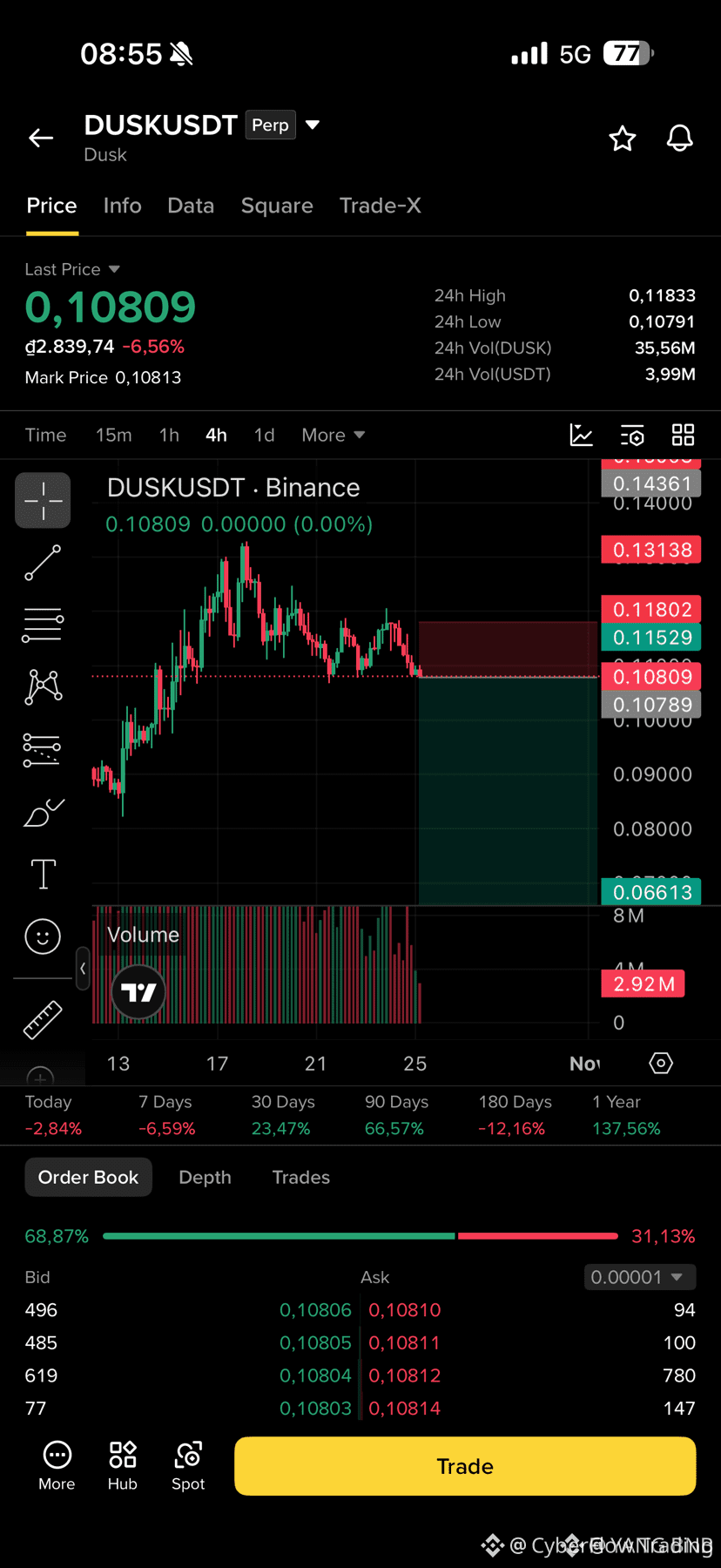
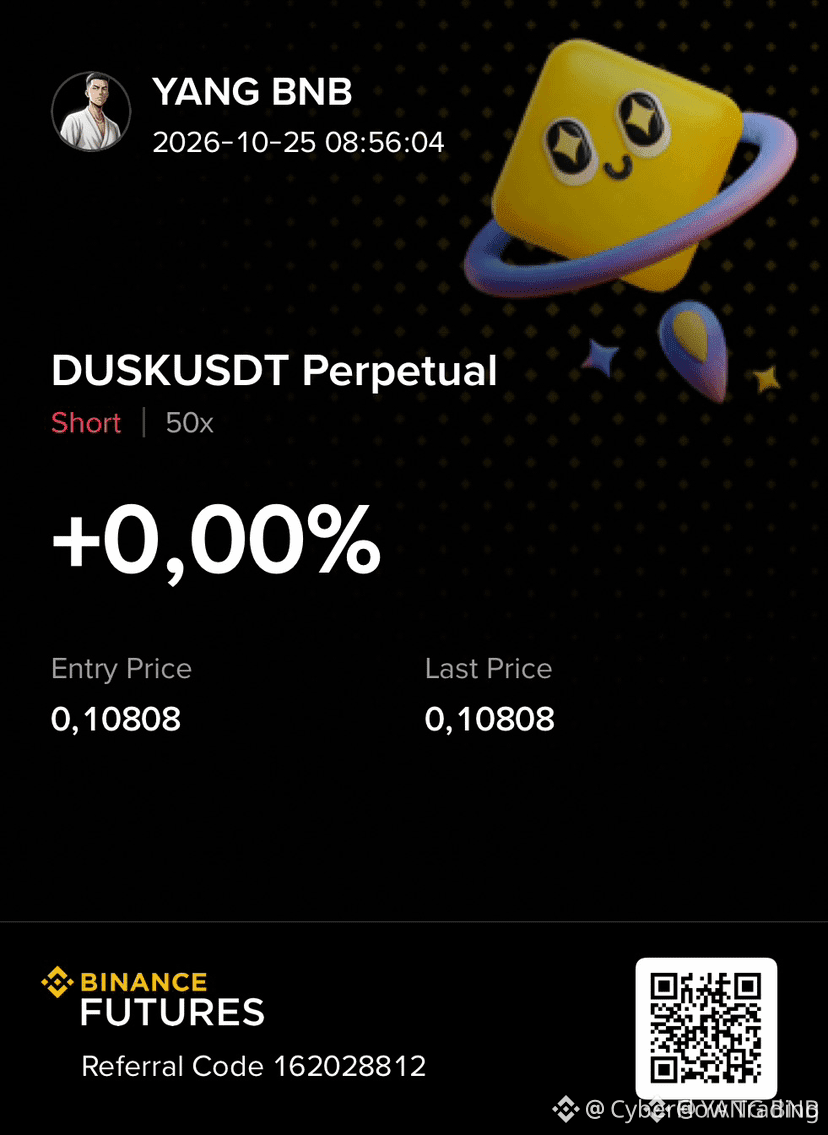
🔴 $DUSK BEARS SQUEEZE SUPPORT – SHORT ALERT! 📉
Entry: 0.1080 ⚡
Target: 0.1030 🚀
Stop Loss: 0.1180 ⚠️
📊 On the 4H chart DUSK is carving lower highs, each swing swallowing the last demand block. 🦈 Smart money is draining liquidity at the $0.108 zone, and a clean break could unleash a cascade toward the $0.095‑$0.085 corridor. ⚡ Volume spikes confirm sellers are flipping the bid faster than buyers can defend.
💡 The risk‑to‑reward tilts heavily short, but watch the $0.110‑$0.112 range for a false bounce before the breakdown. 💬 Do you see the next liquidity sweep coming? 👇
⚠️ Not financial advice. Always manage your risk. 🛡️
🏷️ #DUSK #ShortSetup #Bearish #Crypto
🔥 🦈
🔴 $DUSK BEARS SQUEEZE SUPPORT – SHORT ALERT! 📉
Entry: 0.1080 ⚡
Target: 0.1030 🚀
Stop Loss: 0.1180 ⚠️
📊 On the 4H chart DUSK is carving lower highs, each swing swallowing the last demand block. 🦈 Smart money is draining liquidity at the $0.108 zone, and a clean break could unleash a cascade toward the $0.095‑$0.085 corridor. ⚡ Volume spikes confirm sellers are flipping the bid faster than buyers can defend.
💡 The risk‑to‑reward tilts heavily short, but watch the $0.110‑$0.112 range for a false bounce before the breakdown. 💬 Do you see the next liquidity sweep coming? 👇
⚠️ Not financial advice. Always manage your risk. 🛡️
🏷️ #DUSK #ShortSetup #Bearish #Crypto
🔥 🦈
Entry: 0.1080 ⚡
Target: 0.1030 🚀
Stop Loss: 0.1180 ⚠️
📊 On the 4H chart DUSK is carving lower highs, each swing swallowing the last demand block. 🦈 Smart money is draining liquidity at the $0.108 zone, and a clean break could unleash a cascade toward the $0.095‑$0.085 corridor. ⚡ Volume spikes confirm sellers are flipping the bid faster than buyers can defend.
💡 The risk‑to‑reward tilts heavily short, but watch the $0.110‑$0.112 range for a false bounce before the breakdown. 💬 Do you see the next liquidity sweep coming? 👇
⚠️ Not financial advice. Always manage your risk. 🛡️
🏷️ #DUSK #ShortSetup #Bearish #Crypto
🔥 🦈
5
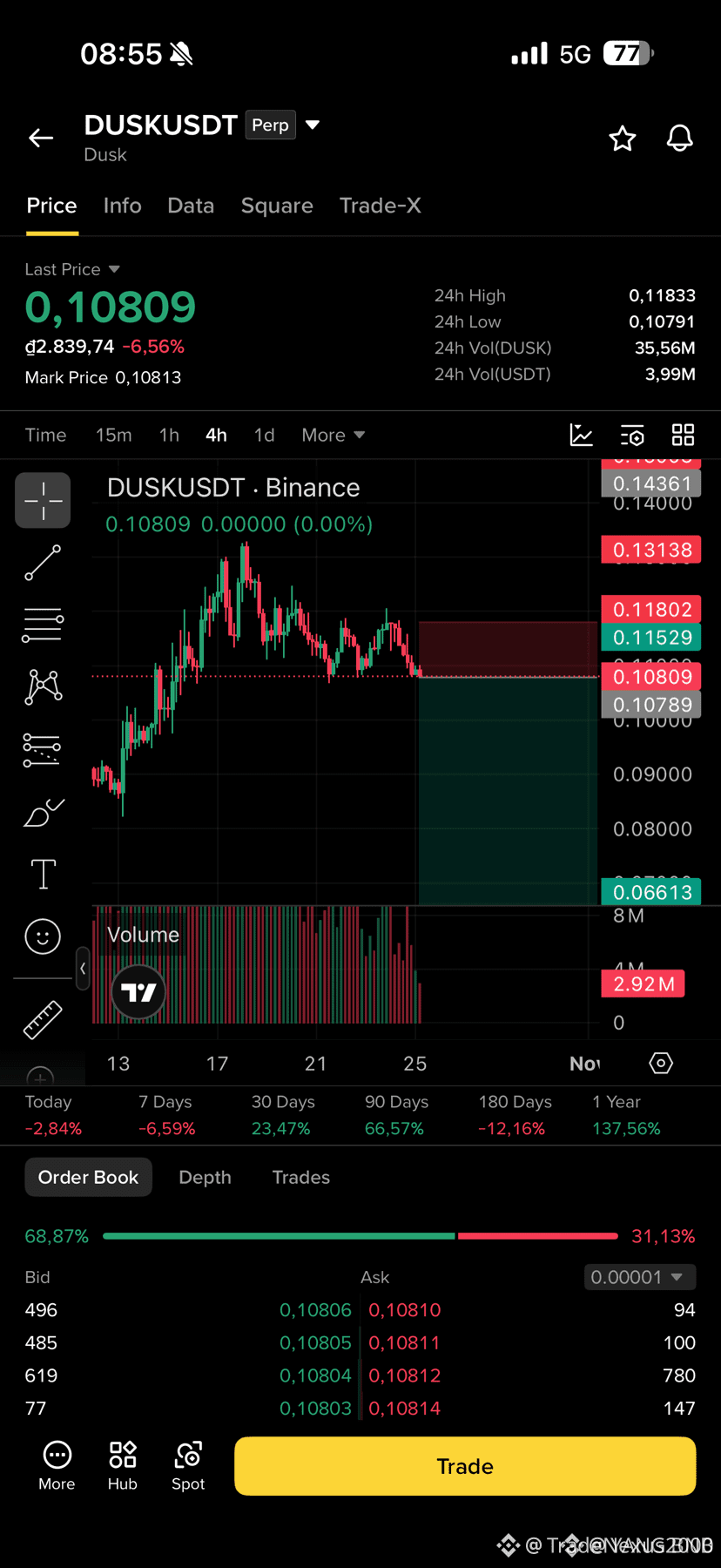
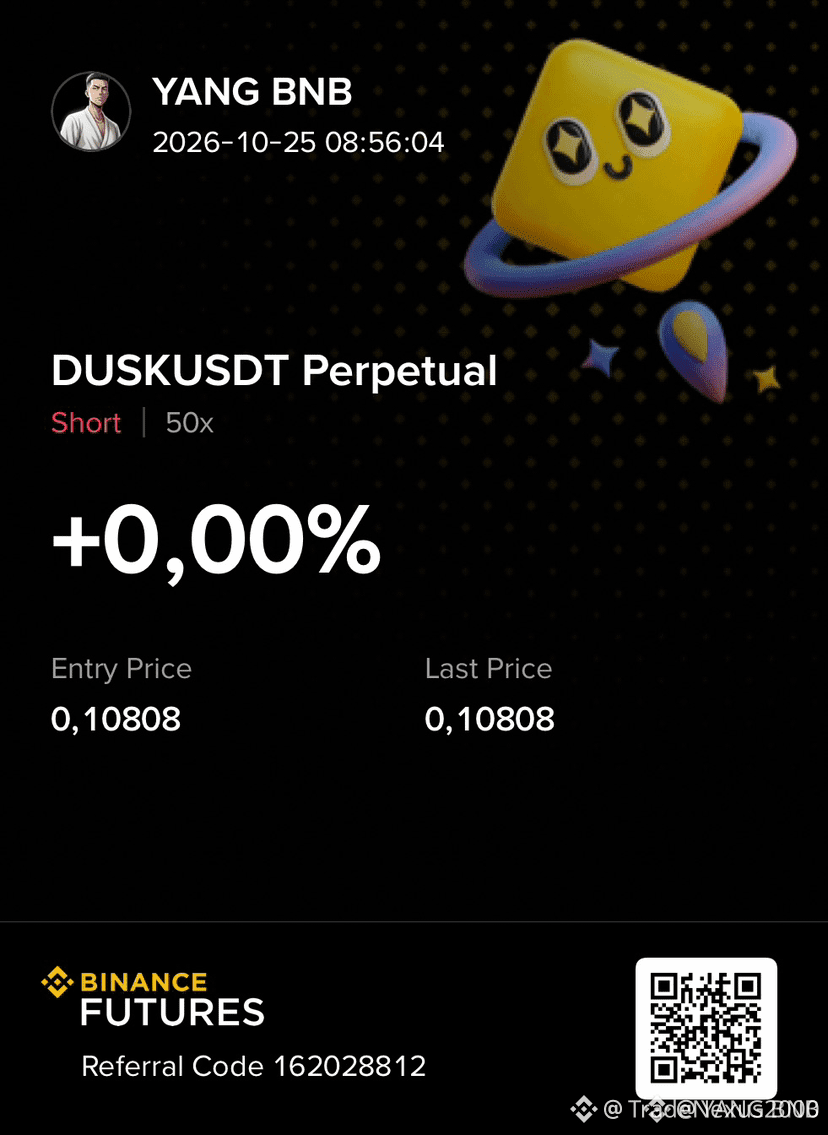
🔴 $DUSK BEAR CLUTCH ON SUPPORT BREAK – SHORT ALERT! 📉
Entry: 0.1080-0.1100 ⚡
Target: 0.1030 🚀
Stop Loss: 0.1180 ⚠️
📊 The 4H frame shows a classic lower‑high pattern, confirming the bears are eating the demand zone. 🌊 Sellers are sweeping liquidity at the $0.108 level, forcing the market into a fresh downtrend corridor. 🔍 Volume spikes align with the breakdown, indicating institutional pressure rather than retail panic. 💡 With the next swing target near $0.095, the risk‑reward ratio stays tight for aggressive shorters.
💬 Are you ready to ride the downside or waiting for a deeper liquidity hunt? 👇
⚠️ Not financial advice. Always manage your risk. 🛡️
🏷️ #DUSK #ShortSetup #Bearish #Crypto
🦈 🔥
🔴 $DUSK BEAR CLUTCH ON SUPPORT BREAK – SHORT ALERT! 📉
Entry: 0.1080-0.1100 ⚡
Target: 0.1030 🚀
Stop Loss: 0.1180 ⚠️
📊 The 4H frame shows a classic lower‑high pattern, confirming the bears are eating the demand zone. 🌊 Sellers are sweeping liquidity at the $0.108 level, forcing the market into a fresh downtrend corridor. 🔍 Volume spikes align with the breakdown, indicating institutional pressure rather than retail panic. 💡 With the next swing target near $0.095, the risk‑reward ratio stays tight for aggressive shorters.
💬 Are you ready to ride the downside or waiting for a deeper liquidity hunt? 👇
⚠️ Not financial advice. Always manage your risk. 🛡️
🏷️ #DUSK #ShortSetup #Bearish #Crypto
🦈 🔥
Entry: 0.1080-0.1100 ⚡
Target: 0.1030 🚀
Stop Loss: 0.1180 ⚠️
📊 The 4H frame shows a classic lower‑high pattern, confirming the bears are eating the demand zone. 🌊 Sellers are sweeping liquidity at the $0.108 level, forcing the market into a fresh downtrend corridor. 🔍 Volume spikes align with the breakdown, indicating institutional pressure rather than retail panic. 💡 With the next swing target near $0.095, the risk‑reward ratio stays tight for aggressive shorters.
💬 Are you ready to ride the downside or waiting for a deeper liquidity hunt? 👇
⚠️ Not financial advice. Always manage your risk. 🛡️
🏷️ #DUSK #ShortSetup #Bearish #Crypto
🦈 🔥
13
Войдите, чтобы посмотреть больше материала
Присоединяйтесь к пользователям криптовалют по всему миру на Binance Square
⚡️ Получайте новейшую и полезную информацию о криптоактивах.
💬 Нам доверяет крупнейшая в мире криптобиржа.
👍 Получите достоверные аналитические данные от верифицированных создателей контента.
Эл. почта/номер телефона
В тренде
1
#BinancekzWin
Просмотров: 32,425
94 обсуждают
2
#BinancePick
Просмотров: 2.8M
147,072 обсуждают
3
#EarningsSeason
Просмотров: 5.1M
25,120 обсуждают
4
#AnthropicTTMRevenueGrewAbout1200%
Просмотров: 582
69 обсуждают
5
#AnthropicS1ExpectedToday
Просмотров: 2,605
93 обсуждают
6
#SouthKoreaReportedlyWeighsFourthCryptoTaxDelay
Просмотров: 11,154
261 обсуждают
7
#FranklinTempletonFilesForTwoDividendToBitcoinETFs
Просмотров: 18,027
386 обсуждают
8
#StrategyMSTRSurpassesNasdaqInMarketCap
Просмотров: 14,056
302 обсуждают
9
#CanadaProposesStablecoinRedemptionWithin3BusinessDays
Просмотров: 651
30 обсуждают
10
#ElectrumWalletBugLetRogueServersStealFunds
Просмотров: 19,209
400 обсуждают