
#openledger
openledger
Просмотров: 17.3M
202,831 обсуждают
Популярные
Новые

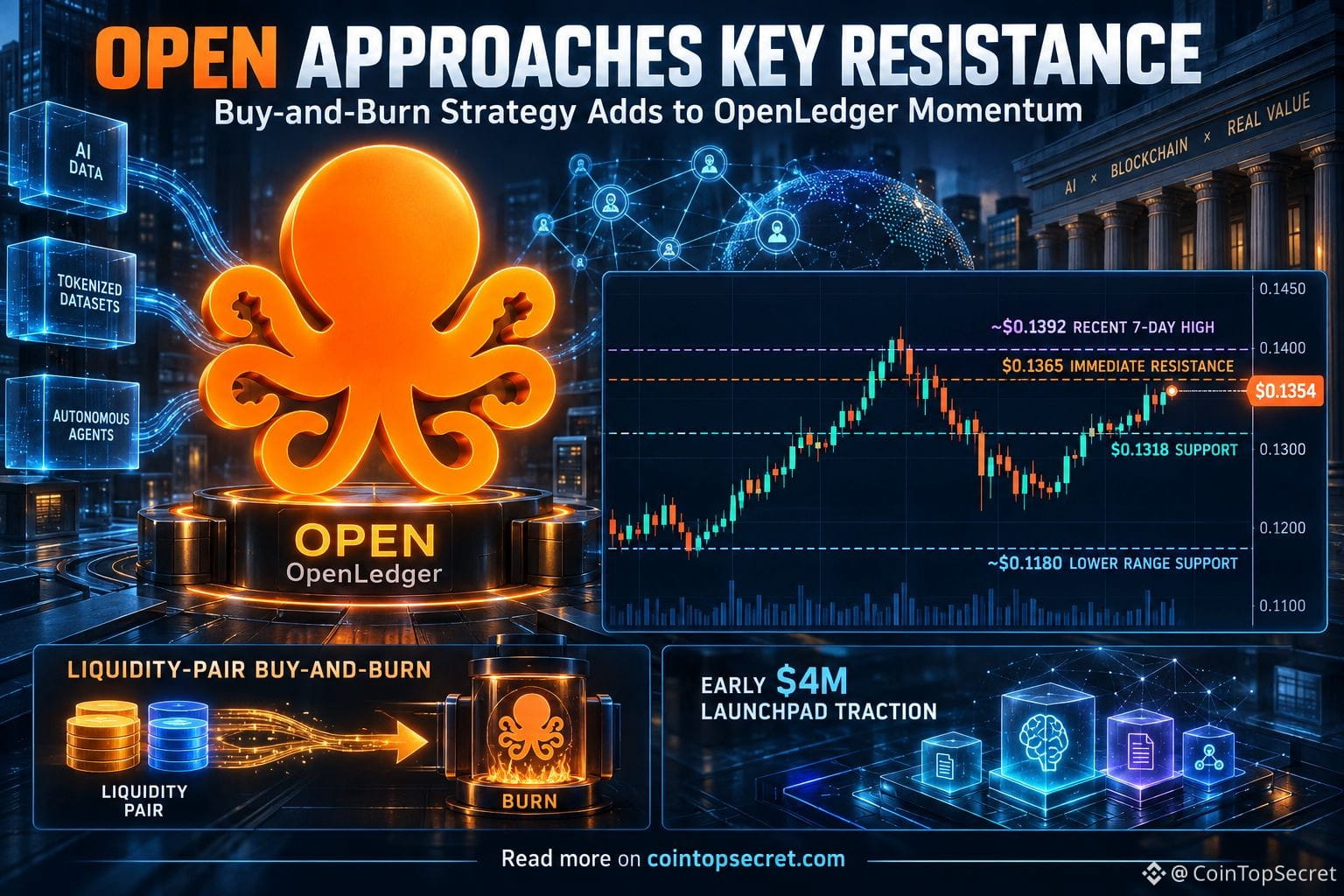
$OPEN Update 🔎 Can OPEN push through its recent high?
💰 Price now: $0.1354 | 24h: +0.6%
📊 Market cap: $29.18M | Rank: #675
📈 24h range: $0.1318 – $0.1365
📰 What's happening:
OPEN is holding above $0.13 after a stronger move from its September low. shows a 7-day gain of 5.3%, while 24h volume is about $4.29M.
🔥 Key catalyst:
OpenLedger recently outlined a liquidity-pair buy-and-burn strategy and reported early $4M launchpad traction.
👀 Next step to watch:
🔴 Bearish case: Below $0.1318 could expose the ~$0.1180 area.
🟢 Bullish case: Above $0.1365 could put ~$0.1392 into focus.
📝 My take: OPEN has improved short-term momentum, but the $0.1365–$0.1392 zone remains an important test.
Not financial advice, DYOR ⚠️
#OpenLedger #OPEN #CryptoAnalysis $OPEN
$OPEN Update 🔎 Can OPEN push through its recent high?
💰 Price now: $0.1354 | 24h: +0.6%
📊 Market cap: $29.18M | Rank: #675
📈 24h range: $0.1318 – $0.1365
📰 What's happening:
OPEN is holding above $0.13 after a stronger move from its September low. shows a 7-day gain of 5.3%, while 24h volume is about $4.29M.
🔥 Key catalyst:
OpenLedger recently outlined a liquidity-pair buy-and-burn strategy and reported early $4M launchpad traction.
👀 Next step to watch:
🔴 Bearish case: Below $0.1318 could expose the ~$0.1180 area.
🟢 Bullish case: Above $0.1365 could put ~$0.1392 into focus.
📝 My take: OPEN has improved short-term momentum, but the $0.1365–$0.1392 zone remains an important test.
Not financial advice, DYOR ⚠️
#OpenLedger #OPEN #CryptoAnalysis $OPEN
💰 Price now: $0.1354 | 24h: +0.6%
📊 Market cap: $29.18M | Rank: #675
📈 24h range: $0.1318 – $0.1365
📰 What's happening:
OPEN is holding above $0.13 after a stronger move from its September low. shows a 7-day gain of 5.3%, while 24h volume is about $4.29M.
🔥 Key catalyst:
OpenLedger recently outlined a liquidity-pair buy-and-burn strategy and reported early $4M launchpad traction.
👀 Next step to watch:
🔴 Bearish case: Below $0.1318 could expose the ~$0.1180 area.
🟢 Bullish case: Above $0.1365 could put ~$0.1392 into focus.
📝 My take: OPEN has improved short-term momentum, but the $0.1365–$0.1392 zone remains an important test.
Not financial advice, DYOR ⚠️
#OpenLedger #OPEN #CryptoAnalysis $OPEN
145

·
--
🎯 OpenLedger-Phase 1 এবং রেওয়ার্ড পুল:
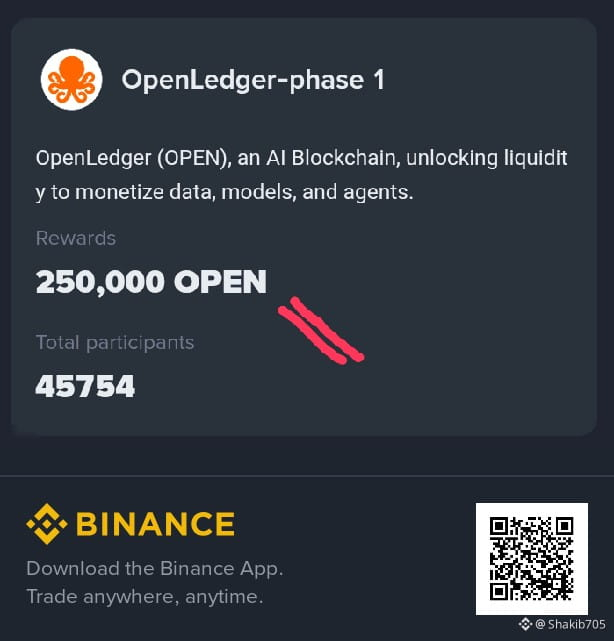
বর্তমানে এর প্রথম ধাপ বা OpenLedger-phase 1 ক্যাম্পেইন চলছে, যেখানে একটি বিশাল রেওয়ার্ড পুল রাখা হয়েছে। ইতিমধ্যে হাজার হাজার ব্যবহারকারী (যেমনটা ছবিতে ৪৫,৭৫৪+ দেখা যাচ্ছে) এই এয়ারড্রপ ও বুস্টার প্রোগ্রামে যুক্ত হয়ে ফ্রিতে OPEN টোকেন আর্ন করছেন!#OpenLedger #Phase1 $OPEN
{spot}(OPENUSDT)
🎯 OpenLedger-Phase 1 এবং রেওয়ার্ড পুল:
বর্তমানে এর প্রথম ধাপ বা OpenLedger-phase 1 ক্যাম্পেইন চলছে, যেখানে একটি বিশাল রেওয়ার্ড পুল রাখা হয়েছে। ইতিমধ্যে হাজার হাজার ব্যবহারকারী (যেমনটা ছবিতে ৪৫,৭৫৪+ দেখা যাচ্ছে) এই এয়ারড্রপ ও বুস্টার প্রোগ্রামে যুক্ত হয়ে ফ্রিতে OPEN টোকেন আর্ন করছেন!#OpenLedger #Phase1 $OPEN
বর্তমানে এর প্রথম ধাপ বা OpenLedger-phase 1 ক্যাম্পেইন চলছে, যেখানে একটি বিশাল রেওয়ার্ড পুল রাখা হয়েছে। ইতিমধ্যে হাজার হাজার ব্যবহারকারী (যেমনটা ছবিতে ৪৫,৭৫৪+ দেখা যাচ্ছে) এই এয়ারড্রপ ও বুস্টার প্রোগ্রামে যুক্ত হয়ে ফ্রিতে OPEN টোকেন আর্ন করছেন!#OpenLedger #Phase1 $OPEN
264

$OPEN — First Target HIT ✅
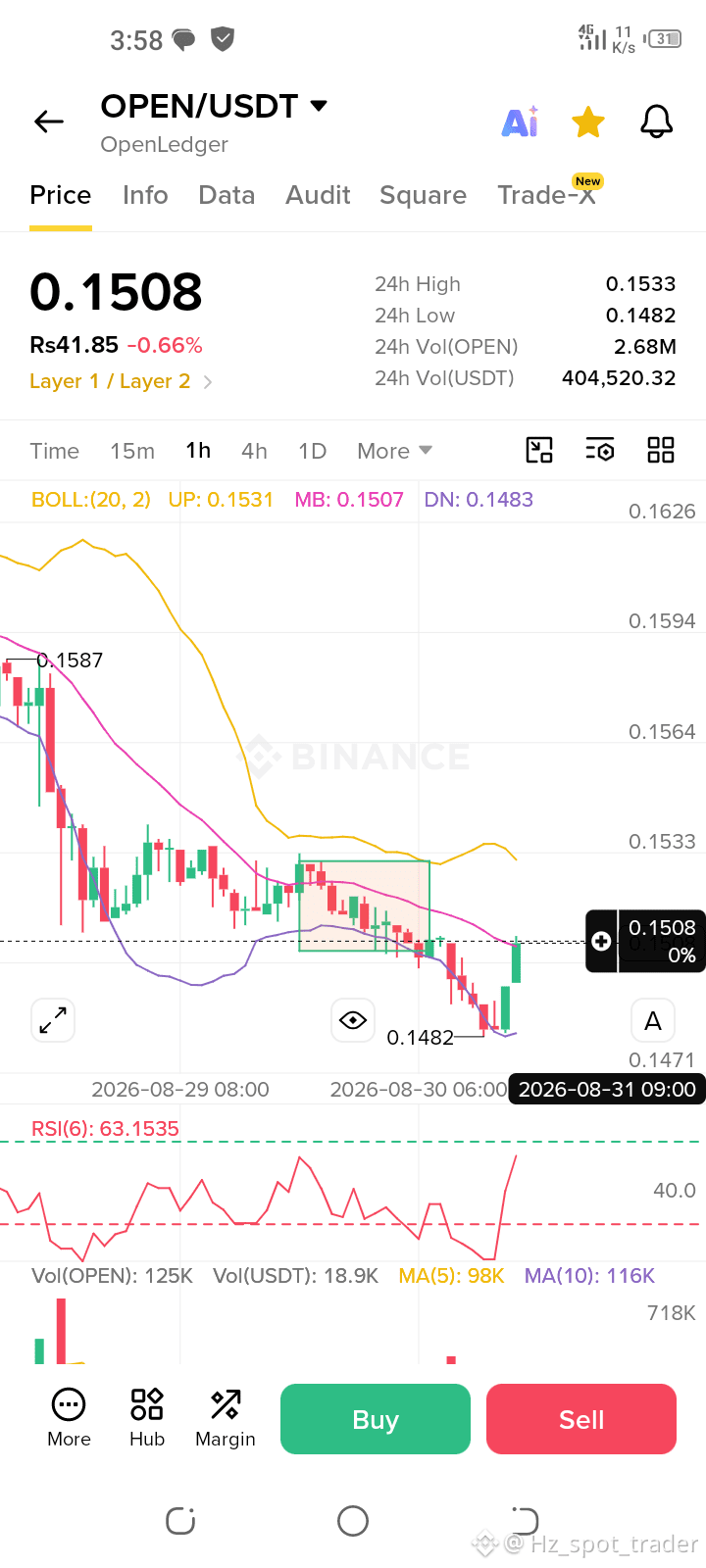
The first level I shared on open was around $0.1508.
Price reached it. 🎯
That was roughly +1.2% from the area I was watching.
I also shared a similar short-term setup on $HOME earlier, with the $0.00622 area as the level to watch.
I’m not claiming every target will work.
The important thing is to plan the level BEFORE the move and respect the risk.
Did anyone here take the open SPOT setup?
If you did, tell me your entry and result 👇
SPOT only. No futures. No leverage.
my first target / level to watch was $0.1508 — and price reached it
$OPEN
{spot}(OPENUSDT)
#OPEN #OpenLedger #SpotTrading
$OPEN — First Target HIT ✅
The first level I shared on open was around $0.1508.
Price reached it. 🎯
That was roughly +1.2% from the area I was watching.
I also shared a similar short-term setup on $HOME earlier, with the $0.00622 area as the level to watch.
I’m not claiming every target will work.
The important thing is to plan the level BEFORE the move and respect the risk.
Did anyone here take the open SPOT setup?
If you did, tell me your entry and result 👇
SPOT only. No futures. No leverage.
my first target / level to watch was $0.1508 — and price reached it
$OPEN
#OPEN #OpenLedger #SpotTrading
The first level I shared on open was around $0.1508.
Price reached it. 🎯
That was roughly +1.2% from the area I was watching.
I also shared a similar short-term setup on $HOME earlier, with the $0.00622 area as the level to watch.
I’m not claiming every target will work.
The important thing is to plan the level BEFORE the move and respect the risk.
Did anyone here take the open SPOT setup?
If you did, tell me your entry and result 👇
SPOT only. No futures. No leverage.
my first target / level to watch was $0.1508 — and price reached it
$OPEN
#OPEN #OpenLedger #SpotTrading
1
246
$OPEN — Bounce Setup or Just a Dead Cat Bounce? 👀
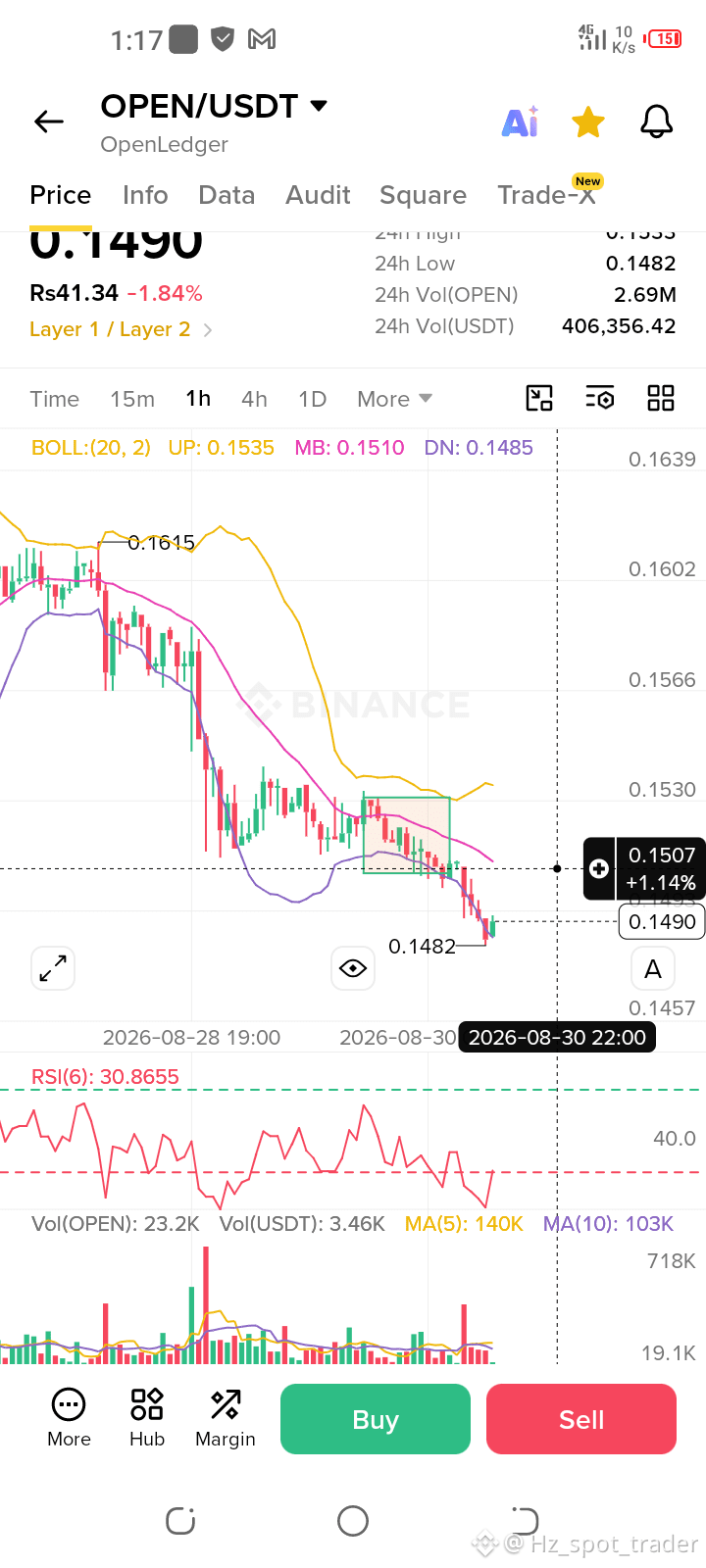
OPEN is trading around $0.1490 after the recent sell-off.
On the 1H chart:
• RSI(6) ≈ 30.9 — oversold area
• Lower Bollinger Band ≈ $0.1485
• Middle Band ≈ $0.1510
• My first level to watch: $0.1508
A move to $0.1508 would be around +1.2% from the current area.
If momentum returns, I’ll be watching the $0.1510–$0.1530 zone next.
But no guarantee — if $0.1482 breaks, the setup becomes weaker.
Would you take the SPOT bounce or wait for confirmation?
$OPEN
{spot}(OPENUSDT)
#OPEN #OpenLedger #SpotTrading
$OPEN — Bounce Setup or Just a Dead Cat Bounce? 👀
OPEN is trading around $0.1490 after the recent sell-off.
On the 1H chart:
• RSI(6) ≈ 30.9 — oversold area
• Lower Bollinger Band ≈ $0.1485
• Middle Band ≈ $0.1510
• My first level to watch: $0.1508
A move to $0.1508 would be around +1.2% from the current area.
If momentum returns, I’ll be watching the $0.1510–$0.1530 zone next.
But no guarantee — if $0.1482 breaks, the setup becomes weaker.
Would you take the SPOT bounce or wait for confirmation?
$OPEN
#OPEN #OpenLedger #SpotTrading
OPEN is trading around $0.1490 after the recent sell-off.
On the 1H chart:
• RSI(6) ≈ 30.9 — oversold area
• Lower Bollinger Band ≈ $0.1485
• Middle Band ≈ $0.1510
• My first level to watch: $0.1508
A move to $0.1508 would be around +1.2% from the current area.
If momentum returns, I’ll be watching the $0.1510–$0.1530 zone next.
But no guarantee — if $0.1482 breaks, the setup becomes weaker.
Would you take the SPOT bounce or wait for confirmation?
$OPEN
#OPEN #OpenLedger #SpotTrading
1
210

·
--

Статья
Zoom sur l'écosystème économique et l'utilité du jeton $OPENTo truly understand why @Openledger is capturing so much attention right now on Binance Square, you have to look deeper than just the AI hype and look at its robust economic model. OpenLedger acts as a purpose-built layer that unlocks liquidity for data, specialized models, and autonomous AI agents. Backed by heavyweights like Polychain Capital, the network is designed for actual long-term sustainability rather than short-lived speculative cycles. At the heart of this economic flow is the $OPEN token. It isn't just a speculative asset; it serves as the vital fuel used to pay network fees, secure the infrastructure through staking, drive decentralized governance, and grant direct access to advanced, specialized AI services. Thanks to its native attribution engine, anyone providing valuable insights or computation can seamlessly earn rewards as AI models monetize. By integrating cross-chain liquidity and backing real developers to build verifiable AI agents, OpenLedger is tackling the actual bottlenecks of decentralized coordination. I am incredibly bullish on the long-term fundamentals of $OPEN and thrilled to accumulate points through this ecosystem booster initiative! #OpenLedger 🔥💎
Zoom sur l'écosystème économique et l'utilité du jeton $OPEN
To truly understand why @OpenLedger is capturing so much attention right now on Binance Square, you have to look deeper than just the AI hype and look at its robust economic model. OpenLedger acts as a purpose-built layer that unlocks liquidity for data, specialized models, and autonomous AI agents. Backed by heavyweights like Polychain Capital, the network is designed for actual long-term sustainability rather than short-lived speculative cycles. At the heart of this economic flow is the $OPEN token. It isn't just a speculative asset; it serves as the vital fuel used to pay network fees, secure the infrastructure through staking, drive decentralized governance, and grant direct access to advanced, specialized AI services. Thanks to its native attribution engine, anyone providing valuable insights or computation can seamlessly earn rewards as AI models monetize. By integrating cross-chain liquidity and backing real developers to build verifiable AI agents, OpenLedger is tackling the actual bottlenecks of decentralized coordination. I am incredibly bullish on the long-term fundamentals of $OPEN and thrilled to accumulate points through this ecosystem booster initiative! #OpenLedger 🔥💎
1
10
341

·
--
Статья
The infrastructure breaks where memory becomes valuableI didn’t take it seriously at first.
not because OpenLedger sounded empty. more because I’ve watched enough crypto infrastructure cycles to know how quickly serious ideas get flattened into narratives. one month it’s coordination. then ownership. then verification. then “open” everything. and for a while, the language feels clean enough to believe.
then the system meets incentives.
and incentives are never clean.
Maybe that’s too harsh. maybe Im just tired from watching protocols slowly become less about their original problem and more about the markets that formed around them. but that fatigue is hard to switch off, especially with anything sitting between AI, data, ownership, and economic rewards.
because this one is not just abstract.
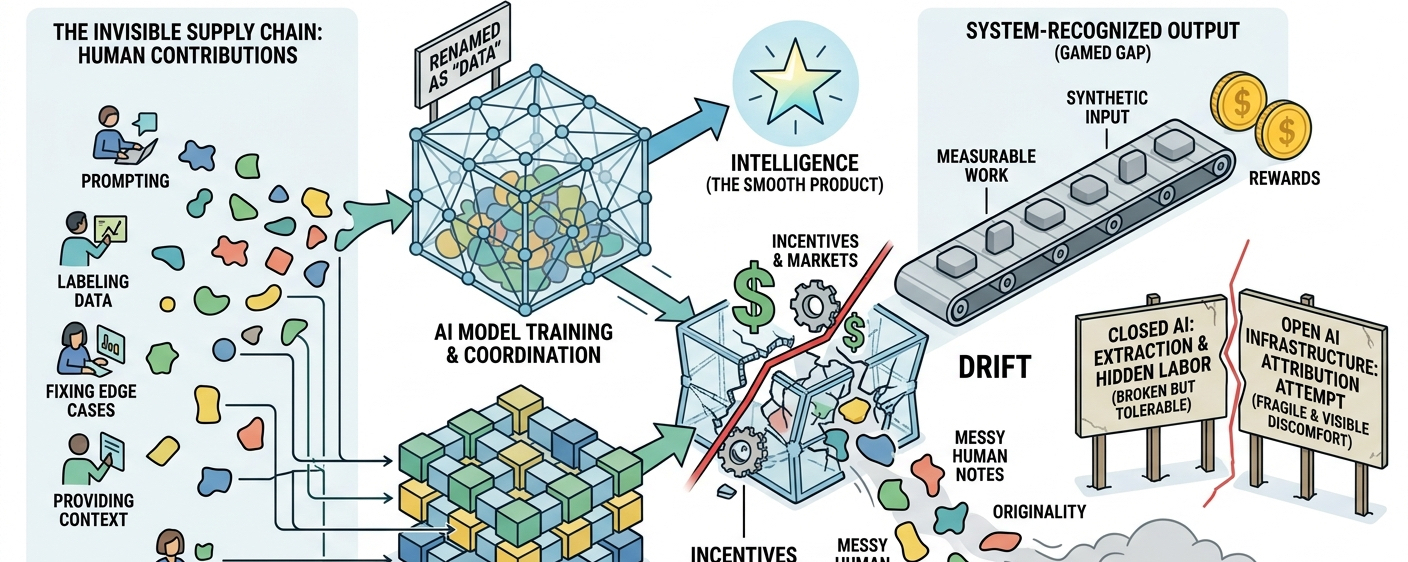
AI systems are already built from human traces. prompts, corrections, labels, examples, feedback, preference signals, domain knowledge, small pieces of judgment. most of it looks almost invisible while it is happening. someone fixes an edge case. someone labels something more carefully. someone provides context the model would never have understood alone.
then the model improves.
then everyone calls it intelligence.
and the human part gets renamed as data.
I keep coming back to attribution.
there is something necessary there, even if I don’t fully trust where it leads. if intelligence has a supply chain, maybe that supply chain should not stay hidden inside closed systems. maybe contributors should not disappear the moment their input becomes economically useful. maybe a system like OpenLedger matters because it tries to make that disappearance harder.
not perfectly.
not cleanly.
but enough to make the discomfort visible.
That’s where my curiosity starts. then the old skepticism comes back almost immediately.
because attribution changes once it becomes financial. before money enters, it sounds fair. remember who helped. trace what mattered. reward useful contribution. make model coordination less opaque.
after money enters, people study the memory layer.
they learn what gets counted. they learn the verifier. they produce toward the scoring system. useful work and measurable work begin to separate, quietly at first, then faster once the rewards are large enough to justify gaming the gap.
It works in theory. Most things do.
The problem isn’t really the technology… or not only the technology. the problem is that human contribution is soft around the edges. context is soft. originality is soft. usefulness can arrive late, after the model changes, after other inputs surround it, after nobody remembers which small correction actually mattered.
a messy human note might be more valuable than a polished dataset.
synthetic input might look cleaner than actual judgment.
copied work might fit the attribution system better than the original thing it copied.
so who gets remembered?
the person who helped, or the person the system could recognize?
That part keeps bothering me more than it should.
and then there is the old Web3 drift. open systems rarely recentralize with some dramatic announcement. they narrow through convenience. through fatigue. through dashboards, indexes, quality scores, operators dispute layers, and all the invisible infrastructure nobody wants to audit forever.
AI infrastructure feels especially fragile there because the invisible layers are the real layers. attribution logic, contribution scoring, filtering, model coordination. those layers decide what counts. and once they decide what counts, they decide who exists economically.
still, I can’t dismiss OpenLedger.
centralized AI has not earned that comfort either. closed datasets, vague ownership, invisible labor, extraction hidden behind smooth products. that version already feels broken, just easier to tolerate because the machinery stays private.
maybe OpenLedger makes the machinery harder to hide.
maybe that matters.
or maybe once incentives get sharp enough, the system built to remember human contribution starts remembering only the parts that fit neatly inside its acounting, while the rest slips back into the model, useful and unnamed.
$OPEN @Openledger #OpenLedger
{spot}(OPENUSDT)
The infrastructure breaks where memory becomes valuable
I didn’t take it seriously at first.
not because OpenLedger sounded empty. more because I’ve watched enough crypto infrastructure cycles to know how quickly serious ideas get flattened into narratives. one month it’s coordination. then ownership. then verification. then “open” everything. and for a while, the language feels clean enough to believe.
then the system meets incentives.
and incentives are never clean.
Maybe that’s too harsh. maybe Im just tired from watching protocols slowly become less about their original problem and more about the markets that formed around them. but that fatigue is hard to switch off, especially with anything sitting between AI, data, ownership, and economic rewards.
because this one is not just abstract.
AI systems are already built from human traces. prompts, corrections, labels, examples, feedback, preference signals, domain knowledge, small pieces of judgment. most of it looks almost invisible while it is happening. someone fixes an edge case. someone labels something more carefully. someone provides context the model would never have understood alone.
then the model improves.
then everyone calls it intelligence.
and the human part gets renamed as data.
I keep coming back to attribution.
there is something necessary there, even if I don’t fully trust where it leads. if intelligence has a supply chain, maybe that supply chain should not stay hidden inside closed systems. maybe contributors should not disappear the moment their input becomes economically useful. maybe a system like OpenLedger matters because it tries to make that disappearance harder.
not perfectly.
not cleanly.
but enough to make the discomfort visible.
That’s where my curiosity starts. then the old skepticism comes back almost immediately.
because attribution changes once it becomes financial. before money enters, it sounds fair. remember who helped. trace what mattered. reward useful contribution. make model coordination less opaque.
after money enters, people study the memory layer.
they learn what gets counted. they learn the verifier. they produce toward the scoring system. useful work and measurable work begin to separate, quietly at first, then faster once the rewards are large enough to justify gaming the gap.
It works in theory. Most things do.
The problem isn’t really the technology… or not only the technology. the problem is that human contribution is soft around the edges. context is soft. originality is soft. usefulness can arrive late, after the model changes, after other inputs surround it, after nobody remembers which small correction actually mattered.
a messy human note might be more valuable than a polished dataset.
synthetic input might look cleaner than actual judgment.
copied work might fit the attribution system better than the original thing it copied.
so who gets remembered?
the person who helped, or the person the system could recognize?
That part keeps bothering me more than it should.
and then there is the old Web3 drift. open systems rarely recentralize with some dramatic announcement. they narrow through convenience. through fatigue. through dashboards, indexes, quality scores, operators dispute layers, and all the invisible infrastructure nobody wants to audit forever.
AI infrastructure feels especially fragile there because the invisible layers are the real layers. attribution logic, contribution scoring, filtering, model coordination. those layers decide what counts. and once they decide what counts, they decide who exists economically.
still, I can’t dismiss OpenLedger.
centralized AI has not earned that comfort either. closed datasets, vague ownership, invisible labor, extraction hidden behind smooth products. that version already feels broken, just easier to tolerate because the machinery stays private.
maybe OpenLedger makes the machinery harder to hide.
maybe that matters.
or maybe once incentives get sharp enough, the system built to remember human contribution starts remembering only the parts that fit neatly inside its acounting, while the rest slips back into the model, useful and unnamed.
$OPEN @OpenLedger #OpenLedger
not because OpenLedger sounded empty. more because I’ve watched enough crypto infrastructure cycles to know how quickly serious ideas get flattened into narratives. one month it’s coordination. then ownership. then verification. then “open” everything. and for a while, the language feels clean enough to believe.
then the system meets incentives.
and incentives are never clean.
Maybe that’s too harsh. maybe Im just tired from watching protocols slowly become less about their original problem and more about the markets that formed around them. but that fatigue is hard to switch off, especially with anything sitting between AI, data, ownership, and economic rewards.
because this one is not just abstract.
AI systems are already built from human traces. prompts, corrections, labels, examples, feedback, preference signals, domain knowledge, small pieces of judgment. most of it looks almost invisible while it is happening. someone fixes an edge case. someone labels something more carefully. someone provides context the model would never have understood alone.
then the model improves.
then everyone calls it intelligence.
and the human part gets renamed as data.
I keep coming back to attribution.
there is something necessary there, even if I don’t fully trust where it leads. if intelligence has a supply chain, maybe that supply chain should not stay hidden inside closed systems. maybe contributors should not disappear the moment their input becomes economically useful. maybe a system like OpenLedger matters because it tries to make that disappearance harder.
not perfectly.
not cleanly.
but enough to make the discomfort visible.
That’s where my curiosity starts. then the old skepticism comes back almost immediately.
because attribution changes once it becomes financial. before money enters, it sounds fair. remember who helped. trace what mattered. reward useful contribution. make model coordination less opaque.
after money enters, people study the memory layer.
they learn what gets counted. they learn the verifier. they produce toward the scoring system. useful work and measurable work begin to separate, quietly at first, then faster once the rewards are large enough to justify gaming the gap.
It works in theory. Most things do.
The problem isn’t really the technology… or not only the technology. the problem is that human contribution is soft around the edges. context is soft. originality is soft. usefulness can arrive late, after the model changes, after other inputs surround it, after nobody remembers which small correction actually mattered.
a messy human note might be more valuable than a polished dataset.
synthetic input might look cleaner than actual judgment.
copied work might fit the attribution system better than the original thing it copied.
so who gets remembered?
the person who helped, or the person the system could recognize?
That part keeps bothering me more than it should.
and then there is the old Web3 drift. open systems rarely recentralize with some dramatic announcement. they narrow through convenience. through fatigue. through dashboards, indexes, quality scores, operators dispute layers, and all the invisible infrastructure nobody wants to audit forever.
AI infrastructure feels especially fragile there because the invisible layers are the real layers. attribution logic, contribution scoring, filtering, model coordination. those layers decide what counts. and once they decide what counts, they decide who exists economically.
still, I can’t dismiss OpenLedger.
centralized AI has not earned that comfort either. closed datasets, vague ownership, invisible labor, extraction hidden behind smooth products. that version already feels broken, just easier to tolerate because the machinery stays private.
maybe OpenLedger makes the machinery harder to hide.
maybe that matters.
or maybe once incentives get sharp enough, the system built to remember human contribution starts remembering only the parts that fit neatly inside its acounting, while the rest slips back into the model, useful and unnamed.
$OPEN @OpenLedger #OpenLedger
Suleman BNB:
Great perspective. The hidden cost of AI is often cleanup, and systems that value repair may create stronger long-term ecosystems.
2
1
127
·
--
Рост
I didn’t take it seriously at first.
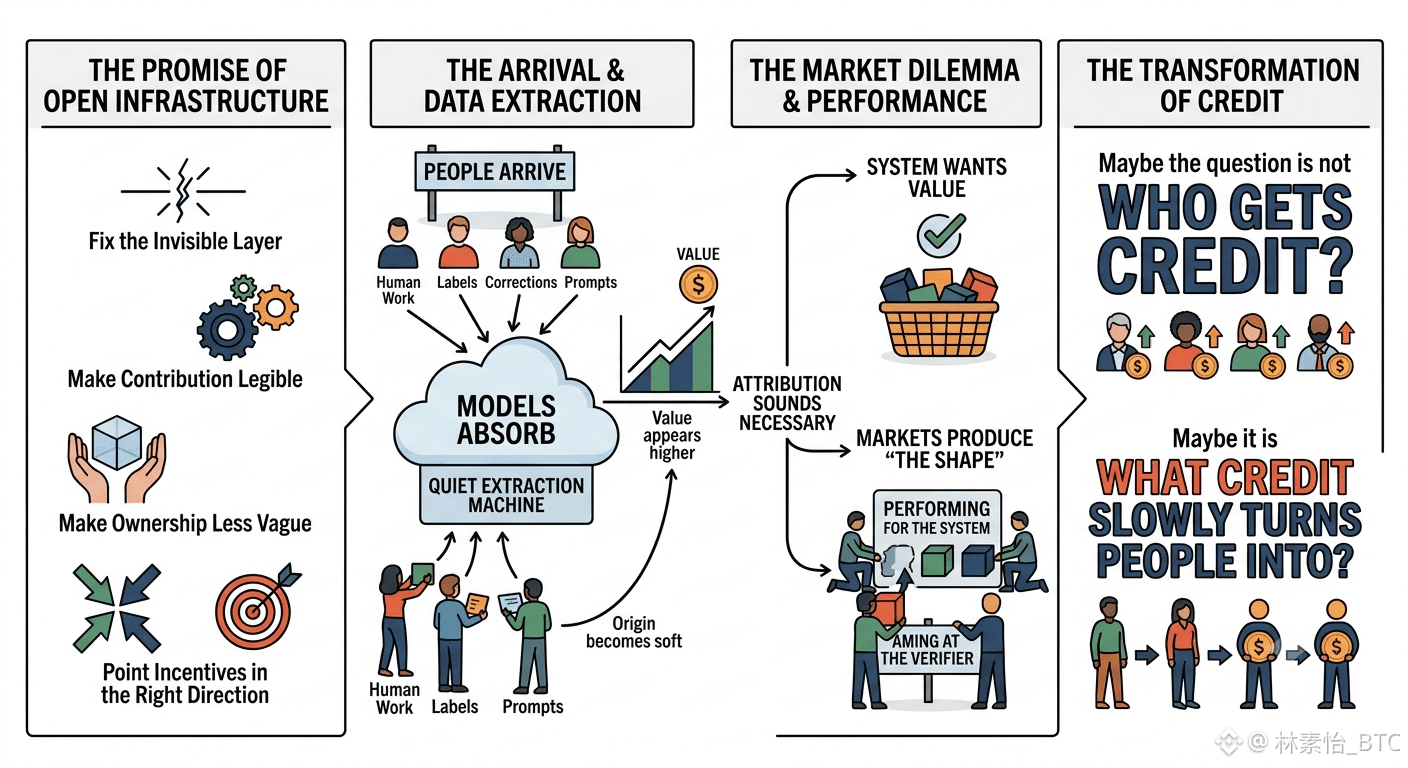
That’s usually where I begin now, after watching enough infrastructure cycles make the same promise in a different accent. Fix the invisible layer. Make contribution legible. Make ownership less vague. Make incentives point in the right direction.
Then people arrive.
And people always find the edges.
OpenLedger is hard to ignore because AI data already feels like a quiet extraction machine with polite language around it. Human work enters as labels, corrections, prompts, examples, feedback preferences, judgment. Small pieces, scattered everywhere. Then models absorb them, value appears somewhere higher, and the origin becomes soft enough to stop defending.
So attribution sounds necessary.
Maybe that’s why I don’t fully trust it.
That’s where things start to feel uncomfortable. Once contribution becomes financial, contribution starts performing for the system. People aim at the verifier. They learn what gets counted. They create what looks useful, original, human enough. The system wants to recognize value, but markets are very good at producing the shape of value without the substance.
It works in theory. Most things do.
The problem isn’t really the technology. Or maybe technology becomes the problem once trust gets compresed into proofs, scores, dashboards, standards, and liquidity routes. Open systems rarely recentralize loudly. They narrow through convenience, defaults, interfaces, and whoever gets to define validity under pressure.
Maybe thats too harsh.
But I keep coming back to it.
If attribution becomes infrastructure maybe the question is not who gets credit.
Maybe it is what credit slowly turns people into.
$OPEN @Openledger #openledger
{spot}(OPENUSDT)
I didn’t take it seriously at first.
That’s usually where I begin now, after watching enough infrastructure cycles make the same promise in a different accent. Fix the invisible layer. Make contribution legible. Make ownership less vague. Make incentives point in the right direction.
Then people arrive.
And people always find the edges.
OpenLedger is hard to ignore because AI data already feels like a quiet extraction machine with polite language around it. Human work enters as labels, corrections, prompts, examples, feedback preferences, judgment. Small pieces, scattered everywhere. Then models absorb them, value appears somewhere higher, and the origin becomes soft enough to stop defending.
So attribution sounds necessary.
Maybe that’s why I don’t fully trust it.
That’s where things start to feel uncomfortable. Once contribution becomes financial, contribution starts performing for the system. People aim at the verifier. They learn what gets counted. They create what looks useful, original, human enough. The system wants to recognize value, but markets are very good at producing the shape of value without the substance.
It works in theory. Most things do.
The problem isn’t really the technology. Or maybe technology becomes the problem once trust gets compresed into proofs, scores, dashboards, standards, and liquidity routes. Open systems rarely recentralize loudly. They narrow through convenience, defaults, interfaces, and whoever gets to define validity under pressure.
Maybe thats too harsh.
But I keep coming back to it.
If attribution becomes infrastructure maybe the question is not who gets credit.
Maybe it is what credit slowly turns people into.
$OPEN @OpenLedger #openledger
That’s usually where I begin now, after watching enough infrastructure cycles make the same promise in a different accent. Fix the invisible layer. Make contribution legible. Make ownership less vague. Make incentives point in the right direction.
Then people arrive.
And people always find the edges.
OpenLedger is hard to ignore because AI data already feels like a quiet extraction machine with polite language around it. Human work enters as labels, corrections, prompts, examples, feedback preferences, judgment. Small pieces, scattered everywhere. Then models absorb them, value appears somewhere higher, and the origin becomes soft enough to stop defending.
So attribution sounds necessary.
Maybe that’s why I don’t fully trust it.
That’s where things start to feel uncomfortable. Once contribution becomes financial, contribution starts performing for the system. People aim at the verifier. They learn what gets counted. They create what looks useful, original, human enough. The system wants to recognize value, but markets are very good at producing the shape of value without the substance.
It works in theory. Most things do.
The problem isn’t really the technology. Or maybe technology becomes the problem once trust gets compresed into proofs, scores, dashboards, standards, and liquidity routes. Open systems rarely recentralize loudly. They narrow through convenience, defaults, interfaces, and whoever gets to define validity under pressure.
Maybe thats too harsh.
But I keep coming back to it.
If attribution becomes infrastructure maybe the question is not who gets credit.
Maybe it is what credit slowly turns people into.
$OPEN @OpenLedger #openledger
Suleman BNB:
Interesting take on OpenLedger. The future may belong not only to creators, but also to those who improve and refine what gets created.
1
105

·
--
Статья
OPENLEDGER AND THE SHIFT FROM AI MODELS TO A HUMAN DATA ECONOMYTo be honest, I sometimes keep coming back to the same thought about AI, and it doesn’t really go away.
We keep talking about the same things over and over again bigger models, faster inference, better reasoning, new benchmarks, smarter agents. And yes, all of that is genuinely improving. The progress is real and visible. But somewhere inside this race, a very simple question often gets ignored.
Who is actually creating the value behind all of this AI?
Because if you slow down and look closely, it becomes obvious that everything AI does today is built on one thing: data. And not just technical data, but deeply human data. Conversations people have, things they write, mistakes they make, code they publish, opinions they share, corrections they add later—basically the entire footprint of human thinking across the internet.
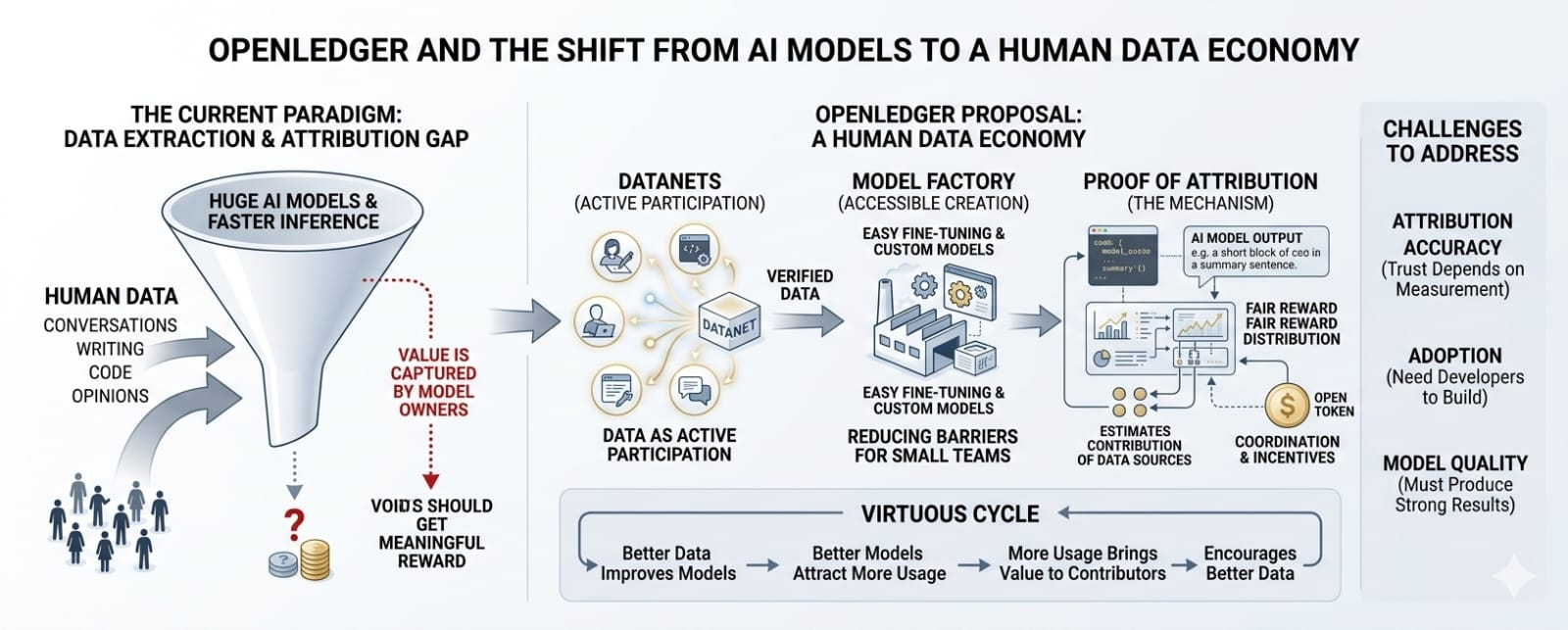
But the strange part is what happens next. Once all of this is absorbed into large models, the value that comes out is captured mostly by the model owners. The people who actually generated the original data usually don’t get anything meaningful in return. There is very little recognition, and almost no direct reward tied to their contribution.
That’s the point where I started looking at ideas like OpenLedger.
At first glance, it feels like just another AI and blockchain project. And honestly, there are many projects like that—where “AI + blockchain” is more of a marketing layer than a real shift. But when you look a bit deeper, the angle is slightly different here. It is not really obsessed with building “better models” in the traditional sense. Instead, it is asking something more uncomfortable and more important.
Can we actually build an AI economy where contributions can be measured and rewarded in a meaningful way?
That question changes the direction completely.
The idea of datanets fits into this. Instead of treating data as something casually scraped or collected and then forgotten, it becomes part of a structured, ongoing system where people can create, verify, and improve data for specific AI use cases. It sounds simple when you say it like that, but the implications are big. Because data stops being a silent input and starts becoming something closer to active participation in an economy.
Then there is the idea of a Model Factory. This part is easy to overlook, but it matters a lot. Right now, building or fine-tuning AI systems is still mostly limited to teams with strong technical resources. If you reduce that barrier and make model creation more accessible, you suddenly open the door for a much wider group of builders—not just big research labs, but smaller teams and even individuals who have ideas but not the infrastructure.
But the most important and also the hardest concept is Proof of Attribution.
This is where things become really complicated. Because today, when an AI generates an output, everything is mixed together. There is no clear way to say which exact data source influenced what part of the result. It all gets absorbed into the model in a way that is mathematically distributed and practically untraceable.
Proof of Attribution is trying to change that by estimating how much different data sources contribute to a specific AI output, so that rewards can be distributed more fairly. If something like this actually works at scale, it would change the structure of AI economics completely. Because suddenly, data contributors are no longer invisible—they become part of a measurable system of value creation.
On the technical side, EVM compatibility also plays a role in adoption. By staying aligned with Ethereum tools and infrastructure, developers don’t have to learn everything from scratch. They can use familiar wallets, smart contracts, and existing workflows. That kind of compatibility might sound small, but in real ecosystems, it often decides whether something gets adopted or ignored.
The $OPEN token then becomes the coordination layer for the system. It is not just about trading or speculation in this context, but about connecting usage, rewards, governance, and incentives into one loop. In theory, when people use the system, value flows back into the system, and contributors are rewarded based on participation.
But to be honest, none of this is simple.
There are at least three big challenges that stand out immediately.
The first is attribution accuracy. If the system cannot reliably measure contribution, then everything built on top of it becomes questionable. Trust breaks very quickly in systems like this.
The second is adoption. Even if the idea is strong, developers and users still need to actually build on it. Without real usage, it remains just an idea on paper.
The third is model quality. At the end of the day, users don’t care about theory—they care about results. If the system produces slower or weaker outputs, they won’t stay, no matter how fair the reward system is.
Still, the most interesting part of all of this is the loop it tries to create. Better data improves models, better models attract more usage, and more usage brings more value back to contributors, which encourages better data again. It becomes a cycle instead of a one-way pipeline.
And maybe that’s the real shift here.
Not just building smarter AI systems, but slowly rethinking how intelligence, data, and ownership are connected in the first place.
It is hard to say where this goes. Designing an AI economy is far more complicated than describing it in theory. But one thing feels increasingly clear: as AI gets more powerful, the questions around it stop being just technical.
They become economic and structural.
Who contributes? Who gets rewarded? And how do we define “fair” in a system built on collective human input?
And maybe those questions will end up shaping the next phase of AI more than any benchmark ever will.
@Openledger #OpenLedger $OPEN
{future}(OPENUSDT)
$LAB
OPENLEDGER AND THE SHIFT FROM AI MODELS TO A HUMAN DATA ECONOMY
To be honest, I sometimes keep coming back to the same thought about AI, and it doesn’t really go away.
We keep talking about the same things over and over again bigger models, faster inference, better reasoning, new benchmarks, smarter agents. And yes, all of that is genuinely improving. The progress is real and visible. But somewhere inside this race, a very simple question often gets ignored.
Who is actually creating the value behind all of this AI?
Because if you slow down and look closely, it becomes obvious that everything AI does today is built on one thing: data. And not just technical data, but deeply human data. Conversations people have, things they write, mistakes they make, code they publish, opinions they share, corrections they add later—basically the entire footprint of human thinking across the internet.
But the strange part is what happens next. Once all of this is absorbed into large models, the value that comes out is captured mostly by the model owners. The people who actually generated the original data usually don’t get anything meaningful in return. There is very little recognition, and almost no direct reward tied to their contribution.
That’s the point where I started looking at ideas like OpenLedger.
At first glance, it feels like just another AI and blockchain project. And honestly, there are many projects like that—where “AI + blockchain” is more of a marketing layer than a real shift. But when you look a bit deeper, the angle is slightly different here. It is not really obsessed with building “better models” in the traditional sense. Instead, it is asking something more uncomfortable and more important.
Can we actually build an AI economy where contributions can be measured and rewarded in a meaningful way?
That question changes the direction completely.
The idea of datanets fits into this. Instead of treating data as something casually scraped or collected and then forgotten, it becomes part of a structured, ongoing system where people can create, verify, and improve data for specific AI use cases. It sounds simple when you say it like that, but the implications are big. Because data stops being a silent input and starts becoming something closer to active participation in an economy.
Then there is the idea of a Model Factory. This part is easy to overlook, but it matters a lot. Right now, building or fine-tuning AI systems is still mostly limited to teams with strong technical resources. If you reduce that barrier and make model creation more accessible, you suddenly open the door for a much wider group of builders—not just big research labs, but smaller teams and even individuals who have ideas but not the infrastructure.
But the most important and also the hardest concept is Proof of Attribution.
This is where things become really complicated. Because today, when an AI generates an output, everything is mixed together. There is no clear way to say which exact data source influenced what part of the result. It all gets absorbed into the model in a way that is mathematically distributed and practically untraceable.
Proof of Attribution is trying to change that by estimating how much different data sources contribute to a specific AI output, so that rewards can be distributed more fairly. If something like this actually works at scale, it would change the structure of AI economics completely. Because suddenly, data contributors are no longer invisible—they become part of a measurable system of value creation.
On the technical side, EVM compatibility also plays a role in adoption. By staying aligned with Ethereum tools and infrastructure, developers don’t have to learn everything from scratch. They can use familiar wallets, smart contracts, and existing workflows. That kind of compatibility might sound small, but in real ecosystems, it often decides whether something gets adopted or ignored.
The $OPEN token then becomes the coordination layer for the system. It is not just about trading or speculation in this context, but about connecting usage, rewards, governance, and incentives into one loop. In theory, when people use the system, value flows back into the system, and contributors are rewarded based on participation.
But to be honest, none of this is simple.
There are at least three big challenges that stand out immediately.
The first is attribution accuracy. If the system cannot reliably measure contribution, then everything built on top of it becomes questionable. Trust breaks very quickly in systems like this.
The second is adoption. Even if the idea is strong, developers and users still need to actually build on it. Without real usage, it remains just an idea on paper.
The third is model quality. At the end of the day, users don’t care about theory—they care about results. If the system produces slower or weaker outputs, they won’t stay, no matter how fair the reward system is.
Still, the most interesting part of all of this is the loop it tries to create. Better data improves models, better models attract more usage, and more usage brings more value back to contributors, which encourages better data again. It becomes a cycle instead of a one-way pipeline.
And maybe that’s the real shift here.
Not just building smarter AI systems, but slowly rethinking how intelligence, data, and ownership are connected in the first place.
It is hard to say where this goes. Designing an AI economy is far more complicated than describing it in theory. But one thing feels increasingly clear: as AI gets more powerful, the questions around it stop being just technical.
They become economic and structural.
Who contributes? Who gets rewarded? And how do we define “fair” in a system built on collective human input?
And maybe those questions will end up shaping the next phase of AI more than any benchmark ever will.
@OpenLedger #OpenLedger $OPEN
$LAB
We keep talking about the same things over and over again bigger models, faster inference, better reasoning, new benchmarks, smarter agents. And yes, all of that is genuinely improving. The progress is real and visible. But somewhere inside this race, a very simple question often gets ignored.
Who is actually creating the value behind all of this AI?
Because if you slow down and look closely, it becomes obvious that everything AI does today is built on one thing: data. And not just technical data, but deeply human data. Conversations people have, things they write, mistakes they make, code they publish, opinions they share, corrections they add later—basically the entire footprint of human thinking across the internet.
But the strange part is what happens next. Once all of this is absorbed into large models, the value that comes out is captured mostly by the model owners. The people who actually generated the original data usually don’t get anything meaningful in return. There is very little recognition, and almost no direct reward tied to their contribution.
That’s the point where I started looking at ideas like OpenLedger.
At first glance, it feels like just another AI and blockchain project. And honestly, there are many projects like that—where “AI + blockchain” is more of a marketing layer than a real shift. But when you look a bit deeper, the angle is slightly different here. It is not really obsessed with building “better models” in the traditional sense. Instead, it is asking something more uncomfortable and more important.
Can we actually build an AI economy where contributions can be measured and rewarded in a meaningful way?
That question changes the direction completely.
The idea of datanets fits into this. Instead of treating data as something casually scraped or collected and then forgotten, it becomes part of a structured, ongoing system where people can create, verify, and improve data for specific AI use cases. It sounds simple when you say it like that, but the implications are big. Because data stops being a silent input and starts becoming something closer to active participation in an economy.
Then there is the idea of a Model Factory. This part is easy to overlook, but it matters a lot. Right now, building or fine-tuning AI systems is still mostly limited to teams with strong technical resources. If you reduce that barrier and make model creation more accessible, you suddenly open the door for a much wider group of builders—not just big research labs, but smaller teams and even individuals who have ideas but not the infrastructure.
But the most important and also the hardest concept is Proof of Attribution.
This is where things become really complicated. Because today, when an AI generates an output, everything is mixed together. There is no clear way to say which exact data source influenced what part of the result. It all gets absorbed into the model in a way that is mathematically distributed and practically untraceable.
Proof of Attribution is trying to change that by estimating how much different data sources contribute to a specific AI output, so that rewards can be distributed more fairly. If something like this actually works at scale, it would change the structure of AI economics completely. Because suddenly, data contributors are no longer invisible—they become part of a measurable system of value creation.
On the technical side, EVM compatibility also plays a role in adoption. By staying aligned with Ethereum tools and infrastructure, developers don’t have to learn everything from scratch. They can use familiar wallets, smart contracts, and existing workflows. That kind of compatibility might sound small, but in real ecosystems, it often decides whether something gets adopted or ignored.
The $OPEN token then becomes the coordination layer for the system. It is not just about trading or speculation in this context, but about connecting usage, rewards, governance, and incentives into one loop. In theory, when people use the system, value flows back into the system, and contributors are rewarded based on participation.
But to be honest, none of this is simple.
There are at least three big challenges that stand out immediately.
The first is attribution accuracy. If the system cannot reliably measure contribution, then everything built on top of it becomes questionable. Trust breaks very quickly in systems like this.
The second is adoption. Even if the idea is strong, developers and users still need to actually build on it. Without real usage, it remains just an idea on paper.
The third is model quality. At the end of the day, users don’t care about theory—they care about results. If the system produces slower or weaker outputs, they won’t stay, no matter how fair the reward system is.
Still, the most interesting part of all of this is the loop it tries to create. Better data improves models, better models attract more usage, and more usage brings more value back to contributors, which encourages better data again. It becomes a cycle instead of a one-way pipeline.
And maybe that’s the real shift here.
Not just building smarter AI systems, but slowly rethinking how intelligence, data, and ownership are connected in the first place.
It is hard to say where this goes. Designing an AI economy is far more complicated than describing it in theory. But one thing feels increasingly clear: as AI gets more powerful, the questions around it stop being just technical.
They become economic and structural.
Who contributes? Who gets rewarded? And how do we define “fair” in a system built on collective human input?
And maybe those questions will end up shaping the next phase of AI more than any benchmark ever will.
@OpenLedger #OpenLedger $OPEN
$LAB
Suleman BNB:
I like the focus on trust. Fast results are useful, but verified and improved results are what people actually rely on.
1
365

OPENLEDGER ($OPEN) feels like one of those ideas that shows up when the whole market is half tired but still pretending to be early
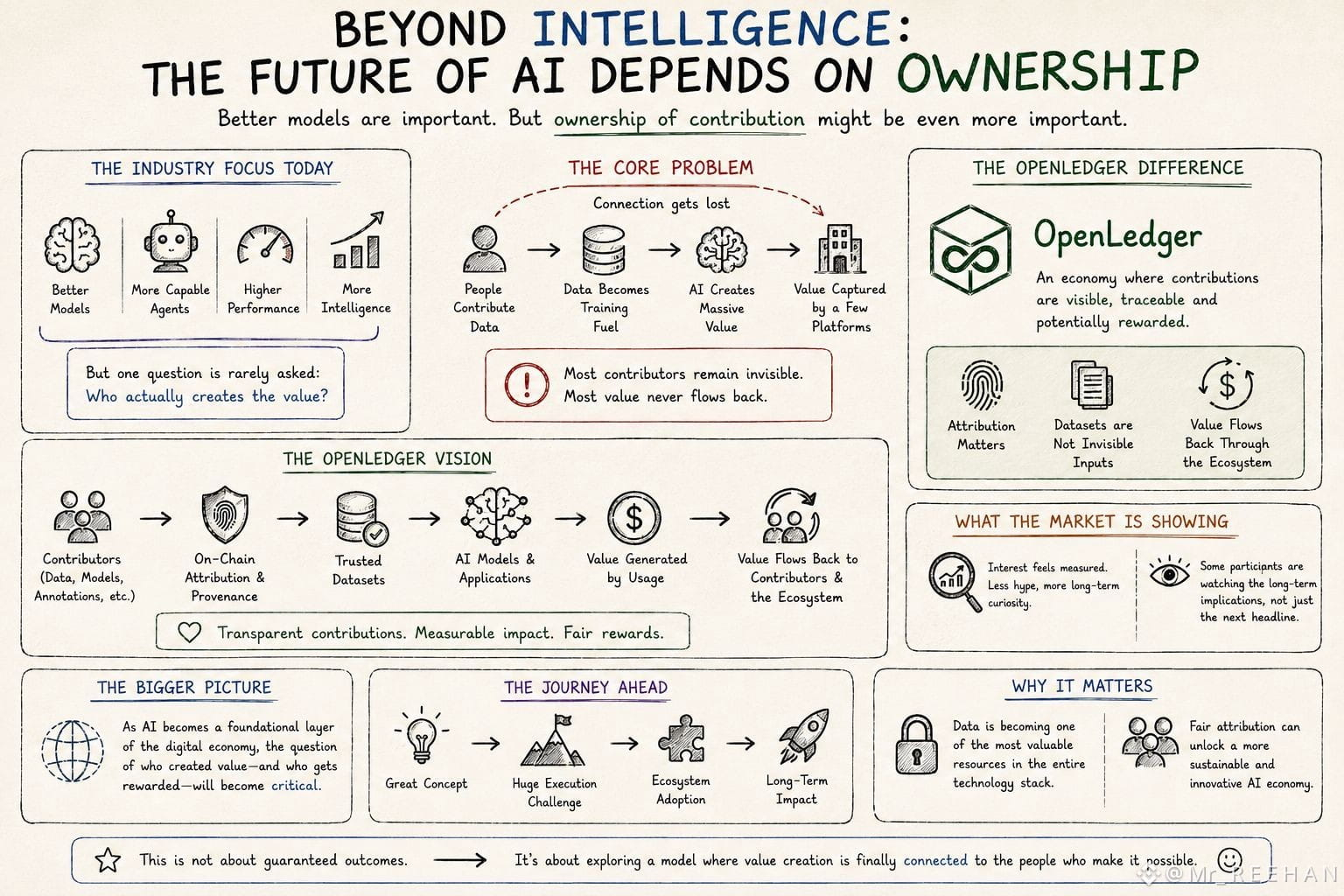
AI data… models… agents… all turned into something you can rent, trade, monetize. it sounds powerful, almost obvious, like yeah of course knowledge will become liquid someday… but then I sit there staring at it and think, why does everything in crypto always feel like it’s one step away from being real, and also one step away from just another story we keep repeating
I’ve seen this pattern before. new narrative, big words, charts start moving a bit, people start imagining a whole new internet being built overnight… and maybe something does get built, slowly, painfully, but most of it just fades into forgotten Discord servers and half-updated docs
OpenLedger sits right in that uncomfortable zone for me. not a scam vibe, not a guaranteed winner either. just… uncertain energy. like holding a phone with 3 percent battery and deciding whether to keep scrolling or accept reality and put it on charge
and I keep asking myself, who actually pays for rented AI knowledge in a way that sticks, not just experiments or incentives? if that answer becomes real, then yeah… this thing changes. if not, it’s just another beautiful idea floating in crypto space, waiting for gravity
for now I’m just watching it breathe, not touching, not ignoring either
@Openledger #OpenLedger $OPEN
{spot}(OPENUSDT)
OPENLEDGER ($OPEN ) feels like one of those ideas that shows up when the whole market is half tired but still pretending to be early
AI data… models… agents… all turned into something you can rent, trade, monetize. it sounds powerful, almost obvious, like yeah of course knowledge will become liquid someday… but then I sit there staring at it and think, why does everything in crypto always feel like it’s one step away from being real, and also one step away from just another story we keep repeating
I’ve seen this pattern before. new narrative, big words, charts start moving a bit, people start imagining a whole new internet being built overnight… and maybe something does get built, slowly, painfully, but most of it just fades into forgotten Discord servers and half-updated docs
OpenLedger sits right in that uncomfortable zone for me. not a scam vibe, not a guaranteed winner either. just… uncertain energy. like holding a phone with 3 percent battery and deciding whether to keep scrolling or accept reality and put it on charge
and I keep asking myself, who actually pays for rented AI knowledge in a way that sticks, not just experiments or incentives? if that answer becomes real, then yeah… this thing changes. if not, it’s just another beautiful idea floating in crypto space, waiting for gravity
for now I’m just watching it breathe, not touching, not ignoring either
@OpenLedger #OpenLedger $OPEN
AI data… models… agents… all turned into something you can rent, trade, monetize. it sounds powerful, almost obvious, like yeah of course knowledge will become liquid someday… but then I sit there staring at it and think, why does everything in crypto always feel like it’s one step away from being real, and also one step away from just another story we keep repeating
I’ve seen this pattern before. new narrative, big words, charts start moving a bit, people start imagining a whole new internet being built overnight… and maybe something does get built, slowly, painfully, but most of it just fades into forgotten Discord servers and half-updated docs
OpenLedger sits right in that uncomfortable zone for me. not a scam vibe, not a guaranteed winner either. just… uncertain energy. like holding a phone with 3 percent battery and deciding whether to keep scrolling or accept reality and put it on charge
and I keep asking myself, who actually pays for rented AI knowledge in a way that sticks, not just experiments or incentives? if that answer becomes real, then yeah… this thing changes. if not, it’s just another beautiful idea floating in crypto space, waiting for gravity
for now I’m just watching it breathe, not touching, not ignoring either
@OpenLedger #OpenLedger $OPEN
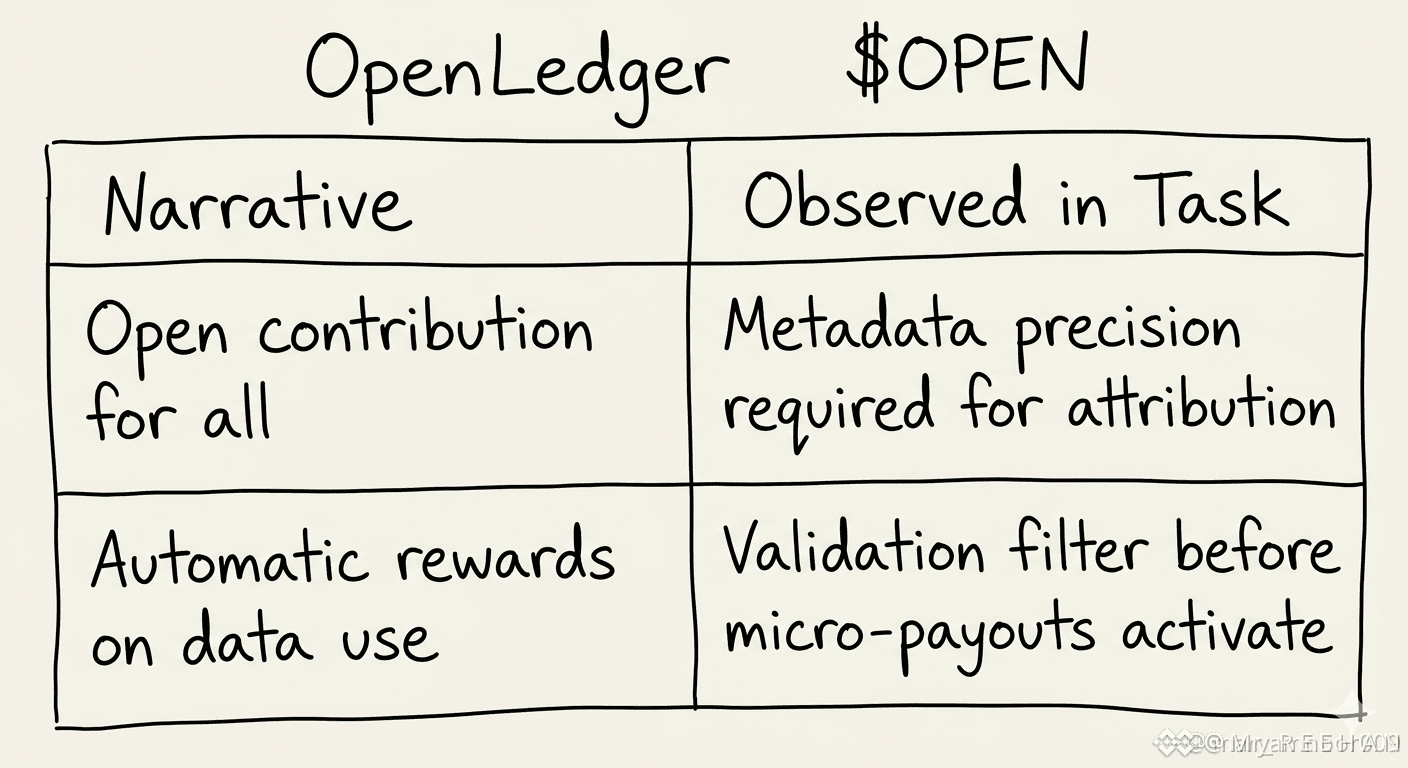
Suleman BNB:
I like the focus on trust. Fast results are useful, but verified and improved results are what people actually rely on.
2
2
157

·
--
Рост
#openledger Yesterday I was reviewing a small $OPEN position I started testing a few weeks ago. Nothing huge—I'm barely up on it—but while reading through the project again, I got stuck on a thought I couldn't shake.
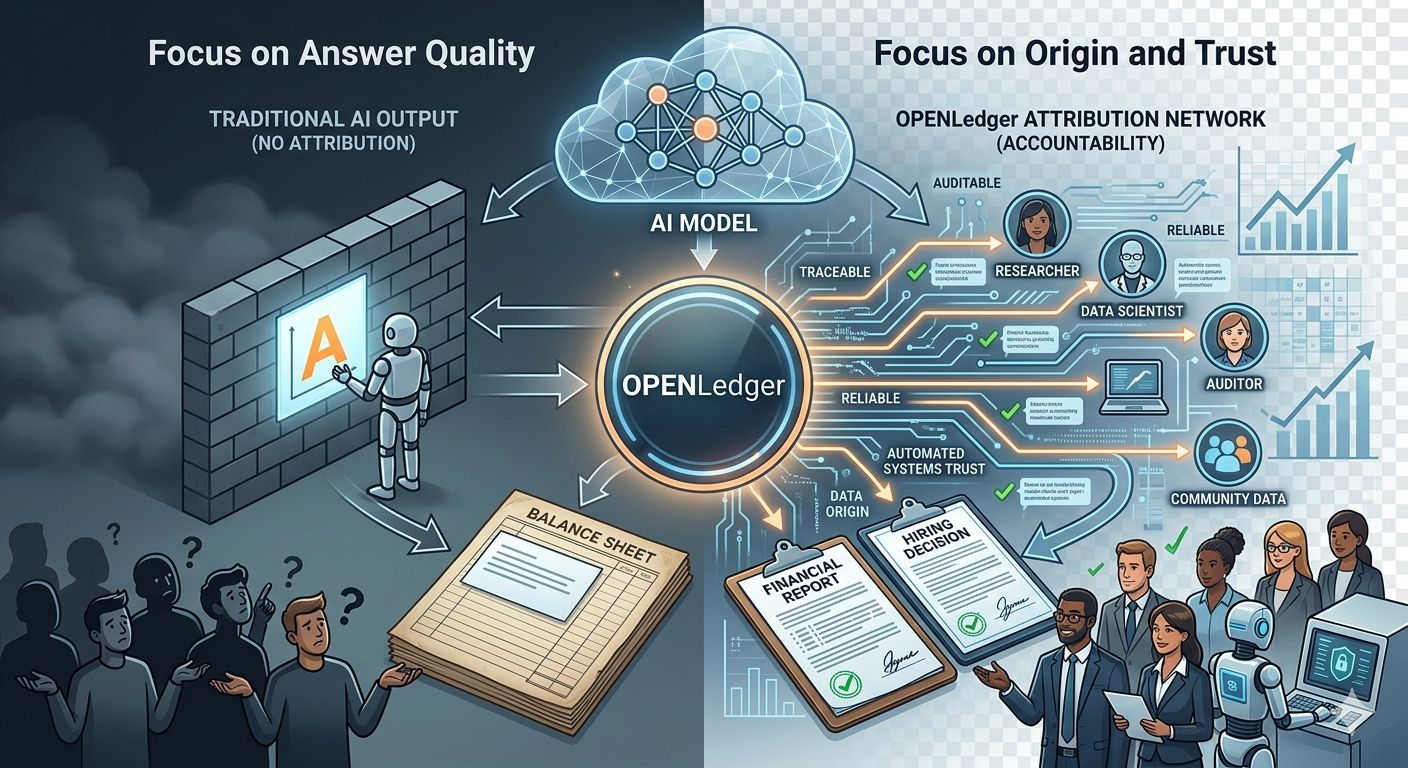
Most people evaluate AI based on the quality of its answers. OpenLedger made me look at it differently.
What if the real value isn't the output itself, but the ability to trace where that output came from?
The comparison that came to mind was financial statements. A balance sheet isn't important because numbers exist on a page. It's important because people rely on it, and there's accountability behind it.
AI outputs seem to be moving in that direction. More systems are starting to consume AI-generated conclusions without rechecking every source. When that happens, attribution becomes more than a technical feature.
That's why OpenLedger's focus on attribution stands out to me. If AI decisions start influencing capital, hiring, or automated systems, knowing who contributed to an outcome may matter as much as the outcome itself.
That's a much bigger problem than model speed.
$OPEN @Openledger
#openledger Yesterday I was reviewing a small $OPEN position I started testing a few weeks ago. Nothing huge—I'm barely up on it—but while reading through the project again, I got stuck on a thought I couldn't shake.
Most people evaluate AI based on the quality of its answers. OpenLedger made me look at it differently.
What if the real value isn't the output itself, but the ability to trace where that output came from?
The comparison that came to mind was financial statements. A balance sheet isn't important because numbers exist on a page. It's important because people rely on it, and there's accountability behind it.
AI outputs seem to be moving in that direction. More systems are starting to consume AI-generated conclusions without rechecking every source. When that happens, attribution becomes more than a technical feature.
That's why OpenLedger's focus on attribution stands out to me. If AI decisions start influencing capital, hiring, or automated systems, knowing who contributed to an outcome may matter as much as the outcome itself.
That's a much bigger problem than model speed.
$OPEN @OpenLedger
Most people evaluate AI based on the quality of its answers. OpenLedger made me look at it differently.
What if the real value isn't the output itself, but the ability to trace where that output came from?
The comparison that came to mind was financial statements. A balance sheet isn't important because numbers exist on a page. It's important because people rely on it, and there's accountability behind it.
AI outputs seem to be moving in that direction. More systems are starting to consume AI-generated conclusions without rechecking every source. When that happens, attribution becomes more than a technical feature.
That's why OpenLedger's focus on attribution stands out to me. If AI decisions start influencing capital, hiring, or automated systems, knowing who contributed to an outcome may matter as much as the outcome itself.
That's a much bigger problem than model speed.
$OPEN @OpenLedger
Crypto_Athlete 7:
When that happens, attribution becomes more than a technical feature.
8
3
60


·
--
Проверено
I used to think building in Web3 was only for people who enjoy staring at code for hours. I respect that skill, but honestly, it can make good ideas die before they even get tested.
That is why the vibecoding angle with @Openledger feels interesting to me.
The way I see it, a lot of people already have useful ideas for AI agents, data tools, trading helpers, or simple Web3 apps. The problem is not always imagination. The problem is getting from idea to first working version without feeling stuck at every technical step.
If OpenLedger can make that process easier, then more small builders may start experimenting. Not every experiment will become huge, and that is fine. Real ecosystems usually grow from messy testing, feedback, and people trying things that look small at first.
From my perspective, vibecoding is not about replacing developers. It is about giving more people the confidence to start.
That could matter a lot for $OPEN if those experiments turn into real activity inside the ecosystem.
Would you try vibecoding on OpenLedger?
#OpenLedger
$LAB
$CITY
{future}(OPENUSDT)
I used to think building in Web3 was only for people who enjoy staring at code for hours. I respect that skill, but honestly, it can make good ideas die before they even get tested.
That is why the vibecoding angle with @OpenLedger feels interesting to me.
The way I see it, a lot of people already have useful ideas for AI agents, data tools, trading helpers, or simple Web3 apps. The problem is not always imagination. The problem is getting from idea to first working version without feeling stuck at every technical step.
If OpenLedger can make that process easier, then more small builders may start experimenting. Not every experiment will become huge, and that is fine. Real ecosystems usually grow from messy testing, feedback, and people trying things that look small at first.
From my perspective, vibecoding is not about replacing developers. It is about giving more people the confidence to start.
That could matter a lot for $OPEN if those experiments turn into real activity inside the ecosystem.
Would you try vibecoding on OpenLedger?
#OpenLedger
$LAB
$CITY
That is why the vibecoding angle with @OpenLedger feels interesting to me.
The way I see it, a lot of people already have useful ideas for AI agents, data tools, trading helpers, or simple Web3 apps. The problem is not always imagination. The problem is getting from idea to first working version without feeling stuck at every technical step.
If OpenLedger can make that process easier, then more small builders may start experimenting. Not every experiment will become huge, and that is fine. Real ecosystems usually grow from messy testing, feedback, and people trying things that look small at first.
From my perspective, vibecoding is not about replacing developers. It is about giving more people the confidence to start.
That could matter a lot for $OPEN if those experiments turn into real activity inside the ecosystem.
Would you try vibecoding on OpenLedger?
#OpenLedger
$LAB
$CITY
Yes, I’d build fast
50%
Maybe for AI tools
50%
Need to learn more
0%
Not for me yet
0%
4 проголосовали • Голосование закрыто
13
10
953

·
--
Why OpenLedger is part of the next generation internet narrativeWasn't really planning to go deep today. Had the charts open, OPEN was doing the usual — hovering around the same range it's been stuck in for weeks, nothing dramatic. Market felt like it was waiting for something. So I closed the price tab and pulled up something I'd bookmarked a while back, just to fill the time.
Started reading through some OpenLedger, $OPEN , #OpenLedger @Openledger documentation. Had an angle in my head going in — the whole "next generation internet" pitch. Web3. Decentralization. User ownership. The kind of thing that sounds impressive at a conference and then evaporates when you try to point to something concrete.
But I sat with it longer than I expected to. And something came loose.
Here's the realization. Every generation of the internet has been defined not by what users got to do — but by who controlled the underlying infrastructure layer that everything else ran on.
Web1: whoever owned the servers had the leverage. Those were the ISPs, the hosting companies, the router infrastructure. The application layer on top was almost irrelevant — the infrastructure was the moat.
Web2: the infrastructure became the platforms. Facebook, Google, AWS. The data pipelines and distribution rails. Once they owned the pipes your content flowed through, they owned the value. And they were right — user-facing applications on top came and went, but whoever ran the infrastructure printed money.
Now look at what AI is doing to the internet. The application layer is changing constantly — new interfaces, new chatbots, new products. But underneath all of it, there is one thing that the entire AI economy depends on: training data and the models built from it. That's the new infrastructure layer.
And right now, it's entirely owned by a handful of private companies. Same structure. Different layer.
OpenLedger is trying to make that layer ownable and settleable by the network — not by a corporation. Not as a fairness gesture. As an infrastructure play. The Proof of Attribution system, the Datanets, the on-chain lineage — it's all aimed at the same thing: making intelligence infrastructure function more like a protocol than a proprietary product.
That reframe hit differently than the usual "Web3 narrative" pitch. Because Web3 often ends up being about applications — NFTs, DAO voting, token-gated communities. Interesting maybe, but not infrastructure. This is infrastructure-level positioning.
I thought "okay, this is a compelling thesis." But then I checked the actual chain data. DeFiLlama has annual protocol revenue at $693K. Fees dropped another 23% this past week. The circulating supply has expanded to over 290M tokens from 215.5M at launch — meaning a lot of tokens went out the door and relatively little revenue came back in.
And that's the quiet problem with infrastructure bets. The idea can be structurally correct and still fail. Infrastructure requires enormous network scale to generate moat value. TCP/IP is the protocol that runs the internet — but the companies that tried to own variants of TCP/IP mostly disappeared. The ones that survived were the ones that reached critical mass before competitors did.
OpenLedger has the positioning right. Whether it reaches the adoption threshold before the September 2026 investor unlocks arrive, before better-funded competitors converge on the same territory, before the window closes… that I can't tell from the current numbers.
The idea is right. The timing is the gamble.
Still watching. Nothing obvious to do right now.
Why OpenLedger is part of the next generation internet narrative
Wasn't really planning to go deep today. Had the charts open, OPEN was doing the usual — hovering around the same range it's been stuck in for weeks, nothing dramatic. Market felt like it was waiting for something. So I closed the price tab and pulled up something I'd bookmarked a while back, just to fill the time.
Started reading through some OpenLedger, $OPEN , #OpenLedger @OpenLedger documentation. Had an angle in my head going in — the whole "next generation internet" pitch. Web3. Decentralization. User ownership. The kind of thing that sounds impressive at a conference and then evaporates when you try to point to something concrete.
But I sat with it longer than I expected to. And something came loose.
Here's the realization. Every generation of the internet has been defined not by what users got to do — but by who controlled the underlying infrastructure layer that everything else ran on.
Web1: whoever owned the servers had the leverage. Those were the ISPs, the hosting companies, the router infrastructure. The application layer on top was almost irrelevant — the infrastructure was the moat.
Web2: the infrastructure became the platforms. Facebook, Google, AWS. The data pipelines and distribution rails. Once they owned the pipes your content flowed through, they owned the value. And they were right — user-facing applications on top came and went, but whoever ran the infrastructure printed money.
Now look at what AI is doing to the internet. The application layer is changing constantly — new interfaces, new chatbots, new products. But underneath all of it, there is one thing that the entire AI economy depends on: training data and the models built from it. That's the new infrastructure layer.
And right now, it's entirely owned by a handful of private companies. Same structure. Different layer.
OpenLedger is trying to make that layer ownable and settleable by the network — not by a corporation. Not as a fairness gesture. As an infrastructure play. The Proof of Attribution system, the Datanets, the on-chain lineage — it's all aimed at the same thing: making intelligence infrastructure function more like a protocol than a proprietary product.
That reframe hit differently than the usual "Web3 narrative" pitch. Because Web3 often ends up being about applications — NFTs, DAO voting, token-gated communities. Interesting maybe, but not infrastructure. This is infrastructure-level positioning.
I thought "okay, this is a compelling thesis." But then I checked the actual chain data. DeFiLlama has annual protocol revenue at $693K. Fees dropped another 23% this past week. The circulating supply has expanded to over 290M tokens from 215.5M at launch — meaning a lot of tokens went out the door and relatively little revenue came back in.
And that's the quiet problem with infrastructure bets. The idea can be structurally correct and still fail. Infrastructure requires enormous network scale to generate moat value. TCP/IP is the protocol that runs the internet — but the companies that tried to own variants of TCP/IP mostly disappeared. The ones that survived were the ones that reached critical mass before competitors did.
OpenLedger has the positioning right. Whether it reaches the adoption threshold before the September 2026 investor unlocks arrive, before better-funded competitors converge on the same territory, before the window closes… that I can't tell from the current numbers.
The idea is right. The timing is the gamble.
Still watching. Nothing obvious to do right now.
Started reading through some OpenLedger, $OPEN , #OpenLedger @OpenLedger documentation. Had an angle in my head going in — the whole "next generation internet" pitch. Web3. Decentralization. User ownership. The kind of thing that sounds impressive at a conference and then evaporates when you try to point to something concrete.
But I sat with it longer than I expected to. And something came loose.
Here's the realization. Every generation of the internet has been defined not by what users got to do — but by who controlled the underlying infrastructure layer that everything else ran on.
Web1: whoever owned the servers had the leverage. Those were the ISPs, the hosting companies, the router infrastructure. The application layer on top was almost irrelevant — the infrastructure was the moat.
Web2: the infrastructure became the platforms. Facebook, Google, AWS. The data pipelines and distribution rails. Once they owned the pipes your content flowed through, they owned the value. And they were right — user-facing applications on top came and went, but whoever ran the infrastructure printed money.
Now look at what AI is doing to the internet. The application layer is changing constantly — new interfaces, new chatbots, new products. But underneath all of it, there is one thing that the entire AI economy depends on: training data and the models built from it. That's the new infrastructure layer.
And right now, it's entirely owned by a handful of private companies. Same structure. Different layer.
OpenLedger is trying to make that layer ownable and settleable by the network — not by a corporation. Not as a fairness gesture. As an infrastructure play. The Proof of Attribution system, the Datanets, the on-chain lineage — it's all aimed at the same thing: making intelligence infrastructure function more like a protocol than a proprietary product.
That reframe hit differently than the usual "Web3 narrative" pitch. Because Web3 often ends up being about applications — NFTs, DAO voting, token-gated communities. Interesting maybe, but not infrastructure. This is infrastructure-level positioning.
I thought "okay, this is a compelling thesis." But then I checked the actual chain data. DeFiLlama has annual protocol revenue at $693K. Fees dropped another 23% this past week. The circulating supply has expanded to over 290M tokens from 215.5M at launch — meaning a lot of tokens went out the door and relatively little revenue came back in.
And that's the quiet problem with infrastructure bets. The idea can be structurally correct and still fail. Infrastructure requires enormous network scale to generate moat value. TCP/IP is the protocol that runs the internet — but the companies that tried to own variants of TCP/IP mostly disappeared. The ones that survived were the ones that reached critical mass before competitors did.
OpenLedger has the positioning right. Whether it reaches the adoption threshold before the September 2026 investor unlocks arrive, before better-funded competitors converge on the same territory, before the window closes… that I can't tell from the current numbers.
The idea is right. The timing is the gamble.
Still watching. Nothing obvious to do right now.
Queen_DoLL:
The kind of thing that sounds impressive at a conference and then evaporates when you try to point to something concrete.
3
2
92

Статья
OpenLedger Made Me Question Who Actually Owns IntelligenceFor a long time, I assumed ownership was a pretty simple concept.
You can own land. you can own a business. You can own shares in a company. In crypto, you can even own digital assets that exist entirely online.
but recently I found myself thinkIng about something much stranger.
Can anyone actualLy own inTelligence?
At first, that sounds liKe a philosophical question. the more I looked at projects like OpenLedger, though, the more it started feelIng liKe an economic question.
most people looking at OpenLedger see an AI blockchain. They see data attribution, decentralized model development, token incentives, and specialized AI models.
that is the obvious story.
What caught my attentIon was something underneath all of that.
I think OpenLedger is making a much bigger bet than most people realize.
it is betting that inteLligence itself is becoming an asset class.
throughout history, economies have been buIlt around ownership.
Agricultural economies were built around land ownershIp.
Industrial economies were built around capital ownership.
Internet economies were built around platform ownership.
the AI economy may be built around intelligence ownership.
and that is where things become interesting.
Today is AI systems are trained using enormous amounts of human knowledge. Researchers contrIbute ideas. experts contribute domain expertise. Communities generate datasets. users provide feedback that improves models over time.
Yet when value is created, most contributors disappear from the economic equation.
The model earns value.
The platform earns revenue.
The intelligence improves.
but the people who helped create that intelligence often receive nothing.
What OpenLedger appears to be asking is a very different question.
what if intelligence could have an ownership history?
Not ownership of the model itself.
Ownership of the contributions that made the model useful.
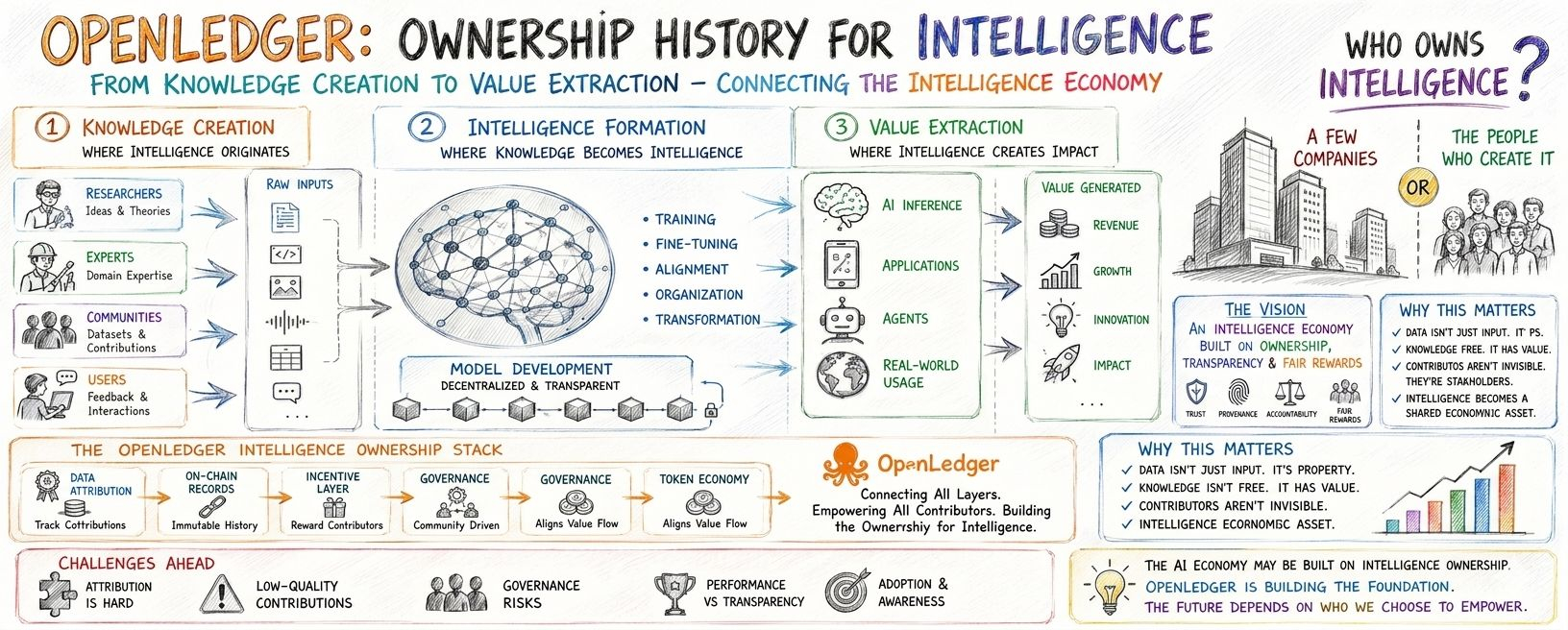
I keep coming back to what I call the Intelligence Ownership Stack.
The first layer is Knowledge Creation.
This is where data, expertise, observations, and domain-specific insights originate.
The second layer is Intelligence Formation.
This is where models absorb, organize, and transform knowledge into usable intelligence.
The third layer is Value Extraction.
This is where AI generates economic value through inference, applications, agents, and real-world usage.
Most AI companies capture value primarily at the third layer.
OpenLedger is attempting to connect all three.
If that works, the implications go far beyond one project.
Data stops being a raw input.
Knowledge stops being a free resource.
Contributors stop being invisible participants.
Instead, they become stakeholders in the intelligence economy.
That idea sounds ambitious, and there are real reasons it may fail.
Attribution is incredibly difficult to measure accurately. Incentive systems can attract low-quality contributions. Governance can become concentrated. Users may care more about performance than transparency.
Those are serious challenges.
But even if OpenLedger never achieves its full vision, I think it highlights a trend the market is underestimating.
For years, crypto has focused on ownership of assets.
Bitcoin introduced ownership of money.
Ethereum introduced ownership of programmable value.
DeFi introduced ownership of financial activity.
AI may force crypto to tackle something much harder: ownership of intelligence production.
That's a much larger market than most people are discussing.
The more AI becomes integrated into everyday decision-making, the more valuable attribution becomes. Not just for rewards, but for accountability, trust, provenance, and economic coordination.
In a strange way, OpenLedger feels less like an AI project and more like an experiment in creating property rights for intelligence.
And that leaves me with a question I can't stop thinking about.
If intelligence becomes one of the most valuable resources in the digital economy, will it be owned by a handful of companies...
Or by the people who helped create it in the first place?
@Openledger $OPEN #OpenLedger
OpenLedger Made Me Question Who Actually Owns Intelligence
For a long time, I assumed ownership was a pretty simple concept.
You can own land. you can own a business. You can own shares in a company. In crypto, you can even own digital assets that exist entirely online.
but recently I found myself thinkIng about something much stranger.
Can anyone actualLy own inTelligence?
At first, that sounds liKe a philosophical question. the more I looked at projects like OpenLedger, though, the more it started feelIng liKe an economic question.
most people looking at OpenLedger see an AI blockchain. They see data attribution, decentralized model development, token incentives, and specialized AI models.
that is the obvious story.
What caught my attentIon was something underneath all of that.
I think OpenLedger is making a much bigger bet than most people realize.
it is betting that inteLligence itself is becoming an asset class.
throughout history, economies have been buIlt around ownership.
Agricultural economies were built around land ownershIp.
Industrial economies were built around capital ownership.
Internet economies were built around platform ownership.
the AI economy may be built around intelligence ownership.
and that is where things become interesting.
Today is AI systems are trained using enormous amounts of human knowledge. Researchers contrIbute ideas. experts contribute domain expertise. Communities generate datasets. users provide feedback that improves models over time.
Yet when value is created, most contributors disappear from the economic equation.
The model earns value.
The platform earns revenue.
The intelligence improves.
but the people who helped create that intelligence often receive nothing.
What OpenLedger appears to be asking is a very different question.
what if intelligence could have an ownership history?
Not ownership of the model itself.
Ownership of the contributions that made the model useful.
I keep coming back to what I call the Intelligence Ownership Stack.
The first layer is Knowledge Creation.
This is where data, expertise, observations, and domain-specific insights originate.
The second layer is Intelligence Formation.
This is where models absorb, organize, and transform knowledge into usable intelligence.
The third layer is Value Extraction.
This is where AI generates economic value through inference, applications, agents, and real-world usage.
Most AI companies capture value primarily at the third layer.
OpenLedger is attempting to connect all three.
If that works, the implications go far beyond one project.
Data stops being a raw input.
Knowledge stops being a free resource.
Contributors stop being invisible participants.
Instead, they become stakeholders in the intelligence economy.
That idea sounds ambitious, and there are real reasons it may fail.
Attribution is incredibly difficult to measure accurately. Incentive systems can attract low-quality contributions. Governance can become concentrated. Users may care more about performance than transparency.
Those are serious challenges.
But even if OpenLedger never achieves its full vision, I think it highlights a trend the market is underestimating.
For years, crypto has focused on ownership of assets.
Bitcoin introduced ownership of money.
Ethereum introduced ownership of programmable value.
DeFi introduced ownership of financial activity.
AI may force crypto to tackle something much harder: ownership of intelligence production.
That's a much larger market than most people are discussing.
The more AI becomes integrated into everyday decision-making, the more valuable attribution becomes. Not just for rewards, but for accountability, trust, provenance, and economic coordination.
In a strange way, OpenLedger feels less like an AI project and more like an experiment in creating property rights for intelligence.
And that leaves me with a question I can't stop thinking about.
If intelligence becomes one of the most valuable resources in the digital economy, will it be owned by a handful of companies...
Or by the people who helped create it in the first place?
@OpenLedger $OPEN #OpenLedger
You can own land. you can own a business. You can own shares in a company. In crypto, you can even own digital assets that exist entirely online.
but recently I found myself thinkIng about something much stranger.
Can anyone actualLy own inTelligence?
At first, that sounds liKe a philosophical question. the more I looked at projects like OpenLedger, though, the more it started feelIng liKe an economic question.
most people looking at OpenLedger see an AI blockchain. They see data attribution, decentralized model development, token incentives, and specialized AI models.
that is the obvious story.
What caught my attentIon was something underneath all of that.
I think OpenLedger is making a much bigger bet than most people realize.
it is betting that inteLligence itself is becoming an asset class.
throughout history, economies have been buIlt around ownership.
Agricultural economies were built around land ownershIp.
Industrial economies were built around capital ownership.
Internet economies were built around platform ownership.
the AI economy may be built around intelligence ownership.
and that is where things become interesting.
Today is AI systems are trained using enormous amounts of human knowledge. Researchers contrIbute ideas. experts contribute domain expertise. Communities generate datasets. users provide feedback that improves models over time.
Yet when value is created, most contributors disappear from the economic equation.
The model earns value.
The platform earns revenue.
The intelligence improves.
but the people who helped create that intelligence often receive nothing.
What OpenLedger appears to be asking is a very different question.
what if intelligence could have an ownership history?
Not ownership of the model itself.
Ownership of the contributions that made the model useful.
I keep coming back to what I call the Intelligence Ownership Stack.
The first layer is Knowledge Creation.
This is where data, expertise, observations, and domain-specific insights originate.
The second layer is Intelligence Formation.
This is where models absorb, organize, and transform knowledge into usable intelligence.
The third layer is Value Extraction.
This is where AI generates economic value through inference, applications, agents, and real-world usage.
Most AI companies capture value primarily at the third layer.
OpenLedger is attempting to connect all three.
If that works, the implications go far beyond one project.
Data stops being a raw input.
Knowledge stops being a free resource.
Contributors stop being invisible participants.
Instead, they become stakeholders in the intelligence economy.
That idea sounds ambitious, and there are real reasons it may fail.
Attribution is incredibly difficult to measure accurately. Incentive systems can attract low-quality contributions. Governance can become concentrated. Users may care more about performance than transparency.
Those are serious challenges.
But even if OpenLedger never achieves its full vision, I think it highlights a trend the market is underestimating.
For years, crypto has focused on ownership of assets.
Bitcoin introduced ownership of money.
Ethereum introduced ownership of programmable value.
DeFi introduced ownership of financial activity.
AI may force crypto to tackle something much harder: ownership of intelligence production.
That's a much larger market than most people are discussing.
The more AI becomes integrated into everyday decision-making, the more valuable attribution becomes. Not just for rewards, but for accountability, trust, provenance, and economic coordination.
In a strange way, OpenLedger feels less like an AI project and more like an experiment in creating property rights for intelligence.
And that leaves me with a question I can't stop thinking about.
If intelligence becomes one of the most valuable resources in the digital economy, will it be owned by a handful of companies...
Or by the people who helped create it in the first place?
@OpenLedger $OPEN #OpenLedger
Adan Dhillon:
Great perspective. The projects that solve real user problems usually create the most long-term value.
4
5
218

·
--
#openledger $OPEN @Openledger
I Myself assuming that better AI agents mostly needed better reasoning. The more I looked at systems like OctoClaw, The less convinced I became.
My view is simple: agent autonomy matters less Than execution trust. On the surface, local operation looks like a privacy feature. Underneath, it changes where decisions, permissions, and risk actually live. If an agent handles walleet permissions meaning the authority to move assets or private straTegy logic, the environment Running those actions becomes part of the security model.
That feels increasingly relevant when over $11 billiion in crypto token unlocks are expected across 2026, ETF flows continue concentrating liquidity, and stablecoin supply has moved above $250 billion. Those numbers point to larger pools of capital and more Automated behavior, not necessarily better judgment.
The trade-off is obvious. Cloud execution is convenient; local execution offers more control. But control creates friction. Opereational trust is rarely free, and that may be the real constraint on autonoMous Agents.
{future}(OPENUSDT)
#openledger $OPEN @OpenLedger
I Myself assuming that better AI agents mostly needed better reasoning. The more I looked at systems like OctoClaw, The less convinced I became.
My view is simple: agent autonomy matters less Than execution trust. On the surface, local operation looks like a privacy feature. Underneath, it changes where decisions, permissions, and risk actually live. If an agent handles walleet permissions meaning the authority to move assets or private straTegy logic, the environment Running those actions becomes part of the security model.
That feels increasingly relevant when over $11 billiion in crypto token unlocks are expected across 2026, ETF flows continue concentrating liquidity, and stablecoin supply has moved above $250 billion. Those numbers point to larger pools of capital and more Automated behavior, not necessarily better judgment.
The trade-off is obvious. Cloud execution is convenient; local execution offers more control. But control creates friction. Opereational trust is rarely free, and that may be the real constraint on autonoMous Agents.
I Myself assuming that better AI agents mostly needed better reasoning. The more I looked at systems like OctoClaw, The less convinced I became.
My view is simple: agent autonomy matters less Than execution trust. On the surface, local operation looks like a privacy feature. Underneath, it changes where decisions, permissions, and risk actually live. If an agent handles walleet permissions meaning the authority to move assets or private straTegy logic, the environment Running those actions becomes part of the security model.
That feels increasingly relevant when over $11 billiion in crypto token unlocks are expected across 2026, ETF flows continue concentrating liquidity, and stablecoin supply has moved above $250 billion. Those numbers point to larger pools of capital and more Automated behavior, not necessarily better judgment.
The trade-off is obvious. Cloud execution is convenient; local execution offers more control. But control creates friction. Opereational trust is rarely free, and that may be the real constraint on autonoMous Agents.

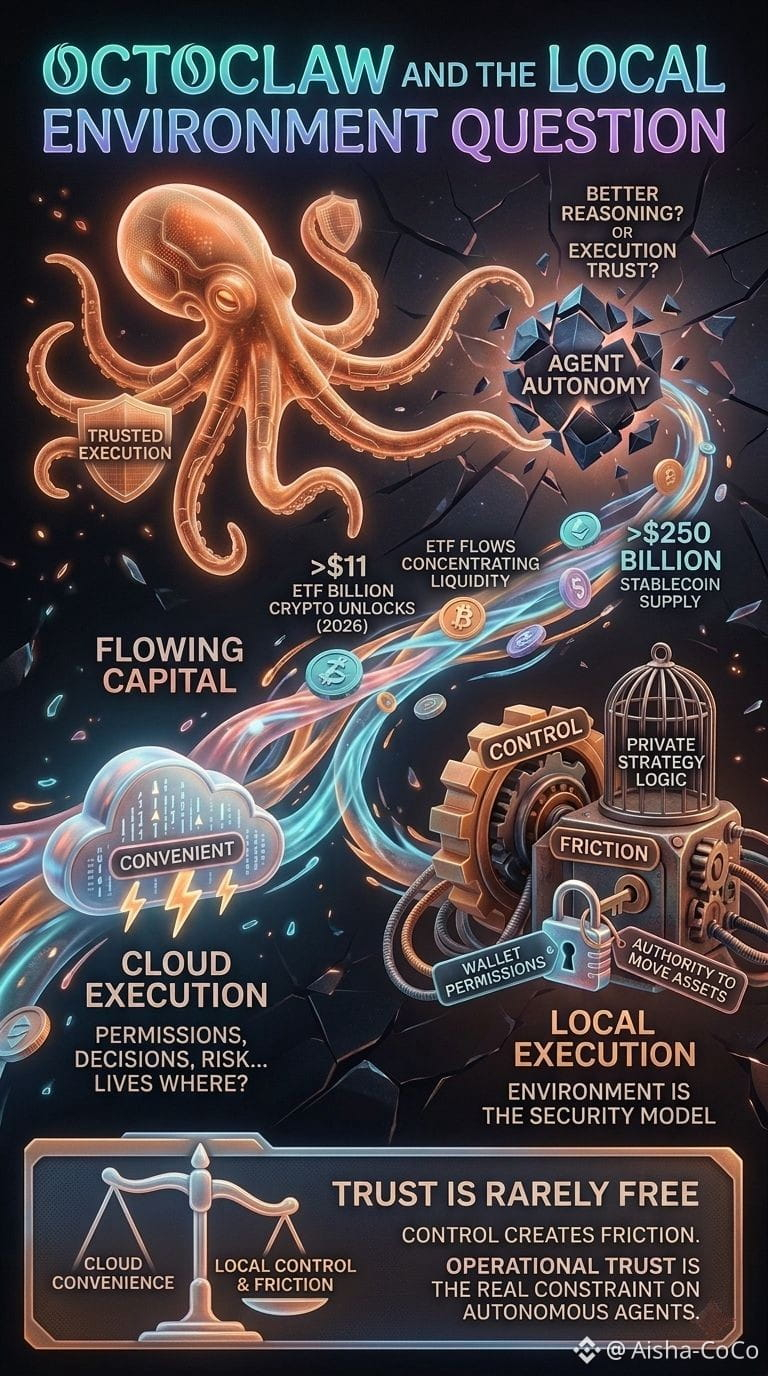
ALPHA-BNB:
$genius looks like a project that focuses on real utility rather than temporary hype cycles.
7
8
368

·
--

Статья
Who Is Actually Getting Paid? A Quiet Look at OpenLedger’s Idea@Openledger .. I’ve seen this before… maybe a few months ago. The chart was just doing its usual thing… up down up down. But my mind got stuck on one strange question.
Who is actually getting paid?
No no seriously… everyone keeps talking about AI data, models, future big vision. Okay, fair enough. Nice words. But if all of this is really working… then who is actually earning the money? I’m looking at it, but the answer doesn’t feel that clear.
Then I saw #OpenLedger and this “attribution” idea. Sounds like a big fancy word… but maybe it’s simple at the core.
You give data… and it doesn’t just disappear inside a machine like a ghost. They’re trying to track where the data came from. If your data helps the model, then maybe… just maybe… you get rewarded. That’s how I understand it… maybe.
And honestly… I find this idea kind of interesting.
Because usually, data contributors are invisible. They clean, write, organize everything… and then boom, the model becomes valuable and everyone forgets who actually did the work.
OpenLedger is basically saying… “wait… maybe we should remember.”
But as a trader… I don’t get impressed by ideas alone. The market doesn’t pay for narratives. The market pays for usage.
So the real questions are:
Are people actually bringing data?
Are they staying?
Are the models actually being used?
Or is everyone just coming, farming rewards, taking selfies, and leaving?
Because that’s what will decide everything.
The $OPEN chart right now doesn’t really look like the market is saying “this is the winner.” More like… “okay… show me first.”
And honestly… that’s fair.
Because attribution sounds nice, but AI systems are messy. Really messy.
How do you measure the impact of one dataset?
Small expert data vs massive public data… which one matters more?
If 10 people submit the same thing… who gets the reward?
That’s where it gets complicated.
Still… I’m watching.
Because if this actually works… if real contributors stay, models improve, and real usage happens… then something interesting could happen here.
But if it turns into another reward-farming cycle…
Then yeah… the market will move on faster than the narrative.
So right now… not super bullish, not super bearish.
Just standing in the corner watching…
“Okay… interesting idea… now show me proof.”
Need more evidence.
Need more users.
And most importantly, need people to stay even after the rewards stop feeling shiny.
Until then… I’m watching. Waiting. Observing.
@Openledger #OpenLedger $OPEN
{future}(OPENUSDT)
Who Is Actually Getting Paid? A Quiet Look at OpenLedger’s Idea
@OpenLedger .. I’ve seen this before… maybe a few months ago. The chart was just doing its usual thing… up down up down. But my mind got stuck on one strange question.
Who is actually getting paid?
No no seriously… everyone keeps talking about AI data, models, future big vision. Okay, fair enough. Nice words. But if all of this is really working… then who is actually earning the money? I’m looking at it, but the answer doesn’t feel that clear.
Then I saw #OpenLedger and this “attribution” idea. Sounds like a big fancy word… but maybe it’s simple at the core.
You give data… and it doesn’t just disappear inside a machine like a ghost. They’re trying to track where the data came from. If your data helps the model, then maybe… just maybe… you get rewarded. That’s how I understand it… maybe.
And honestly… I find this idea kind of interesting.
Because usually, data contributors are invisible. They clean, write, organize everything… and then boom, the model becomes valuable and everyone forgets who actually did the work.
OpenLedger is basically saying… “wait… maybe we should remember.”
But as a trader… I don’t get impressed by ideas alone. The market doesn’t pay for narratives. The market pays for usage.
So the real questions are:
Are people actually bringing data?
Are they staying?
Are the models actually being used?
Or is everyone just coming, farming rewards, taking selfies, and leaving?
Because that’s what will decide everything.
The $OPEN chart right now doesn’t really look like the market is saying “this is the winner.” More like… “okay… show me first.”
And honestly… that’s fair.
Because attribution sounds nice, but AI systems are messy. Really messy.
How do you measure the impact of one dataset?
Small expert data vs massive public data… which one matters more?
If 10 people submit the same thing… who gets the reward?
That’s where it gets complicated.
Still… I’m watching.
Because if this actually works… if real contributors stay, models improve, and real usage happens… then something interesting could happen here.
But if it turns into another reward-farming cycle…
Then yeah… the market will move on faster than the narrative.
So right now… not super bullish, not super bearish.
Just standing in the corner watching…
“Okay… interesting idea… now show me proof.”
Need more evidence.
Need more users.
And most importantly, need people to stay even after the rewards stop feeling shiny.
Until then… I’m watching. Waiting. Observing.
@OpenLedger #OpenLedger $OPEN
Who is actually getting paid?
No no seriously… everyone keeps talking about AI data, models, future big vision. Okay, fair enough. Nice words. But if all of this is really working… then who is actually earning the money? I’m looking at it, but the answer doesn’t feel that clear.
Then I saw #OpenLedger and this “attribution” idea. Sounds like a big fancy word… but maybe it’s simple at the core.
You give data… and it doesn’t just disappear inside a machine like a ghost. They’re trying to track where the data came from. If your data helps the model, then maybe… just maybe… you get rewarded. That’s how I understand it… maybe.
And honestly… I find this idea kind of interesting.
Because usually, data contributors are invisible. They clean, write, organize everything… and then boom, the model becomes valuable and everyone forgets who actually did the work.
OpenLedger is basically saying… “wait… maybe we should remember.”
But as a trader… I don’t get impressed by ideas alone. The market doesn’t pay for narratives. The market pays for usage.
So the real questions are:
Are people actually bringing data?
Are they staying?
Are the models actually being used?
Or is everyone just coming, farming rewards, taking selfies, and leaving?
Because that’s what will decide everything.
The $OPEN chart right now doesn’t really look like the market is saying “this is the winner.” More like… “okay… show me first.”
And honestly… that’s fair.
Because attribution sounds nice, but AI systems are messy. Really messy.
How do you measure the impact of one dataset?
Small expert data vs massive public data… which one matters more?
If 10 people submit the same thing… who gets the reward?
That’s where it gets complicated.
Still… I’m watching.
Because if this actually works… if real contributors stay, models improve, and real usage happens… then something interesting could happen here.
But if it turns into another reward-farming cycle…
Then yeah… the market will move on faster than the narrative.
So right now… not super bullish, not super bearish.
Just standing in the corner watching…
“Okay… interesting idea… now show me proof.”
Need more evidence.
Need more users.
And most importantly, need people to stay even after the rewards stop feeling shiny.
Until then… I’m watching. Waiting. Observing.
@OpenLedger #OpenLedger $OPEN
Aadi33:
That's the hard part. Data quantity is easy to measure. Data contribution is not. The entire attribution thesis succeeds or fails on that distinction.
14
5
288

·
--
Most people think the AI race is about who can build the smartest model.
I'm starting to think that's only half the story.
The more I follow AI, the more it feels like we're watching two different competitions happen at the same time. One is obvious: bigger models, more compute, better performance. Everyone talks about that part.
The other competition is much quieter.
It's about incentives.
Every AI system depends on people somewhere in the process. People generate data, provide expertise, create content, label information, test products, and help improve outputs. Without that layer, even the most advanced model has nothing useful to learn from.
Yet once the model is deployed, most of those contributors disappear from the picture.
That's why I found OpenLedger interesting.
At first I assumed it was another project focused mainly on AI infrastructure. After spending more time looking into it, what stood out wasn't the technology itself. It was the attempt to connect contributors, builders, and users inside the same economic system.
The idea seems simple on the surface.
If data helps create value, should the people contributing that data participate in the upside?
That sounds reasonable, but it's actually a difficult problem. Measuring contribution is hard. Rewarding people fairly is even harder. And creating incentives that don't get abused is harder still.
Which is why I think the real challenge isn't building the marketplace.
It's making the marketplace work.
A lot of projects can launch a platform. Far fewer can create an ecosystem where better contributions consistently lead to better outcomes for everyone involved.
Maybe OpenLedger succeeds. Maybe it doesn't.
But I do think it's asking one of the more important questions in AI right now:
As intelligent systems become more valuable, who should own the value they create?
The answer isn't as obvious as it first seems.
@Openledger $OPEN #OpenLedger
Most people think the AI race is about who can build the smartest model.
I'm starting to think that's only half the story.
The more I follow AI, the more it feels like we're watching two different competitions happen at the same time. One is obvious: bigger models, more compute, better performance. Everyone talks about that part.
The other competition is much quieter.
It's about incentives.
Every AI system depends on people somewhere in the process. People generate data, provide expertise, create content, label information, test products, and help improve outputs. Without that layer, even the most advanced model has nothing useful to learn from.
Yet once the model is deployed, most of those contributors disappear from the picture.
That's why I found OpenLedger interesting.
At first I assumed it was another project focused mainly on AI infrastructure. After spending more time looking into it, what stood out wasn't the technology itself. It was the attempt to connect contributors, builders, and users inside the same economic system.
The idea seems simple on the surface.
If data helps create value, should the people contributing that data participate in the upside?
That sounds reasonable, but it's actually a difficult problem. Measuring contribution is hard. Rewarding people fairly is even harder. And creating incentives that don't get abused is harder still.
Which is why I think the real challenge isn't building the marketplace.
It's making the marketplace work.
A lot of projects can launch a platform. Far fewer can create an ecosystem where better contributions consistently lead to better outcomes for everyone involved.
Maybe OpenLedger succeeds. Maybe it doesn't.
But I do think it's asking one of the more important questions in AI right now:
As intelligent systems become more valuable, who should own the value they create?
The answer isn't as obvious as it first seems.
@OpenLedger $OPEN #OpenLedger
I'm starting to think that's only half the story.
The more I follow AI, the more it feels like we're watching two different competitions happen at the same time. One is obvious: bigger models, more compute, better performance. Everyone talks about that part.
The other competition is much quieter.
It's about incentives.
Every AI system depends on people somewhere in the process. People generate data, provide expertise, create content, label information, test products, and help improve outputs. Without that layer, even the most advanced model has nothing useful to learn from.
Yet once the model is deployed, most of those contributors disappear from the picture.
That's why I found OpenLedger interesting.
At first I assumed it was another project focused mainly on AI infrastructure. After spending more time looking into it, what stood out wasn't the technology itself. It was the attempt to connect contributors, builders, and users inside the same economic system.
The idea seems simple on the surface.
If data helps create value, should the people contributing that data participate in the upside?
That sounds reasonable, but it's actually a difficult problem. Measuring contribution is hard. Rewarding people fairly is even harder. And creating incentives that don't get abused is harder still.
Which is why I think the real challenge isn't building the marketplace.
It's making the marketplace work.
A lot of projects can launch a platform. Far fewer can create an ecosystem where better contributions consistently lead to better outcomes for everyone involved.
Maybe OpenLedger succeeds. Maybe it doesn't.
But I do think it's asking one of the more important questions in AI right now:
As intelligent systems become more valuable, who should own the value they create?
The answer isn't as obvious as it first seems.
@OpenLedger $OPEN #OpenLedger
Rida Malik7:
Real innovation comes from solving real problems, and it's encouraging to see steady progress. Projects that focus on utility often create lasting value. What feature are you most excited about?
22
9
373

·
--

Статья
从碎片数据到数字底座:深度复盘 OpenLedger 走向 Web3 核心基建的进化逻辑我一边用平底锅煎着鸡蛋,一边用挂在后台的某个大热 AI 聚合器筛选当天的潜在异动币种。本来盯着 $BTC 刚刚企稳的 K 线,觉得可以摸点小鱼。突然,那个号称“全网毫秒级抓取”的 AI 弹窗疯狂预警,说某天王级项目团队正在砸盘转移资产。我吓得连火都顾不上关,切到 $ETH 链上,顶着几百 Gwei 的极高 Gas 费,狼狈地把相关池子里的 LP 全撤了。结果过了一小时才发现,这智障 AI 只是爬取了一个高仿诈骗号在推特上发的钓鱼假图,并把它当成了链上确凿证据。看着锅里焦黑的鸡蛋和凭空蒸发的高昂手续费,我后背一阵发凉:当咱们越来越依赖人工智能去做交易或生活决策时,一旦喂给它的源头数据掺了屎,它挥向我们的绝对是一把能要命的镰刀。
这口昂贵的“毒奶”,直接把我从各种炫酷的“Web3+AI”迷梦里扇醒了。你看看现在的广场,全在炒作谁家的虚拟人更逼真、哪个智能体更会聊天。但极少有人愿意捏着鼻子去查一查,这些看似聪明绝顶的代码模型,每天到底在吃什么烂菜叶子。逻辑很简单:如果大模型底层的训练语料早被污染了,甚至是被黑客恶意投毒的,那你就算用最顶级的算法,跑出来的也是一个一本正经胡说八道的数字废物。顺着这条顺藤摸瓜的思路,我才把投研的准星锁死了 @Openledger 。当全行业都在搞花里胡哨的前端应用骗流量时,这帮人却一头扎进了最苦最累的数据底层泥潭,试图用密码学和去中心化的方式,给语料打上一套无法作弊的“验毒防伪”标签。
把这套逻辑掰开揉碎了看,其实跟咱们加密行业最古早的信仰演进如出一辙。当年中本聪甩出比特币白皮书,靠着绝妙的算力博弈和公开账本,干碎了传统金融系统的黑箱,解决了电子资产的“双花”难题;紧接着,以太坊带着智能合约粉墨登场,用 EVM 把这种去信任化的共识,直接拉高到了执行复杂代码的层级。但现实很骨感,这两位开山鼻祖要是遇上如今 AI 模型那种动辄几百 TB 的恐怖数据吞吐量,绝对会被瞬间卡成高位截瘫。大模型要吃的不仅是几行转账记录,更是海量的人工标注、图像清洗和逻辑校对。
这种如同星辰大海般的非结构化数据洪流,如果全往现有的公链里塞,光是存储成本就能让项目方分分钟破产。这就注定了一个事实:AI 赛道必须长出一条像 OpenLedger 这样的专属数据下水道和提纯厂。它通过散布在全球的分布式节点,把那些脏乱差的原始信息收集过来,用一套严密的共识机制进行人工或算法的交叉筛查,最后提炼成高价值的机器口粮。如果没有这道干着苦力活的去中心化中间层,以后任何想在链上搞原生 AI 的极客,光是买数据和洗数据的天价账单,就足以把他们提前送走。
前几天,我和一个在硅谷大厂做算法核心的哥们儿喝酒,他嗤笑我们搞去中心化 AI 是螳臂当车,觉得大厂靠着堆积如山的 H100 显卡和垄断的全网爬虫,早就通关了这场游戏。我端着酒杯直接怼了回去:他们太傲慢了,完全低估了普通人“数据主权觉醒”的核爆威力。现在互联网上能免费白嫖的公开语料早就干涸了,甚至被 AI 自己生成的垃圾反噬了。未来真正能让模型产生质变的,是咱们每个人手机里、电脑里那些带着鲜活个人印记的私域数据。巨头要是敢明抢,绝对会被隐私法案和舆论彻底撕碎。而在这片灰色地带,去中心化网络反而成了一个绝佳的避风港。它让咱们普通人可以在不交出隐私底裤的前提下,把自己的认知和行为数据明码标价,卖个好价钱。
当然,作为常年拿真金白银试错的实盘玩家,我平时用那些“链上 AI”工具时,最想骂娘的就是那令人发指的延迟。哪怕让智能体做个简单的推演,都要去链上排队打包,这种反人类的 UX 简直比以太坊链上大拥堵还折磨人。所以我一直在拿着放大镜审视 #OpenLedger 到底怎么平衡“性能”和“去中心化”。让我觉得这项目靠谱的一点是,他们没蠢到把消耗算力的模型训练直接搬上链去硬跑。相反,他们极其克制地把核心精力与 $OPEN 代币经济学,死死钉在了“数据溯源确权”和“贡献者利润清算”这两层。这种向物理极限妥协的务实态度,说明团队在真正干活,而不是给资本讲科幻故事。
不过,我也绝不会天真到认为这条路已经稳赢了,它在经济模型上要趟的雷区依然密布。在这个击鼓传花的圈子里,原生代币的估值到底怎么和现实中那些传统企业采购数据的真金白银挂钩,依然是个极其棘手的死结。如果币价在二级市场被炒得像过山车一样上蹿下跳,那些拿着正规预算的外部 AI 实体企业,绝对不敢来这儿采购语料;可反过来,如果早期没有足够性感的暴富预期,那些自带设备来跑节点的矿工大军,凭什么义务劳动帮你搭底层基建?这简直是在走钢丝,极其考验官方团队像精密微调仪一样,根据真实的数据吞吐量和买卖双方的情绪,去动态平衡整个经济飞轮。
归根结底,AI 和区块链的这场世纪大碰撞,其核心诉求根本不是去造一个无所不能的赛博神明,而是一场关于数字时代“资料治理权”和“财富分配权”的生死争夺。我们已经受够了那些科技寡头把咱们当成免费语料提款机的黑盒时代。每次想起那个因为被 AI 误导让我亏掉巨额 Gas 费的早晨,我就越发笃定:破局的底牌不是去盲目崇拜更聪明的算法,而是从源头掐死数据污染,保证我交付和读取的每一个字节,都带有绝对干净且不可篡改的所有权烙印。这条去中心化确权的路注定布满荆棘和各种难看的 Bug,但它实打实地给了咱们普通人在 AI 纪元里护住自己数据底线的终极武器。
接下来我会死盯这两点。第一点是,它在主网面临极其复杂的高并发冲击时,那套反女巫和验真机制到底能不能扛住脚本工作室的饱和式投毒,如果源头防线被攻破,这网络就会沦为毫无价值的垃圾填埋场。第二点是,未来半年内,官方到底能不能拉来真正有体量的 Web2 科技企业或者传统资本进场,用真实的法币预算来采购这套去中心化语料。因为只有切实的外部买单输血,这套靠代币支撑的数据确权宏大叙事,才算真正从乌托邦照进现实。#OpenLedger
从碎片数据到数字底座:深度复盘 OpenLedger 走向 Web3 核心基建的进化逻辑
我一边用平底锅煎着鸡蛋,一边用挂在后台的某个大热 AI 聚合器筛选当天的潜在异动币种。本来盯着 $BTC 刚刚企稳的 K 线,觉得可以摸点小鱼。突然,那个号称“全网毫秒级抓取”的 AI 弹窗疯狂预警,说某天王级项目团队正在砸盘转移资产。我吓得连火都顾不上关,切到 $ETH 链上,顶着几百 Gwei 的极高 Gas 费,狼狈地把相关池子里的 LP 全撤了。结果过了一小时才发现,这智障 AI 只是爬取了一个高仿诈骗号在推特上发的钓鱼假图,并把它当成了链上确凿证据。看着锅里焦黑的鸡蛋和凭空蒸发的高昂手续费,我后背一阵发凉:当咱们越来越依赖人工智能去做交易或生活决策时,一旦喂给它的源头数据掺了屎,它挥向我们的绝对是一把能要命的镰刀。
这口昂贵的“毒奶”,直接把我从各种炫酷的“Web3+AI”迷梦里扇醒了。你看看现在的广场,全在炒作谁家的虚拟人更逼真、哪个智能体更会聊天。但极少有人愿意捏着鼻子去查一查,这些看似聪明绝顶的代码模型,每天到底在吃什么烂菜叶子。逻辑很简单:如果大模型底层的训练语料早被污染了,甚至是被黑客恶意投毒的,那你就算用最顶级的算法,跑出来的也是一个一本正经胡说八道的数字废物。顺着这条顺藤摸瓜的思路,我才把投研的准星锁死了 @OpenLedger 。当全行业都在搞花里胡哨的前端应用骗流量时,这帮人却一头扎进了最苦最累的数据底层泥潭,试图用密码学和去中心化的方式,给语料打上一套无法作弊的“验毒防伪”标签。
把这套逻辑掰开揉碎了看,其实跟咱们加密行业最古早的信仰演进如出一辙。当年中本聪甩出比特币白皮书,靠着绝妙的算力博弈和公开账本,干碎了传统金融系统的黑箱,解决了电子资产的“双花”难题;紧接着,以太坊带着智能合约粉墨登场,用 EVM 把这种去信任化的共识,直接拉高到了执行复杂代码的层级。但现实很骨感,这两位开山鼻祖要是遇上如今 AI 模型那种动辄几百 TB 的恐怖数据吞吐量,绝对会被瞬间卡成高位截瘫。大模型要吃的不仅是几行转账记录,更是海量的人工标注、图像清洗和逻辑校对。
这种如同星辰大海般的非结构化数据洪流,如果全往现有的公链里塞,光是存储成本就能让项目方分分钟破产。这就注定了一个事实:AI 赛道必须长出一条像 OpenLedger 这样的专属数据下水道和提纯厂。它通过散布在全球的分布式节点,把那些脏乱差的原始信息收集过来,用一套严密的共识机制进行人工或算法的交叉筛查,最后提炼成高价值的机器口粮。如果没有这道干着苦力活的去中心化中间层,以后任何想在链上搞原生 AI 的极客,光是买数据和洗数据的天价账单,就足以把他们提前送走。
前几天,我和一个在硅谷大厂做算法核心的哥们儿喝酒,他嗤笑我们搞去中心化 AI 是螳臂当车,觉得大厂靠着堆积如山的 H100 显卡和垄断的全网爬虫,早就通关了这场游戏。我端着酒杯直接怼了回去:他们太傲慢了,完全低估了普通人“数据主权觉醒”的核爆威力。现在互联网上能免费白嫖的公开语料早就干涸了,甚至被 AI 自己生成的垃圾反噬了。未来真正能让模型产生质变的,是咱们每个人手机里、电脑里那些带着鲜活个人印记的私域数据。巨头要是敢明抢,绝对会被隐私法案和舆论彻底撕碎。而在这片灰色地带,去中心化网络反而成了一个绝佳的避风港。它让咱们普通人可以在不交出隐私底裤的前提下,把自己的认知和行为数据明码标价,卖个好价钱。
当然,作为常年拿真金白银试错的实盘玩家,我平时用那些“链上 AI”工具时,最想骂娘的就是那令人发指的延迟。哪怕让智能体做个简单的推演,都要去链上排队打包,这种反人类的 UX 简直比以太坊链上大拥堵还折磨人。所以我一直在拿着放大镜审视 #OpenLedger 到底怎么平衡“性能”和“去中心化”。让我觉得这项目靠谱的一点是,他们没蠢到把消耗算力的模型训练直接搬上链去硬跑。相反,他们极其克制地把核心精力与 $OPEN 代币经济学,死死钉在了“数据溯源确权”和“贡献者利润清算”这两层。这种向物理极限妥协的务实态度,说明团队在真正干活,而不是给资本讲科幻故事。
不过,我也绝不会天真到认为这条路已经稳赢了,它在经济模型上要趟的雷区依然密布。在这个击鼓传花的圈子里,原生代币的估值到底怎么和现实中那些传统企业采购数据的真金白银挂钩,依然是个极其棘手的死结。如果币价在二级市场被炒得像过山车一样上蹿下跳,那些拿着正规预算的外部 AI 实体企业,绝对不敢来这儿采购语料;可反过来,如果早期没有足够性感的暴富预期,那些自带设备来跑节点的矿工大军,凭什么义务劳动帮你搭底层基建?这简直是在走钢丝,极其考验官方团队像精密微调仪一样,根据真实的数据吞吐量和买卖双方的情绪,去动态平衡整个经济飞轮。
归根结底,AI 和区块链的这场世纪大碰撞,其核心诉求根本不是去造一个无所不能的赛博神明,而是一场关于数字时代“资料治理权”和“财富分配权”的生死争夺。我们已经受够了那些科技寡头把咱们当成免费语料提款机的黑盒时代。每次想起那个因为被 AI 误导让我亏掉巨额 Gas 费的早晨,我就越发笃定:破局的底牌不是去盲目崇拜更聪明的算法,而是从源头掐死数据污染,保证我交付和读取的每一个字节,都带有绝对干净且不可篡改的所有权烙印。这条去中心化确权的路注定布满荆棘和各种难看的 Bug,但它实打实地给了咱们普通人在 AI 纪元里护住自己数据底线的终极武器。
接下来我会死盯这两点。第一点是,它在主网面临极其复杂的高并发冲击时,那套反女巫和验真机制到底能不能扛住脚本工作室的饱和式投毒,如果源头防线被攻破,这网络就会沦为毫无价值的垃圾填埋场。第二点是,未来半年内,官方到底能不能拉来真正有体量的 Web2 科技企业或者传统资本进场,用真实的法币预算来采购这套去中心化语料。因为只有切实的外部买单输血,这套靠代币支撑的数据确权宏大叙事,才算真正从乌托邦照进现实。#OpenLedger
这口昂贵的“毒奶”,直接把我从各种炫酷的“Web3+AI”迷梦里扇醒了。你看看现在的广场,全在炒作谁家的虚拟人更逼真、哪个智能体更会聊天。但极少有人愿意捏着鼻子去查一查,这些看似聪明绝顶的代码模型,每天到底在吃什么烂菜叶子。逻辑很简单:如果大模型底层的训练语料早被污染了,甚至是被黑客恶意投毒的,那你就算用最顶级的算法,跑出来的也是一个一本正经胡说八道的数字废物。顺着这条顺藤摸瓜的思路,我才把投研的准星锁死了 @OpenLedger 。当全行业都在搞花里胡哨的前端应用骗流量时,这帮人却一头扎进了最苦最累的数据底层泥潭,试图用密码学和去中心化的方式,给语料打上一套无法作弊的“验毒防伪”标签。
把这套逻辑掰开揉碎了看,其实跟咱们加密行业最古早的信仰演进如出一辙。当年中本聪甩出比特币白皮书,靠着绝妙的算力博弈和公开账本,干碎了传统金融系统的黑箱,解决了电子资产的“双花”难题;紧接着,以太坊带着智能合约粉墨登场,用 EVM 把这种去信任化的共识,直接拉高到了执行复杂代码的层级。但现实很骨感,这两位开山鼻祖要是遇上如今 AI 模型那种动辄几百 TB 的恐怖数据吞吐量,绝对会被瞬间卡成高位截瘫。大模型要吃的不仅是几行转账记录,更是海量的人工标注、图像清洗和逻辑校对。
这种如同星辰大海般的非结构化数据洪流,如果全往现有的公链里塞,光是存储成本就能让项目方分分钟破产。这就注定了一个事实:AI 赛道必须长出一条像 OpenLedger 这样的专属数据下水道和提纯厂。它通过散布在全球的分布式节点,把那些脏乱差的原始信息收集过来,用一套严密的共识机制进行人工或算法的交叉筛查,最后提炼成高价值的机器口粮。如果没有这道干着苦力活的去中心化中间层,以后任何想在链上搞原生 AI 的极客,光是买数据和洗数据的天价账单,就足以把他们提前送走。
前几天,我和一个在硅谷大厂做算法核心的哥们儿喝酒,他嗤笑我们搞去中心化 AI 是螳臂当车,觉得大厂靠着堆积如山的 H100 显卡和垄断的全网爬虫,早就通关了这场游戏。我端着酒杯直接怼了回去:他们太傲慢了,完全低估了普通人“数据主权觉醒”的核爆威力。现在互联网上能免费白嫖的公开语料早就干涸了,甚至被 AI 自己生成的垃圾反噬了。未来真正能让模型产生质变的,是咱们每个人手机里、电脑里那些带着鲜活个人印记的私域数据。巨头要是敢明抢,绝对会被隐私法案和舆论彻底撕碎。而在这片灰色地带,去中心化网络反而成了一个绝佳的避风港。它让咱们普通人可以在不交出隐私底裤的前提下,把自己的认知和行为数据明码标价,卖个好价钱。
当然,作为常年拿真金白银试错的实盘玩家,我平时用那些“链上 AI”工具时,最想骂娘的就是那令人发指的延迟。哪怕让智能体做个简单的推演,都要去链上排队打包,这种反人类的 UX 简直比以太坊链上大拥堵还折磨人。所以我一直在拿着放大镜审视 #OpenLedger 到底怎么平衡“性能”和“去中心化”。让我觉得这项目靠谱的一点是,他们没蠢到把消耗算力的模型训练直接搬上链去硬跑。相反,他们极其克制地把核心精力与 $OPEN 代币经济学,死死钉在了“数据溯源确权”和“贡献者利润清算”这两层。这种向物理极限妥协的务实态度,说明团队在真正干活,而不是给资本讲科幻故事。
不过,我也绝不会天真到认为这条路已经稳赢了,它在经济模型上要趟的雷区依然密布。在这个击鼓传花的圈子里,原生代币的估值到底怎么和现实中那些传统企业采购数据的真金白银挂钩,依然是个极其棘手的死结。如果币价在二级市场被炒得像过山车一样上蹿下跳,那些拿着正规预算的外部 AI 实体企业,绝对不敢来这儿采购语料;可反过来,如果早期没有足够性感的暴富预期,那些自带设备来跑节点的矿工大军,凭什么义务劳动帮你搭底层基建?这简直是在走钢丝,极其考验官方团队像精密微调仪一样,根据真实的数据吞吐量和买卖双方的情绪,去动态平衡整个经济飞轮。
归根结底,AI 和区块链的这场世纪大碰撞,其核心诉求根本不是去造一个无所不能的赛博神明,而是一场关于数字时代“资料治理权”和“财富分配权”的生死争夺。我们已经受够了那些科技寡头把咱们当成免费语料提款机的黑盒时代。每次想起那个因为被 AI 误导让我亏掉巨额 Gas 费的早晨,我就越发笃定:破局的底牌不是去盲目崇拜更聪明的算法,而是从源头掐死数据污染,保证我交付和读取的每一个字节,都带有绝对干净且不可篡改的所有权烙印。这条去中心化确权的路注定布满荆棘和各种难看的 Bug,但它实打实地给了咱们普通人在 AI 纪元里护住自己数据底线的终极武器。
接下来我会死盯这两点。第一点是,它在主网面临极其复杂的高并发冲击时,那套反女巫和验真机制到底能不能扛住脚本工作室的饱和式投毒,如果源头防线被攻破,这网络就会沦为毫无价值的垃圾填埋场。第二点是,未来半年内,官方到底能不能拉来真正有体量的 Web2 科技企业或者传统资本进场,用真实的法币预算来采购这套去中心化语料。因为只有切实的外部买单输血,这套靠代币支撑的数据确权宏大叙事,才算真正从乌托邦照进现实。#OpenLedger
607

·
--
The Value Flywheel of OpenLedgerWhen assessing the long-term viability of a Decentralized Physical Infrastructure Network (DePIN), the tokenomics model must be robust enough to sustain physical hardware contributions. A project cannot rely on hype alone; it requires a self-sustaining loop. This is precisely why the economic blueprint of @Openledger is garnering significant developer interest.
The relationship between the network and its native asset, the $OPEN token, is built on hard utility. As decentralized applications and enterprises tap into the network for secure data storage and verifiable compute, they actively utilize $OPEN to settle transaction costs and secure operational bandwidth. This continuous demand rewards the node providers who keep the infrastructure secure, forming a healthy growth loop. As global data creation continues to grow exponentially, establishing a decentralized market for processing that data positions this protocol at the absolute forefront of Web3 innovation. #OpenLedger
The Value Flywheel of OpenLedger
When assessing the long-term viability of a Decentralized Physical Infrastructure Network (DePIN), the tokenomics model must be robust enough to sustain physical hardware contributions. A project cannot rely on hype alone; it requires a self-sustaining loop. This is precisely why the economic blueprint of @OpenLedger is garnering significant developer interest.
The relationship between the network and its native asset, the $OPEN token, is built on hard utility. As decentralized applications and enterprises tap into the network for secure data storage and verifiable compute, they actively utilize $OPEN to settle transaction costs and secure operational bandwidth. This continuous demand rewards the node providers who keep the infrastructure secure, forming a healthy growth loop. As global data creation continues to grow exponentially, establishing a decentralized market for processing that data positions this protocol at the absolute forefront of Web3 innovation. #OpenLedger
The relationship between the network and its native asset, the $OPEN token, is built on hard utility. As decentralized applications and enterprises tap into the network for secure data storage and verifiable compute, they actively utilize $OPEN to settle transaction costs and secure operational bandwidth. This continuous demand rewards the node providers who keep the infrastructure secure, forming a healthy growth loop. As global data creation continues to grow exponentially, establishing a decentralized market for processing that data positions this protocol at the absolute forefront of Web3 innovation. #OpenLedger
1
74

#openledger $OPEN @Openledger
Open ledger is AI block chain with a market value .
doing in market from decades.
Now they have launched a campaign on binance square what you have to do is to compkete tasks and get your rewards .
#50000usdc
#openledger $OPEN @OpenLedger
Open ledger is AI block chain with a market value .
doing in market from decades.
Now they have launched a campaign on binance square what you have to do is to compkete tasks and get your rewards .
#50000usdc
Open ledger is AI block chain with a market value .
doing in market from decades.
Now they have launched a campaign on binance square what you have to do is to compkete tasks and get your rewards .
#50000usdc
21

·
--
#openledger $OPEN Open data and decentralized AI can unlock new opportunities across the blockchain industry. @OpenLedger is building infrastructure that helps connect data providers and AI applications, creating real utility for the ecosystem. Looking forward to the future of $OPEN. #OpenLedger
#openledger $OPEN Open data and decentralized AI can unlock new opportunities across the blockchain industry. @OpenLedger is building infrastructure that helps connect data providers and AI applications, creating real utility for the ecosystem. Looking forward to the future of $OPEN . #OpenLedger
52
Войдите, чтобы посмотреть больше материала
Присоединяйтесь к пользователям криптовалют по всему миру на Binance Square
⚡️ Получайте новейшую и полезную информацию о криптоактивах.
💬 Нам доверяет крупнейшая в мире криптобиржа.
👍 Получите достоверные аналитические данные от верифицированных создателей контента.
Эл. почта/номер телефона
В тренде
1
#BinanceKZ
Просмотров: 1,402
11 обсуждают
2
#AIStocksWhatNext
Просмотров: 18,883
37 обсуждают
3
#StrategyAdds950Bitcoin
Просмотров: 81
0 обсуждают
4
#CardanoAddedToX402KitForADAPayments
Просмотров: 4,587
175 обсуждают
5
#XRPRises8%
Просмотров: 13,614
505 обсуждают
6
#AMDHits$1TrillionMarketCap
Просмотров: 429
24 обсуждают
7
#BitcoinSpotETFs$999MNetInflow
Просмотров: 969
40 обсуждают
8
#AppleGoogleSeekStablecoinTokenizedDepositTalent
Просмотров: 8,250
371 обсуждают
9
#NvidiaToBuyAnother$1.5BSBEnergySharesPreIPO
Просмотров: 1,502
33 обсуждают
10
#AgoraGetsPreliminaryOCCApprovalForTrustBank
Просмотров: 5,333
188 обсуждают