Binance Square

binancebuild

Просмотров: 14,876
109 обсуждают
MarketNerve
·
--
​🔥 NVIDIA, Google, and Vanar: Why This Alliance Will Change the Game in 2026? ​Have you ever wondered why tech giants are increasingly turning their attention toward @Vanar ? While other blockchains are still struggling with basic scalability issues, Vanar Chain is already building next-generation infrastructure. ​🤖 More Than Just a Blockchain: The Era of AI and Gaming ​The secret weapon of $VANRY lies in its integration with cutting-edge technology. Collaborating with NVIDIA and leveraging Google Cloud power isn't just about flashy headlines. It’s about providing access to: ​AI Tools for game developers to create smarter ecosystems. ​Ultra-low latency for seamless, real-time transactions. ​Massive scalability designed to onboard billions of users simultaneously. ​🌍 Real Utility, Not Just Empty Hype ​Most crypto projects live in a vacuum. @Vanar , however, is laser-focused on the Mainstream. From eco-friendly initiatives (Vanguard) to direct solutions for major retail brands, this blockchain is built to break out of the "crypto bubble." ​"Vanar Chain is the bridge between traditional business efficiency and Web3 transparency." ​💸 Why Keep $VANRY on Your Watchlist? ​We have reached the point where technology finally matches ambition. With the surging demand for AI-driven blockchains and carbon-neutral transactions, the Vanar ecosystem is perfectly positioned to become a market leader. ​If you are looking for a fundamentally strong asset with a real-world user base—you’ve found it. #vanar #MarketNerve #NVIDIA #TradeNTell #BinanceBuild
​🔥 NVIDIA, Google, and Vanar: Why This Alliance Will Change the Game in 2026?

​Have you ever wondered why tech giants are increasingly turning their attention toward @Vanarchain ? While other blockchains are still struggling with basic scalability issues, Vanar Chain is already building next-generation infrastructure.

​🤖 More Than Just a Blockchain: The Era of AI and Gaming

​The secret weapon of $VANRY lies in its integration with cutting-edge technology. Collaborating with NVIDIA and leveraging Google Cloud power isn't just about flashy headlines. It’s about providing access to:

​AI Tools for game developers to create smarter ecosystems.

​Ultra-low latency for seamless, real-time transactions.

​Massive scalability designed to onboard billions of users simultaneously.

​🌍 Real Utility, Not Just Empty Hype

​Most crypto projects live in a vacuum. @Vanarchain , however, is laser-focused on the Mainstream. From eco-friendly initiatives (Vanguard) to direct solutions for major retail brands, this blockchain is built to break out of the "crypto bubble."

​"Vanar Chain is the bridge between traditional business efficiency and Web3 transparency."

​💸 Why Keep $VANRY on Your Watchlist?

​We have reached the point where technology finally matches ambition. With the surging demand for AI-driven blockchains and carbon-neutral transactions, the Vanar ecosystem is perfectly positioned to become a market leader.

​If you are looking for a fundamentally strong asset with a real-world user base—you’ve found it.

#vanar #MarketNerve #NVIDIA #TradeNTell #BinanceBuild
Why Most Blockchains Break When Real Money Arrives🚨 Liquidity is useless if the chain can’t handle it. That’s the uncomfortable truth Web3 keeps ignoring. The deeper I look into the market, the clearer one thing becomes: most blockchains don’t break when prices rise — they break when usage does. TPS numbers look great on paper, but once real capital and stable payment flows arrive, delays, congestion, and chaos follow. This is exactly where Plasma enters the picture — and why #Plasma deserves attention. Plasma is an EVM-compatible Layer-1 built around high-volume payments and stablecoins, not abstract promises. The focus on low latency, high throughput, and predictable execution is what real financial infrastructure actually needs if Web3 wants to move beyond experiments 💸 The role of $XPL is not cosmetic. It’s embedded into the network’s security and incentive model, while Plasma reduces friction for users by minimizing gas-related complexity in everyday stablecoin transfers. That’s a crucial step toward real adoption. What I respect about @Plasma is the mindset: less storytelling, more problem-solving. History shows that infrastructure projects survive long after hype fades — because money doesn’t care about narratives, it cares about reliability 📊 👉 Bottom line: if liquidity is the bloodstream of crypto markets, Plasma is building the arteries. And without them, Web3 doesn’t scale. #MarketNerve #BinanceBuild #TradeNTell #XPLToken
Why Most Blockchains Break When Real Money Arrives

🚨 Liquidity is useless if the chain can’t handle it. That’s the uncomfortable truth Web3 keeps ignoring.
The deeper I look into the market, the clearer one thing becomes: most blockchains don’t break when prices rise — they break when usage does. TPS numbers look great on paper, but once real capital and stable payment flows arrive, delays, congestion, and chaos follow. This is exactly where Plasma enters the picture — and why #Plasma deserves attention.
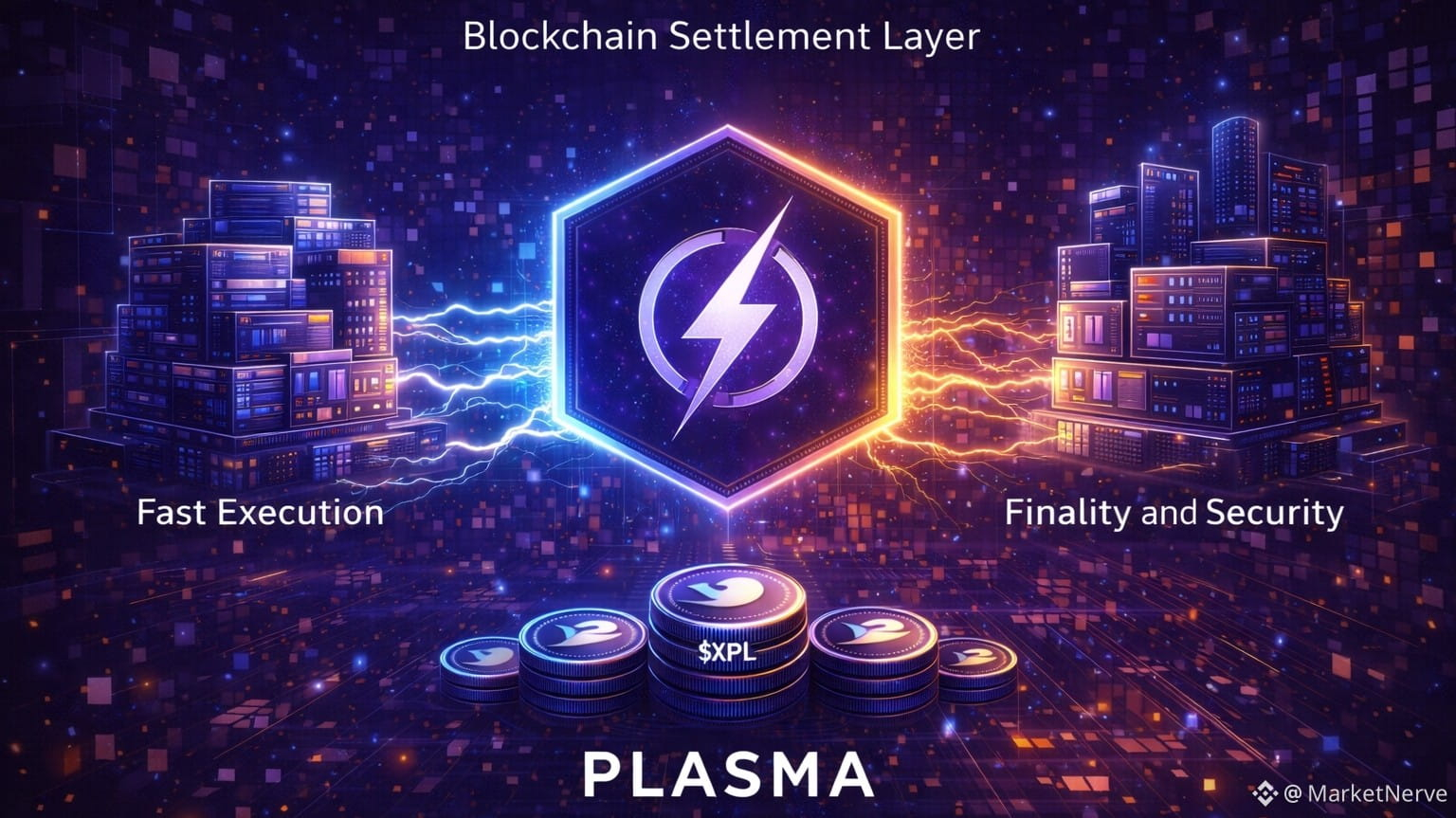
Plasma is an EVM-compatible Layer-1 built around high-volume payments and stablecoins, not abstract promises. The focus on low latency, high throughput, and predictable execution is what real financial infrastructure actually needs if Web3 wants to move beyond experiments 💸
The role of $XPL is not cosmetic. It’s embedded into the network’s security and incentive model, while Plasma reduces friction for users by minimizing gas-related complexity in everyday stablecoin transfers. That’s a crucial step toward real adoption.
What I respect about @Plasma is the mindset: less storytelling, more problem-solving. History shows that infrastructure projects survive long after hype fades — because money doesn’t care about narratives, it cares about reliability 📊
👉 Bottom line: if liquidity is the bloodstream of crypto markets, Plasma is building the arteries. And without them, Web3 doesn’t scale.
#MarketNerve #BinanceBuild #TradeNTell #XPLToken
Most Chains Are Built for Growth. Few Are Built for Reality.🔥 Speed alone doesn’t build ecosystems. Infrastructure that survives real usage does — and this is where many chains fall short. The more I look at how Web3 is actually used, the clearer it becomes: most blockchains are optimized for early growth phases, not for sustained, real-world demand. As soon as applications become data-heavy, latency-sensitive, or AI-integrated, weaknesses start to surface. This is exactly why Vanar Chain stands out to me. #vanar is not built around short-term hype, but around long-term execution. Vanar Chain is an EVM-compatible Layer-1 designed with data-intensive workloads in mind. That matters because the next phase of Web3 goes far beyond simple transactions. Gaming economies, PayFi systems, and AI-driven applications require predictable performance, low latency, and the ability to handle large volumes of data without degradation. Vanar’s architecture clearly reflects these requirements. What strengthens this thesis is the role of $VANRY . It is not positioned as a narrative token, but as the economic backbone of the network — used for fees, execution, and ecosystem incentives. As real usage grows, demand for VANRY grows alongside it, directly linking token relevance to network activity rather than speculation. I also appreciate the approach taken by @Vanar . Instead of overpromising future metrics, the focus remains on infrastructure maturity and practical scalability. These are usually the projects that don’t dominate headlines early, but become increasingly relevant as Web3 moves from experimentation to production. 👉 My takeaway: Vanar Chain is positioning itself for a future where performance consistency matters more than peak numbers. As Web3 applications become more complex, infrastructure-first design stops being optional. If you’re evaluating blockchain infrastructure with a long-term perspective, taking a closer look at #vanar and the role of $VANRY may be a rational step. #MarketRally #MarketNerve #BinanceBuild #TradeNTell

Most Chains Are Built for Growth. Few Are Built for Reality.

🔥 Speed alone doesn’t build ecosystems. Infrastructure that survives real usage does — and this is where many chains fall short.
The more I look at how Web3 is actually used, the clearer it becomes: most blockchains are optimized for early growth phases, not for sustained, real-world demand. As soon as applications become data-heavy, latency-sensitive, or AI-integrated, weaknesses start to surface. This is exactly why Vanar Chain stands out to me. #vanar is not built around short-term hype, but around long-term execution.
Vanar Chain is an EVM-compatible Layer-1 designed with data-intensive workloads in mind. That matters because the next phase of Web3 goes far beyond simple transactions. Gaming economies, PayFi systems, and AI-driven applications require predictable performance, low latency, and the ability to handle large volumes of data without degradation. Vanar’s architecture clearly reflects these requirements.
What strengthens this thesis is the role of $VANRY . It is not positioned as a narrative token, but as the economic backbone of the network — used for fees, execution, and ecosystem incentives. As real usage grows, demand for VANRY grows alongside it, directly linking token relevance to network activity rather than speculation.
I also appreciate the approach taken by @Vanarchain . Instead of overpromising future metrics, the focus remains on infrastructure maturity and practical scalability. These are usually the projects that don’t dominate headlines early, but become increasingly relevant as Web3 moves from experimentation to production.
👉 My takeaway: Vanar Chain is positioning itself for a future where performance consistency matters more than peak numbers. As Web3 applications become more complex, infrastructure-first design stops being optional.
If you’re evaluating blockchain infrastructure with a long-term perspective, taking a closer look at #vanar and the role of $VANRY may be a rational step.
#MarketRally #MarketNerve #BinanceBuild #TradeNTell
​🔥 Institutional On-Chain: Why 99% of Blockchains are a Dead End for Big Money​I often hear the mantra that "total transparency" is crypto’s greatest gift. But let’s be real: transparency without control destroys institutions, and control without transparency destroys trust. ​The deeper I dive into the mechanics of real-world institutional finance, the clearer one uncomfortable truth becomes: most modern blockchains are fundamentally broken for regulated finance. ​🛑 Toxic Transparency ​Public ledgers are a nightmare for banks and hedge funds. Open balances, visible strategies, and traceable counterparties aren't "freedom"—for major capital, this is a critical operational risk. No serious player is going to show their entire hand to the market in real-time. ​On the flip side, "black hole" anonymity doesn't work either; it shatters the moment it hits the wall of auditing, KYC, and compliance. We’ve been stuck in a gap that the market has ignored for years. ​⚡️ Dusk: Bridging the Divide ​I’ve been watching Dusk because they aren’t trying to be just another "privacy coin" for geeks. They are rebuilding financial infrastructure the way TradFi actually functions, but on blockchain steroids. ​The "Secret Sauce"? Selective Disclosure. On Dusk, transactions are private by default but remain verifiable whenever the law requires it. To me, this isn't a compromise—it’s the gold standard. This is how clearinghouses and stock exchanges operate: data isn't public to the masses, but it’s always accessible to the auditor. ​Dusk isn’t breaking the system; it’s making the system efficient. ​💎 Why $DUSK is About Fundamentals, Not Hype ​While others chase meme-driven narratives, @Dusk_Foundation has focused on regulated use cases from day one: ​RWA (Real World Assets): Tokenizing everything from equities to real estate.​Compliant DeFi: Decentralized finance that doesn't trigger a subpoena.​Institutional Settlement: Fast, cheap, and confidential. ​The role of the DUSK token is fundamental here. It’s not just "gas"; it’s the glue aligning incentives in an ecosystem built for long-term adoption rather than pump-and-dump cycles. There is a direct link here: as more regulated activity moves on-chain, the systemic value of $DUSK scales accordingly. ​📉 My Take ​If Web3 truly intends to absorb the trillions of dollars circulating in the real-world financial sector, privacy won't disappear—it will evolve. It will become controlled, auditable, and compliant. ​Dusk has already claimed this territory while everyone else is still busy reading the regulatory guidelines. If you are looking at infrastructure beyond the hype cycles, performing deep due diligence on @Dusk_Foundation and the role of $DUSK is the only rational move right now 👇 {future}(DUSKUSDT) #dusk #MarketSentimentToday #MarketNerve #BinanceBuild #TradeNTeel

​🔥 Institutional On-Chain: Why 99% of Blockchains are a Dead End for Big Money

​I often hear the mantra that "total transparency" is crypto’s greatest gift. But let’s be real: transparency without control destroys institutions, and control without transparency destroys trust.
​The deeper I dive into the mechanics of real-world institutional finance, the clearer one uncomfortable truth becomes: most modern blockchains are fundamentally broken for regulated finance.
​🛑 Toxic Transparency
​Public ledgers are a nightmare for banks and hedge funds.
Open balances, visible strategies, and traceable counterparties aren't "freedom"—for major capital, this is a critical operational risk. No serious player is going to show their entire hand to the market in real-time.
​On the flip side, "black hole" anonymity doesn't work either; it shatters the moment it hits the wall of auditing, KYC, and compliance. We’ve been stuck in a gap that the market has ignored for years.
​⚡️ Dusk: Bridging the Divide
​I’ve been watching Dusk because they aren’t trying to be just another "privacy coin" for geeks. They are rebuilding financial infrastructure the way TradFi actually functions, but on blockchain steroids.
​The "Secret Sauce"? Selective Disclosure.
On Dusk, transactions are private by default but remain verifiable whenever the law requires it. To me, this isn't a compromise—it’s the gold standard. This is how clearinghouses and stock exchanges operate: data isn't public to the masses, but it’s always accessible to the auditor.

​Dusk isn’t breaking the system; it’s making the system efficient.

​💎 Why $DUSK is About Fundamentals, Not Hype
​While others chase meme-driven narratives, @Dusk has focused on regulated use cases from day one:

​RWA (Real World Assets): Tokenizing everything from equities to real estate.​Compliant DeFi: Decentralized finance that doesn't trigger a subpoena.​Institutional Settlement: Fast, cheap, and confidential.
​The role of the DUSK token is fundamental here. It’s not just "gas"; it’s the glue aligning incentives in an ecosystem built for long-term adoption rather than pump-and-dump cycles. There is a direct link here: as more regulated activity moves on-chain, the systemic value of $DUSK scales accordingly.
​📉 My Take
​If Web3 truly intends to absorb the trillions of dollars circulating in the real-world financial sector, privacy won't disappear—it will evolve. It will become controlled, auditable, and compliant.
​Dusk has already claimed this territory while everyone else is still busy reading the regulatory guidelines. If you are looking at infrastructure beyond the hype cycles, performing deep due diligence on @Dusk and the role of $DUSK is the only rational move right now 👇
#dusk #MarketSentimentToday #MarketNerve #BinanceBuild #TradeNTeel
Most L1s Chase TPS. Vanar Builds for Reality🔥 Fast blockchains are everywhere. Infrastructure that survives real usage is rare. And this is where the market keeps mispricing reality. When people talk about Layer-1 networks, the discussion almost always revolves around speed, TPS, or short-term narratives. But the more I look at how Web3 is actually evolving, the clearer one thing becomes: performance without structure collapses under real demand. This is exactly why Vanar Chain caught my attention. #vanar isn’t positioning itself as a hype-driven L1 — it’s building for environments where data, execution, and scale collide. Vanar Chain is an EVM-compatible Layer-1 designed for data-heavy and AI-ready applications. That matters because the next wave of Web3 is not just DeFi. Gaming economies, PayFi systems, and AI-integrated platforms push blockchains far beyond simple value transfers. Many existing networks struggle here. Vanar is clearly architected with these workloads in mind, focusing on throughput, low latency, and predictable execution. What reinforces this view for me is the role of $VANRY. It’s not a decorative token — it’s the economic core of the network. Fees, smart-contract execution, and ecosystem incentives all flow through VANRY, directly tying the token’s relevance to actual usage. That alignment between infrastructure demand and token utility is something the market often notices too late. I also respect the approach taken by @Vanar . There’s no rush to oversell narratives. The focus stays on architecture, tooling, and long-term scalability. These are usually the projects that don’t explode first — but they’re the ones developers and serious users return to when hype fades. 👉 My takeaway: Vanar Chain is building for the phase where Web3 stops experimenting and starts operating under real load. In that environment, design choices matter more than slogans. If you’re evaluating infrastructure with a forward-looking mindset, taking a closer look at #VanarChain and the role of $VANRY makes a lot of sense right now 👇 {future}(VANRYUSDT) #MarketNerve #BinanceBuild #TradeNTell

Most L1s Chase TPS. Vanar Builds for Reality

🔥 Fast blockchains are everywhere. Infrastructure that survives real usage is rare. And this is where the market keeps mispricing reality.
When people talk about Layer-1 networks, the discussion almost always revolves around speed, TPS, or short-term narratives. But the more I look at how Web3 is actually evolving, the clearer one thing becomes: performance without structure collapses under real demand. This is exactly why Vanar Chain caught my attention. #vanar isn’t positioning itself as a hype-driven L1 — it’s building for environments where data, execution, and scale collide.
Vanar Chain is an EVM-compatible Layer-1 designed for data-heavy and AI-ready applications. That matters because the next wave of Web3 is not just DeFi. Gaming economies, PayFi systems, and AI-integrated platforms push blockchains far beyond simple value transfers. Many existing networks struggle here. Vanar is clearly architected with these workloads in mind, focusing on throughput, low latency, and predictable execution.
What reinforces this view for me is the role of $VANRY . It’s not a decorative token — it’s the economic core of the network. Fees, smart-contract execution, and ecosystem incentives all flow through VANRY, directly tying the token’s relevance to actual usage. That alignment between infrastructure demand and token utility is something the market often notices too late.
I also respect the approach taken by @Vanarchain . There’s no rush to oversell narratives. The focus stays on architecture, tooling, and long-term scalability. These are usually the projects that don’t explode first — but they’re the ones developers and serious users return to when hype fades.
👉 My takeaway: Vanar Chain is building for the phase where Web3 stops experimenting and starts operating under real load. In that environment, design choices matter more than slogans.
If you’re evaluating infrastructure with a forward-looking mindset, taking a closer look at #VanarChain and the role of $VANRY makes a lot of sense right now 👇
#MarketNerve #BinanceBuild #TradeNTell
🔥 Finance without privacy is exposed. Privacy without rules is unusable. And most blockchains still fail to reconcile this reality. The closer Web3 moves toward real financial use cases, the more obvious its structural weakness becomes: public blockchains were never built for regulated capital. Absolute transparency may work for experimentation, but it breaks down the moment institutions are involved. Exposing balances, counterparties, and transaction logic is not innovation — it’s operational risk. This is exactly where Dusk stands apart. #dusk isn’t avoiding regulation; it’s engineering privacy that regulators can actually accept. Dusk is designed specifically for compliant financial infrastructure. Its core concept is selective disclosure — transactions remain private by default, yet can be revealed to authorized parties when regulation requires it. From my perspective, this isn’t a compromise; it’s the only realistic path for bringing RWAs, institutional settlement, and compliant DeFi on-chain. What makes this approach compelling is its alignment with how financial markets already operate. Banks don’t publish their books in real time, and funds don’t expose strategies to the public. @Dusk_Foundation builds with this reality in mind, focusing on auditability, privacy, and scalability as a single system — not as competing narratives. The role of $DUSK is foundational. It secures the network, powers transactions, and aligns incentives around long-term usage rather than short-term speculation. Its value grows with adoption in regulated environments, not with temporary hype cycles. 👉 My takeaway: as Web3 matures, privacy won’t disappear — it will become controlled, auditable, and institutional-grade. Dusk is positioning itself exactly for that transition. If you’re looking beyond trends and evaluating infrastructure that can survive regulation and scale with real capital, studying @Dusk_Foundation and the role of $DUSK now makes a lot of sense 👇 {future}(DUSKUSDT) #Market_Update #MarketNerve #TradeNTell #BinanceBuild
🔥 Finance without privacy is exposed. Privacy without rules is unusable. And most blockchains still fail to reconcile this reality.

The closer Web3 moves toward real financial use cases, the more obvious its structural weakness becomes: public blockchains were never built for regulated capital. Absolute transparency may work for experimentation, but it breaks down the moment institutions are involved. Exposing balances, counterparties, and transaction logic is not innovation — it’s operational risk. This is exactly where Dusk stands apart. #dusk isn’t avoiding regulation; it’s engineering privacy that regulators can actually accept.

Dusk is designed specifically for compliant financial infrastructure. Its core concept is selective disclosure — transactions remain private by default, yet can be revealed to authorized parties when regulation requires it. From my perspective, this isn’t a compromise; it’s the only realistic path for bringing RWAs, institutional settlement, and compliant DeFi on-chain.

What makes this approach compelling is its alignment with how financial markets already operate. Banks don’t publish their books in real time, and funds don’t expose strategies to the public. @Dusk builds with this reality in mind, focusing on auditability, privacy, and scalability as a single system — not as competing narratives.

The role of $DUSK is foundational. It secures the network, powers transactions, and aligns incentives around long-term usage rather than short-term speculation. Its value grows with adoption in regulated environments, not with temporary hype cycles.

👉 My takeaway: as Web3 matures, privacy won’t disappear — it will become controlled, auditable, and institutional-grade. Dusk is positioning itself exactly for that transition.

If you’re looking beyond trends and evaluating infrastructure that can survive regulation and scale with real capital, studying @Dusk and the role of $DUSK now makes a lot of sense 👇
#Market_Update #MarketNerve #TradeNTell #BinanceBuild
🔥 Web3 scales transactions easily. It collapses when applications demand data. The more Web3 matures, the more obvious its weakest point becomes: data-heavy applications. Payments and swaps are no longer the challenge. The real stress starts when networks have to support video, gaming assets, AI datasets, and large on-chain archives. This is where most infrastructure quietly fails — and where Walrus becomes especially relevant. #walrus is built around a problem the market still underprices. Walrus is not just another decentralized storage solution. It’s a protocol focused on data availability at scale. For me, that distinction matters. Storing data cheaply is meaningless if applications can’t reliably access it under load. Walrus is designed so that availability is treated as a first-class requirement, not an afterthought. What stands out about @WalrusProtocol is the emphasis on real-world conditions. Web3 apps don’t operate in ideal environments. They face spikes in demand, network stress, and unpredictable usage patterns. Walrus is being built with these scenarios in mind, targeting consistency and reliability instead of theoretical benchmarks. The asset $WAL plays a central role in this model. It aligns incentives between users and storage providers, secures availability guarantees, and ties the economics of the network directly to actual usage. As demand for data availability grows, the importance of WAL grows alongside it — a straightforward but powerful dynamic. 👉 My takeaway: as Web3 shifts toward richer, data-driven applications, storage and availability stop being background infrastructure and become a core bottleneck. Walrus is positioning itself exactly where that pressure will increase the most. If you’re looking at infrastructure projects through a long-term lens, taking a closer look at @WalrusProtocol and the role of $WAL makes a lot of sense right now 👇 {future}(WALUSDT) #MarketMoves #MarketNerve #BinanceBuild #TradeNTell
🔥 Web3 scales transactions easily. It collapses when applications demand data.

The more Web3 matures, the more obvious its weakest point becomes: data-heavy applications. Payments and swaps are no longer the challenge. The real stress starts when networks have to support video, gaming assets, AI datasets, and large on-chain archives. This is where most infrastructure quietly fails — and where Walrus becomes especially relevant. #walrus is built around a problem the market still underprices.

Walrus is not just another decentralized storage solution. It’s a protocol focused on data availability at scale. For me, that distinction matters. Storing data cheaply is meaningless if applications can’t reliably access it under load. Walrus is designed so that availability is treated as a first-class requirement, not an afterthought.

What stands out about @Walrus 🦭/acc is the emphasis on real-world conditions. Web3 apps don’t operate in ideal environments. They face spikes in demand, network stress, and unpredictable usage patterns. Walrus is being built with these scenarios in mind, targeting consistency and reliability instead of theoretical benchmarks.

The asset $WAL plays a central role in this model. It aligns incentives between users and storage providers, secures availability guarantees, and ties the economics of the network directly to actual usage. As demand for data availability grows, the importance of WAL grows alongside it — a straightforward but powerful dynamic.

👉 My takeaway: as Web3 shifts toward richer, data-driven applications, storage and availability stop being background infrastructure and become a core bottleneck. Walrus is positioning itself exactly where that pressure will increase the most.

If you’re looking at infrastructure projects through a long-term lens, taking a closer look at @Walrus 🦭/acc and the role of $WAL makes a lot of sense right now 👇
#MarketMoves #MarketNerve #BinanceBuild #TradeNTell
🔥 Institutions don’t fear volatility. They fear exposure. Public blockchains leak too much: balances, counterparties, strategies. That might be fine for experiments — but it completely fails at institutional scale. This is where Dusk draws a hard line. #dusk is built for finance that needs privacy with accountability, not ideological transparency. Dusk introduces selective disclosure: transactions stay private by default, but can be audited when regulation demands it. No black boxes. No public oversharing. Just controlled privacy that actually works for regulated markets. That’s why @Dusk_Foundation isn’t chasing hype narratives. It’s building infrastructure for RWAs, institutional settlement, and compliant DeFi — the parts of Web3 that actually handle capital. $DUSK secures this system and aligns incentives around real usage, not speculation. When finance moves on-chain at scale, this kind of design stops being optional. 👉 The takeaway: transparency breaks real finance. Control doesn’t. And that’s exactly what Dusk is building 👇 {future}(DUSKUSDT) #DuskNetwork #MarketNerve #BinanceBuild #TradeNTell
🔥 Institutions don’t fear volatility. They fear exposure.

Public blockchains leak too much: balances, counterparties, strategies. That might be fine for experiments — but it completely fails at institutional scale. This is where Dusk draws a hard line. #dusk is built for finance that needs privacy with accountability, not ideological transparency.

Dusk introduces selective disclosure: transactions stay private by default, but can be audited when regulation demands it. No black boxes. No public oversharing. Just controlled privacy that actually works for regulated markets.

That’s why @Dusk isn’t chasing hype narratives. It’s building infrastructure for RWAs, institutional settlement, and compliant DeFi — the parts of Web3 that actually handle capital.

$DUSK secures this system and aligns incentives around real usage, not speculation. When finance moves on-chain at scale, this kind of design stops being optional.

👉 The takeaway: transparency breaks real finance. Control doesn’t.
And that’s exactly what Dusk is building 👇

#DuskNetwork #MarketNerve #BinanceBuild #TradeNTell
Web3 doesn’t fail at transactions. It fails at data🔥 Cheap storage breaks Web3. Unavailable data breaks it completely. And most blockchains still underestimate this risk. The deeper I look into Web3 infrastructure, the clearer one thing becomes: the real bottleneck isn’t transactions — it’s data. Many networks can process payments, but they start failing when it comes to storing and reliably accessing large volumes of information. This is exactly where Walrus stands out. #walrus is solving a fundamental problem, not a trendy one. Walrus is a decentralized storage and data availability protocol built for large binary objects — videos, NFT media, gaming assets, blockchain archives, and AI datasets. Instead of simply “parking data somewhere,” Walrus focuses on guaranteed availability, which is critical for Web3 applications to function reliably. What I particularly respect about @WalrusProtocol is the practical mindset. If data isn’t accessible when it’s needed, it doesn’t matter how cheap it is. Walrus is building infrastructure that applications can depend on under load, not just in ideal conditions. The role of $WAL is central to this system. It’s not a decorative token — it’s the economic mechanism of the network, used for storage payments, provider incentives, and securing data availability. As demand for storage and access grows, WAL’s relevance grows with it. A direct link between usage and economics is still rare in infrastructure projects. 👉 My takeaway: as Web3 becomes more data-heavy, storage and availability stop being background concerns and become real bottlenecks. Walrus is positioning itself exactly where that pressure will build. If you’re looking at infrastructure beyond hype cycles, taking a closer look at @WalrusProtocol and the role of $WAL makes a lot of sense right now 👇 {future}(WALUSDT) #WAL #MarketNerve #BinanceBuild #TradeNTell

Web3 doesn’t fail at transactions. It fails at data

🔥 Cheap storage breaks Web3. Unavailable data breaks it completely. And most blockchains still underestimate this risk.
The deeper I look into Web3 infrastructure, the clearer one thing becomes: the real bottleneck isn’t transactions — it’s data. Many networks can process payments, but they start failing when it comes to storing and reliably accessing large volumes of information. This is exactly where Walrus stands out. #walrus is solving a fundamental problem, not a trendy one.
Walrus is a decentralized storage and data availability protocol built for large binary objects — videos, NFT media, gaming assets, blockchain archives, and AI datasets. Instead of simply “parking data somewhere,” Walrus focuses on guaranteed availability, which is critical for Web3 applications to function reliably.
What I particularly respect about @Walrus 🦭/acc is the practical mindset. If data isn’t accessible when it’s needed, it doesn’t matter how cheap it is. Walrus is building infrastructure that applications can depend on under load, not just in ideal conditions.
The role of $WAL is central to this system. It’s not a decorative token — it’s the economic mechanism of the network, used for storage payments, provider incentives, and securing data availability. As demand for storage and access grows, WAL’s relevance grows with it. A direct link between usage and economics is still rare in infrastructure projects.
👉 My takeaway: as Web3 becomes more data-heavy, storage and availability stop being background concerns and become real bottlenecks. Walrus is positioning itself exactly where that pressure will build.
If you’re looking at infrastructure beyond hype cycles, taking a closer look at @Walrus 🦭/acc and the role of $WAL makes a lot of sense right now 👇
#WAL #MarketNerve #BinanceBuild #TradeNTell
Institutions don’t want transparency. They want control🔥 Transparency without control breaks real finance. Privacy without compliance breaks trust. And most blockchains still choose the wrong side. When the market talks about privacy, it usually means hiding everything. But that’s not how real finance works. This is exactly why Dusk stands out to me. #dusk isn’t trying to escape regulation — it’s building privacy in a way that works within regulatory frameworks, not against them. Dusk is designed specifically for regulated financial use cases: real-world asset tokenization, institutional products, and compliant DeFi. The core idea is selective disclosure. Transactions remain private by default, but can be audited when required. That balance is what banks, funds, and serious capital actually need — not full transparency, and not a black box. What I find important is that @Dusk_Foundation focuses on infrastructure, not trends. Fully transparent public ledgers may work for experimentation, but they fail when real capital is involved. Exposing balances, strategies, and counterparties is simply not acceptable at scale. The role of $DUSK is fundamental. It secures the network, powers transactions, and aligns economic incentives across the ecosystem. Its value is tied to real usage in regulated environments, not short-term narratives. 👉 My takeaway: Dusk is a bet on the moment when Web3 stops being a sandbox and starts serving real financial markets. When institutions demand privacy with accountability, solutions like Dusk stop being niche and become necessary. If you’re looking beyond noise and focusing on infrastructure, taking a closer look at @Dusk_Foundation and the role of $DUSK makes sense right now 👇 {future}(DUSKUSDT) #Privacy #MarketNerve #BinanceBuild #TradeNTell

Institutions don’t want transparency. They want control

🔥 Transparency without control breaks real finance. Privacy without compliance breaks trust. And most blockchains still choose the wrong side.
When the market talks about privacy, it usually means hiding everything. But that’s not how real finance works. This is exactly why Dusk stands out to me. #dusk isn’t trying to escape regulation — it’s building privacy in a way that works within regulatory frameworks, not against them.
Dusk is designed specifically for regulated financial use cases: real-world asset tokenization, institutional products, and compliant DeFi. The core idea is selective disclosure. Transactions remain private by default, but can be audited when required. That balance is what banks, funds, and serious capital actually need — not full transparency, and not a black box.
What I find important is that @Dusk focuses on infrastructure, not trends. Fully transparent public ledgers may work for experimentation, but they fail when real capital is involved. Exposing balances, strategies, and counterparties is simply not acceptable at scale.
The role of $DUSK is fundamental. It secures the network, powers transactions, and aligns economic incentives across the ecosystem. Its value is tied to real usage in regulated environments, not short-term narratives.
👉 My takeaway: Dusk is a bet on the moment when Web3 stops being a sandbox and starts serving real financial markets. When institutions demand privacy with accountability, solutions like Dusk stop being niche and become necessary.
If you’re looking beyond noise and focusing on infrastructure, taking a closer look at @Dusk and the role of $DUSK makes sense right now 👇
#Privacy #MarketNerve #BinanceBuild #TradeNTell
🔥 Speed alone doesn’t scale Web3. Architecture does. And most networks learn this too late. When I look at how Web3 evolves, one pattern keeps repeating itself: networks perform well in early stages, but start breaking when real usage arrives. More users, more transactions, more data — and suddenly scalability becomes a bottleneck instead of a feature. This is exactly the problem Plasma is trying to solve. #Plasma is not built for demos — it’s built for sustained load. Plasma focuses on efficient execution and predictable performance, even as network activity grows. Instead of chasing headline TPS numbers, the project emphasizes stability, throughput under stress, and infrastructure-level scalability. That matters because real-world applications don’t care about marketing — they care about reliability. The role of $XPL fits naturally into this design. It’s not a speculative add-on, but the economic engine of the network: transaction fees, smart contract execution, and incentive alignment all flow through it. As network usage increases, the relevance of XPL increases with it — a simple but often overlooked principle. What stands out to me about @Plasma is the lack of noise. There’s no rush to oversell narratives. The focus stays on engineering choices and long-term viability. These are usually the projects that don’t trend early — but quietly become essential as ecosystems mature. 👉 My takeaway: Plasma is positioning itself for the phase where Web3 stops experimenting and starts scaling for real. When usage becomes the real test, architecture wins. If you’re evaluating infrastructure beyond hype cycles, taking a closer look at @Plasma and the role of $XPL makes sense 👇 {future}(XPLUSDT) #CryptoAnalysis #MarketNerve #BinanceBuild #TradeNTell
🔥 Speed alone doesn’t scale Web3. Architecture does. And most networks learn this too late.

When I look at how Web3 evolves, one pattern keeps repeating itself: networks perform well in early stages, but start breaking when real usage arrives. More users, more transactions, more data — and suddenly scalability becomes a bottleneck instead of a feature. This is exactly the problem Plasma is trying to solve. #Plasma is not built for demos — it’s built for sustained load.

Plasma focuses on efficient execution and predictable performance, even as network activity grows. Instead of chasing headline TPS numbers, the project emphasizes stability, throughput under stress, and infrastructure-level scalability. That matters because real-world applications don’t care about marketing — they care about reliability.

The role of $XPL fits naturally into this design. It’s not a speculative add-on, but the economic engine of the network: transaction fees, smart contract execution, and incentive alignment all flow through it. As network usage increases, the relevance of XPL increases with it — a simple but often overlooked principle.

What stands out to me about @Plasma is the lack of noise. There’s no rush to oversell narratives. The focus stays on engineering choices and long-term viability. These are usually the projects that don’t trend early — but quietly become essential as ecosystems mature.

👉 My takeaway: Plasma is positioning itself for the phase where Web3 stops experimenting and starts scaling for real. When usage becomes the real test, architecture wins.

If you’re evaluating infrastructure beyond hype cycles, taking a closer look at @Plasma and the role of $XPL makes sense 👇
#CryptoAnalysis #MarketNerve #BinanceBuild #TradeNTell
Web3 doesn’t break at hype. It breaks at scale🔥 Scalability without privacy is fragile. Privacy without performance is unusable. And most blockchains still fail this balance. I’m increasingly paying attention to projects that don’t try to solve one problem by sacrificing another. Plasma is one of them. #Plasma isn’t pitching an abstract “revolutionary L1” — it focuses on what actually matters for Web3: scalability, privacy, and readiness for real-world load. Plasma is a blockchain infrastructure designed for efficient transaction and data processing, without the usual trade-offs between speed and security. This is where most networks start to struggle: more users → more load → degraded performance. Plasma is being built with this scenario in mind from the ground up. The role of $XPL is central here. It’s not just a utility token — it’s the economic backbone of the network, powering fees, smart-contract execution, and participant incentives. From my perspective, that directly ties the token’s value to actual network usage rather than short-term narratives. What I respect about @Plasma is the approach: minimal noise, maximum focus on architecture. Projects like this rarely trend early, but they tend to stand out when the market shifts its attention from hype back to fundamentals. 👉 My takeaway: Plasma is a bet on a version of Web3 without illusions — where scalability and privacy must work together. It clearly deserves closer attention. If you’re evaluating infrastructure plays with a long-term mindset, diving deeper into @Plasma and the role of $XPL makes sense 👇 {future}(XPLUSDT) #Web3 #MarketNerve #BinanceBuild #TradeNTell

Web3 doesn’t break at hype. It breaks at scale

🔥 Scalability without privacy is fragile. Privacy without performance is unusable. And most blockchains still fail this balance.
I’m increasingly paying attention to projects that don’t try to solve one problem by sacrificing another. Plasma is one of them. #Plasma isn’t pitching an abstract “revolutionary L1” — it focuses on what actually matters for Web3: scalability, privacy, and readiness for real-world load.
Plasma is a blockchain infrastructure designed for efficient transaction and data processing, without the usual trade-offs between speed and security. This is where most networks start to struggle: more users → more load → degraded performance. Plasma is being built with this scenario in mind from the ground up.
The role of $XPL is central here. It’s not just a utility token — it’s the economic backbone of the network, powering fees, smart-contract execution, and participant incentives. From my perspective, that directly ties the token’s value to actual network usage rather than short-term narratives.
What I respect about @Plasma is the approach: minimal noise, maximum focus on architecture. Projects like this rarely trend early, but they tend to stand out when the market shifts its attention from hype back to fundamentals.
👉 My takeaway: Plasma is a bet on a version of Web3 without illusions — where scalability and privacy must work together. It clearly deserves closer attention.
If you’re evaluating infrastructure plays with a long-term mindset, diving deeper into @Plasma and the role of $XPL makes sense 👇
#Web3 #MarketNerve #BinanceBuild #TradeNTell
🔥 Most L1s don’t fail because of hype — they fail under real load. Web3 loves scaling narratives, but breaks the moment applications demand speed, low latency, and data-heavy execution. Gaming, AI-integrated apps, PayFi — these use cases quickly expose which networks were built for real usage and which were built for slides. Vanar Chain is designed as an EVM-compatible Layer-1 focused on performance and stability under pressure. Not promises — architecture: high throughput, low fees, and readiness for complex workloads where older L1s start to collapse. $VANRY isn’t a decorative token. It’s directly tied to how the network functions — fees, smart-contract execution, and economic incentives. The more real usage, the more relevant it becomes. 👉 The takeaway is simple: markets chase words, but value settles on infrastructure. Vanar is being built for the moment when Web3 stops experimenting and starts scaling for real. If you look at L1s without illusions, @Vanar and $VANRY deserve attention👇 {future}(VANRYUSDT) #vanar #web3gaming #MarketNerve #BinanceBuild #TradeNTell
🔥 Most L1s don’t fail because of hype — they fail under real load.

Web3 loves scaling narratives, but breaks the moment applications demand speed, low latency, and data-heavy execution. Gaming, AI-integrated apps, PayFi — these use cases quickly expose which networks were built for real usage and which were built for slides.

Vanar Chain is designed as an EVM-compatible Layer-1 focused on performance and stability under pressure. Not promises — architecture: high throughput, low fees, and readiness for complex workloads where older L1s start to collapse.

$VANRY isn’t a decorative token. It’s directly tied to how the network functions — fees, smart-contract execution, and economic incentives. The more real usage, the more relevant it becomes.

👉 The takeaway is simple: markets chase words, but value settles on infrastructure. Vanar is being built for the moment when Web3 stops experimenting and starts scaling for real.

If you look at L1s without illusions, @Vanar and $VANRY deserve attention👇
#vanar #web3gaming #MarketNerve #BinanceBuild #TradeNTell
AI needs infrastructure — Vanar is building it🔥 AI without scalable infrastructure is just noise. Scalability without real use cases is wasted tech. And the market keeps missing this gap. I keep noticing that the market is obsessed with AI narratives, but rarely looks at the infrastructure required to support them. That’s exactly why Vanar Chain caught my attention. #vanar isn’t another experimental Layer-1 — it’s an attempt to build a blockchain designed for data-heavy and AI-oriented applications. Vanar Chain is an EVM-compatible Layer-1 network focused on high throughput, low fees, and scalability. But the real value lies in its forward-looking design. Gaming, PayFi, and data-intensive Web3 applications are where older blockchains start to break — and that’s the environment Vanar is targeting. The role of $VANRY is also key. This isn’t just a gas token — it’s the economic backbone of the ecosystem, powering fees, smart contracts, and incentive mechanisms. From my perspective, that directly ties the token’s value to actual network usage rather than abstract narratives. What I respect about @Vanar is the approach: no loud marketing, just a clear focus on architecture and long-term development. Projects like this rarely get attention early, but they tend to look far more attractive when the market shifts back from speculation to fundamentals. 👉 My takeaway: Vanar Chain is a bet on the next phase of Web3, where performance and data handling matter more than slogans. It’s a project that clearly deserves closer attention. If you’re evaluating infrastructure plays with a future-focused mindset, taking a deeper look at @Vanar and the role of $VANRY right now makes sense 👇 {future}(VANRYUSDT) #Web3 #MarketNerve #BinanceBuild #TradeNTell

AI needs infrastructure — Vanar is building it

🔥 AI without scalable infrastructure is just noise. Scalability without real use cases is wasted tech. And the market keeps missing this gap.
I keep noticing that the market is obsessed with AI narratives, but rarely looks at the infrastructure required to support them. That’s exactly why Vanar Chain caught my attention. #vanar isn’t another experimental Layer-1 — it’s an attempt to build a blockchain designed for data-heavy and AI-oriented applications.
Vanar Chain is an EVM-compatible Layer-1 network focused on high throughput, low fees, and scalability. But the real value lies in its forward-looking design. Gaming, PayFi, and data-intensive Web3 applications are where older blockchains start to break — and that’s the environment Vanar is targeting.
The role of $VANRY is also key. This isn’t just a gas token — it’s the economic backbone of the ecosystem, powering fees, smart contracts, and incentive mechanisms. From my perspective, that directly ties the token’s value to actual network usage rather than abstract narratives.
What I respect about @Vanar is the approach: no loud marketing, just a clear focus on architecture and long-term development. Projects like this rarely get attention early, but they tend to look far more attractive when the market shifts back from speculation to fundamentals.
👉 My takeaway: Vanar Chain is a bet on the next phase of Web3, where performance and data handling matter more than slogans. It’s a project that clearly deserves closer attention.
If you’re evaluating infrastructure plays with a future-focused mindset, taking a deeper look at @Vanar and the role of $VANRY right now makes sense 👇
#Web3 #MarketNerve #BinanceBuild #TradeNTell
🔥 Storage without availability breaks Web3 — and most blockchains still ignore it I’ve been digging into infrastructure projects, and Walrus stands out for tackling a problem many chains quietly avoid: data availability for large-scale content. Transactions scale well on most L1s, but the moment Web3 apps need to handle videos, game assets, AI datasets, or archives, the system starts to crack. This is exactly where #walrus comes in. At its core, Walrus is a decentralized data storage and availability protocol designed specifically for large binary objects. Instead of pushing heavy data on-chain or relying on centralized cloud providers, Walrus introduces a model that keeps data distributed, resilient, and reliably accessible. For me, this is a critical distinction: cheap storage means nothing if your app can’t access data when it actually needs it. What I appreciate most about @WalrusProtocol is the clear focus on availability, not just storage. Web3 applications — especially gaming, DePIN, AI, and data-rich DeFi — require guarantees that data will be there under load and stress. Walrus is being built with that assumption from day one, not as an afterthought. The token $WAL is central to this design. It powers payments for storage, incentivizes providers, and secures the network’s economic model. This ties usage directly to demand — making WAL a utility-driven infrastructure token, not a narrative add-on. 👉 My takeaway: as Web3 becomes more data-heavy, storage and availability will stop being “background tech” and start being a bottleneck. Walrus is positioning itself exactly where that pressure will build next. If you’re looking at infrastructure plays with real long-term demand, taking a closer look at @WalrusProtocol and the role of $WAL makes a lot of sense. #MarketNerve #Web3 #TradeNTell #BinanceBuild
🔥 Storage without availability breaks Web3 — and most blockchains still ignore it

I’ve been digging into infrastructure projects, and Walrus stands out for tackling a problem many chains quietly avoid: data availability for large-scale content. Transactions scale well on most L1s, but the moment Web3 apps need to handle videos, game assets, AI datasets, or archives, the system starts to crack. This is exactly where #walrus comes in.

At its core, Walrus is a decentralized data storage and availability protocol designed specifically for large binary objects. Instead of pushing heavy data on-chain or relying on centralized cloud providers, Walrus introduces a model that keeps data distributed, resilient, and reliably accessible. For me, this is a critical distinction: cheap storage means nothing if your app can’t access data when it actually needs it.

What I appreciate most about @Walrus 🦭/acc is the clear focus on availability, not just storage. Web3 applications — especially gaming, DePIN, AI, and data-rich DeFi — require guarantees that data will be there under load and stress. Walrus is being built with that assumption from day one, not as an afterthought.

The token $WAL is central to this design. It powers payments for storage, incentivizes providers, and secures the network’s economic model. This ties usage directly to demand — making WAL a utility-driven infrastructure token, not a narrative add-on.

👉 My takeaway: as Web3 becomes more data-heavy, storage and availability will stop being “background tech” and start being a bottleneck. Walrus is positioning itself exactly where that pressure will build next.

If you’re looking at infrastructure plays with real long-term demand, taking a closer look at @Walrus 🦭/acc and the role of $WAL makes a lot of sense.

#MarketNerve #Web3 #TradeNTell #BinanceBuild
🔥 Full transparency breaks real finance. Full privacy breaks regulation. Dusk fixes both — and the market is still slow to notice. When people talk about privacy in crypto, they usually mean one thing: hide everything. And that’s exactly where most privacy projects hit a wall. Financial markets don’t work in the dark. They work with rules, audits, and accountability. This is why Dusk immediately caught my attention. Dusk isn’t fighting regulation — it’s designing privacy that regulators can actually accept. At its core, Dusk is a blockchain built specifically for regulated finance. Instead of radical transparency or total anonymity, it introduces selective disclosure. Transactions remain private by default, but can be revealed to authorized parties when compliance requires it. In my view, this is not a compromise — it’s the only scalable model for institutions, RWAs, and compliant DeFi. What makes this approach powerful is how closely it aligns with real-world needs. Banks, funds, and enterprises don’t want their balances, strategies, or counterparties exposed on public ledgers. At the same time, they must be able to prove legitimacy. @Dusk_Foundation targets this exact gap — one most blockchains simply ignore. The token $DUSK underpins this entire system. It secures the network, incentivizes validators, and powers transactions within an ecosystem built for long-term adoption, not short-term hype. This isn’t about trends — it’s about infrastructure that can actually handle institutional capital. 👉 My conclusion: Dusk is quietly building what regulated finance will eventually demand — privacy with accountability. The market often overlooks this narrative until institutions move at scale. When that happens, projects like #dusk stop being optional and start becoming essential. If you’re looking beyond hype cycles and toward sustainable blockchain infrastructure, taking a closer look at $DUSK and the @Dusk_Foundation ecosystem makes sense right now 👇 {future}(DUSKUSDT) #MarketNerve #BinanceBuild #TradeNTell
🔥 Full transparency breaks real finance. Full privacy breaks regulation. Dusk fixes both — and the market is still slow to notice.

When people talk about privacy in crypto, they usually mean one thing: hide everything. And that’s exactly where most privacy projects hit a wall. Financial markets don’t work in the dark. They work with rules, audits, and accountability. This is why Dusk immediately caught my attention. Dusk isn’t fighting regulation — it’s designing privacy that regulators can actually accept.

At its core, Dusk is a blockchain built specifically for regulated finance. Instead of radical transparency or total anonymity, it introduces selective disclosure. Transactions remain private by default, but can be revealed to authorized parties when compliance requires it. In my view, this is not a compromise — it’s the only scalable model for institutions, RWAs, and compliant DeFi.

What makes this approach powerful is how closely it aligns with real-world needs. Banks, funds, and enterprises don’t want their balances, strategies, or counterparties exposed on public ledgers. At the same time, they must be able to prove legitimacy. @Dusk targets this exact gap — one most blockchains simply ignore.

The token $DUSK underpins this entire system. It secures the network, incentivizes validators, and powers transactions within an ecosystem built for long-term adoption, not short-term hype. This isn’t about trends — it’s about infrastructure that can actually handle institutional capital.

👉 My conclusion: Dusk is quietly building what regulated finance will eventually demand — privacy with accountability. The market often overlooks this narrative until institutions move at scale. When that happens, projects like #dusk stop being optional and start becoming essential.

If you’re looking beyond hype cycles and toward sustainable blockchain infrastructure, taking a closer look at $DUSK and the @Dusk ecosystem makes sense right now 👇
#MarketNerve #BinanceBuild #TradeNTell
🔥 Vanar Chain is not “just another L1” — and the market still underestimates it I spend a lot of time watching infrastructure blockchains, and Vanar Chain stands out for exactly what Web3 is missing right now: a focus on data, scalability, and real-world use cases, not noise and short-term hype. #vanar isn’t built around speculation — it’s built around an architecture designed to handle the next growth cycle. At its core, Vanar is an EVM-compatible Layer-1 network optimized for high throughput and low fees. But the key point for me is its AI-ready infrastructure. Web3 is gradually moving from simple value transfers to complex, data-heavy applications — from PayFi and gaming economies to real-world asset tokenization. Vanar is clearly positioning itself for that shift. The role of $VANRY is also critical. This isn’t just a gas token — it’s the economic backbone of the network, powering fees, smart contracts, and incentive mechanisms across the ecosystem. Through VANRY, Vanar aligns users, developers, and validators into a single growth model — something the market often prices in late. What I respect most is that @Vanar isn’t trying to shout louder than the market. Instead, it’s quietly building infrastructure. These are usually the projects that don’t pump first — but they do attract serious attention when demand shifts toward scalable, sustainable solutions. 👉 My takeaway: Vanar Chain is a bet not on hype, but on the next phase of Web3, where data and performance matter more than slogans. It’s a project that clearly deserves a closer look. If you’re evaluating infrastructure plays with a medium- to long-term horizon, taking a deeper look at @Vanar and $VANRY right now makes sense. {future}(VANRYUSDT) #MarketNerve #BinanceBuild #TradeNTell
🔥 Vanar Chain is not “just another L1” — and the market still underestimates it

I spend a lot of time watching infrastructure blockchains, and Vanar Chain stands out for exactly what Web3 is missing right now: a focus on data, scalability, and real-world use cases, not noise and short-term hype. #vanar isn’t built around speculation — it’s built around an architecture designed to handle the next growth cycle.

At its core, Vanar is an EVM-compatible Layer-1 network optimized for high throughput and low fees. But the key point for me is its AI-ready infrastructure. Web3 is gradually moving from simple value transfers to complex, data-heavy applications — from PayFi and gaming economies to real-world asset tokenization. Vanar is clearly positioning itself for that shift.

The role of $VANRY is also critical. This isn’t just a gas token — it’s the economic backbone of the network, powering fees, smart contracts, and incentive mechanisms across the ecosystem. Through VANRY, Vanar aligns users, developers, and validators into a single growth model — something the market often prices in late.

What I respect most is that @Vanar isn’t trying to shout louder than the market. Instead, it’s quietly building infrastructure. These are usually the projects that don’t pump first — but they do attract serious attention when demand shifts toward scalable, sustainable solutions.

👉 My takeaway: Vanar Chain is a bet not on hype, but on the next phase of Web3, where data and performance matter more than slogans. It’s a project that clearly deserves a closer look.

If you’re evaluating infrastructure plays with a medium- to long-term horizon, taking a deeper look at @Vanar and $VANRY right now makes sense.
#MarketNerve #BinanceBuild #TradeNTell
🔥 Vanar Chain: the blockchain that challenges Web3 stereotypesWhen I first looked into Vanar Chain, it immediately stood out to me as more than just another Layer-1 network. #vanar feels like a deliberate attempt to rethink blockchain infrastructure through AI, scalability, and real-world utility, rather than chasing short-term hype. At its core, Vanar Chain is an AI-oriented, EVM-compatible Layer-1 blockchain designed for high throughput and low fees. What makes it different is the focus on processing and structuring data at the protocol level, opening the door to smarter dApps, automated decision-making, and applications that go beyond simple transactions. This approach directly addresses one of Web3’s biggest limitations: blockchains that move value well, but struggle with complex data. The ecosystem is powered by $VANRY , the native token used for transaction fees, smart-contract execution, and staking. From my perspective, VANRY isn’t just a utility token — it’s the economic backbone that aligns validators, developers, and users around network growth. Liquidity on major exchanges also signals that the market is already paying attention, even if the broader narrative hasn’t fully caught up yet. Why does this matter? Vanar Chain is positioning itself as infrastructure for PayFi, real-world asset tokenization, gaming, and data-heavy Web3 applications. These are exactly the sectors where older blockchains start to show scalability and cost issues. By focusing on performance and AI-readiness early, Vanar is clearly aiming at long-term adoption, not just speculative cycles. 👉 My takeaway: Vanar is not trying to be loud — it’s trying to be useful. If Web3 is going to scale beyond experiments, it needs chains that treat data as a first-class asset. That’s where #vanar and $VANRY start to look strategically interesting. Take action: explore the project in more detail, follow @Vanar , and decide whether $VANRY deserves a place on your watchlist or in an active position 👇 {future}(VANRYUSDT) #MarketNerve #TradeNTell #BinanceBuild

🔥 Vanar Chain: the blockchain that challenges Web3 stereotypes

When I first looked into Vanar Chain, it immediately stood out to me as more than just another Layer-1 network. #vanar feels like a deliberate attempt to rethink blockchain infrastructure through AI, scalability, and real-world utility, rather than chasing short-term hype.
At its core, Vanar Chain is an AI-oriented, EVM-compatible Layer-1 blockchain designed for high throughput and low fees. What makes it different is the focus on processing and structuring data at the protocol level, opening the door to smarter dApps, automated decision-making, and applications that go beyond simple transactions. This approach directly addresses one of Web3’s biggest limitations: blockchains that move value well, but struggle with complex data.
The ecosystem is powered by $VANRY , the native token used for transaction fees, smart-contract execution, and staking. From my perspective, VANRY isn’t just a utility token — it’s the economic backbone that aligns validators, developers, and users around network growth. Liquidity on major exchanges also signals that the market is already paying attention, even if the broader narrative hasn’t fully caught up yet.
Why does this matter?

Vanar Chain is positioning itself as infrastructure for PayFi, real-world asset tokenization, gaming, and data-heavy Web3 applications. These are exactly the sectors where older blockchains start to show scalability and cost issues. By focusing on performance and AI-readiness early, Vanar is clearly aiming at long-term adoption, not just speculative cycles.
👉 My takeaway: Vanar is not trying to be loud — it’s trying to be useful. If Web3 is going to scale beyond experiments, it needs chains that treat data as a first-class asset. That’s where #vanar and $VANRY start to look strategically interesting.
Take action: explore the project in more detail, follow @Vanar , and decide whether $VANRY deserves a place on your watchlist or in an active position 👇
#MarketNerve #TradeNTell #BinanceBuild
What I find interesting about @Plasma is its focus on execution rather than narrative. Plasma isn’t trying to reinvent blockchain theory — it’s building a practical environment where scalability, low latency, and developer efficiency actually matter. In that sense, $XPL reflects infrastructure value, not hype. This is the kind of project that grows quietly, not loudly. #Plasma #MarketNerve #BinanceBuild #TradeNTell
What I find interesting about @Plasma is its focus on execution rather than narrative. Plasma isn’t trying to reinvent blockchain theory — it’s building a practical environment where scalability, low latency, and developer efficiency actually matter. In that sense, $XPL reflects infrastructure value, not hype. This is the kind of project that grows quietly, not loudly.

#Plasma #MarketNerve #BinanceBuild #TradeNTell
Yukord:
Brilliant read. While others chase hype, $XPL builds the future of L2 with @Plasma tech. Long-term vision only.
Personally, I increasingly come to the conclusion that the core problem of most blockchains isn’t scalability or even UX, but a flawed assumption: that full transparency works for real-world finance. In practice, it doesn’t. The approach taken by @Dusk_Foundation looks more mature. Dusk is designed from the ground up as infrastructure for regulated markets, where privacy is not an option but a requirement. Selective confidentiality combined with auditability is exactly the balance needed for RWA and institutional use cases. What also matters is that $DUSK is not a decorative token. It is structurally embedded into the network’s security and incentive model. From my perspective, Dusk is one of the few projects addressing a real architectural problem rather than optimizing an outdated paradigm. #dusk #MarketNerve #BinanceBuild #TradeNTell
Personally, I increasingly come to the conclusion that the core problem of most blockchains isn’t scalability or even UX, but a flawed assumption: that full transparency works for real-world finance. In practice, it doesn’t.

The approach taken by @Dusk looks more mature. Dusk is designed from the ground up as infrastructure for regulated markets, where privacy is not an option but a requirement. Selective confidentiality combined with auditability is exactly the balance needed for RWA and institutional use cases.

What also matters is that $DUSK is not a decorative token. It is structurally embedded into the network’s security and incentive model. From my perspective, Dusk is one of the few projects addressing a real architectural problem rather than optimizing an outdated paradigm.

#dusk #MarketNerve #BinanceBuild #TradeNTell
Войдите, чтобы посмотреть больше материала
Последние новости криптовалют
⚡️ Участвуйте в последних обсуждениях в криптомире
💬 Общайтесь с любимыми авторами
👍 Изучайте темы, которые вам интересны
Эл. почта/номер телефона