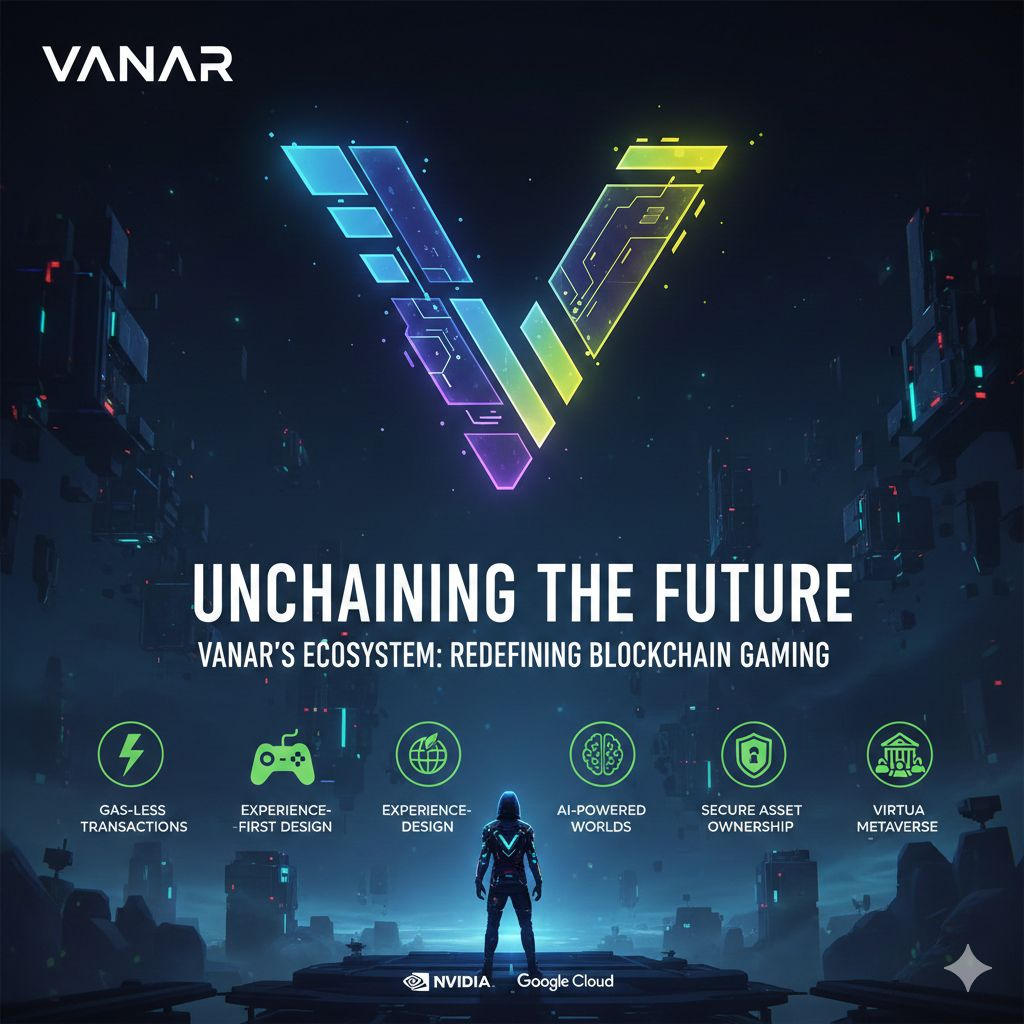
In this article, I'm writing about how vanar chain is playing its unique and helpful role in Gaming sector to provide enjoyable and secure Blockchain Gaming environment. For years, the promise of "blockchain gaming" has felt a bit like a carrot on a stick. We’ve been told about a future where players truly own their items, where assets move between games, and where digital economies are finally fair. But if you’ve actually tried to play a Web3 game, you know the reality: clunky wallets, "gas anxiety" over transaction fees, and gameplay that often feels more like a spreadsheet than a fantasy world. Vanar is changing that by shifting the narrative from technical obsession to player-first immersion.
One of the most significant shifts Vanar introduces is the solution to the "gas anxiety" problem. In traditional gaming, you don't pay a fee every time you open a door or pick up a sword. In Web3, however, every interaction often requires a signature and a small payment, which is a total immersion-killer. Vanar tackles this with an infrastructure designed for high-frequency, low-cost interactions. With transaction costs sitting at a fraction of a cent, developers can finally build games where the blockchain operates silently in the background. Through sponsored transactions and "gasless" experiences, you can play the game first and worry about the on-chain technicalities later—exactly how it should be.
This "invisible blockchain" approach is backed by the Vanar Gaming Network (VGN), a plug-and-play stack for developers. Instead of building complex smart contracts from scratch, studios can use pre-built modules for asset settlement, identity marking, and real-time state synchronization. It’s a transition from building for cryptographers to building for gamers.
Beyond the plumbing, Vanar is addressing the environmental concerns that have long kept mainstream brands like Nike or Coca-Cola at arm's length. As a carbon-neutral Layer 1, it offers a "green moat" that makes it safe for Fortune 500 companies and eco-conscious indie developers to build without a massive carbon footprint. They’ve even integrated a "Vanar Eco" module that lets everyone track the energy usage of their transactions in real-time.
The ecosystem is also evolving into something "intelligent" through the integration of AI-native infrastructure like the Kayon AI engine. This allows for smarter NPCs that learn from player behavior and remember past choices using on-chain "semantic memory." It’s no longer just about owning a digital sword; it’s about inhabiting a world that reacts to you. This intelligence extends to onboarding as well, using AI-driven assistants to help players set up human-readable names using simple natural language rather than long, confusing strings of random characters.
Ultimately, Vanar’s goal is to reach a point where we stop calling it "blockchain gaming" and just call it gaming. By partnering with tech giants like NVIDIA and Google Cloud and prioritizing the player’s emotional experience over technical jargon, they are making the technology serve the fun. The chains are coming off, and the future of gaming is finally becoming an ecosystem where you can actually play without a manual.