


Most chains today try to outshout each other. TPS numbers. TVL screenshots. Partnerships announcements every week. AI everywhere. Vanar is moving in a very different direction and honestly that is why many people miss it. Vanar is not trying to look impressive. It is trying to remove the boring painful parts that stop real products from shipping.
Wallet confusion onboarding drop offs broken tooling rewriting codebases every time a team switches chains. These are the things that kill products silently. Vanar seems obsessed with those problems instead of slogans.
When you strip away the marketing Vanar is building a chain where Ethereum developers can take something that already works and push it to more users with fewer sharp edges. That is not sexy. But that is infrastructure.
also read: Vanar And The Boring Fix That Crypto Never Wanted To Admit
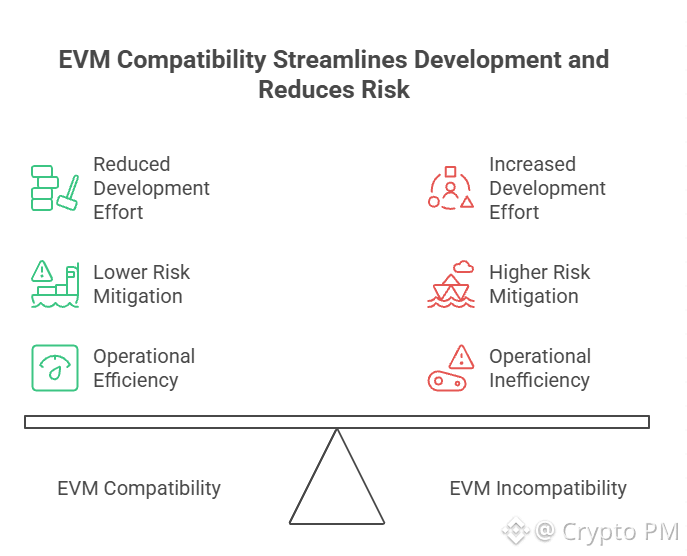
EVM Compatibility Is A Strategy Not A Checkbox
Every chain says EVM compatible like it is a badge. Vanar treats it like a survival strategy. EVM compatibility here is not just about Solidity. It is about audits tools mental models deployment pipelines debugging habits and years of muscle memory.
The biggest cost in software is not gas or compute. It is time and risk. When a team evaluates a new chain the real fear is rewiring everything. New hires new audits new bugs new unknowns.
Vanar answer is simple. Do not migrate your brain. Bring what you have and we reduce the operational pain around it.
This flips the L1 competition model. Speed is not measured in TPS but in how fast a team goes from repo to production.
Onboarding Is The Real Bottleneck Not Transactions
The uncomfortable truth of Web3 is this. People do not leave apps because they are slow. They leave because wallets are scary. Seed phrases gas tokens approvals popups fear of losing funds.
Vanar documentation openly discusses account abstraction patterns like ERC 4337. That means apps can create wallets for users behind the scenes. Users can sign in with email social login normal flows.
This is huge. It means Vanar sees the chain as a backend not a shrine. The frontend can feel like normal software.
When wallets become invisible you unlock a different class of users. People who do not want to be crypto users. They just want a product that works.
Infrastructure Is Distribution And Vanar Knows It
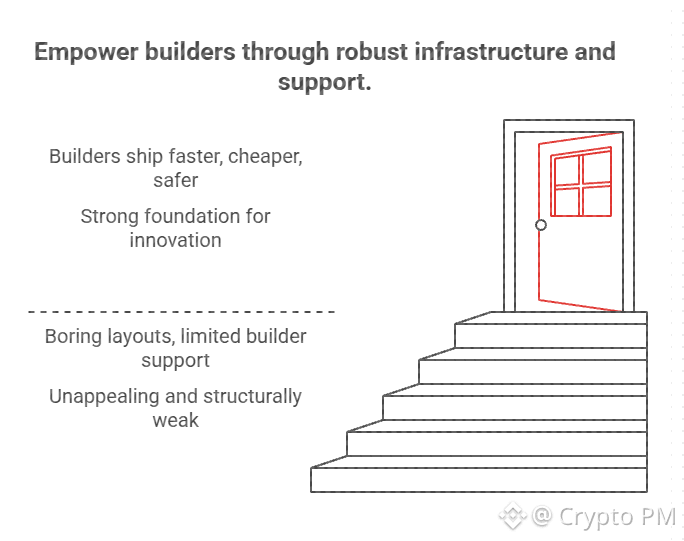
Vanar ecosystem pages look boring. Kickstart style layouts. Builder perks onboarding support discounts co marketing. This is not flashy but it is structural.
Chains do not win by selling blockspace alone. They win by helping builders ship faster cheaper safer. This is the boring truth of platforms.
Saving a builder three weeks of setup is more powerful than any hackathon prize.
Tooling Presence Signals Serious Intent
One underrated signal is where a chain shows up. Vanar is integrated into third party developer platforms like Thirdweb with embedded chain IDs.
That sounds small but it matters. It means deployment contract interaction and app building fit into existing workflows. Developers hate starting from zero.
This is how infrastructure becomes invisible. Invisible infrastructure scales.
Chains Built For Software Not Just Humans
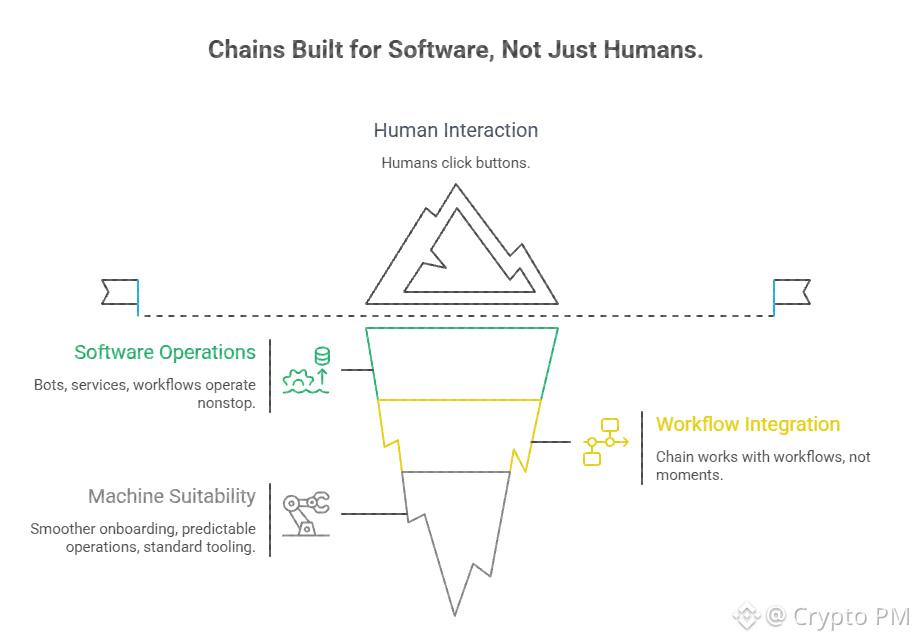
There is a difference between chains built for humans clicking buttons and chains built for software that runs continuously. Bots services workflows agents operate nonstop. Humans come later.
Vanar messaging increasingly frames the chain as something that works with workflows not moments. Apps run all the time. Machines do not get tired.
The smoother the onboarding predictable operations and standard tooling the more suitable the chain is for machine driven activity.
The Market Often Misses These Bets
Spectacle is rewarded fast. Reliability is rewarded slow. Most essential infrastructure changes look boring at first.
But businesses consumer apps and serious builders buy reliability. They buy predictability. They buy ease of shipping.
If Vanar succeeds in reducing onboarding friction migration friction and ecosystem friction it earns something rare. Developer trust.
Even small trust compounds. A developer launches once and comes back. A team ships without seed phrase nightmares and grows. Familiar tools mean faster iteration.
These are not narratives. These are reasons ecosystems form.
The Next Users Will Not Know It Is Web3
This is the most important part. The next generation of users will not care about blockchains. They will use products.
Vanar is not trying to attract more crypto enthusiasts. It is trying to let normal users use software that happens to run on a blockchain.
That is why developer experience matters more than token hype. Winning chains will make building ordinary onboarding safe and launching fast.
Vanar feels like that kind of infrastructure. Quiet overlooked not flashy. But comfortable to use.
And comfortable systems tend to last.
my take
Personally I think Vanar is playing a long and uncomfortable game. It will not win attention cycles. It will not trend every week. But it is solving the exact things that made me abandon half the Web3 apps I tested. Wallet friction tooling pain migration cost. If Vanar keeps pushing in this direction it might earn the one thing markets cannot fake. Developers choosing it again and again. That usually decides everything in the end.
