

Plasma and then watch how the chain presents itself through its own docs and onchain explorer, I get the impression that the team is building with one stubborn priority in mind, which is making stablecoin movement feel like normal payments instead of a crypto workflow where the user has to think about gas tokens, fee spikes, and confirmation uncertainty before they can even send money.
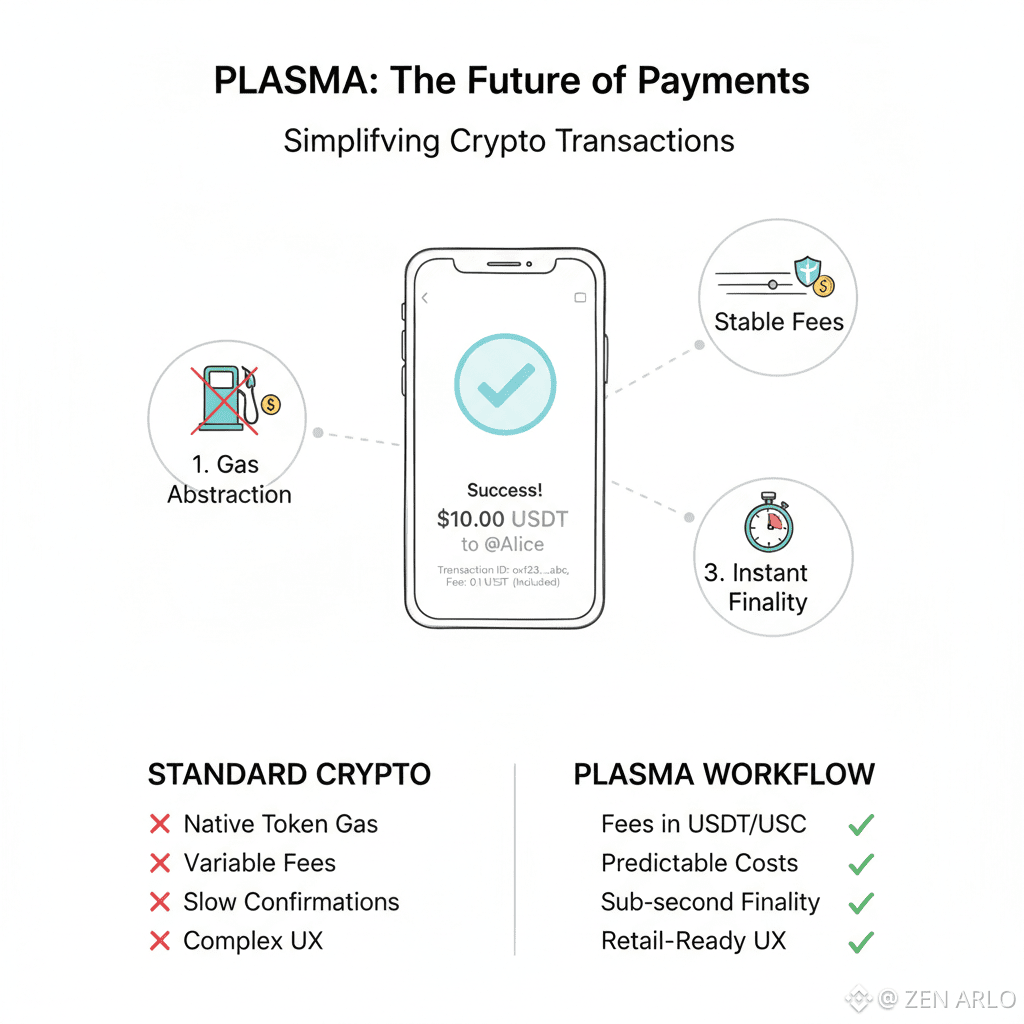
What pulls my attention most is that Plasma does not describe stablecoins as just another asset class that happens to live on an EVM chain, because the language around the protocol keeps circling back to stablecoin settlement as the main job, and the technical choices they highlight are aligned with that job, including fast finality through their consensus design and a fully EVM compatible environment so builders can ship payment and finance applications without learning a new virtual machine from scratch.
From my observation, the real design statement is the stablecoin native experience they keep pushing, because features like gasless stablecoin transfers and stablecoin first gas are not framed as marketing perks but as core infrastructure, which suggests they want the default user journey to be stablecoin in, stablecoin out, and the user never getting stuck in that annoying situation where they have money but cannot move it because they are missing a separate gas token.
I also notice that Plasma talks about liquidity as if it is part of the product rather than something that will magically appear later, and that matters because payments at scale are not only about speed, they are about depth and reliability, since a settlement chain that is fast but thin still becomes frustrating when real volume shows up and routes get messy, so the way Plasma emphasizes starting liquidity and ecosystem readiness reads like an attempt to avoid that classic trap early.
On the security side, the way Plasma leans into a Bitcoin anchored narrative feels like a long term positioning move rather than a short term performance claim, because stablecoin infrastructure eventually gets judged on neutrality and resilience, and anchoring to a widely recognized security baseline is a way of saying the chain wants to remain credible even when usage becomes meaningful and the stakes grow beyond typical crypto cycles.
When I check what is actually happening on the explorer, I see a chain that is not just a whitepaper idea, because there is ongoing transaction flow and consistent block production that you can monitor day to day, and while numbers will always move with traffic, the important part for me is that the system looks active enough to treat as a living network rather than a quiet test environment.
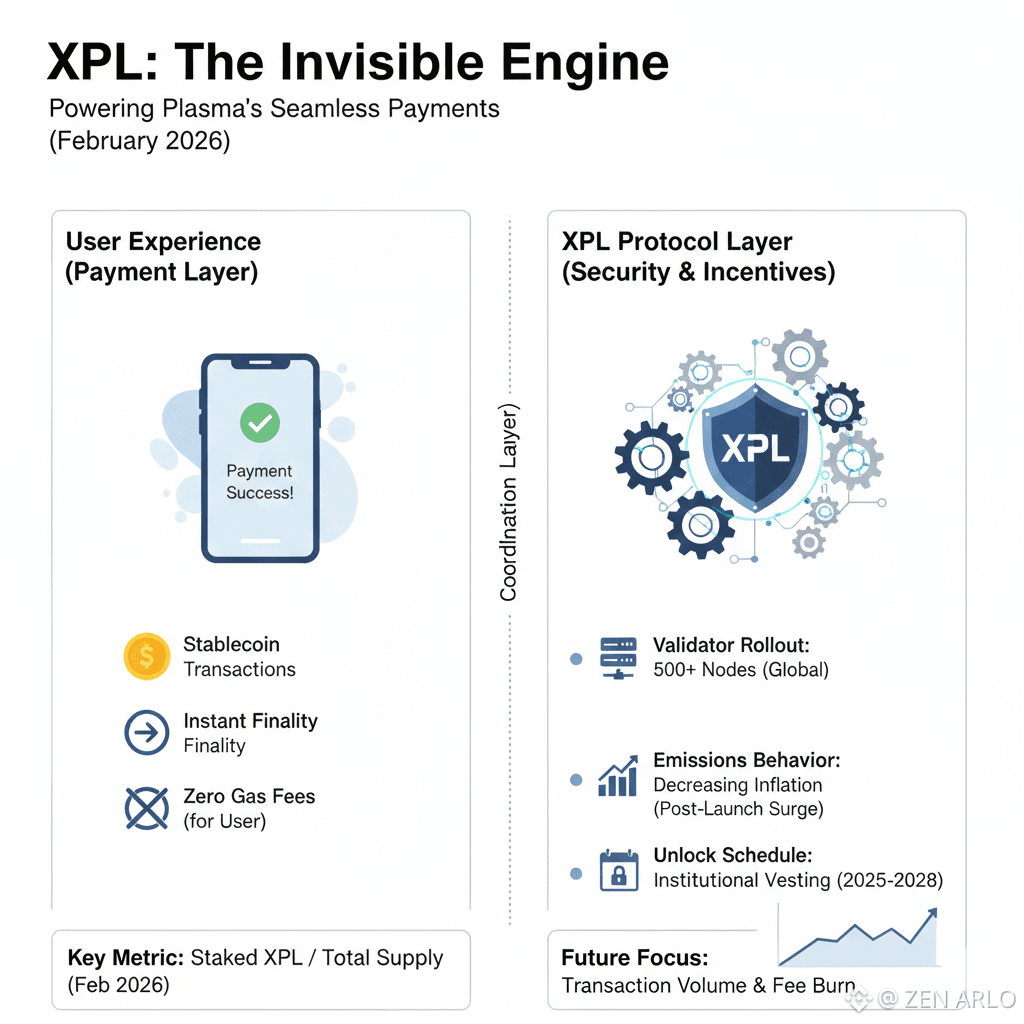
The XPL story, as I understand it from how Plasma explains it, sits more in the background as the coordination and security layer of the network instead of the thing users must constantly hold, and that separation is important because a payments focused chain usually wins when the user experience is simple while the incentive structure stays strong behind the scenes, so the details that matter most over time are the validator rollout, emissions behavior when decentralization expands, and the unlock schedule that shapes supply dynamics as the ecosystem grows.
Plasma is trying to be different is that it does not stop at settlement onchain and then leave the rest to third parties, because it keeps signaling an end to end loop where stablecoins can be acquired, moved with minimal friction, and then used in real life, which is how stablecoin payment rails become more than a niche tool and start looking like everyday infrastructure.


