

Everyone keeps asking the same question: why can't decentralized storage just be simple? Write your data once. Read it anywhere. Guarantee it stays intact even when nodes lie or fail. Walrus actually delivers this—and the simplicity is deceptive.
The Simplicity We've Been Missing
Here's what makes good infrastructure great: it hides complexity. You don't think about TCP retries when you use the internet. You don't manage transaction ordering when you use Ethereum. The complexity is there, but it's handled invisibly.
Decentralized storage has been the opposite. You store data and immediately face decisions: which nodes replicate it? How many copies? What happens if nodes disappear? How do you verify what you get back is actually what you stored? The complexity is shoved into the user's lap.
@Walrus 🦭/acc changes this by making the model absurdly simple: write once, read anywhere, data stays safe. Byzantine faults—nodes lying, failing, conspiring—don't touch your guarantees. That's the storage equivalent of "don't think about it, it just works."
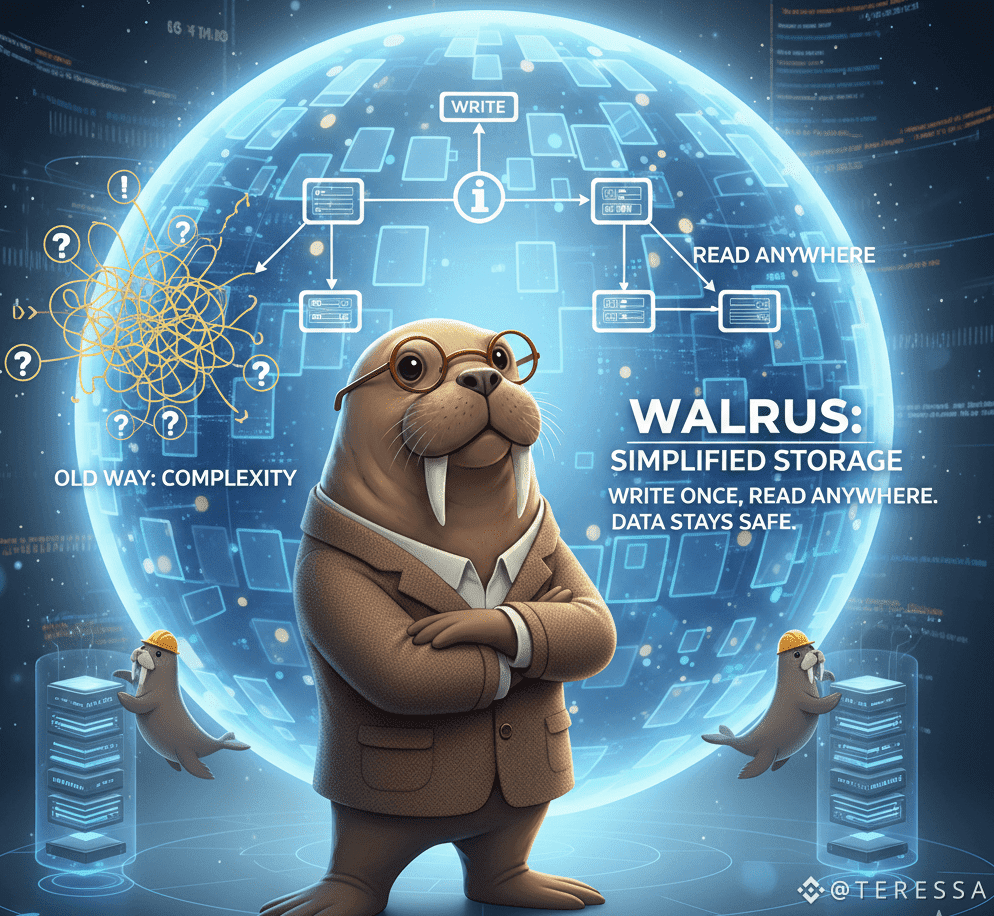
Why "Write Once, Read Anywhere" Actually Requires Byzantine Safety
The simplicity is only possible because the complexity is handled right. "Read anywhere" doesn't mean "hope some node has your data." It means any honest node can give you your data and prove it's legitimate. Byzantine safety makes that possible.
When you read from Walrus, you get cryptographic proofs that what you're reading is genuine. Nodes can't lie about your data. They can't serve you stale versions. They can't conspire to hide pieces. The protocol guarantees that if your data exists, you'll get valid copies—regardless of how many nodes are misbehaving.
This is what you actually need when storage is distributed across hundreds of untrusted nodes.
The Architecture That Enables Simplicity
Walrus achieves this through strategic erasure coding combined with Byzantine-resistant verification. Your data is sharded across the network in ways that let any subset of honest nodes reconstruct it completely. Validators are economically incentivized to serve valid data correctly.
The magic is that honest validators don't need to coordinate. They don't need to know which other nodes are honest. The protocol makes it impossible for dishonest validators to serve you bad data—even if they try.
Simple from the outside. Mathematically bulletproof on the inside.
What This Enables for Builders
Write once, read anywhere changes how you think about infrastructure. You're not managing replication strategies. You're not worrying about data loss from node failures. You're not negotiating with providers about uptime guarantees.
You write your data to Walrus and know—with cryptographic certainty—that you can read it from anywhere, anytime, regardless of Byzantine faults. That simplicity is transformative for application design.
NFT metadata lives permanently. Rollup transaction history is always accessible. dApp state survives node failures. Archives stay readable centuries later. All with the same simple interface: write once, read anywhere.
The Byzantine Fault Tolerance That Disappears
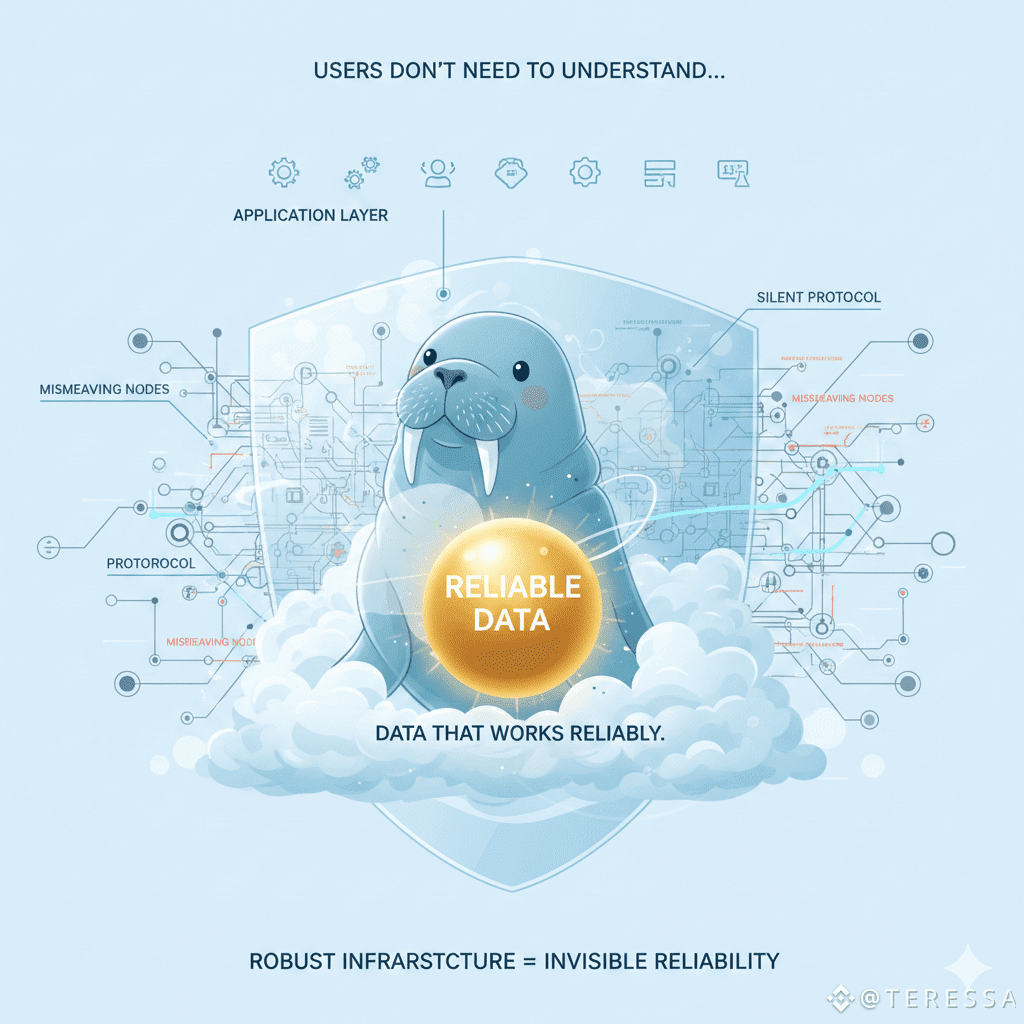
Users don't need to understand Byzantine fault tolerance to use Walrus. They just experience the benefit: data that works reliably. The protocol handles the Byzantine faults silently—detecting misbehaving nodes, routing around them, verifying data integrity—all invisible to the application layer.
This is maturity. When infrastructure gets so robust that users stop thinking about failure modes, that's when it truly works.
Walrus proves decentralized storage can be simple because it's built on solid Byzantine fault tolerance foundations. Write once, read anywhere—guaranteed secure regardless of how many nodes fail or misbehave. No complexity leaking to users. No infrastructure worries. Just storage that actually works like you'd expect it to. That's the future of decentralized infrastructure.
