
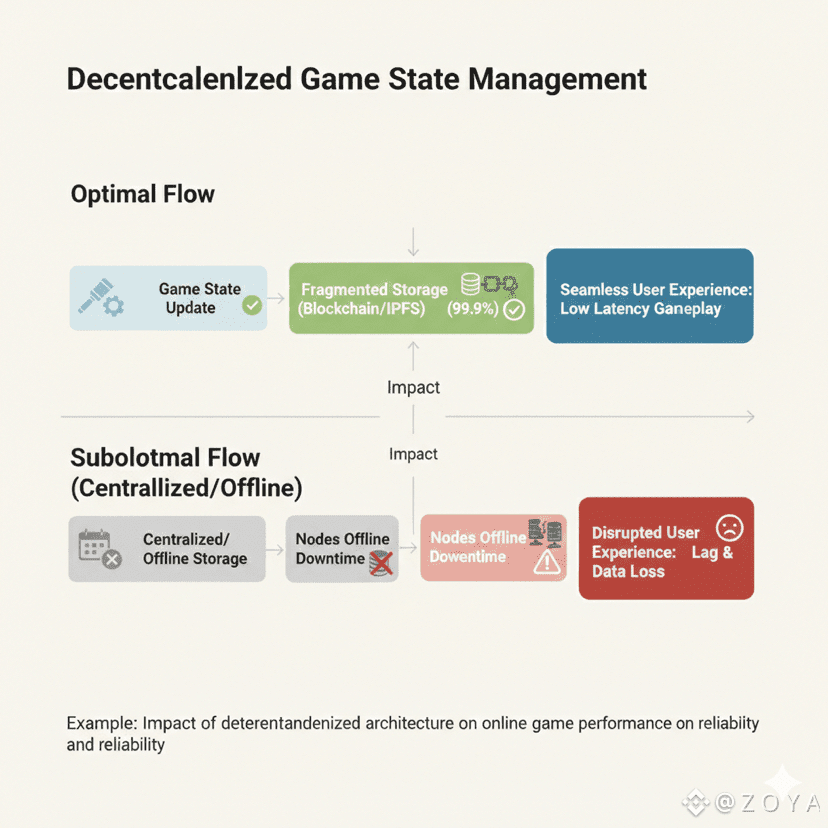
It’s the middle of a heated raid in a blockchain-based MMO. Players’ inventories, guild stats, chat logs—all flying across servers. Suddenly, three nodes drop offline. In most systems, inventories vanish, progress stalls, panic erupts. Not here. Walrus absorbs the shock. Erasure-coded fragments scattered across independent nodes rebuild the lost pieces in under 1.5 seconds, without developer intervention. Chat logs remain intact, leaderboard calculations continue, players barely blink.
Behind this invisible stability, the WAL token is quietly at work. Operators are rewarded for uptime and penalized for lapses. That’s not abstract economics—it’s players not losing hours of progress, devs not staring at red dashboards, and dApps surviving moments that would cripple ordinary storage networks. Suddenly, tokenomics isn’t a finance lecture; it’s real-life reliability, silently defending the game world.
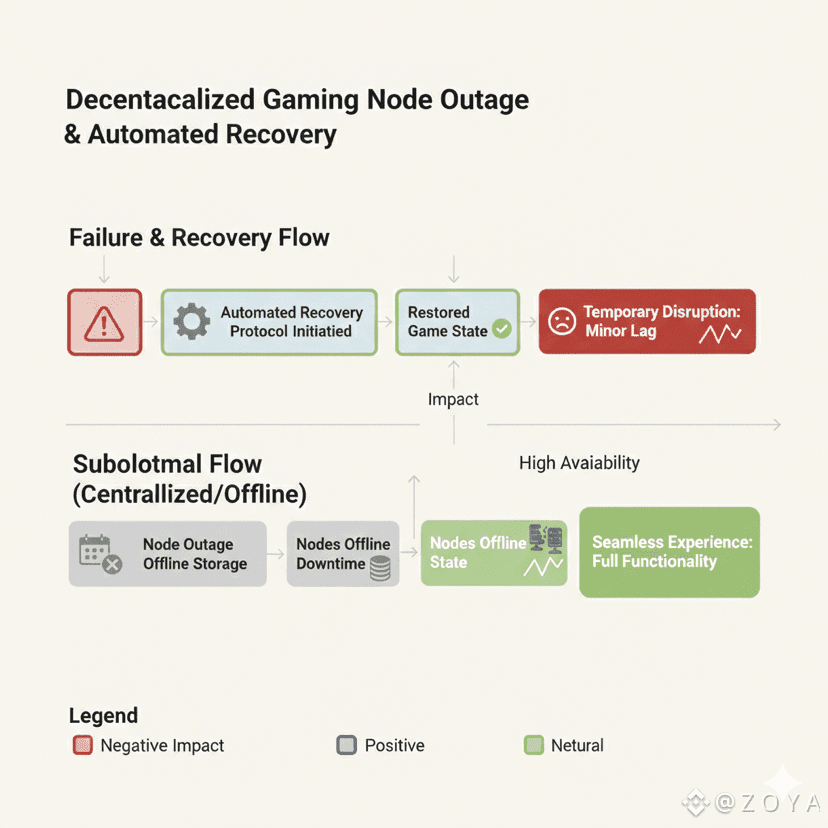
Even smaller apps feel the difference. Imagine a decentralized creative platform, uploading video tutorials or design files. A sudden node failure could scramble timelines and force re-uploads. Walrus prevents this by making recovery predictable and measurable. Developers know 99.9% of operations will complete uninterrupted; users never notice a hiccup. That micro-guarantee transforms trust, turning shaky dApps into rock-solid experiences without adding complexity for the dev team.
Every fragment, every token, every incentive contributes to this silent choreography. Users see smooth gameplay, uninterrupted analytics dashboards, reliable storage. Developers see logs with numbers that match expectations. And the system keeps humming, stress-tested under chaos, proving that when Walrus is in play, nothing breaks—at least, nothing the end-user sees.
