

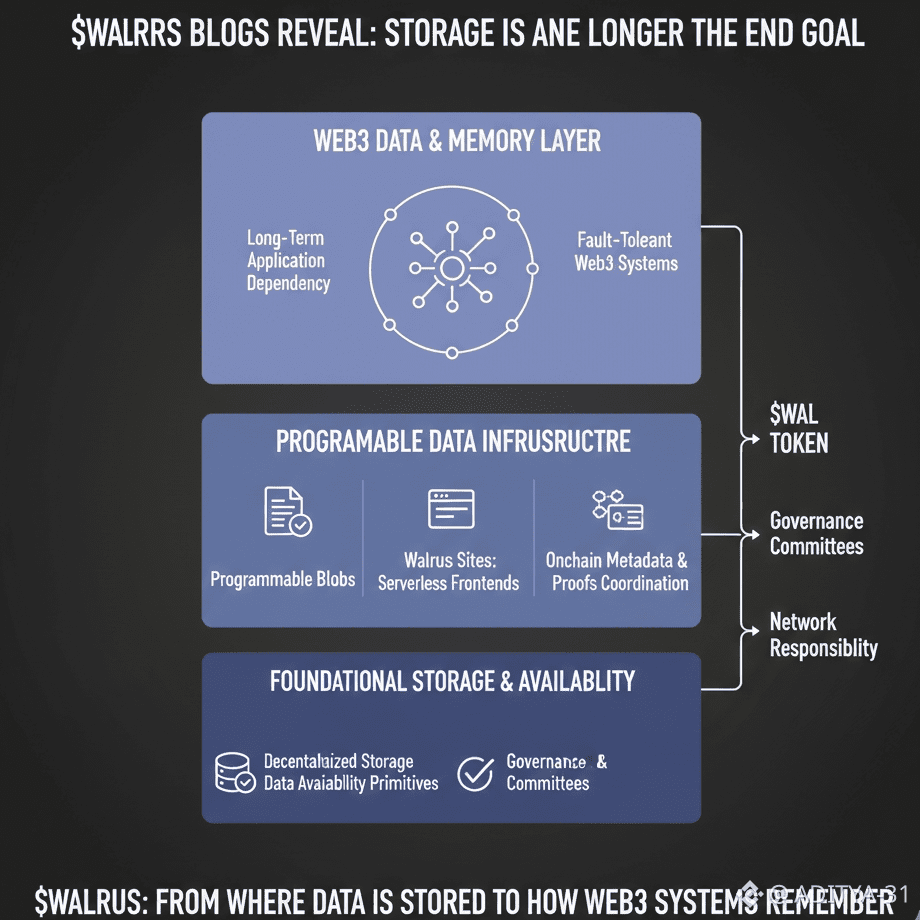
Agar tum Walrus ke official docs blog ko dhyaan se dekhte ho, to ek pattern clearly dikhta hai. Ye blog sirf announcements ya formal updates ke liye nahi likha gaya. In posts ke through Walrus quietly ye show kar raha hai ki protocol ka focus ab sirf “decentralized storage” tak limited nahi raha. Direction clear hai — Walrus Web3 ke liye ek proper data infrastructure banana chahta hai.
Sabse strong signal Mainnet launch se aata hai. Blog update me clearly bataya gaya tha ki Walrus ka production mainnet live ho chuka hai, aur ye koi small-scale deployment nahi hai. Network 100 se zyada independent storage nodes ke saath run kar raha hai. Is stage par developers sirf test nahi kar rahe, balki actual usage possible hai — blobs publish ho rahe hain, Walrus Sites upload aur browse ho rahe hain, aur $WAL token ke through staking aur unstaking bhi live hai. Ye sab cheeze ek hi baat point karti hain: Walrus ab experiment mode me nahi hai.
Blog timeline ko thoda peeche jaakar dekho to protocol ka evolution aur clear ho jaata hai. Initial posts me Walrus ka introduction ek decentralized storage aur data availability protocol ke taur par hua tha, jahan design philosophy aur developer previews pe focus tha. Uske baad testnet phases aaye — Testnet v2, redeploys, governance related updates, blob handling improvements. Ye sab random updates nahi the. Ye ek step-by-step journey thi jo testing se production tak responsibly move karti hai.
Is journey ka direct impact $WAL token par bhi dikhta hai. Blog posts indirectly ye clear kar dete hain ki $WAL koi sirf trading token nahi hai. Mainnet staking, governance committees, storage incentives — in sab jagah $WAL ka role deeply embedded hai. Jaise-jaise Walrus Sites aur blob management jaise features live hue, token ki practical utility aur strong hoti gayi. Yahan token hype ke liye nahi, network responsibility ke liye use ho raha hai.
Blog posts ka ek aur important signal ye hai ki Walrus ka scope widen ho raha hai. Early phase me focus tha basic decentralized storage problems par — reliability, scaling, testnet stability. Lekin recent updates me narrative change ho chuki hai. Ab baat sirf “data store ho raha hai” tak nahi hai. Ab baat hai programmable data ki — jahan data ko onchain objects ke saath coordinate kiya ja sakta hai, aur applications ke liye ek long-term memory layer provide ki ja rahi hai.
Iska matlab ye hai ki Walrus khud ko ek “storage bucket” ke taur par nahi dekh raha. Wo khud ko decentralized systems ke liye foundation ke taur par position kar raha hai — jahan storage, site hosting, programmability aur ecosystem integration ek saath kaam kare.
Agar sab kuch ek saath summarize karein, to Walrus ke docs blog se ye baatein clearly nikal kar aati hain:
Protocol test phase se nikal kar real production mainnet me aa chuka hai. Development slow aur hype-driven nahi, balki infrastructure-first approach me ho rahi hai. $WAL token network ke core operations — staking, governance aur storage economics — me deeply involved hai. Aur sabse important, Walrus ab sirf decentralized storage nahi, balki Web3 ke liye ek proper data layer banne ki direction me move kar raha hai.
Ye sab cheeze blog ke flashy words se nahi, balki updates ke pattern se samajh aati hain. Aur yahi cheez Walrus ko quietly different banati hai.
