


#SignDigitalSovereignInfra l $SIGN l @SignOfficial
As Web3 continues to evolve, much of the focus has been placed on decentralization, ownership, and innovation. However, one critical layer remains underdeveloped trust infrastructure. While blockchains enable transparent and verifiable systems, the way trust is currently implemented across applications is fragmented, repetitive, and inefficient.
This is where SIGN Protocol positions itself.
At its core, SIGN is designed to address a simple but persistent problem: the need to repeatedly verify the same information across different platforms. Whether it is wallet verification, allowlist access, contributor recognition, or eligibility for rewards, users are often required to go through identical processes multiple times. This not only creates friction but also slows down adoption and disrupts user experience.
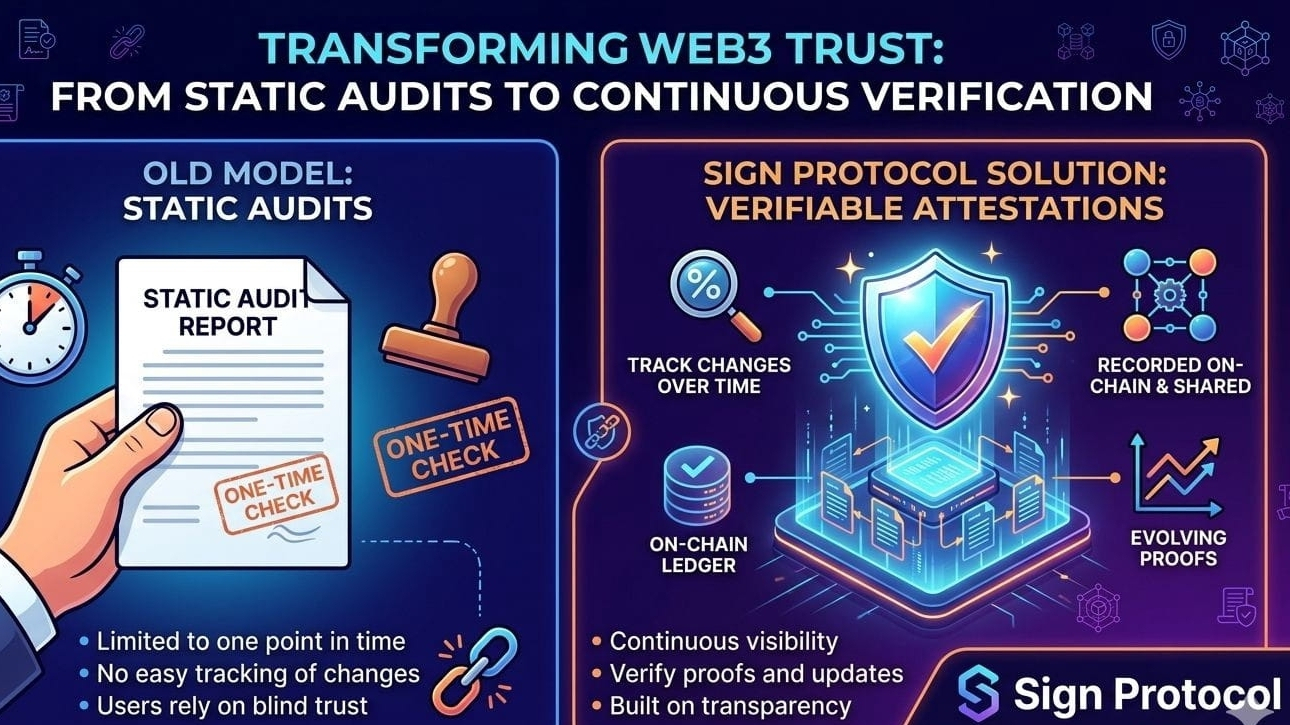
SIGN introduces a more structured approach through reusable on-chain attestations.
An attestation, in this context, is a verified piece of information — such as identity status, participation history, or access rights — that can be recorded and referenced across multiple applications. Instead of rebuilding verification systems independently, projects can rely on these shared credentials. Once a user is verified, that proof becomes portable and can be utilized wherever it is accepted.
This shift significantly improves efficiency.
For users, it reduces repetitive actions and simplifies onboarding across platforms. For developers, it eliminates the need to design and maintain redundant verification systems, allowing them to focus on building core product functionality. Over time, this can lead to a more interconnected ecosystem where trust is not isolated within individual applications but shared across networks.
Beyond credentials, SIGN also extends its functionality into token distribution through its TokenTable framework.
Token distribution is a critical yet often overlooked component of Web3 projects. Inefficient vesting mechanisms, unclear allocation structures, and lack of transparency can create long-term instability within ecosystems. TokenTable aims to standardize and streamline these processes by offering structured tools for managing allocations, vesting schedules, and reward distribution.
By integrating trust verification with value distribution, SIGN expands its role beyond a typical identity solution.
It operates as a foundational layer that supports multiple aspects of Web3 infrastructure — from user verification and permission management to token economics. This broader positioning allows SIGN to serve as an enabler for other projects rather than a competitor within a single niche.
Another key strength of SIGN lies in its focus on interoperability.
Web3 ecosystems are inherently fragmented, with numerous blockchains, applications, and protocols operating independently. SIGN’s model of reusable attestations has the potential to bridge these gaps by creating a common standard for trust. If widely adopted, it could allow credentials to move seamlessly across different platforms, enhancing both usability and integration.
However, the success of such infrastructure depends heavily on adoption.
The concept of reusable trust is powerful, but it requires widespread integration to deliver its full value. Projects must recognize the benefits of shared verification systems, and users must experience tangible improvements in usability. Without this network effect, even well-designed infrastructure can struggle to reach its potential.
Despite this challenge, the direction SIGN is taking aligns with the broader needs of the Web3 ecosystem.
As the industry matures, the emphasis is shifting from isolated innovation to cohesive systems that improve overall user experience. Reducing friction, enhancing interoperability, and creating reliable trust mechanisms are essential steps toward mainstream adoption.
SIGN Protocol is not attempting to reinvent the core principles of blockchain. Instead, it is refining how those principles are applied in practice.
By making trust reusable, portable, and efficient, it addresses one of the most overlooked barriers in Web3 today. If successfully implemented at scale, SIGN could become a fundamental component of the decentralized infrastructure enabling smoother interactions, stronger ecosystems, and more sustainable growth.
In a space driven by constant innovation, sometimes the most impactful solutions are not the ones that introduce entirely new ideas, but the ones that make existing systems work better.
SIGN Protocol appears to be aiming for exactly that.