

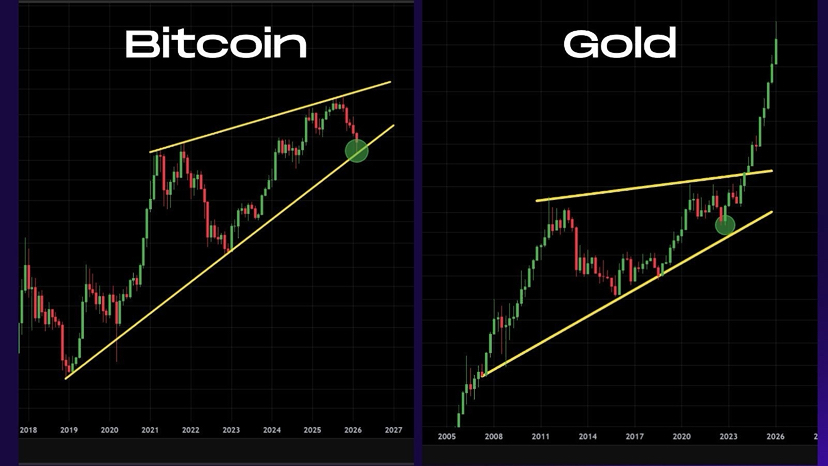
#Bitcoin is on track to record its weakest first quarter since 2018 if current performance holds. On the surface, that sounds alarming. But historically, Q1 has often been one of the most volatile periods of the year for $BTC — sharp moves in both directions are not unusual.
Looking back over the past 13 years, there have been instances where Q2 simply followed Q1’s direction. But there have also been multiple years where the rest of the year completely diverged from the first quarter’s performance. In other words, three months rarely define the entire cycle.
So the real question isn’t whether Q1 is red or green.
The real question is: what is the structure telling us right now?
Is the broader market structure trending higher or rolling over?
Are higher timeframes aligned — or are we seeing early signs of local exhaustion?
Is momentum expanding — or compressing?
Over the past 1–2 years, Bitcoin hasn’t been moving in one clean, extended macro trend. Instead, it has rotated through multi-month expansions and contractions. Impulse. Pullback. Rotation. Repeat.
That means seasonality and quarterly statistics matter less than structure.
In environments like this, anchoring bias becomes dangerous. Traders who expect Q2 to “fix” Q1 can miss what price is actually doing. The market doesn’t owe anyone symmetry.
What matters now:
– Trend alignment across timeframes
– Liquidity positioning
– Volatility expansion vs compression
– Momentum confirmation, not calendar expectations
If structure shifts bullish, Q1 weakness becomes noise.
If structure deteriorates further, Q1 was simply an early warning.
Time periods create headlines.
Structure creates trends.
And in Bitcoin, structure always wins.
