

@Fogo Official #Fogo $FOGO
Hey fam, gather around because today I want to dive into something fresh and exciting that has been popping up across crypto circles in the last few months. We are going to talk about Fogo, often stylized as FOGO, which is emerging as one of the most talked-about Layer 1 networks right now. This isn’t another “general purpose” chain chasing generic adoption. Fogo is laser-focused on performance, trading, real-time finance, and building infrastructure that makes on-chain trading feel as responsive as traditional markets.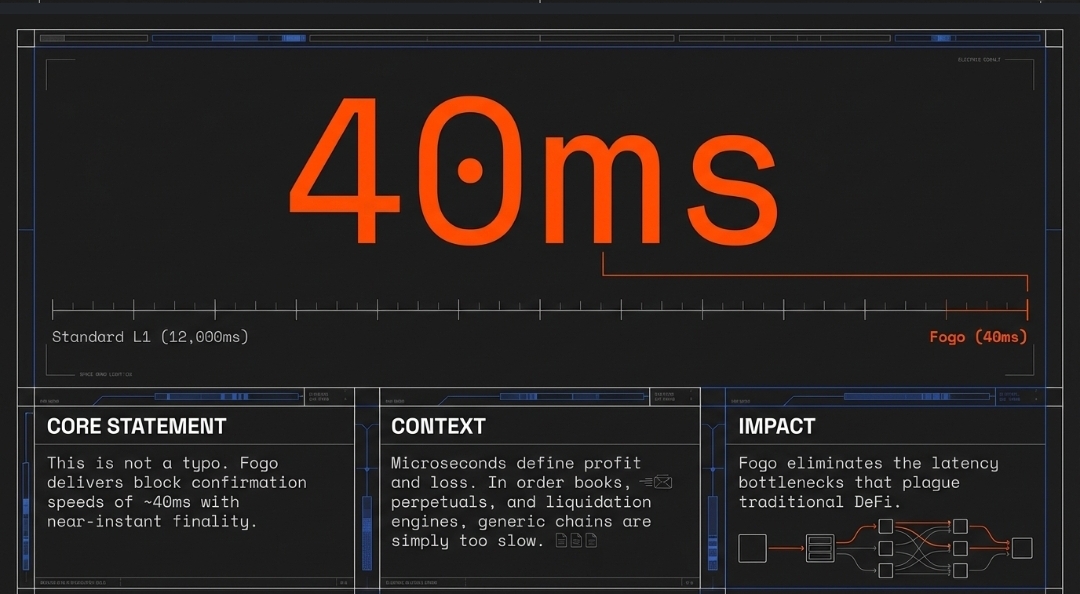
I promise you this article will break down everything you need to understand about Fogo’s latest developments, technological foundations, real usage features, ecosystem momentum, and why this project matters to anyone serious about crypto that goes beyond memes and market cap charts.
What Makes Fogo Different From Every Other Layer One
Let’s start with the basics but quickly build into the parts that really matter.
Fogo is a Layer 1 blockchain built for one primary purpose: high-performance trading and real-time financial applications on chain. Unlike many other chains that start with generic smart contract capabilities or decentralized apps, Fogo set out with a very clear thesis, make blockchain feel like a high-speed trading engine, not a slow ledger.
So what does that mean in practice?
Well, the network claims block confirmation speeds of around forty milliseconds with near-instant finality. That is not a typo, forty milliseconds. That kind of responsiveness is critical for things like order books, perpetuals trading, liquidation engines, and any environment where even a tiny delay can cost traders serious money. This is accomplished by building on the Solana Virtual Machine (SVM) and layering in several performance-centric architectural decisions that prioritize speed and throughput above all.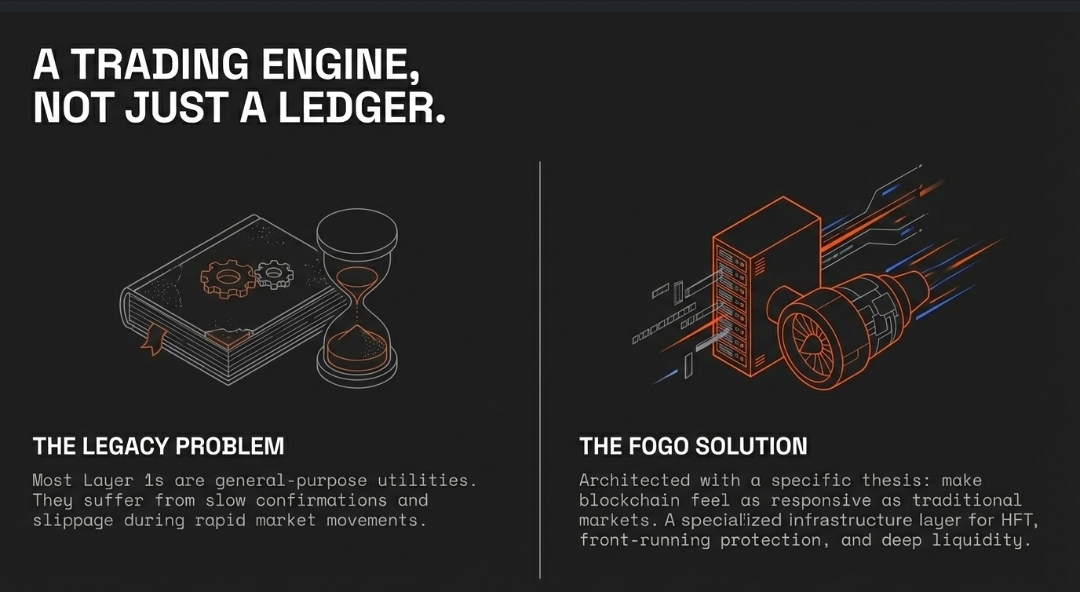
And that focus shows everywhere you look in Fogo’s design.
Behind the Tech: Firedancer, SVM Compatibility, and Multi-Local Consensus
Now I know some of you are going to ask about the tech stack, so let’s talk about why Fogo feels so fast and why it matters.
Fogo’s core runs on a custom implementation of the Firedancer client, which was originally developed for performance and stability. This client gives Fogo a kind of “near hardware” network feel where transaction processing and validator coordination is tuned for minimal overhead. In simple terms, Fogo isn’t just copying another chain’s design. It is building its own specialized client optimized for speed.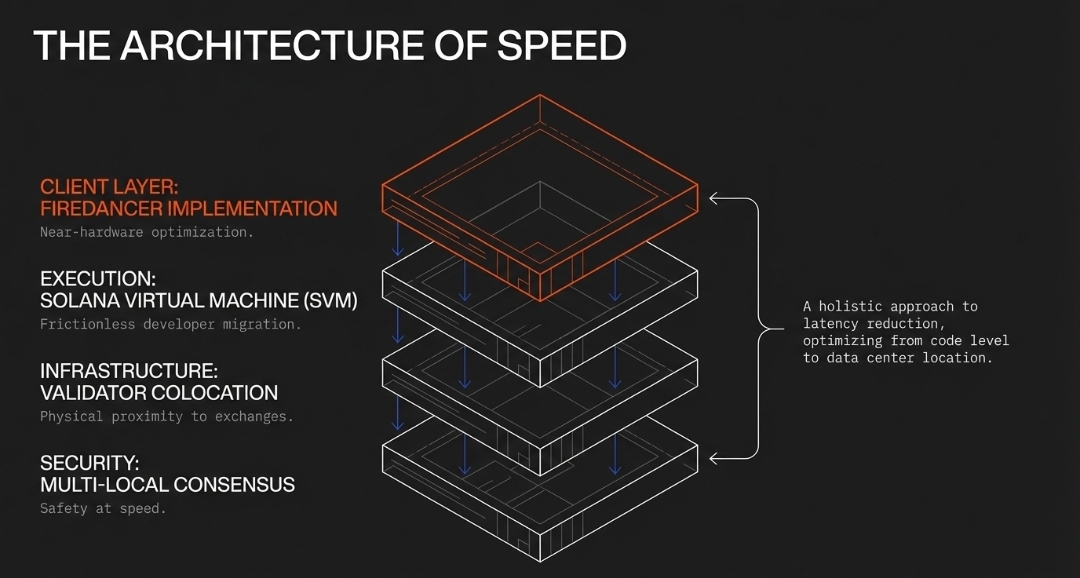
Being fully compatible with the Solana Virtual Machine means that developers familiar with Solana tools and programming environments can bring their projects over with minimal friction. That compatibility also opens the door to a large ecosystem of tooling and developer resources that already exist in the Solana world.
Another interesting piece is the approach around validator colocation. Instead of spreading validators thinly across the globe, the initial active validators are located in high-performance data centers strategically positioned close to major exchange infrastructure. This reduces latency at the network level, which is exactly what you want when milliseconds matter for trading.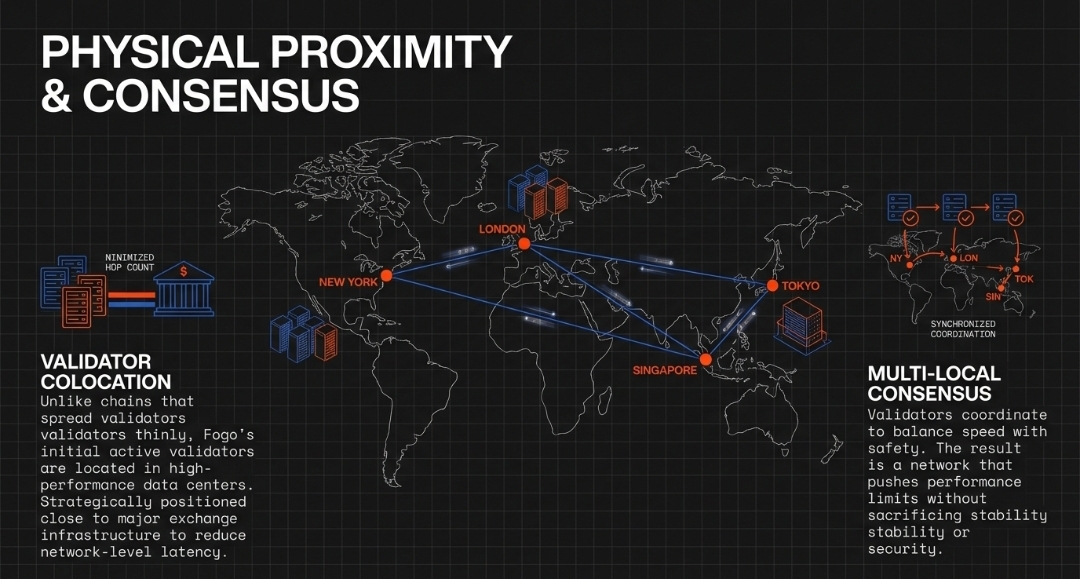
Finally, a multi-local consensus model helps keep things stable while pushing performance. Validators work together in a way that balances speed and security: meaning the network doesn’t sacrifice safety for responsiveness.
Mainnet Live and Ecosystem Taking Shape
One of the biggest milestones for any blockchain is launching its public mainnet. And guess what? Fogo crossed that milestone in January 2026. The network became live, and that means real transactions, real decentralized applications, and real liquidity moving through the ecosystem.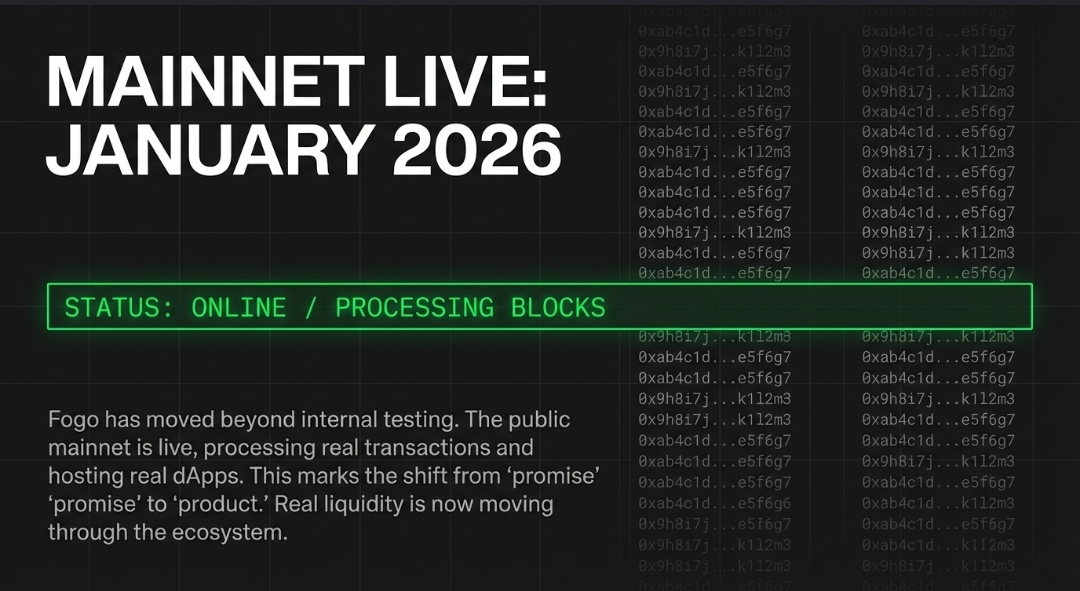
With the mainnet launch, Fogo opened itself up to far more than just internal tests. It enabled developers and projects to start deploying real dApps that leverage the network’s promise of ultra-fast trading and DeFi experiences.
Some of the initial ecosystem apps that went live alongside Fogo’s mainnet include:
Valiant DEX: A decentralized exchange built for performance
Fogolend: A lending and borrowing protocol
Brasa Finance: Liquid staking and yield opportunities
FluxBeam: A suite that includes a DEX interface and tools for traders
And there are at least ten more that launched around the same time, giving users options for everything from simple swaps to more advanced DeFi experiences.
But here’s what gets interesting, these are not random testnet projects. These are real applications built for use cases that thrive on speed and deep liquidity.
Why This Matters for DeFi and Traders
If you’ve ever traded on a blockchain and felt frustration from slow confirmations or slippage, you already know the pain point Fogo is trying to solve.
Traditional DeFi suffers when the underlying chain can’t keep up with rapid market movements. This is especially critical for decentralized derivatives markets, order books, and front-running protection. Fogo’s infrastructure aims to eliminate these latency bottlenecks, making on-chain trading feel smoother and more responsive, closer to what professionals experience in centralized systems.
The native token, FOGO, is used for things like:
Gas fees
Staking to support network security
Governance participation
Ecosystem incentives
Having these core functionalities centered around the FOGO token means that as the network’s utility grows, so could the real demand and usage for the token itself.
A Community-First Launch and What That Means
When many projects launch, they start with big token sales and private rounds that lock up supply early and give insiders a head start. Fogo took a very different approach.
Instead of a traditional $20 million presale, the Fogo team chose a community-focused airdrop strategy. This means that tokens were distributed directly to users who participated in testnets, played ecosystem games, provided liquidity, or engaged with the project in meaningful ways.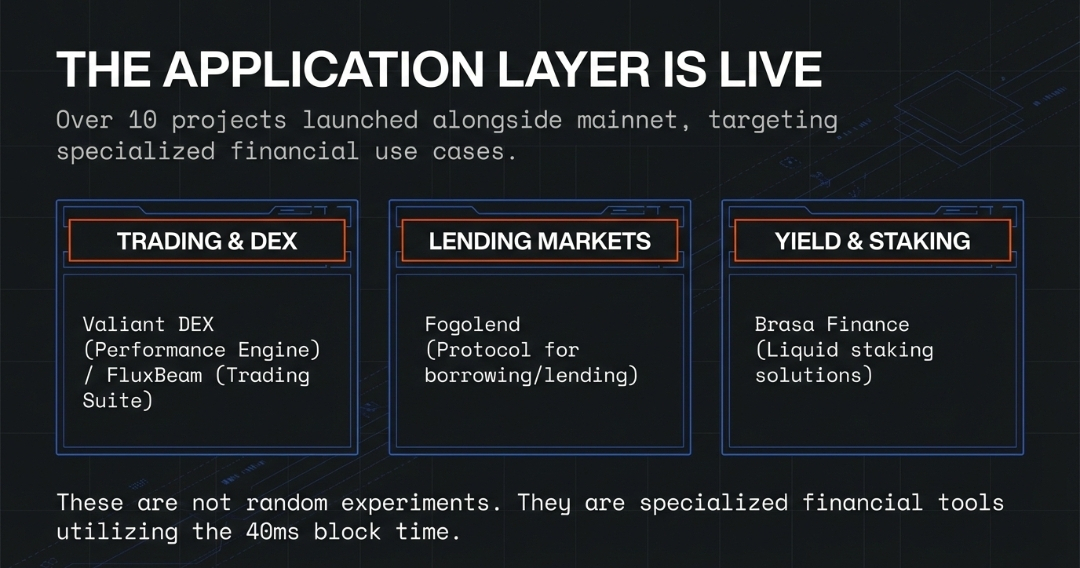
This isn’t just a marketing gimmick. It shifts the incentive structure in a way that rewards active participants, not just deep pockets. It also helps foster a more passionate and engaged community from day one, because those early participants actually own a piece of the network and have a stake in its success.
And unlike some airdrops that feel random or poorly executed, Fogo’s “Fogo Flames” program was intentional, rewarding specific actions that contribute to network growth.
Cross-Chain Liquidity With Wormhole
One thing that came up right at launch is that Fogo integrated the Wormhole bridge as its native cross-chain connectivity solution. This is a big deal because Wormhole is already a bridge protocol connecting dozens of networks and billions of dollars in liquidity.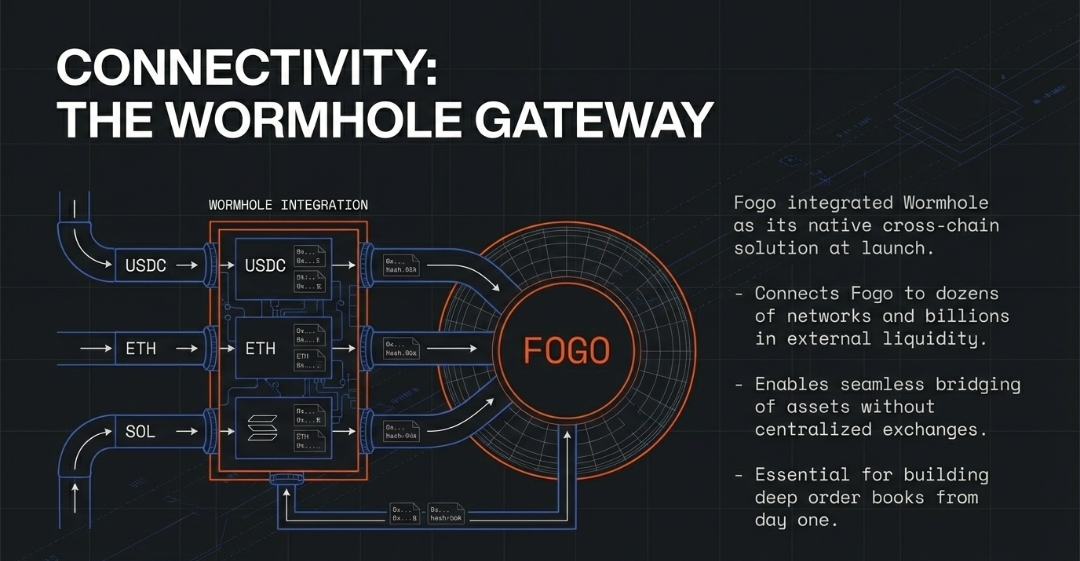
What that means for users is that assets like USDC, ETH, SOL, and more can be moved onto Fogo without having to go through centralized exchanges first. That unlocks immediate cross-chain liquidity, which is essential if Fogo wants real trading volume and deep order books.
The People and Philosophy Behind Fogo
Something that often gets overlooked is the background of the people building a project.
Fogo’s team includes contributors with serious experience in both traditional finance and crypto infrastructure. We’re talking backgrounds that include big Wall Street firms, crypto infrastructure builders, and performance-oriented development crews.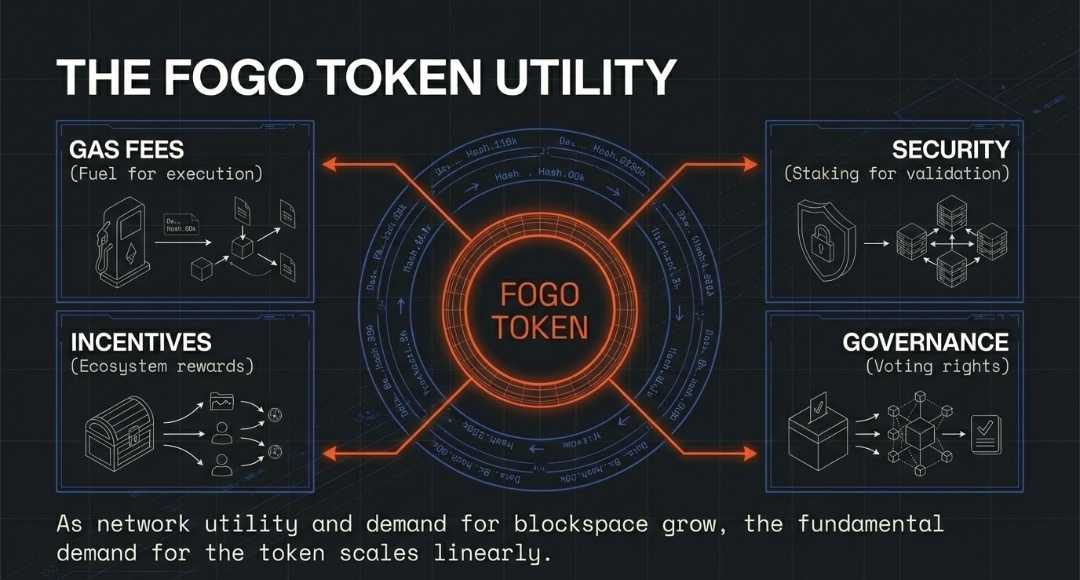
That blend of real-world trading knowledge and blockchain-native engineering is what drives the project’s very specific performance focus.
This is not another chain that just copied Ethereum or Solana.
This is a chain that says “we understand what professional traders need, and we are building for that world.”
Things to Watch in 2026
Alright, let’s be honest with ourselves for a minute. Fogo is still young. The mainnet is new. Prices have been volatile post-launch classic “sell the news” behavior that many projects experience.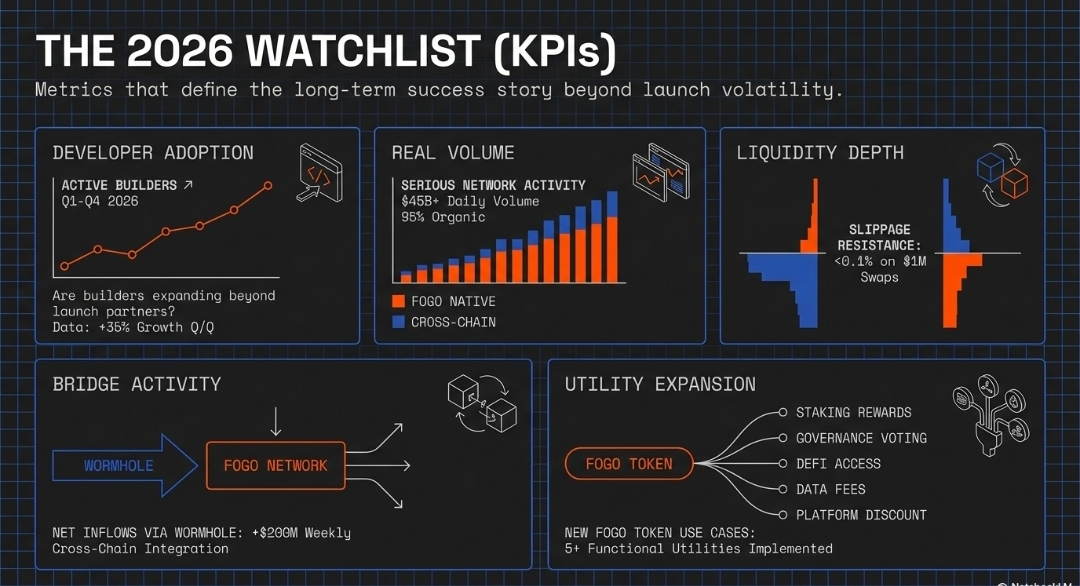
Here’s what I personally think we should keep an eye on this year:
Developer Adoption: Are projects beyond the initial few starting to build on Fogo?
Real Trading Volume: Are traders actually using the network for serious activity?
Liquidity Depth: Does the liquidity grow to support larger trades without slippage?
Cross-chain Activity: How active is the Wormhole bridge inflow of assets?
Token Utility Expansion: Are new use cases emerging for the FOGO token?
If all of these trends go in the right direction, we could be looking at a slow-burn success story where Fogo quietly becomes a backbone for performance-oriented DeFi. That’s the kind of narrative that doesn’t always explode overnight but builds real resilience over time.
Final Thoughts
Fogo is not trying to be a jack of all trades. It is trying to dominate in a very specialized niche, fast on-chain trading and financial applications with real performance that matches or exceeds expectations. Its focus on speed, structural design around Solana Virtual Machine compatibility, community first token distribution, and immediate ecosystem utility makes it one of the most interesting projects in 2026 so far.
This is not a pump story. This is a foundational infrastructure story. And if builders and traders decide to embrace it, we could witness something that shifts how on-chain finance works at scale.
I am personally excited to watch how Fogo evolves this year, and I think any serious community member should too.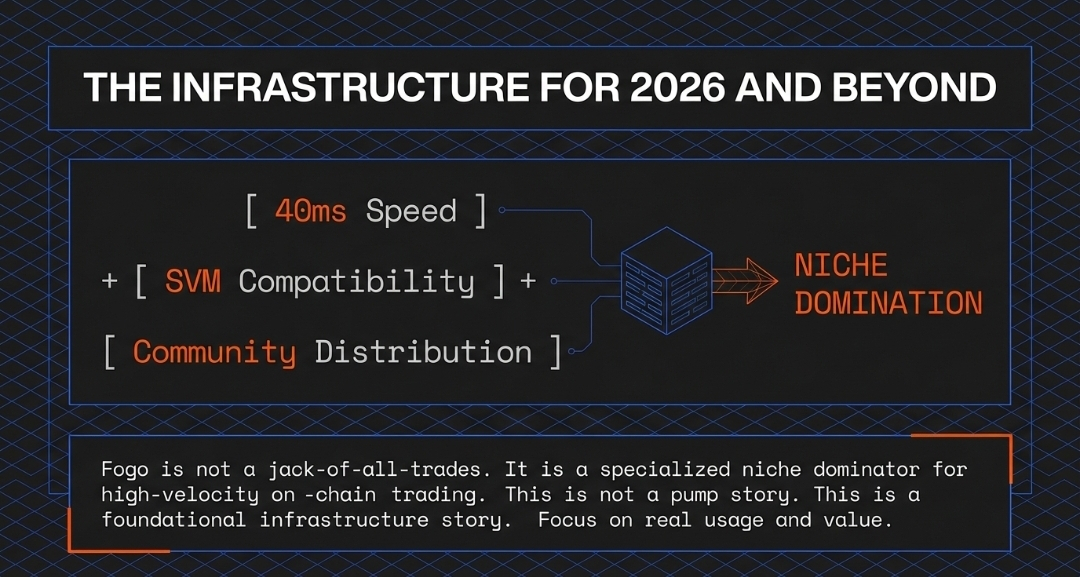
Stay tuned, stay informed, and most importantly, think beyond price. Focus on real usage and value. That’s where the real stories are written.


