

The decentralized finance revolution promised to democratize access to financial services and create seamless global capital markets operating without traditional intermediaries. Yet as DeFi evolved, a different reality emerged. Rather than creating unified financial infrastructure, the ecosystem fragmented into isolated islands where assets and opportunities remained trapped within individual blockchain networks. Users discovered that accessing the best yields, deepest liquidity, or most innovative protocols often meant navigating treacherous bridges that exposed funds to security risks while imposing significant time delays and costs. Plasma Protocol was conceived from the recognition that DeFi could only fulfill its transformative potential if someone built infrastructure enabling capital to flow freely across blockchain boundaries as easily as information flows across the internet.
The inspiration driving Plasma’s creation emerged from watching talented teams build innovative DeFi protocols on emerging blockchains while users remained anchored to established networks where their capital resided. This created a chicken-and-egg problem where new chains struggled to attract users without compelling applications, but applications couldn’t attract users without existing liquidity and adoption. Meanwhile, users on established chains watched opportunities pass by on other networks, frustrated by the complexity and risk of moving assets cross-chain to participate. The founding team recognized that solving this coordination problem required more than incremental improvements to existing bridge technology. It demanded fundamentally rethinking how value moves between independent blockchain systems.
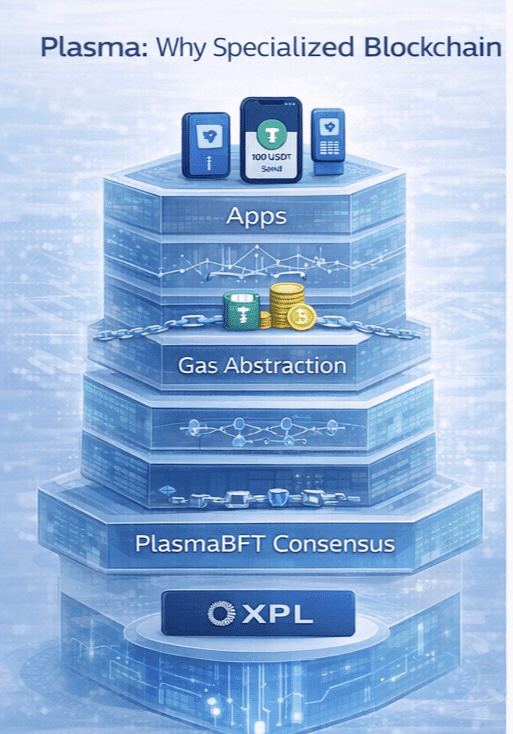
Early explorations focused on understanding why existing cross-chain solutions consistently disappointed users. Traditional bridges relied on centralized validator sets that became attractive targets for sophisticated attackers. Wrapped token implementations created additional layers of counterparty risk while fragmenting rather than unifying liquidity. Hash time-locked contracts provided trustless transfers but imposed poor user experiences and limited functionality. Each existing approach made unacceptable tradeoffs between security, speed, cost, and user experience. Plasma’s team concluded that properly solving cross-chain interaction required building entirely new infrastructure rather than patching fundamentally flawed architectural patterns.
Foundation Through Novel Architecture
The technical architecture Plasma developed represents a synthesis of insights from multiple failed cross-chain attempts combined with novel mechanisms addressing their shortcomings. At the protocol’s core sits a decentralized validator network responsible for monitoring state changes across supported blockchains and achieving consensus on cross-chain transactions. These validators must stake substantial XPL token quantities to participate, creating economic commitment that gets forfeited if they attest to fraudulent cross-chain messages or fail to maintain operational standards. This stake-based security model creates incentive alignment without requiring users to trust validator honesty or reputation.
The protocol leverages optimistic assumptions to achieve superior performance compared to fully verified cross-chain messaging. Transactions are assumed valid unless explicitly challenged within designated dispute windows. This optimistic approach enables near-instant cross-chain transfers for the vast majority of legitimate transactions while maintaining security through economic challenge mechanisms. Anyone can challenge suspicious transactions by posting challenge bonds. If challenges prove valid, dishonest validators forfeit stakes that get distributed to successful challengers. This economic design creates distributed monitoring where profit-seeking actors actively watch for protocol violations without requiring centralized oversight.
Liquidity architecture represents perhaps Plasma’s most significant innovation compared to traditional bridge designs. Rather than locking assets in custodial smart contracts that create security vulnerabilities, Plasma maintains decentralized liquidity pools on each supported blockchain. Users wanting to transfer value cross-chain actually execute swaps with these distributed pools rather than minting wrapped representations of locked assets. This architectural choice eliminates the custody risks that have led to catastrophic bridge exploits while simultaneously enabling faster transfers. The liquidity pools automatically rebalance through arbitrage incentives, ensuring capital distributes efficiently across chains without centralized coordination or manual intervention.
The swap-based transfer mechanism provides additional benefits beyond security improvements. Users receive native assets on destination chains rather than wrapped tokens requiring trust in bridge operators or additional unwrapping steps. This creates superior user experiences while avoiding the liquidity fragmentation that wrapped tokens introduce. When users receive native USDC on Arbitrum rather than wrapped bridged USDC, they can immediately interact with protocols without additional conversion steps or accepting counterparty risk from bridge operators.
Economic Design Enabling Sustainable Operations
The XPL token serves multiple interconnected roles within Plasma’s ecosystem, creating utility mechanisms that extend well beyond speculative value. Validator participation requires staking significant XPL quantities proportional to the value being validated, ensuring security scales with network usage. As transaction volumes and values increase, more validators join to handle additional throughput while staking progressively more XPL. This removes tokens from circulation precisely as network activity grows, creating supply constraints that theoretically support long-term value appreciation through basic supply-demand dynamics.
Fee revenue from cross-chain transactions gets distributed between validators securing the network and liquidity providers supplying capital to pools. This dual revenue stream attracts both security providers and capital providers essential for protocol operation. The fee structure balances multiple competing objectives simultaneously. Fees must remain competitive with alternative cross-chain solutions to attract user adoption while generating sufficient revenue to adequately compensate validators and liquidity providers for their capital commitment and operational costs. If Plasma becomes a primary mechanism for cross-chain value transfer, aggregate fee volumes could become substantial even with individually modest per-transaction fees.
Governance mechanisms embedded in XPL holdings enable token holders to participate in protocol evolution decisions. These include adjusting economic parameters like fee rates or staking requirements, adding support for additional blockchain networks as they mature and attract users, modifying security parameters in response to emerging threats, and allocating treasury resources toward development priorities. For cross-chain protocols operating across multiple independent blockchain ecosystems, governance becomes particularly complex because decisions must balance interests across different communities with potentially conflicting preferences.
The token distribution and emission schedule reflects long-term thinking about sustainable protocol development. Team and investor allocations vest gradually to prevent concentrated selling pressure while aligning long-term interests. Token emissions reward ongoing network participation rather than front-loading distribution to early participants. Treasury allocations fund continuous development, comprehensive security auditing, and ecosystem growth initiatives. These economic design choices demonstrate understanding that infrastructure protocols require patient capital and sustained development over years rather than optimizing for short-term token price appreciation.
Expanding Connectivity Across Blockchain Ecosystems
Plasma’s strategy for blockchain integration prioritizes networks where substantial DeFi activity already exists and user demand for cross-chain interaction is demonstrably strong. Ethereum support remains foundational given its continued dominance in total value locked, diversity of established protocols, and network effects as the primary DeFi hub. Layer-two scaling solutions have become increasingly important integration targets because they offer dramatically better economics while maintaining strong security connections to Ethereum. Alternative layer-one blockchains with significant DeFi ecosystems represent natural expansion opportunities where users frequently want to move capital between these networks and Ethereum-based alternatives.
Each new blockchain integration requires substantial engineering investment beyond simply deploying smart contracts. Teams must develop intimate understanding of each chain’s consensus mechanism, finality characteristics, fee markets, and operational peculiarities. Validator infrastructure requires optimization to efficiently monitor additional chains without excessive cost or complexity. Liquidity pools need careful calibration to function effectively within each chain’s distinct economic environment. Comprehensive testing becomes absolutely critical because cross-chain protocol bugs can enable catastrophic exploits draining user funds and permanently destroying trust.
We’re seeing Plasma take deliberately methodical approaches to chain integration, prioritizing thorough security validation and operational reliability over expansion speed. This conservative approach may seem slow compared to competitors rushing to support dozens of chains, but it reflects hard-learned lessons from bridge exploits that cost users billions. Each integration undergoes extensive internal testing, external security audits, and gradual rollout with initially conservative limits before scaling to handle larger values. This patience prioritizes user fund safety over growth metrics that might look impressive but expose users to unacceptable risks.
Transformative Applications Across DeFi
Cross-chain yield aggregation represents one of the most immediately valuable applications enabled by Plasma’s infrastructure. DeFi yields fluctuate dramatically across chains as incentive programs launch and expire, market conditions shift, and capital flows move between ecosystems. Sophisticated yield strategies want to access optimal risk-adjusted returns wherever they appear without being constrained by which chain currently holds their capital. Plasma enables automated strategies that continuously rebalance across chains to capture best yields, something previously impractical due to bridge friction, costs, and security concerns.
Arbitrage trading across fragmented markets becomes significantly more accessible through Plasma’s fast and economical cross-chain transfers. Price discrepancies for identical or economically equivalent assets across different chains create arbitrage opportunities for traders who can exploit them before markets equilibrate. Traditional bridges impose delays and costs that eliminate most arbitrage profits by the time transfers complete. Plasma’s near-instant transfers at minimal cost allow arbitrageurs to capture these opportunities profitably, which simultaneously generates protocol fee revenue while improving market efficiency by keeping prices aligned across fragmented liquidity pools.
Decentralized exchange aggregators can leverage Plasma to source liquidity across multiple chains transparently from user perspectives. Traders wanting optimal execution for specific pairs often find best liquidity concentrated on particular chains due to market maker incentives or protocol designs. Without efficient cross-chain infrastructure, they must manually bridge assets before trading, adding complexity and cost. Plasma enables aggregators to present unified liquidity across chains, automatically routing trades wherever execution is optimal while handling cross-chain transfers seamlessly behind the scenes.
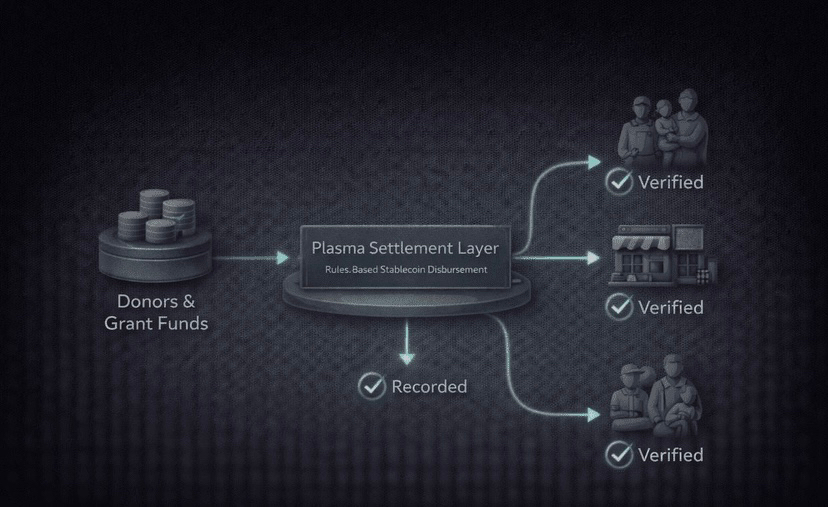
Cross-chain lending protocols can utilize Plasma infrastructure to enable scenarios where collateral on one chain secures borrowing on another offering superior rates or different asset availability. This capital efficiency improvement becomes possible because Plasma provides reliable cross-chain messaging and liquidity coordination needed to manage positions across chains securely. Users can optimize lending and borrowing strategies based purely on economic factors rather than being artificially constrained by where their collateral happens to reside.
Comprehensive Security Architecture
Security considerations dominate every architectural decision because cross-chain protocols represent extremely high-value targets for sophisticated attackers. Plasma implements layered security through multiple complementary mechanisms operating simultaneously. The validator network provides foundational security through economic stake requirements making attacks economically irrational. Validators must post collateral exceeding potential gains from fraudulent attestations, creating negative expected value for dishonest behavior. Optimistic verification with dispute periods creates additional security by allowing anyone to identify and challenge fraudulent transactions before they finalize irreversibly.
Smart contract security receives extraordinary attention through multiple independent audits from leading security firms. Each audit brings different methodologies and perspectives, increasing likelihood of identifying potential vulnerabilities before deployment. Bug bounty programs incentivize white-hat security researchers to discover and responsibly disclose vulnerabilities by offering substantial rewards proportional to severity. This harnesses distributed security expertise beyond what any single team could maintain internally.
Automated monitoring systems continuously analyze network activity for suspicious patterns that might indicate ongoing attacks or system malfunctions. Circuit breakers can automatically pause protocol operations if anomalous activity exceeds defined thresholds, preventing catastrophic losses during active exploits. While circuit breakers risk temporary service disruption, they provide critical defense against sophisticated attacks that might otherwise drain protocol liquidity before manual intervention becomes possible. The design philosophy explicitly prioritizes fund security over continuous availability given the severe and irreversible consequences of security failures.
Building Engaged Communities
Long-term protocol success depends on cultivating engaged communities across multiple stakeholder groups with different interests and needs. Developers require comprehensive documentation explaining integration patterns, software development kits simplifying implementation, working code examples demonstrating common use cases, and responsive technical support when facing integration challenges. Quality developer experience directly impacts how many applications integrate Plasma, which drives user adoption and transaction volume generating sustainable protocol revenue.
Liquidity providers need transparent analytics showing pool performance, fee generation, impermanent loss dynamics, and risk-adjusted returns to make informed capital allocation decisions. Educational content helps liquidity providers understand how Plasma pools differ from traditional automated market makers and why these differences create different risk-return profiles. Clear communication about pool economics, rebalancing mechanisms, and fee structures builds confidence that attracts capital necessary for protocol operation.
Users need assurance that Plasma represents genuine improvement over existing cross-chain solutions that have repeatedly failed them through security exploits or poor experiences. Educational content explaining architectural differences, security mechanisms, and practical benefits helps users understand why Plasma deserves trust despite justified skepticism toward cross-chain protocols generally. Transparent communication about security practices, audit results, and operational metrics builds credibility within communities that have learned to be extremely cautious.
Strategic Market Positioning
The cross-chain infrastructure landscape includes numerous competing protocols representing different architectural philosophies and tradeoff decisions. Traditional bridges often prioritize broad chain support and implementation simplicity while accepting centralized trust assumptions. Next-generation messaging protocols achieve stronger security through cryptographic verification but may sacrifice throughput or impose higher costs. Liquidity network approaches similar to Plasma’s design are emerging from multiple teams recognizing advantages of pool-based architectures.
If it becomes industry standard that DeFi users expect seamless cross-chain interaction without compromising security or accepting unreasonable costs, protocols successfully delivering on these expectations will capture disproportionate value. Plasma positions itself to benefit from this potential future by focusing relentlessly on the core value proposition of secure, fast, and affordable cross-chain transfers rather than attempting to be everything to everyone. This strategic focus enables deeper optimization for specific use cases compared to generalist approaches trying to serve all possible cross-chain scenarios.
Network effects create winner-take-most potential in cross-chain infrastructure markets. Deeper liquidity creates better pricing and lower slippage, attracting more users, which attracts more liquidity providers seeking fee revenue. Developers preferentially integrate protocols their users already trust and use. These positive feedback loops can accelerate growth once critical mass is achieved, though they make early stages challenging when liquidity remains limited and awareness is low.
The Road Ahead
Looking years forward, Plasma’s evolution depends partially on broader trends in blockchain ecosystem development. Continued fragmentation across multiple significant chains increases demand for cross-chain infrastructure making chain boundaries less relevant to users. Alternatively, consolidation toward fewer dominant ecosystems might reduce addressable market for cross-chain protocols. Plasma must execute excellently regardless while hoping market structure evolves favorably.
I’m convinced that seamless cross-chain interaction becomes progressively essential as DeFi matures beyond early adopters toward mainstream financial infrastructure. Current fragmentation where users manually manage positions across chains with separate wallets represents an unsustainable early phase. Either infrastructure successfully abstracts complexity making chain boundaries invisible, or frustration drives consolidation into fewer ecosystems. Plasma is building for futures where multi-chain ecosystems persist because infrastructure makes managing complexity effortless. The protocols that successfully balance security, performance, and user experience while building sustainable business models through fair value capture will likely dominate that future. That’s precisely the opportunity Plasma is pursuing across the evolving landscape of decentralized finance, one cross-chain transfer at a time.

