

 Withdrawal Risk
Proof-of-stake (PoS) underlies Ethereum’s consensus mechanism. Ethereum switched on its proof-of-stake mechanism in 2022 because it is more secure, less energy-intensive, and better for implementing new scaling solutions to the previous proof-of-work architecture.
Fyi: Ethereum is scheduled for its next upgrade on September 2023. The ETH roadmap involves interconnected protocol upgrades that will make the network more scalable, more secure, and more sustainable. This upgrade could make or break the network. Although this upgrade could be pushed back based on disagreements from the core developers, that the project could be moving too quickly.
Once the merge was made, the merge itself did not allow validators to withdraw their staked eth not only that but they could not withdraw any staking rewards either.

Now one of the big concerns around the upgrade, means that all the eth that had been locked up will hit the market, since the staking smart contract launched in December 20220, $16 million eth worth over $25 billion dollars has been deposited into it. This could mean that there are a lot of early stakers that might want to take a profit. Some could even be facing financial difficulty (i.e. FTX) and as we know the worst kind of seller is a forced seller.
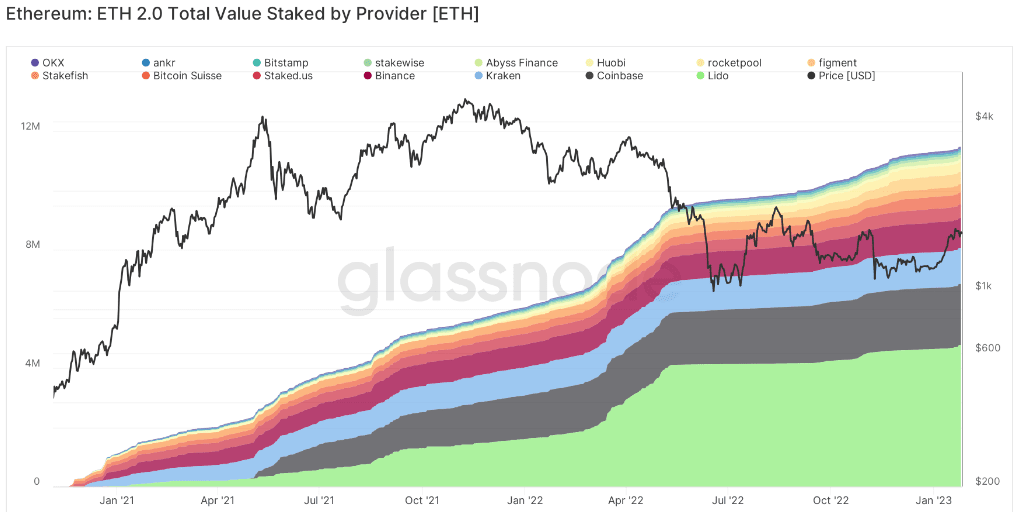 Will This Crash ETH’s Price
I don’t think this will happen because not everyone will be able to withdraw their initial staked eth immediately. This is a misconception that the devs have addressed in the FAQ section of the merge.
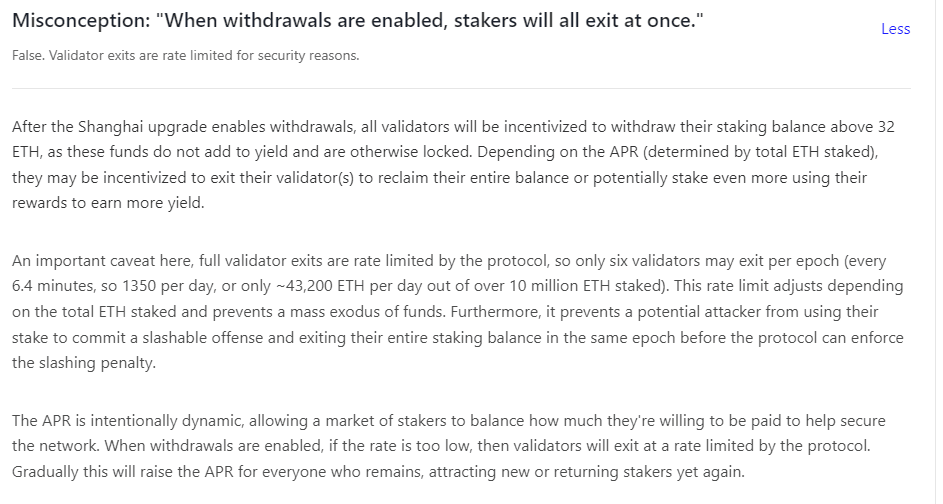
There are two types of withdrawal requests:
Partial withdrawal: The overview of this withdrawal is that one can withdraw the interest incurred on the staked eth but not the initial deposit (principal).

2. Full withdrawals: See validators withdrawing all of the eth they’ve put up in the staking contract. Plus the rewards that have been accrued. The partial withdrawals will happen automatically assuming that the withdrawal credentials are set to 0x01 and point to a valid Ethereum address, the partial withdrawal will happen automatically.

These withdrawals will happen 1 sweep per week. These withdrawals are unlikely they will have a big impact on the markets. These withdrawals have been designed so as not to place too much of a burden on the network.

Most people are worried about the full validator exists as well. This will be rate limited by the protocol so that there isn’t too much of a validator set before the APR can adjust.

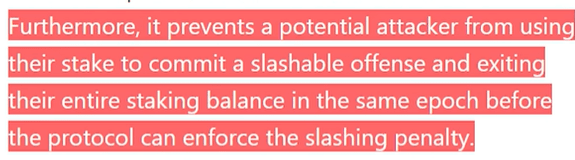
This also prevents potential attackers from using their stake to commit a slashable offense.
There is a max selling pressure that eth could endure per day is an $80 million exit per day. Since there is an:
Epoch = 6.4 minutes
Max Validators Exits = 1,575
1,575 * 32 = 50,400
50,400 * $1,600 = $80m
Assuming a price of $1,600 per eth.
Also assuming that all the validators want to dump all their eth on one exchange at the same time then this could theoretically lead to a falling price. These two assumptions are very unlikely. Also assuming that no one is going to use OTC trades which anyone with significant size will want to do because of the market impact. Also that all this won’t be met with equal or even greater buying pressure.
Institutional Buying
When validators exit, APR percentages on ETH increase enticing some validators to stay and deposit into staking contracts.
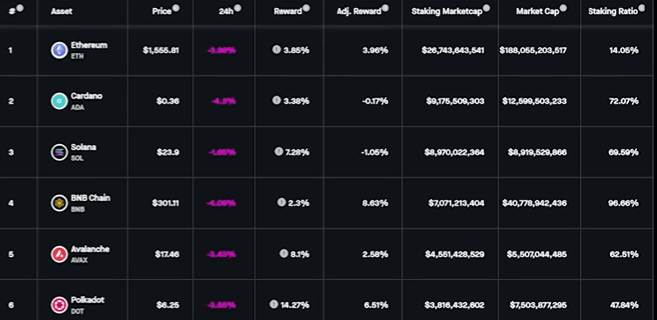
There is also the argument that there have been a lot of users sitting on the sidelines because if you compare staking rations to those of others it is much lower it’s sitting at 14% compared to other protocols. This means that after the next upgrade, this could give confidence to all the other users to finally start staking their eth. Now they will be able to withdrawal without the uncertainty of having their eth locked up.
There potentially are a lot of institutions waiting on the sidelines that are waiting just at the right time to give them to confidence to start deploying their capital. Now they have even more reasons to be able to deploy the capital given that eth is more environmentally friendly because it is using 99.5% less energy and adding to the ESG investment thesis. Which is why many institutions have been sitting in the sidelines.
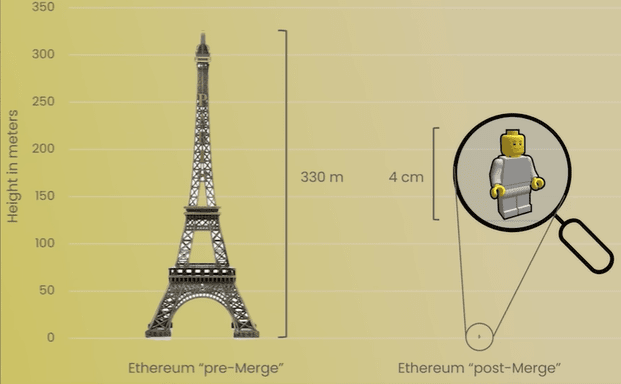
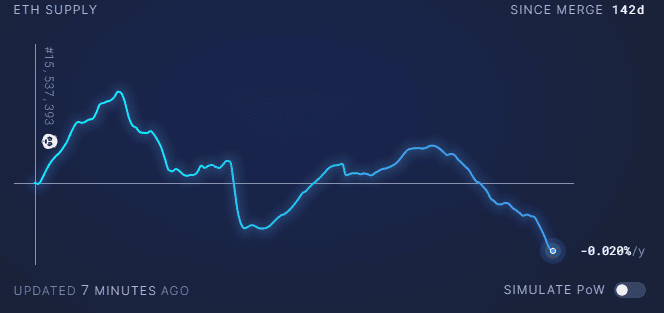
Another reason that eth is an attractive asset is because of its updated monetary economics. Eth has been deflationary thanks to EIP 1559 which introduced base fee burns to Ethereum.
As of now, there is a sustained deflation of about -0.020 per year. I.E te supply is shrinking at annual rate of 0.20 basis points.
For context, bitcoin is averaging around 1.78% this will trend toward zero over time but it will never go deflationary.
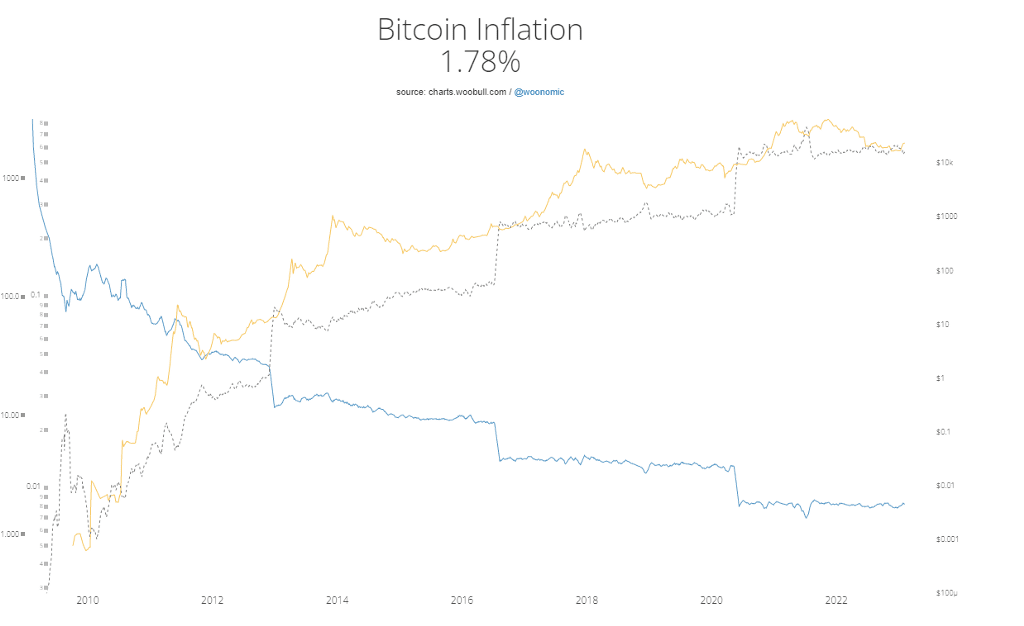
This is different from ETH’s current monetary dynamic Amex, this is important because of the fundamentals of supply and demand. If there is less of a valuable asset to go around then the price is likely to adjust upward if demand stays the same or increases.
As of now, there are no monetary assets that currently exist that are deflationary that’s why many people call ETH Ultrasound money.
A higher staking percentage means a higher issuance while a higher base gase fee means a higher burn. Pretty much more network demand -> higher base fee -> higher burn.
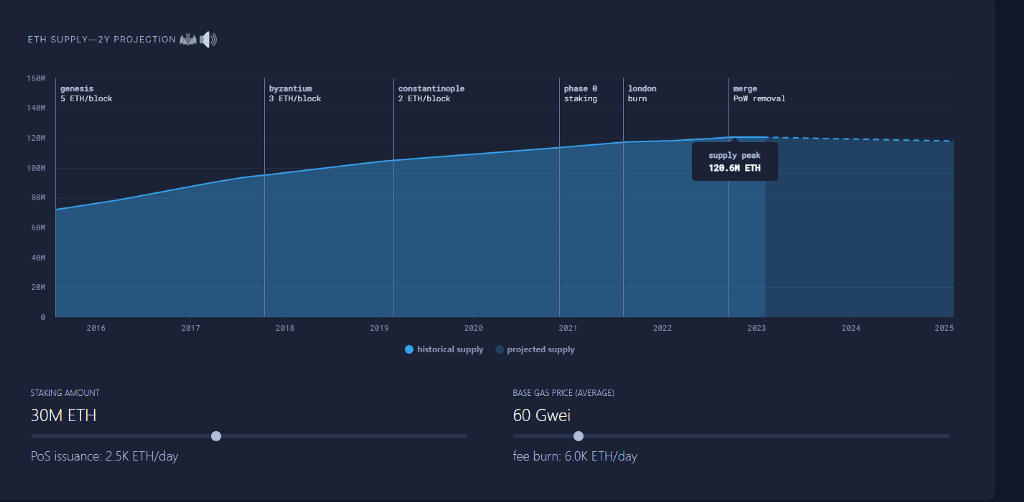
If you do believe that ETH will continue to expand over the coming years then you can also assume the burn rate will pick up as well. I do believe ETH will continue to expand.
This is not financial advise and is meant to be used for informational use only.
Ethereum Predictions & Risk was originally published in CryptoStars on Medium, where people are continuing the conversation by highlighting and responding to this story.