

Satoshi Pupil
574 Publicações

Satoshi Pupil
Denunciar
Bloquear Utilizador
#binance
Trader Frequente
4 ano(s)
24 A seguir
63 Seguidores
613 Gostaram
Publicações
Tudo
Cotações
Vídeos

Artigo
Quase US$ 150 milhões em liquidações em duas horas: por que o Bitcoin corre o risco de cair ainda maisO Bitcoin caiu para a faixa dos US$ 79.600 e tenta se manter acima da marca psicológica de US$ 80.000. É o que informa o Cointelegraph. O mercado cripto está sob pressão devido às preocupações com os próximos passos da política monetária do Federal Reserve dos EUA, às vendas nos mercados de ações e ao fechamento forçado de posições de traders.
O Bitcoin entrou na última semana do mês sob a pressão de vários fatores: as expectativas em relação à decisão do Fed, os resultados financeiros das grandes empresas de tecnologia e novos dados macroeconômicos dos EUA.
Quase US$ 150 milhões em liquidações em duas horas: por que o Bitcoin corre o risco de cair ainda mais
O Bitcoin caiu para a faixa dos US$ 79.600 e tenta se manter acima da marca psicológica de US$ 80.000. É o que informa o Cointelegraph. O mercado cripto está sob pressão devido às preocupações com os próximos passos da política monetária do Federal Reserve dos EUA, às vendas nos mercados de ações e ao fechamento forçado de posições de traders.
O Bitcoin entrou na última semana do mês sob a pressão de vários fatores: as expectativas em relação à decisão do Fed, os resultados financeiros das grandes empresas de tecnologia e novos dados macroeconômicos dos EUA.
O Bitcoin entrou na última semana do mês sob a pressão de vários fatores: as expectativas em relação à decisão do Fed, os resultados financeiros das grandes empresas de tecnologia e novos dados macroeconômicos dos EUA.
75

Artigo
Ver tradução
A Step Toward Solving a Millennium Problem: OpenAI Announces Three New AI Scientific BreakthroughsLess than a month after releasing hundreds of solutions to long-standing mathematical problems, OpenAI has announced three new breakthroughs achieved by its artificial intelligence in the fields of mathematics, computer science, and physics. These include the proof of mathematical conjectures, the disproof of the exponential time hypothesis, and discoveries related to quantum field theory. The company has already engaged external experts to verify these results, interpret them, and assess their implications for science.
A distinct publication approach was adopted for each study. Some materials have already been made publicly available, while groups of scientists have been assembled to verify others.
Proving Conjectures Across All Dimensions
The first result concerns harmonic analysis—a branch of mathematics that, among other things, studies the behavior of waves. In 1991, mathematician Christopher Sogge formulated the "local smoothing conjecture," which describes patterns in wave focusing and predicts that the most extreme instances of such focusing must be short-lived.
The concept suggests that, in the worst-case scenario, a wave can focus much more intensely than it would at a typical moment in time. This conjecture carries broader implications for mathematical analysis; specifically, it is linked to the Kakeya conjecture and the Stein restriction conjecture. Prior to this, the local smoothing conjecture had been proven for two spatial dimensions in 2019, and the Kakeya conjecture for three dimensions in 2025. According to a statement from OpenAI, its models have proven the local smoothing conjecture, the Kakeya conjecture, and the Stein restriction conjecture for all dimensions. The new proof relies on an auxiliary partial differential equation.
The company achieved this result on October 18, 2026, and the following day formalized the proof using Lean—a system for verifying mathematical proofs. OpenAI has published a description of the result and the formalized proof in a public GitHub repository.
AI Refutes the Exponential Time Hypothesis
A second result concerns the Exponential Time Hypothesis (ETH), which describes the expected complexity of solving the Boolean satisfiability problem. This problem involves determining whether there exists an assignment of variable values that makes a given logical formula true.
ETH is widely used in theoretical computer science to evaluate the complexity of algorithms. It is also linked to the P versus NP question—one of the most famous unsolved problems in theoretical computer science, which concerns the relationship between problems whose solutions can be verified quickly and problems that can be solved quickly.
OpenAI claims that its system has refuted the ETH, and the result was subsequently verified using Lean. The hypothesis has been used in hundreds of scientific papers, including research in graph theory, computational biology, and database systems.
If the refutation is confirmed by independent researchers, it could reshape our understanding of the complexity of many computational problems and aid in the search for faster algorithms. At the same time, the practical application of this result will require further research. The verification process will be coordinated by experts in computational complexity theory: Russell Impagliazzo and Ramamohan Paturi from the University of California, San Diego, as well as Ryan Williams from the Massachusetts Institute of Technology.
At the request of this group, OpenAI has released raw data and proofs, allowing scientists to independently verify the claim. The company has also agreed to fund a conference dedicated to discussing the result and its potential implications.
Proofs for Quantum Field Theory
The third result concerns quantum field theory—the mathematical foundation of modern theoretical physics. OpenAI states that its models have generated proofs for the existence of certain interacting quantum field theories in four dimensions, specifically those related to quantum chromodynamics (QCD) and the Standard Model of particle physics.
Quantum chromodynamics describes the strong interaction that binds quarks and gluons together. The work also covers pure Yang-Mills theory, the existence of which is linked to one of the Clay Mathematics Institute’s Millennium Prize Problems—a challenge with a one-million-dollar reward for its solution.
The results will be verified by a group led by physicist David Gross, with the participation of Michael Douglas, Arthur Jaffe, Igor Klebanov, and Nikita Nekrasov. The team members have extensive research experience in mathematical physics and Yang-Mills theory.
You might be interested in: OpenAI claims to have solved a problem with a million-dollar prize attached.
OpenAI’s models generated a proof for the existence of Yang-Mills theory in natural language on September 9, 2026, followed by a proof for QCD on September 18. The company delayed the release of these findings to complete their formalization; the proof for the existence of Yang-Mills theory was verified using Lean on October 16.
Unlike the other two research tracks, the physics group decided not to release the AI-generated materials directly, opting instead to prepare their own presentation of the results. Their conclusions are expected to help assess whether these findings can contribute to making quantum field theory more mathematically rigorous.
OpenAI will fund further research
The company stated that it would support scientists who verify, explain, and build upon results generated by AI. This new collaboration program complements OpenAI’s previously announced $5 million contribution to the Simons Foundation.
You might be interested in: The price of a breakthrough is $2,000: a new model from OpenAI has solved 10 problems that had stumped scientists for decades.
The Simons Foundation will independently manage the funding, directing it toward seminars, conferences, and specialized programs for researchers. The goal is to provide scientists with the resources to independently examine, explain, and further develop these findings.
OpenAI notes that it will continue to gather feedback from the academic community regarding how AI-generated results are disclosed. The company also acknowledges that involving a limited number of initial curators could influence who gains early access to the research, potentially creating disparities in access to information.
Therefore, a key objective moving forward is to broaden the participation of scientists and find ways to make the process of verifying and interpreting results more open. The significance of these findings for mathematics, computer science, and physics will depend on the extent to which researchers can independently verify the claims.
Last month, OpenAI established a Mathematics and AI Advisory Group at the Institute for Advanced Study (IAS). A group of nine scientists operates autonomously and without funding from OpenAI to independently assess the academic significance of discoveries, develop recommendations for the safe release of findings, and determine the impact of AI systems on the development of fundamental mathematics.
A Step Toward Solving a Millennium Problem: OpenAI Announces Three New AI Scientific Breakthroughs
Less than a month after releasing hundreds of solutions to long-standing mathematical problems, OpenAI has announced three new breakthroughs achieved by its artificial intelligence in the fields of mathematics, computer science, and physics. These include the proof of mathematical conjectures, the disproof of the exponential time hypothesis, and discoveries related to quantum field theory. The company has already engaged external experts to verify these results, interpret them, and assess their implications for science.
A distinct publication approach was adopted for each study. Some materials have already been made publicly available, while groups of scientists have been assembled to verify others.
Proving Conjectures Across All Dimensions
The first result concerns harmonic analysis—a branch of mathematics that, among other things, studies the behavior of waves. In 1991, mathematician Christopher Sogge formulated the "local smoothing conjecture," which describes patterns in wave focusing and predicts that the most extreme instances of such focusing must be short-lived.
The concept suggests that, in the worst-case scenario, a wave can focus much more intensely than it would at a typical moment in time. This conjecture carries broader implications for mathematical analysis; specifically, it is linked to the Kakeya conjecture and the Stein restriction conjecture. Prior to this, the local smoothing conjecture had been proven for two spatial dimensions in 2019, and the Kakeya conjecture for three dimensions in 2025. According to a statement from OpenAI, its models have proven the local smoothing conjecture, the Kakeya conjecture, and the Stein restriction conjecture for all dimensions. The new proof relies on an auxiliary partial differential equation.
The company achieved this result on October 18, 2026, and the following day formalized the proof using Lean—a system for verifying mathematical proofs. OpenAI has published a description of the result and the formalized proof in a public GitHub repository.
AI Refutes the Exponential Time Hypothesis
A second result concerns the Exponential Time Hypothesis (ETH), which describes the expected complexity of solving the Boolean satisfiability problem. This problem involves determining whether there exists an assignment of variable values that makes a given logical formula true.
ETH is widely used in theoretical computer science to evaluate the complexity of algorithms. It is also linked to the P versus NP question—one of the most famous unsolved problems in theoretical computer science, which concerns the relationship between problems whose solutions can be verified quickly and problems that can be solved quickly.
OpenAI claims that its system has refuted the ETH, and the result was subsequently verified using Lean. The hypothesis has been used in hundreds of scientific papers, including research in graph theory, computational biology, and database systems.
If the refutation is confirmed by independent researchers, it could reshape our understanding of the complexity of many computational problems and aid in the search for faster algorithms. At the same time, the practical application of this result will require further research. The verification process will be coordinated by experts in computational complexity theory: Russell Impagliazzo and Ramamohan Paturi from the University of California, San Diego, as well as Ryan Williams from the Massachusetts Institute of Technology.
At the request of this group, OpenAI has released raw data and proofs, allowing scientists to independently verify the claim. The company has also agreed to fund a conference dedicated to discussing the result and its potential implications.
Proofs for Quantum Field Theory
The third result concerns quantum field theory—the mathematical foundation of modern theoretical physics. OpenAI states that its models have generated proofs for the existence of certain interacting quantum field theories in four dimensions, specifically those related to quantum chromodynamics (QCD) and the Standard Model of particle physics.
Quantum chromodynamics describes the strong interaction that binds quarks and gluons together. The work also covers pure Yang-Mills theory, the existence of which is linked to one of the Clay Mathematics Institute’s Millennium Prize Problems—a challenge with a one-million-dollar reward for its solution.
The results will be verified by a group led by physicist David Gross, with the participation of Michael Douglas, Arthur Jaffe, Igor Klebanov, and Nikita Nekrasov. The team members have extensive research experience in mathematical physics and Yang-Mills theory.
You might be interested in: OpenAI claims to have solved a problem with a million-dollar prize attached.
OpenAI’s models generated a proof for the existence of Yang-Mills theory in natural language on September 9, 2026, followed by a proof for QCD on September 18. The company delayed the release of these findings to complete their formalization; the proof for the existence of Yang-Mills theory was verified using Lean on October 16.
Unlike the other two research tracks, the physics group decided not to release the AI-generated materials directly, opting instead to prepare their own presentation of the results. Their conclusions are expected to help assess whether these findings can contribute to making quantum field theory more mathematically rigorous.
OpenAI will fund further research
The company stated that it would support scientists who verify, explain, and build upon results generated by AI. This new collaboration program complements OpenAI’s previously announced $5 million contribution to the Simons Foundation.
You might be interested in: The price of a breakthrough is $2,000: a new model from OpenAI has solved 10 problems that had stumped scientists for decades.
The Simons Foundation will independently manage the funding, directing it toward seminars, conferences, and specialized programs for researchers. The goal is to provide scientists with the resources to independently examine, explain, and further develop these findings.
OpenAI notes that it will continue to gather feedback from the academic community regarding how AI-generated results are disclosed. The company also acknowledges that involving a limited number of initial curators could influence who gains early access to the research, potentially creating disparities in access to information.
Therefore, a key objective moving forward is to broaden the participation of scientists and find ways to make the process of verifying and interpreting results more open. The significance of these findings for mathematics, computer science, and physics will depend on the extent to which researchers can independently verify the claims.
Last month, OpenAI established a Mathematics and AI Advisory Group at the Institute for Advanced Study (IAS). A group of nine scientists operates autonomously and without funding from OpenAI to independently assess the academic significance of discoveries, develop recommendations for the safe release of findings, and determine the impact of AI systems on the development of fundamental mathematics.
36
Ver tradução
Bitcoin mining and AI compute infrastructure company Luxor Technology has raised $16 million in a strategic funding round led by CMT Digital.
Canaan, MicroBT, Halo, Steelhead, and undisclosed angel investors also participated. The round included primary and secondary capital. Luxor said it will use the funding for its AI cloud platform, hardware business, and compute derivatives products.
Canaan, MicroBT, Halo, Steelhead, and undisclosed angel investors also participated. The round included primary and secondary capital. Luxor said it will use the funding for its AI cloud platform, hardware business, and compute derivatives products.

2
2
Justin Sun acabou de fazer uma aposta enorme em PEPE?
De acordo com dados da Arkham Intelligence, Justin Sun possui cerca de 2,82% dos $PEPE tokens disponíveis, totalizando aproximadamente 11,85 trilhões de tokens, avaliados em cerca de US$ 51,25 milhões.
A maior parte desse montante chegou nos últimos dez dias, quando ocorreram duas grandes retiradas da Poloniex, em 17 e 26 de outubro.
Até meados de outubro, suas participações anteriores em PEPE eram avaliadas em cerca de US$ 267 mil.
Apenas #Binance , #Robinhood e #Coinbace possuem mais do que ele. Nenhum outro grupo de carteiras chega perto.
No entanto, há uma ressalva: a Poloniex está ligada à carteira de Sun, então algumas dessas transações podem ter sido internas, e não novas aquisições no mercado.
De qualquer forma, Sun definitivamente tem participação em PEPE agora.
1
35
Se você acha que é tarde demais para aprender sobre Bitcoin e comprá-lo, aqui estão 4 pontos que podem fazer você mudar de ideia:
• Muitas instituições de grande porte ainda restringem o acesso
• A legislação para garantir clareza regulatória ainda não foi aprovada
• Uma reserva estratégica ainda não fez nenhuma compra
• A maioria das empresas e nações ainda está à margem
• Muitas instituições de grande porte ainda restringem o acesso
• A legislação para garantir clareza regulatória ainda não foi aprovada
• Uma reserva estratégica ainda não fez nenhuma compra
• A maioria das empresas e nações ainda está à margem
1
Se você acha que é tarde demais para aprender sobre Bitcoin e comprá-lo, aqui estão 4 pontos que vão mudar sua opinião:
• Muitas grandes instituições ainda restringem o acesso
• A Lei da Clareza ainda não virou lei
• A reserva estratégica ainda não comprou nada
• A maioria das empresas e das nações ainda está fora do jogo
• Muitas grandes instituições ainda restringem o acesso
• A Lei da Clareza ainda não virou lei
• A reserva estratégica ainda não comprou nada
• A maioria das empresas e das nações ainda está fora do jogo
1
15
Ver tradução
The cryptocurrency exchange Binance has officially applied for a Virtual Asset Service Provider (VASP) license in Brazil. The application was submitted to the Central Bank of Brazil on October 23, 2026, through a local legal entity, BBrasil.
This move is driven by a strict regulatory deadline set for October 30, 2026. Under the new regulations, companies already operating in the market that fail to submit an application by this date will be required to cease all operations in the country within 90 days. Submitting the documentation allows Binance to continue its operations during the transition period while the regulator reviews the request.
As part of its adaptation to the Central Bank's new requirements, Binance has implemented significant restrictions for local users:
• Service limitations: Effective October 27, 2026, the exchange has suspended or restricted eight key services, including crypto lending, margin trading, mining pools, and cloud mining.
• Asset delisting: 22 cryptocurrencies (including USDE, USTC, DCR, and XVG) have been removed from the local platform.
• Account migration: By October 29, the company plans to complete the migration of Brazilian users to a local payment account structure to ensure compliance with domestic financial regulations. Binance’s General Manager in Brazil, Thiago Sarandi, stated that the company fully supports market regulation and hopes that continued dialogue with the Central Bank will allow for the return of some of the discontinued products in the future.
1
1
A Ripple recebe aprovação do OCC para lançar o Ripple National Trust Bank (RNTB), tornando-se uma instituição fiduciária constituída em âmbito federal nos EUA.
A Ripple recebe aprovação do OCC para lançar o Ripple National Trust Bank (RNTB), tornando-se uma instituição fiduciária constituída em âmbito federal nos EUA.
1
29
Ver tradução
BlackRock на 15 трильйонів доларів співпрацює з японськими SBI та Startale, щоб з’єднати токенізовані інвестиційні фонди зі стейблкоіном японської єни.
BlackRock на 15 трильйонів доларів співпрацює з японськими SBI та Startale, щоб з’єднати токенізовані інвестиційні фонди зі стейблкоіном японської єни.
1
10
Ver tradução
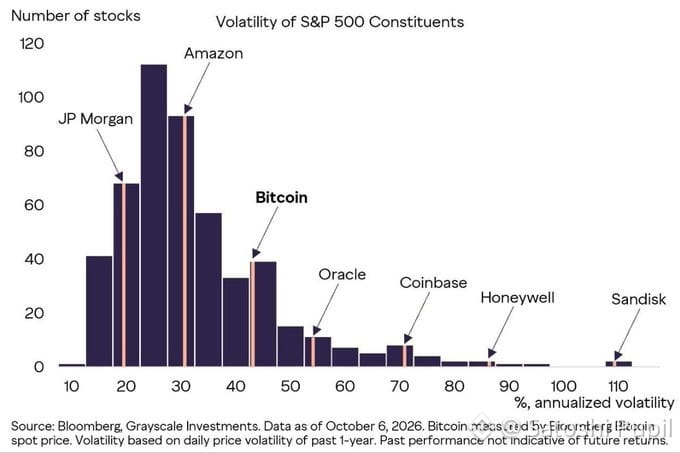
Біткоїн МЕНШ ВОЛАТИЛЬНИЙ, ніж Oracle, Coinbase, Honeywell та Sandisk, за даними Grayscale.
Річна реалізована волатильність біткоїна становила 43%, що нижче за його середній показник за останнє десятиліття у 64% та 81% зафіксований п’ять років тому.
Grayscale розміщує біткоїн нижче приблизно 19% акцій S&P 500 за цим показником, що є тихим нагадуванням про те, що деякі знайомі акції зазнали більших коливань цін, ніж BTC.
1
9
Ver tradução
Біткоїн МЕНШ ВОЛАТИЛЬНИЙ, ніж Oracle, Coinbase, Honeywell та Sandisk, за даними Grayscale.
Річна реалізована волатильність біткоїна становила 43%, що нижче за його середній показник за останнє десятиліття у 64% та 81% зафіксований п’ять років тому.
Grayscale розміщує біткоїн нижче приблизно 19% акцій S&P 500 за цим показником, що є тихим нагадуванням про те, що деякі знайомі акції зазнали більших коливань цін, ніж BTC.
Біткоїн МЕНШ ВОЛАТИЛЬНИЙ, ніж Oracle, Coinbase, Honeywell та Sandisk, за даними Grayscale.
Річна реалізована волатильність біткоїна становила 43%, що нижче за його середній показник за останнє десятиліття у 64% та 81% зафіксований п’ять років тому.
Grayscale розміщує біткоїн нижче приблизно 19% акцій S&P 500 за цим показником, що є тихим нагадуванням про те, що деякі знайомі акції зазнали більших коливань цін, ніж BTC.
Річна реалізована волатильність біткоїна становила 43%, що нижче за його середній показник за останнє десятиліття у 64% та 81% зафіксований п’ять років тому.
Grayscale розміщує біткоїн нижче приблизно 19% акцій S&P 500 за цим показником, що є тихим нагадуванням про те, що деякі знайомі акції зазнали більших коливань цін, ніж BTC.
1
4
Sentimento geral do mercado
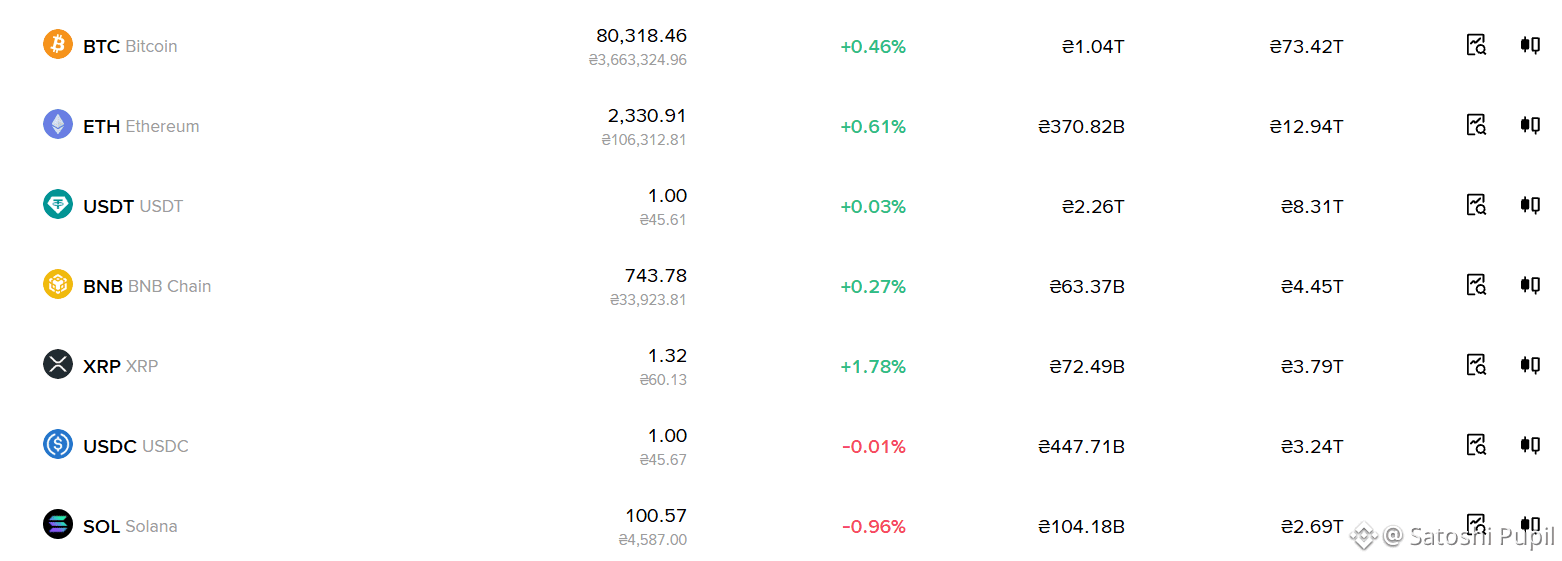
O mercado está passando por uma consolidação positiva moderada, com baixa volatilidade. A maioria dos principais ativos apresenta crescimento ligeiro, entre +0.27% e +1.78%, indicando uma fase de acumulação ou a expectativa do mercado por novos catalisadores (notícias macroeconômicas ou atualizações de rede).
Bitcoin: O ativo consolidou-se acima da marca psicológica de $80,000. A capitalização está em $1.04T, e o alto volume de negociação confirma uma demanda dominante e constante no mercado.
XRP: Líder em crescimento entre as principais altcoins (+1.78%), o token demonstra o maior impulso positivo entre os ativos apresentados, mantendo o preço em $1.32.
Ethereum e BNB: Apresentam uma dinâmica estável (+0.61% e +0.27%, respectivamente). O BNB está no nível elevado de $743.78.
Solana (-0.96%): O ativo com pior desempenho da sessão e a única altcoin importante da lista a apresentar uma ligeira correção local, mantendo-se próxima do nível de suporte de $100.00 ($100.57).
2
43
Sentimento geral do mercado
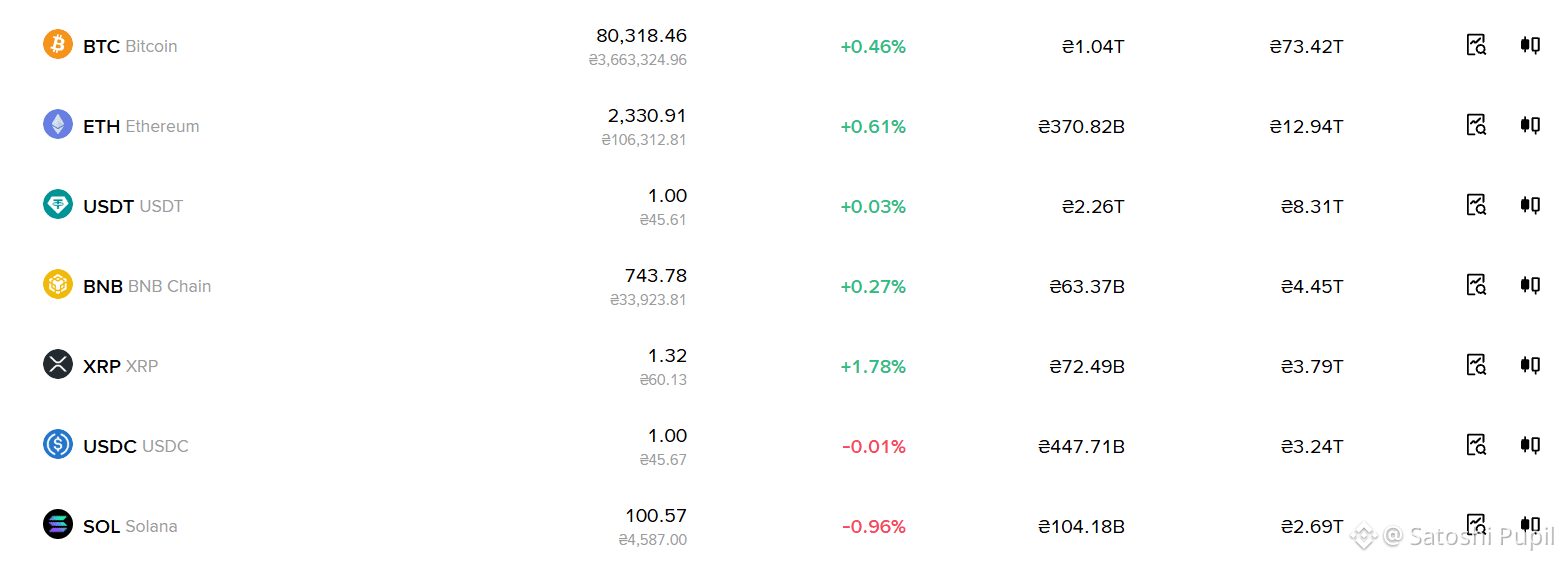
O mercado apresenta uma consolidação positiva moderada, com baixa volatilidade. A maioria dos principais ativos registra uma leve alta, entre +0.27% e +1.78%, indicando uma fase de acumulação ou de espera por novos catalisadores do mercado (notícias macroeconômicas ou atualizações das redes).
Bitcoin: O ativo se consolidou acima da marca psicológica de US$ 80,000. Sua capitalização é de US$ 1.04T, e o alto volume de negociação confirma uma demanda dominante e estável no mercado.
Líder de alta entre as principais altcoins — XRP (+1.78%): o token apresenta o desempenho positivo mais forte entre os ativos listados, mantendo o preço em US$ 1.32.
Ethereum e BNB: Apresentam um desempenho estável (+0.61% e +0.27%, respectivamente). O BNB está em um patamar elevado, a US$ 743.78.
Destaque negativo da sessão — Solana (-0.96%): é a única altcoin de grande porte da lista que registra uma leve correção local, oscilando perto do nível de suporte de US$ 100.00 (US$ 100.57).
3
57
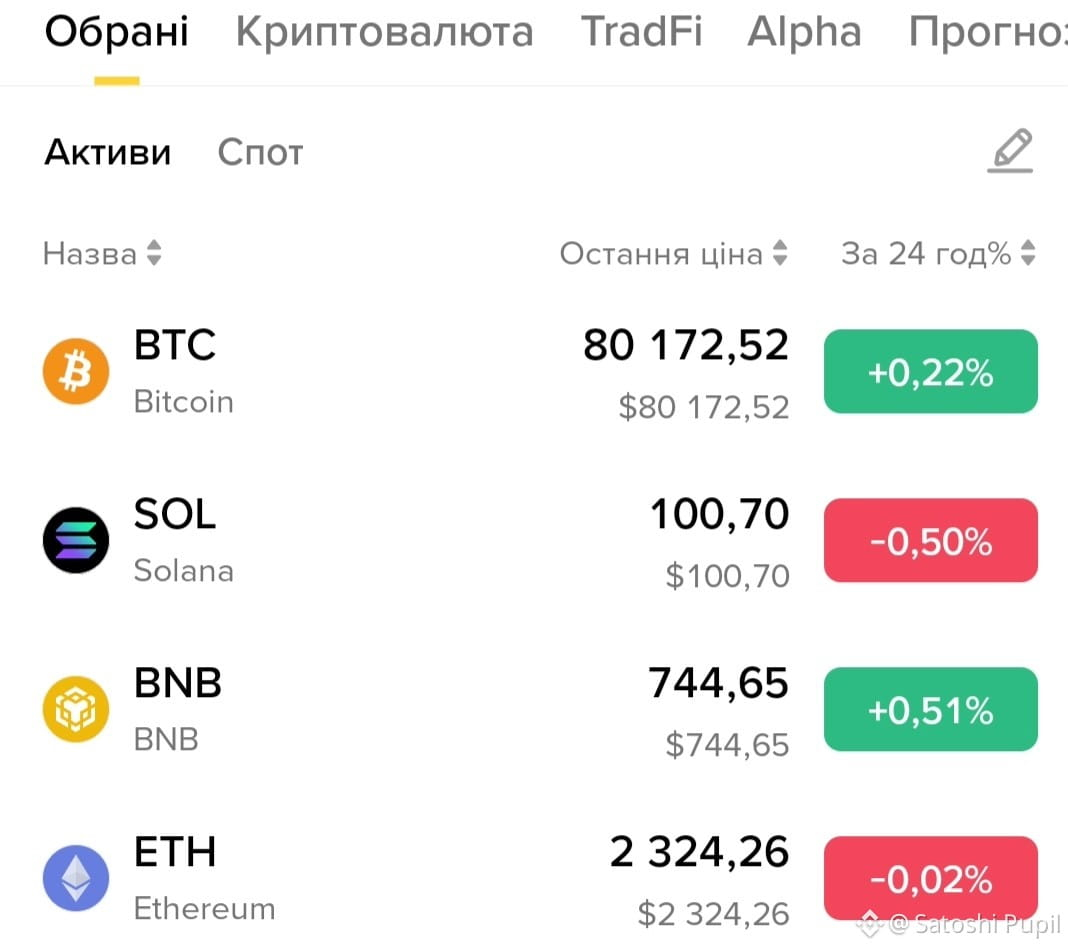

$BNB $SOL também caem, droga
{spot}(SOLUSDT)
{spot}(BNBUSDT)
$BNB $SOL também caem, droga

4
553
Bem, pelo menos, o mercado de ações subiu
Bem, pelo menos, o mercado de ações subiu
1
63
Ver tradução
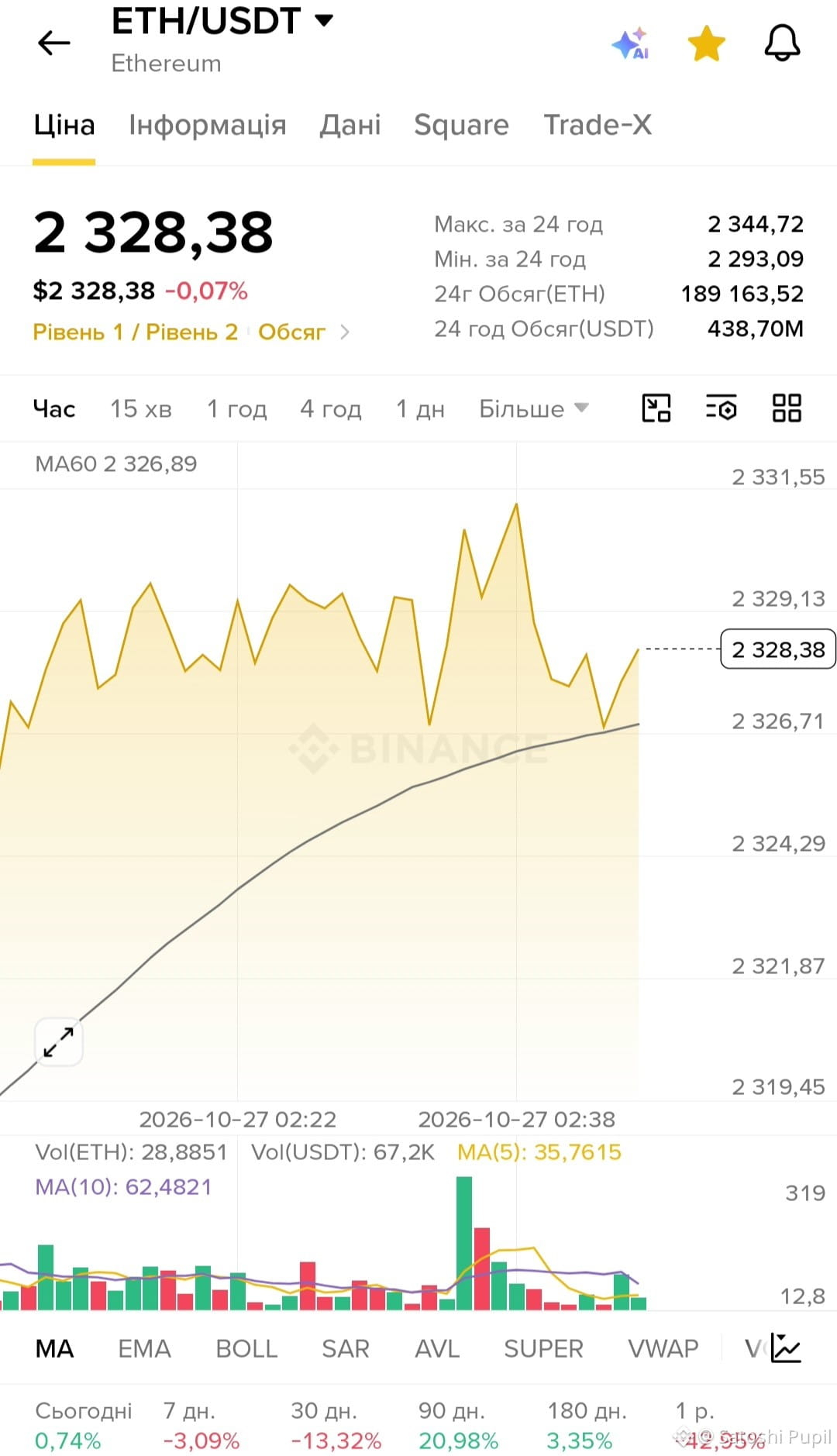
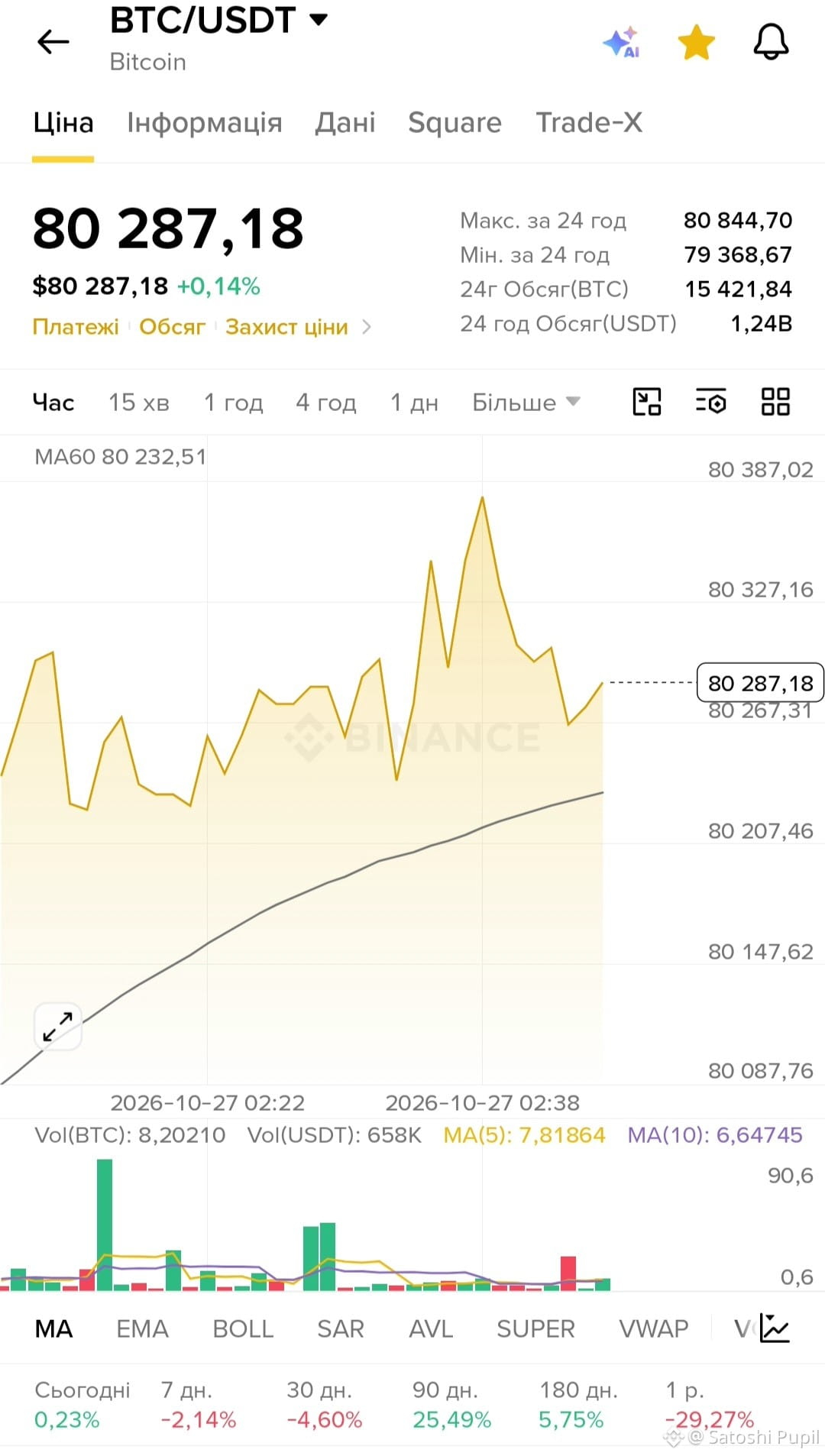
Bitcoin drops back below $80,000, while Ethereum falls below $2,300 as US and Israeli strikes on Iran increasingly appears to be a matter of “when,” NOT “if.”
Bitcoin drops back below $80,000, while Ethereum falls below $2,300 as US and Israeli strikes on Iran increasingly appears to be a matter of “when,” NOT “if.”
1
1
78
Ver tradução
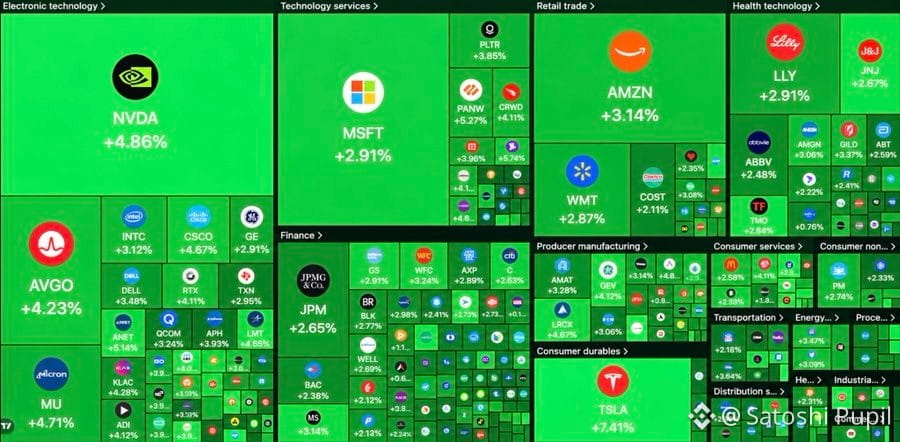
$550 BILLION has been added to the U.S. stock market in just ONE HOUR as Trump put attacks on Iran on hold.
The TACO trade is playing out perfectly AGAIN.
$550 BILLION has been added to the U.S. stock market in just ONE HOUR as Trump put attacks on Iran on hold.
The TACO trade is playing out perfectly AGAIN.
The TACO trade is playing out perfectly AGAIN.
4
Ver tradução
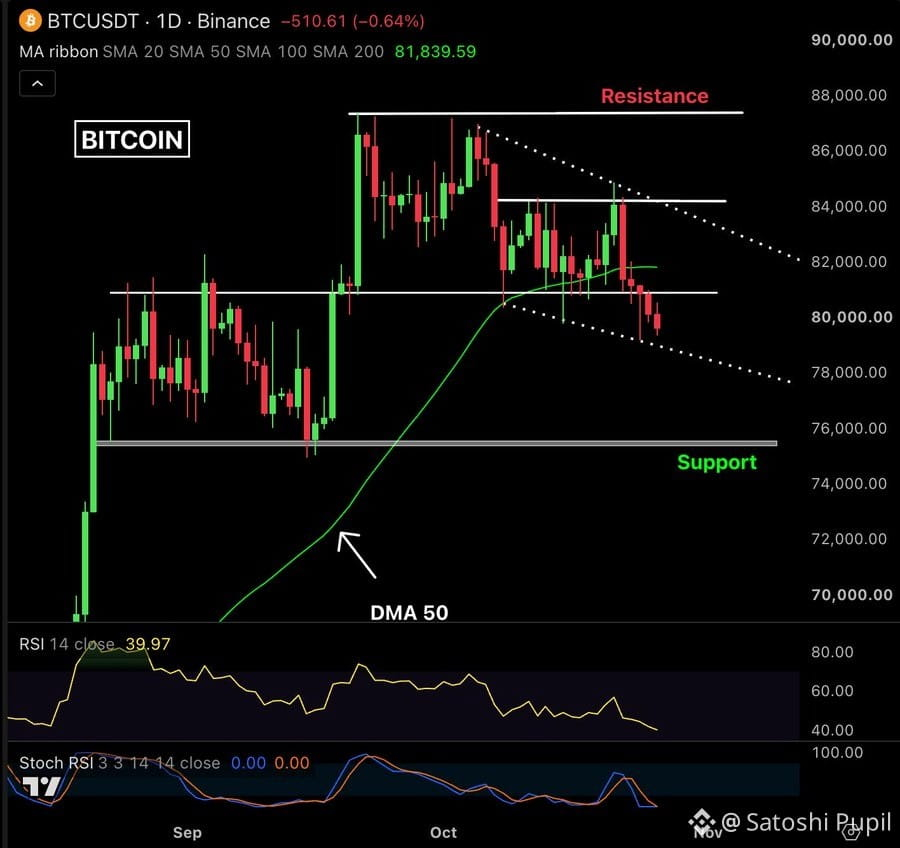
Bitcoin has been falling for the last five days, and the daily chart is looking weak. Price has dropped below the daily MA 50 near $81,800, and it needs to reclaim that level to keep the bullish case strong.
For now, $84,800 and $87,500 are the resistance levels to watch, and the support is around $75,000.
This week’s Israel election, FOMC decision, big tech earnings, U.S. PCE, GDP and midterm elections could all drive volatility.
If $BTCgets back above the daily MA 50, things could start looking better. A move above $85,000 would be another positive sign.
5
A NBA faz parceria com Kalshi e Polymarket como bolsas preferenciais de mercados de previsão, enquanto firma um acordo de compartilhamento de dados com a CFTC para combater o uso de informações privilegiadas.
#NBA #Polymarket
A NBA faz parceria com Kalshi e Polymarket como bolsas preferenciais de mercados de previsão, enquanto firma um acordo de compartilhamento de dados com a CFTC para combater o uso de informações privilegiadas.
#NBA #Polymarket
#NBA #Polymarket
2
Inicia sessão para explorar mais conteúdos
Junta-te a utilizadores de criptomoedas de todo o mundo na Binance Square
⚡️ Obtém informações úteis e recentes sobre criptomoedas.
💬 Com a confiança da maior exchange de criptomoedas do mundo.
👍 Descobre perspetivas reais de criadores verificados.
E-mail/Número de telefone
Tópicos em Tendência
CanMicrosoftDeliverOnAI
109,005 visualizações
838 a discutir
Temporada de resultados — Sessão 3: a Google e a Microsoft vão superar as expectativas?
Binance Square Official
·67 gostos
·18.7k visualizações
CanGoogleDefindItsCore
51,487 visualizações
601 a discutir
FOMCWatch
9.1M visualizações
28,080 a discutir