Sky borrowing has an annualized rate of 20%—tell me, would you dare deposit?
The founder shifted funds around and borrowed 77 million yuan; after the collapse, are they still short on money to pay back the hole?
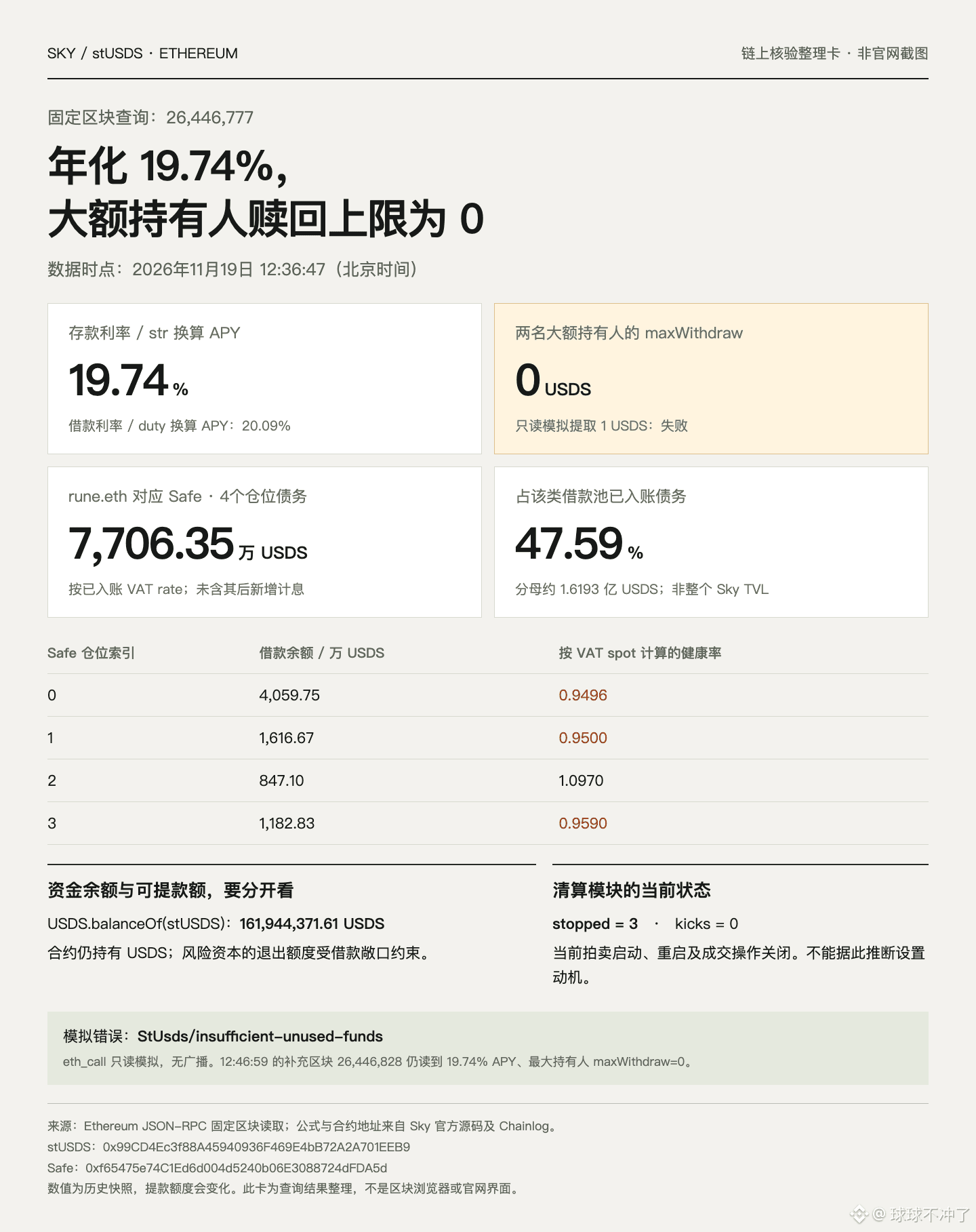
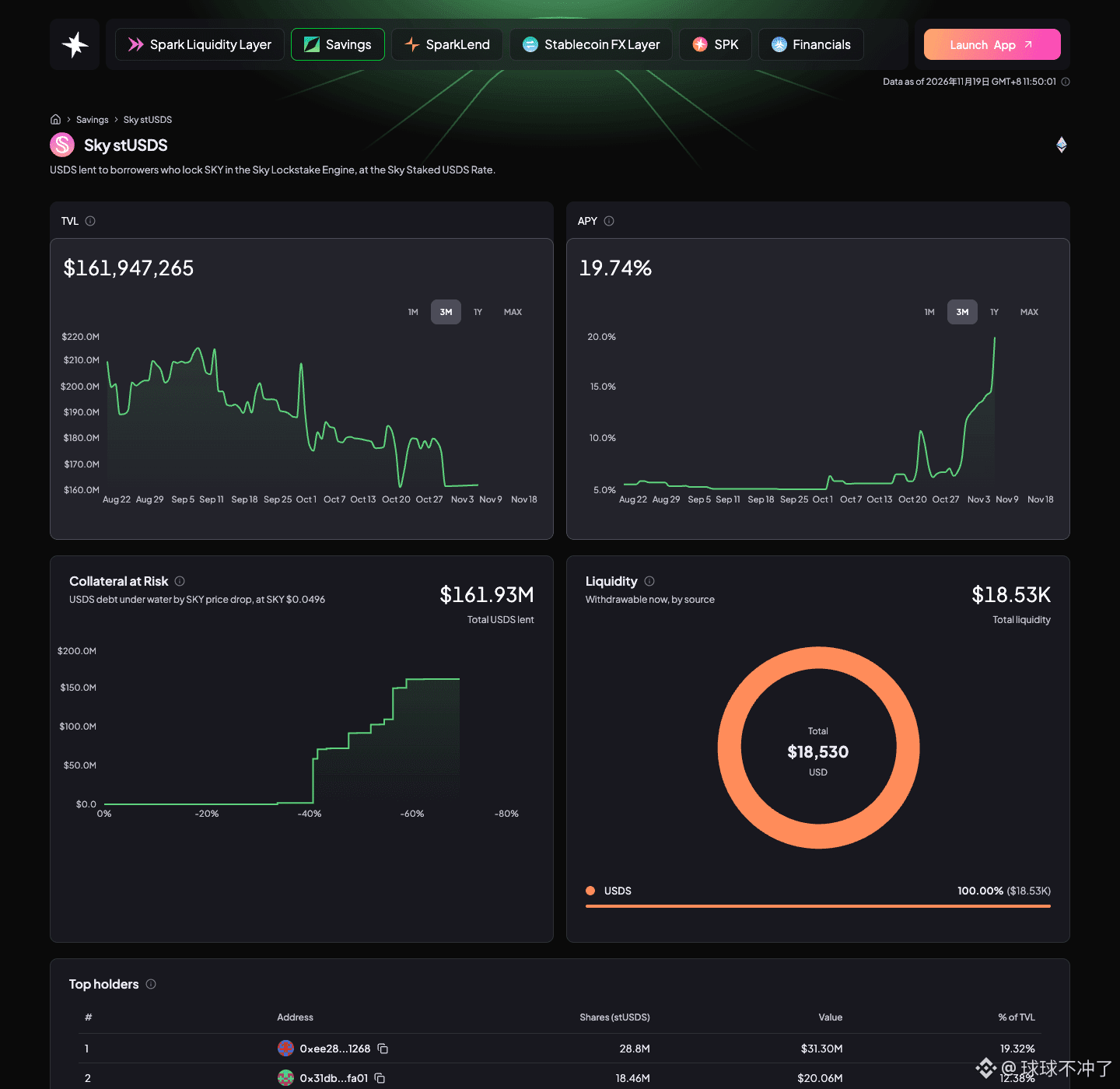
🧑🎤 stUSDS deposits have an annualized rate of 19.74%, and the maximum withdrawable amount for both large holders is 0.
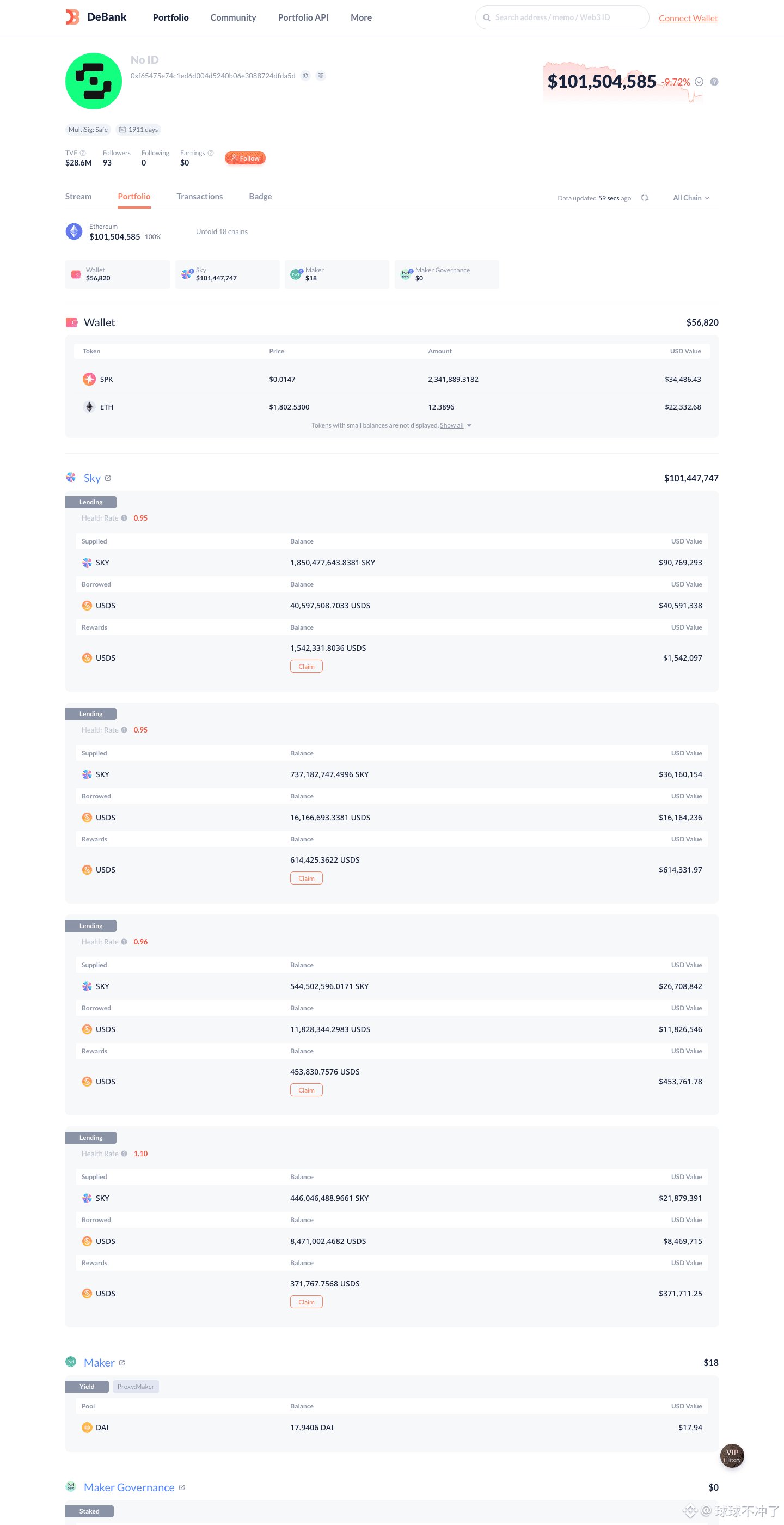
🧑🎤 rune.eth’s corresponding Safe owes about 77.06 million USDS, accounting for 47.6% of this type of total borrowing.
🧑🎤 Of the 4 positions, 3 are priced below the safety line according to the protocol, and the related liquidation auction module is still closed.
In plain language, if depositors want to exit, they have to wait for the founder to pay back the debt first.
Sky is the protocol renamed from MakerDAO. Users deposit USDS and lend it to those who borrow with SKY as collateral. Whether they can redeem depends on the pool’s utilization.
🕰️ How did this matter unfold step by step to today?
On October 26, according to Protos, the linked wallet newly borrowed 1 million USDS.
On October 30, Rune-linked gaming company Raw Power Games entered bankruptcy proceedings.
On October 31, according to @punkquidity’s review, the pool had long periods with no withdrawal quota available, and the interest rate rose to about 10.7% before recovering in the evening.
From November 10 to 14, withdrawals became tight again, and the interest rate rose to about 13%.
From November 18 to 19, the annualized rate rose to 19.74%.
The interest keeps going up—when exactly will the borrower repay?
💰 77 million—can it be paid back?
The SKY pledged by the rune.eth wallet is valued by the market at about 175.5 million USD, but if you really try to sell tens of millions of dollars’ worth of coins, who would take the other side?
Assuming the interest rate stays unchanged, with 77.06 million in debt, about 1.18 million USDS in interest would accrue in one month. The loan has no fixed term, so when the money can be repaid depends on when others can withdraw.
There’s another detail: the stUSDS contract itself still holds about 162 million USDS. It’s just that this risk capital is tied up by the borrowing exposure, and the contract doesn’t allow it to be withdrawn casually.
🔮 What might happen next? Maybe no one can exit safely
① The big borrower repays, and everyone gets off the bus one by one
If the boss pays the money back, reserve usage drops and withdrawal capacity recovers—that’s the best outcome.
In 2023, Curve’s founder’s borrowing on Fraxlend also went through 100% utilization and a sharp rise in interest rates, and later eased through actual repayment and liquidity arrangements.
② High rates persist, withdrawals keep waiting
The borrower continues to bear the interest, depositors’ claims continue to grow, and the exit date remains uncertain.
New deposits may temporarily free up space; if the added capacity is quickly borrowed again, the pressure will keep recurring.
③ Governance steps in, deleverages, or adds funds
It could limit new borrowing, negotiate collateral disposal, or introduce external funding. This estimate is probably very difficult now—there’s nothing to do.
④ The collateral isn’t enough, and holders bear losses
If the recovered funds ultimately aren’t enough to repay the debt, and no other funds make up the shortfall, stUSDS’s loss-sharing mechanism may reduce holders’权益.
Using about 161.95 million USDS as the denominator, if a net loss of 10 million USDS were borne entirely by the pool, the decline in权益 would be about 6.17%.
If debt repayment requires concentrated selling of SKY, the selling pressure may push down the token price; and if the collateral shrinks, the remaining borrowing becomes even harder to handle.
That’s the vicious cycle. Will SKY be doomed? Nobody knows.
What more people want to ask is—forget the interest, when will you pay back my principal?