
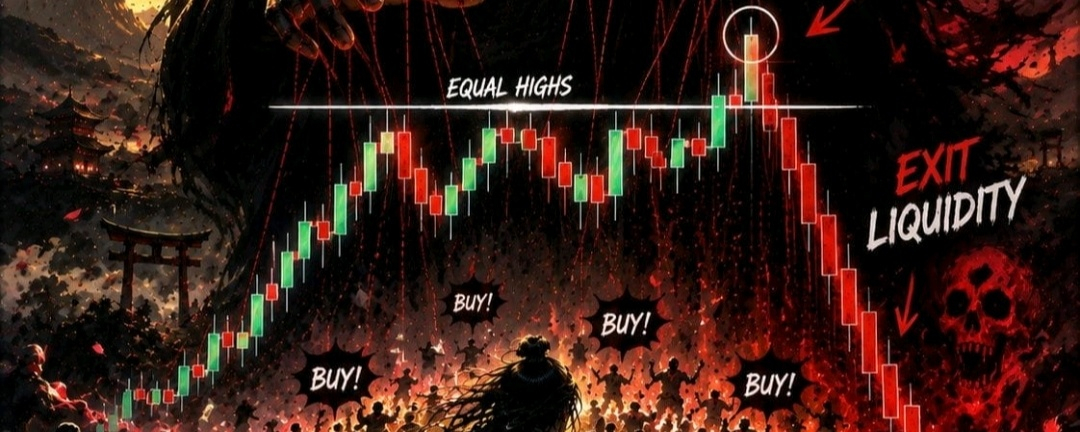

For my first two years of trading, I thought my problem was my strategy.
Whenever I blew up an account or gave back a month of gains in a single afternoon, I went hunting for a better indicator, a tighter timeframe, or a different market. It took me far too long to realize that my entries were fine. My problem was the person clicking the buttons.
I was suffering from the classic cycle: hesitating on valid setups out of fear, chasing extended candles out of FOMO, and doubling my position size after a loss to "make it back" before the market closed.
Trying to "be more disciplined" through sheer willpower didn't work. You cannot out-will human biology when real money is on the line. Instead, I fixed my trading psychology by changing my environment and rules so my emotions no longer had a vote.
Here are the five concrete changes that finally stopped the bleeding.
1. I Cut My Position Size Until I Felt Nothing
I used to think trading psychology was about mastering fear and greed. Eventually, I realized most "psychological" issues are actually risk-management issues in disguise.
If your heart rate spikes when a candle ticks against you, or if you find yourself staring at every 1-minute fluctuation, you are trading too big. Your nervous system is in fight-or-flight mode, and human beings cannot make rational probability-based decisions in that state.
I cut my risk per trade down to 0.25% of my account. Suddenly, taking three losses in a row didn't hurt. It was annoying, sure, but it didn't trigger panic or anger. Once the financial pain disappeared, the emotional tilt disappeared with it. I only scaled back up once I could execute my rules effortlessly for 50 consecutive trades.
2. I Hid My P&L During Market Hours
Focusing on daily dollar targets is poison for a trader. When I told myself, "I need to make $300 today," two things happened:
If I was down $150, I forced low-probability setups just to get back to green.
If I was up $280, I closed a winning trade early just to lock in my arbitrary target, cutting off my biggest winners.
I turned off the open P&L display on my broker platform. Instead of measuring my day in dollars, I started grading myself on a simple binary checklist: Did I follow my plan? A day where I lost money following my rules became a "win." A day where I made money breaking my rules became a "loss."
3. I Stopped Making Decisions While in a Trade
Once live money is on the line, your IQ drops by 30 points. Hope convinces you to widen your stop-loss on a loser; fear convinces you to take profits too early on a winner.
I made a hard rule: Every decision must be made before the order is placed. Before clicking buy or sell, I set a hard stop-loss and a predetermined target. Once the trade was active, I wasn't allowed to move my stop further away or manually close the trade out of panic. I became a bystander to my own pre-planned execution.
4. I Built a Hard "Circuit Breaker"
Revenge trading accounted for roughly 80% of my worst days. One bad loss would trigger a cascade of impulsive, oversized trades aimed at getting back to even.
To stop this, I set an automated daily loss limit directly through my broker's risk settings: two losses in a row, or a 1.5% drawdown on the day, and my platform locks me out until the next morning. Taking the decision to walk away out of my own hands saved my account more times than any technical setup ever has.
5. I Started Journaling My State of Mind, Not Just My Charts
My early trading journals were full of screenshots, moving averages, and entry notes. None of it helped because the charts weren't the issue.
I added one new column to my spreadsheet: Emotional State. Every single trade had to be tagged as Clean, FOMO, Revenge, or Hesitated. At the end of my first month tracking this, the data was undeniable. My Clean trades were comfortably profitable. Almost all of my net losses came from trades tagged FOMO or Revenge. Seeing that math in black and white made breaking those habits a business decision rather than an emotional struggle.
Fixing your trading psychology isn't about becoming a stoic robot who never feels frustration or excitement. It's about building guardrails so tight that even when you do feel emotional, you can't do any real damage to your account.