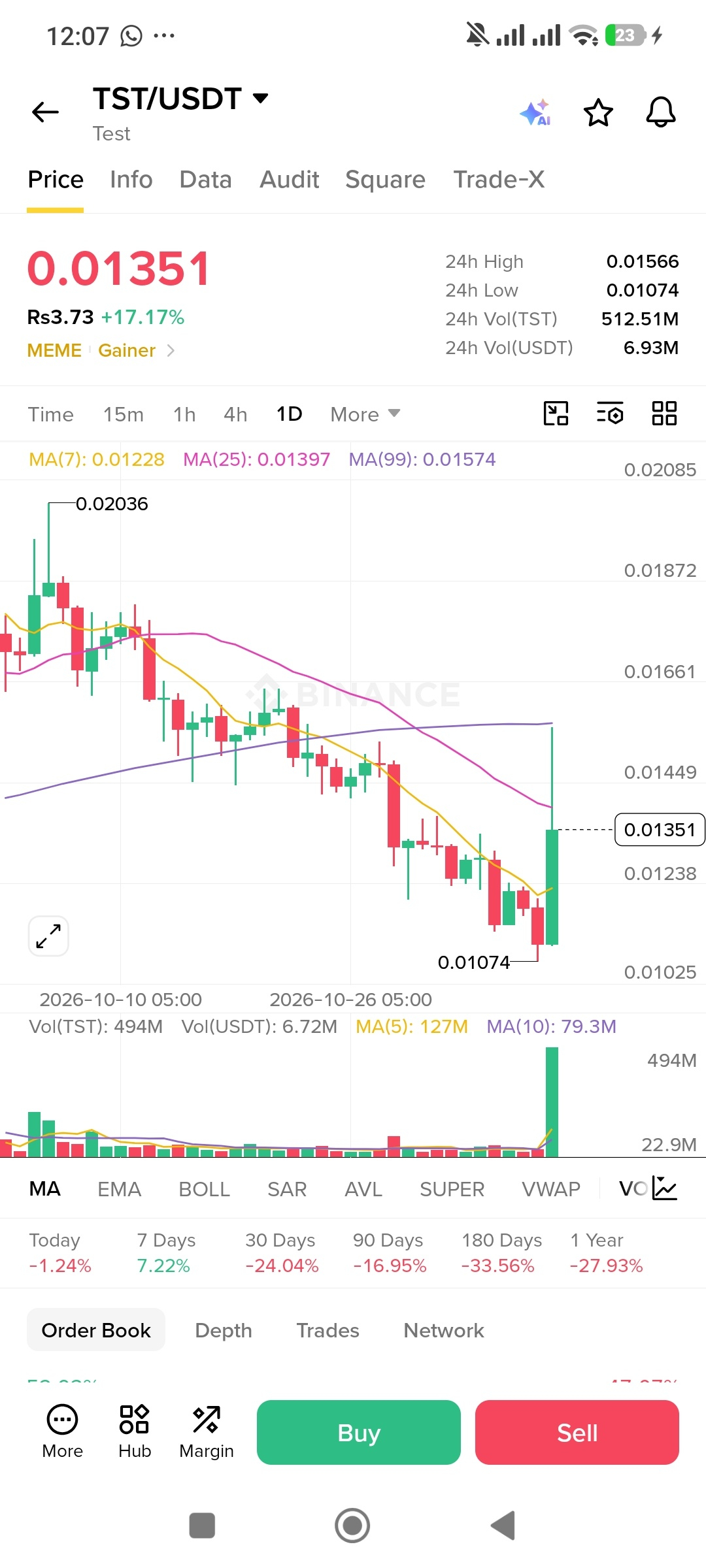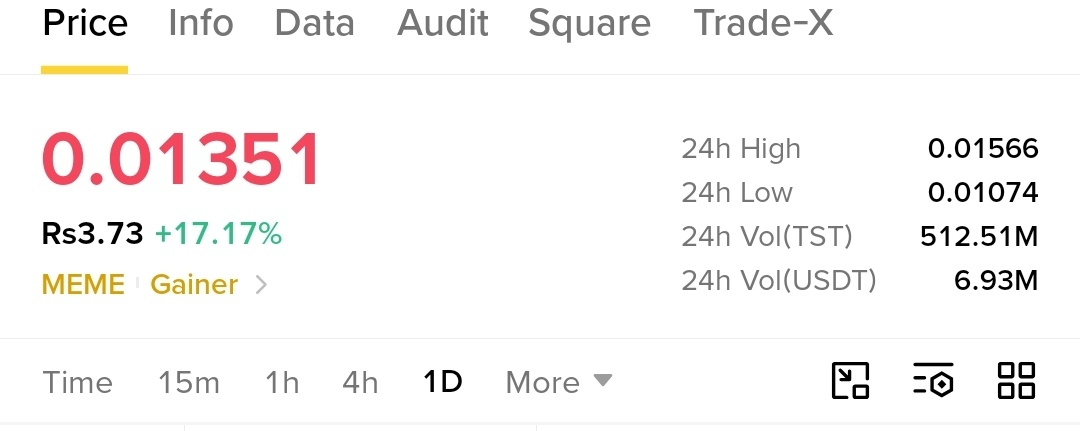

The TST Token Phenomenon: From Tutorial Demo to Viral Meme Asset
Test Token (ticker: TST) represents one of the most unusual chapters in recent cryptocurrency history: an asset originally created with zero financial intent that rapidly transitioned into a multi-million-dollar speculative trading instrument.
1. What Is TST Coin?
Origin as an Educational Dummy Asset: TST was minted on the BNB Smart Chain (BSC) using the BEP-20 token standard. It was deployed solely as a walkthrough asset by developers to illustrate how smart contracts and meme launchpads (like Four.Meme) deploy code on-chain.
The "Accidental" Launch: In early 2025, a developer tutorial video displayed the active contract address on screen. Algorithmic on-chain snipers and opportunistic retail traders picked up the address, assuming an unannounced Binance-ecosystem deployment, and began pouring liquidity into decentralized pools.
Social Amplification: Despite explicit clarifications from figures like Changpeng Zhao (CZ) stating that TST had no official project backing, roadmap, or reserve allocation, speculative traders treated the asset as a narrative-driven meme coin.
2. Core Profile & Technical Data
Attribute
Specification
Asset Name
Test / Test Token
Ticker
TST
Blockchain Network
BNB Smart Chain (BSC)
Token Standard
BEP-20
Verified Contract
0x86Bb94DdD16Efc8bc58e6b056e8df71D9e666429
Core Utility
Purely speculative / meme-driven (no native protocol utility)
3. Market Mechanics: Why Did It Explode?
The BNB Chain Ecosystem Narrative: Because the asset originated in direct BNB Chain instructional material, speculators gambled that major exchanges would feel pressured by sudden liquidity surges to list the token.
Viral Momentum Trading: Within days of its discovery, daily volume spiked dramatically and retail groups fueled parabolic short-term price discovery, outperforming traditional utility altcoins during a broader market lull.
PancakeSwap Liquidity Pools: Community and early whale deposits into automated market maker (AMM) pools sustained initial decentralized trading before secondary and centralized platforms followed.
4. Key Risks and Structural Limitations
Absence of Intrinsic Value or Roadmap: Unlike Layer-1 protocols, DeFi primitives, or governance tokens, TST does not generate revenue, offer staking incentives, or govern an operational protocol.
Delisting & Liquidity Evaporation: As initial speculative interest wanes, exchanges frequently review and delist experimental assets that lack active development teams, leading to sharp declines in liquidity.
Concentrated Whale Ownership: Early snipers who acquired tokens for negligible gas fees hold disproportionate power over order books, exposing late retail buyers to sharp downside risk.

TST